

The TNF-α System: Functional Aspects in Depression, Narcolepsy and Psychopharmacology
Open accessThe DOI matches its Crossref record; 119 of the 119 references it cites were found in a registry or an index.
Abstract
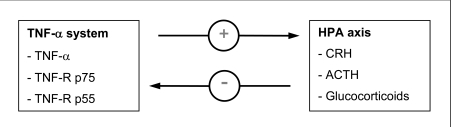
Changes of the tumor necrosis factor-alpha (TNF-alpha) system have been shown to be involved in the development of psychiatric disorders and are additionally associated with changes in body weight as well as endocrine and metabolic changes in psychiatric patients. TNF-alpha might, for example, contribute to the pathogenesis of depression by an activation of the hypothalamo-pituitary-adrenocortical (HPA) axis, an activation of neuronal serotonin transporters and the stimulation of the indoleamine 2,3-dioxygenase which leads to tryptophan depletion. On the other hand, during an acute depressive episode, an elevated HPA axis activity may suppress TNF-alpha system activity, while after remission, when HPA axis activity has normalized the suppression of the TNF-alpha system has been shown not to be apparent any more.In narcoleptic patients, soluble TNF receptor (sTNF-R) p75 plasma levels have been shown to be elevated, suggesting a functional role of the TNF-alpha system in the development of this disorder.Additionally, psychotropic drugs influence the TNF-alpha system as well as the secretion and the effect of hormones which counteract or interact with the TNF-alpha system such as the intestinal hormone ghrelin. However, only preliminary studies with restricted sample sizes exist on these issues, and many open questions remain.
Overview
The claims and statistics of this paper haven’t been checked yet.
Free: it reads the open-access text and checks the first 5 claims that cite a source we can check. Create a free account to check every claim.
Integrity signals
Registry
Cites
Statistics
Figures
Verification
Claims the paper makes
The claims and statistics of this paper haven’t been checked yet.
Free: it reads the open-access text and checks the first 5 claims that cite a source we can check. Create a free account to check every claim.
Claims other papers make about this one
Each is checked against this paper’s own text: does it say what the citing paper says it does?
The cited source says what the claim attributes to it.
In the citing paper
“As growing white adipose tissue becomes infiltrated by macrophages, this fatty tissue could be a major source of pro-inflammatory cytokines in the context of increasing body weight during psychopharmacological treatment (195).”
From Cytokine Research in Depression: Principles, Challenges, and Open Questions (2019) · cites this paper as [195]
Self-check
Percentages, sums and reported differences re-computed from the paper’s own numbers.
The self-check needs the paper’s full text.
Citations
Cites
An endotoxin-induced serum factor that causes necrosis of tumors
Carswell, E. A., Old, L. J., Kassel, R. L., Green, S., Fiore, N., & Williamson, B. (1975) · Proceedings of the National Academy of Sciences · doi:10.1073/pnas.72.9.3666 · Cited by 4,532
Ghrelin induces adiposity in rodents
Tschöp, M., Smiley, D. L., & Heiman, M. L. (2000) · Nature · doi:10.1038/35038090 · Cited by 3,949 · cited 2×
“Ghrelin is an important factor of energy balance, weight regulation and the control of appetite and feeding, and its dysregulation is assumed to play an important role regarding obesity [14, 47, 60, 98, 108, 109].”
BackgroundA role for ghrelin in the central regulation of feeding
Nakazato, M., Murakami, N., Date, Y., Kojima, M., Matsuo, H., Kangawa, K., & Matsukura, S. (2001) · Nature · doi:10.1038/35051587 · Cited by 3,443 · cited 2×
“Ghrelin is an important factor of energy balance, weight regulation and the control of appetite and feeding, and its dysregulation is assumed to play an important role regarding obesity [14, 47, 60, 98, 108, 109].”
BackgroundRecent advances in the relationship between obesity, inflammation, and insulin resistance.
Bastard, J., Maachi, M., Lagathu, C., Kim, M. J., Caron, M., Vidal, H., Capeau, J., & Fève, B. (2006) · PubMed · Cited by 2,545
Ghrelin enhances appetite and increases food intake in humans
Wren, A. M., Seal, L. J., Cohen, M. A., Brynes, A. E., Frost, G. S., Murphy, K. G., Dhillo, W. S., Ghatei, M. A., & Bloom, S. R. (2001) · The Journal of Clinical Endocrinology & Metabolism · doi:10.1210/jcem.86.12.8111 · Cited by 2,494
Ridker, P. M., Rifai, N., Stampfer, M. J., & Hennekens, C. H. (2000) · Circulation · doi:10.1161/01.cir.101.15.1767 · Cited by 2,429 · cited 1×
“As increased pro-inflammatory cytokine levels are known to be associated with cardiovascular disease [25, 41, 81], silent brain infarctions [39], and a worse prognosis after stroke [102], Park et al.”
BackgroundTumor necrosis factor signaling
Wajant, H., Pfizenmaier, K., & Scheurich, P. (2003) · Cell Death & Differentiation · doi:10.1038/sj.cdd.4401189 · Cited by 2,359 · cited 1×
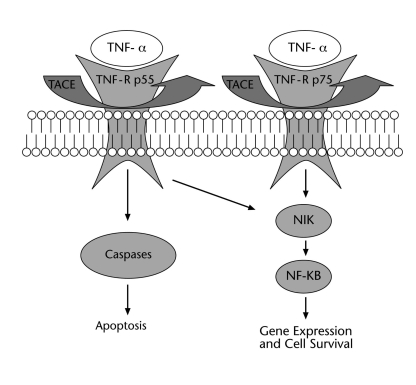
“Accordingly, in the vast majority of cells, TNF-R p55 appears to be the key mediator of TNFsignaling, whereas in the lymphoid system, TNF-R p75 seems to play a major role [101].”
BackgroundWilson, A. G., Symons, J. A., McDowell, T. L., McDevitt, H. O., & Duff, G. W. (1997) · Proceedings of the National Academy of Sciences · doi:10.1073/pnas.94.7.3195 · Cited by 2,218 · cited 3×
“Thus, TNF- might be involved in the process of neurodevelopment and neurodegeneration, which could link to the pathogenesis of Schizophrenia by subtle alterations in neuronal number and density [105].”
BackgroundReduced Number of Hypocretin Neurons in Human Narcolepsy
Thannickal, T. C., Moore, R. Y., Nienhuis, R., Ramanathan, L., Gulyani, S., Aldrich, M., Cornford, M., & Siegel, J. M. (2000) · Neuron · doi:10.1016/s0896-6273(00)00058-1 · Cited by 2,089
Circulating Ghrelin Levels Are Decreased in Human Obesity
Tschöp, M., Weyer, C., Tataranni, P. A., Devanarayan, V., Ravussin, E., & Heiman, M. L. (2001) · Diabetes · doi:10.2337/diabetes.50.4.707 · Cited by 2,008
Research works printed but not linked: 1
- [85]Schuld A Kraus T Haack M Hinze-Selch D Kühn M Pollmächer T Plasma levels of cytokines and soluble cytokine receptors during treatment with olanzapine Schizophr. Res 2000 102 1 3 11001592
Cited by
The IL-1β, IL-6, and TNF cytokine triad is associated with post-acute sequelae of COVID-19
Schultheiß, C., Willscher, E., Paschold, L., Gottschick, C., Klee, B., Henkes, S.-S., Bosurgi, L., Dutzmann, J., Sedding, D., Frese, T., et al. (2022) · Cell Reports Medicine · doi:10.1016/j.xcrm.2022.100663 · Cited by 431
Cytokine Research in Depression: Principles, Challenges, and Open Questions
Himmerich, H., Patsalos, O., Lichtblau, N., Ibrahim, M. A. A., & Dalton, B. (2019) · Frontiers in Psychiatry · doi:10.3389/fpsyt.2019.00030 · Cited by 313
Self-citationRole of Adiponectin in Central Nervous System Disorders
Bloemer, J., Pinky, P. D., Govindarajulu, M., Hong, H., Judd, R., Amin, R. H., Moore, T., Dhanasekaran, M., Reed, M. N., & Suppiramaniam, V. (2018) · Neural Plasticity · doi:10.1155/2018/4593530 · Cited by 182
“Overactivity of HPA axis contributes to the pathogenesis of depression, in that activation of the HPA axis leads to activation of neuronal serotonin transporters leading to reduced serotonin availability in the brain [123].”
BackgroundMajor Depression: One Brain, One Disease, One Set of Intertwined Processes
Filatova, E. V., Shadrina, M. I., & Slominsky, P. A. (2021) · Cells · doi:10.3390/cells10061283 · Cited by 160
Cytokines as biomarkers in depressive disorder: current standing and prospects
Lichtblau, N., Schmidt, F. M., Schumann, R., Kirkby, K. C., & Himmerich, H. (2013) · International Review of Psychiatry · doi:10.3109/09540261.2013.813442 · Cited by 155
“It is, for example, assumed that narcoleptic patients lose orexin neurons due to activation of the TNF- α system (Berthold-Losleben & Himmerich, 2008; Himmerich & Sheldrick, 2010).”
BackgroundSelf-citationTherapeutic Potential of Hericium erinaceus for Depressive Disorder
Chong, P. S., Fung, M., Wong, K. H., & Lim, L. W. (2019) · International Journal of Molecular Sciences · doi:10.3390/ijms21010163 · Cited by 163
“Both TNF-α and IL-10 were previously reported to be associated with depression, in which TNF-α is a pro-inflammatory cytokine, while IL-10 is an anti-inflammatory cytokine [71,95,96].”
BackgroundThe importance of cytokines and autoantibodies in depression
Postal, M., & Appenzeller, S. (2014) · Autoimmunity Reviews · doi:10.1016/j.autrev.2014.09.001 · Cited by 155
Molecular Mechanisms of Psilocybin and Implications for the Treatment of Depression
Ling, S., Ceban, F., Lui, L. M. W., Lee, Y., Teopiz, K. M., Rodrigues, N. B., Lipsitz, O., Gill, H., Subramaniapillai, M., Mansur, R. B., et al. (2022) · CNS Drugs · doi:10.1007/s40263-021-00877-y · Cited by 127
Malnutrition in Older Adults with Cancer
Zhang, X., & Edwards, B. J.-A. (2019) · Current Oncology Reports · doi:10.1007/s11912-019-0829-8 · Cited by 143
Weight gain and metabolic changes during treatment with antipsychotics and antidepressants
Himmerich, H., Minkwitz, J., & Kirkby, K. (2015) · Endocrine, Metabolic & Immune Disorders-Drug Targets · doi:10.2174/1871530315666150623092031 · Cited by 122
Self-citationImpact of antidepressants on cytokine production of depressed patients in Vitro
Munzer, A., Sack, U., Mergl, R., Schönherr, J., Petersein, C., Bartsch, S., Kirkby, K., Bauer, K., & Himmerich, H. (2013) · Toxins · doi:10.3390/toxins5112227 · Cited by 114
“Particularly important are cytokine-induced changes in metabolism of the monoamines dopamine, noradrenalin and serotonin, in midbrain nuclei with widespread projections [7–9].”
BackgroundSelf-citationDepressive symptoms are associated with tumor necrosis factor alpha in systemic lupus erythematosus
Postal, M., Lapa, A. T., Sinicato, N. A., Peliçari, K. D. O., Peres, F. A., Costallat, L. T. L., Fernandes, P. T., Marini, R., & Appenzeller, S. (2016) · Journal of Neuroinflammation · doi:10.1186/s12974-015-0471-9 · Cited by 106
“First, the activation of the cytokine system might play a causative role in the depression-related activation of the HPA axis [14, 47, 48].”
BackgroundInfluentialGougol, A., Zareh-Mohammadi, N., Raheb, S., Farokhnia, M., Salimi, S., Iranpour, N., Yekehtaz, H., & Akhondzadeh, S. (2015) · Journal of Psychopharmacology · doi:10.1177/0269881115578160 · Cited by 77
“In addition to treating dyslipidemia, statins are also potent antioxidant and anti-inflammatory agents as they can reduce levels of C-reactive protein (CRP) and tumor necrosis factor-α (TNF-α) (Berthold-Losleben and Himmerich, 2008; Devaraj et al., 2007).”
BackgroundLu, R.-R., Zhang, L., Wang, H. H., Li, M., Feng, W., & Zheng, X. (2023) · Frontiers in Pharmacology · doi:10.3389/fphar.2022.993483 · Cited by 88
“A large number of studies pointed out that microglia will be activated accompanied by changes in cell morphology and function if microglia are exposed to a pro-inflammatory (Berthold-Losleben and Himmerich, 2008; Menassa and Gomez-Nicola, 2018).”
BackgroundChronic Stress-Induced Neuroinflammation: Relevance of Rodent Models to Human Disease
White, A. G., Elias, E., Orozco, A., Robinson, S. A., & Manners, M. T. (2024) · International Journal of Molecular Sciences · doi:10.3390/ijms25105085 · Cited by 89
“This subsequently results in apoptosis and demyelination, making TNF-α one of the most important inflammatory factors to be investigated in rodent models of chronic stress [119–122].”
BackgroundZhou, Y., Huang, Y., Ye, W., Chen, Z., & Yuan, Z. (2024) · Biomedicine & Pharmacotherapy · doi:10.1016/j.biopha.2024.116425 · Cited by 69
Chen, J., Zhou, X. J., Liu, B., Wei, X., Ding, H.-L., Lin, Z.-J., Zhan, H., Yang, F., Li, W.-B., Xie, J.-C., et al. (2020) · Journal of Neuroinflammation · doi:10.1186/s12974-020-01786-5 · Cited by 66
“Additionally, TNF-α/NF-κB signaling has also been shown to be involved in the development of depression [60] and the regulation of memory [61].”
BackgroundPro-inflammatory cytokines and psychotherapy in depression: Results from a randomized clinical trial
Del Grande da Silva, G., Wiener, C. D., Barbosa, L. P., Gonçalves Araujo, J. M., Molina, M. L., San Martin, P., Oses, J. P., Jansen, K., Dias de Mattos Souza, L., & Azevedo da Silva, R. (2016) · Journal of Psychiatric Research · doi:10.1016/j.jpsychires.2016.01.008 · Cited by 60
Kang, J., Yang, L., Jia, T., Zhang, W., Wang, L., Zhao, Y., You, J., Deng, Y., Ge, Y., Liu, W., et al. (2024) · Science Bulletin · doi:10.1016/j.scib.2024.09.041 · Cited by 73
Inflammation in psychotic disorders: A population-based study
Suvisaari, J., Loo, B.-M., Saarni, S. E., Haukka, J. K., Perälä, J., Saarni, S. I., Viertiö, S., Partti, K., Lönnqvist, J. K., & Jula, A. (2011) · Psychiatry Research · doi:10.1016/j.psychres.2011.07.006 · Cited by 63
“The fact that TNF-αwas elevated in mood disorders and in persons using antipsychotic medication is consistent with previous research (Berthold-Losleben and Himmerich, 2008). Contrary to the metaanalysis by Potvin et al. (2008), we did not find elevated IL-6 in any of the groups.”
ResultVaseghi, S., Mostafavijabbari, A., Alizadeh, M.-S., Ghaffarzadegan, R., Kholghi, G., & Zarrindast, M. (2022) · Metabolic Brain Disease · doi:10.1007/s11011-022-01124-z · Cited by 65
“Note that, pro-inflammatory cytokines including TNF-α can significantly alter serotonin metabolism and overactivate the HPA axis (Berthold-Losleben and Himmerich 2008).”
BackgroundTumor necrosis factor-alpha regulates the Hypocretin system via mRNA degradation and ubiquitination
Zhan, S., Cai, G., Zheng, A., Wang, Y., Jia, J., Fang, H., Yang, Y., Hu, M., & Ding, Q. (2010) · Biochimica et Biophysica Acta (BBA) - Molecular Basis of Disease · doi:10.1016/j.bbadis.2010.11.003 · Cited by 54
“Published data indicate that TNF-α is involved in regulation of sleep-wakefulness behavior and fatigue during infections and depression [14,17,20,22].”
MethodPrevalence and factors associated with malnutrition in older patients with cancer
Zhang, X., Pang, L., Sharma, S. V., Li, R., Nyitray, A. G., & Edwards, B. J. (2019) · Journal of Geriatric Oncology · doi:10.1016/j.jgo.2019.01.021 · Cited by 53
Pro-inflammatory markers and fatigue in patients with depression: A case-control study
Pedraz-Petrozzi, B., Neumann, E., & Sammer, G. (2020) · Scientific Reports · doi:10.1038/s41598-020-66532-6 · Cited by 51
Behavioral despair associated with a mouse model of Crohn's disease: Role of nitric oxide pathway
Heydarpour, P., Rahimian, R., Fakhfouri, G., Khoshkish, S., Fakhraei, N., Salehi-Sadaghiani, M., Wang, H., Abbasi, A., Dehpour, A. R., & Ghia, J. (2015) · Progress in Neuro-Psychopharmacology and Biological Psychiatry · doi:10.1016/j.pnpbp.2015.08.004 · Cited by 53
“Various studies have revealed that inflammatory markers (CRP, IL-6 and TNF-α) are significantly elevated in acutely depressed patients and further have suggested TNF-α as a biomarker in depression (Berthold-Losleben and Himmerich, 2008, Himmerich et al. , 2008, Vogelzangs et al. , 2012).”
Klyne, D. M., Barbe, M. F., & Hodges, P. W. (2021) · The Spine Journal · doi:10.1016/j.spinee.2021.09.006 · Cited by 45
Chen, A.-L., Sun, X., Wang, W., Liu, J.-F., Zeng, X., Qiu, J.-F., Liu, X.-J., & Wang, Y. (2016) · Journal of Neuroinflammation · doi:10.1186/s12974-016-0743-z · Cited by 42
“IL-1, IL-6, and TNF-α, which mainly come from activated microglial cells in the damaged brain, are commonly associated with HPA axis and sympathetic nervous system activation [19–22].”
BackgroundMiguel-Hidalgo, J. J., Whittom, A., Villarreal, A., Soni, M., Meshram, A., Pickett, J. C., Rajkowska, G., & Stockmeier, C. A. (2014) · Journal of Affective Disorders · doi:10.1016/j.jad.2014.02.010 · Cited by 42
Impact of lithium alone and in combination with antidepressants on cytokine production in vitro
Petersein, C., Sack, U., Mergl, R., Schönherr, J., Schmidt, F. M., Lichtblau, N., Kirkby, K. C., Bauer, K., & Himmerich, H. (2015) · Journal of Neural Transmission · doi:10.1007/s00702-014-1328-6 · Cited by 40
“1995), for example the metabolism of the monoamines dopamine, noradrenalin and serotonin (Capuron and Miller 2011; Himmerich et al. 2009; Berthold-Losleben and Himmerich 2008).”
BackgroundSelf-citationInvolvement of genetic factors in bipolar disorders: current status.
Weschenfelder, J., Sander, C., Kluge, M., Kirkby, K. C., & Himmerich, H. (2012) · PubMed · Cited by 43
Self-citationTodorović, N., & Filipović, D. (2017) · Pharmacology Biochemistry and Behavior · doi:10.1016/j.pbb.2017.10.006 · Cited by 42
Druzhkova, T., Pochigaeva, K., Yakovlev, A., Kazimirova, E., Grishkina, M., Chepelev, A., Guekht, A., & Gulyaeva, N. (2019) · Metabolic Brain Disease · doi:10.1007/s11011-018-0367-3 · Cited by 37
Sharifi, A., Vahedi, H., Nedjat, S., Mohamadkhani, A., & Hosseinzadeh‐Attar, M. J. (2018) · Journal of Dietary Supplements · doi:10.1080/19390211.2018.1472168 · Cited by 39
“TNF-α, which is a key cytokine in the pathogenesis of chronic inflammatory diseases such as IBD, plays an important role in the pathophysiology of various neuropsychiatric conditions (Berthold-Losleben & Himmerich, 2008; Han & Yu, 2014).”
BackgroundWang, K., Li, F., Cui, Y., Cui, C., Cao, Z., Xu, K., Han, S., Zhu, P., & Sun, Y. S. (2019) · Mediators of Inflammation · doi:10.1155/2019/2987901 · Cited by 43
“There is emerging evidence implying that TNF-α-producing macrophages play a key role not only in the neurodevelopment but also in the pathophysiology of various neuropsychiatric conditions, including depression [12].”
BackgroundComorbid psychiatric disorders among patients with narcolepsy
Alasim, H., Alqazlan, S., Albanyan, S., Alsalhi, A., Buraik, A. S., Olaish, A. H., Almeneessier, A. S., Alosaimi, F. D., AlHadi, A. N., & BaHammam, A. S. (2019) · Sleep And Breathing · doi:10.1007/s11325-019-01890-8 · Cited by 40
Islam, M. R., Sohan, M., Daria, S., Masud, A. A., Ahmed, M. U., Roy, A., & Shahriar, M. (2023) · International Journal of Immunopathology and Pharmacology · doi:10.1177/03946320231198828 · Cited by 43
Cerebrovascular Anomalies: Perspectives From Immunology and Cerebrospinal Fluid Flow
Rustenhoven, J., Tanumihardja, C., & Kipnis, J. (2021) · Circulation Research · doi:10.1161/circresaha.121.318173 · Cited by 41
Dib, P. S., Zhang, Y., Ihnat, M. A., Gallucci, R. M., & Standifer, K. M. (2021) · Frontiers in Psychiatry · doi:10.3389/fpsyt.2021.721999 · Cited by 40
“Consequently, drugs that reduce TNF-α synthesis may reduce pain, anxiety and depressive symptoms by moderating TNFα-induced changes in neurotransmission (25).”
BackgroundInteraction mechanisms between major depressive disorder and non-alcoholic fatty liver disease
Shao, Q., Wu, Y., Ji, J., Xu, T., Yu, Q., Ma, C., Liao, X., Cheng, F., & Wang, X. (2021) · Frontiers in Psychiatry · doi:10.3389/fpsyt.2021.711835 · Cited by 32
“Since TNF-α and interferon-γ (IFN-γ) as well as other inflammatory factors can induce the synthesis and secretion of IL-6 (148), IL-6 can play a similar role to TNF-α by excessively activating the HPA axis (138) and stimulating IDO activation to degrade tryptophan and hinder the synthesis of N-acetyl-5-HT and melatoni…”
BackgroundSung, P., Chen, P.-W., Yen, C., Shen, M.-R., Chen, C., Tsai, K., & Lin, C. K. (2021) · Cancers · doi:10.3390/cancers13164177 · Cited by 31
“Previous studies have shown that TNF-α in plasma and cerebrospinal fluid was correlated with depression symptoms [41,42] and anxiety [43].”
ResultRoads Less Traveled: Sexual Dimorphism and Mast Cell Contributions to Migraine Pathology
Loewendorf, A. I., Matynia, A., Saribekyan, H., Gross, N. B., CSETE, M. E., & Harrington, M. (2016) · Frontiers in Immunology · doi:10.3389/fimmu.2016.00140 · Cited by 35
“Activation or dysregulation of the HPA has also been implicated in migraine and depression (288, 289).”
BackgroundSchmidt, F. M., Pschiebl, A., Sander, C., Kirkby, K. C., Thormann, J., Minkwitz, J., Chittka, T., Weschenfelder, J., Holdt, L. M., Teupser, D., et al. (2016) · Neuropsychobiology · doi:10.1159/000441190 · Cited by 32
Self-citationHildebrandt, C. S., Helmbold, K., Linden, M., Langen, K., Filss, C. P., Runions, K., Stewart, R. M., Rao, P., Moore, J. K., Mahfouda, S., et al. (2018) · The World Journal of Biological Psychiatry · doi:10.1080/15622975.2018.1428357 · Cited by 26
Wasilczuk, K. M., Bayer, K. C., Somann, J. P., Albors, G. O., Sturgis, J. E., Lyle, L. T., Robinson, J. P., & Irazoqui, P. P. (2018) · Ultrasound in Medicine & Biology · doi:10.1016/j.ultrasmedbio.2018.09.005 · Cited by 33
Leman, J. A., Walton, S., Layton, A., Ward, K., McBride, S. R., Cliff, S. H., Downs, A. M., Landeira, M., & Bewley, A. (2019) · Journal of Dermatological Treatment · doi:10.1080/09546634.2019.1592096 · Cited by 28
“There is some evidence that depression is a TNF-mediated process (37), which may account for this difference.”
BackgroundMagdy, Y., El-Kharashi, O. A., Nabih, E. S., Shaker, S. M., Abd-Elaziz, L. F., & Aboul‐Fotouh, S. (2016) · Biomedicine & Pharmacotherapy · doi:10.1016/j.biopha.2016.10.098 · Cited by 25
Zhan, S., Che, P., Zhao, X., Li, N., Ding, Y., Liu, J., Li, S., Ding, K., Han, L. K., Huang, Z., et al. (2019) · Journal of Cellular and Molecular Medicine · doi:10.1111/jcmm.14566 · Cited by 24
Schmitz, C. N., Sammer, G., Neumann, E., Blecker, C. R., Gründer, G., Adolphi, H., Lamadé, E. K., & Petrozzi, B. P. (2025) · Scientific Reports · doi:10.1038/s41598-025-85514-0 · Cited by 29
The Role of Neuroinflammation in the Comorbidity of Psychiatric Disorders and Internal Diseases
Cătălina, G. R., Gheorman, V., Gheorman, V., & Forțofoiu, M.-C. (2025) · Healthcare · doi:10.3390/healthcare13070837 · Cited by 33
Mileva, G. R., Rooke, J., Ismail, N., & Bielajew, C. H. (2016) · Behavioural Brain Research · doi:10.1016/j.bbr.2016.09.004 · Cited by 24
Suzuki, N., Nakanishi, K., Yoneda, M., Hirofuji, T., & Hanioka, T. (2016) · Tobacco Induced Diseases · doi:10.1186/s12971-016-0085-8 · Cited by 25
Nie, X., Kitaoka, S., Shinohara, M., Kakizuka, A., Narumiya, S., & Furuyashiki, T. (2019) · Scientific Reports · doi:10.1038/s41598-019-54082-5 · Cited by 27
Elnahas, E. M., Zeid, M. S. A., Kawy, H. S. A., Hendawy, N., & Baher, W. (2016) · Life Sciences · doi:10.1016/j.lfs.2016.08.027 · Cited by 21
Depression, inflammation, and memory loss among Mexican Americans: analysis of the HABLE cohort
Johnson, L. A., Edwards, M., Gamboa, A., Hall, J. R., Robinson, M., & O’Bryant, S. E. (2017) · International Psychogeriatrics · doi:10.1017/s1041610217001016 · Cited by 22
“…in tumor necrosis factor-α (TNFα), interleukin 6 (IL6), and creactive protein have been consistently linked with increased depressive symptoms (Pucak and Kaplin, 2005; Simen et al., 2006; Losleben-Berthold and Himmerich, 2008 ; Miller et al., 2009; Trollor et al., 2012; Huang and Lin, 2015).”
BackgroundTafseer, S., Gupta, R., Ahmad, R. S., Jain, S., Bhatia, M. S., & Gupta, L. K. (2020) · Pharmacology Biochemistry and Behavior · doi:10.1016/j.pbb.2020.173073 · Cited by 20
Early warning biomarkers in major depressive disorder: a strategic approach to a testing question
Pratt, R., & Stapelberg, N. J. C. (2018) · Biomarkers · doi:10.1080/1354750x.2018.1463563 · Cited by 18
“TNFa has been proposed as a biomarker in MDD reflecting HPA axis dysfunction (Tanabe and Nomura 2007, Berthold-Loslben and Himmmerich 2008).”
BackgroundNutraceuticals and Physical Activity as Antidepressants: The Central Role of the Gut Microbiota
Zeppa, S. D., Ferrini, F., Agostini, D., Amatori, S., Barbieri, E., Piccoli, G., Sestili, P., & Stocchi, V. (2022) · Antioxidants · doi:10.3390/antiox11020236 · Cited by 22
“TNF-α is known to induce apoptosis, disorders in synaptic plasticity, and depressive behaviors [6].”
BackgroundNeuro-Immuno-Endocrine Interactions in Early Life Stress and Heroin Withdrawal Timeline
Moeini, M., Esmaeil, N., Mokhtari, H. R., Eskandari, N., & Banafshe, H. R. (2019) · European Addiction Research · doi:10.1159/000503880 · Cited by 16
Modulation of triglyceride accumulation in adipocytes by psychopharmacological agents in vitro
Löffler, D., Landgraf, K., Körner, A., Kratzsch, J., Kirkby, K. C., & Himmerich, H. (2015) · Journal of Psychiatric Research · doi:10.1016/j.jpsychires.2015.10.008 · Cited by 18
Self-citationIncreased plasma level of tumor necrosis factor α in patients with narcolepsy in Taiwan
Chen, Y., Huang, Y., & Chen, C. (2013) · Sleep Medicine · doi:10.1016/j.sleep.2013.04.030 · Cited by 15
“Accumulating evidence has shown that TNF a has multiple functions and is involved in many biologic activities and human diseases including sleep disorders [15,16].”
BackgroundMetabolomic changes in vertebrate host during malaria disease progression
Ghosh, S., Pathak, S., Sonawat, H. M., Sharma, S., & Sengupta, A. (2018) · Cytokine · doi:10.1016/j.cyto.2018.07.022 · Cited by 16
Ladha, S., Qiu, X., Casal, L. L., Caron, N. S., Ehrnhoefer, D. E., & Hayden, M. R. (2018) · Cell Death Discovery · doi:10.1038/s41420-018-0043-8 · Cited by 15
Strzelecki, D., Urban‐Kowalczyk, M., & Wysokiński, A. (2018) · Psychiatry Research · doi:10.1016/j.psychres.2018.08.002 · Cited by 16
Of patents and patent disputes: The TNFα patent files. Part 1: Humira
Storz, U. (2016) · Human Antibodies · doi:10.3233/hab-160300 · Cited by 14
Masid‐de‐Brito, D., Xavier‐Elsas, P., Luz, R. A., Queto, T., Almeida-da-Silva, C. L. C., Lopes, R., Vieira, B. M., & Elsas, M. (2013) · Life Sciences · doi:10.1016/j.lfs.2013.11.006 · Cited by 17
“In future studies, it is important that such a TNF-α-mediated process be experimentally dissociated from any maneuver intended to evoke stress, because stress induces TNF-α in mice (Berthold-Losleben and Himmerich, 2008; Joachim et al., 2006).”
BackgroundInfluentialKoy, E. H. S., Labauge, P. M., Baillet, A. C., Prati, C., Marotte, H., & Pers, Y. (2021) · Therapeutic Advances in Musculoskeletal Disease · doi:10.1177/1759720x211025894 · Cited by 20
Ferreira, N. V., Gonçalves, N. G., Khandpur, N., Steele, E. M., Levy, R. B., Monteiro, C. A., Goulart, A. C., Brunoni, A. R., Bacchi, P. S., Lotufo, P. A., et al. (2024) · Journal of the Academy of Nutrition and Dietetics · doi:10.1016/j.jand.2024.10.012 · Cited by 16
Depression and Anxiety - Risk Factors in the Evolution of Breast Cancer in Women
Schenker, R. A., Ciurea, M. E., Stovicek, P. O., Ciubară, A., Schenker, M., & Marinescu, I. P. (2022) · BRAIN BROAD RESEARCH IN ARTIFICIAL INTELLIGENCE AND NEUROSCIENCE · doi:10.18662/brain/13.1sup1/309 · Cited by 15
Association between programmed death-1 pathway and major depression
Huang, K.-W., & Huang, T. (2023) · The World Journal of Biological Psychiatry · doi:10.1080/15622975.2023.2209876 · Cited by 13
“In addition, proinflammatory cytokines and their receptors associated with MD in peripheral blood (Berthold-Losleben and Himmerich 2008; Petralia et al. 2020; Orsolini et al. 2022), and damage-associated molecular patterns (DAMPs) related with neuroinflammatory conditions (Lian et al. 2017) were…”
BackgroundLiang, G., Lee, Y. Z., Kow, A. S. F., Lee, Q. L., Lim, L. W. C., Yusof, R., Tham, C. L., Ho, Y., & Lee, M. T. (2024) · European Journal of Pharmacology · doi:10.1016/j.ejphar.2024.176766 · Cited by 14
Mueller, C., & Szaflarski, J. P. (2023) · NeuroImage Clinical · doi:10.1016/j.nicl.2023.103462 · Cited by 12
Interplay of inflammatory biomarkers in heart disease patients with depressive symptoms: An update
Varghese, T. P., Chand, S., Varghese, N. M., Singh, R., & Yadav, S. K. (2023) · Current Problems in Cardiology · doi:10.1016/j.cpcardiol.2023.102352 · Cited by 12
Patil, S. P., Liu, C., Alban, J., Yang, N., & Li, X.-M. (2014) · Journal of Traditional Chinese Medical Sciences · doi:10.1016/j.jtcms.2014.11.004 · Cited by 12
El‐Bakly, W. M., & Hasanin, A. H. (2014) · Korean Journal of Physiology and Pharmacology · doi:10.4196/kjpp.2014.18.3.233 · Cited by 12
“Simen and his colleagues reported that deletion of either TNF receptor-1 or TNF receptor-2 leads to an antidepressant-like response in the forced swim test [5].”
BackgroundBarbe, M. F., Chen, F. L., Loomis, R. H., Harris, M. Y., Kim, B. M., Xie, K., Hilliard, B. A., McGonagle, E. R., Bailey, T. D., Gares, R. P., et al. (2024) · Frontiers in Pain Research · doi:10.3389/fpain.2024.1394017 · Cited by 14
Yuenyongchaiwat, K., Akekawatchai, C., & Khattiya, J. (2022) · Clinical Gerontologist · doi:10.1080/07317115.2022.2150396 · Cited by 11
Ghashang, S. K., Suwandi, A., Büettner, M., Hamdan, I., Graßl, G. A., Gutenbrunner, C. M., & Nugraha, B. (2024) · Frontiers in Nutrition · doi:10.3389/fnut.2024.1298281 · Cited by 13
Kumari, R., Verma, V., & Singaravel, M. (2024) · Neuroscience · doi:10.1016/j.neuroscience.2024.01.026 · Cited by 9
Maldonado-García, J. L., Álvarez-Herrera, S., Pérez‐Sánchez, G., Becerril‐Villanueva, E., Pavón, L., Tesoro-Cruz, E., Girón‐Pérez, M. I., Hurtado‐Alvarado, G., Damián-Morales, G., López‐Santiago, R., et al. (2024) · Pharmaceuticals · doi:10.3390/ph17050638 · Cited by 10
Zepf, F. D., Dingerkus, V. L. S., Helmbold, K., Bubenzer‐Busch, S., Biskup, C. S., Herpertz‐Dahlmann, B., Schaab, M., Kratzsch, J., Eisert, A., Rink, L., et al. (2014) · Journal of Neural Transmission · doi:10.1007/s00702-014-1292-1 · Cited by 8
Park, B., & Lee, Y. (2021) · Journal of Medicinal Food · doi:10.1089/jmf.2020.4766 · Cited by 7
“30,44 NO, acting as a neurotransmitter in the brain, is generated by neuronal NOS (nNOS) and iNOS in the brain and is involved in the regulation of the HPA axis, but overexpression of nNOS and iNOS can lead to HPA hyperactivity with stress-related behavioral changes.”
Low CD40L levels and relative lymphopenia in narcoleptic patients
Coelho, F. M. S., Pradella-Hallinan, M. L. D. C., Pedrazzoli, M., Soares, C. A. S., Fernandes, G. B. P., Murray, B. J., Tufik, S. B., & Bittencourt, L. (2011) · Human Immunology · doi:10.1016/j.humimm.2011.05.024 · Cited by 10
Baek, J.-S., Ma, X., Park, H.-S., Lee, D.-Y., & Kim, D.-H. (2025) · Cells · doi:10.3390/cells14191547 · Cited by 8
Lee, B.-H., Park, Y., Lee, S., & Shim, M. (2019) · Brain Sciences · doi:10.3390/brainsci9100253 · Cited by 5
“Some evidence revealed that several cytokines are elevated in patients with MDD [20], with proinflammatory cytokines including TNF-α which plays a major role in MDD [7].”
BackgroundResultMajor depressive disorder (mdd): emerging immune targets at preclinical level
Varma, M., Kaur, A., Bhandari, R., Kumar, A., & Kuhad, A. (2023) · Expert Opinion on Therapeutic Targets · doi:10.1080/14728222.2023.2225216 · Cited by 6
Câmara, A. B., & Brandão, I. A. (2025) · Journal of Psychiatric Research · doi:10.1016/j.jpsychires.2025.02.012 · Cited by 5
Neuro-Immune Interactions in Depression: Mechanisms and Translational Implications
Abelaira, H. M., da Silva, R. H., Carlessi, A. S., Quevedo, J., & Réus, G. Z. (2019) · Elsevier eBooks · doi:10.1016/b978-0-12-813333-0.00008-1 · Cited by 5
Peripheral inflammation is associated with impaired sadness recognition in euthymic bipolar patients
Chang, C.-Y., Chang, H. H., Wu, C. Y., Tsai, Y. T., Lu, T., Chang, W. H., Hsu, C., Chen, P. S., & Tseng, H. (2024) · Journal of Psychiatric Research · doi:10.1016/j.jpsychires.2024.03.049 · Cited by 4
Inflammation biomarkers and neurobehavioral performance in rural adolescents
Amdemicael, B., Yang, K., Chronister, B. N. C., Mackey, C., Tu, X. M., Gahagan, S., Martínez, D., Checkoway, H., Jacobs, D. R., Suárez-Torres, J., et al. (2024) · Brain Behavior & Immunity - Health · doi:10.1016/j.bbih.2024.100912 · Cited by 4
“Inflammatory cytokines, such as interleukin-1 (IL-1), interleukin-6 (IL-6) and tumor necrosis factor alpha (TNF-⍺ ) have been shown to alter the activity of neurotransmitter networks to induce neurobehavioral changes 8 .”
Choi, Y., Kim, Y., Lee, H., & Cho, S. (2021) · Evidence-based Complementary and Alternative Medicine · doi:10.1155/2021/8888841 · Cited by 4
“TNF-α is one of the key proinflammatory cytokines, which is relevant to pathogenesis of depression [44, 45] through activating hypothalamopituitary-adrenocortical (HPA) axis.”
BackgroundRole of Gastrointestinal Tract (GUT) Health in Reducing Non-communicable Disease Risk
Tripti, T., & Ghosh, J. (2025) · Journal of Comprehensive Health · doi:10.25259/jch_29_2024 · Cited by 3
da Silva, S. J. R., Matthews, Q., Cazaux, S., Vigar, J. R. J., Santos, B. N. R., Carvalho, D. C. M., Cranmer, L. A., Duplat, D., Singh, S., Simchi, M., et al. (2026) · Science Advances · doi:10.1126/sciadv.aeb7039 · Cited by 3
Büttiker, P., Boukherissa, A., Weissenberger, S., Ptáček, R., Anders, M., Raboch, J., & Stefano, G. B. (2024) · Cellular and Molecular Neurobiology · doi:10.1007/s10571-024-01509-x · Cited by 8
Inhibition is associated with metabolic syndrome and depression through inflammation
Murdock, K. W., LeRoy, A. S., & Fagundes, C. P. (2018) · Stress and Health · doi:10.1002/smi.2808 · Cited by 7
Shen, Z., Wang, F., Cui, L., Ren, L., Hong, X., Yuan, Y., & Shen, X. (2021) · Annals of Palliative Medicine · doi:10.21037/apm-21-1542 · Cited by 2
“Inflammatory factors can activate the hypothalamicpituitary-adrenal axis, which thereby activates the 5-HT transporter, causing a reduction in the serotonin available in the brain (29).”
BackgroundAlhaideri, A. F., Al-Ameedy, W. A., Al-Agam, A. N. M., Alzughaibi, M. A. K., Al-Hindy, H. A.-A. M., & Mousa, M. J. (2024) · Medical Journal of Babylon · doi:10.4103/mjbl.mjbl_1584_23 · Cited by 6
Li, H., Wu, K., Zhang, Y., Li, N., & Wang, K. (2020) · Tropical Journal of Pharmaceutical Research · doi:10.4314/tjpr.v19i8.18 · Cited by 4
“Some antidepressants displayed the ability to restore the disorders of HPA axis and TNF-α [7].”
Bellinello, G. D. S. T., Urbano, M. R., Vargas, H. O., Verri, W. A., Jr., Rossaneis, A. C., & Nunes, S. O. V. (2024) · The Journal of Nervous and Mental Disease · doi:10.1097/nmd.0000000000001805 · Cited by 4
Sousa, F. S. S., Baldinotti, R., Fronza, M. G., Balaguez, R. A., Alves, D. A. C., Brüning, C. A., & Savegnago, L. (2025) · Brain Research · doi:10.1016/j.brainres.2025.149473 · Cited by 2
Xu, S., Tian, Y., Chen, X., Zhang, W., Mei, Y., Zhang, Q., & Zhang, H. (2025) · Drug Metabolism and Disposition · doi:10.1016/j.dmd.2025.100084 · Cited by 2
Metadata
- Authors
- Berthold-Losleben, M., & Himmerich, H.
- Affiliations
- Universitätsklinikum Aachen (DE)
- Corresponding author
- Himmerich, Hubertus
- ORCID
- Himmerich, Hubertus
- Venue
- Current Neuropharmacology
- Publisher
- Bentham Science Publishers Ltd.
- Published
- 2008-09-01
- Volume
- 6
- Issue
- 3
- Pages
- 193-202
- ISSN
- 1570-159X (ISSN-L)
- PMC
- PMC2687935
- OpenAlex
- W2065888192
- Cited by
- 119
- References
- 118
- Citations by year
- 2026: 6 · 2025: 8 · 2024: 15 · 2023: 7 · 2022: 6 · 2021: 13 · 2020: 6 · 2019: 12 · 2018: 10 · 2017: 3 · 2016: 12 · 2015: 4 · 2014: 8 · 2013: 5 · 2012: 1
- FWCI
- 0.33
- Type
- journal article
- Language
- en
- Open access
- green
- www.ncbi.nlm.nih.gov
- Licence
- cc-by
- Locations
- Current Neuropharmacology (publishedVersion)
- Europe PMC (PubMed Central) (publishedVersion, cc-by)
- PubMed Central (publishedVersion, cc-by)
- PubMed (publishedVersion)
- RWTH Publications (RWTH Aachen) (submittedVersion)
- Topics
- Life Sciences › Neuroscience › Biological Psychiatry › Tryptophan and brain disorders
- Life Sciences › Neuroscience › Behavioral Neuroscience › Stress Responses and Cortisol
- Life Sciences › Neuroscience › Neurology › Neuroinflammation and Neurodegeneration Mechanisms
- Keywords
- TNF-α, depression, narcolepsy, hypothalamic-pituitary-adrenal axis, serotonin transporter, tryptophan depletion, ghrelin, psychotropic drugs, body weight
About these checks
Registry, retraction, Cites and statistics results are computed, not judged, with one exception: a printed reference that no index lists is read once by a model before it counts as a citation error. Claims are extracted by a model and kept only when their quote appears verbatim in the text; each cited source is then checked, with a model’s help, for whether it says what the claim relies on. Those verdicts can be wrong — read the claim’s quote and the cited source before relying on one.
Statistics and arithmetic are recomputed, not judged.
Confidence bands are shown only for fields calibrated on our annotated test set. None is calibrated yet, so no band is shown.
What counts as a claim ›How we measure confidence ›How we check this ›
Are you an author, or do you see a problem with this page? Request a review
Data sources
Bibliographic data: Semantic Scholar, OpenAlex, Crossref.
Contains information from the Semantic Scholar Academic Graph Datasets, made available under the ODC Attribution License (ODC-BY 1.0).
Semantic Scholar’s data is described in: Kinney, R., et al. (2023). The Semantic Scholar Open Data Platform. arXiv:2301.10140.
