

Acetylcholinesterase Inhibitors and Drugs Acting on Muscarinic Receptors- Potential Crosstalk of Cholinergic Mechanisms During Pharmacological Treatment
Open accessThe DOI matches its Crossref record; 238 of the 241 references it cites were found in a registry or an index, and 1 are not checked yet.
Abstract
BACKGROUND: Pharmaceuticals with targets in the cholinergic transmission have been used for decades and are still fundamental treatments in many diseases and conditions today. Both the transmission and the effects of the somatomotoric and the parasympathetic nervous systems may be targeted by such treatments. Irrespective of the knowledge that the effects of neuronal signalling in the nervous systems may include a number of different receptor subtypes of both the nicotinic and the muscarinic receptors, this complexity is generally overlooked when assessing the mechanisms of action of pharmaceuticals. METHODS: We have search of bibliographic databases for peer-reviewed research literature focused on the cholinergic system. Also, we have taken advantage of our expertise in this field to deduce the conclusions of this study. RESULTS: Presently, the life cycle of acetylcholine, muscarinic receptors and their effects are reviewed in the major organ systems of the body. Neuronal and non-neuronal sources of acetylcholine are elucidated. Examples of pharmaceuticals, in particular cholinesterase inhibitors, affecting these systems are discussed. The review focuses on salivary glands, the respiratory tract and the lower urinary tract, since the complexity of the interplay of different muscarinic receptor subtypes is of significance for physiological, pharmacological and toxicological effects in these organs. CONCLUSION: Most pharmaceuticals targeting muscarinic receptors are employed at such large doses that no selectivity can be expected. However, some differences in the adverse effect profile of muscarinic antagonists may still be explained by the variation of expression of muscarinic receptor subtypes in different organs. However, a complex pattern of interactions between muscarinic receptor subtypes occurs and needs to be considered when searching for selective pharmaceuticals. In the development of new entities for the treatment of for instance pesticide intoxication, the muscarinic receptor selectivity needs to be considered. Reactivators generally have a muscarinic M2 receptor acting profile. Such a blockade may engrave the situation since it may enlarge the effect of the muscarinic M3 receptor effect. This may explain why respiratory arrest is the major cause for deaths by esterase blocking.
Overview
The claims and statistics of this paper haven’t been checked yet.
Free: it reads the open-access text and checks the first 5 claims that cite a source we can check. Create a free account to check every claim.
Integrity signals
Registry
Cites
Statistics
Figures
Verification
Claims the paper makes
The claims and statistics of this paper haven’t been checked yet.
Free: it reads the open-access text and checks the first 5 claims that cite a source we can check. Create a free account to check every claim.
Claims other papers make about this one
Each is checked against this paper’s own text: does it say what the citing paper says it does?
The cited source says what the claim attributes to it.
In the citing paper
“we stimulated RAW 264.7wt and RAW 264.7α7ko cells for 4 h with varying concentrations of ACh (in the presence of pyridostigmine49) and observed significant induction of IL-6 production in RAW 264.7wt cells but not in RAW 264.7α7ko cells (Figure 5F).”
From B cell-derived acetylcholine promotes liver regeneration by regulating Kupffer cell and hepatic CD8+ T cell function (2025) · cites this paper as [49]
Self-check
Percentages, sums and reported differences re-computed from the paper’s own numbers.
The self-check needs the paper’s full text.
Citations
Cites
Items 201–241 of 241
Andersson, M., Aronsson, P., Doufish, D., Lampert, A., & Tobin, G. (2012) · Autonomic Neuroscience · doi:10.1016/j.autneu.2012.06.004 · Cited by 22 · cited 1×
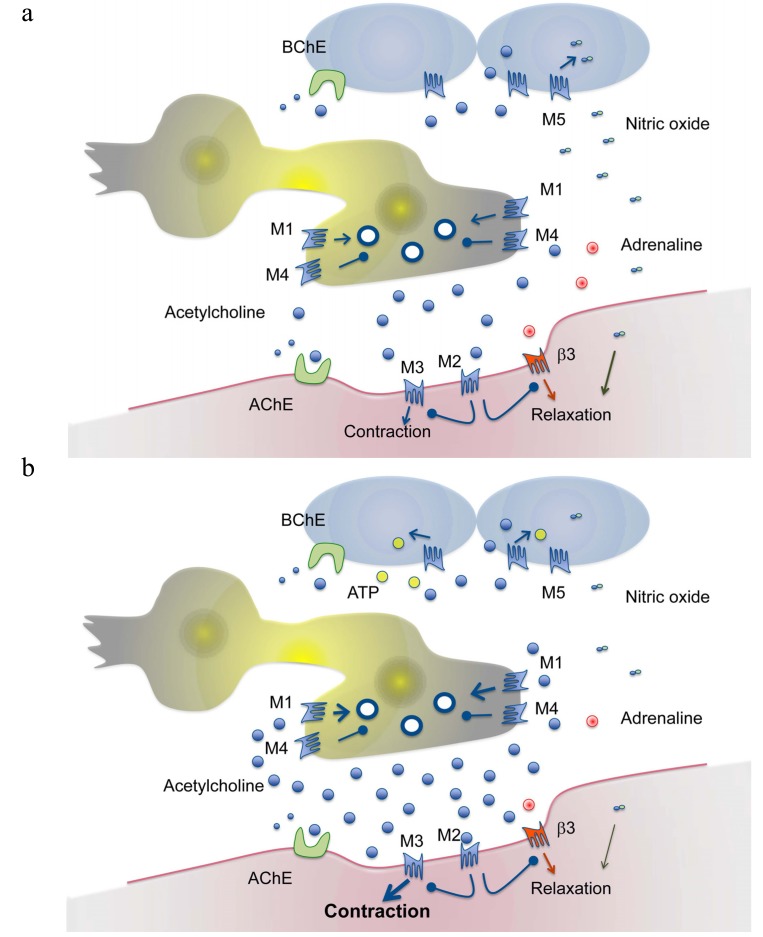
“Nonneuronal acetylcholine may, by acting on urothelial muscarinic M5 receptors, induce the release of nitric oxide that exerts inhibitory effects and that preserves low bladder pressures in spite of increasing urine volumes [57].”
Self-citationYamazaki, T., Muraki, Y., & Anraku, T. (2011) · Naunyn-Schmiedeberg s Archives of Pharmacology · doi:10.1007/s00210-011-0675-1 · Cited by 22
Harada, T., Fushimi, K., Kato, A., Ito, Y., Nishijima, S., Sugaya, K., & Yamada, S. (2010) · Biological and Pharmaceutical Bulletin · doi:10.1248/bpb.33.653 · Cited by 22
Cholinergic symptoms due to nerve agent attack: a strategy for management
Schecter, W. P. (2004) · Anesthesiology Clinics of North America · doi:10.1016/j.atc.2004.04.005 · Cited by 22 · cited 1×
“In conditions of excessive discharge of the parasympathetic nervous systems, typical signs of cholinergic effects appear [30].”
Ekström, J., Asztély, A., & Tobin, G. (1998) · PubMed · Cited by 20
Self-citationRivastigmine as a Modulator of the Neuronal Glutamate Transporter rEAAC1 mRNA Expression
Andin, J., Enz, A., Gentsch, C., & Marcusson, J. O. (2004) · Dementia and Geriatric Cognitive Disorders · doi:10.1159/000080966 · Cited by 20 · cited 2×
“The latter effect on the Aβ cascade might be a common feature of all BChE inhibitors since the locally neurotoxic Aβ plaque development is driven by the increase of BChE at the plaque level [128].”
Veselá, R., Aronsson, P., Andersson, M., Wsól, V., & Tobin, G. (2012) · PubMed · Cited by 20
Self-citationTobin, G. (2002) · Autonomic Neuroscience · doi:10.1016/s1566-0702(02)00094-2 · Cited by 19
Self-citationNeural control of lower airway vasculature. Involvement of classical transmitters and neuropeptides.
Matran, R. (1991) · PubMed · Cited by 19
Management of chronic obstructive pulmonary disease: Moving beyond the asthma algorithm
Gordon, E. D., & Lazarus, S. C. (2009) · Journal of Allergy and Clinical Immunology · doi:10.1016/j.jaci.2009.09.040 · Cited by 18
A first principles investigation of aging processes in soman conjugated AChE
Chandar, N. B., & Ganguly, B. (2013) · Chemico-Biological Interactions · doi:10.1016/j.cbi.2013.05.013 · Cited by 17 · cited 1×
“Soman poisoning is also complicated due to the process called “aging”, which is a time-dependent loss of AChE ability to be reactivated [116].”
The effect of oxime reactivators on muscarinic receptors: Functional and binding examinations
Soukup, O., Killi, U. K., Proška, J., Bratova, L., Adem, A., Jun, D., Fusek, J., Kuča, K., & Tobin, G. (2011) · Environmental Toxicology and Pharmacology · doi:10.1016/j.etap.2011.01.003 · Cited by 17 · cited 1×
“References: a=[154] b=[155] c=[156] d=[157] e=[158] f=[159] g=[160] h=[161] i=[162] j=[163] k=[164] l=[165] m=[166] n=[167] o=[168] p=[169] q=[170] r=[171] s=[172] t=[173] u=[147] v=[174], w=[175] x=[176].”
Self-citationTreatment Principles in the Management of Autoimmune Myasthenia Gravis
Richman, D. P., & Agius, M. A. (2003) · Annals of the New York Academy of Sciences · doi:10.1196/annals.1254.060 · Cited by 17 · cited 1×
“AChE inhibitors are usually employed in the early stage of myasthenia gravis, when an adequate number of nicotinic receptors still exists [141].”
Cholinergic submandibular effects and muscarinic receptor expression in blood vessels of the rat
Ryberg, A. T., Selberg, H., Soukup, O., Gradin, K. A., & Tobin, G. (2008) · Archives of Oral Biology · doi:10.1016/j.archoralbio.2008.01.016 · Cited by 16 · cited 1×
“Here, VIP is the major player, while acetylcholine, by acting on muscarinic M3 receptors, has additive effects [46].”
Self-citationSinha, S., Sk, G., Malhotra, S., Krishna, N., Meru, A., Babu, V., Bansal, V., Garg, M., Kumar, N., Chugh, A., et al. (2010) · British Journal of Pharmacology · doi:10.1111/j.1476-5381.2010.00752.x · Cited by 15
Thesleff, S. (1990) · Progress in brain research · doi:10.1016/s0079-6123(08)60892-4 · Cited by 15
Валерьевич, А. Д., Borodinova, A. A., Rosenshtraukh, L. V., & Nikolsky, E. E. (2012) · Life Sciences · doi:10.1016/j.lfs.2012.03.031 · Cited by 15
Masumori, N. (2013) · Patient Preference and Adherence · doi:10.2147/ppa.s28160 · Cited by 14
Rivastigmine and Parkinson dementia complex
Moretti, R., Torre, P., Vilotti, C., Antonello, R. M., & Pizzolato, G. (2007) · Expert Opinion on Pharmacotherapy · doi:10.1517/14656566.8.6.817 · Cited by 14 · cited 1×
“References: a=[154] b=[155] c=[156] d=[157] e=[158] f=[159] g=[160] h=[161] i=[162] j=[163] k=[164] l=[165] m=[166] n=[167] o=[168] p=[169] q=[170] r=[171] s=[172] t=[173] u=[147] v=[174], w=[175] x=[176].”
Donepezil, but not galantamine, blocks muscarinic receptor‐mediated in vitro and in vivo responses
Ago, Y., Koda, K., Ota, Y., Kita, Y., Fukada, A., Takuma, K., & Matsuda, T. (2011) · Synapse · doi:10.1002/syn.20969 · Cited by 13 · cited 1×
“References: a=[154] b=[155] c=[156] d=[157] e=[158] f=[159] g=[160] h=[161] i=[162] j=[163] k=[164] l=[165] m=[166] n=[167] o=[168] p=[169] q=[170] r=[171] s=[172] t=[173] u=[147] v=[174], w=[175] x=[176].”
Design, synthesis and biological evaluation of ambenonium derivatives as AChE inhibitors
Bolognesi, M. L., Cavalli, A., Andrisano, V., Bartolini, M., Banzi, R., Antonello, A., Rosini, M., & Melchiorre, C. (2003) · Il Farmaco · doi:10.1016/s0014-827x(03)00150-2 · Cited by 13 · cited 1×
“Ambenonium, due to its efficacy, became a parent structure for the derivatives capable to cross the blood brain barrier and which are useful pharmaceuticals in the treatment of AD [146].”
Excitatory effect of M1 muscarinic acetylcholine receptor on automaticity of mouse heart
Woo, S., Lee, B. H., Kwon, K.-I., & Lee, C. O. (2005) · Archives of Pharmacal Research · doi:10.1007/bf02973879 · Cited by 12
Giglio, D., Delbro, D. S., & Tobin, G. (2005) · Autonomic and Autacoid Pharmacology · doi:10.1111/j.1474-8673.2005.00340.x · Cited by 11 · cited 1×
“Also, muscarinic M2 receptors inhibit adenylate cyclase and by that the formation of cAMP [59].”
Self-citationSøkilde, B., Mikkelsen, I., Stensbøl, T. B., Andersen, B., Ebdrup, S., Krogsgaard‐Larsen, P., & Falch, E. (1996) · Archiv der Pharmazie · doi:10.1002/ardp.19963290207 · Cited by 11
Soukup, O., Tobin, G., Killi, U. K., Jun, D., Fusek, J., & Kuča, K. (2010) · Toxicology Mechanisms and Methods · doi:10.3109/15376516.2010.497974 · Cited by 11 · cited 2×
“Obidoxime, for instance, exerts significant antagonism on the muscarinic M2 receptor [8].”
Self-citationThe influence of anticholinergic agents on treatment for bronchitis and emphysema
Gross, N. J. (1991) · The American Journal of Medicine · doi:10.1016/0002-9343(91)90255-v · Cited by 10
Orii, R., Sugawara, Y., Sawamura, S., & Yamada, Y. (2010) · PubMed · Cited by 10
The Interaction of Quaternary Reversible Acetylcholinesterase Inhibitors With the Nicotinic Receptor
Šepsová, V., Krůšek, J., Karasová, J. Ž., Zemek, F., Musílek, K., Kuča, K., & Soukup, O. (2014) · Physiological Research · doi:10.33549/physiolres.932768 · Cited by 10 · cited 1×
“References: a=[154] b=[155] c=[156] d=[157] e=[158] f=[159] g=[160] h=[161] i=[162] j=[163] k=[164] l=[165] m=[166] n=[167] o=[168] p=[169] q=[170] r=[171] s=[172] t=[173] u=[147] v=[174], w=[175] x=[176].”
Self-citationSvobodová, L., Krůšek, J., Hendrych, T., & Vyskočil, F. (2006) · Neuroscience Letters · doi:10.1016/j.neulet.2006.02.065 · Cited by 8 · cited 1×
“References: a=[154] b=[155] c=[156] d=[157] e=[158] f=[159] g=[160] h=[161] i=[162] j=[163] k=[164] l=[165] m=[166] n=[167] o=[168] p=[169] q=[170] r=[171] s=[172] t=[173] u=[147] v=[174], w=[175] x=[176].”
Saw, L., Shumway, J., & Ruckart, P. Z. (2011) · Journal of Medical Toxicology · doi:10.1007/s13181-011-0152-8 · Cited by 8
The role of muscarinic M1 and M2 receptors in airway constriction in the cat
Killingsworth, C. R., & Robinson, N. E. (1992) · European Journal of Pharmacology · doi:10.1016/0014-2999(92)90409-w · Cited by 7 · cited 1×
“In resemblance with the urinary bladder and salivary glands, prejunctional muscarinic M1 receptors facilitate the acetylcholine release [63].”
Prat, M., Gavaldà, A., Fonquerna, S., & Miralpeix, M. (2011) · Expert Opinion on Therapeutic Patents · doi:10.1517/13543776.2011.596528 · Cited by 7
Yoshida, A., Kuraoka, S., Ito, Y., Okura, T., Deguchi, Y., Otsuka, A., Ozono, S., Takeda, M., Masuyama, K., Araki, I., et al. (2013) · Journal of Pharmacological Sciences · doi:10.1254/jphs.13193fp · Cited by 7
Effect of distigmine bromide on the central cholinergic system
Nakayama, K., Katsu, H., & Kitazumi, K. (2008) · Journal of Psychopharmacology · doi:10.1177/0269881108089817 · Cited by 6 · cited 1×
“References: a=[154] b=[155] c=[156] d=[157] e=[158] f=[159] g=[160] h=[161] i=[162] j=[163] k=[164] l=[165] m=[166] n=[167] o=[168] p=[169] q=[170] r=[171] s=[172] t=[173] u=[147] v=[174], w=[175] x=[176].”
Kiwamoto, H., Ma, F., Higashira, H., Park, Y. C., & Kurita, T. (2001) · International Journal of Urology · doi:10.1046/j.1442-2042.2001.00370.x · Cited by 6
Killi, U. K., Wsól, V., Soukup, O., Kuča, K., Winder, M., & Tobin, G. (2013) · Clinical and Experimental Pharmacology and Physiology · doi:10.1111/1440-1681.12191 · Cited by 4 · cited 2×
“However, in the light of what has been discussed above regarding the physiological function of this particular receptor, it may explain its higher toxicity [58].”
Self-citationSasaki, S., & Motomura, S. (1999) · Journal of Cardiovascular Pharmacology · doi:10.1097/00005344-199906000-00012 · Cited by 3 · cited 1×
“Also, muscarinic M2 receptors influence the conductance of impulses in the atrioventricular node, which is slowed down by parasympathetic activity [77].”
Effect of 7-methoxytacrine and L-carnitine on the activity of choline acetyltransferase.
Bajgar, J., Skopec, F., Herink, J., Patocka, J., & Kvetina, J. (1999) · PubMed · Cited by 1
Musílek, K., Doležal, M., Gunn‐Moore, F. J., & Kuča, K. (2011) · ChemInform · doi:10.1002/chin.201147236 · Cited by 1
Barbero (2014) · doi:10.1016/j · Cited by 1
(2014) · Institutional Repository University of Antioquia (University of Antioquia) · doi:10.1371/journal.pone
Research works printed but not linked: 2
- [93]Marrs T.C. Organophosphate poisoning. Pharmacol. Ther. 1993 58 1 51 66 [http://dx.doi.org/10.1016/0163-7258(93)90066-M]. [PMID: 8415873]. 8415873 · DOI · Paper page
- [143]Garcia-Carrasco M. Escarcega R.O. Fuentes-Alexandro S. Riebeling C. Cervera R. Therapeutic options in autoimmune myasthenia gravis. Autoimmun. Rev. 2007 6 6 373 378 [http:// dx.doi.org/10.1016/j.autrev.2007.01.001]. [PMID: 17537383]. 17537383 · DOI
Cited by
Natural cholinesterase inhibitors from marine organisms
Moodie, L. W. K., Sepčić, K., Turk, T., Frangež, R., & Svenson, J. (2019) · Natural Product Reports · doi:10.1039/c9np00010k · Cited by 111
Current status of muscarinic M1 and M4 receptors as drug targets for neurodegenerative diseases
Felder, C. C., Goldsmith, P. J., Jackson, K. A., Sanger, H., Evans, D. A. P., Mogg, A. J., & Broad, L. M. (2018) · Neuropharmacology · doi:10.1016/j.neuropharm.2018.01.028 · Cited by 100
Anticholinergic medication: Related dry mouth and effects on the salivary glands
Arany, S., Kopycka‐Kędzierawski, D. T., Caprio, T. V., & Watson, G. E. (2021) · Oral Surgery Oral Medicine Oral Pathology and Oral Radiology · doi:10.1016/j.oooo.2021.08.015 · Cited by 105
Morozova, V., Cohen, L. S., Makki, A. E.-H., Shur, A., Pilar, G., El Idrissi, A., & Alonso, A. D. (2019) · Frontiers in Cellular Neuroscience · doi:10.3389/fncel.2019.00403 · Cited by 63
Pronin, A. N., Wang, Q., & Slepak, V. Z. (2017) · Molecular Pharmacology · doi:10.1124/mol.117.109678 · Cited by 58
“Receptors of acetylcholine and proteins involved in its synthesis, secretion and degradation are established targets for pharmacological intervention (reviews (Kruse et al., 2014b; Soukup et al., 2017; Wess, 2004)).”
Metadata
- Authors
- Soukup, O., Winder, M., Killi, U. K., Wsol, V., Jun, D., Kuca, K., & Tobin, G.
- Affiliations
- University of Gothenburg (SE)
- Charles University (CZ)
- University Hospital Hradec Králové (CZ)
- Corresponding author
- Tobin, Gunnar
- Venue
- Current Neuropharmacology
- Publisher
- Bentham Science Publishers Ltd.
- Published
- 2017-04-11
- Volume
- 15
- Issue
- 4
- Pages
- 637-653
- ISSN
- 1570-159X (ISSN-L)
- PMC
- PMC5543679
- OpenAlex
- W2413641555
- Cited by
- 34
- References
- 239
- Citations by year
- 2026: 2 · 2025: 4 · 2024: 4 · 2023: 1 · 2022: 5 · 2021: 5 · 2020: 5 · 2019: 5 · 2018: 1 · 2017: 1
- FWCI
- 0.21
- Type
- journal article
- Language
- en
- Open access
- bronze
- doi.org
- Locations
- Current Neuropharmacology (publishedVersion)
- PubMed Central (publishedVersion, cc-by-nc)
- PubMed (publishedVersion)
- Funders
- Fakultní nemocnice Hradec Králové (00179906)
- European Regional Development Fund (ED2.1.00/03.0078)
- National Institute of Mental Health (ED2.1.00/03., ED2.1.00/03.0078)
- Topics
- Life Sciences › Biochemistry, Genetics and Molecular Biology › Molecular Biology › Receptor Mechanisms and Signaling
- Health Sciences › Medicine › Pharmacology (medical) › Cholinesterase and Neurodegenerative Diseases
- Life Sciences › Biochemistry, Genetics and Molecular Biology › Molecular Biology › Nicotinic Acetylcholine Receptors Study
- Keywords
- acetylcholinesterase inhibitors, muscarinic receptors, muscarinic receptor subtypes, cholinergic neurotransmission, antimuscarinic agents, acetylcholine, salivary glands, respiratory tract, lower urinary tract, M2 muscarinic receptor, M3 muscarinic receptor, pesticide poisoning, adverse drug reactions, receptor selectivity
- MeSH terms
- Animals, Cholinesterase Inhibitors, Humans, Receptors, Muscarinic, Receptor Cross-Talk
About these checks
Registry, retraction, Cites and statistics results are computed, not judged, with one exception: a printed reference that no index lists is read once by a model before it counts as a citation error. Claims are extracted by a model and kept only when their quote appears verbatim in the text; each cited source is then checked, with a model’s help, for whether it says what the claim relies on. Those verdicts can be wrong — read the claim’s quote and the cited source before relying on one.
Statistics and arithmetic are recomputed, not judged.
Confidence bands are shown only for fields calibrated on our annotated test set. None is calibrated yet, so no band is shown.
What counts as a claim ›How we measure confidence ›How we check this ›
Are you an author, or do you see a problem with this page? Request a review
Data sources
Bibliographic data: Semantic Scholar, OpenAlex, Crossref.
Contains information from the Semantic Scholar Academic Graph Datasets, made available under the ODC Attribution License (ODC-BY 1.0).
Semantic Scholar’s data is described in: Kinney, R., et al. (2023). The Semantic Scholar Open Data Platform. arXiv:2301.10140.
