

Acetylcholinesterase Inhibitors and Drugs Acting on Muscarinic Receptors- Potential Crosstalk of Cholinergic Mechanisms During Pharmacological Treatment
Open accessThe DOI matches its Crossref record; 240 of the 241 references it cites were found in a registry or an index, and 1 are not checked yet.
Abstract
BACKGROUND: Pharmaceuticals with targets in the cholinergic transmission have been used for decades and are still fundamental treatments in many diseases and conditions today. Both the transmission and the effects of the somatomotoric and the parasympathetic nervous systems may be targeted by such treatments. Irrespective of the knowledge that the effects of neuronal signalling in the nervous systems may include a number of different receptor subtypes of both the nicotinic and the muscarinic receptors, this complexity is generally overlooked when assessing the mechanisms of action of pharmaceuticals. METHODS: We have search of bibliographic databases for peer-reviewed research literature focused on the cholinergic system. Also, we have taken advantage of our expertise in this field to deduce the conclusions of this study. RESULTS: Presently, the life cycle of acetylcholine, muscarinic receptors and their effects are reviewed in the major organ systems of the body. Neuronal and non-neuronal sources of acetylcholine are elucidated. Examples of pharmaceuticals, in particular cholinesterase inhibitors, affecting these systems are discussed. The review focuses on salivary glands, the respiratory tract and the lower urinary tract, since the complexity of the interplay of different muscarinic receptor subtypes is of significance for physiological, pharmacological and toxicological effects in these organs. CONCLUSION: Most pharmaceuticals targeting muscarinic receptors are employed at such large doses that no selectivity can be expected. However, some differences in the adverse effect profile of muscarinic antagonists may still be explained by the variation of expression of muscarinic receptor subtypes in different organs. However, a complex pattern of interactions between muscarinic receptor subtypes occurs and needs to be considered when searching for selective pharmaceuticals. In the development of new entities for the treatment of for instance pesticide intoxication, the muscarinic receptor selectivity needs to be considered. Reactivators generally have a muscarinic M2 receptor acting profile. Such a blockade may engrave the situation since it may enlarge the effect of the muscarinic M3 receptor effect. This may explain why respiratory arrest is the major cause for deaths by esterase blocking.
Overview
The claims and statistics of this paper haven’t been checked yet.
Free: it reads the open-access text and checks the first 5 claims that cite a source we can check. Create a free account to check every claim.
Integrity signals
Registry
Cites
Statistics
Figures
Verification
Claims the paper makes
The claims and statistics of this paper haven’t been checked yet.
Free: it reads the open-access text and checks the first 5 claims that cite a source we can check. Create a free account to check every claim.
Claims other papers make about this one
Each is checked against this paper’s own text: does it say what the citing paper says it does?
The cited source says what the claim attributes to it.
In the citing paper
“we stimulated RAW 264.7wt and RAW 264.7α7ko cells for 4 h with varying concentrations of ACh (in the presence of pyridostigmine49) and observed significant induction of IL-6 production in RAW 264.7wt cells but not in RAW 264.7α7ko cells (Figure 5F).”
From B cell-derived acetylcholine promotes liver regeneration by regulating Kupffer cell and hepatic CD8+ T cell function (2025) · cites this paper as [49]
Self-check
Percentages, sums and reported differences re-computed from the paper’s own numbers.
The self-check needs the paper’s full text.
Citations
Cites
Yaşlı Kadınlarda Üreme Sağlığı
Kokanalı, D., & Engin Üstün, Y. (n.d.) · DergiPark (Istanbul University) · Cited by 170,090
Yaşlı Kadınlarda Üreme Sağlığı
Kokanalı, D., & Üstün, Y. E. (2019) · Jinekoloji-Obstetrik ve Neonatoloji Tıp Dergisi · Cited by 169,629
Cholinesterase inhibitors for Alzheimer's disease
Birks, J. S. (2006) · Cochrane Database of Systematic Reviews · doi:10.1002/14651858.cd005593 · Cited by 1,906
Presynaptic nicotinic ACh receptors
Wonnacott, S. (1997) · Trends in Neurosciences · doi:10.1016/s0166-2236(96)10073-4 · Cited by 1,308 · cited 1×
“At the motor neurons, presynaptic nicotinic receptors facilitate mobilization of a reserve pool of acetylcholine, thereby enhancing the cholinergic transmission [37].”
Muscarinic Receptors—Characterization, coupling and function
Caulfield, M. P. (1993) · Pharmacology & Therapeutics · doi:10.1016/0163-7258(93)90027-b · Cited by 1,277
Hoch, W., McConville, J., Helms, S., Newsom-Davis, J., Melms, A., & Vincent, A. (2001) · Nature Medicine · doi:10.1038/85520 · Cited by 1,183 · cited 1×
“It has been shown that many seronegative patients have antibodies that bind to the muscle-specific tyrosine kinase that anchors and clusters the nicotinic receptor at the postsynaptic membrane [139].”
Inestrosa, N. C., Alvarez, A., Pérez, C. A., Moreno, R. D., Vicente, M., Linker, C., Casanueva, O. I., Soto, C., & Garrido, J. (1996) · Neuron · doi:10.1016/s0896-6273(00)80108-7 · Cited by 1,101
Suicide mortality in India: a nationally representative survey
Patel, V., Ramasundarahettige, C., Vijayakumar, L., Thakur, J., Gajalakshmi, V., Gururaj, G., Suraweera, W., & Jha, P. (2012) · The Lancet · doi:10.1016/s0140-6736(12)60606-0 · Cited by 936
Acetylcholine in mind: a neurotransmitter correlate of consciousness?
Perry, E., Walker, M., Grace, J., & Perry, R. (1999) · Trends in Neurosciences · doi:10.1016/s0166-2236(98)01361-7 · Cited by 763 · cited 1×
“In contrast to the periphery, acetylcholine primarily acts as a neuromodulator within the central nervous system [32].”
Kryger, G., Silman, I., & Sussman, J. L. (1999) · Structure · doi:10.1016/s0969-2126(99)80040-9 · Cited by 757 · cited 1×
“Its efficacy is ensured by its simultaneous binding to the active site and to the peripheral anionic site of the enzyme [132], which has been reported to enhance Aβ aggregation [133].”
Therapeutics of Alzheimer's disease: Past, present and future
Anand, R., Gill, K. D., & Mahdi, A. A. (2014) · Neuropharmacology · doi:10.1016/j.neuropharm.2013.07.004 · Cited by 747 · cited 1×
“Newly developed derivatives of currently used AChE inhibitors have been reviewed recently [135].”
Organophosphates⧸Nerve Agent Poisoning: Mechanism of Action, Diagnosis, Prophylaxis, And Treatment
(2004) · Advances in Clinical Chemistry · doi:10.1016/s0065-2423(04)38006-6 · Cited by 701
Marrs, T. C. (1993) · Pharmacology & Therapeutics · doi:10.1016/0163-7258(93)90066-m · Cited by 643
Abrams, P., Andersson, K., Buccafusco, J. J., Chapple, C., de Groat, W. C., Fryer, A. D., Kay, G., Laties, A., Nathanson, N. M., Pasricha, P. J., et al. (2006) · British Journal of Pharmacology · doi:10.1038/sj.bjp.0706780 · Cited by 632 · cited 1×
“drugs exert almost no selectivity between the muscarinic receptor subtypes [4].”
Hospitalizations and Mortality in the Lung Health Study
Anthonisen, N. R., Connett, J. E., Enright, P. L., & Manfreda, J. (2002) · American Journal of Respiratory and Critical Care Medicine · doi:10.1164/rccm.2110093 · Cited by 588
Cholinesterase inhibitors: new roles and therapeutic alternatives
GIACOBINI, E. (2004) · Pharmacological Research · doi:10.1016/j.phrs.2003.11.017 · Cited by 555
Nicotinic acetylcholine receptors: From basic science to therapeutics
Hurst, R., Rollema, H., & Bertrand, D. (2013) · Pharmacology & Therapeutics · doi:10.1016/j.pharmthera.2012.08.012 · Cited by 522 · cited 1×
“The effects are exerted by activation of both major groups of cholinergic receptors, muscarinic and nicotinic, which are widely distributed throughout the central nervous system [29, 33].”
A New Therapeutic Target in Alzheimer's Disease Treatment: Attention to Butyrylcholinesterase
Greig, N. H., Utsuki, T., Yu, Q.-S., Zhu, X., Holloway, H. W., Perry, T., Lee, B., Ingram, D. K., & Lahiri, D. K. (2001) · Current Medical Research and Opinion · doi:10.1185/03007990152673800 · Cited by 493
Pharmacology and Therapeutics of Bronchodilators
Cazzola, M., Page, C. P., Calzetta, L., & Matera, M. G. (2012) · Pharmacological Reviews · doi:10.1124/pr.111.004580 · Cited by 467
Vesicle tethering complexes in membrane traffic
Whyte, J. R. C., & Munro, S. (2002) · Journal of Cell Science · doi:10.1242/jcs.115.13.2627 · Cited by 455
Albuquerque, E. X., Alkondon, M., Pereira, E. F. R., Castro, N. G., Schrattenholz, A., Barbosa, C. T. F., Bonfante-Cabarcas, R., Aracava, Y., Eisenberg, H. M., & Maelicke, A. (1997) · The Journal of Pharmacology and Experimental Therapeutics · doi:10.1016/s0022-3565(24)36503-6 · Cited by 445 · cited 1×
“Galantamine acts as a positive allosteric modulator on nicotinic receptors in the central nervous system, which are down regulated in AD patients [130].”
Muscarinic acetylcholine receptors as CNS drug targets
Langmead, C. J., Watson, J., & Reavill, C. (2008) · Pharmacology & Therapeutics · doi:10.1016/j.pharmthera.2007.09.009 · Cited by 419 · cited 1×
“Also, the muscarinic receptor may be either directly or indirectly targeted in pharmacotherapies of the central nervous system [3].”
Review of Oximes in the Antidotal Treatment of Poisoning by Organophosphorus Nerve Agents
Kassa, J. (2002) · Journal of Toxicology: Clinical Toxicology · doi:10.1081/clt-120015840 · Cited by 390 · cited 1×
“On the contrary, those compounds are ineffective against soman poisoning (for review see [115]).”
Treatment of Primary Sjögren Syndrome: A Systematic Review
Ramos-Casals, M., Tzioufas, A. G., Stone, J. H., Sisó, A., & Bosch, X. (2010) · JAMA · doi:10.1001/jama.2010.1014 · Cited by 381
Parasympathetic control of the heart
Levy, M. N., & Pj, M. (1984) · Unknown eBooks · Cited by 376
Coyle, J., & Kershaw, P. (2001) · Biological Psychiatry · doi:10.1016/s0006-3223(00)01101-x · Cited by 335
Kuffler, S. W., & Yoshikami, D. (1975) · The Journal of Physiology · doi:10.1113/jphysiol.1975.sp011103 · Cited by 332 · cited 1×
“At the neuromuscular synapses, the content of an acetylcholine quantum is fairly constant (6000– 10000 molecules) [23].”
Muscarinic receptor subtypes in neuronal and non‐neuronal cholinergic function
Eglen, R. M. (2006) · Autonomic and Autacoid Pharmacology · doi:10.1111/j.1474-8673.2006.00368.x · Cited by 311
Hegde, S. S., Choppin, A., Bonhaus, D., Briaud, S., Loeb, M., Moy, T. M., Loury, D., & Eglen, R. M. (1997) · British Journal of Pharmacology · doi:10.1038/sj.bjp.0701048 · Cited by 300
Outcomes of Alzheimer's disease therapy with acetylcholinesterase inhibitors and memantine
Zemek, F., Drtinova, L., Nepovimova, E., Sepsova, V., Korabecny, J., Klimes, J., & Kuca, K. (2014) · Expert Opinion on Drug Safety · doi:10.1517/14740338.2014.914168 · Cited by 299
Antimuscarinics and the Overactive Detrusor—Which Is the Main Mechanism of Action?
Andersson, K.-E., & Yoshida, M. (2003) · European Urology · doi:10.1016/s0302-2838(02)00540-7 · Cited by 284
Vilaró, M. T., Palacios, J., & Mengod, G. (1990) · Neuroscience Letters · doi:10.1016/0304-3940(90)90064-g · Cited by 268 · cited 1×
“Muscarinic M5 receptors, on the other hand, are sparsely expressed in the central nervous system [86].”
SNARE Proteins: One to Fuse and Three to Keep the Nascent Fusion Pore Open
Shi, L., Shen, Q.-T., Kiel, A., Wang, J., Wang, H.-W., Melia, T. J., Rothman, J. E., & Pincet, F. (2012) · Science · doi:10.1126/science.1214984 · Cited by 263
TIMING OF SYNAPTIC TRANSMISSION
Sabatini, B. L., & Regehr, W. G. (1999) · Annual Review of Physiology · doi:10.1146/annurev.physiol.61.1.521 · Cited by 259
SUN, Y., KEAY, S., De DEYNE, P. G., & CHAI, T. C. (2001) · Journal of Urology · doi:10.1016/s0022-5347(05)65726-6 · Cited by 255 · cited 1×
“Stretch may release urothelial ATP that, directly or indirectly via inducing non-neuronal acetylcholine release, stimulates afferents within the micturition reflex [56].”
RAB3 AND SYNAPTOTAGMIN: The Yin and Yang of Synaptic Membrane Fusion
Geppert, M., & Südhof, T. C. (1998) · Annual Review of Neuroscience · doi:10.1146/annurev.neuro.21.1.75 · Cited by 254 · cited 1×
“However, the vesicles docking with the presynaptic membrane of the active zone have to undergo a priming reaction before exocytosis [21].”
Parasympathetic Control of the Heart
Higgins, C. B., Vatner, S. F., & Braunwald, E. (1973) · Pharmacological Reviews · doi:10.1016/s0031-6997(25)06588-3 · Cited by 252 · cited 1×
“The primary effect of the parasympathetic nervous system in the heart is to decrease the rate [71].”
The Epidemiology of Myasthenia Gravis
PHILLIPS, L. H. (2003) · Annals of the New York Academy of Sciences · doi:10.1196/annals.1254.053 · Cited by 250
Differential Regulation of Molecular Subtypes of Muscarinic Receptors in Alzheimer's Disease
Flynn, D. D., Ferrari‐DiLeo, G., Mash, D. C., & Levey, A. I. (1995) · Journal of Neurochemistry · doi:10.1046/j.1471-4159.1995.64041888.x · Cited by 234
Schrattenholz, A., Pereira, E. F., Roth, U., Weber, K. H., Albuquerque, E. X., & Maelicke, A. (1996) · Molecular Pharmacology · doi:10.1016/s0026-895x(25)08675-4 · Cited by 226
Tacrine Derivatives and Alzheimers Disease
Tumiatti, V., Minarini, A., Bolognesi, M. L., Milelli, A., Rosini, M., & Melchiorre, C. (2010) · Current Medicinal Chemistry · doi:10.2174/092986710791111206 · Cited by 225
Mansfield, K. J., Liu, L., Mitchelson, F. J., Moore, K. H., Millard, R. J., & Burcher, E. (2005) · British Journal of Pharmacology · doi:10.1038/sj.bjp.0706147 · Cited by 213
Evolutional study on acetylcholine expression
Horiuchi, Y., Kimura, R., Kato, N., Fujii, T., Seki, M., Endo, T., Kato, T., & Kawashima, K. (2003) · Life Sciences · doi:10.1016/s0024-3205(02)02478-5 · Cited by 203 · cited 2×
“The evolvement of the acetylcholine synthesizing systems occurred well ahead of the appearance of living organisms expressing a nervous system [10].”
Brodde, O.-E., Bruck, H., Leineweber, K., & Seyfarth, T. (2001) · Basic Research in Cardiology · doi:10.1007/s003950170003 · Cited by 200 · cited 1×
“The classical view is that atrial muscarinic M2 receptors exclusively mediate this effect [72].”
The epithelial cholinergic system of the airways
Kummer, W., Lips, K. S., & Pfeil, U. (2008) · Histochemistry and Cell Biology · doi:10.1007/s00418-008-0455-2 · Cited by 200 · cited 1×
“However, the vagal transmitter release is not the only source of acetylcholine [70].”
Ikeda, K., Kobayashi, S., Suzuki, M., Miyata, K., Takeuchi, M., Yamada, T., & Honda, K. (2002) · Naunyn-Schmiedeberg's Archives of Pharmacology · doi:10.1007/s00210-002-0554-x · Cited by 199
Liston, D. R., Nielsen, J. A., Villalobos, A., Chapin, D., Jones, S. B., Hubbard, S. T., Shalaby, I. A., Ramirez, A., Nason, D., & White, W. F. (2004) · European Journal of Pharmacology · doi:10.1016/j.ejphar.2003.11.080 · Cited by 195
Modern Pharmacology with Clinical Applications
Mucklow, J. (2004) · British Journal of Clinical Pharmacology · doi:10.1111/j.1365-2125.2004.02140.x · Cited by 189
More than just a barrier: urothelium as a drug target for urinary bladder pain
Birder, L. A. (2005) · American Journal of Physiology-Renal Physiology · doi:10.1152/ajprenal.00467.2004 · Cited by 189
Nilvebrant, L., Hallén, B., & Larsson, G. (1997) · Life Sciences · doi:10.1016/s0024-3205(97)00057-x · Cited by 187
Neuronal nicotinic receptors: from protein structure to function
Itier, V., & Bertrand, D. (2001) · FEBS Letters · doi:10.1016/s0014-5793(01)02702-8 · Cited by 185 · cited 1×
“Usually, sodium (Na) ions flow inward and potassium (K) outward, however, some neuronal nicotinic receptors have been shown to be permeable for calcium (Ca) ions, thereby affecting the release of other neurotransmitters [34].”
Kuffler, S. W., & Yoshikami, D. (1975) · The Journal of Physiology · doi:10.1113/jphysiol.1975.sp010821 · Cited by 184
The spontaneous release of acetylcholine from the denervated hemidiaphragm of the rat
Mitchell, J. F., & Silver, A. (1963) · The Journal of Physiology · doi:10.1113/jphysiol.1963.sp007046 · Cited by 177
Muscarinic regulation of cardiac ion channels
Harvey, R. D., & Belevych, A. E. (2003) · British Journal of Pharmacology · doi:10.1038/sj.bjp.0705338 · Cited by 175
Cholinesterase inhibition by organophosphorus compounds and its clinical effects.
Namba, T. (1971) · Europe PMC (PubMed Central) · Cited by 170
The synthesis of acetylcholine in skeletal muscles of the rat
Tuček, S. (1982) · The Journal of Physiology · doi:10.1113/jphysiol.1982.sp014022 · Cited by 169 · cited 1×
“For example, the measurement of the synthesis of acetylcholine in homogenates of the extensor digitorum longus muscles (in the normally sciatic nerve innervated and in the denervated muscle) revealed half of the acetylcholine to be synthetized by CarAT in the former case and almost all of it in the latter case [16].”
The Pharmacology of Physostigmine
Triggle, D. J., Mitchell, J. M., & Filler, R. (1998) · CNS Drug Reviews · doi:10.1111/j.1527-3458.1998.tb00059.x · Cited by 165 · cited 1×
“References: a=[154] b=[155] c=[156] d=[157] e=[158] f=[159] g=[160] h=[161] i=[162] j=[163] k=[164] l=[165] m=[166] n=[167] o=[168] p=[169] q=[170] r=[171] s=[172] t=[173] u=[147] v=[174], w=[175] x=[176].”
Pharmacological effects of oximes: how relevant are they?
van Helden, H. P. M., Busker, R. W., Melchers, B. P. C., & Bruijnzeel, P. L. B. (1996) · Archives of Toxicology · doi:10.1007/s002040050340 · Cited by 163
Rivastigmine in the treatment of Alzheimer's disease: an update
Onor, M. L., Trevisiol, M., & Aguglia, E. (2007) · Clinical Interventions in Aging · doi:10.2147/ciia.2007.2.1.17 · Cited by 161
Autonomic Innervation of Human Airways: Structure, Function, and Pathophysiology in Asthma
van der Velden, V. H. J., & Hulsmann, A. R. (1999) · NeuroImmunoModulation · doi:10.1159/000026376 · Cited by 161 · cited 1×
“The pulmonary arteries belong to the group of vessels, including those of salivary glands as well, that are influenced by parasympathetic nerve activity [66].”
Non-neuronal acetylcholine and urinary bladder urothelium
Hanna-Mitchell, A. T., Beckel, J. M., Barbadora, S., Kanai, A. J., de Groat, W. C., & Birder, L. A. (2007) · Life Sciences · doi:10.1016/j.lfs.2007.02.010 · Cited by 159 · cited 1×
“Specifically, CarAT is the major ACh-synthesizing enzyme in the urothelium in the urinary bladder [17].”
Socio-economic Aspects of Alzheimer's Disease
Marešová, P., Mohelská, H., Dolejš, J., & Kuča, K. (2015) · Current Alzheimer Research · doi:10.2174/156720501209151019111448 · Cited by 156
Gautam, D., Heard, T. S., Cui, Y., Miller, G., Bloodworth, L. M., & Wess, J. (2004) · Molecular Pharmacology · doi:10.1124/mol.66.2.260 · Cited by 155
Wessler, I. K., Roth, E., Deutsch, C., Brockerhoff, P., Bittinger, F., Kirkpatrick, C. J., & Kilbinger, H. J. (2001) · British Journal of Pharmacology · doi:10.1038/sj.bjp.0704335 · Cited by 152 · cited 1×
“One example of the latter is the urothelial release in the urinary bladder, and further, the OCT seems to be of particular importance in the non-neuronal release of acetylcholine [25, 26].”
Muscarinic Receptor Antagonists: Effects on Pulmonary Function
Buels, K. S., & Fryer, A. D. (2011) · Handbook of experimental pharmacology · doi:10.1007/978-3-642-23274-9_14 · Cited by 151 · cited 1×
“However, the use of pharmaceuticals acting on the parasympathetic nervous system is still indicated in the pharmacotherapy, but then non-systemic administration approaches of the drugs may be employed [88].”
Nepovimova, E., Uliassi, E., Korabecny, J., Peña-Altamira, L. E., Samez, S., Pesaresi, A., Garcia, G. E., Bartolini, M., Andrisano, V., Bergamini, C., et al. (2014) · Journal of Medicinal Chemistry · doi:10.1021/jm5010804 · Cited by 151
Localization of muscarinic M3 receptor protein and M3 receptor binding in rat brain
Levey, A. I., Edmunds, S. M., Heilman, C. J., Desmond, T. J., & Frey, K. A. (1994) · Neuroscience · doi:10.1016/0306-4522(94)90017-5 · Cited by 148
Treatment of Organophosphate Intoxication Using Cholinesterase Reactivators:Facts and Fiction
Bajgar, J., Fusek, J., Kuča, K., Bartošová, L., & Jun, D. (2007) · Mini-Reviews in Medicinal Chemistry · doi:10.2174/138955707780619581 · Cited by 145 · cited 1×
“However, the use of tacrine was limited by its poor oral bioavailability, the necessity of four-times daily dosing, and considerable adverse effects (mainly hepatotoxicity) [122].”
Self-citationThanvi, B. R., & Lo, T. C. N. (2004) · Postgraduate Medical Journal · doi:10.1136/pgmj.2004.018903 · Cited by 142
Overview of Muscarinic Receptor Subtypes
Eglen, R. M. (2011) · Handbook of experimental pharmacology · doi:10.1007/978-3-642-23274-9_1 · Cited by 138
BURNSTOCK, G., SATCHELL, D. G., & SMYTHE, A. (1972) · British Journal of Pharmacology · doi:10.1111/j.1476-5381.1972.tb06868.x · Cited by 138 · cited 1×
“In the case of the occurrence of NANC responses, ATP (short-lasting effects) is the main transmitter in the bladder [101], while neuropeptides (substance P, VIP and calcitonin gene-related peptide; long-lasting effects) evoke the atropine-resistant responses in glands [102].”
Musílek, K., Doležal, M., Gunn, F. J., & Kuča, K. (2009) · Medicinal Research Reviews · doi:10.1002/med.20192 · Cited by 136 · cited 1×
“Attempts with compounds lacking this moiety have been made, but these compounds are not better than oxime-based reactivators regarding efficacy against OP compounds (for review see [118].”
Rand, J. (2007) · WormBook · doi:10.1895/wormbook.1.131.1 · Cited by 134
Cardiomyocyte‐secreted acetylcholine is required for maintenance of homeostasis in the heart
Roy, A., Fields, W. C., Resende, C. R., Resende, R. R., Guatimosim, S., Prado, V. F., Gros, R., & Prado, M. A. M. (2013) · The FASEB Journal · doi:10.1096/fj.13-238279 · Cited by 133
Choline and carnitine acetyltransferases of heart
White, H. L., & Wu, J. C. (1973) · Biochemistry · doi:10.1021/bi00729a009 · Cited by 131 · cited 1×
“Besides enhancing the ChAT mediated acetylcholine synthesis by cooperative mechanisms, CarAT may by itself cause acetylcholine synthesis [15].”
The role of anticholinergics in chronic obstructive pulmonary disease
Barnes, P. J. (2004) · The American Journal of Medicine Supplements · doi:10.1016/j.amjmed.2004.10.018 · Cited by 128 · cited 1×
“Consequently, the drugs may exert a number of attractive effects, which in addition to counteracting the smooth muscle contraction, decreases mucus secretion and bronchial vasodilatation [106].”
A Quaternary SNARE–Synaptotagmin–Ca2+–Phospholipid Complex in Neurotransmitter Release
Dai, H., Shen, N., Araç, D., & Rizo, J. (2007) · Journal of Molecular Biology · doi:10.1016/j.jmb.2007.01.040 · Cited by 127
Acetylcholinesterase inhibitor treatment for myasthenia gravis
Mehndiratta, M. M., Pandey, S., & Küntzer, T. (2014) · Cochrane Database of Systematic Reviews · doi:10.1002/14651858.cd006986.pub3 · Cited by 126
Discovery & development of selective M3 antagonists for clinical use
Alabaster, V. A. (1997) · Life Sciences · doi:10.1016/s0024-3205(97)00047-7 · Cited by 124
Nicotinic acetylcholine receptor subunits and receptor activity in the epithelial cell line HT29
Summers, A. E., Whelan, C. J., & Parsons, M. E. (2003) · Life Sciences · doi:10.1016/s0024-3205(03)00089-4 · Cited by 124
HI-6 therapy of soman and tabun poisoning in primates and rodents
Hamilton, M. G., & Lundy, P. M. (1989) · Archives of Toxicology · doi:10.1007/bf00316437 · Cited by 118 · cited 1×
“However, when examining the mechanism of action of the reactivators it has turned out to be complex [6].”
Advances in the pharmacological control of the bladder
Andersson, K. (1999) · Experimental Physiology · doi:10.1111/j.1469-445x.1999.tb00083.x · Cited by 118 · cited 1×
“Therefore, if one solely takes into account the detrusor overactivity in OAB patients to be caused by activation of muscarinic M3 receptors located either on the detrusor muscle [97] or on afferents [98], it is impossible to explain the positive clinical effects of the drugs.”
Muscarinic Receptor Agonists and Antagonists: Effects on Cardiovascular Function
Harvey, R. D. (2011) · Handbook of experimental pharmacology · doi:10.1007/978-3-642-23274-9_13 · Cited by 116 · cited 2×
“for inducing mydriasis, counteracting cycloplegia and as asthma inhalation treatment [88, 90b], they are applied systemically in the treatment of certain diseases and conditions such as for resuscitation purposes via inhibition of bradycardia and for relief of postprandial discomfort [82, 87, 94].”
Ion channel blockade by oximes and recovery of diaphragm muscle from soman poisoning in vitro
Tattersall, J. E. H. (1993) · British Journal of Pharmacology · doi:10.1111/j.1476-5381.1993.tb13498.x · Cited by 115
A study on the blunted natural killer cell activity in severely depressed patients
Maes, M. H. J., Stevens, W. J., Peeters, D., DeClerck, L., Scharpé, S., Bridts, C. H., Schotte, C., & Cosyns, P. R. (1992) · Life Sciences · doi:10.1016/0024-3205(92)90390-b · Cited by 115
Non-neuronal cholinergic machinery present in cardiomyocytes offsets hypertrophic signals
Resende, C. R., Roy, A., Resende, R. R., Ladeira, M. S., Lara, A., Gomes, E. R. D. M., Prado, V. F., Gros, R., Guatimosim, C., Prado, M. A. M., et al. (2012) · Journal of Molecular and Cellular Cardiology · doi:10.1016/j.yjmcc.2012.05.003 · Cited by 114
Evidence that M3 muscarinic receptors in rat parotid gland couple to two second messenger systems
Dai, Y. S., Ambudkar, I. S., Horn, V. J., Yeh, C. K., Kousvelari, E. E., Wall, S. J., Li, M., Yasuda, R. P., Wolfe, B. B., & Baum, B. J. (1991) · American Journal of Physiology-Cell Physiology · doi:10.1152/ajpcell.1991.261.6.c1063 · Cited by 114 · cited 1×
“However, all subtypes have been described in salivary glands [40] and data from studies in several animal models have indicated that in particular muscarinic M1 receptors also contribute to the secretory response to muscarinic receptor stimulation [41].”
Muscarinic receptor subtypes in the alimentary tract.
Tobin, G., Giglio, D., & Lundgren, O. (2009) · PubMed · Cited by 112
Self-citationTacrine alters the secretion of the beta‐amyloid precursor protein in cell lines
Lahiri, D. K., Lewis, S., & Farlow, M. R. (1994) · Journal of Neuroscience Research · doi:10.1002/jnr.490370612 · Cited by 111
Hamulakova, S., Janovec, L., Hrabinova, M., Spilovska, K., Korabecny, J., Kristian, P., Kuca, K., & Imrich, J. (2014) · Journal of Medicinal Chemistry · doi:10.1021/jm5008648 · Cited by 110
Ehlert, F. J. (2003) · Life Sciences · doi:10.1016/j.lfs.2003.09.023 · Cited by 107 · cited 1×
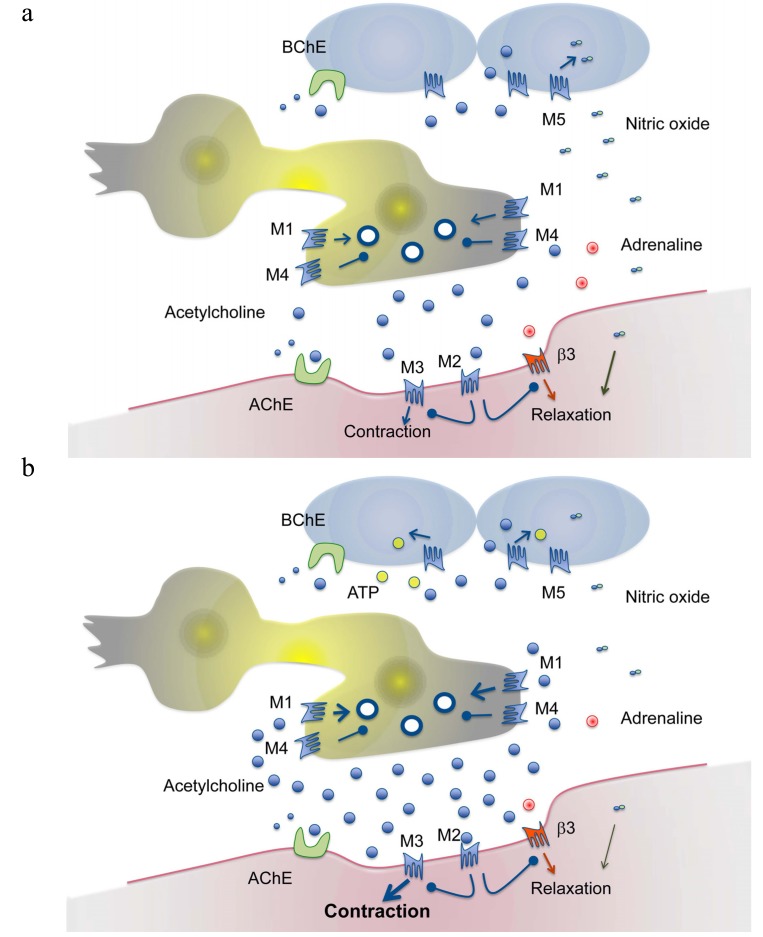
“These indirect roles are exerted by inhibition of relaxation evoked by β-adrenoceptors [61].”
Kim, Y., Yoshimura, N., Masuda, H., Miguel, F. D., & Chancellor, M. B. (2005) · Urology · doi:10.1016/j.urology.2004.11.021 · Cited by 107 · cited 1×
“However, even though it is well known that the administration of muscarinic antagonists inhibits the neuronal activity in bladder afferents [54], the specific effects of the muscarinic receptor subtypes in the local bladder afferent activation are unclear.”
Distribution of m2 muscarinic receptors in rat brain using antisera selective for m2 receptors.
Li, M., Yasuda, R. P., Wall, S. J., Wellstein, A., & Wolfe, B. B. (1991) · Molecular Pharmacology · doi:10.1016/s0026-895x(25)12846-0 · Cited by 107 · cited 1×
“Muscarinic M2 receptors occur both pre- and postsynaptically, and the receptor subtype occurs in high levels in the nucleus basalis, cerebellum, pons/medulla and thalamus/hypothalamus [85].”
Dobrzynski, H., Marples, D. D. R., Musa, H., Yamanushi, T. T., Hendersonxyl, Z., Takagishi, Y., Honjo, H., Kodama, I., & Boyett, M. R. (2001) · Journal of Histochemistry & Cytochemistry · doi:10.1177/002215540104901004 · Cited by 106 · cited 2×
“One way this effect of muscarinic M2 receptors is exerted is via potassium currents (IK(ACh)) that hyperpolarizes the membrane potential [76].”
Scarr, E. (2012) · CNS Neuroscience & Therapeutics · doi:10.1111/j.1755-5949.2011.00249.x · Cited by 105
Buckner, S. A., Milicic, I., Daza, A. V., Coghlan, M. J., & Gopalakrishnan, M. (2002) · British Journal of Pharmacology · doi:10.1038/sj.bjp.0704499 · Cited by 103
A Resurrection of 7-MEOTA: A Comparison with Tacrine
Soukup, O., Jun, D., Zdarova-Karasova, J., Patocka, J., Musilek, K., Korabecny, J., Krusek, J., Kaniakova, M., Sepsova, V., Mandikova, J., et al. (2013) · Current Alzheimer Research · doi:10.2174/1567205011310080011 · Cited by 101 · cited 1×
“References: a=[154] b=[155] c=[156] d=[157] e=[158] f=[159] g=[160] h=[161] i=[162] j=[163] k=[164] l=[165] m=[166] n=[167] o=[168] p=[169] q=[170] r=[171] s=[172] t=[173] u=[147] v=[174], w=[175] x=[176].”
Self-citationExpression of muscarinic and nicotinic acetylcholine receptors in the mouse urothelium
Zarghooni, S., Wunsch, J., Bodenbenner, M., Brüggmann, D., Grando, S. A., Schwantes, U., Wess, J., Kummer, W., & Lips, K. S. (2007) · Life Sciences · doi:10.1016/j.lfs.2007.01.046 · Cited by 97 · cited 1×
“The muscarinic M1 receptors occur on basal cells and muscarinic M2 receptors on umbrella cells, while muscarinic M3 and M4 receptors are homogenously distributed and muscarinic M5 receptors are distributed with a decreasing gradient from luminal to basal cells [49].”
Urinary bladder urothelium: Molecular sensors of chemical/thermal/mechanical stimuli
Birder, L. A. (2006) · Vascular Pharmacology · doi:10.1016/j.vph.2005.08.027 · Cited by 97 · cited 1×
“A number of substances may be released from the urothelium of which ATP seems to be of particular interest [55].”
Giglio, D., Ryberg, A. T., To, K., Delbro, D. S., & Tobin, G. (2005) · Autonomic Neuroscience · doi:10.1016/j.autneu.2005.07.005 · Cited by 96
Self-citationBroad, L. M., Zwart, R., Pearson, K. H., Lee, M. W., Wallace, L., McPhie, G. I., Emkey, R., Hollinshead, S. P., Dell, C. P., Baker, S., et al. (2006) · Journal of Pharmacology and Experimental Therapeutics · doi:10.1124/jpet.106.104505 · Cited by 96 · cited 1×
“Homomeric receptors consist of only α7-10 subunits, heteromeric of α2-6 and β2-4 subunits in a conserved 2:3 ratio [35].”
Muscarinic Receptor Subtypes in the Lower Urinary Tract
Giglio, D., & Tobin, G. (2009) · Pharmacology · doi:10.1159/000209255 · Cited by 94 · cited 3×
“Today it is well accepted that bladder contraction is almost solely caused by activation of muscarinic M3receptors, with slight influence of M2-receptors via indirect inhibition of adrenergic and purinergic induced detrusor relaxation [47].”
Self-citationGottwald, M. D., & Rozanski, R. I. (1999) · Expert Opinion on Investigational Drugs · doi:10.1517/13543784.8.10.1673 · Cited by 91
Cuomo, V., Cagiano, R., Brunello, N., Fumagalli, R., & Racagni, G. (1983) · Neuroscience Letters · doi:10.1016/0304-3940(83)90058-7 · Cited by 86
Tobin, G., & Sjögren, C. (1995) · European Journal of Pharmacology · doi:10.1016/0014-2999(95)00221-6 · Cited by 85 · cited 1×
“Regarding the neuronal activation of salivary glands, prejunctional muscarinic receptors modulate the parasympathetic nerve-evoked response [43].”
Self-citationLuo, W., Yu, Q., Kulkarni, S. S., Parrish, D. A., Holloway, H. W., Tweedie, D., Shafferman, A., Lahiri, D. K., Brossi, A. R., & Greig, N. H. (2006) · Journal of Medicinal Chemistry · doi:10.1021/jm050578p · Cited by 84 · cited 1×
“References: a=[154] b=[155] c=[156] d=[157] e=[158] f=[159] g=[160] h=[161] i=[162] j=[163] k=[164] l=[165] m=[166] n=[167] o=[168] p=[169] q=[170] r=[171] s=[172] t=[173] u=[147] v=[174], w=[175] x=[176].”
D’Agostino, G., Bolognesi, M. L., Lucchelli, A., Vicini, D., Balestra, B., Spelta, V., Melchiorre, C., & Tonini, M. (2000) · British Journal of Pharmacology · doi:10.1038/sj.bjp.0703080 · Cited by 84
Benchekroun, M., Bartolini, M., Egea, J., Romero, A., Soriano, E., Pudlo, M., Luzet, V., Andrisano, V., Jimeno, M. L., López, M. G., et al. (2014) · ChemMedChem · doi:10.1002/cmdc.201402409 · Cited by 80
Kummer, W., Wiegand, S., Akinci, S., Wessler, I., Schinkel, A., Wess, J., Koepsell, H., Haberberger, R., & Lips, K. (2006) · Respiratory Research · doi:10.1186/1465-9921-7-65 · Cited by 79
Gillberg, P., Sundquist, S., & Nilvebrant, L. (1998) · European Journal of Pharmacology · doi:10.1016/s0014-2999(98)00214-3 · Cited by 78
Glaucoma: a review of adjunctive therapy and new management strategies
Whitson, J. T. (2007) · Expert Opinion on Pharmacotherapy · doi:10.1517/14656566.8.18.3237 · Cited by 77 · cited 1×
“Examples of drugs exerting effects via intervention of the muscarinic receptor are pharmaceuticals employed in the treatment of the overactive urinary bladder, in obstructive pulmonary diseases and in the treatment of eye diseases [2].”
Pascuzzo, G. J., AKAIKE, A., Maleque, M. A., Shaw, K. P., Aronstam, R. S., Rickett, D. L., & Albuquerque, E. X. (1984) · Molecular Pharmacology · doi:10.1016/s0026-895x(25)14996-1 · Cited by 77
The secretion of amyloid β-peptides is inhibited in the tacrine-treated human neuroblastoma cells
Lahiri, D. K., Farlow, M. R., & Sambamurti, K. (1998) · Molecular Brain Research · doi:10.1016/s0169-328x(98)00236-8 · Cited by 76
Perry, E. K., Smith, C. J., COURT, J. A., Bonham, J. R., Rodway, M., & Atack, J. R. (1988) · Neuroscience Letters · doi:10.1016/0304-3940(88)90770-7 · Cited by 75 · cited 1×
“References: a=[154] b=[155] c=[156] d=[157] e=[158] f=[159] g=[160] h=[161] i=[162] j=[163] k=[164] l=[165] m=[166] n=[167] o=[168] p=[169] q=[170] r=[171] s=[172] t=[173] u=[147] v=[174], w=[175] x=[176].”
Craddock, T. J. A., Fritsch, P., Rice, M. A., del Rosario, R. M., Miller, D. B., Fletcher, M. A., Klimas, N. G., & Broderick, G. (2014) · PLoS ONE · doi:10.1371/journal.pone.0084839 · Cited by 75 · cited 1×
“However, in the treatment of glaucoma (local) or oral dryness as in Sjögren’s syndrome (systemic) pilocarpine may be prescribed for long-term use [90].”
THE RELEASE OF ACETYLCHOLINE FROM MAMMALIAN MOTOR NERVE ENDINGS
Straughan, D. W. (1960) · British Journal of Pharmacology and Chemotherapy · doi:10.1111/j.1476-5381.1960.tb01266.x · Cited by 75
Quantitation of mRNAs for M1 to M5Subtypes of Muscarinic Receptors in Rat Heart and Brain Cortex
Krejčí, A., & Tuček, S. (2002) · Molecular Pharmacology · doi:10.1124/mol.61.6.1267 · Cited by 75
Gallo, M. P., Alloatti, G., Eva, C. E., Oberto, A., & Levi, R. C. (1993) · The Journal of Physiology · doi:10.1113/jphysiol.1993.sp019890 · Cited by 74 · cited 1×
“A muscarinic M1 receptor effect has been suggested to be mediated via PLC-dependent mechanisms that enhance L-type Cachannels [80].”
Non-quantal acetylcholine release at the neuromuscular junction
Vyskočil, F., Malomouzh, A. I., & Nikolsky, E. E. (2009) · Physiological Research · doi:10.33549/physiolres.931865 · Cited by 72
Spilovska, K., Korabecny, J., Kral, J., Horova, A., Musilek, K., Soukup, O., Drtinova, L., Gazova, Z., Siposova, K., & Kuca, K. (2013) · Molecules · doi:10.3390/molecules18022397 · Cited by 72
Self-citationNicotinic Receptors, Amyloid-β, and Synaptic Failure in Alzheimer’s Disease
Jürgensen, S., & Ferreira, S. T. (2009) · Journal of Molecular Neuroscience · doi:10.1007/s12031-009-9237-0 · Cited by 71
Nicotinic acetylcholine receptor subunits and receptor activity in the epithelial cell line HT29
Summers, A. E., Whelan, C. J., & Parsons, M. (2003) · University of Hertfordshire Research Archive (University of Hertfordshire) · doi:10.1016/s0024-3205 · Cited by 71
Bailey, J. A., Ray, B., Greig, N. H., & Lahiri, D. K. (2011) · PLoS ONE · doi:10.1371/journal.pone.0021954 · Cited by 69
Andersson, M. C., Tobin, G., & Giglio, D. (2008) · British Journal of Pharmacology · doi:10.1038/bjp.2008.6 · Cited by 68
Self-citationLuo, W., Li, Y., He, Y., Huang, S., Li, D., Gu, L., & Huang, Z. (2011) · European Journal of Medicinal Chemistry · doi:10.1016/j.ejmech.2011.03.058 · Cited by 67
Antimuscarinics and overactive bladder: other mechanism of action
Yamaguchi, O. (2009) · Neurourology and Urodynamics · doi:10.1002/nau.20796 · Cited by 67 · cited 1×
“rationale for anticholinergic treatment of overactive bladder is via blockade of muscarinic receptors, the effect is likely exerted at more levels than merely by antagonizing receptors in the detrusor [95].”
Marchi, M., & Grilli, M. (2010) · Progress in Neurobiology · doi:10.1016/j.pneurobio.2010.06.004 · Cited by 66 · cited 1×
“The nicotinic-evoked release of transmitter can be both positively and negatively modulated by interactions with metabotropic and ionotropic receptors [36].”
Nicotinic Cholinergic Modulation: Galantamine as a Prototype
Woodruff‐Pak, D. S., Lander, C., & Geerts, H. (2002) · CNS Drug Reviews · doi:10.1111/j.1527-3458.2002.tb00237.x · Cited by 63 · cited 1×
“References: a=[154] b=[155] c=[156] d=[157] e=[158] f=[159] g=[160] h=[161] i=[162] j=[163] k=[164] l=[165] m=[166] n=[167] o=[168] p=[169] q=[170] r=[171] s=[172] t=[173] u=[147] v=[174], w=[175] x=[176].”
Kobayashi, S., Ikeda, K., & Miyata, K. (2003) · Life Sciences · doi:10.1016/j.lfs.2003.07.019 · Cited by 63 · cited 1×
“Competitive inhibition of [(3)H]NMS [149] and [(3)H]imidafenacin [96d] binding by muscarinic antagonists in homogenates of human bladder and parotid gland and c of carbacholinduced Ca mobilization in bladder and submandibular gland cells from Cynomolgus monkeys [150].”
Review article: Management of acute severe and near‐fatal asthma
Holley, A., & Boots, R. J. (2009) · Emergency Medicine Australasia · doi:10.1111/j.1742-6723.2009.01195.x · Cited by 62
Muscarinic Agonists and Antagonists: Effects on the Urinary Bladder
Sellers, D., & Chess‐Williams, R. (2011) · Handbook of experimental pharmacology · doi:10.1007/978-3-642-23274-9_16 · Cited by 61 · cited 1×
“for inducing mydriasis, counteracting cycloplegia and as asthma inhalation treatment [88, 90b], they are applied systemically in the treatment of certain diseases and conditions such as for resuscitation purposes via inhibition of bradycardia and for relief of postprandial discomfort [82, 87, 94].”
Muscarinic control of airway function
Zaagsma, J., Roffel, A. F., & Meurs, H. (1997) · Life Sciences · doi:10.1016/s0024-3205(97)00048-9 · Cited by 61 · cited 2×
“Both facilitatory and inhibitory prejunctional muscarinic receptors regulate the parasympathetic transmission [62].”
Takada‐Takatori, Y., Kume, T., Izumi, Y., Ohgi, Y., Niidome, T., Fujii, T., Sugimoto, H., & Akaike, A. (2009) · Biological and Pharmaceutical Bulletin · doi:10.1248/bpb.32.318 · Cited by 60 · cited 1×
“Nicotinic receptors in the CNS are commonly linked to neurodegenerative diseases such as Alzheimer ́s and Parkinson’s disease [38].”
Therapeutic options in autoimmune myasthenia gravis
García‐Carrasco, M., Escarcega, R. O., Fuentes-Alexandro, S. A., Riebeling, C., & Cervera, R. (2007) · Autoimmunity Reviews · doi:10.1016/j.autrev.2007.01.001 · Cited by 60 · cited 1×
“Although possessing one quarter of the potency of neostigmine, pyridostigmine is the drug of choice also due to its long duration of action (6 h) and fewer gastrointestinal side effects [143].”
Cholinergic drugs potentiate human nicotinic α4β2 acetylcholine receptors by a competitive mechanism
Smulders, C., Zwart, R., Bermúdez, I., van Kleef, R. G. D. M., Groot‐Kormelink, P. J., & Vijverberg, H. P. M. (2005) · European Journal of Pharmacology · doi:10.1016/j.ejphar.2004.12.037 · Cited by 59
Muscarinic receptor agonists and antagonists
Zlotos, D. P., Bender, W., & Holzgrabe, U. (1999) · Expert Opinion on Therapeutic Patents · doi:10.1517/13543776.9.8.1029 · Cited by 59
Clarke, P. B. S., Reuben, M., & El-Bizri, H. (1994) · British Journal of Pharmacology · doi:10.1111/j.1476-5381.1994.tb14793.x · Cited by 58 · cited 1×
“References: a=[154] b=[155] c=[156] d=[157] e=[158] f=[159] g=[160] h=[161] i=[162] j=[163] k=[164] l=[165] m=[166] n=[167] o=[168] p=[169] q=[170] r=[171] s=[172] t=[173] u=[147] v=[174], w=[175] x=[176].”
Evidence for prejunctional M2 muscarinic receptors in pulmonary cholinergic nerves in the rat
Aas, P., & Maclagan, J. (1990) · British Journal of Pharmacology · doi:10.1111/j.1476-5381.1990.tb12091.x · Cited by 56 · cited 1×
“However, most reports claim the inhibitory receptors to be of the M2 subtype, even though some animal studies propose the prejunctional receptors to be of the M4 subtype [64].”
Maruyama, S., Oki, T., Otsuka, A., Shinbo, H., Ozono, S., Kageyama, S., Mikami, Y., Araki, I., Takeda, M., Masuyama, K., et al. (2005) · The Journal of Urology · doi:10.1016/s0022-5347(05)00017-0 · Cited by 56 · cited 1×
“Competitive inhibition of [(3)H]NMS [149] and [(3)H]imidafenacin [96d] binding by muscarinic antagonists in homogenates of human bladder and parotid gland and c of carbacholinduced Ca mobilization in bladder and submandibular gland cells from Cynomolgus monkeys [150].”
Nelson, C. P., Gupta, P., Napier, C. M., Nahorski, S. R., & Challiss, R. A. J. (2004) · Journal of Pharmacology and Experimental Therapeutics · doi:10.1124/jpet.104.067140 · Cited by 56 · cited 1×
“When examining the affinity of the antimuscarinic drugs, most of them have greatest affinity for muscarinic M3 receptors with some exceptions such as imidafenacin and tolterodine [96].”
Alberts, P. (1995) · Journal of Pharmacology and Experimental Therapeutics · doi:10.1016/s0022-3565(25)10643-5 · Cited by 56 · cited 1×
“However, some reports indicate that the inhibitory subtype may be the muscarinic M4 receptor [47, 52].”
Both M1 and M3 receptors regulate exocrine secretion by mucous acini
Culp, D. J., Luo, W., Richardson, L., Watson, G. E., & Latchney, L. R. (1996) · American Journal of Physiology-Cell Physiology · doi:10.1152/ajpcell.1996.271.6.c1963 · Cited by 55 · cited 1×
“However, all subtypes have been described in salivary glands [40] and data from studies in several animal models have indicated that in particular muscarinic M1 receptors also contribute to the secretory response to muscarinic receptor stimulation [41].”
From Pyridinium-based to Centrally Active Acetylcholinesterase Reactivators
Korábečný, J., Soukup, O., Doležal, R., Špilovská, K., Nepovimová, E., Andrš, M., Nguyen, T., Jun, D., Musílek, K., Kučerová-Chlupáčová, M., et al. (2014) · Mini-Reviews in Medicinal Chemistry · doi:10.2174/1389557514666140219103138 · Cited by 55
Self-citationMuscarinic Receptor Agonists and Antagonists: Effects on Ocular Function
Mitchelson, F. J. (2011) · Handbook of experimental pharmacology · doi:10.1007/978-3-642-23274-9_12 · Cited by 53
D’Agostino, G., Barbieri, A., Chiossa, E., & Tonini, M. (1997) · Journal of Pharmacology and Experimental Therapeutics · doi:10.1016/s0022-3565(24)37044-2 · Cited by 53
Suppression of transmitter release at the neuromuscular junction
Katz, B., & Miledi, R. (1977) · Proceedings of the Royal Society B Biological Sciences · doi:10.1098/rspb.1977.0051 · Cited by 53 · cited 1×
“The quantal release was first described for the neuromuscular junction, but is typical for neuronal transmission [19].”
Baum, B. J., & Wellner, R. B. (1999) · KARGER eBooks · doi:10.1159/000061125 · Cited by 52 · cited 1×
“The increase in salivary flow evoked by activation of muscarinic receptors has generally been attributed to effects via muscarinic M3 receptors [39].”
In vitro modulation of bovine caudate muscarinic receptor number by organophosphates and carbamates
VOLPE, L., Biagioni, T. M., & Marquis, J. K. (1985) · Toxicology and Applied Pharmacology · doi:10.1016/0041-008x(85)90286-8 · Cited by 52 · cited 1×
“References: a=[154] b=[155] c=[156] d=[157] e=[158] f=[159] g=[160] h=[161] i=[162] j=[163] k=[164] l=[165] m=[166] n=[167] o=[168] p=[169] q=[170] r=[171] s=[172] t=[173] u=[147] v=[174], w=[175] x=[176].”
Therapeutic efficacy of HI-6 in soman-poisoned marmoset monkeys
van Helden, H. P. M., Wiel, H. J. V. D., de Lange, J., Busker, R. W., Melchers, B. P. C., & Wolthuis, O. L. (1992) · Toxicology and Applied Pharmacology · doi:10.1016/0041-008x(92)90366-z · Cited by 51
Greig, N. H., Reale, M., & Tata, A. M. (2013) · Recent Patents on CNS Drug Discovery · doi:10.2174/1574889811308020003 · Cited by 51
Mansfield, K. J., Chandran, J. J., Vaux, K. J., Millard, R. J., Christopoulos, A., Mitchelson, F. J., & Burcher, E. (2008) · Journal of Pharmacology and Experimental Therapeutics · doi:10.1124/jpet.108.145508 · Cited by 51
Kobayashi, F., Yageta, Y., Yamazaki, T., Wakabayashi, E., Inoue, M., Segawa, M., & Matsuzawa, S. (2011) · Arzneimittelforschung · doi:10.1055/s-0031-1296598 · Cited by 51
Winter, M., Wille, T., Musílek, K., Kuča, K., Thiermann, H., & Worek, F. (2015) · Toxicology Letters · doi:10.1016/j.toxlet.2015.07.007 · Cited by 48 · cited 1×
“References: a=[154] b=[155] c=[156] d=[157] e=[158] f=[159] g=[160] h=[161] i=[162] j=[163] k=[164] l=[165] m=[166] n=[167] o=[168] p=[169] q=[170] r=[171] s=[172] t=[173] u=[147] v=[174], w=[175] x=[176].”
Triple Inhaled Drug Protocol for the Treatment of Acute Severe Asthmaa
Rodrigo, G. J., & Rodrigo, C. (2003) · CHEST Journal · doi:10.1378/chest.123.6.1908 · Cited by 48 · cited 1×
“However, β2-agonists are generally superior in improving airflow in acute asthma when compared with anticholinergics [107].”
Sarriá, B., Naline, E., Zhang, Y., Cortijo, J., Molimard, M., Moreau, J., Thérond, P., Advenier, C., & Morcillo, E. J. (2002) · American Journal of Physiology-Lung Cellular and Molecular Physiology · doi:10.1152/ajplung.00084.2002 · Cited by 48 · cited 1×
“Furthermore, the selectivity for muscarinic M3 over M2 receptors may even be disadvantageous in view of the muscarinic M2 receptor inhibiting adrenergic relaxation [112].”
Muscarinic acetylcholine receptor subtypes expressed by mouse bladder afferent neurons
Nandigama, R., Bonitz, M., Papadakis, T., Schwantes, U., Bschleipfer, T., & Kummer, W. (2010) · Neuroscience · doi:10.1016/j.neuroscience.2010.04.012 · Cited by 48
Role of M2 muscarinic receptors in airway smooth muscle contraction
Hirshman, C. A., Lande, B., & Croxton, T. L. (1999) · Life Sciences · doi:10.1016/s0024-3205(98)00586-4 · Cited by 47
Acetylcholinesterase inhibitor treatment for myasthenia gravis
Mehndiratta, M. M., Pandey, S., & Küntzer, T. (2011) · Cochrane Database of Systematic Reviews · doi:10.1002/14651858.cd006986.pub2 · Cited by 47 · cited 1×
“Even though no randomised controlled trial has been conducted on the use of the inhibitors, pyridostigmine seems to be better tolerated and more widely used than neostigmine [142].”
Deprenyl selectively inhibits 3H-MPTP binding sites in monkey brain
DEL ZOMPO, M., Zuddas, A., Pintus, S., & Corsini, G. U. (1985) · UNICA IRIS Institutional Research Information System (University of Cagliari) · doi:10.1016/0014-2999 · Cited by 47
Acetylcholinesterase inhibitors in MG: To be or not to be?
Punga, A. R., & Stålberg, E. (2009) · Muscle & Nerve · doi:10.1002/mus.21319 · Cited by 46
Butyrylcholinesterase and the control of synaptic responses in acetylcholinesterase knockout mice
Girard, E., Bernard, V., Vidić, J., Chatonnet, A., Krejci, É., & Molgó, J. (2007) · Life Sciences · doi:10.1016/j.lfs.2007.03.011 · Cited by 45 · cited 1×
“In the synaptic cleft, acetylcholine is metabolized by AChE within milliseconds after its release from the nerve, forming choline and acetic acid [27].”
Beaumont, M., Batéjat, D., Coste, O., Doireau, P., Chauffard, F., Enslen, M., Lagarde, D., & Pierard, C. (2005) · Neuropsychobiology · doi:10.1159/000082851 · Cited by 45 · cited 1×
“The delay of the release is minimized by a large number of calcium channels being accessible close to the active zone [20].”
Kitazawa, T., Asakawa, K., Nakamura, T., Teraoka, H., Unno, T., Komori, S., Yamada, M., & Wess, J. (2009) · Journal of Pharmacology and Experimental Therapeutics · doi:10.1124/jpet.109.153304 · Cited by 45
Hodge, A. S., Humphrey, D. R., & Rosenberry, T. L. (1992) · Molecular Pharmacology · doi:10.1016/s0026-895x(25)09170-9 · Cited by 45 · cited 1×
“Ambenonium is an interesting compound with the highest affinity to the AChE, despite the fact that it forms only non-covalent bounds [145].”
Muscarinic Agonists and Antagonists: Effects on Gastrointestinal Function
Ehlert, F. J., Pak, K. J., & Griffin, M. T. (2011) · Handbook of experimental pharmacology · doi:10.1007/978-3-642-23274-9_15 · Cited by 44 · cited 2×
“for inducing mydriasis, counteracting cycloplegia and as asthma inhalation treatment [88, 90b], they are applied systemically in the treatment of certain diseases and conditions such as for resuscitation purposes via inhibition of bradycardia and for relief of postprandial discomfort [82, 87, 94].”
Tobin, G., Ekström, J., Bloom, S. R., & Edwards, A. V. (1991) · The Journal of Physiology · doi:10.1113/jphysiol.1991.sp018598 · Cited by 44
Self-citationDonepezil modulates nicotinic receptors of substantia nigra dopaminergic neurones
Angelantonio, S. D., Bernardi, G., & Mercuri, N. B. (2004) · British Journal of Pharmacology · doi:10.1038/sj.bjp.0705660 · Cited by 43 · cited 1×
“References: a=[154] b=[155] c=[156] d=[157] e=[158] f=[159] g=[160] h=[161] i=[162] j=[163] k=[164] l=[165] m=[166] n=[167] o=[168] p=[169] q=[170] r=[171] s=[172] t=[173] u=[147] v=[174], w=[175] x=[176].”
Altered Cardiovascular Responses in Mice Lacking the M1 Muscarinic Acetylcholine Receptor
Hardouin, S. N., Richmond, K. N., Zimmerman, A., Hamilton, S. E., Feigl, E. O., & Nathanson, N. M. (2002) · Journal of Pharmacology and Experimental Therapeutics · doi:10.1124/jpet.301.1.129 · Cited by 43
Putative mechanisms of action of tacrine in Alzheimer's disease
Adem, A. (1992) · Acta Neurologica Scandinavica · doi:10.1111/j.1600-0404.1992.tb04458.x · Cited by 43
Afferent Mechanism in the Urinary Tract
Kanai, A. (2011) · Handbook of experimental pharmacology · doi:10.1007/978-3-642-16499-6_9 · Cited by 43
Soukup, O., Jun, D., Tobin, G., & Kuča, K. (2012) · Archives of Toxicology · doi:10.1007/s00204-012-0977-1 · Cited by 41
Self-citationTobin, G. (1995) · Journal of Autonomic Pharmacology · doi:10.1111/j.1474-8673.1995.tb00410.x · Cited by 40
Self-citationTobin, G., & Sjögren, C. (1998) · Journal of the Autonomic Nervous System · doi:10.1016/s0165-1838(97)00128-8 · Cited by 39
Self-citationAvailable, N. A. N., Available, N. A. N., Available, N. A. N., Available, N. A. N., & Available, N. A. N. (2001) · Naunyn-Schmiedeberg s Archives of Pharmacology · doi:10.1007/s002100000382 · Cited by 36 · cited 1×
“References: a=[154] b=[155] c=[156] d=[157] e=[158] f=[159] g=[160] h=[161] i=[162] j=[163] k=[164] l=[165] m=[166] n=[167] o=[168] p=[169] q=[170] r=[171] s=[172] t=[173] u=[147] v=[174], w=[175] x=[176].”
Autonomic Control of Salivary Blood Flow
Edwards, A. V. (1998) · KARGER eBooks · doi:10.1159/000061091 · Cited by 36
Horn, G., Wille, T., Musílek, K., Kuča, K., Thiermann, H., & Worek, F. (2014) · Archives of Toxicology · doi:10.1007/s00204-014-1288-5 · Cited by 36 · cited 1×
“References: a=[154] b=[155] c=[156] d=[157] e=[158] f=[159] g=[160] h=[161] i=[162] j=[163] k=[164] l=[165] m=[166] n=[167] o=[168] p=[169] q=[170] r=[171] s=[172] t=[173] u=[147] v=[174], w=[175] x=[176].”
Musílek, K., Komlóová, M., Holas, O., Hrabinová, M., Pohanka, M., Dohnal, V., Nachon, F., Doležal, M., & Kuča, K. (2010) · European Journal of Medicinal Chemistry · doi:10.1016/j.ejmech.2010.12.011 · Cited by 35
Komlóová, M., Musílek, K., Doležal, M., Gunn‐Moore, F. J., & Kuča, K. (2010) · Current Medicinal Chemistry · doi:10.2174/092986710791111198 · Cited by 35
Interaction of Nerve Agent Antidotes with Cholinergic Systems
Soukup, O., Tobin, G., Killi, U. K., Binder, J., Proška, J., Jun, D., Fusek, J., & Kuča, K. (2010) · Current Medicinal Chemistry · doi:10.2174/092986710791111260 · Cited by 35 · cited 3×
“However, muscarinic and nicotinic receptor antagonism has been suggested [92].”
InfluentialSelf-citationNontoxic and Neuroprotective β-Naphthotacrines for Alzheimer’s Disease
Esquivias-Pérez, M., Maalej, E., Romero, A., Chabchoub, F., Samadi, A., Marco, J. L., & Oset‐Gasque, M. J. (2013) · Chemical Research in Toxicology · doi:10.1021/tx400138s · Cited by 34
The non-neuronal cholinergic system as novel drug target in the airways
Pieper, M. P. (2012) · Life Sciences · doi:10.1016/j.lfs.2012.08.030 · Cited by 34 · cited 1×
“In addition to the smooth muscle expression of muscarinic receptors, mucosal glands also exhibit muscarinic receptors and likewise the M3 subtype mediates the main secretory response [65].”
Clozapine: Agonistic and Antagonistic Salivary Secretory Actions
Ekström, J., Godoy, T., & Riva, A. (2010) · Journal of Dental Research · doi:10.1177/0022034509356055 · Cited by 33
Adem, A., Mohammed, A. K., & Winblad, B. G. (1990) · Journal of Neural Transmission - Parkinsons Disease and Dementia Section · doi:10.1007/bf02260899 · Cited by 32
Kuča, K., Musílek, K., Jun, D., Pohanka, M., Ghosh, K. K., & Hrabinová, M. (2010) · Journal of Enzyme Inhibition and Medicinal Chemistry · doi:10.3109/14756360903357569 · Cited by 32 · cited 1×
“However, due to its higher toxicity, a replacement of obidoxime would be beneficial and the oxime K027 seems to be a rather promising candidate [117].”
Self-citationPeyter, A., Muehlethaler, V., Liaudet, L., Marino, M., Bernardo, S. D., Diaceri, G., & Tolsa, J. (2008) · American Journal of Physiology-Lung Cellular and Molecular Physiology · doi:10.1152/ajplung.00264.2007 · Cited by 31 · cited 1×
“Muscarinic M1 receptors have been discussed in this context and have been proposed to have a key role in pulmonary vascular dysfunction [69].”
Distribution and function of muscarinic receptor subtypes in the ovine submandibular gland
Tobin, G., Ryberg, A. T., Gentle, S., & Edwards, A. V. (2005) · Journal of Applied Physiology · doi:10.1152/japplphysiol.00779.2005 · Cited by 29
Self-citationAcute Colonic Pseudo-Obstruction: Rapid Correction with Neostigmine in the Emergency Department
McNamara, R. M., & Mihalakis, M. J. (2008) · Journal of Emergency Medicine · doi:10.1016/j.jemermed.2007.06.043 · Cited by 29 · cited 1×
“Neostigmine is used mainly for reversing neuromuscular blockade, but may be used in other conditions as well such as in colonic pseudo-obstructive conditions [144].”
Bockman, C. S., Bradley, M. E., Dang, H. K., Zeng, W., Scofield, M. A., & Dowd, F. J. (2001) · Journal of Pharmacology and Experimental Therapeutics · doi:10.1016/s0022-3565(24)29590-2 · Cited by 28
Cholinesterase inhibitors: new roles and therapeutic alternatives
Giacobini, E. (2004) · Pharmacological Research · doi:10.1016/s1043-6618(04)00085-4 · Cited by 28
The detection of the non-M2 muscarinic receptor subtype in the rat heart atria and ventricles
Mysliveček, J., Klein, M., Nováková, M., & Říčný, J. (2008) · Naunyn-Schmiedeberg s Archives of Pharmacology · doi:10.1007/s00210-008-0285-8 · Cited by 27 · cited 1×
“However, studies in a number of different species including man, indicate the expression of other subtypes, in particular in the ventricles [73].”
Update on the treatment of overactive bladder
Dmochowski, R. R., & Gomelsky, A. (2011) · Current Opinion in Urology · doi:10.1097/mou.0b013e3283468da3 · Cited by 26
Nascimento, J. H. M., Sallé, L., Hoebeke, J., Argibay, J. A., & Peineau, N. (2001) · American Journal of Physiology-Cell Physiology · doi:10.1152/ajpcell.2001.281.4.c1251 · Cited by 26
Activation of muscarinic receptors by non-neuronal acetylcholine.
Wessler, I., & Kirkpatrick, C. (2012) · Handbook of Experimental Pharmacology · doi:10.1007/978-3-642-23274-9_20 · Cited by 25 · cited 1×
“However, today two sources of acetylcholine synthesis are recognized – neurons and non-neuronal tissues [11].”
Functional M3 cholinoreceptors are present in pacemaker and working myocardium of murine heart
Валерьевич, А. Д., Tapilina, S. V., Sukhova, G. S., Nikolsky, E. E., & Faritovich, N. L. (2012) · Pflügers Archiv - European Journal of Physiology · doi:10.1007/s00424-012-1075-1 · Cited by 25 · cited 1×
“Of these other subtypes, most interest has been given to muscarinic M1 and M3 receptors [74].”
Endogenous nitric oxide influences acetylcholine-induced bronchovascular dilation in sheep
Sasaki, F., Paré, P. D., Ernest, D., Bai, T. R., Verburgt, L., March, R., & Baile, E. M. (1995) · Journal of Applied Physiology · doi:10.1152/jappl.1995.78.2.539 · Cited by 25 · cited 1×
“This may in turn cause endothelial release of nitric oxide [68].”
Prejunctional muscarinic receptors regulating neurotransmitter release in airways
Kilbinger, H. J., von Bardeleben, R. S., Siefken, H., & Wolf, D. (1995) · Life Sciences · doi:10.1016/0024-3205(95)00037-7 · Cited by 24 · cited 1×
“However, it is still not clarified if these latter receptors are of the muscarinic M2 or the M4 receptor subtype in humans, even though animal experiments indicate the receptors to be of the latter subtype [111].”
Tobin, G. (1998) · Journal of the Autonomic Nervous System · doi:10.1016/s0165-1838(98)00088-5 · Cited by 24
Self-citationPérez, C. C. N., Tobar, I. D. B., Jiménez, E., Castañeda, D., Rivero, M. B., Concepción, J. L., Chiurillo, M. Á., & Bonfante-Cabarcas, R. A. (2006) · Pharmacological Research · doi:10.1016/j.phrs.2006.07.001 · Cited by 23
Ekström, J., Garrett, J. R., Månsson, B., & Tobin, G. (1988) · The Journal of Physiology · doi:10.1113/jphysiol.1988.sp017241 · Cited by 23
Self-citationOxime Reactivators and Their in Vivo and in Vitro Effects on Nicotinic Receptors
Soukup, O., Krůšek, J., Kaniaková, M., KUMAR, U. K., Öz, M., Jun, D., Fusek, J., Kuča, K., & Tobin, G. (2011) · Physiological Research · doi:10.33549/physiolres.932105 · Cited by 23 · cited 1×
“References: a=[154] b=[155] c=[156] d=[157] e=[158] f=[159] g=[160] h=[161] i=[162] j=[163] k=[164] l=[165] m=[166] n=[167] o=[168] p=[169] q=[170] r=[171] s=[172] t=[173] u=[147] v=[174], w=[175] x=[176].”
Self-citation
Research works printed but not linked: 2
- [93]Marrs T.C. Organophosphate poisoning. Pharmacol. Ther. 1993 58 1 51 66 [http://dx.doi.org/10.1016/0163-7258(93)90066-M]. [PMID: 8415873]. 8415873 · DOI · Paper page
- [143]Garcia-Carrasco M. Escarcega R.O. Fuentes-Alexandro S. Riebeling C. Cervera R. Therapeutic options in autoimmune myasthenia gravis. Autoimmun. Rev. 2007 6 6 373 378 [http:// dx.doi.org/10.1016/j.autrev.2007.01.001]. [PMID: 17537383]. 17537383 · DOI
Cited by
Natural cholinesterase inhibitors from marine organisms
Moodie, L. W. K., Sepčić, K., Turk, T., Frangež, R., & Svenson, J. (2019) · Natural Product Reports · doi:10.1039/c9np00010k · Cited by 111
Current status of muscarinic M1 and M4 receptors as drug targets for neurodegenerative diseases
Felder, C. C., Goldsmith, P. J., Jackson, K. A., Sanger, H., Evans, D. A. P., Mogg, A. J., & Broad, L. M. (2018) · Neuropharmacology · doi:10.1016/j.neuropharm.2018.01.028 · Cited by 100
Anticholinergic medication: Related dry mouth and effects on the salivary glands
Arany, S., Kopycka‐Kędzierawski, D. T., Caprio, T. V., & Watson, G. E. (2021) · Oral Surgery Oral Medicine Oral Pathology and Oral Radiology · doi:10.1016/j.oooo.2021.08.015 · Cited by 105
Morozova, V., Cohen, L. S., Makki, A. E.-H., Shur, A., Pilar, G., El Idrissi, A., & Alonso, A. D. (2019) · Frontiers in Cellular Neuroscience · doi:10.3389/fncel.2019.00403 · Cited by 63
Pronin, A. N., Wang, Q., & Slepak, V. Z. (2017) · Molecular Pharmacology · doi:10.1124/mol.117.109678 · Cited by 58
“Receptors of acetylcholine and proteins involved in its synthesis, secretion and degradation are established targets for pharmacological intervention (reviews (Kruse et al., 2014b; Soukup et al., 2017; Wess, 2004)).”
Metadata
- Authors
- Soukup, O., Winder, M., Killi, U. K., Wsol, V., Jun, D., Kuca, K., & Tobin, G.
- Affiliations
- University of Gothenburg (SE)
- Charles University (CZ)
- University Hospital Hradec Králové (CZ)
- Corresponding author
- Tobin, Gunnar
- Venue
- Current Neuropharmacology
- Publisher
- Bentham Science Publishers Ltd.
- Published
- 2017-04-11
- Volume
- 15
- Issue
- 4
- Pages
- 637-653
- ISSN
- 1570-159X (ISSN-L)
- PMC
- PMC5543679
- OpenAlex
- W2413641555
- Cited by
- 34
- References
- 239
- Citations by year
- 2026: 2 · 2025: 4 · 2024: 4 · 2023: 1 · 2022: 5 · 2021: 5 · 2020: 5 · 2019: 5 · 2018: 1 · 2017: 1
- FWCI
- 0.21
- Type
- journal article
- Language
- en
- Open access
- bronze
- doi.org
- Locations
- Current Neuropharmacology (publishedVersion)
- PubMed Central (publishedVersion, cc-by-nc)
- PubMed (publishedVersion)
- Funders
- Fakultní nemocnice Hradec Králové (00179906)
- European Regional Development Fund (ED2.1.00/03.0078)
- National Institute of Mental Health (ED2.1.00/03., ED2.1.00/03.0078)
- Topics
- Life Sciences › Biochemistry, Genetics and Molecular Biology › Molecular Biology › Receptor Mechanisms and Signaling
- Health Sciences › Medicine › Pharmacology (medical) › Cholinesterase and Neurodegenerative Diseases
- Life Sciences › Biochemistry, Genetics and Molecular Biology › Molecular Biology › Nicotinic Acetylcholine Receptors Study
- Keywords
- acetylcholinesterase inhibitors, muscarinic receptors, muscarinic receptor subtypes, cholinergic neurotransmission, antimuscarinic agents, acetylcholine, salivary glands, respiratory tract, lower urinary tract, M2 muscarinic receptor, M3 muscarinic receptor, pesticide poisoning, adverse drug reactions, receptor selectivity
- MeSH terms
- Animals, Cholinesterase Inhibitors, Humans, Receptors, Muscarinic, Receptor Cross-Talk
About these checks
Registry, retraction, Cites and statistics results are computed, not judged, with one exception: a printed reference that no index lists is read once by a model before it counts as a citation error. Claims are extracted by a model and kept only when their quote appears verbatim in the text; each cited source is then checked, with a model’s help, for whether it says what the claim relies on. Those verdicts can be wrong — read the claim’s quote and the cited source before relying on one.
Statistics and arithmetic are recomputed, not judged.
Confidence bands are shown only for fields calibrated on our annotated test set. None is calibrated yet, so no band is shown.
What counts as a claim ›How we measure confidence ›How we check this ›
Are you an author, or do you see a problem with this page? Request a review
Data sources
Bibliographic data: Semantic Scholar, OpenAlex, Crossref.
Contains information from the Semantic Scholar Academic Graph Datasets, made available under the ODC Attribution License (ODC-BY 1.0).
Semantic Scholar’s data is described in: Kinney, R., et al. (2023). The Semantic Scholar Open Data Platform. arXiv:2301.10140.
