

Regional Influence of Cannabinoid CB1 Receptors in the Regulation of Ethanol Self-Administration by Wistar Rats
Open accessThe DOI matches its Crossref record; 67 of the 67 references it cites were found in a registry or an index.
Abstract
receptors in the NAC and posterior VTA, but not anterior VTA and mPFC in the regulation of ethanol self-administration behavior by outbred Wistar rats.
Overview
The claims and statistics of this paper haven’t been checked yet.
Free: it reads the open-access text and checks the first 5 claims that cite a source we can check. Create a free account to check every claim.
Integrity signals
Registry
Cites
Statistics
Figures
Verification
Claims the paper makes
The claims and statistics of this paper haven’t been checked yet.
Free: it reads the open-access text and checks the first 5 claims that cite a source we can check. Create a free account to check every claim.
Claims other papers make about this one
Each is checked against this paper’s own text: does it say what the citing paper says it does?
The source backs part of the claim, not all of it — or backs it for a different population, condition or comparison.
In the citing paper
“For alcohol, chronic alcohol exposure increases brain 2-AG (Caillé et al., 2007;Alvarez-Jaimes et al., 2009) and N-arachidonoylethanolamine (AEA), particularly in basal forebrain areas, in rodents (González et al., 2004;Vinod et al., 2006), but decreases in both 2-AG and AEA were observed in the CeA during withdrawal (Serrano et al., 2018).”
From Drug Addiction: Hyperkatifeia/Negative Reinforcement as a Framework for Medications Development (2021) · cites this paper as Alvarez-Jaimes et al., 2009
Experimental — accuracy not yet measured
Self-check
Percentages, sums and reported differences re-computed from the paper’s own numbers.
The self-check needs the paper’s full text.
Citations
Cites
The Rat Brain in Stereotaxic Coordinates
(1982) · Elsevier eBooks · doi:10.1016/c2009-0-63235-9 · Cited by 51,963
Herkenham, M., Lynn, A., Johnson, M., Melvin, L., de Costa, B., & Rice, K. (1991) · The Journal of Neuroscience · doi:10.1523/jneurosci.11-02-00563.1991 · Cited by 2,159
Drugs of abuse: anatomy, pharmacology and function of reward pathways
Koob, G. F. (1992) · Trends in Pharmacological Sciences · doi:10.1016/0165-6147(92)90060-j · Cited by 2,070 · cited 1×
“The NAC is an important region for the mediation of the rewarding properties of EtOH [45-47] and evidence suggests that EtOH-induced increases in NAC dopamine signaling contributes to the rewarding properties of EtOH [48-51].”
Role of Endogenous Cannabinoids in Synaptic Signaling
FREUND, T. F., KATONA, I., & PIOMELLI, D. (2003) · Physiological Reviews · doi:10.1152/physrev.00004.2003 · Cited by 1,574 · cited 1×
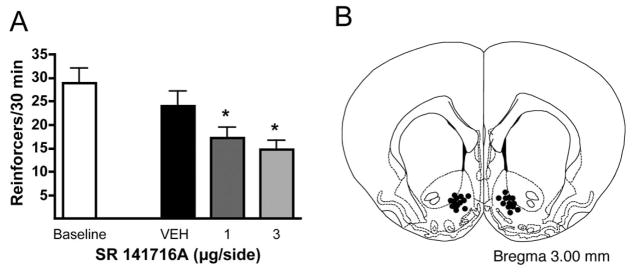
“…infusions of the CB1 receptor antagonist SR141716A (0, 1 and 3 μg/side) into the NAC, anterior and posterior VTA and mPFC. Separate groups of Wistar rats were trained to operantly respond for an oral ethanol solution and prepared with bilateral injection cannulae aimed at each brain region.”
Ventral tegmental (A10) system: neurobiology. 1. Anatomy and connectivity
Oades, R. D., & Halliday, G. M. (1987) · Brain Research Reviews · doi:10.1016/0165-0173(87)90011-7 · Cited by 1,008
Pierce, R. C., & Kumaresan, V. (2006) · Neuroscience & Biobehavioral Reviews · doi:10.1016/j.neubiorev.2005.04.016 · Cited by 913
Low doses of ethanol activate dopaminergic neurons in the ventral tegmental area
Gessa, G. L., Muntoni, F., Collu, M., Vargiu, L., & Mereu, G. (1985) · Brain Research · doi:10.1016/0006-8993(85)90381-6 · Cited by 770
Weiss, F., Lorang, M. T., Bloom, F. E., & Koob, G. F. (1993) · The Journal of Pharmacology and Experimental Therapeutics · doi:10.1016/s0022-3565(25)39420-6 · Cited by 750
Mailleux, P., & Vanderhaeghen, J.-J. (1992) · Neuroscience · doi:10.1016/0306-4522(92)90409-u · Cited by 664 · cited 1×
“Termination of EC signaling is accomplished through a carrier-mediated uptake mechanism and subsequent hydrolysis by enzymes such as fatty acid amidehydrolase (FAAH) or monoacylglycerol lipase (MAGL) [10–12].”
Samson, H. H. (1986) · Alcoholism: Clinical and Experimental Research · doi:10.1111/j.1530-0277.1986.tb05120.x · Cited by 652 · cited 2×
“Operant EtOH self-administration was established under a fixed-ratio 1 (FR-1) timeout 20 s (TO-20 s; during which lever pressing behavior was recorded but not reinforced) schedule of reinforcement using a modified sweet solution fading procedure [39].”
Method
Research works printed but not linked: 1
- [29]Hungund BL Szakall I Adam A Basavarajappa BS Vadasz C Cannabinoid CB1 receptor knockout mice exhibit markedly reduced voluntary alcohol consumption and lack alcohol-induced dopamine release in the nucleus accumbens J Neurochem 2003 84 698 704 12562514
Cited by
Endocannabinoid signalling in reward and addiction
Parsons, L. H., & Hurd, Y. L. (2015) · Nature Reviews Neuroscience · doi:10.1038/nrn4004 · Cited by 481
Self-citationDrug Addiction: Hyperkatifeia/Negative Reinforcement as a Framework for Medications Development
Koob, G. F. (2021) · Pharmacological Reviews · doi:10.1124/pharmrev.120.000083 · Cited by 337
“For alcohol, chronic alcohol exposure increases brain 2-AG (Caillé et al., 2007; Alvarez-Jaimes et al., 2009) and N-arachidonoylethanolamine (AEA), particularly in basal forebrain areas, in rodents (González et al.”
BackgroundEndocannabinoid influence in drug reinforcement, dependence and addiction-related behaviors
Serrano, A., & Parsons, L. H. (2011) · Pharmacology & Therapeutics · doi:10.1016/j.pharmthera.2011.06.005 · Cited by 180
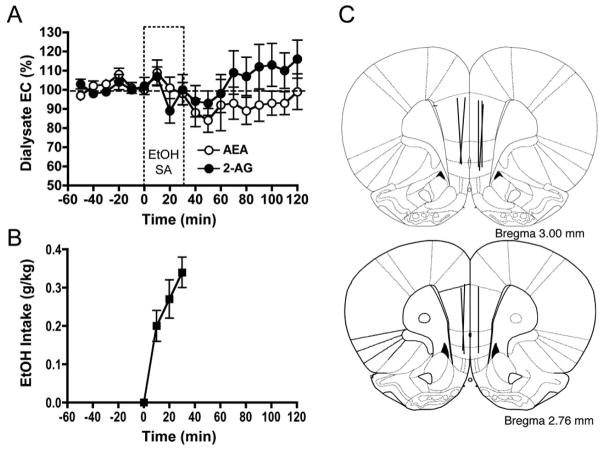
“…ethanol self-administration increases 2-AG content in dialysates collected from the NAc (Caille et al., 2007) and ventral tegmental area (Parsons, unpublished observations), but does not alter either 2-AG or AEA levels in dialysates collected from the medial PFC (Alvarez-Jaimes et al., 2009a).”
BackgroundInfluentialSelf-citationQuantification of brain endocannabinoid levels: methods, interpretations and pitfalls
Buczynski, M. W., & Parsons, L. H. (2010) · British Journal of Pharmacology · doi:10.1111/j.1476-5381.2010.00787.x · Cited by 158
Self-citationDopamine, endocannabinoids and their interaction in fear extinction and negative affect in PTSD
Ney, L. J., Akhurst, J., Bruno, R., Laing, P. A. F., Matthews, A. J., & Felmingham, K. L. (2020) · Progress in Neuro-Psychopharmacology and Biological Psychiatry · doi:10.1016/j.pnpbp.2020.110118 · Cited by 65
Balla, A., Dong, B., Shilpa, B. M., Vemuri, K. V., Makriyannis, A., Pandey, S. C., Sershen, H. W., Suckow, R. F., & Vinod, K. Y. (2017) · Neuropharmacology · doi:10.1016/j.neuropharm.2017.10.040 · Cited by 55
Interactions Between Alcohol and the Endocannabinoid System
Kunos, G. (2020) · Alcoholism Clinical and Experimental Research · doi:10.1111/acer.14306 · Cited by 56
“…VTA (Malinen and Hyytia, 2008) and in particular its posterior region (Alvarez-Jaimes et al., 2009), into the nucleus accumbens (NAc) of AA mice (Malinen and Hyytia, 2008) or Wistar rats (Alvarez-Jaimes et al., 2009) and, in some rat lines, into the medial prefrontal cortex (Hansson et al., 2007).”
BackgroundInfluentialVinod, K. Y., Maccioni, P., García‐Gutiérrez, M. S., Femenía, T., Xie, S., Carai, M. A. M., Manzanares, J., Cooper, T. B., Hungund, B. L., & Colombo, G. (2011) · Addiction Biology · doi:10.1111/j.1369-1600.2010.00299.x · Cited by 49
Endocannabinoid signaling in neurotoxicity and neuroprotection
Pope, C., Mechoulam, R., & Parsons, L. H. (2009) · NeuroToxicology · doi:10.1016/j.neuro.2009.12.002 · Cited by 48
Self-citationAlcohol-Endocannabinoid Interactions: Implications for Addiction-Related Behavioral Processes
Serrano, A., & Natividad, L. A. (2022) · Alcohol research · doi:10.35946/arcr.v42.1.09 · Cited by 30
Physiological processes underlying organ injury in alcohol abuse
Souza‐Smith, F. M., Lang, C. H., Nagy, L. E., Bailey, S. M., Parsons, L. H., & Murray, G. J. (2016) · American Journal of Physiology-Endocrinology and Metabolism · doi:10.1152/ajpendo.00270.2016 · Cited by 29
“For example, prolonged stress exposure impairs ECB-mediated DSI (depolarization-induced suppression of inhibition), LTD (longterm depression), and fEPSPs (field excitatory postsynaptic potential) in the NAc, attenuates ECB-mediated DSE and DSI in the paraventicular nucleus (PVN), and enhances 2-AGmediated DSI in the b…”
BackgroundInfluentialSelf-citationGetachew, B., Hauser, S. R., Dhaher, R., Katner, S. N., Bell, R. L., Oster, S. M., McBride, W. J., & Rodd, Z. A. (2010) · Pharmacology Biochemistry and Behavior · doi:10.1016/j.pbb.2010.11.006 · Cited by 31
Targeting diacylglycerol lipase reduces alcohol consumption in preclinical models
Winters, N. D., Bedse, G., Astafyev, A. A., Patrick, T. A., Altemus, M., Morgan, A., Mukerjee, S., Johnson, K., Mahajan, V. R., Uddin, M. J., et al. (2021) · Journal of Clinical Investigation · doi:10.1172/jci146861 · Cited by 24
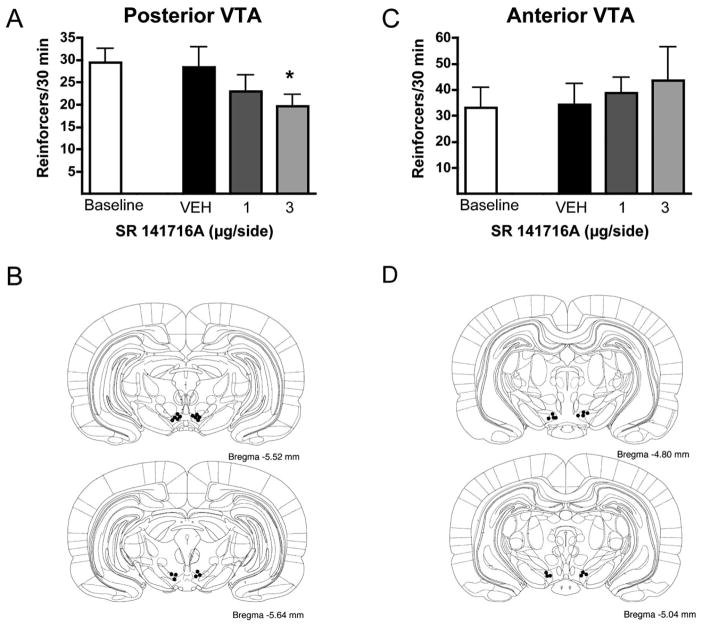
“It has been previously reported that inhibition of CB1 receptors in the posterior (but not anterior) VTA reduces alcohol intake (37).”
BackgroundPavón, F. J., Serrano, A., Stouffer, D. G., Polis, I. Y., Roberto, M., Cravatt, B. F., Martin‐Fardon, R., de Fonseca, F. R., & Parsons, L. H. (2018) · Addiction Biology · doi:10.1111/adb.12695 · Cited by 18
“Collectively, these data support the hypothesis that accumbal endocannabinoids can modulate both inhibitory and excitatory transmissions and provide a direct or indirect influence on DA neurons in regions innervated by the NAc, such as VTA.(35) In addition, differences in GABA and GLU transmissions in FAAH KO mice cou…”
Self-citation- Role of the Endocannabinoid System in the Neurobiology of Suicide
Dwivedi, Y. (2012) · CRC Press eBooks · doi:10.1201/b12215-11 · Cited by 12
Cannabidiol as a Modulator of the Development of Alcohol Tolerance in Rats
Szulc, M., Kujawski, R., Pacholak, A., Poprawska, M., Czora-Poczwardowska, K., Geppert, B., & Mikołajczak, P. Ł. (2023) · Nutrients · doi:10.3390/nu15071702 · Cited by 9
Piggott, V. M., Lloyd, S. C., Matchynski, J. I., Perrine, S. A., & Conti, A. C. (2021) · Molecules · doi:10.3390/molecules26072086 · Cited by 10
“In alcohol studies, previous research has shown unaltered AEA with increased 2-AG content in the NAc of rats self-administering alcohol [86,87], which is an alcohol administration method different from our method in this study.”
MethodAnalysis of Neurotransmitters and Their Metabolites by Liquid Chromatography
Bosse, K. E., Birbeck, J. A., Newman, B. D., & Mathews, T. A. (2013) · Elsevier eBooks · doi:10.1016/b978-0-12-415806-1.00020-6 · Cited by 8
Elkrief, L., Spinney, S., Vosberg, D. E., Banaschewski, T., Bokde, A. L. W., Quinlan, E. B., Desrivières, S., Flor, H., Garavan, H., Gowland, P. A., et al. (2021) · Frontiers in Psychiatry · doi:10.3389/fpsyt.2021.645746 · Cited by 9
“These eCB levels are affected by ethanol (5), and the eCB system plays a role in the development of AUD and other substance use disorders in humans (4).”
BackgroundMethodParks, C., Rogers, C., Prins, P., Williams, R. W., Chen, H., Jones, B. C., Moore, B. M., II, & Mulligan, M. K. (2021) · Frontiers in Genetics · doi:10.3389/fgene.2021.659012 · Cited by 6
Nestor, L., Bundel, D. D., Heyden, Y. V., Smolders, I. J., & Eeckhaut, A. V. (2023) · Journal of Chromatography A · doi:10.1016/j.chroma.2023.464479 · Cited by 6
Sangiamo, D. T., Weingarten, M. J., Nelson, N. G., Choi, C. Y., Das, A., & Liang, N. (2023) · Behavioural Brain Research · doi:10.1016/j.bbr.2023.114587 · Cited by 6
Endocannabinoid Signaling in Reward and Addiction: From Homeostasis to Pathology
Laredo, S. A., Marrs, W., & Parsons, L. H. (2017) · Springer eBooks · doi:10.1007/978-3-319-57371-7_10 · Cited by 8
Self-citationRole of the Endocannabinoid System in the Neurobiology of Suicide
Vinod, K. (2012) · Frontiers in neuroscience · doi:10.1201/b12215-6 · Cited by 10
Cannabinoid-Alcohol Interactions
Natividad, L. A., Maccioni, P., Parsons, L. H., & Colombo, G. (2015) · Springer eBooks · doi:10.1007/978-1-4939-2294-9_14 · Cited by 5
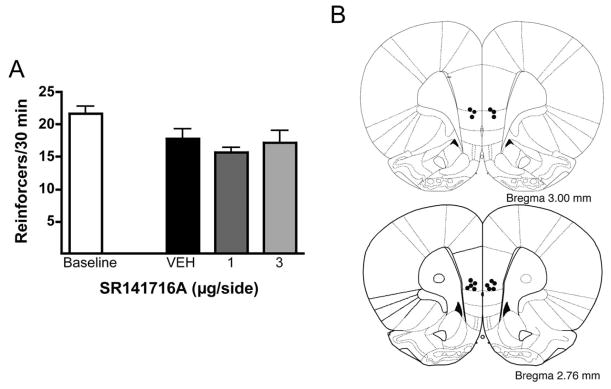
“Similarly, alcohol self-administration by non-selected Wistar rats is reduced following Rimonabant infusions into the nucleus accumbens [73, 74] and posterior portion of the VTA [74], though no disruptions in alcohol selfadministration were evident following infusions into the anterior VTA or medial PFC [74].”
BackgroundSelf-citationPavón, F. J., Polis, I. Y., Stouffer, D. G., Roberto, M., Martin‐Fardon, R., de Fonseca, F. R., Parsons, L. H., & Serrano, A. (2020) · Alcoholism Clinical and Experimental Research · doi:10.1111/acer.14456 · Cited by 4
Self-citationHauser, S. R., Katner, S. N., Waeiss, R. A., Truitt, W. A., Bell, R. L., McBride, W. J., & Rodd, Z. A. (2020) · Pharmacology Biochemistry and Behavior · doi:10.1016/j.pbb.2020.173002 · Cited by 3
“A series of studies have confirmed that infusions of a CB1R antagonist in the Acb and posterior, but not anterior, VTA decreases EtOH self-administration in rats (Caille and Parsons, 2006, Caille et al., 2007, Alvarez-Jaimes et al., 2009b).”
BackgroundCosta, G. P. A., Cerezo-Matias, M. A., Funaro, M. C., Bağdaş, D., Kaye, A. P., Krystal, J. H., Petrakis, I. L., & Aquino, J. P. D. (2026) · Molecular Psychiatry · doi:10.1038/s41380-026-03523-5 · Cited by 3
Patton, M. S., & Mathur, B. N. (2023) · Elsevier eBooks · doi:10.1016/b978-0-12-823453-2.00010-2 · Cited by 1
Getachew, B., Hauser, S. R., Dhaher, R., Bell, R. L., Oster, S. M., McBride, W. J., & Rodd, Z. A. (2011) · PMC
Role of the endocannabinoid system in exercise motivation
Redon, B. (2021) · theses.fr (ABES) · doi:10.70675/844c9d99zd3c6z4550z97a6zebab239b226c
Metadata
- Authors
- Alvarez-Jaimes, L., Polis, I., & Parsons, L. H.
- Affiliations
- Scripps Research Institute (US)
- Venue
- The Open Neuropsychopharmacology Journal
- Publisher
- Bentham Science Publishers Ltd.
- Published
- 2009-09-08
- Volume
- 2
- Issue
- 2
- Pages
- 77-85
- ISSN
- 1876-5238 (ISSN-L)
- PMC
- PMC5152943
- OpenAlex
- W2132988297
- Cited by
- 32
- References
- 67
- Citations by year
- 2026: 1 · 2023: 4 · 2022: 1 · 2021: 5 · 2020: 6 · 2018: 1 · 2017: 2 · 2016: 1 · 2015: 2 · 2013: 1 · 2012: 2
- FWCI
- 1.92
- Type
- journal article
- Language
- en
- Open access
- green
- www.ncbi.nlm.nih.gov
- Licence
- cc-by-nc
- Locations
- The Open Neuropsychopharmacology Journal (publishedVersion)
- PubMed (publishedVersion)
- PubMed Central (acceptedVersion, cc-by-nc)
- Funders
- National Institute on Alcohol Abuse and Alcoholism (P50AA006420, R01AA014619, R01AA017447, P60AA006420)
- Topics
- Health Sciences › Medicine › Pharmacology (medical) › Cannabis and Cannabinoid Research
- Life Sciences › Neuroscience › Cellular and Molecular Neuroscience › Neurotransmitter Receptor Influence on Behavior
- Life Sciences › Neuroscience › Cellular and Molecular Neuroscience › Neuroscience and Neuropharmacology Research
- Keywords
- CB1 receptor, ethanol self-administration, nucleus accumbens, ventral tegmental area, medial prefrontal cortex, alcohol reward, Wistar rats
About these checks
Registry, retraction, Cites and statistics results are computed, not judged, with one exception: a printed reference that no index lists is read once by a model before it counts as a citation error. Claims are extracted by a model and kept only when their quote appears verbatim in the text; each cited source is then checked, with a model’s help, for whether it says what the claim relies on. Those verdicts can be wrong — read the claim’s quote and the cited source before relying on one.
Statistics and arithmetic are recomputed, not judged.
Confidence bands are shown only for fields calibrated on our annotated test set. None is calibrated yet, so no band is shown.
What counts as a claim ›How we measure confidence ›How we check this ›
Are you an author, or do you see a problem with this page? Request a review
Data sources
Bibliographic data: Semantic Scholar, OpenAlex, Crossref.
Contains information from the Semantic Scholar Academic Graph Datasets, made available under the ODC Attribution License (ODC-BY 1.0).
Semantic Scholar’s data is described in: Kinney, R., et al. (2023). The Semantic Scholar Open Data Platform. arXiv:2301.10140.
