

The DOI matches its Crossref record; the references it cites are not checked yet.
The Development of an Arabic Weight-Loss App Akser Waznk: Qualitative Results
Open accessPublished version of a preprint
Abstract
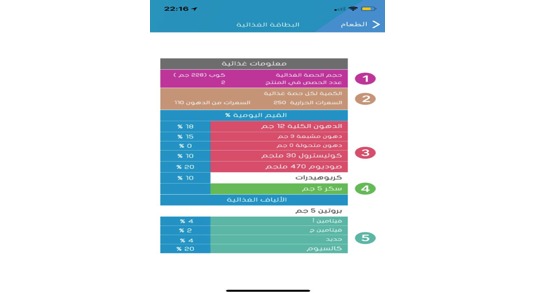
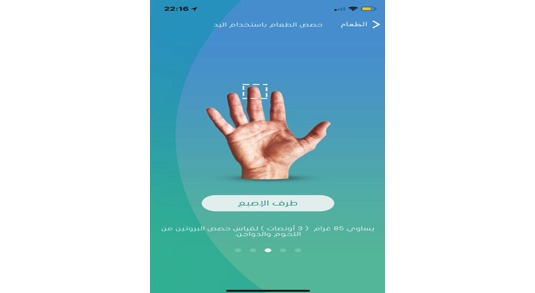
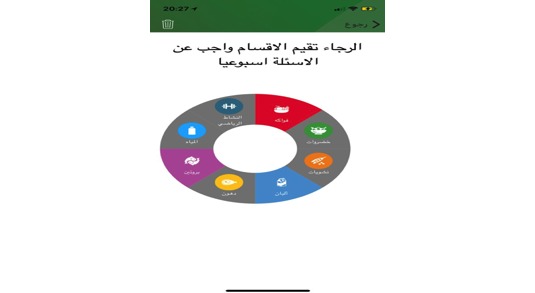
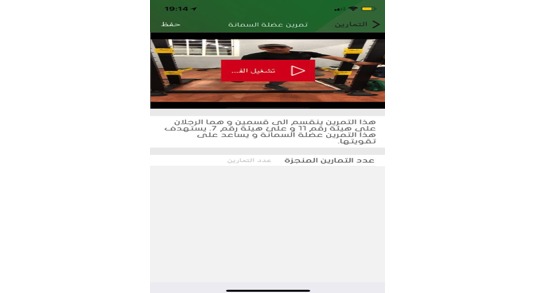
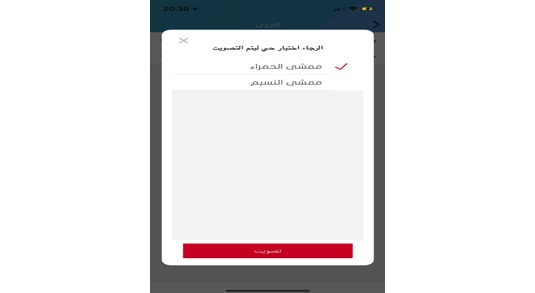
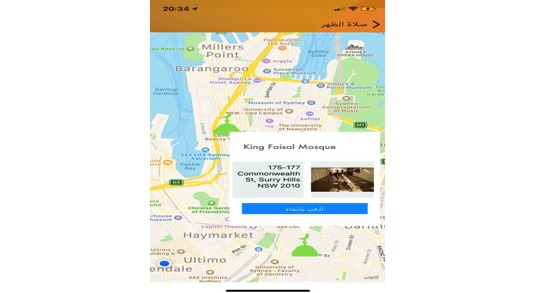
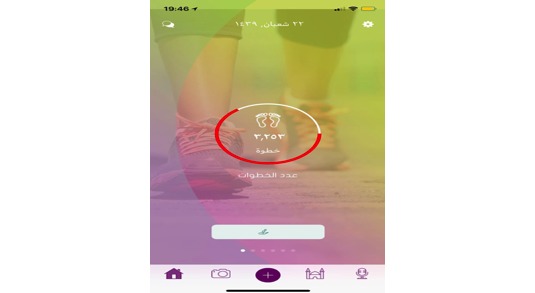
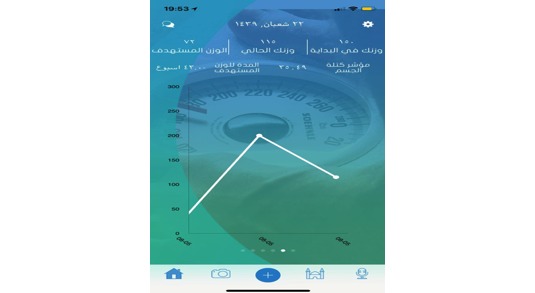
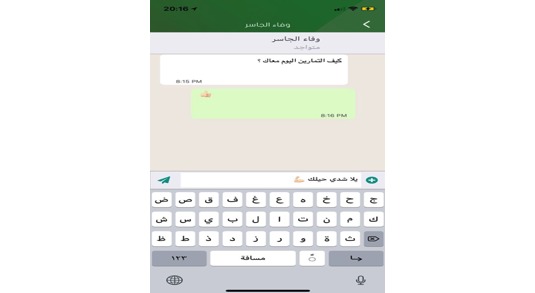
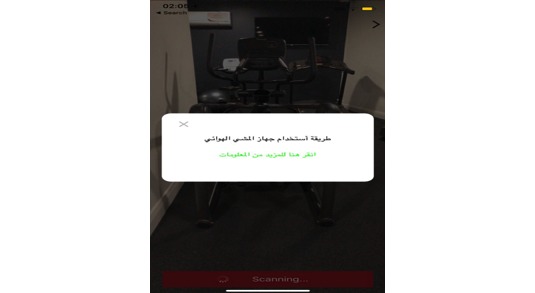
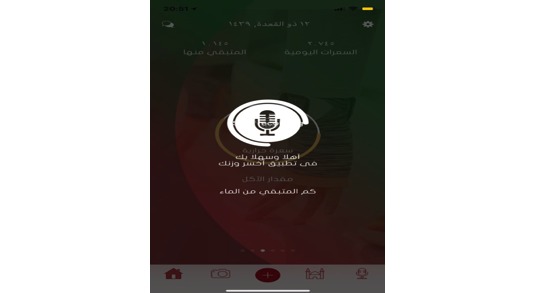
BACKGROUND: Obesity and its related illnesses are a major health problem around the world. Saudi Arabia has one of the highest national obesity rates globally; however, it is not easy to intervene to prevent obesity and becoming overweight owing to Saudi Arabia's cultural and social norms, and linguistic barriers. In recent years, there has been an exponential growth in the usage of smartphones and apps in Saudi Arabia. These could be used as a cost-effective tool to facilitate the delivery of behavior-modification interventions for obese and overweight people. There are a variety of health and fitness apps that claim to offer lifestyle-modification tools. However, these do not identify the motivational features required to overcome obesity, consider the evidence-based practices for weight management, or enhance the usability of apps by considering usability attributes. OBJECTIVE: This study aimed to explore the opportunity and the need to develop an Arabic weight-loss app that provides localized content and addresses the issues with existing apps identified here. This study has explained the steps taken to design an Arabic weight-loss app that was developed to facilitate the adjustment of key nutritional and physical activities and behaviors, which considers the social and cultural norms of Saudi Arabia. METHODS: Qualitative studies were conducted with 26 obese Saudi Arabians, who tested the level of usability of 2 weight-loss apps and then provided feedback and recommendations. The app Akser Waznk is an interactive, user-friendly app designed primarily for iPhones. It has several features intended to assist users to monitor and track their food consumption and physical activities. The app provides personalized diet and weight loss advice. Unique features such as Let's Walk are designed to motivate users to walk more. An augmented reality function is implemented to provide information regarding fitness equipment, fruits, and vegetables. The app uses behavior-change techniques to increase activities and healthy behaviors and evidence-informed practices for weight-loss management. The Akser Waznk app considers user privacy and data security by applying a number of guidelines and procedures. RESULTS: The development of the app took 26 months. In all, 7 experts (5 dietitians, and 2 physical activity professionals) evaluated the app's contents. Moreover, 10 potential users (5 men and 5 women) tested the app's level of usability, its features, and performance during a pilot study. They reported that the app's design is interactive, and the motivational features are user-friendly. CONCLUSIONS: Mobile technology, such as mobile apps, has the potential to be an effective tool that facilitates the changing of unhealthy lifestyle behaviors within the Saudi community. To be successful, the target group, the usability, motivational features, and social and cultural norms must be considered.
Overview
The claims and statistics of this paper haven’t been checked yet.
Run the check — free, no account needed. It reads the open-access text and checks the sources it cites.
Integrity signals
Registry
Cites
Statistics
Figures

Verification
Claims the paper makes
The claims and statistics of this paper haven’t been checked yet.
Run the check — free, no account needed. It reads the open-access text and checks the sources it cites.
Self-check
Percentages, sums and reported differences re-computed from the paper’s own numbers.
The self-check needs the paper’s full text.
Citations
The citation lists haven’t been fetched yet
References 41 · Cited by 22
Research works printed but not linked: 35
- 10.7326/0003-4819-100-2-285 · DOI
- 10.1001/jama.289.2.187 · DOI
- 10.1093/ajcn/55.2.516s · DOI
- 10.1177/146642409911900410 · DOI
- 10.1186/s12905-016-0312-8 · DOI
- 10.1177/1359105313476977 · DOI
- 10.1515/reveh-2015-0008 · DOI
- 10.1002/rwm3.20144 · DOI
- MourtadaRSalemFThe Arab Social Media Report2018-05-24Citizen Engagement and Public Services in the Arab World: The Potential of Social Media https://papers.ssrn.com/sol3/papers.cfm?abstract_id=2578993
- 10.1007/978-3-319-05579-4_50 · DOI
- 10.15623/ijret.2016.0509032 · DOI
- 10.1007/s13142-011-0076-5 · DOI · Paper page
- 10.1007/s13142-015-0347-7 · DOI
- 10.2196/mhealth.4409 · DOI
- 10.5121/csit.2017.71108 · DOI
- 10.5121/ijcsit.2017.9509 · DOI
- Alturki, R, 2019, Recent Trends And Advances In Wireless And Iot-enabled Networks
- 10.1080/08870449808407422 · DOI · Paper page
- 10.1381/0960892054621350 · DOI
- 10.1016/j.jada.2005.02.005 · DOI · Paper page
- Musaiger, A, 2006, Food Composition Tables for Arab Gulf Countries, 176
- 10.1093/jn/136.11.2934 · DOI
- 10.1089/met.2010.0031 · DOI
- 10.2147/NDS.S77460 · DOI
- 10.2196/mhealth.4520 · DOI
- 10.17795/whb-31083 · DOI
- Alturki, R, 2019, Applications Of Intelligent Technologies In Healthcare
- 10.1007/s11042-010-0660-6 · DOI
- 10.1108/03074801211273902 · DOI
- 10.1016/j.proenv.2011.09.150 · DOI
- 10.3389/fpubh.2016.00289 · DOI · Paper page
- 10.1007/s12160-013-9486-6 · DOI · Paper page
- 10.1007/s10916-014-0181-3 · DOI
- 10.1093/ntr/nts343 · DOI
- 10.1111/j.1365-2923.2009.03588.x · DOI
Metadata
- Authors
- Alturki, R., & Gay, V.
- Affiliations
- University of Technology Sydney (AU)
- Corresponding author
- Alturki, Ryan
- Venue
- JMIR Formative Research
- Publisher
- JMIR Publications Inc.
- Published
- 2019-03-14
- Volume
- 3
- Issue
- 1
- Pages
- e11785
- ISSN
- 2561-326X (ISSN-L)
- PMC
- PMC6437613
- OpenAlex
- W2908032200
- Cited by
- 22
- References
- 41
- Citations by year
- 2025: 2 · 2024: 2 · 2023: 1 · 2022: 5 · 2021: 8 · 2020: 4
- FWCI
- 4.58
- Type
- journal article
- Language
- en
- Open access
- gold
- doi.org
- Licence
- cc-by
- Locations
- JMIR Formative Research (publishedVersion, cc-by)
- PubMed Central (publishedVersion, cc-by)
- PubMed (publishedVersion)
- UTS ePRESS (University of Technology Sydney) (submittedVersion)
- UTS ePRESS (University of Technology Sydney) (submittedVersion, other-oa)
- Funders
- University of Technology Sydney
- Topics
- Health Sciences › Health Professions › General Health Professions › Mobile Health and mHealth Applications
- Social Sciences › Psychology › Applied Psychology › Digital Mental Health Interventions
- Physical Sciences › Computer Science › Human-Computer Interaction › Innovative Human-Technology Interaction
- Keywords
- weight loss apps, obesity, overweight, app usability, behaviour change techniques, mobile health, Saudi Arabia, sociocultural norms, exercise motivation, augmented reality, user feedback, app development, lifestyle modification, user-centered design
About these checks
Registry, retraction, Cites and statistics results are computed, not judged, with one exception: a printed reference that no index lists is read once by a model before it counts as a citation error. Claims are extracted by a model and kept only when their quote appears verbatim in the text; each cited source is then checked, with a model’s help, for whether it says what the claim relies on. Those verdicts can be wrong — read the claim’s quote and the cited source before relying on one.
Statistics and arithmetic are recomputed, not judged.
Confidence bands are shown only for fields calibrated on our annotated test set. None is calibrated yet, so no band is shown.
What counts as a claim ›How we measure confidence ›How we check this ›
Are you an author, or do you see a problem with this page? Request a review
How to cite
Cite CoChat for the checks on this page, and the paper for its own findings.
- This page
- CoChat. (2026). Citation check: The Development of an Arabic Weight-Loss App Akser Waznk: Qualitative Results. https://app.cochat.ai/papers/10.2196/11785
- The paper
- Alturki, R., & Gay, V. (2019). The Development of an Arabic Weight-Loss App Akser Waznk: Qualitative Results. JMIR Formative Research. https://doi.org/10.2196/11785
