

Exergaming Platform for Older Adults Residing in Long-Term Care Homes: User-Centered Design, Development, and Usability Study
Open accessPublished version of a preprint
The DOI matches its Crossref record; 64 of the 64 references it cites were found in a registry or an index.
Abstract
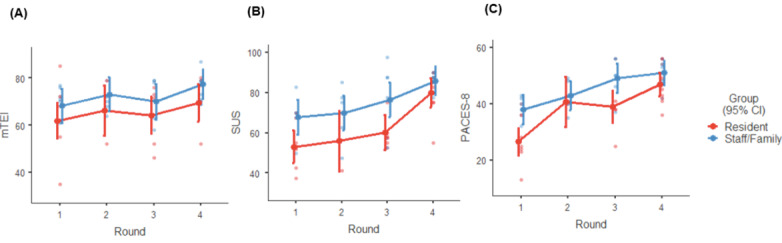
BACKGROUND: Older adults (OAs) residing in long-term care (LTC) homes are often unable to engage in adequate amounts of physical activity because of multiple comorbidities, including frailty and severe cognitive impairments. This level of physical inactivity is associated with declines in cognitive and functional abilities and can be further compounded by social isolation. Exergaming, defined as a combination of exercise and gaming, has the potential to engage OAs in exercise and encourage social interaction. However, previously used systems such as the Nintendo Wii are no longer commercially available, and the physical design of other exergames is not suitable for OAs (ie, fall risks, accessibility issues, and games geared toward a younger population) with diverse physical and cognitive impairments. OBJECTIVE: This study aims to design and develop a novel, user-centered, evidence-based exergaming system for use among OAs in LTC homes. In addition, we aim to identify facilitators and barriers to the implementation of our exergaming intervention, the MouvMat, into LTC homes according to staff input. METHODS: This study used a user-centered design (UCD) process that consisted of 4 rounds of usability testing. The exergame was developed and finalized based on existing evidence, end user and stakeholder input, and user testing. Semistructured interviews and standardized and validated scales were used iteratively to evaluate the acceptability, usability, and physical activity enjoyment of the MouvMat. RESULTS: A total of 28 participants, 13 LTC residents, and 15 staff and family members participated in the UCD process for over 18 months to design and develop the novel exergaming intervention, the MouvMat. The iterative use of validated scales (System Usability Scale, 8-item Physical Activity Enjoyment Scale, and modified Treatment Evaluation Inventory) indicated an upward trend in the acceptability, usability, and enjoyment scores of MouvMat over 4 rounds of usability testing, suggesting that identified areas for refinement and improvement were appropriately addressed by the team. A qualitative analysis of semistructured interview data found that residents enjoyed engaging with the prototype and appreciated the opportunity to increase their PA. In addition, staff and stakeholders were drawn to MouvMat's ability to increase residents' autonomous PA. The intended and perceived benefits of MouvMat use, that is, improved physical and cognitive health, were the most common facilitators of its use identified by study participants. CONCLUSIONS: This study was successful in applying UCD to collaborate with LTC residents, despite the high number of physical and sensory impairments that this population experiences. By following a UCD process, an exergaming intervention that meets diverse requirements (ie, hardware design features and motivation) and considers environmental barriers and residents' physical and cognitive needs was developed. The effectiveness of MouvMat in improving physical and cognitive abilities should be explored in future multisite randomized controlled trials.
Overview
The claims and statistics of this paper haven’t been checked yet.
Free: it reads the open-access text and checks the first 5 claims that cite a source we can check. Create a free account to check every claim.
Integrity signals
Registry
Cites
Statistics
Figures
Verification
Claims the paper makes
The claims and statistics of this paper haven’t been checked yet.
Free: it reads the open-access text and checks the first 5 claims that cite a source we can check. Create a free account to check every claim.
Claims other papers make about this one
Each is checked against this paper’s own text: does it say what the citing paper says it does?
In the citing paper
“More research developing technologies are also being conducted with older adults (Chu et al., 2021; Harrington et al., 2018), but there is a need for continued analysis of the process to address aspects of ageism (Mannheim et al., 2019).”
From Digital ageism: challenges and opportunities in artificial intelligence for older adults (2022) · cites this paper as Chu et al., 2021
Self-check
Percentages, sums and reported differences re-computed from the paper’s own numbers.
The self-check needs the paper’s full text.
Citations
Cites
Using thematic analysis in psychology
Braun, V., & Clarke, V. (2006) · Qualitative Research in Psychology · doi:10.1191/1478088706qp063oa · Cited by 194,414
Three Approaches to Qualitative Content Analysis
Hsieh, H.-F., & Shannon, S. E. (2005) · Qualitative Health Research · doi:10.1177/1049732305276687 · Cited by 44,601 · cited 2×
“We believe that the use of a question guide with open-ended questions and allowing the participants to speak freely, as well as triangulation [50,70] of the data, contributed to the validity of the results.”
BackgroundMethod(1998) · Cited by 13,501
(2009) · Cited by 6,311
The Mini‐Mental State Examination: A Comprehensive Review
Tombaugh, T. N., & McIntyre, N. J. (1992) · Journal of the American Geriatrics Society · doi:10.1111/j.1532-5415.1992.tb01992.x · Cited by 5,152 · cited 7×
“It should also be noted that the analysis of the average MMSE scores of participants who completed the rounds indicated that selective attrition of participants with poorer cognitive function and frailty was not an issue; in particular, MMSE scores were lowest in participants who completed 3 rounds of testing.”
MethodInfluentialThe Constant Comparative Method of Qualitative Analysis
Glaser, B. G. (1965) · Social Problems · doi:10.2307/798843 · Cited by 4,588 · cited 1×
“In addition, the team would debrief and discuss observations at the end of each testing day by applying an adapted constant comparison approach [51] with themes from the preceding sessions.”
MethodProtocol Analysis: Verbal Reports as Data
Ericsson, K. A., & Simon, H. A. (1993) · doi:10.7551/mitpress/5657.001.0001 · Cited by 3,537
The World report on ageing and health: a policy framework for healthy ageing
Beard, J. R., Officer, A., de Carvalho, I. A., Sadana, R., Pot, A. M., Michel, J.-P., Lloyd-Sherlock, P., Epping-Jordan, J. E., Peeters, G. M. E. E. (., Mahanani, W. R., et al. (2016) · The Lancet · doi:10.1016/s0140-6736(15)00516-4 · Cited by 3,287 · cited 1×
“The World Health Organization [13] reports a critical need for interventions that can help OAs maintain their physical and cognitive health and reduce social isolation.”
BackgroundHertzog, C., Kramer, A. F., Wilson, R. S., & Lindenberger, U. (2008) · Psychological Science in the Public Interest · doi:10.1111/j.1539-6053.2009.01034.x · Cited by 1,495 · cited 1×
“The mechanism of this benefit is supported by the cognitive enrichment hypothesis [22], which states that the collective behaviors of an individual have a meaningful positive impact on cognition and function in old age.”
BackgroundMandolesi, L., Polverino, A., Montuori, S., Foti, F., Ferraioli, G., Sorrentino, P., & Sorrentino, G. (2018) · Frontiers in Psychology · doi:10.3389/fpsyg.2018.00509 · Cited by 1,038 · cited 1×
“Routine physical activity (PA) is a widely recognized component of healthy aging among OAs [4-6].”
Background
Research works printed but not linked: 6
- Beaupré G Amélie Biss R Sultana A Chu C The effects of exergaming interventions on cognition and physical activity of institutionalized older adults: a systematic review Proceedings of the 9th Canadian Conference on Gerontology 2017 The 9th Canadian Conference on Dementia (CCD) November, 2017 Toronto, ON, Canada
- Sultana A Biss R Chu C Designing an exergaming device for older adults residing in long-term care homes Proceedings of the Workshop on Designing Interactions for the Aging Populations to Be Held with Association for Computing Machinery Conference on Human Factors in Computing Systems 2018 2018 Workshop on Designing Interactions for the Aging Populations to Be Held with Association for Computing Machinery Conference on Human Factors in Computing Systems 2018 2018 Montreal, Canada
- Rubin J Chisnell D Spool J Handbook of Usability Testing (2nd ed.) 2008 New Jersey, United States Wiley
- Brooke J SUS-A quick and dirty usability scale Usab Eval Ind 1996 Florida CRC Press 4 7
- Wankel L The importance of enjoyment to adherence and psychological benefits from physical activity Int J Sport Exerc Psychol 1993
- Miles MB Huberman AM Saldaña J Qualitative Data Analysis: A Methods Sourcebook and The Coding Manual for Qualitative Researchers Tech Comm Q 2014 12 24 Thousand Oaks, CA SAGE Publications Ltd 109 12
Cited by
Digital ageism: challenges and opportunities in artificial intelligence for older adults
Chu, C. H., Nyrup, R., Leslie, K., Shi, J., Bianchi, A., Lyn, A., McNicholl, M., Khan, S., Rahimi, S., & Grenier, A. (2022) · The Gerontologist · doi:10.1093/geront/gnab167 · Cited by 290
“More research developing technologies are also being conducted with older adults (Chu et al., 2021; Harrington et al., 2018), but there is a need for continued analysis of the process to address aspects of ageism (Mannheim et al., 2019).”
Self-citationCastillo, J. F. V., Montoya, M. F., Muñoz, J. E., Lopez, D., Quiñones, L., Henao, O. A., & Lopez, J. F. (2024) · JMIR Serious Games · doi:10.2196/48900 · Cited by 74
“In addition, in this prior study, we considered the following clinical requirements when developing the VR exergame [34,35].”
BackgroundChu, C. H., Ronquillo, C., Khan, S., Hung, L., & Boscart, V. (2021) · Journal of Aging & Social Policy · doi:10.1080/08959420.2021.1927620 · Cited by 52
“Other technologies for leisure that are in their nascent stages include music technology (Creech, 2019), exergaming systems that encourage physical activity designed for LTC residents (Chu et al., 2021b) and virtual reality (Dermody et al., 2020).”
BackgroundSelf-citationTuan, S., Chang, L.-H., Sun, S., Li, C.-H., Chen, G., & Tsai, Y. (2024) · Journal of Medical Internet Research · doi:10.2196/59468 · Cited by 56
“Most research focuses on improvements in health-related quality of life (HRQoL), cognitive functions, and overall functional status [22,23].”
Kamnardsiri, T., Phirom, K., Boripuntakul, S., & Sungkarat, S. (2021) · JMIR Serious Games · doi:10.2196/27848 · Cited by 53
“To overcome this limitation, the UCD approach, which incorporates game design principles (ie, goals, rules, feedback, points, time, reward structures, levels, and aesthetics), was used in the process of designing and developing a game-based exercise prototype with an aim to motivate and engage older adults in exercisi…”
BackgroundMethodSuleiman‐Martos, N., García‐Lara, R. A., Albendín‐García, L., Romero‐Béjar, J. L., la Fuente, G. A. C., Monsalve-Reyes, C. S., & Gómez‐Urquiza, J. L. (2021) · Journal of Advanced Nursing · doi:10.1111/jan.15138 · Cited by 48
Liau, S. J., Lalic, S., Visvanathan, R., Dowd, L. A., & Bell, J. S. (2021) · The journal of nutrition health & aging · doi:10.1007/s12603-021-1694-3 · Cited by 40
“Cross-sectional associations with frailty were not investigated in seven studies (24, 36-38, 40, 48, 54), therefore criteria related to confounding factors were not assessed in these studies.”
BackgroundMethodInfluentialSeinsche, J., de Bruin, E. D., Saibene, E., Rizzo, F., Carpinella, I., Ferrarin, M., Moza, S., Ritter, T., & Giannouli, E. (2023) · JMIR Human Factors · doi:10.2196/48845 · Cited by 42
“This approach facilitates a comprehensive understanding of the factors influencing the use of the corresponding technology and ensures that this technology is acceptable, purposeful, usable, safe, and effective [24,25].”
BackgroundResultExergaming to Increase Physical Activity in Older Adults: Feasibility and Practical Implications
Rytterström, P., Strömberg, A., Jaarsma, T., & Klompstra, L. V. (2024) · Current Heart Failure Reports · doi:10.1007/s11897-024-00675-9 · Cited by 42
Rüth, M., Schmelzer, M., Burtniak, K., & Kaspar, K. (2023) · Frontiers in Psychology · doi:10.3389/fpsyg.2023.1155569 · Cited by 36
“Additionally, some of these systematic reviews contain findings based on various study designs in lack of a risk of bias assessment (Bonnechère et al., 2016) or findings related to a high risk of bias in most of the studies (Chu et al., 2021), limiting the possibility to draw practical implications.”
BackgroundInfluentialExperiences of older adults participating in dance exergames: A systematic review and meta-synthesis
Yoong, S. Q., Wu, X. V., & Jiang, Y. (2024) · International Journal of Nursing Studies · doi:10.1016/j.ijnurstu.2024.104696 · Cited by 42
Use of serious games with older adults: systematic literature review
Pérez, B. M. G., Martín‐García, A. V., Murciano-Hueso, A., & Cardoso, A. P. (2023) · Humanities and Social Sciences Communications · doi:10.1057/s41599-023-02432-0 · Cited by 31
Esmaeilzadeh, P., & Maddah, M. (2024) · Technology in Society · doi:10.1016/j.techsoc.2024.102689 · Cited by 35
Zainal, A., Aziz, N. F. A., Ahmad, N. A., Razak, F. H. A., Razali, F., Azmi, N. H., & Koyou, H. L. (2023) · Bulletin of Electrical Engineering and Informatics · doi:10.11591/eei.v12i3.4773 · Cited by 29
Kleschnitzki, J. M., Beyer, L., Beyer, R., & Großmann, I. (2022) · JMIR Serious Games · doi:10.2196/33169 · Cited by 25
Chu, C. H., Quan, A. M. L., Souter, A., Krisnagopal, A., & Biss, R. K. (2022) · Gerontology · doi:10.1159/000521832 · Cited by 23
Self-citationMeasuring Brain Activation Patterns from Raw Single-Channel EEG during Exergaming: A Pilot Study
Amprimo, G., Rechichi, I., Ferraris, C., & Olmo, G. (2023) · Electronics · doi:10.3390/electronics12030623 · Cited by 24
Tuan, S., Chang, L., Sun, S., Lin, K., & Tsai, Y. (2022) · Frontiers in Medicine · doi:10.3389/fmed.2022.1071409 · Cited by 18
Suppan, M., Stuby, L., Harbarth, S., Fehlmann, C. A., Achab, S., Abbas, M., & Suppan, L. (2021) · JMIR Serious Games · doi:10.2196/33003 · Cited by 18
“Indeed, even though there might be a tendency to think that games are only for young individuals, factual data bely this somewhat prejudiced impression [45-48].”
BackgroundJhaveri, S., Romanyk, M., Glatt, R. M., & Satchidanand, N. (2023) · Journal of Aging and Physical Activity · doi:10.1123/japa.2022-0040 · Cited by 16
Šumak, B., Kous, K., Normand, L. M., Pekša, J., & Pušnik, M. (2023) · Applied Sciences · doi:10.3390/app13095498 · Cited by 16
Autschbach, D., Hagedorn, A., & Halek, M. (2024) · BMC Geriatrics · doi:10.1186/s12877-024-05156-1 · Cited by 15
“There were several interventions that introduced games: an open playgroup with nursing home residents, younger children and their parents [58]; online quiz sessions [39]; and exergaming [47] with residents.”
BackgroundPlayer Experience Evaluation in Game-Based Systems for Older Adults
Cardona, J. A. S., Ceballos-Cardona, B., Paderewski, P., Vela, F. L. G., & Arango‐López, J. (2024) · Sensors · doi:10.3390/s24186121 · Cited by 14
Esmaeilzadeh, P. (2023) · JMIR mhealth and uhealth · doi:10.2196/46430 · Cited by 16
“The third refers to the design and usability of age tech, such as user-centered design, accessibility, ease of use, and usability of technology for older adults [14].”
BackgroundKokorelias, K. M., McMurray, J., Chu, C. H., Astell, A. J., Grigorovich, A., Kontos, P., Babineau, J., Bytautas, J., Ahuja, A., & Iaboni, A. (2024) · JMIR Neurotechnology · doi:10.2196/53038 · Cited by 15
“The technologies focused on obtaining various outcomes, including improving mood [24,28,46-49, 51, 55,”
InfluentialSelf-citationIntergenerational active play: a scoping review
Tran, K. D., Blackler, A. L., Ploderer, B., & Vickery, N. E. M. (2022) · Australian Conference on Human-Computer Interaction (OzCHI) · doi:10.1145/3572921.3576217 · Cited by 11
Baidya, S., Connolly, C. J., Petersen, J. M., Baldwin, C. E., van den Berg, M. E. L., Harris, I., & Lewis, L. K. (2024) · Journal of Aging and Health · doi:10.1177/08982643241302209 · Cited by 13
Malone, L. A., Mendonca, C. J., Mohanraj, S., Misko, S. R., Moore, J., Brascome, J. M., & Thirumalai, M. (2023) · JMIR Serious Games · doi:10.2196/38484 · Cited by 11
“Another study examined the usability of an AVG platform for older adults with various physical and sensory impairments residing in long-term care homes, with 85% having a mobility impairment [15].”
BackgroundCorey, J. J., Tsai, J. M., Mhadeshwar, A., Srinivasan, S. M., & Bhat, A. N. (2024) · Disability and Rehabilitation · doi:10.1080/09638288.2024.2398148 · Cited by 10
“…of games, adaptability such as slowing the pace or difficulty levels) may greatly impact the study outcomes due to the specific needs of individual with ID (slower processing, decreased social interaction, low IQ, and physical delays); which has also been demonstrated in geriatric populations [65].”
Li, A., Qiang, W., Li, J., Geng, Y., Qiang, Y., & Zhao, J. (2025) · Journal of Medical Internet Research · doi:10.2196/69109 · Cited by 9
RetractedQualitative study measuring the usability of the International Cardiac Rehabilitation Registry
Abukhadijah, H. J., Turk-Adawi, K. I., Dewart, N., & Grace, S. L. (2022) · BMJ Open · doi:10.1136/bmjopen-2022-064255 · Cited by 10
Glatt, R. M., Patis, C., Miller, K. J., Merrill, D. A., Stubbs, B., Adcock, M., Giannouli, E., & Siddarth, P. (2024) · Frontiers in Sports and Active Living · doi:10.3389/fspor.2024.1449699 · Cited by 12
“However, employing user-centered design practices (113) and customizing programs to the target population is essential to overcome barriers to adoption and participation (114).”
Westworth, S. E., Lu, A., Long, K. M., & Andrew, N. E. (2025) · Journal of Public Health · doi:10.1093/pubmed/fdaf111 · Cited by 8
Manser, P., Huber, S. K., Seinsche, J., de Bruin, E. D., & Giannouli, E. (2023) · PLoS ONE · doi:10.1371/journal.pone.0286556 · Cited by 8
Ghosh, R., Khan, N., Migovich, M., Tate, J. A., Maxwell, C. A., NEWHOUSE, P. A., Scharre, D. W., Tan, A., Mion, L. C., & Sarkar, N. (2025) · JMIR Aging · doi:10.2196/75288 · Cited by 8
“While UCD has been used to develop immersive VR [39], eHealth applications [66,67], exercise games [68-70], and websites [71,72] for older adults, to the best of our knowledge, this is the first study to take an iterative UCD approach to developing a SAR-VR system and activities for pairs of older…”
Williams, T. M., Kennedy‐Malone, L., Thompson, J. A., & Monge, E. (2022) · Geriatric Nursing · doi:10.1016/j.gerinurse.2022.01.001 · Cited by 7
Tacchino, A., Ponzio, M., Confalonieri, P. A., Leocani, L., Inglese, M., Centonze, D., Cocco, E. E., Gallo, P., Paolicelli, D., Rovaris, M., et al. (2023) · JMIR Serious Games · doi:10.2196/41371 · Cited by 7
Kukkohovi, S., Siira, H. J., & Elo, S. (2024) · Communications in computer and information science · doi:10.1007/978-3-031-59080-1_15 · Cited by 5
The Digital Divide in Geriatric Care: Why Usability, Not Access, is the Real ProblemPreprint
Ine, C. (2026) · arXiv (Cornell University) · doi:10.48550/arxiv.2601.17012 · Cited by 5
“Figure 2 below displays the underlying UX design strategies that enhance accessibility and inclusion for older adult users. engagement, and safety (Villalba-Mora et al., 2021; Chu et al., 2021).”
O’Connor, S., Zhang, M., Hui, V. C. C., Chen, L. A., Delgado, J., Chu, C. H., Ronquillo, C., Gosak, L., Wicks, D., White, P., et al. (2026) · Nurse Education in Practice · doi:10.1016/j.nepr.2026.104837 · Cited by 6
Self-citationKamboj, N., Metcalfe, K. A., Chu, C. H., & Conway, A. (2024) · Applied Clinical Informatics · doi:10.1055/s-0044-1787755 · Cited by 4
Self-citationBudak, K. B., Heins, P., Uribe, F. L., Felding, S. A., & Roes, M. (2024) · Digital Health · doi:10.1177/20552076241277886 · Cited by 4
“…24 lack of space, 25 lack of staff member ’ s time, 25 staff member ’ s low technology competence, 25 a low belief that the technology will be suited to successfully perform the desired task, 18 the operational costs, 18 and the risk of harm when implementing exergaming in the nursing home.”
BackgroundInfluentialGamification System to Improve the Personal Health of Bedridden Patients in Long-Term Care
Boiko, A., Asadov, A., Gaiduk, M., Seepold, R., & Madrid, N. M. (2022) · Lecture notes in bioengineering · doi:10.1007/978-3-031-16855-0_13 · Cited by 4
Zhao, J., Zhu, D., Wang, Y., Xia, Y., Zhu, Z., & Yu, J. (2025) · JMIR Serious Games · doi:10.2196/75823 · Cited by 3
du Preez, S., Coleman, K., & Smuts, H. (2022) · EPiC series in computing · doi:10.29007/w8h9 · Cited by 6
“Scholars report many barriers in terms of experience design such as technology adoption, cost of technology, fear of harm (Chu, Biss, Cooper, Quan, & Matulis, 2021; Melles, Albayrak, & Goossens, 2021), risk and uncertainty, resistant to change, inability to accept new ideas (Baha, Ghei, &…”
BackgroundHung, L., Lam, J., Wong, K. L. Y., Wong, J., Ren, L. H., Chakraborty, N., & Zhao, Y. (2025) · Journal of dementia and Alzheimer's disease · doi:10.3390/jdad2020007 · Cited by 3
“In another study, which implemented an exercise game platform called MouvMat, health-care providers mentioned the benefits to residents, such as enjoyment, which motivated them to adopt the technology [18].”
Wong, K. L. Y., Hung, L., Wang, C., Pan, D., Liao, D., Ren, L. H., & Berndt, A. (2025) · Digital Health · doi:10.1177/20552076251357490 · Cited by 2
Aplikasi Mudah Alih I-Rehlah untuk Memartabatkan Pelancongan Islam di Selangor pada Era Globalisasi
Ahmad, M. I., Adnan, A. S., Jaffar, M. N., & Masrop, N. A. M. (2024) · Jurnal Pengajian Islam · doi:10.53840/jpi.v17i1.306 · Cited by 2
Influence of User Involvement on the Personal Empowerment of Participants
Giordano, K., Baumgaertner, A., & Corsten, S. (2025) · Activities Adaptation & Aging · doi:10.1080/01924788.2025.2454172 · Cited by 2
Why Nursing Home Residents Use Social Network Systems: An Attachment Perspective
Chang, I., Cheng, K., Chiang, C.-Y., & Hu, C.-K. (2021) · Healthcare · doi:10.3390/healthcare9081037 · Cited by 3
“New social network scales [26] or new social platforms/devices [27] can also be explored to add value to the research area.”
BackgroundLi, X., Keller, J., Stelter, J., Brune, K., & Ingman, S. (2023) · Educational Gerontology · doi:10.1080/03601277.2023.2172518 · Cited by 2
A Literature Review of Entertainment-Based Applications Promoting Social Activity of Older AdultsPreprint
Santos, D., Coelho, J., & Duarte, C. (2022) · SSRN Electronic Journal · doi:10.2139/ssrn.4123763 · Cited by 2
Systematic Literature Review on User Experience Research of Somatosensory Games for the Elderly
Nan, J., & Azmi, N. H. (2024) · Journal Of ICT In Education · doi:10.37134/jictie.vol11.2.5.2024 · Cited by 1
Huang, Y., & Liu, S. (2025) · International Conference on Artificial Intelligence, Virtual Reality and Interaction Design · doi:10.1145/3777730.3777771 · Cited by 1
“Few studies examine long-term use in real-world contexts, and integrated frameworks addressing age-related interaction factors are rare [7].”
Villada, J. F., Montoya, M. F., & Mendez, J. (2026) · Multimedia Tools and Applications · doi:10.1007/s11042-026-21141-9 · Cited by 1
“The slow prototyping was developed using storyboards (See Figure 1) and the game mechanics design methodology [44].”
Pröbsting, J. S., Rießenberger, K. A., & Fischer, F. (2026) · BMC Digital Health · doi:10.1186/s44247-026-00254-z · Cited by 1
Design and Architecture of an Open Multiplayer Exergaming Platform called Move2Play
Coutinho, F., Silva, I. S., Barbosa, G. A. R., Costa, T. F., Carvalho, L. G. D., Andrade, C., Pereira, J. P. S., Pinto, R. S. G., & Silva, J. H. (2022) · Brazilian Symposium on Computer Games and Digital Entertainment (SBGames) · doi:10.1109/sbgames56371.2022.9961109 · Cited by 1
“Hard to acquire platforms are the ones that use special-purpose or adapted hardware, such as some exercise bikes or treadmills [3], [5], [8]–[10], [13] usually for each user.”
BackgroundMethodMoreno, M. P. S., Vivas, L., Sarmiento, E. A. R., & Vivas, J. R. (2024) · International Journal of Human-Computer Interaction · doi:10.1080/10447318.2024.2434768 · Cited by 1
“Similarly, Rodr � ıguez-Almendros et al. (2021) and Chu et al. (2021) highlighted the importance of UCD in providing insights into the diverse needs and preferences of end-users, advocating for personalized support services that encourage the adoption of new technologies.”
Evaluation of a prototype for early active patient mobilization
Asadov, A., Boiko, A., Gaiduk, M., Scherz, W. D., Seepold, R., & Madrid, N. M. (2022) · Procedia Computer Science · doi:10.1016/j.procs.2022.09.282 · Cited by 1
Luk, S. C. Y. (2023) · Springer eBooks · doi:10.1007/978-981-99-0872-1_6
MICROBIAL RESISTANCE AND BIOPROSPECTION: TRENDS AND CHALLENGES
de Oliveira, M. G., Varela, A. L. N., Almeida‐Bezerra, J. W., Silva, R. L., Luciano, B. H., Freitas, D. G. D. S., de Sousa, S. D. G., Johanes, I., de Lima, L. F., Gonçalo, M. A. B. F., et al. (2024) · doi:10.22533/at.ed.8062420065
PESQUISA EM SAÚDE BUCAL: O CONSUMO DE DIETAS RICAS EM GORDURA E AS DOENÇAS ORAIS OSTEOLÍTICAS
Lima, R. B., Moura, A. P. G. E., Filho, A. E. D. F. M., Araújo, L. D. C., Paulo, A. C., Lucisano, M. P., Filho, P. N., da Silva, L. A. B., & da Silva, R. A. B. (2024) · doi:10.22533/at.ed.8062420063
OCCLUSAL VERTICAL DIMENSION: AN ANALYSIS OF THE ACCURACY OF THE WILLIS METHOD
Andriolli, G. R., Machado, J. B., de Araújo, S. M., Luiz, L. K. M., Luiz, B. K. M., & Filho, C. M. M. (2024) · doi:10.22533/at.ed.8062420062
SOLUTIONS TO SUPPORT AND REHABILITATE OLDER ADULTS: SCOPING REVIEW
Shapoval, S., Zorrilla, A. M., Sokol, Y., & García-Zapirain, B. (2024) · doi:10.22533/at.ed.8062420064
Health research: current challenges and future perspectives 3
Almeida‐Bezerra, J. W., & da Silva, V. B. (2024) · doi:10.22533/at.ed.806242006
Pereira, K. S., Nunes, N. G., Cachina, M. L. D. M., de Queiroz, A. L. O., de Morais, L. A. F., da Penha, L. M. S., Dantas, J. F., Guerra, Â. R. O., & Neto, C. L. D. B. G. (2024) · doi:10.22533/at.ed.8062420061
User-Centered Design of a Smart Home Voice System for Older Chinese Adults
Chang, Y., Yao, K., Zou, M., & Zhong, R. (2025) · Lecture notes in computer science · doi:10.1007/978-3-031-93736-1_11
Alhasan, H. S., Almalki, R. S., Altohami, A. Y., & Alshehri, M. A. (2025) · Hong Kong Physiotherapy Journal · doi:10.1142/s1013702525500118
Metcalfe, H., Robinson-Carter, E., & Joddrell, P. (2025) · Home Health Care Management & Practice · doi:10.1177/10848223251359669
“50,53,55,57,59,60 49-51,60 Participatory Compared to traditional exercise, or activities, exergaming was suggested to be more versatile, and adaptable.”
InfluentialThe Immersion Paradox: A Longitudinal Analysis of Vr and Mr Exergame Engagement in Older AdultsPreprint
Song, X., Ali, N. M., Salim, M. H. M., Rezaldi, M. Y., & Sunny, I. (2025) · SSRN Electronic Journal · doi:10.2139/ssrn.5401034
Evaluation and Development of a User-Centered Online Platform for Fashion Contests
Lee, M., & Chung, K. (2025) · The Korean Society of Costume · doi:10.7233/jksc.2025.75.5.047
Calle Vásquez, L. E., & Medina Figueroa, M. D. (2023) · Repositorio Institucional (Universidad de Cuenca)
Kelly, S., Gellion, A., Bone, T., Collingwod, N., Tennyson, R., Saywell, E., Brown, I., Kenmuir-Hogg, C., & Yuen, K. (2023) · SHURA (Sheffield Hallam University Research Archive) (Sheffield Hallam University)
Riveros, J. W. C., & Beltrán, E. J. M. (2025) · Revista de la Facultad de Ciencias de la Salud Universidad del Cauca · doi:10.47373/rfcs.2025.v27.2565
Narsakka, N. (2026) · UTUPub (University of Turku) · Cited by 1
Han, W., Scott, D., & Stawarz, K. (2026) · CHI Conference on Human Factors in Computing Systems · doi:10.1145/3772318.3790580
“…social acceptability was addressed in many studies, some through standardised questionnaires such as the System Us-ability Scale (SUS) score [30, 49, 131], and the others through qualitative comments about whether devices looked decorative or clinical, fitted into existing furniture and…”
InfluentialBigotto, F., Panigada, J., Bruni, F., Mancuso, V., Cavedoni, S., Stramba-Badiale, M., Goulene, K., Pedroli, E., & Serino, S. (2026) · JMIR Aging · doi:10.2196/68032
Co-designing Tangible Embedded and Embodied Interaction for Co-located Intergenerational Active Play
Tran, K. D., Blackler, A. L., Cook, D., Ploderer, B., & Vickery, N. E. M. (2025) · International Association of Societies of Design Research Congress (IASDR) · doi:10.21606/iasdr.2025.284 · Cited by 1
Song, X., Ali, N. M., Salim, M. H. M., Rezaldi, M. Y., & Sun, L. (2026) · Virtual Reality · doi:10.1007/s10055-026-01371-w
CogniFrame: a serious games framework for older adults with mild cognitive impairment
Skikos, G., & Goumopoulos, C. (2026) · Behaviour and Information Technology · doi:10.1080/0144929x.2026.2676748
Chen, X., Ning, H., Peng, L., Zhang, C., Zhang, J., Jiang, D., Li, X., Wan, X., Huang, J., Xie, Q., et al. (2026) · JMIR Serious Games · doi:10.2196/93081
“A plausible explanation is that table tennis is a highly familiar sport and leisure element in the daily lives of most Chinese older adults, which is crucial for enhancing game acceptance [70] and consequently boosting their confidence to participate.”
Rosly, M. M., Hirose, T., & Shirasaka, S. (2026) · Aerospace · doi:10.3390/aerospace13090781
Balogun, Z. A., Davis, L., Zimmermann, L., Kim, Y. C., Yus, R., Doran, K. A., Holmes, S., & Reynolds, T. L. (2026) · Applied Clinical Informatics · doi:10.1055/a-2988-8139
Zelko, A., Antoniadou, M., Rosenberger, J., Veselská, Z. D., Gecková, A. M., Klompstra, L. V., & Jaarsma, T. (2026) · JMIR Rehabilitation and Assistive Technologies · doi:10.2196/106283
Metadata
- Authors
- Chu, C. H., Biss, R. K., Cooper, L., Quan, A. M. L., & Matulis, H.
- Affiliations
- University Health Network (CA)
- University of Windsor (CA)
- University of Toronto (CA)
- Corresponding author
- Chu, Charlene H
- Venue
- JMIR Serious Games
- Publisher
- JMIR Publications Inc.
- Published
- 2021-03-09
- Volume
- 9
- Issue
- 1
- Pages
- e22370
- ISSN
- 2291-9279 (ISSN-L)
- PMC
- PMC7988392
- OpenAlex
- W3129340383
- Cited by
- 74
- References
- 64
- Citations by year
- 2026: 8 · 2025: 12 · 2024: 23 · 2023: 13 · 2022: 11 · 2021: 7
- FWCI
- 21.27
- Type
- journal article
- Language
- en
- Open access
- gold
- doi.org
- Licence
- cc-by
- Locations
- JMIR Serious Games (publishedVersion, cc-by)
- PubMed Central (publishedVersion, cc-by)
- PubMed (publishedVersion)
- DOAJ (DOAJ: Directory of Open Access Journals) (submittedVersion, cc-by-sa)
- Scholarship at UWindsor (University of Windsor) (submittedVersion)
- Funders
- AGE-WELL
- Women's College Hospital
- Topics
- Health Sciences › Medicine › Geriatrics and Gerontology › Technology Use by Older Adults
- Social Sciences › Psychology › Developmental and Educational Psychology › Educational Games and Gamification
- Health Sciences › Medicine › Public Health, Environmental and Occupational Health › Physical Activity and Health
- Keywords
- exergames, older adults, long-term care facilities, physical activity, user-centered design, usability, physical activity enjoyment, implementation barriers and facilitators, staff perspectives, cognitive impairment, frailty, social isolation, assistive technology, treatment acceptability, fall risk, accessibility, Nintendo Wii, System Usability Scale, Physical Activity Enjoyment Scale
About these checks
Registry, retraction, Cites and statistics results are computed, not judged, with one exception: a printed reference that no index lists is read once by a model before it counts as a citation error. Claims are extracted by a model and kept only when their quote appears verbatim in the text; each cited source is then checked, with a model’s help, for whether it says what the claim relies on. Those verdicts can be wrong — read the claim’s quote and the cited source before relying on one.
Statistics and arithmetic are recomputed, not judged.
Confidence bands are shown only for fields calibrated on our annotated test set. None is calibrated yet, so no band is shown.
What counts as a claim ›How we measure confidence ›How we check this ›
Are you an author, or do you see a problem with this page? Request a review
Data sources
Bibliographic data: Semantic Scholar, OpenAlex, Crossref.
Contains information from the Semantic Scholar Academic Graph Datasets, made available under the ODC Attribution License (ODC-BY 1.0).
Semantic Scholar’s data is described in: Kinney, R., et al. (2023). The Semantic Scholar Open Data Platform. arXiv:2301.10140.
