

Exergaming Platform for Older Adults Residing in Long-Term Care Homes: User-Centered Design, Development, and Usability Study
Open accessPublished version of a preprint
The DOI matches its Crossref record; 64 of the 64 references it cites were found in a registry or an index.
Abstract
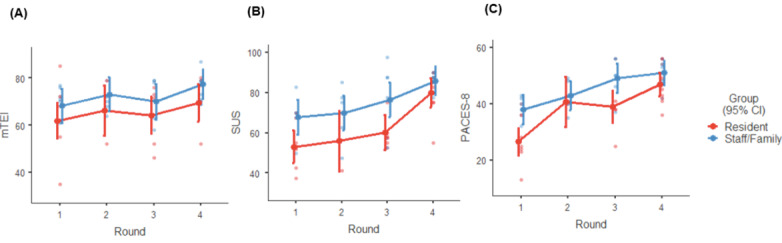
BACKGROUND: Older adults (OAs) residing in long-term care (LTC) homes are often unable to engage in adequate amounts of physical activity because of multiple comorbidities, including frailty and severe cognitive impairments. This level of physical inactivity is associated with declines in cognitive and functional abilities and can be further compounded by social isolation. Exergaming, defined as a combination of exercise and gaming, has the potential to engage OAs in exercise and encourage social interaction. However, previously used systems such as the Nintendo Wii are no longer commercially available, and the physical design of other exergames is not suitable for OAs (ie, fall risks, accessibility issues, and games geared toward a younger population) with diverse physical and cognitive impairments. OBJECTIVE: This study aims to design and develop a novel, user-centered, evidence-based exergaming system for use among OAs in LTC homes. In addition, we aim to identify facilitators and barriers to the implementation of our exergaming intervention, the MouvMat, into LTC homes according to staff input. METHODS: This study used a user-centered design (UCD) process that consisted of 4 rounds of usability testing. The exergame was developed and finalized based on existing evidence, end user and stakeholder input, and user testing. Semistructured interviews and standardized and validated scales were used iteratively to evaluate the acceptability, usability, and physical activity enjoyment of the MouvMat. RESULTS: A total of 28 participants, 13 LTC residents, and 15 staff and family members participated in the UCD process for over 18 months to design and develop the novel exergaming intervention, the MouvMat. The iterative use of validated scales (System Usability Scale, 8-item Physical Activity Enjoyment Scale, and modified Treatment Evaluation Inventory) indicated an upward trend in the acceptability, usability, and enjoyment scores of MouvMat over 4 rounds of usability testing, suggesting that identified areas for refinement and improvement were appropriately addressed by the team. A qualitative analysis of semistructured interview data found that residents enjoyed engaging with the prototype and appreciated the opportunity to increase their PA. In addition, staff and stakeholders were drawn to MouvMat's ability to increase residents' autonomous PA. The intended and perceived benefits of MouvMat use, that is, improved physical and cognitive health, were the most common facilitators of its use identified by study participants. CONCLUSIONS: This study was successful in applying UCD to collaborate with LTC residents, despite the high number of physical and sensory impairments that this population experiences. By following a UCD process, an exergaming intervention that meets diverse requirements (ie, hardware design features and motivation) and considers environmental barriers and residents' physical and cognitive needs was developed. The effectiveness of MouvMat in improving physical and cognitive abilities should be explored in future multisite randomized controlled trials.
Overview
The claims and statistics of this paper haven’t been checked yet.
Free: it reads the open-access text and checks the first 5 claims that cite a source we can check. Create a free account to check every claim.
Integrity signals
Registry
Cites
Statistics
Figures
Verification
Claims the paper makes
The claims and statistics of this paper haven’t been checked yet.
Free: it reads the open-access text and checks the first 5 claims that cite a source we can check. Create a free account to check every claim.
Claims other papers make about this one
Each is checked against this paper’s own text: does it say what the citing paper says it does?
In the citing paper
“More research developing technologies are also being conducted with older adults (Chu et al., 2021; Harrington et al., 2018), but there is a need for continued analysis of the process to address aspects of ageism (Mannheim et al., 2019).”
From Digital ageism: challenges and opportunities in artificial intelligence for older adults (2022) · cites this paper as Chu et al., 2021
Self-check
Percentages, sums and reported differences re-computed from the paper’s own numbers.
The self-check needs the paper’s full text.
Citations
Cites
Using thematic analysis in psychology
Braun, V., & Clarke, V. (2006) · Qualitative Research in Psychology · doi:10.1191/1478088706qp063oa · Cited by 194,414
Three Approaches to Qualitative Content Analysis
Hsieh, H.-F., & Shannon, S. E. (2005) · Qualitative Health Research · doi:10.1177/1049732305276687 · Cited by 44,601 · cited 2×
“We believe that the use of a question guide with open-ended questions and allowing the participants to speak freely, as well as triangulation [50,70] of the data, contributed to the validity of the results.”
BackgroundMethod(1998) · Cited by 13,501
(2009) · Cited by 6,311
The Mini‐Mental State Examination: A Comprehensive Review
Tombaugh, T. N., & McIntyre, N. J. (1992) · Journal of the American Geriatrics Society · doi:10.1111/j.1532-5415.1992.tb01992.x · Cited by 5,152 · cited 7×
“It should also be noted that the analysis of the average MMSE scores of participants who completed the rounds indicated that selective attrition of participants with poorer cognitive function and frailty was not an issue; in particular, MMSE scores were lowest in participants who completed 3 rounds of testing.”
MethodInfluentialThe Constant Comparative Method of Qualitative Analysis
Glaser, B. G. (1965) · Social Problems · doi:10.2307/798843 · Cited by 4,588 · cited 1×
“In addition, the team would debrief and discuss observations at the end of each testing day by applying an adapted constant comparison approach [51] with themes from the preceding sessions.”
MethodProtocol Analysis: Verbal Reports as Data
Ericsson, K. A., & Simon, H. A. (1993) · doi:10.7551/mitpress/5657.001.0001 · Cited by 3,537
The World report on ageing and health: a policy framework for healthy ageing
Beard, J. R., Officer, A., de Carvalho, I. A., Sadana, R., Pot, A. M., Michel, J.-P., Lloyd-Sherlock, P., Epping-Jordan, J. E., Peeters, G. M. E. E. (., Mahanani, W. R., et al. (2016) · The Lancet · doi:10.1016/s0140-6736(15)00516-4 · Cited by 3,287 · cited 1×
“The World Health Organization [13] reports a critical need for interventions that can help OAs maintain their physical and cognitive health and reduce social isolation.”
BackgroundHertzog, C., Kramer, A. F., Wilson, R. S., & Lindenberger, U. (2008) · Psychological Science in the Public Interest · doi:10.1111/j.1539-6053.2009.01034.x · Cited by 1,495 · cited 1×
“The mechanism of this benefit is supported by the cognitive enrichment hypothesis [22], which states that the collective behaviors of an individual have a meaningful positive impact on cognition and function in old age.”
BackgroundMandolesi, L., Polverino, A., Montuori, S., Foti, F., Ferraioli, G., Sorrentino, P., & Sorrentino, G. (2018) · Frontiers in Psychology · doi:10.3389/fpsyg.2018.00509 · Cited by 1,038 · cited 1×
“Routine physical activity (PA) is a widely recognized component of healthy aging among OAs [4-6].”
BackgroundA Review of Social Isolation: An Important but Underassessed Condition in Older Adults
Nicholson, N. R. (2012) · The Journal of Primary Prevention · doi:10.1007/s10935-012-0271-2 · Cited by 781 · cited 1×
“The high prevalence of physical and cognitive impairments among LTC residents also compounds social isolation [10,11], a risk factor that negatively influences cognitive [12] and mental health.”
BackgroundACCEPTABILITY OF ALTERNATIVE TREATMENTS FOR DEVIANT CHILD BEHAVIOR
Kazdin, A. E. (1980) · Journal of Applied Behavior Analysis · doi:10.1901/jaba.1980.13-259 · Cited by 692 · cited 1×
“An adapted modified Treatment Evaluation Inventory (m-TEI) [40,41] was used to assess the acceptability of residents and stakeholders (ie, collaterals and staff).”
MethodJull, J., Giles, A., & Graham, I. D. (2017) · Implementation Science · doi:10.1186/s13012-017-0696-3 · Cited by 651 · cited 1×
“Moving forward, we anticipate adopting an integrated knowledge translation approach [68,69], which is a continuation of the ethos of the UCD approach used in this study.”
MethodPhysical activity is medicine for older adults
Taylor, D. (2014) · Postgraduate Medical Journal · doi:10.1136/postgradmedj-2012-131366 · Cited by 539
The Importance of Physical Activity Exercise among Older People
Langhammer, B., Bergland, A., & Rydwik, E. (2018) · BioMed Research International · doi:10.1155/2018/7856823 · Cited by 530 · cited 1×
“These findings are consistent with the current literature on habitual PA, which suggests that reducing health risk factors and maintaining functional abilities are among the most common self-reported intrinsic motivators for engaging in exercise among OAs [54-56].”
ResultExercise acts as a drug; the pharmacological benefits of exercise
Vina, J., Sanchis‐Gomar, F., Martinez‐Bello, V, & Gomez‐Cabrera, M. (2012) · British Journal of Pharmacology · doi:10.1111/j.1476-5381.2012.01970.x · Cited by 443 · cited 1×
“Routine physical activity (PA) is a widely recognized component of healthy aging among OAs [4-6].”
BackgroundHarte, R., Glynn, L., Rodríguez-Molinero, A., Baker, P. M., Scharf, T., Quinlan, L. R., & ÓLaighin, G. (2017) · JMIR Human Factors · doi:10.2196/humanfactors.5443 · Cited by 399 · cited 2×
“We applied a user-centered, iterative design process [28,29] to center the experiences and perspectives of residents and other stakeholders to address the safety, accessibility, and practical disadvantages of existing systems.”
MethodMullen, S. P., Olson, E. A., Phillips, S. M., Szabo, A. N., Wójcicki, T. R., Mailey, E. L., Gothe, N. P., Fanning, J. T., Kramer, A. F., & McAuley, E. (2011) · International Journal of Behavioral Nutrition and Physical Activity · doi:10.1186/1479-5868-8-103 · Cited by 359 · cited 1×
“Third, the 8-item Physical Activity Enjoyment Scale (PACES-8) [44] is a brief measure of subjective enjoyment of physical exercise validated in OAs [44].”
BackgroundSkjæret, N., Nawaz, A., Morat, T., Schoene, D., Helbostad, J. L., & Vereijken, B. (2016) · International Journal of Medical Informatics · doi:10.1016/j.ijmedinf.2015.10.008 · Cited by 355 · cited 1×
“The current literature suggests that exergames have positive social, cognitive, and physical effects [18-21].”
BackgroundEthical and Methodological Issues in Interviewing Persons With Dementia
Hellström, I., Nolan, M., Nordenfelt, L., & Lundh, U. (2007) · Nursing Ethics · doi:10.1177/0969733007080206 · Cited by 348 · cited 1×
“LTC residents are a historically challenging group to conduct research with [57-59], especially those with cognitive impairment [60-62], and as such have often been excluded from research [63].”
BackgroundIn-office mental status testing: a practical guide.
Mungas, D. (1991) · PubMed · Cited by 298
Defining Integrated Knowledge Translation and Moving Forward: A Response to Recent Commentaries
Kothari, A., McCutcheon, C., & Graham, I. D. (2017) · International Journal of Health Policy and Management · doi:10.15171/ijhpm.2017.15 · Cited by 259 · cited 1×
“Moving forward, we anticipate adopting an integrated knowledge translation approach [68,69], which is a continuation of the ethos of the UCD approach used in this study.”
MethodEffects of Using Nintendo Wii™ Exergames in Older Adults: A Review of the Literature
Chao, Y.-Y., Scherer, Y. K., & Montgomery, C. A. (2015) · Journal of Aging and Health · doi:10.1177/0898264314551171 · Cited by 240 · cited 1×
“Although these gaming systems are accessible for research purposes, the physical design poses safety hazards for residents [25].”
BackgroundReducing social isolation and loneliness in older people: a systematic review protocol
Landeiro, F., Barrows, P., Nuttall Musson, E., Gray, A. M., & Leal, J. (2017) · BMJ Open · doi:10.1136/bmjopen-2016-013778 · Cited by 222
Older Adults' Intrinsic and Extrinsic Motivation Toward Physical Activity
Dacey, M. (2008) · American Journal of Health Behavior · doi:10.5993/ajhb.32.6.2 · Cited by 195
Taylor, J. S., DeMers, S. M., Vig, E. K., & Borson, S. (2012) · Journal of the American Geriatrics Society · doi:10.1111/j.1532-5415.2011.03847.x · Cited by 192 · cited 1×
“LTC residents are a historically challenging group to conduct research with [57-59], especially those with cognitive impairment [60-62], and as such have often been excluded from research [63].”
BackgroundPichierri, G., Murer, K., & de Bruin, E. D. (2012) · BMC Geriatrics · doi:10.1186/1471-2318-12-74 · Cited by 183 · cited 1×
“Third, the games offered are generally designed around the interests of younger populations and often encompass small text, fast flashing screens with visual distraction, and unrelatable game concepts that are more difficult for OAs to comprehend (eg, collecting imaginary characters) [26].”
BackgroundSkin substitutes to enhance wound healing
Mansbridge, J. (1998) · Expert Opinion on Investigational Drugs · doi:10.1517/13543784.7.5.803 · Cited by 181
Murphy, K., Jordan, F., Hunter, A., Cooney, A., & Casey, D. (2015) · Dementia · doi:10.1177/1471301213512489 · Cited by 174 · cited 1×
“Special considerations when working with this population [62,64] included assessing assent, using effective communication strategies to fill out the validated tools, and conducting interviews.”
BackgroundFu, S. N., Gao, K. L., Tung, A. K., Tsang, W. W. N., & Kwan, M. M. S. (2015) · Archives of Physical Medicine and Rehabilitation · doi:10.1016/j.apmr.2015.08.427 · Cited by 169 · cited 1×
“Exergaming products are a safe way to improve these outcomes in OAs [14-17].”
BackgroundFrailty in Nursing Homes: The FRAIL-NH Scale
Kaehr, E. W., Visvanathan, R., Malmstrom, T. K., & Morley, J. E. (2014) · Journal of the American Medical Directors Association · doi:10.1016/j.jamda.2014.12.002 · Cited by 169 · cited 1×
“Once enrolled, a research assistant collected demographic information and familiarity with electronic devices and game technologies, administered the MMSE [31], and completed the Frailty in Nursing Homes Scale (FRAIL-NH) [32], with the latter two measures administered to residents only.”
MethodChallenges in Conducting Qualitative Research with Individuals with Dementia
Beuscher, L., & Grando, V. T. (2009) · Research in Gerontological Nursing · doi:10.3928/19404921-20090101-04 · Cited by 156 · cited 1×
“LTC residents are a historically challenging group to conduct research with [57-59], especially those with cognitive impairment [60-62], and as such have often been excluded from research [63].”
BackgroundUsing interRAI assessment systems to measure and maintain quality of long-term care
(2013) · OECD health policy studies · doi:10.1787/9789264194564-7-en · Cited by 153
Monsalves, M. J., Bangdiwala, A. S., Thabane, A., & Bangdiwala, S. I. (2020) · BMC Medical Research Methodology · doi:10.1186/s12874-019-0876-8 · Cited by 153
The Social Effects of Exergames on Older Adults: Systematic Review and Metric Analysis
Li, J., Erdt, M., Chen, L., Cao, Y., Lee, S.-Q., & Theng, Y.-L. (2018) · Journal of Medical Internet Research · doi:10.2196/10486 · Cited by 150 · cited 2×
“First, interactive gaming platforms that encourage movement, such as Nintendo Wii Yoga and Dance Dance Revolution, use raised platforms or metal pads and mats posing a fall risk and accessibility issues for residents with physical disabilities or who require wheelchairs [19].”
BackgroundChallenges to conducting research with older people living in nursing homes
Hall, S., Longhurst, S., & Higginson, I. J. (2009) · BMC Geriatrics · doi:10.1186/1471-2318-9-38 · Cited by 126 · cited 2×
“An in-depth understanding of the complex physical, cognitive, and medical complexities of this population is imperative because LTC residents often experience symptoms, including fatigue and hearing or visual impairments, which can severely impact all aspects of the research, especially recruitment, retention, and dat…”
BackgroundRegular group exercise contributes to balanced health in older adults in Japan: a qualitative study
Komatsu, H., Yagasaki, K., Saito, Y., & Oguma, Y. (2017) · BMC Geriatrics · doi:10.1186/s12877-017-0584-3 · Cited by 125 · cited 1×
“These findings are consistent with the current literature on habitual PA, which suggests that reducing health risk factors and maintaining functional abilities are among the most common self-reported intrinsic motivators for engaging in exercise among OAs [54-56].”
ResultUsability and acceptability of balance exergames in older adults: A scoping review
Nawaz, A., Skjæret, N., Helbostad, J. L., Vereijken, B., Boulton, E., & Svanaes, D. (2016) · Health Informatics Journal · doi:10.1177/1460458215598638 · Cited by 121 · cited 1×
“However, an ongoing analysis of the existing body of evidence regarding the validity of exergaming as an activity for OAs has revealed that many studies are outdated [23] and are predominantly based on gaming systems that are no longer commercially available, such as the Nintendo Wii or the XBOX Kinect [24].”
BackgroundEffects of Exergaming in People with Dementia: Results of a Systematic Literature Review
van Santen, J., Dröes, R.-M., Holstege, M., Henkemans, O. B., van Rijn, A., de Vries, R., van Straten, A., & Meiland, F. (2018) · Journal of Alzheimer’s Disease · doi:10.3233/jad-170667 · Cited by 111 · cited 2×
“In addition to the gaming system limitations of previous work, from a methodological perspective, there are only a small number of exergaming studies that included residents with cognitive impairment [18], despite 87% of residents living with some type of cognitive impairment [27].”
BackgroundPrevalence of Diabetes and the Burden of Comorbid Conditions Among Elderly Nursing Home Residents
Dybicz, S. B., Thompson, S., Molotsky, S., & Stuart, B. (2011) · The American Journal of Geriatric Pharmacotherapy · doi:10.1016/j.amjopharm.2011.05.001 · Cited by 104 · cited 1×
“However, it is difficult for OAs who reside in LTC homes (herein referred to as residents) to engage in adequate amounts of PA because of multiple comorbidities, including frailty and severe cognitive impairments [1,7].”
BackgroundVerheijden Klompstra, L., Jaarsma, T., & Strömberg, A. (2014) · European Journal of Cardiovascular Nursing · doi:10.1177/1474515113512203 · Cited by 101
Yeşilyaprak, S. S., Yıldırım, M. Ş., Tomruk, M., Ertekin, Ö., & Algun, Z. C. (2016) · Physiotherapy Theory and Practice · doi:10.3109/09593985.2015.1138009 · Cited by 97
Reflections and Recommendations for Conducting In-Depth Interviews With People With Dementia
Cridland, E. K., Phillipson, L., Brennan-Horley, C., & Swaffer, K. (2016) · Qualitative Health Research · doi:10.1177/1049732316637065 · Cited by 94 · cited 4×
“Consistent with other studies [62], we also experienced user testing sessions being postponed or canceled if the resident was ill or had a medical appointment and scheduled for other activities, and residents often felt too lethargic to engage in PA after lunch; therefore, patience and open and empathetic attitudes fr…”
BackgroundResultInfluentialStrategies to improve recruitment of people with dementia to research studies
Bartlett, R. L., Milne, R., & Croucher, R. (2018) · Dementia · doi:10.1177/1471301217748503 · Cited by 88 · cited 1×
“LTC residents are a historically challenging group to conduct research with [57-59], especially those with cognitive impairment [60-62], and as such have often been excluded from research [63].”
BackgroundGrossman, M. D., & Stewart, A. L. (2003) · The American Journal of Geriatric Cardiology · doi:10.1111/j.1076-7460.2003.01753.x · Cited by 82 · cited 1×
“These findings are consistent with the current literature on habitual PA, which suggests that reducing health risk factors and maintaining functional abilities are among the most common self-reported intrinsic motivators for engaging in exercise among OAs [54-56].”
ResultAnticipated affective consequences of physical activity adoption and maintenance.
Dunton, G. F., & Vaughan, E. (2008) · Health Psychology · doi:10.1037/0278-6133.27.6.703 · Cited by 64 · cited 1×
“Furthermore, OAs’ anticipated enjoyment from physical activities can predict their adoption of and motivation to engage in physical activities [46,47].”
BackgroundExergaming in Older Adults: Movement Characteristics While Playing Stepping Games
Skjæret-Maroni, N., Vonstad, E. K., Ihlen, E. A. F., Tan, X., Helbostad, J. L., & Vereijken, B. (2016) · Frontiers in Psychology · doi:10.3389/fpsyg.2016.00964 · Cited by 60 · cited 1×
“The barriers to uptake in this study are corroborated by existing research in gerotechnology [65-67].”
ResultErgonomics of human-system interaction. Human-centred design for interactive systems
(2020) · BSI Standards · doi:10.3403/30388991u · Cited by 53
Ergonomics of human-system interaction: Part 210: Human-centred design for interactive systems
(2015) · BSI Standards · doi:10.3403/30186637u · Cited by 48
Using Commercial Video Games for Falls Prevention in Older Adults
Pietrzak, E. R., Cotea, C., & Pullman, S. (2014) · Journal of Geriatric Physical Therapy · doi:10.1519/jpt.0b013e3182abe76e · Cited by 42 · cited 1×
“Exergaming products are a safe way to improve these outcomes in OAs [14-17].”
BackgroundAssessing Older Adults’ Usability Challenges Using Kinect-Based Exergames
Harrington, C., Hartley, J. Q., Mitzner, T. L., & Rogers, W. A. (2015) · Lecture notes in computer science · doi:10.1007/978-3-319-20913-5_45 · Cited by 34 · cited 1×
“The barriers to uptake in this study are corroborated by existing research in gerotechnology [65-67].”
ResultHämmig, O. (2019) · PLoS ONE · doi:10.1371/journal.pone.0222124 · Cited by 31 · cited 1×
“The high prevalence of physical and cognitive impairments among LTC residents also compounds social isolation [10,11], a risk factor that negatively influences cognitive [12] and mental health.”
BackgroundIdentifying Potential Usability Challenges for Xbox 360 Kinect Exergames for Older Adults
Marinelli, E. C., & Rogers, W. A. (2014) · Proceedings of the Human Factors and Ergonomics Society Annual Meeting · doi:10.1177/1541931214581260 · Cited by 22 · cited 1×
“The barriers to uptake in this study are corroborated by existing research in gerotechnology [65-67].”
ResultChu, C., Puts, M., Brooks, D., Parry, M., & McGilton, K. (2018) · Rehabilitation Nursing · doi:10.1097/rnj.0000000000000186 · Cited by 19 · cited 1×
“An adapted modified Treatment Evaluation Inventory (m-TEI) [40,41] was used to assess the acceptability of residents and stakeholders (ie, collaterals and staff).”
MethodSelf-citationZhou, J., & Salvendy, G. (2015) · Lecture notes in computer science · doi:10.1007/978-3-319-20913-5 · Cited by 12
Using environmental engineering to increase hand hygiene compliance: a cross-over study protocol
Schmidtke, K. A., Aujla, N., Marshall, T. P., Hussain, A., Hodgkinson, G. P., Arheart, K. L., Marti, J., Birnbach, D. J., & Vlaev, I. (2017) · BMJ Open · doi:10.1136/bmjopen-2017-017108 · Cited by 12 · cited 1×
“LTC residents are a historically challenging group to conduct research with [57-59], especially those with cognitive impairment [60-62], and as such have often been excluded from research [63].”
BackgroundThe social organization of a sedentary life for residents in long‐term care
Benjamin, K., Rankin, J. M., Edwards, N. C., Ploeg, J., & Legault, F. (2015) · Nursing Inquiry · doi:10.1111/nin.12120 · Cited by 9 · cited 1×
“The sedentary nature of living in LTC homes is well documented [8], and this level of physical inactivity significantly increases the likelihood of further declines in cognitive and functional abilities, especially in the first few months after OAs are admitted to LTC homes [9].”
BackgroundSizing Up the Challenge Ahead: Future Demographic Trends and Long-term Care Costs
OECD (2011) · OECD health policy studies · doi:10.1787/9789264097759-7-en · Cited by 9
Chu, C. H., & McGilton, K. S. (2016) · Alzheimer s & Dementia · doi:10.1016/j.jalz.2016.06.937 · Cited by 3 · cited 1×
“The sedentary nature of living in LTC homes is well documented [8], and this level of physical inactivity significantly increases the likelihood of further declines in cognitive and functional abilities, especially in the first few months after OAs are admitted to LTC homes [9].”
BackgroundSelf-citation(2015) · Springer Publishing Company eBooks · doi:10.1891/9780826126092.0002 · Cited by 2
Exergaming improves dynamic balance in community dwelling elderly
Lamoth, C. J. C., & Caljouw, S. R. (2011) · IOS Press eBooks · doi:10.3233/978-1-60750-814-4-818 · Cited by 2
Chu, C. H., Biss, R. K., Sultana, A., Gauthier-Beaupré, A., & Talebzadeh, A. (2019) · Innovation in Aging · doi:10.1093/geroni/igz038.1764 · Cited by 1
Self-citation41. The Book That Would Not Die
Whyte, W. F. (2019) · Cornell University Press eBooks · doi:10.7591/9781501744921-042 · Cited by 1
National Cancer Institute (2020) · Definitions · doi:10.32388/16b69w · Cited by 1
Research works printed but not linked: 6
- Beaupré G Amélie Biss R Sultana A Chu C The effects of exergaming interventions on cognition and physical activity of institutionalized older adults: a systematic review Proceedings of the 9th Canadian Conference on Gerontology 2017 The 9th Canadian Conference on Dementia (CCD) November, 2017 Toronto, ON, Canada
- Sultana A Biss R Chu C Designing an exergaming device for older adults residing in long-term care homes Proceedings of the Workshop on Designing Interactions for the Aging Populations to Be Held with Association for Computing Machinery Conference on Human Factors in Computing Systems 2018 2018 Workshop on Designing Interactions for the Aging Populations to Be Held with Association for Computing Machinery Conference on Human Factors in Computing Systems 2018 2018 Montreal, Canada
- Rubin J Chisnell D Spool J Handbook of Usability Testing (2nd ed.) 2008 New Jersey, United States Wiley
- Brooke J SUS-A quick and dirty usability scale Usab Eval Ind 1996 Florida CRC Press 4 7
- Wankel L The importance of enjoyment to adherence and psychological benefits from physical activity Int J Sport Exerc Psychol 1993
- Miles MB Huberman AM Saldaña J Qualitative Data Analysis: A Methods Sourcebook and The Coding Manual for Qualitative Researchers Tech Comm Q 2014 12 24 Thousand Oaks, CA SAGE Publications Ltd 109 12
Cited by
Digital ageism: challenges and opportunities in artificial intelligence for older adults
Chu, C. H., Nyrup, R., Leslie, K., Shi, J., Bianchi, A., Lyn, A., McNicholl, M., Khan, S., Rahimi, S., & Grenier, A. (2022) · The Gerontologist · doi:10.1093/geront/gnab167 · Cited by 290
“More research developing technologies are also being conducted with older adults (Chu et al., 2021; Harrington et al., 2018), but there is a need for continued analysis of the process to address aspects of ageism (Mannheim et al., 2019).”
Self-citationCastillo, J. F. V., Montoya, M. F., Muñoz, J. E., Lopez, D., Quiñones, L., Henao, O. A., & Lopez, J. F. (2024) · JMIR Serious Games · doi:10.2196/48900 · Cited by 74
“In addition, in this prior study, we considered the following clinical requirements when developing the VR exergame [34,35].”
BackgroundChu, C. H., Ronquillo, C., Khan, S., Hung, L., & Boscart, V. (2021) · Journal of Aging & Social Policy · doi:10.1080/08959420.2021.1927620 · Cited by 52
“Other technologies for leisure that are in their nascent stages include music technology (Creech, 2019), exergaming systems that encourage physical activity designed for LTC residents (Chu et al., 2021b) and virtual reality (Dermody et al., 2020).”
BackgroundSelf-citationTuan, S., Chang, L.-H., Sun, S., Li, C.-H., Chen, G., & Tsai, Y. (2024) · Journal of Medical Internet Research · doi:10.2196/59468 · Cited by 56
“Most research focuses on improvements in health-related quality of life (HRQoL), cognitive functions, and overall functional status [22,23].”
Kamnardsiri, T., Phirom, K., Boripuntakul, S., & Sungkarat, S. (2021) · JMIR Serious Games · doi:10.2196/27848 · Cited by 53
“To overcome this limitation, the UCD approach, which incorporates game design principles (ie, goals, rules, feedback, points, time, reward structures, levels, and aesthetics), was used in the process of designing and developing a game-based exercise prototype with an aim to motivate and engage older adults in exercisi…”
BackgroundMethod
Metadata
- Authors
- Chu, C. H., Biss, R. K., Cooper, L., Quan, A. M. L., & Matulis, H.
- Affiliations
- University Health Network (CA)
- University of Windsor (CA)
- University of Toronto (CA)
- Corresponding author
- Chu, Charlene H
- Venue
- JMIR Serious Games
- Publisher
- JMIR Publications Inc.
- Published
- 2021-03-09
- Volume
- 9
- Issue
- 1
- Pages
- e22370
- ISSN
- 2291-9279 (ISSN-L)
- PMC
- PMC7988392
- OpenAlex
- W3129340383
- Cited by
- 74
- References
- 64
- Citations by year
- 2026: 8 · 2025: 12 · 2024: 23 · 2023: 13 · 2022: 11 · 2021: 7
- FWCI
- 21.27
- Type
- journal article
- Language
- en
- Open access
- gold
- doi.org
- Licence
- cc-by
- Locations
- JMIR Serious Games (publishedVersion, cc-by)
- PubMed Central (publishedVersion, cc-by)
- PubMed (publishedVersion)
- DOAJ (DOAJ: Directory of Open Access Journals) (submittedVersion, cc-by-sa)
- Scholarship at UWindsor (University of Windsor) (submittedVersion)
- Funders
- AGE-WELL
- Women's College Hospital
- Topics
- Health Sciences › Medicine › Geriatrics and Gerontology › Technology Use by Older Adults
- Social Sciences › Psychology › Developmental and Educational Psychology › Educational Games and Gamification
- Health Sciences › Medicine › Public Health, Environmental and Occupational Health › Physical Activity and Health
- Keywords
- exergames, older adults, long-term care facilities, physical activity, user-centered design, usability, physical activity enjoyment, implementation barriers and facilitators, staff perspectives, cognitive impairment, frailty, social isolation, assistive technology, treatment acceptability, fall risk, accessibility, Nintendo Wii, System Usability Scale, Physical Activity Enjoyment Scale
About these checks
Registry, retraction, Cites and statistics results are computed, not judged, with one exception: a printed reference that no index lists is read once by a model before it counts as a citation error. Claims are extracted by a model and kept only when their quote appears verbatim in the text; each cited source is then checked, with a model’s help, for whether it says what the claim relies on. Those verdicts can be wrong — read the claim’s quote and the cited source before relying on one.
Statistics and arithmetic are recomputed, not judged.
Confidence bands are shown only for fields calibrated on our annotated test set. None is calibrated yet, so no band is shown.
What counts as a claim ›How we measure confidence ›How we check this ›
Are you an author, or do you see a problem with this page? Request a review
Data sources
Bibliographic data: Semantic Scholar, OpenAlex, Crossref.
Contains information from the Semantic Scholar Academic Graph Datasets, made available under the ODC Attribution License (ODC-BY 1.0).
Semantic Scholar’s data is described in: Kinney, R., et al. (2023). The Semantic Scholar Open Data Platform. arXiv:2301.10140.
