

Differences in Psychological Inflexibility Among Men With Erectile Dysfunction Younger and Older Than 40 Years: Web-Based Cross-Sectional Study
Open accessPublished version of a preprint
The DOI matches its Crossref record; 27 of the 27 references it cites were found in a registry or an index; none of the 2 sources its claims cite is checked for support yet.
Abstract
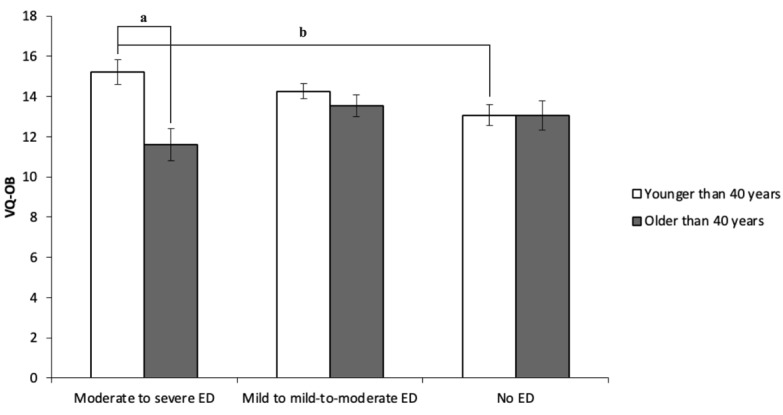
Background: Psychological inflexibility is a core concept of acceptance and commitment therapy (ACT), which is a comprehensive, transdiagnostic interpretation of mental health symptoms. Erectile dysfunction (ED) is a condition that affects male sexual performance, involving the inability to achieve and maintain a penile erection sufficient for satisfactory sexual activity. Psychosocial factors primarily influence ED in men younger than 40 years, whereas biological factors are more likely to be the underlying cause in older men. Objective: This web-based cross-sectional study examined differences in depression, anxiety, and psychological inflexibility among men with ED younger and older than 40 years in a Japanese population. Methods: We used a web-based survey to gather data from various community samples. ED was assessed by the International Index of Erectile Function‐5 (IIEF-5) questionnaire, while depression, anxiety, and psychological inflexibility were evaluated by the Patient Health Questionnaire-9 (PHQ-9), General Anxiety Disorder-7 (GAD-7), Acceptance and Action Questionnaire-II (AAQ-II), Cognitive Fusion Questionnaire (CFQ), and Valuing Questionnaire–Obstacle Subscale (VQ-OB) questionnaires. The chi‐square test estimated the scores of PHQ-9 and GAD-7 among men with ED, comparing those younger than 40 years and those older than 40 years. Additionally, a two-way ANOVA was conducted with ED severity and age group as independent variables, assessing psychological inflexibility. Results: Valid responses from 643 individuals (mean age 36.19, SD 7.54 years) were obtained. Of these, 422 were younger than 40 years (mean age 31.76, SD 5.00 years), and 221 were older than 40 years (mean age 44.67, SD 2.88 years). There was a statistical difference in the prevalence of depression as judged by PHQ≥10 between men with ED younger and older than 40 years (P<.001). On the other hand, there was no difference in the prevalence of anxiety as judged by GAD≥10 (P=.12). The two-way ANOVA revealed that the interactions for CFQ (P=.04) and VQ-OB (P=.01) were significant. The simple main effect was that men with ED younger than 40 years had significantly higher CFQ (P=.01; d=0.62) and VQ-OB (P<.001; d=0.87) scores compared to those older than 40 years in moderate ED and severe ED. Additionally, it was found that men younger than 40 years with moderate to severe ED had significantly higher CFQ (P=.01; d=0.42) and VQ-OB (P=.02; d=0.38) scores compared to men younger than 40 years without ED. On the other hand, no interaction was found for AAQ-II (P=.16) scores. Conclusions: To the best of our knowledge, this web-based cross-sectional study is the first to examine the relationship between psychological inflexibility and ED. We conclude that men with moderate and severe ED younger than 40 years have higher psychological inflexibility and might be eligible for ACT. © 2024 JMIR Publications Inc.. All rights reserved.
Overview
CoChat Summary
## TL;DR
This web-based cross-sectional study in Japan found that men with ED younger than 40 years had higher depression prevalence and, in moderate-to-severe ED, higher cognitive fusion and obstruction of valued living than men older than 40 years. The authors conclude that younger men with moderate/severe ED may be more psychologically inflexible and could be candidates for ACT.
## Key findings
- Valid responses were obtained from 643 individuals: 422 younger than 40 years (mean age 31.76, SD 5.00) and 221 older than 40 years (mean age 44.67, SD 2.88).
- Depression prevalence by PHQ-9 ≥10 was 39.81% (168/422) in men younger than 40 years versus 24.89% (55/221) in men older than 40 years (P<.001).
- Anxiety prevalence by GAD-7 ≥10 was 27.25% (115/422) in men younger than 40 years versus 21.72% (48/221) in men older than 40 years; this difference was not significant (P=.12).
- In the two-way ANOVA, interactions were significant for CFQ (P=.04) and VQ-OB (P=.01); among men with moderate and severe ED, those younger than 40 years had higher CFQ (P=.01; d=0.62) and VQ-OB (P<.001; d=0.87) scores than those older than 40 years. Men younger than 40 years with moderate to severe ED also had higher CFQ (P=.01; d=0.42) and VQ-OB (P=.02; d=0.38) scores than men younger than 40 years without ED.
## Methods
- Design: Web-based cross-sectional survey conducted in Japan.
- Sample/data: Community sample recruited via Rakuten Insight; included male participants aged 20 to 50 years who were married or living with a fixed sexual partner for more than 6 months. The study analyzed 643 valid responses after exclusions based on specified medical and medication criteria.
- Main analysis: ED severity was measured with IIEF-5; depression and anxiety with PHQ-9 and GAD-7; psychological inflexibility with AAQ-II, CFQ, and VQ-OB. Group differences were tested with chi-square tests, t tests, and two-way ANOVA with post hoc Holm correction; effect sizes were reported as Cohen d.
## Limitations
- The paper states that the cross-sectional design only shows associations, not causality.
- The paper states that no responses were obtained from partners of men with ED, and recommends including partners in future studies.
- The paper states that the participants’ racial/ethnic and socioeconomic profiles may restrict generalizability, and that the study was conducted during the COVID-19 epidemic, which may have influenced the results.
Model-written summary. Check it against the paper before relying on it.
Integrity signals
Registry
Cites
Statistics
Figures

Verification
Claims the paper makes
0 Valid · 0 Not valid · 2 Not checked · 22 Own results and interpretations
A result the paper reports from its own data — it cites no other source for it, so there is none to check. The quote shows it is in the paper.
In the paper
“On the other hand, no interaction was found for AAQ-II (P=.16) scores.”
§ Differences in Psychological Inflexibility Among Men With Erectile Dysfunction Younger and Older Than 40 Years: Web-Based Cross-Sectional Study > Abstract > Results
plainn = 643- Asserted: passes — The authors put it forward as true.
- Checkable: passes — It can be checked against evidence.
- Load-bearing: unclear — It is unclear whether the paper’s conclusions depend on it.
- Based: passes — The paper gives a reason why it holds.
A result the paper reports from its own data — it cites no other source for it, so there is none to check. The quote shows it is in the paper.
In the paper
“On the other hand, there were significant differences in the scores of CFQ (P=.04) and VQ-OB (P=.004) attributed to age.”
§ Differences in Psychological Inflexibility Among Men With Erectile Dysfunction Younger and Older Than 40 Years: Web-Based Cross-Sectional Study > Results
plainstates an association- Asserted: passes — The authors put it forward as true.
- Checkable: passes — It can be checked against evidence.
- Load-bearing: passes — The paper’s conclusions depend on it.
- Based: passes — The paper gives a reason why it holds.
A result the paper reports from its own data — it cites no other source for it, so there is none to check. The quote shows it is in the paper.
In the paper
“There was a statistical difference in the prevalence of depression as judged by PHQ≥10 between men with ED younger and older than 40 years (P<.001).”
- Also stated in: § Results · plain
“There was a statistical difference in the prevalence of depression between the two groups (P<.001).”
§ Differences in Psychological Inflexibility Among Men With Erectile Dysfunction Younger and Older Than 40 Years: Web-Based Cross-Sectional Study > Abstract > Results
plainstates an associationn = 643- Asserted: passes — The authors put it forward as true.
- Checkable: passes — It can be checked against evidence.
- Load-bearing: unclear — It is unclear whether the paper’s conclusions depend on it.
- Based: passes — The paper gives a reason why it holds.
- Also stated in: § Results · plain
A result the paper reports from its own data — it cites no other source for it, so there is none to check. The quote shows it is in the paper.
In the paper
“Additionally, it was found that men younger than 40 years with moderate to severe ED had significantly higher CFQ (P=.01; d=0.42) and VQ-OB (P=.02; d=0.38) scores compared to men younger than 40 years without ED.”
- Also stated in: § Results · plain
“Additionally, it was found that men with moderate to severe ED younger than 40 years had significantly higher CFQ (P=.01; d=0.42) and VQ-OB (P=.02; d=0.38) scores compared to men with no ED younger than 40 years.”
§ Differences in Psychological Inflexibility Among Men With Erectile Dysfunction Younger and Older Than 40 Years: Web-Based Cross-Sectional Study > Abstract > Results
plainstates an association- Asserted: passes — The authors put it forward as true.
- Checkable: passes — It can be checked against evidence.
- Load-bearing: passes — The paper’s conclusions depend on it.
- Based: passes — The paper gives a reason why it holds.
- Also stated in: § Results · plain
A result the paper reports from its own data — it cites no other source for it, so there is none to check. The quote shows it is in the paper.
In the paper
“The simple main effect was that men with ED younger than 40 years had significantly higher CFQ (P=.01; d=0.62) and VQ-OB (P<.001; d=0.87) scores compared to those older than 40 years in moderate ED and severe ED.”
- Also stated in: § Results · plain
“It was found that men with ED younger than 40 years had significantly higher CFQ (P=.01; d=0.62) and VQ-OB (P<.001; d=0.87) scores compared to those older than 40 years, in cases of moderate and severe ED.”
§ Differences in Psychological Inflexibility Among Men With Erectile Dysfunction Younger and Older Than 40 Years: Web-Based Cross-Sectional Study > Abstract > Results
plain- Asserted: passes — The authors put it forward as true.
- Checkable: passes — It can be checked against evidence.
- Load-bearing: passes — The paper’s conclusions depend on it.
- Based: passes — The paper gives a reason why it holds.
- Also stated in: § Results · plain
13 more claims
Create a free account to see all 24 claims and every source verdict.
- It may state two separate claims as one. 3
- Probably not a substantial claim. 3
- The quote only partly states this claim. 1
Citations
Cites
Acceptance and commitment therapy: model, processes and outcomes
Hayes, S. C., Luoma, J. B., Bond, F. W., Masuda, A., & Lillis, J. (2006) · Behaviour Research and Therapy · doi:10.1016/j.brat.2005.06.006 · Cited by 6,587 · cited 1×
“Cognitive fusion represents the phenomenon by which individuals are influenced by the literal meaning of their thoughts instead of viewing them as transient internal states [8].”
Background(1971) · Medical Journal of Australia · doi:10.5694/j.1326-5377.1971.tb87410.x · Cited by 2,859
Measuring experiential avoidance: A preliminary test of a working model
Hayes, S. C., Strosahl, K., Wilson, K. G., Bissett, R. T., Pistorello, J., Toarmino, D., Polusny, M. A., Dykstra, T. A., Batten, S. V., Bergan, J., et al. (2004) · The Psychological Record · doi:10.1007/bf03395492 · Cited by 2,140
Masters, S. L., Dunne, A., Subramanian, S. L., Hull, R. L., Tannahill, G. M., Sharp, F. A., Becker, C., Franchi, L., Yoshihara, E., Chen, Z., et al. (2010) · Nature Immunology · doi:10.1038/ni.1935 · Cited by 1,330
Causes of sexual dysfunction: The role of anxiety and cognitive interference.
Barlow, D. H. (1986) · Journal of Consulting and Clinical Psychology · doi:10.1037/0022-006x.54.2.140 · Cited by 896 · cited 2×
“It is also consistent with Barlow’s theory [27].”
BackgroundResultNIH Consensus Conference. Impotence. NIH Consensus Development Panel on Impotence
(1993) · JAMA · doi:10.1001/jama.270.1.83 · Cited by 843
Gregg, J. A., Callaghan, G. M., Hayes, S. C., & Glenn-Lawson, J. L. (2007) · Journal of Consulting and Clinical Psychology · doi:10.1037/0022-006x.75.2.336 · Cited by 695 · cited 1×
“There is supporting evidence for ACT across various physical illnesses (eg, chronic pain [2], diabetes [3], epilepsy [4], cancer [5], and irritable bowel syndrome [6]).”
BackgroundThe empirical status of acceptance and commitment therapy: A review of meta-analyses
Gloster, A. T., Walder, N., Levin, M. E., Twohig, M. P., & Karekla, M. (2020) · Journal of Contextual Behavioral Science · doi:10.1016/j.jcbs.2020.09.009 · Cited by 622 · cited 1×
“The efficacy of acceptance and commitment therapy (ACT) has been evaluated in numerous randomized controlled studies exploring various targeted conditions [1].”
BackgroundAraujo, A. B., Durante, R., Feldman, H. A., Goldstein, I., & McKinlay, J. B. (1998) · Psychosomatic Medicine · doi:10.1097/00006842-199807000-00011 · Cited by 576 · cited 1×
“However, it is well known that ED prevalence varies across geographical groups [16,17]; therefore, it is essential to research ED etiology according to different racial, cultural, religious, and socioeconomic backgrounds.”
BackgroundGreco, L. A., Lambert, W., & Baer, R. A. (2008) · Psychological Assessment · doi:10.1037/1040-3590.20.2.93 · Cited by 514
Research works printed but not linked: 3
- Kimoto, Y, 2009, Jpn J Impot Res, 24, 295
- Shima, T, 2016, Japanese J Behav Ther, 42, 73
- Doi, S, 2017, Japanese J Behav Ther, 43, 83
Cited by
Dróżdż, O., Dołęga, M., Gacka, P., Musialska, D., & Grzelka, M. (2024) · Quality in Sport · doi:10.12775/qs.2024.17.53372 · Cited by 1
Zhou, J., Hu, S., Ouyang, Y., et al. (2026) · World Journal of Urology · doi:10.1007/s00345-026-06391-4
Santos, V., Rosa, P. J., Roberto, M. S., Manão, A. A., Oliveira, C., Tomada, N., Osur, J. O., Telles‐Correia, D., & Pascoal, P. M. (2026) · Sexual Medicine · doi:10.1093/sexmed/qfag062
“For instance, Saito et al. showed that men with erectile dysfunction younger than 40 years have higher PI and might be eligible for ACT 29 ; however, despite measuring psychopatholog y, they focused solely on male sexual function and did not measure the level of sexual distress or sexual pleasure…”
Influential
Metadata
- Authors
- Saito, J., Kumano, H., Ghazizadeh, M., Shimokawa, C., & Tanemura, H.
- Affiliations
- Comprehensive Research Organization, Waseda University (JP)
- Waseda University (JP)
- Corresponding author
- Saito, Junichi
- Venue
- JMIR Formative Research
- Publisher
- JMIR Publications Inc.
- Published
- 2024-01-03
- Volume
- 8
- Pages
- e45998
- ISSN
- 2561-326X (ISSN-L)
- PMC
- PMC10794957
- OpenAlex
- W4390572557
- Cited by
- 3
- References
- 24
- Citations by year
- 2026: 2 · 2024: 1
- FWCI
- 0.88
- Type
- journal article
- Language
- en
- Open access
- gold
- doi.org
- Licence
- cc-by
- Locations
- JMIR Formative Research (publishedVersion, cc-by)
- PubMed Central (publishedVersion, cc-by)
- PubMed (publishedVersion)
- DOAJ (DOAJ: Directory of Open Access Journals) (submittedVersion, cc-by-sa)
- Topics
- Health Sciences › Medicine › Psychiatry and Mental health › Sexual function and dysfunction studies
- Social Sciences › Psychology › Clinical Psychology › Mindfulness and Compassion Interventions
- Social Sciences › Psychology › Experimental and Cognitive Psychology › Anxiety, Depression, Psychometrics, Treatment, Cognitive Processes
- Keywords
- erectile dysfunction, psychological inflexibility, cognitive fusion, acceptance and commitment therapy, depression, anxiety, age differences, young men, older men, sexual health, Japanese men, IIEF-5, Acceptance and Action Questionnaire-II, PHQ-9, psychosocial factors, biological factors
About these checks
Registry, retraction, Cites and statistics results are computed, not judged, with one exception: a printed reference that no index lists is read once by a model before it counts as a citation error. Claims are extracted by a model and kept only when their quote appears verbatim in the text; each cited source is then checked, with a model’s help, for whether it says what the claim relies on. Those verdicts can be wrong — read the claim’s quote and the cited source before relying on one.
A language model drew the claims from the paper on 2026-10-11, under version 3 of the claim definition (model deepseek-v4.1-flash, prompt extract-v3).
A second model labelled each claim on 2026-10-11 (model jev-1.13-20260917, definition revision gold-guideline-v0.2).
Statistics and arithmetic are recomputed, not judged.
Confidence bands are shown only for fields calibrated on our annotated test set. None is calibrated yet, so no band is shown.
What counts as a claim ›How we measure confidence ›How we check this ›
Are you an author, or do you see a problem with this page? Request a review
Data sources
Bibliographic data: Semantic Scholar, OpenAlex, Crossref.
Contains information from the Semantic Scholar Academic Graph Datasets, made available under the ODC Attribution License (ODC-BY 1.0).
Semantic Scholar’s data is described in: Kinney, R., et al. (2023). The Semantic Scholar Open Data Platform. arXiv:2301.10140.
