

Immersive Virtual Reality-Based Methods for Assessing Executive Functioning: Systematic Review
Open accessPublished version of a preprint
The DOI matches its Crossref record; 108 of the 108 references it cites were found in a registry or an index.
Abstract
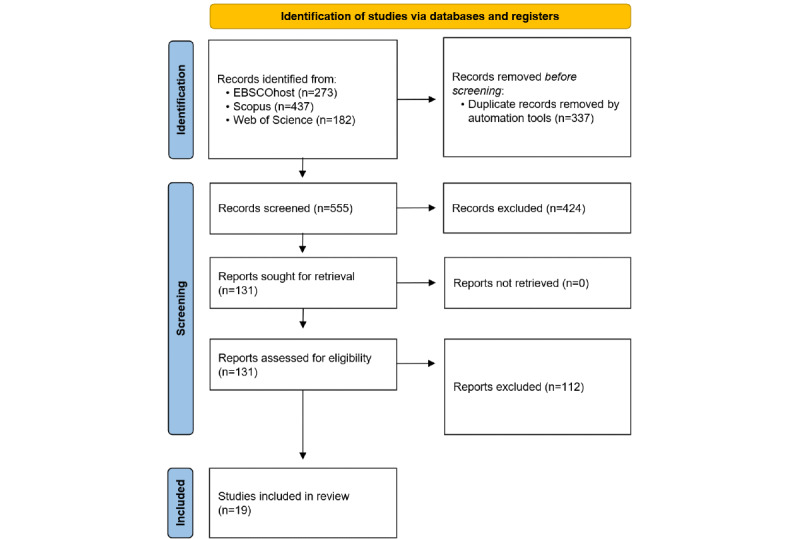
Background: Neuropsychological assessments traditionally include tests of executive functioning (EF) because of its critical role in daily activities and link to mental disorders. Established traditional EF assessments, although robust, lack ecological validity and are limited to single cognitive processes. These methods, which are suitable for clinical populations, are less informative regarding EF in healthy individuals. With these limitations in mind, immersive virtual reality (VR)–based assessments of EF have garnered interest because of their potential to increase test sensitivity, ecological validity, and neuropsychological assessment accessibility. Objective: This systematic review aims to explore the literature on immersive VR assessments of EF focusing on (1) EF components being assessed, (2) how these assessments are validated, and (3) strategies for monitoring potential adverse (cybersickness) and beneficial (immersion) effects. Methods: EBSCOhost, Scopus, and Web of Science were searched in July 2022 using keywords that reflected the main themes of VR, neuropsychological tests, and EF. Articles had to be peer-reviewed manuscripts written in English and published after 2013 that detailed empirical, clinical, or proof-of-concept studies in which a virtual environment using a head-mounted display was used to assess EF in an adult population. A tabular synthesis method was used in which validation details from each study, including comparative assessments and scores, were systematically organized in a table. The results were summed and qualitatively analyzed to provide a comprehensive overview of the findings. Results: The search retrieved 555 unique articles, of which 19 (3.4%) met the inclusion criteria. The reviewed studies encompassed EF and associated higher-order cognitive functions such as inhibitory control, cognitive flexibility, working memory, planning, and attention. VR assessments commonly underwent validation against gold-standard traditional tasks. However, discrepancies were observed, with some studies lacking reported a priori planned correlations, omitting detailed descriptions of the EF constructs evaluated using the VR paradigms, and frequently reporting incomplete results. Notably, only 4 of the 19 (21%) studies evaluated cybersickness, and 5 of the 19 (26%) studies included user experience assessments. Conclusions: Although it acknowledges the potential of VR paradigms for assessing EF, the evidence has limitations. The methodological and psychometric properties of the included studies were inconsistently addressed, raising concerns about their validity and reliability. Infrequent monitoring of adverse effects such as cybersickness and considerable variability in sample sizes may limit interpretation and hinder psychometric evaluation. Several recommendations are proposed to improve the theory and practice of immersive VR assessments of EF. Future studies should explore the integration of biosensors with VR systems and the capabilities of VR in the context of spatial navigation assessments. Despite considerable promise, the systematic and validated implementation of VR assessments is essential for ensuring their practical utility in real-world applications.
Overview
The claims and statistics of this paper haven’t been checked yet.
Free: it reads the open-access text and checks the first 5 claims that cite a source we can check. Create a free account to check every claim.
Integrity signals
Registry
Cites
Statistics
Figures
Verification
Claims the paper makes
The claims and statistics of this paper haven’t been checked yet.
Free: it reads the open-access text and checks the first 5 claims that cite a source we can check. Create a free account to check every claim.
Claims other papers make about this one
Each is checked against this paper’s own text: does it say what the citing paper says it does?
The source backs part of the claim, not all of it — or backs it for a different population, condition or comparison.
In the citing paper
“However, their accuracy in assessing functional deficits in ADHD may be limited.”
From Enhancing Ecological Validity: Virtual Reality Assessment of Executive Functioning in Children and Adolescents with ADHD (2024) · cites this paper as [5]
Experimental — accuracy not yet measuredThe source backs part of the claim, not all of it — or backs it for a different population, condition or comparison.
In the citing paper
“Typically conducted in clinical or laboratory settings, these tests often evaluate specific skills in isolation, potentially overlooking interactions between different EFs and their relevance to daily activities [4,5].”
From Enhancing Ecological Validity: Virtual Reality Assessment of Executive Functioning in Children and Adolescents with ADHD (2024) · cites this paper as [5]
Experimental — accuracy not yet measuredThe cited source says what the claim attributes to it.
In the citing paper
“Recent advancements in virtual reality (VR) technology have provided promising avenues for creating immersive digital environments that simulate real-life scenarios [5].”
From Enhancing Ecological Validity: Virtual Reality Assessment of Executive Functioning in Children and Adolescents with ADHD (2024) · cites this paper as [5]
Self-check
Percentages, sums and reported differences re-computed from the paper’s own numbers.
The self-check needs the paper’s full text.
Citations
Cites
Preferred reporting items for systematic reviews and meta-analyses: The PRISMA statement
Moher, D., Liberati, A., Tetzlaff, J., Altman, D. G., & the PRISMA Group* (2009) · Annals of Internal Medicine · doi:10.7326/0003-4819-151-4-200908180-00135 · Cited by 37,554
Miyake, A., Friedman, N. P., Emerson, M. J., Witzki, A. H., Howerter, A., & Wager, T. D. (2000) · Cognitive Psychology · doi:10.1006/cogp.1999.0734 · Cited by 15,798
Diamond, A. (2013) · Annual Review of Psychology · doi:10.1146/annurev-psych-113011-143750 · Cited by 13,268
Preferred reporting items for systematic reviews and meta-analyses: The PRISMA statement
Moher, D., Liberati, A., Tetzlaff, J., & Altman, D. G. (2010) · International Journal of Surgery · doi:10.1016/j.ijsu.2010.02.007 · Cited by 12,156 · cited 1×
“Our review methodology followed the PRISMA (Preferred Reporting Items for Systematic Reviews and Meta-Analyses) statement [57].”
MethodThe journal coverage of Web of Science and Scopus: A comparative analysis
Mongeon, P., & Paul-Hus, A. (2016) · Scientometrics · doi:10.1007/s11192-015-1765-5 · Cited by 5,274 · cited 1×
“To compensate for the bias toward engineering and natural science articles found through Scopus and WoS [59], EBSCOhost was searched for articles published in fields such as (clinical) psychology and medicine.”
MethodDelis-Kaplan Executive Function System
Delis, D. C., Kaplan, E., & Kramer, J. H. (2012) · PsycTESTS Dataset · doi:10.1037/t15082-000 · Cited by 2,683
Assessment and Development of Executive Function (EF) During Childhood
Anderson, P. (2002) · Child Neuropsychology · doi:10.1076/chin.8.2.71.8724 · Cited by 2,218
DEFICITS IN STRATEGY APPLICATION FOLLOWING FRONTAL LOBE DAMAGE IN MAN
SHALLICE, T., & BURGESS, P. W. (1991) · Brain · doi:10.1093/brain/114.2.727 · Cited by 2,017 · cited 1×
“For example, the Multiple Errands Test (MET) [31] requires individuals to run errands in a real environment (eg, a shopping center).”
BackgroundEssentials of Psychological Testing
Urbina, S. (2014) · doi:10.1002/9781394259458 · Cited by 1,845
Snyder, H. R. (2013) · Psychological Bulletin · doi:10.1037/a0028727 · Cited by 1,667 · cited 1×
“Although traditional methods used to assess EF are popular [11,12] and well validated [13], they have been criticized for their lack of ecological validity [14,15].”
Method
Research works printed but not linked: 6
- Kvavilashvili, L, 2004, History Philos Psychol, 6, 59
- Pedroli, E, 2013, Stud Health Technol Inform, 191, 38
- Riva, G, 2011, Stud Health Technol Inform, 163, 493
- Delis, DC, 2000, California Verbal Learning Test-Second Edition (CVLT-II)
- Wilson, BA, 2008, Rivermead Behavioural Memory Test - Third Edition
- D'Elia, LF, 1996, Color Trails Test
Cited by
Jespersen, A. E., Lumbye, A., Schandorff, J. M., Damgaard, V., Glenthøj, L. B., Nordentoft, M., Mikkelsen, C., Didriksen, M., Ostrowski, S. R., Vinberg, M., et al. (2024) · Journal of Affective Disorders · doi:10.1016/j.jad.2024.10.095 · Cited by 20
“…consider verisimilitude , i.e., designing simulations representative of daily-life situations, they often neglect the veridicality of the results, i.e., the investigation of how well the tasks predict real-world performance in these situations (Franzen and Wilhelm, 1996; Kirkham et al., 2024).”
Caporusso, E., Melillo, A., Perrottelli, A., Giuliani, L., Marzocchi, F. F., Pezzella, P., & Giordano, G. M. (2025) · Frontiers in Behavioral Neuroscience · doi:10.3389/fnbeh.2025.1543005 · Cited by 21
Romero-Ayuso, D., del Pino-González, A., Torres-Jiménez, A., Juan-González, J., Celdrán, F. J., Franchella, M. C., Ortega-López, N., Triviño-Juárez, J. M., Garach-Gómez, A., Arrabal-Fernández, L., et al. (2024) · Children · doi:10.3390/children11080986 · Cited by 20
“Recent advancements in virtual reality (VR) technology have provided promising avenues for creating immersive digital environments that simulate real-life scenarios [5].”
BackgroundHoran, W. P., Moore, R. C., Belanger, H. G., & Harvey, P. D. (2024) · Schizophrenia Bulletin Open · doi:10.1093/schizbullopen/sgae025 · Cited by 17
Llana, T., Garcés-Arilla, S., García-Navarra, S., Méndez-López, M., Juan, M. ‐., & Méndez, M. (2025) · Virtual Reality · doi:10.1007/s10055-025-01244-8 · Cited by 7
“One of the most sig - nificant obstacles to the widespread adoption of VR is cybersickness, a common human factor that may occur in virtual environments (VEs), which can reduce the validity of assessments (Kirkham et al. 2024; Rebenitsch and Owen 2016 ).”
Immersive training programs for schoolchildren: a systematic review
Gentile, A., & Alesi, M. (2025) · Acta Psychologica · doi:10.1016/j.actpsy.2025.105657 · Cited by 7
Sabermahani, F., Almasi‐Dooghaee, M., & Sheikhtaheri, A. (2024) · Games for Health Journal · doi:10.1089/g4h.2023.0106 · Cited by 5
“38 In another review, 108 studies with the participation of 15,902 people over 60 years old were analyzed and a total of 125 scales were identi fi ed to evaluate different aspects of old age.”
Exploring working memory across aging using virtual reality
Kamal, F., Segado, M., Shaigetz, V. G., Perron, M., Lau, B., Alain, C., & Choudhury, N. (2025) · Virtual Reality · doi:10.1007/s10055-025-01191-4 · Cited by 2
“In recent years, several studies have described attempts to develop VR versions of traditional cognitive 2D tasks to assess complex executive functions (see Kirkham et al. 2024 and Tortora et al. 2023 , for recent reviews).”
Toward embodied, ecological cognition with ambulatory virtual reality
Hill, P. F., & Ekstrom, A. D. (2026) · Trends in Cognitive Sciences · doi:10.1016/j.tics.2026.01.007 · Cited by 2
Chitale, V., Henry, J. D., Liang, H., Matthews, B., & Baghaei, N. (2024) · New Ideas in Psychology · doi:10.1016/j.newideapsych.2024.101127 · Cited by 4
Rebón-Ortiz, F., Areces, D., Saura-Carrasco, M., Flores, C. P. C., Rodríguez, C., Díaz-Orueta, U., Climent, G., & Giglioli, I. A. C. (2025) · Frontiers in Psychology · doi:10.3389/fpsyg.2025.1561802 · Cited by 3
Qiao, X., Tian, S., Tang, M., He, S., Wang, J., Fan, L., Zhu, Y., Zhang, Z., Du, S. X., Dong, C., et al. (2026) · JMIR Serious Games · doi:10.2196/83128 · Cited by 1
Shamhan, A. N. M., Hijab, M. H. F., Qaraqe, M., & Al‐Thani, D. (2026) · JMIR Serious Games · doi:10.2196/90444 · Cited by 2
“Expert evaluation by specialists in cognitive psychology and human-computer interaction is particularly important for planning assessment tools, as it supports methodological rigor and accurate interpretation of performance metrics [42].”
Vidacic, M., Lešnik, V. M., Politakis, V. A., Podlešek, A., & Štaba, U. Č. (2025) · International Journal of Rehabilitation Research · doi:10.1097/mrr.0000000000000657
“Other authors [15] have found similar associations with the TOL task, supporting the use of serious games in the assessment.”
Sensory Solutions or Overload?
Gomez, M. G. A., Petil, E. D., & Laigo, R. C. (2025) · IGI Global eBooks · doi:10.4018/979-8-3693-9969-9.ch006
Executive functions: current concepts, clinical diagnosis, and future prospects
Popova, P. S., Khrulev, A. Е., Grigoryeva, V. N., Сорокоумова, С. Н., & Суворова, О. В. (2025) · Neurology Bulletin · doi:10.17816/nb641646 · Cited by 1
National survey on the use of telepsychology in the work of psychologists in Serbia
Jocić, D., Blažanin, B., Dukanac, V., Pavlovic, V., & Pavličić, N. (2025) · Vojnosanitetski pregled · doi:10.2298/vsp250125046d
Shamhan, A. N. M., Al‐Thani, D., Qaraqe, M., & Hijab, M. H. F. (2025) · doi:10.2196/preprints.80862
Qiao, X., Tian, S., Tang, M., He, S., Wang, J., Fan, L., Zhu, Y., Zhang, Z., Du, S. X., Dong, C., et al. (2025) · doi:10.2196/preprints.83128
An Optimized Multimodal Feedback System for VR Skill Training Based on ST-GCN and WaveNet
Hu, Y., Tian, Z., Lyu, Y., & Tian, F. (2025) · International Conference on Computer Information Science and Application Technology (CISAT) · doi:10.1109/cisat66811.2025.11181883
“…latency, far exceeding the 20ms ideal for VR applications [3]; (2) multimodal asynchrony, with a lack of precise temporal alignment be-tween kinesthetic and auditory feedback [4]; and (3) limited assessment accuracy, struggling to accommodate individual variations and complex movements [5].”
Rodríguez‐Herrera, R., Fernández‐Martín, P., Sánchez-Kuhn, A., Marcos, S.-L., Miguel, S.-O., Laura, A.-P., Patricia, M.-S., León, J. J., & Pilar, F. (2025) · Virtual Reality · doi:10.1007/s10055-025-01214-0
“…has been explored in relation to certain conventional measures (Chaytor and Schmitter-Edgecombe 2003 ; Chaytor et al. 2006 ; Snyder et al. 2015), its investigation remains limited across a wide range of assessment tools, including emerging VR-based tasks (Kirkham et al. 2024 ; Neguț et al. 2016).”
InfluentialVirtual Reality Game Effect on Healthy Young Adults′ Executive Functions: A Pilot Study
Gentile, A., Presti, L. L., Cascia, M. L., Simonetti, A. M., Bianco, A., & Alesi, M. (2025) · Human Behavior and Emerging Technologies · doi:10.1155/hbe2/6121499
Virtual reality and assessment of neurocognitive functions
Djuric-Jocic, D., Pavlović, V., & Đurđevka, K. (2024) · Engrami · doi:10.5937/engrami46-53122 · Cited by 1
Montelaghi, A., Duina, M., Mule, A., & Carraro, A. (2025) · IEEE International Workshop on Sport, Technology and Research (STAR) · doi:10.1109/star66750.2025.11264803
“While these instruments are well-established and scientifically validated, they often lack ecological validity and may not fully capture attentional performance in dynamic, real-world contexts [17].”
A Review of Research on Executive Function Components and Their Assessment Methods
陈, 宗. (2025) · Advances in Psychology · doi:10.12677/ap.2025.1512643
Cognition in Autism Spectrum Disorder
Akemoğlu, Y. (2026) · Autism and child psychopathology series · doi:10.1007/978-3-032-11141-8_1
Boynton, H. G., Fontanese, M. S., & Barnett, M. D. (2026) · Assessment · doi:10.1177/10731911251407473
Uimonen, J., Merzon, L., Villarreal, S., Laari, S. P. K., Arola, A., Ijäs, P. H., Hietanen, M., & Salmi, J. (2026) · Virtual Reality · doi:10.1007/s10055-025-01287-x
“…deficits in stroke patients without spatial neglect (Brouwer et al. 2022), as well as to evaluate executive functions (EF), memory per - formance, and general attention dynamics in other clinical populations (Belger et al. 2024a; Borgnis et al. 2022; Kirkham et al. 2024; Mangalmurti et al. 2020 ).”
Tyburski, E. M., Zawadzka, E., Bober, A., Karabanowicz, E., Podwalski, P., Samochowiec, J., Michalczyk, A., Mueller, S. T., Szelepajło, M., Misiak, B., et al. (2026) · Scientific Reports · doi:10.1038/s41598-026-40643-y
“Our approach is coincident with recent recommendations 80 .”
The use of avatars to improve empathy and emotional intelligence: A scoping review
Ciarmoli, D., Scuotto, C., Vinci, L. A., & Triberti, S. (2026) · Acta Psychologica · doi:10.1016/j.actpsy.2026.106823
Beckmann, L., Donohoe, R., Schmid, D., Kiphuth, I. C., Ludwig, K., & Schenk, T. (2026) · Brain Sciences · doi:10.3390/brainsci16050541 · Cited by 1
“…heterogeneous outcome measures (e.g., [18]), uncertain added diagnostic value relative to established neuropsychological tests, and potential usability problems (e.g., [25]) related to fatigue, cybersickness, visual or motor impairments, cognitive load, unfamiliarity with technology, and cost.”
Weisse, M., Dardier, V., di Vettimo, S. S., Tsimba, V., Trolès, N., Douguet, A.-S., Jouan, V., & Lacroix, A. (2026) · Journal of Integrative Neuroscience · doi:10.31083/jin47025
Aljoudi, A. S., Al–Hakimi, A. M., & Alshehri, M. S. (2026) · IEEE International Conference on Automatic Control and Intelligent Systems (I2CACIS) · doi:10.1109/i2cacis69435.2026.11600062
Virtual Reality-Based Intervention in Neurorehabilitation
Pérez, S. E. M., Stender, C. L. H., Infante-Guedes, A., Vico-Rodríguez, P., Cano-Orihuela, M., González-Martín, A. M., SUÁREZ, A. B., & Pérez, I. M. M. (2026) · Encyclopedia · doi:10.3390/encyclopedia6080164
“From a neurocognitive perspective, these effects may reflect the allocation of limited attentional resources and the engagement of top-down executive mechanisms that influence perception, emotional salience, and cognitive appraisal [97,98].”
Carral-Trucios, E., Martinez-Zaldivar, M., Saura-Carrasco, M., & Giglioli, I. A. C. (2026) · Neuropsychology Review · doi:10.1007/s11065-026-09707-8
Cognitive function and eye movement patterns during reading tasks in older adults
Zuo, H., Lim, K. H., Huang, H., Eswaran, S., Phang, J. T. S., Song, L., Zhang, C., Li, Z., & Huang, H. (2026) · Alzheimer s & Dementia Diagnosis Assessment & Disease Monitoring · doi:10.1002/dad2.70464
“However, current VR assessments 21,22 often introduce new tasks rather than adapting established screening protocols such as the MMSE and MoCA.”
Guo, Y., Zhang, Y., Li, C., Liu, J., Yao, Z., & Yuan, Q. (2026) · International Journal of Human-Computer Interaction · doi:10.1080/10447318.2026.2740398
Rundo, F., Musso, S., Buono, S., Recupero, M., & Ferri, R. (2026) · Sensors · doi:10.3390/s26206479
Ricci, F. S., Setia, H., Hamilton-Fletcher, G., Rizzo, J., & Porfiri, M. (2026) · JMIR Serious Games · doi:10.2196/105116
Metadata
- Authors
- Kirkham, R., Kooijman, L., Albertella, L., Myles, D., Yücel, M., & Rotaru, K.
- Affiliations
- Monash University (AU)
- Deakin University (AU)
- QIMR Berghofer Medical Research Institute (AU)
- Corresponding author
- Kirkham, Rebecca
- Venue
- JMIR Serious Games
- Publisher
- JMIR Publications Inc.
- Published
- 2024-02-26
- Volume
- 12
- Pages
- e50282
- ISSN
- 2291-9279 (ISSN-L)
- PMC
- PMC10928525
- OpenAlex
- W4390419184
- Cited by
- 40
- References
- 108
- Citations by year
- 2026: 17 · 2025: 16 · 2024: 7
- FWCI
- 1.40
- Type
- journal article
- Language
- en
- Open access
- gold
- doi.org
- Licence
- cc-by
- Locations
- JMIR Serious Games (publishedVersion, cc-by)
- PubMed Central (publishedVersion, cc-by)
- PubMed (publishedVersion)
- DOAJ (DOAJ: Directory of Open Access Journals) (acceptedVersion)
- Figshare (submittedVersion, cc-by)
- Funders
- Wilson Foundation
- Department of Science and Technology, Ministry of Science and Technology, India
- Universiteit van Amsterdam
- Department of Industry, Innovation and Science, Australian Government
- National Institutes of Health
- National Health and Medical Research Council
- Defence Science and Technology Group
- Topics
- Physical Sciences › Computer Science › Human-Computer Interaction › Virtual Reality Applications and Impacts
- Social Sciences › Psychology › Experimental and Cognitive Psychology › Cognitive Functions and Memory
- Life Sciences › Neuroscience › Cognitive Neuroscience › Neural and Behavioral Psychology Studies
- Keywords
- executive function, immersive virtual reality, neuropsychological assessment, cybersickness, ecological validity, test validation, inhibitory control, cognitive flexibility, working memory, planning, attention, user experience, head-mounted displays, psychometric properties, healthy adults, clinical populations
About these checks
Registry, retraction, Cites and statistics results are computed, not judged, with one exception: a printed reference that no index lists is read once by a model before it counts as a citation error. Claims are extracted by a model and kept only when their quote appears verbatim in the text; each cited source is then checked, with a model’s help, for whether it says what the claim relies on. Those verdicts can be wrong — read the claim’s quote and the cited source before relying on one.
Statistics and arithmetic are recomputed, not judged.
Confidence bands are shown only for fields calibrated on our annotated test set. None is calibrated yet, so no band is shown.
What counts as a claim ›How we measure confidence ›How we check this ›
Are you an author, or do you see a problem with this page? Request a review
Data sources
Bibliographic data: Semantic Scholar, OpenAlex, Crossref.
Contains information from the Semantic Scholar Academic Graph Datasets, made available under the ODC Attribution License (ODC-BY 1.0).
Semantic Scholar’s data is described in: Kinney, R., et al. (2023). The Semantic Scholar Open Data Platform. arXiv:2301.10140.
