

Large Language Models and Empathy: Systematic Review
Open accessPublished version of a preprint
The DOI matches its Crossref record; 42 of the 43 references it cites were found in a registry or an index.
Abstract
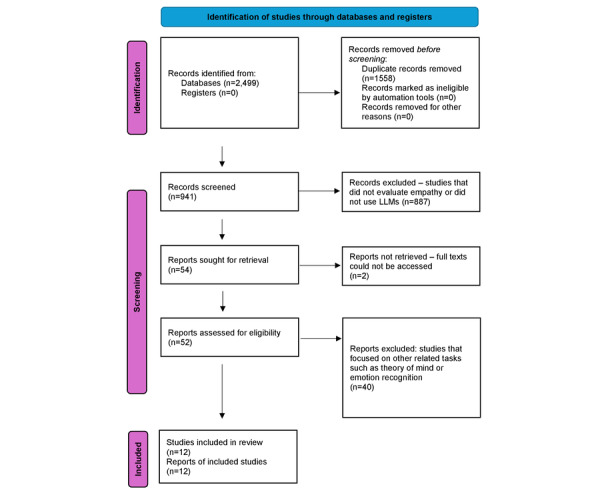
Background: Empathy, a fundamental aspect of human interaction, is characterized as the ability to experience another being’s emotions within oneself. In health care, empathy is a fundamental for health care professionals and patients’ interaction. It is a unique quality to humans that large language models (LLMs) are believed to lack. Objective: We aimed to review the literature on the capacity of LLMs in demonstrating empathy. Methods: We conducted a literature search on MEDLINE, Google Scholar, PsyArXiv, medRxiv, and arXiv between December 2022 and February 2024. We included English-language full-length publications that evaluated empathy in LLMs’ outputs. We excluded papers evaluating other topics related to emotional intelligence that were not specifically empathy. The included studies’ results, including the LLMs used, performance in empathy tasks, and limitations of the models, along with studies’ metadata were summarized. Results: A total of 12 studies published in 2023 met the inclusion criteria. ChatGPT-3.5 (OpenAI) was evaluated in all studies, with 6 studies comparing it with other LLMs such GPT-4, LLaMA (Meta), and fine-tuned chatbots. Seven studies focused on empathy within a medical context. The studies reported LLMs to exhibit elements of empathy, including emotions recognition and emotional support in diverse contexts. Evaluation metric included automatic metrics such as Recall-Oriented Understudy for Gisting Evaluation and Bilingual Evaluation Understudy, and human subjective evaluation. Some studies compared performance on empathy with humans, while others compared between different models. In some cases, LLMs were observed to outperform humans in empathy-related tasks. For example, ChatGPT-3.5 was evaluated for its responses to patients’ questions from social media, where ChatGPT’s responses were preferred over those of humans in 78.6% of cases. Other studies used subjective readers’ assigned scores. One study reported a mean empathy score of 1.84-1.9 (scale 0-2) for their fine-tuned LLM, while a different study evaluating ChatGPT-based chatbots reported a mean human rating of 3.43 out of 4 for empathetic responses. Other evaluations were based on the level of the emotional awareness scale, which was reported to be higher for ChatGPT-3.5 than for humans. Another study evaluated ChatGPT and GPT-4 on soft-skills questions in the United States Medical Licensing Examination, where GPT-4 answered 90% of questions correctly. Limitations were noted, including repetitive use of empathic phrases, difficulty following initial instructions, overly lengthy responses, sensitivity to prompts, and overall subjective evaluation metrics influenced by the evaluator’s background. Conclusions: LLMs exhibit elements of cognitive empathy, recognizing emotions and providing emotionally supportive responses in various contexts. Since social skills are an integral part of intelligence, these advancements bring LLMs closer to human-like interactions and expand their potential use in applications requiring emotional intelligence. However, there remains room for improvement in both the performance of these models and the evaluation strategies used for assessing soft skills.
Overview
The claims and statistics of this paper haven’t been checked yet.
Free: it reads the open-access text and checks the first 5 claims that cite a source we can check. Create a free account to check every claim.
Integrity signals
Registry
Cites
Statistics
Figures
Verification
Claims the paper makes
The claims and statistics of this paper haven’t been checked yet.
Free: it reads the open-access text and checks the first 5 claims that cite a source we can check. Create a free account to check every claim.
Claims other papers make about this one
Each is checked against this paper’s own text: does it say what the citing paper says it does?
The check wasn’t confident either way, so it gives no verdict — never disputed.
In the citing paper
“empathic clinical phrasing can inflate acceptance of uncertain diagnoses when cognitive forcing functions are absent [18, 19, 36].”
From Caring Without Feeling: Affective Dynamics as the Control Layer of Human-AI Agent Collaboration (2026) · cites this paper as [19]
Experimental — accuracy not yet measured
Self-check
Percentages, sums and reported differences re-computed from the paper’s own numbers.
The self-check needs the paper’s full text.
Citations
Cites
Sallam, M. (2023) · Healthcare · doi:10.3390/healthcare11060887 · Cited by 3,126 · cited 2×
“LLMs have shown impressive abilities in semantic understanding and logical reasoning [5].”
Ayers, J. W., Poliak, A., Dredze, M., Leas, E. C., Zhu, Z., Kelley, J. B., Faix, D. J., Goodman, A. M., Longhurst, C. A., Hogarth, M., et al. (2023) · JAMA Internal Medicine · doi:10.1001/jamainternmed.2023.1838 · Cited by 2,613 · cited 5×
“They concluded that the chatbot may have potential in aiding drafting responses to patient questions [26].”
InfluentialEmpathy: A Review of the Concept
Cuff, B. M. P., Brown, S. J., Taylor, L., & Howat, D. J. (2016) · Emotion Review · doi:10.1177/1754073914558466 · Cited by 1,640 · cited 8×
“The origin of the word “empathy” dates back to the 1880s, when Theodore Lipps determined the word “einfuhlung” (“in-feeling”) to describe the emotional appreciation of another’s feelings [1].”
InfluentialShamay-Tsoory, S. G., Aharon-Peretz, J., & Perry, D. (2009) · Brain · doi:10.1093/brain/awn279 · Cited by 1,544 · cited 1×
“Neurological studies demonstrated distinct brain regions associated with each type of empathy, which further supports this notion [41,42].”
The Jefferson Scale of Physician Empathy: Development and Preliminary Psychometric Data
Hojat, M., Mangione, S., Nasca, T. J., Cohen, M. J. M., Gonnella, J. S., Erdmann, J. B., Veloski, J., & Magee, M. (2001) · Educational and Psychological Measurement · doi:10.1177/00131640121971158 · Cited by 1,049 · cited 2×
“Empathy in health care aligns more with cognitive rather than affective empathy, involving the ability to understand the pain and suffering of patients, and the capability to communicate this understanding [44,45].”
The future landscape of large language models in medicine
Clusmann, J., Kolbinger, F. R., Muti, H. S., Carrero, Z. I., Eckardt, J.-N., Laleh, N. G., Löffler, C. M. L., Schwarzkopf, S.-C., Unger, M., Veldhuizen, G. P., et al. (2023) · Communications Medicine · doi:10.1038/s43856-023-00370-1 · Cited by 1,045 · cited 1×
“While LLMs have the potential to improve and automate some medical tasks, there are significant limitations to these models and their integration [10,11].”
Yeo, Y. H., Samaan, J. S., Ng, W. H., Ting, P.-S., Trivedi, H., Vipani, A., Ayoub, W., Yang, J. D., Liran, O., Spiegel, B., et al. (2023) · doi:10.1101/2023.02.06.23285449 · Cited by 666
Yeo, Y. H., Samaan, J. S., Ng, W. H., Ting, P.-S., Trivedi, H., Vipani, A., Ayoub, W., Yang, J. D., Liran, O., Spiegel, B., et al. (2023) · Clinical and Molecular Hepatology · doi:10.3350/cmh.2023.0089 · Cited by 662 · cited 2×
“For caregivers, ChatGPT provided psychological and practical recommendations [31].”
The Role of Empathy in Health and Social Care Professionals
Moudatsou, M., Stavropoulou, A., Philalithis, A., & Koukouli, S. (2020) · Healthcare · doi:10.3390/healthcare8010026 · Cited by 645 · cited 2×
“Empathy allows health care professionals to understand the emotional and psychological states of patients, fostering better communication and trust [4].”
The neural bases of empathic accuracy
Zaki, J., Weber, J., Bolger, N., & Ochsner, K. (2009) · Proceedings of the National Academy of Sciences · doi:10.1073/pnas.0902666106 · Cited by 422 · cited 1×
“Neurological studies demonstrated distinct brain regions associated with each type of empathy, which further supports this notion [41,42].”
Research works printed but not linked: 5
- Chen S Wu M Zhu KQ Lan K Zhang Z Cui L LLM-empowered chatbots for psychiatrist and patient simulation: application and evaluation ArXiv Preprint posted online on May 23, 2023
- Zhao W Zhao Y Lu X Wang S Tong Y Qin B Is ChatGPT Equipped with Emotional Dialogue Capabilities? ArXiv Preprint posted online on April 19, 2023
- Huang JT Lam MH Li EJ Ren S Wang W Jiao W Tu Z Lyu MR Emotionally numb or empathetic? Evaluating how llms feel using emotionbench ArXiv Preprint posted online on August 07, 2023
- Lee YK Lee I Shin M Bae S Hahn S Chain of empathy: enhancing empathetic response of large language models based on psychotherapy models ArXiv Preprint posted online on November 02, 2023
- Bubeck S Chandrasekaran V Eldan R Gehrke J Horvitz E Kamar E Lee P Lee YT Li Y Lundberg S Nori H Palangi H Ribeiro MT Zhang Y Sparks of artificial general intelligence: Early experiments with gpt-4 ArXiv Preprint posted online on March 22, 2023
Cited by
AI can help people feel heard, but an AI label diminishes this impact
Yin, Y., Jia, N., & Wakslak, C. J. (2024) · Proceedings of the National Academy of Sciences · doi:10.1073/pnas.2319112121 · Cited by 247
Comparing the value of perceived human versus AI-generated empathy
Rubin, M., Li, J. Z., Zimmerman, F., Ong, D. C., Goldenberg, A., & Perry, A. (2025) · Nature Human Behaviour · doi:10.1038/s41562-025-02247-w · Cited by 122
Large Language Model–Based Responses to Patients’ In-Basket Messages
Small, W. R., Wiesenfeld, B., Brandfield-Harvey, B., Jonassen, Z., Mandal, S., Stevens, E. R., Major, V. J., Lostraglio, E., Szerencsy, A., Jones, S., et al. (2024) · JAMA Network Open · doi:10.1001/jamanetworkopen.2024.22399 · Cited by 106
The Application and Ethical Implication of Generative AI in Mental Health: Systematic Review
Wang, X., Zhou, Y., & Zhou, G. (2025) · JMIR Mental Health · doi:10.2196/70610 · Cited by 96
“Similarly, most systematic reviews to date have focused on particular domains, such as depression detection [13], chatbot interventions [14], empathic communication [5], psychiatric education [15], and AI-based art therapy [16].”
Introduction to large language models (LLMs) for dementia care and research
Treder, M. S., Lee, S., & Tsvetanov, K. A. (2024) · Frontiers in Dementia · doi:10.3389/frdem.2024.1385303 · Cited by 63
Challenges of Implementing LLMs in Clinical Practice: Perspectives
Artsi, Y., Sorin, V., Glicksberg, B. S., Korfiatis, P. D., Freeman, R., Nadkarni, G. N., & Klang, E. (2025) · Journal of Clinical Medicine · doi:10.3390/jcm14176169 · Cited by 68
“However, Sorin et al. systematically reviewed the literature and demonstrated that LLMs already exhibit “elements of cognitive empathy, recognizing emotions and providing emotionally supportive responses in various contexts” [63].”
Self-citationYankouskaya, A., Babiker, A., Rizvi, S., Alshakhsi, S., Liebherr, M., & Ali, R. (2025) · ACM Transactions on the Web · doi:10.1145/3765895 · Cited by 32
“What distinguishes LLMs from other technologies is not only their cognitive utility but their capacity to simulate emotional and interpersonal presence [11] [12] [13].”
InfluentialLai, L., Pan, Y., Xu, R., & Jiang, Y. (2025) · Frontiers in Public Health · doi:10.3389/fpubh.2025.1580826 · Cited by 34
López-Gazpio, I. (2025) · Information · doi:10.3390/info16060473 · Cited by 56
“In this context, LLMs have emerged as promising technological interventions capable of addressing these often neglected domains [30].”
A Brief Review on Benchmarking for Large Language Models Evaluation in Healthcare
Cilar, L., Chen, H., Chen, A., Topaz, M., Tam, W., Bian, J., & Štiglic, G. (2025) · Wiley Interdisciplinary Reviews Data Mining and Knowledge Discovery · doi:10.1002/widm.70010 · Cited by 40
“Empathy is another important aspect to evaluate, particularly for LLMs designed for emotional and social support systems (Sorin et al. 2024).”
Yu, L., Ge, Y., Ansari, S., Imran, M. A., & Ahmad, W. (2025) · Sensors · doi:10.3390/s25154763 · Cited by 35
“Clinical evaluations have cautioned that LLM responses, while linguistically appropriate, may fail to detect nuanced emotional states or respond safely in high-risk scenarios, such as self-harm or trauma disclosure [89,93,94].”
Huang, Y., Wang, W., Zhou, J., Zhang, L., Lin, J., Liu, H., Hu, X., Zhou, Z., & Dong, W. (2025) · Information Processing & Management · doi:10.1016/j.ipm.2025.104152 · Cited by 22
Artificial intelligence and psychoanalysis: is it time for psychoanalyst.AI?
Rabeyron, T. (2025) · Frontiers in Psychiatry · doi:10.3389/fpsyt.2025.1558513 · Cited by 26
Boit, S., & Patil, R. (2025) · JMIR Mental Health · doi:10.2196/75078 · Cited by 46
“They can identify or “perceive” feelings but are not capable of experiencing them themselves, whereas affective empathy remains unique to humans [40].”
Kleinert, T., Waldschütz, M., Blau, J., Heinrichs, M., & Schiller, B. (2026) · Communications Psychology · doi:10.1038/s44271-025-00391-7 · Cited by 37
“Recent studieshavedemonstratedthatpeopledoformsomesortofrelationship with ‘ AI social companions ’ 59 , and highlight AI ’ s socio-emotional capabilities, such as emotional awareness 27 , empathetic responses 60 , and the ability to offer relationship advice 11 .”
ChatGPT Clinical Use in Mental Health Care: Scoping Review of Empirical Evidence
Balan, R., & Gumpel, T. P. (2025) · JMIR Mental Health · doi:10.2196/81204 · Cited by 25
“These skills are crucial in conducting clinical assessments or in providing psychological interventions [22].”
RAG-Enhanced Open SLMs for Hypertension Management Chatbots
Aguzzi, G., Magnini, M., Farahmand, A., Ferretti, S., Pengo, M. F., & Montagna, S. (2025) · Journal of Medical Systems · doi:10.1007/s10916-025-02297-7 · Cited by 18
“For what it concerns the first requirement, there is a growing body of literature focused on the capabilities of LMs in terms of exhibiting empathy [ 7].”
When large language models are reliable for judging empathic communication
Kumar, A., Poungpeth, N., Yang, D., Farrell, E. L., Lambert, B. L., & Groh, M. (2026) · Nature Machine Intelligence · doi:10.1038/s42256-025-01169-6 · Cited by 43
“In particular, there is growing evidence that LLMs can generate responses that people perceive as empathic, often rating them higher than human responses [3, 4].”
Artificial Intelligence and Knowledge Management in Healthcare: A Pathway to SDGs Achievement
Brescia, V., Degregori, G., & Cavazza, A. (2025) · Lecture notes in networks and systems · doi:10.1007/978-3-032-23684-5_43 · Cited by 15
Trecca, E. M. C., Caponio, V. C. A., Turri‐Zanoni, M., Lullo, A. M. D., Gaffuri, M., Lechien, J. R., Maniaci, A., Maruccio, G., Reale, M., Visconti, I. C., et al. (2025) · Otolaryngology · doi:10.1002/ohn.1225 · Cited by 15
You’ve Got AI Friend in Me: LLMs as Collaborative Learning Partners
Oppenheimer, D. M., Cash, T. N., & Pensky, A. C. (2025) · International Journal of Artificial Intelligence in Education · doi:10.1007/s40593-025-00521-6 · Cited by 24
“For example, LLMs can take on personas (Desai et al., 2025; Hu & Collier, 2024) adjust their responses to match the perspectives of users (Sun & Wang, 2025), adhere to social norms (Horiguchi et al., 2024), and even express some forms of empathy (Sorin et al., 2024).”
Therapy chatbots and emotional complexity: do therapy chatbots really empathise?
Gabriels, K., & Goffin, K. (2026) · Current Opinion in Psychology · doi:10.1016/j.copsyc.2025.102263 · Cited by 19
Empathy order effects on shaping GenAI online complaint management in tourism
Xu, X., Wen, N., & Cai, R. (2025) · Tourism Management · doi:10.1016/j.tourman.2025.105304 · Cited by 14
Dong, Y., Zhang, Z., Zhi, Y., Li, X., Guo, T., He, L., Zhao, S., Yang, X., Tang, J. T., Zhong, W., et al. (2025) · JHEP Reports · doi:10.1016/j.jhepr.2025.101579 · Cited by 13
“33,34 However, concise responses can still be accurate and clinically useful, especially in patient education contexts, where clarity and brevity are essential.”
AI-generated videos in medical education: systematic review
Artsi, Y., Sorin, V., Glicksberg, B. S., Korfiatis, P. D., Thomas, D. C., Nadkarni, G. N., & Klang, E. (2025) · BMJ Open Quality · doi:10.1136/bmjoq-2025-003704 · Cited by 20
“By maintaining high standards and critically evaluating AI-generated content, we can responsibly integrate these tools to enhance learning while preserving essential human elements such as mentorship and critical thinking.”
Self-citationRokhshad, R., Tichý, A., Ducret, M., Chaurasia, A., Uribe, S. E., Gambelin, O., & Schwendicke, F. (2025) · Journal of Dentistry · doi:10.1016/j.jdent.2025.106187 · Cited by 13
Transforming artificial intelligence into artificial wisdom
Jeste, D. V., Paulus, M. P., Alexopoulos, G. S., Barnard, M., Otte, W. M., Satake, Y., Na, P. J., Torous, J. B., Prodan, A., & Occhipinti, J. (2026) · Nature Mental Health · doi:10.1038/s44220-026-00640-6 · Cited by 10
“Future AW-based psychotherapies could provide readily available counseling or coaching that supports emotion regulation and psychological coping 118,119 .”
Talay, L., Lagesen, L., Yip, A., Vickers, M., & Ahuja, N. K. (2025) · Healthcare · doi:10.3390/healthcare13060647 · Cited by 11
“While there has been general consensus around the utility of LLMs within a narrow healthcare scope, many experts have expressed concerns about their capability to convey empathy in patient consultations [18,24,27], which various studies have supported [28,29].”
InfluentialHong, Y., Li, X., & Sung, Y. (2025) · Interacting with Computers · doi:10.1093/iwc/iwaf042 · Cited by 12
Bridging LLMs, Education, and Sustainability: Guiding Students in Local Community Initiatives
Jurišević, N., Nikolić, N., Nemś, A., Gordić, D., Rakić, N., Končalović, D., & Kocsis, D. L. (2025) · Sustainability · doi:10.3390/su172210148 · Cited by 8
Govathson, C., Chetty-Makkan, C. M., Greener, R., Frade, S., Rech, D., Morris, S., Richard, Y., Mendonca, R., Maricich, N., Long, L. C., et al. (2026) · Frontiers in Digital Health · doi:10.3389/fdgth.2025.1731002 · Cited by 8
“For example, some studies assess “empathy” in purely functional terms, such as whether an LLM recognises emotions or generates supportive language that aligns with concepts of cognitive empathy (16).”
When Patients Arrive With Answers
Sundar, K. R. (2025) · JAMA · doi:10.1001/jama.2025.10678 · Cited by 8
Burla, L., Metzler, J. M., Kalaitzopoulos, D. R., Kamm, S., Ormos, M., Passweg, D. E., Schraag, S. M., Samartzis, E. P., Samartzis, N., Witzel, I., et al. (2025) · European Journal of Obstetrics & Gynecology and Reproductive Biology · doi:10.1016/j.ejogrb.2025.114625 · Cited by 7
Xiao, Y., Pan, Q., Liu, H., He, Y., Zhang, Y., & Jiang, N. (2025) · Health Informatics Journal · doi:10.1177/14604582251381240 · Cited by 7
“54 Our study found that CPs perceived LLMs as less effective in providing actionable and empathetic support, which is crucial in managing the emotional and practical challenges of caregiving.”
Smith, N. B., & Salingaros, N. A. (2025) · Designs · doi:10.3390/designs9050118 · Cited by 9
Clinical pathway-aware large language models for reliable and transparent medical dialogue
Wu, J., Wu, X., Zheng, Y., & Yang, J. (2025) · Journal of Biomedical Informatics · doi:10.1016/j.jbi.2025.104942 · Cited by 14
Application of chatbots in chronic disease management: A scoping review
Hou, J., Lin, S., Teng, P., Han, Y., Luo, Y., & He, G. (2026) · Digital Health · doi:10.1177/20552076251411287 · Cited by 8
“Finally, strengthening regulatory and privacy protection frameworks by implementing rigorous privacy-preserving protocols and robust data security mechanisms to build patient trust.”
Karnieli‐Miller, O., & Elyoseph, Z. (2026) · Advances in Simulation · doi:10.1186/s41077-026-00429-8 · Cited by 7
Towards neuroadaptive chatbots: a feasibility study
Gherman, D. E., & Zander, T. O. (2025) · Frontiers in Neuroergonomics · doi:10.3389/fnrgo.2025.1589734 · Cited by 6
Zhou, Q., Hu, L., Yan, J., Cai, Y., & Zhang, Y. (2025) · Computers in Human Behavior Reports · doi:10.1016/j.chbr.2025.100904 · Cited by 8
Bertin, L., Branchi, F., Ciacci, C., Lee, A. R., Sanders, D. S., Trott, N., & Zingone, F. (2025) · Nutrients · doi:10.3390/nu17243828 · Cited by 6
“Moreover, Sorin et al.’s systematic review on LLMs and empathy found that ChatGPT’s responses were preferred over physician responses in 78.6% of cases when answering patient questions, and were rated significantly higher for both quality and empathy [81].”
InfluentialWang, M., Ma, H., & Piao, M. (2026) · npj Digital Medicine · doi:10.1038/s41746-025-02302-w · Cited by 9
“This observation is consistent with Sorin et al. 37 , who noted that most empathy evaluationsemphasizeemotionaltoneandsupportivelanguage,whilerarely includingequity-orientedconstructssuchassocioculturalalignment.”
Assessing the impact of safety guardrails on large language models using irritability metrics
Teferra, B. G., Johny, N., Huang, S., Rueda, A., Kamaleddin, M. A., Dunlop, K., Zhang, Y., Jha, M., Sharma, D., & Bhat, V. (2026) · npj Digital Medicine · doi:10.1038/s41746-025-02333-3 · Cited by 5
“5 often produce supportive, emotionally appropriate replies 31 .”
The risk of empty empathy talk and challenges of automated empathy in healthcare communication
Hvidt, E. A., Cairns, P., & Simonsen, L. M. (2026) · npj Digital Medicine · doi:10.1038/s41746-026-02574-w · Cited by 7
“For example, concerning how empathy has been measured, unvali-dated single-item Likert scales have been used, limiting standardization, increasing subjectivity 1,2 , and raising the fundamental question: is what is being measured truly empathy?”
InfluentialArtificial intelligence, health empowerment, and the general practitioner scheme
Krumsvik, R. J., Johansen, M. O., & Slettvoll, V. (2025) · Digital Health · doi:10.1177/20552076251365006 · Cited by 5
“For example, Sorin et al. 40 analyzed GPT responses to patient questions and found that the chatbots ’ advice was rated more empath-etic and of higher quality than physician responses.”
Emotional Coregulation in Close Relationships with AI Agents: A Survey of ChatGPT and Replika Users
Pruss, E., Alimardani, M., Struijs, S., & Koole, S. L. (2025) · Proceedings of the 13th International Conference on Human-Agent Interaction · doi:10.1145/3765766.3765801 · Cited by 4
“Recent break-throughs in LLMs have significantly enhanced AI agents’ ability to generate nuanced, context-aware, and emotionally relevant responses [25, 62, 66].”
Albrecht, C., Archiwaranguprok, C., Poonsiriwong, R., Chen, A., Lertsutthiwong, M., Winson, K., Maes, P., Ersner-Hershfield, H., & Pataranutaporn, P. (2026) · ACM International Conference on Intelligent User Interfaces (IUI) · doi:10.1145/3742413.3789455 · Cited by 9
Liang, J., Xing, M., Xiang, P., Wang, G., Chen, M., Fang, Q., Zhou, T., Lu, Z., Leng, X., Huang, J., et al. (2026) · npj Digital Medicine · doi:10.1038/s41746-026-02537-1 · Cited by 5
“However, it must be made clear that patients ’ high satisfaction with model outputs should not lead them to equate the resultswith clinical diagnoses 38,39 .”
Beyond Benchmarks: Evaluating Generalist Medical Artificial Intelligence With Psychometrics
Sun, L., Sidey-Gibbons, C. J., Hernández‐Orallo, J., Wang, X., Jiang, L., Stillwell, D. J., Luo, F., & Xie, X. (2025) · Journal of Medical Internet Research · doi:10.2196/70901 · Cited by 9
“Health care professionals, including GMAI, are expected to demonstrate empathy in their interaction with patients [21].”
Empathic Extended Reality in the Era of Generative AI
Dongre, P., Behravan, M., & Gračanin, D. (2025) · Empathic Computing · doi:10.70401/ec.2025.0009 · Cited by 6
When LLMs Recognize Your Space: Research on Experiences with Spatially Aware LLM Agents
Oh, S., An, N., Cho, Y., Jung, M., & Kim, K. K. (2025) · IEEE Transactions on Visualization and Computer Graphics · doi:10.1109/tvcg.2025.3616809 · Cited by 4
“LLMs support long-term conversation context retention [75], personalized response generation [15], and emotionally nuanced expression [60].”
Bridging People and Technology: The Influence of AI-Driven HRM Empathy on Workplace Outcomes
Ali, A., & Pitafi, A. H. (2025) · Systems · doi:10.3390/systems13121129 · Cited by 10
“Advocates contend that empathic features can nurture trust, psychological safety, and engagement [13,14].”
Measuring Large Language Models Dependency: Validating the Arabic Version of the LLM-D12 Scale
Alshakhsi, S. A. A., Yankouskaya, A., Liebherr, M., & Ali, R. (2026) · Arabian Journal for Science and Engineering · doi:10.1007/s13369-026-11386-9 · Cited by 7
“At the same time, the conversational tone, emotional responsiveness, and adaptive feedback of LLMs simulate human-like companionship, encouraging self-disclosure and the formation of parasocial bonds [11][12][13][14].”
Development and validation of a scale assessing perceived trustworthiness in large language models
Yankouskaya, A., Barajeeh, B., Babiker, A., Alshakhsi, S. A. A., Ma, Y. T., Ho, C. S. M., & Ali, R. (2026) · Discover Artificial Intelligence · doi:10.21203/rs.3.rs-7738215/v1 · Cited by 5
The Competence Paradox: Rethinking Goal-Setting in the Age of Algorithmic Management
Ofem, O. E. (2025) · Human Resource Development Review · doi:10.1177/15344843251359149 · Cited by 6
“Moreover, Sorin et al. (2024) review large-language-model studies and warn that residual empathy gaps still erode trust.”
Tarhini, A. A., Dave, P., & Naqa, I. E. (2025) · BJR|Artificial Intelligence · doi:10.1093/bjrai/ubaf015 · Cited by 7
“47 Involving AI in cancer diagnosis and treatment is a massive step in the right direction, as technologies like Amazon Comprehend Medical can extract and compare clinical trial and radiology reports, identifying valuable relationships between information that can provide important context to…”
Lim, S., Schmälzle, R., & Bente, G. (2025) · ACM International Conference on Intelligent Virtual Agents (IVA) · doi:10.1145/3742886.3756741 · Cited by 2
Duan, L., Yao, Z., Li, X., Wu, Y., & Sheng, D. (2025) · Digital Health · doi:10.1177/20552076251388140 · Cited by 4
Zhou, H., Zhu, Z., Oh, K. M., & Hong, S.-S. (2026) · JMIR Formative Research · doi:10.2196/79975 · Cited by 5
“A systematic review by Sorin et al [29] similarly confirmed that LLMs can demonstrate cognitive empathy toward users’ emotional cues.”
Suh, J., Le, L., Shayegani, E., Ramos, G., Amores, J., Ong, D. C., Czerwinski, M. P., & Hernandez, J. (2026) · IEEE Transactions on Affective Computing · doi:10.1109/taffc.2026.3656531 · Cited by 18
“Thereisagrowingarea ofcomputingresearcharoundevaluatingandimprovingthese models’inherent“empathy”[10],[14],[15],[16],[17],[18], [19].”
Skjuve, M. B., Følstad, A., & Brandtzæg, P. B. (2026) · Digital Health · doi:10.1177/20552076261427447 · Cited by 6
“19 Furthermore, research indicates that ChatGPT may display empathy 20 and emotional awareness.”
AI aversion? Effects of author disclosure on young people’s perceptions of mental health advice
Brandtzæg, P. B., Skjuve, M. B., & Følstad, A. (2026) · Cyberpsychology Journal of Psychosocial Research on Cyberspace · doi:10.5817/cp2026-2-1 · Cited by 4
“This trend is driven by LLMs like ChatGPT, which are highly sophisticated and capable of empathetic interactions on virtually any topic, in any language, at any time (Brown et al., 2020; Sorin et al., 2024).”
Andonia, D. (2026) · The Design Journal · doi:10.1080/14606925.2026.2652397 · Cited by 3
Hirosawa, T., Yokose, M., Sakamoto, T., Hayashi, A., Harada, Y., Tokumasu, K., Mizuta, K., & Shimizu, T. (2026) · JMIR Formative Research · doi:10.2196/92016 · Cited by 3
“The observed score deflation may indicate that these models applied stricter or more literal rubric interpretation under the tested prompt conditions, but the present study cannot determine the underlying mechanism [63].”
The digital therapist? LLMs and the future of clinical dialogue
Shi, E. R., Pei, R., & Barceló-Coblijn, L. (2026) · Language and Health · doi:10.1016/j.laheal.2026.100086 · Cited by 5
Three scenarios of development: a predictive psychobiography of ChatGPT
Bálint, Á., Jenák, I., & Rab, V. (2025) · International Review of Psychiatry · doi:10.1080/09540261.2025.2529243 · Cited by 5
“Embodied participation may allow AI to move beyond its psychopathic nature and current capacity for purely cognitive empathy (cf. Li et al., 2024; cf. Sorin et al., 2024).”
Carl, N., Haggenmüller, S., Winterstein, J. T., Nguyen, L., Wies, C., Hetz, M. J., Mangold, M. H., Grüne, B., Michel, M. S., Brinker, T. J., et al. (2025) · World Journal of Urology · doi:10.1007/s00345-025-05872-2 · Cited by 6
“In clinical care, empathy generally is a cornerstone of effective communication [ 27] positively influencing patient satisfaction, adherence to treatment, and clinical outcomes [ 28 – 30 ].”
Grunebaum, A. N., & Chervenak, F. A. (2025) · Journal of Perinatal Medicine · doi:10.1515/jpm-2025-0367 · Cited by 3
Kim, N., Lee, J., Park, S. H., On, Y., Lee, J., Keum, M., Oh, S.-H., Song, Y., Lee, J., Won, G. H., et al. (2025) · Frontiers in Psychiatry · doi:10.3389/fpsyt.2025.1473614 · Cited by 6
“Furthermore, several studies used LLMs to offer a variety of empathetic and supportive interactions through conversations with the model (5 – 8).”
Leveraging Large Language Models to Enhance Emotional Intelligence Training in Anesthesiology
Nanda, M., Gabriel, R. A., & Sakai, T. (2025) · Anesthesiology · doi:10.1097/aln.0000000000005533 · Cited by 4
Pareek, S., & Jain, G. (2025) · Journal of Technology in Behavioral Science · doi:10.1007/s41347-025-00544-9 · Cited by 3
“Consequently, human-centric definitions of empathy may not apply to LLMs, highlighting the need to rethink how empathy is measured (Sorin et al., 2024).”
InfluentialMotegi, M., Noda, T., Morino, T., Torii, J., Ohto, H., Yoshida, S., Tada, H., Matsuyama, T., & Chikamatsu, K. (2025) · Journal of Adolescent Health · doi:10.1016/j.jadohealth.2025.06.018 · Cited by 2
Li, K., Peng, Y., Li, L., Liu, B., & Huang, Z. (2025) · JMIR Formative Research · doi:10.2196/76458 · Cited by 2
“This finding aligns with the research of Sorin et al [58] and Howe et al [59].”
Substitute Economics and the Threat of Artificial Intelligence Providing Pharmaceutical Care
Mattingly, T. J. (2025) · American Journal of Pharmaceutical Education · doi:10.1016/j.ajpe.2025.101867 · Cited by 3
Chatbots and Diabetes: Is There Gender Bias?
Wu, G., Tewari, S., Wong, A., Chung, E., Chim, I., Hoang, B., Mansubi, N., Shams, A., Buono, M. D., Srinivasan, S., et al. (2025) · Journal of Patient Experience · doi:10.1177/23743735251380954 · Cited by 3
Lin, R., Shen, S., Hu, W., He, Q., Xiong, A., Huang, L., Hu, H., & Tan, Y. (2025) · ACM International Conference on Multimedia (ACM MM) · doi:10.1145/3746027.3762029 · Cited by 11
When and How to Express Empathy in Human-Robot Interaction Scenarios
Cruz, C. A., Montiel-Vázquez, E. C., Maeda, C., & Gómez, R. (2025) · IEEE RO-MAN · doi:10.1109/ro-man63969.2025.11217729 · Cited by 7
“The literature indicates that LLMs can produce empathetic responses that surpass human capabilities in specific contexts, such as healthcare and legal fields, without compromising factual accuracy [31], [32], [33].”
Bergmann, L., Beckenbach, R., Zach, L., Roth, B., & Tran, U. S. (2025) · Zeitschrift für Psychologie · doi:10.1027/2151-2604/a000609 · Cited by 6
Can large language models exhibit cognitive and affective empathy as humans?
Yu, T., Pan, S., Fan, C., Luo, S., Jin, Y., & Zhao, B. (2025) · Computers in Human Behavior Artificial Humans · doi:10.1016/j.chbah.2025.100233 · Cited by 13
Liu, B., Shang, Q., Li, J., Yao, S., Ouyang, M., Wang, Y., Luo, S., & Ouyang, Q. (2026) · Cancer Innovation · doi:10.1002/cai2.70047 · Cited by 3
“…offer personalized care advice, develop individualized care plans [64], and provide emotionally supportive dialogs to reduce patients' psychological stress and promote adherence [65, 66], thereby enabling effective self‐ management and substantially lowering hospital management and care costs.”
Rizvi, S. W. F., Yankouskaya, A., Alshakhsi, S. A. A., Al‐Thani, D., & Ali, R. (2025) · International Conference on Foundation and Large Language Models (FLLM) · doi:10.1109/fllm67465.2025.11391082 · Cited by 2
“With their capacity for empathetic interaction, LLMs can engage learners in supportive, non-judgmental dialogue that facilitates emotional expression and mitigates stress, anxiety, and isolation [83].”
Will AI reduce science and education to an algorithm or make us all embrace our humanity?
Erduran, S. (2026) · Ciência & Educação (Bauru) · doi:10.1590/1516-73132026000b · Cited by 3
Hung, M., Ward, C., Marx, J., Strickler, I., & Jensen, A. (2026) · AI and Ethics · doi:10.1007/s43681-026-01048-9 · Cited by 5
Gao, B., Zeng, Z., Yu, Y., Werry, I. P., Chan, C. L., Chen, M., Zhang, H., Huang, B., Ji, J., Leung, C., et al. (2026) · CHI Conference on Human Factors in Computing Systems · doi:10.1145/3772318.3791422 · Cited by 3
“Users still frequently prefer human responses [94], and without careful design, LLM empathy becomes repetitive or emotionally flat [128].”
Wang, S. Q. G., Mou, K., Wang, J., Mo, C., Shen, X., Wang, J., Zuo, W., & Chen, Y. (2026) · BMC Medical Education · doi:10.1186/s12909-026-09223-6 · Cited by 3
“Interest-ingly, this view stands in partial contrast to emerging quantitative literature from 2025, which indicates that in text-based scenarios, AI chatbots can occasionally be rated as more empathetic than human physicians due to their consistent, tireless, and detailed responses [49, 50].”
Exploring Real-World Use of AI Chatbots for Mental Health Support: Cross-Sectional Survey Study
Bernaerts, S., Buelens, F., Witte, N. A. J. D., Balaskas, A., Colman, T., & Daele, T. V. (2026) · JMIR Mental Health · doi:10.2196/104316 · Cited by 6
“The LLMs powering AI chatbots have been described as capable of cognitive empathy, recognizing emotions, and providing emotionally supportive responses in various contexts [10].”
Zhao, Y., Guo, R., Miao, Y., Luo, Y., Wang, H., & Wu, Y. X. (2026) · Journal of Medical Internet Research · doi:10.2196/89190 · Cited by 2
“In this context, high levels of user trust and positive responses to “synthetic empathy” may increase risk if they are not matched by robust safeguards and clear communication about limitations [113, 114].”
Uncertainty-aware multimodal affective data fusion for personalized mental health dialogue
Zhu, X., Cambria, E., & Hui, C. H. E. N. (2026) · Pattern Recognition · doi:10.1016/j.patcog.2026.114574 · Cited by 3
Mileti, A., de Cosmo, L. M., Piper, L., Baldassarre, F. F., Schillaci, C. E., & Guido, G. (2025) · Journal of Economic Surveys · doi:10.1111/joes.12696 · Cited by 2
Giabbanelli, P. J., Daumas, C., Flandre, N. Y. J.-P., Pitkar, A., & Vazquez-Estrada, J. (2025) · Journal of Simulation · doi:10.1080/17477778.2025.2536663 · Cited by 9
Empathy Cuts Both Ways in Clinical AI (Preprint)Preprint
Sorin, V., & Klang, E. (2026) · doi:10.2196/preprints.108778 · Cited by 2
Self-citationLudo Star Game Addiction and Aggression: Social Support and Empathy as Moderators
Mussawar, B., Jaffri, A. R., & Khan, M. A. (2024) · Journal of Professional & Applied Psychology · doi:10.52053/jpap.v5i4.346 · Cited by 4
A Survey on Integration of Empathy Cues Into Empathetic Text Generation
Montiel-Vázquez, E. C., Cruz, C. A., Uresti, J. A. R., González-Mendoza, M., & Gómez, R. (2025) · IEEE Access · doi:10.1109/access.2025.3597304 · Cited by 2
“Empathetic response generation has many applications beyond one-on-one open domain conversations [12], [33].”
Designing Trustworthy AI Systems for PTSD Follow-Up
Cazares, M. F., Miño, J., Ortiz, I., & Andrade, R. (2025) · Technologies · doi:10.3390/technologies13080361 · Cited by 1
Zhou, C., Kraus, M., Nasir, J., Mahesh, B., & André, E. (2025) · ACM International Conference on Intelligent Virtual Agents (IVA) · doi:10.1145/3742886.3756744 · Cited by 2
Manai, S., Gemme, L., Zanoli, R., & Lavelli, A. (2025) · Electronics · doi:10.3390/electronics14204052 · Cited by 1
Large language models support delivery of telemedicine in pharmacy: A cross-sectional study
Sridharan, K., & Sivaramakrishnan, G. (2025) · Intelligent Medicine · doi:10.1016/j.imed.2025.12.001 · Cited by 1
Confucian Self-Cultivation and the Ethics of Learning with Large Language Models
Lam, C. C. (2026) · Studies in Philosophy and Education · doi:10.1007/s11217-026-10045-8 · Cited by 7
Large Language Models (LLM) for Emergency Department Triage Based on Vital Signs
Lederer, T. G., Herring, W. C., Ammar, L. A., Abella, B. S., Apakama, D. J., Abbott, E. E., & Shekhar, A. C. (2026) · Emergency Care and Medicine · doi:10.3390/ecm3010009 · Cited by 1
“Differences in triage tendencies may mirror other model-specific characteristics that have been observed in other domains and with other tasks [19].”
Bao, T. G., El-Haj, M., Alshakhsi, S. A. A., García‐Cabot, A., Ali, R., & Yankouskaya, A. (2026) · Discover Psychology · doi:10.1007/s44202-026-00829-x · Cited by 1
Metadata
- Authors
- Sorin, V., Brin, D., Barash, Y., Konen, E., Charney, A., Nadkarni, G., & Klang, E.
- Affiliations
- Mayo Clinic (US)
- Tel Aviv University (IL)
- Icahn School of Medicine at Mount Sinai (US)
- Corresponding author
- Sorin, Vera
- Venue
- Journal of Medical Internet Research
- Publisher
- JMIR Publications Inc.
- Published
- 2024-12-11
- Volume
- 26
- Pages
- e52597
- ISSN
- 1438-8871 (ISSN-L)
- PMC
- PMC11669866
- OpenAlex
- W4403583423
- Cited by
- 240
- References
- 39
- Citations by year
- 2026: 154 · 2025: 83 · 2024: 3
- FWCI
- 5.47
- Type
- journal article
- Language
- en
- Open access
- gold
- doi.org
- Licence
- cc-by
- Locations
- Journal of Medical Internet Research (publishedVersion, cc-by)
- PubMed Central (publishedVersion, cc-by)
- PubMed (publishedVersion)
- DOAJ (DOAJ: Directory of Open Access Journals) (submittedVersion, cc-by-sa)
- Topics
- Health Sciences › Medicine › Health Informatics › Artificial Intelligence in Healthcare and Education
- Health Sciences › Medicine › Psychiatry and Mental health › Empathy and Medical Education
- Physical Sciences › Computer Science › Artificial Intelligence › Sentiment Analysis and Opinion Mining
- Keywords
- large language models, empathy, ChatGPT-3.5, GPT-4, llamas, medical communication, emotional support, emotion recognition, human-AI comparison, patient-provider interaction, human-AI collaboration
- MeSH terms
- Empathy, Humans, Language
About these checks
Registry, retraction, Cites and statistics results are computed, not judged, with one exception: a printed reference that no index lists is read once by a model before it counts as a citation error. Claims are extracted by a model and kept only when their quote appears verbatim in the text; each cited source is then checked, with a model’s help, for whether it says what the claim relies on. Those verdicts can be wrong — read the claim’s quote and the cited source before relying on one.
Statistics and arithmetic are recomputed, not judged.
Confidence bands are shown only for fields calibrated on our annotated test set. None is calibrated yet, so no band is shown.
What counts as a claim ›How we measure confidence ›How we check this ›
Are you an author, or do you see a problem with this page? Request a review
Data sources
Bibliographic data: Semantic Scholar, OpenAlex, Crossref.
Contains information from the Semantic Scholar Academic Graph Datasets, made available under the ODC Attribution License (ODC-BY 1.0).
Semantic Scholar’s data is described in: Kinney, R., et al. (2023). The Semantic Scholar Open Data Platform. arXiv:2301.10140.
