

Smartphone-Based Speech Therapy for Poststroke Dysarthria: Pilot Randomized Controlled Trial Evaluating Efficacy and Feasibility
Open accessPublished version of a preprint
The DOI matches its Crossref record; 79 of the 79 references it cites were found in a registry or an index; 24 of the 60 sources its claims cite were checked for support.
Abstract
Background Dysarthria is a common poststroke speech disorder affecting communication and psychological well-being. Traditional speech therapy is effective but often poses challenges in terms of accessibility and patient adherence. Emerging smartphone-based therapies may offer promising alternatives for the treatment of poststroke dysarthria. Objective This study aimed to assess the efficacy and feasibility of smartphone-based speech therapy for improving speech intelligibility in patients with acute and early subacute poststroke dysarthria. This study also explored the impact of the intervention on psychological well-being, user experience, and overall feasibility in a clinical setting. Methods Participants were divided into 2 groups for this randomized, evaluator-blinded trial. The intervention group used a smartphone-based speech therapy app for 1 hour per day, 5 days per week, for 4 weeks, with guideline-based standard stroke care. The control group received standard guideline-based stroke care and rehabilitation. Speech intelligibility, psychological well-being, quality of life, and user acceptance were assessed using repeated measures ANOVA. Results In this study, 40 patients with poststroke dysarthria were enrolled, 32 of whom completed the trial (16 in each group). The intervention group showed significant improvements in speech intelligibility compared with the control group. This was evidenced by improvements from baseline (F1,30=34.35; P<.001), between-group differences (F1,30=6.18; P=.02), and notable time-by-group interactions (F1,30=6.91; P=.01). Regarding secondary outcomes, the intervention led to improvements in the percentage of correct consonants over time (F1,30=5.57; P=.03). In addition, significant reductions were noted in the severity of dysarthria in the intervention group over time (F1,30=21.18; P<.001), with a pronounced group effect (F1,30=5.52; P=.03) and time-by-group interaction (F1,30=5.29; P=.03). Regarding quality of life, significant improvements were observed as measured by the EQ-5D-3L questionnaire (F1,30=13.25; P<.001) and EQ-VAS (F1,30=7.74; P=.009) over time. The adherence rate to the smartphone-based app was 64%, with over half of the participants completing all the sessions. The usability of the app was rated high (system usability score 80.78). In addition, the intervention group reported increased self-efficacy in using the app compared with the control group (F1,30=10.81; P=.003). Conclusions The smartphone-based speech therapy app significantly improved speech intelligibility, articulation, and quality of life in patients with poststroke dysarthria. These findings indicate that smartphone-based speech therapy can be a useful assistant device in the management of poststroke dysarthria, particularly in the acute and early subacute stroke stages. Trial Registration ClinicalTrials.gov NCT05146765; https://clinicaltrials.gov/ct2/show/NCT05146765
Overview
CoChat Summary
TL;DR
In this pilot randomized evaluator-blinded trial, a smartphone-based speech therapy app plus standard care improved speech intelligibility and dysarthria severity in acute/early subacute poststroke dysarthria compared with standard care alone. The app was feasible with high usability, but adherence was 64% and the trial was small.
Key findings
- Among 40 enrolled and 32 analyzed (16 per group), speech intelligibility improved in the intervention group from 1.56 (SD 0.89) to 0.69 (SD 1.09) versus control from 2.31 (SD 1.30) to 1.98 (SD 1.43); time F1,30=34.35, P<.001; group F1,30=6.18, P=.02; time-by-group F1,30=6.91, P=.01.
- Dysarthria severity on NIHSS dysarthria improved: time F1,30=21.18, P<.001; group F1,30=5.52, P=.03; time-by-group F1,30=5.29, P=.03. U-TAP2 percentage of correct consonants showed a significant time effect (F1,30=5.57, P=.03), but group (P=.07) and time-by-group (P=.05) effects were not statistically significant.
- Quality of life improved over time on EQ-5D-3L (F1,30=13.25, P<.001) and EQ-VAS (F1,30=7.74, P=.009; group F1,30=6.06, P=.02); depression and anxiety showed no significant time or time-by-group effects.
- Feasibility: 64% (n=20) consistently used the app, >51% (n=16) completed prescribed sessions, mean SUS score was 80.78 (SD 16.27), mCSES showed a group effect (F1,30=10.81, P=.003), and no significant adverse events were observed.
Methods
- Prospective, randomized, evaluator-blinded pilot trial at 2 stroke centers in South Korea; 40 participants enrolled, 32 completed and analyzed (16 intervention, 16 control). Participants had first-ever acute or early subacute stroke within the past 1 month with dysarthria and MMSE ≥26.
- Intervention group used a smartphone-based speech therapy app for 1 hour/day, 5 days/week for 4 weeks plus guideline-based standard stroke care; control group received standard guideline-based stroke care and rehabilitation alone.
- Primary outcome was speech intelligibility from the “Gaeul” passage, rated 0–6 by 3 blinded speech-language pathologists; secondary outcomes included U-TAP2, NIHSS dysarthria, PHQ-9, GAD-7, EQ-5D-3L, EQ-VAS, feasibility, SUS, and mCSES. Repeated measures ANOVA was used under intention-to-treat in SPSS v27, with P<.05.
Limitations
- Stated: small pilot sample and gender imbalance (25 male, 7 female); only acute/early subacute patients were included; U-TAP2 word-level assessment may not capture rhythm, prosody, or coarticulation in adult poststroke dysarthria; the app was developed only in Korean.
- Stated: adherence measurement was challenging because of variable internet connectivity and low-specification phones, which may have caused inaccurate log data; adherence was lower than expected.
- Evident: baseline EQ-VAS differed between groups (intervention 69.88 vs control 52.19; P=.04 in Table 2) despite the text stating no significant baseline differences, which may affect interpretation of quality-of-life group effects.
Model-written summary. Check it against the paper before relying on it.
Integrity signals
Registry
Cites
Statistics
Figures
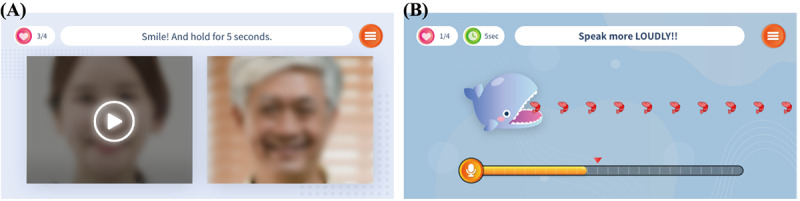
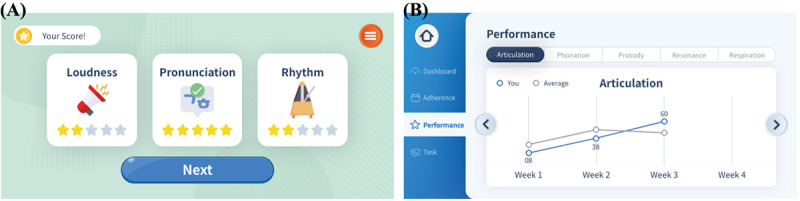
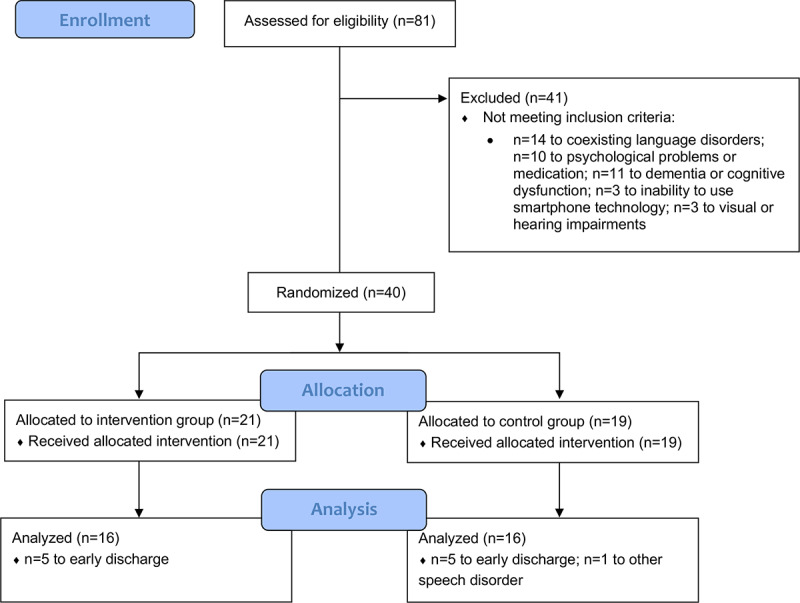
Verification
Claims the paper makes
14 Valid · 7 Not valid · 15 Not checked · 84 Own results and interpretations
The cited sources support only part of this claim — read each source’s verdict below.
In the paper
“Digital speech therapy apps may offer significant advancements over traditional approaches [18,19].”
§ Smartphone-Based Speech Therapy for Poststroke Dysarthria: Pilot Randomized Controlled Trial Evaluating Efficacy and Feasibility > Introduction
What the sources say
- Partly supportedcites [18] sourceExperimental — accuracy not yet measured
The Conclusions (page unavailable) describe digital games as a potential alternative for rehabilitating cognitive skills. They do not address speech therapy apps or establish significant advancements over traditional speech therapy, so the claim extends beyond what this source supports. (LLM, conf=0.78)
- Not checked — no full text of the sourcecites [19] source
hedgedstates a possible cause- Asserted: passes — The authors put it forward as true.
- Checkable: passes — It can be checked against evidence.
- Load-bearing: passes — The paper’s conclusions depend on it.
- Based: passes — The paper gives a reason why it holds.
- Partly supported
Every source the paper cites for this claim was checked and supports it.
In the paper
“Additionally, the amount and frequency of therapy received varies among patients [17].”
§ Smartphone-Based Speech Therapy for Poststroke Dysarthria: Pilot Randomized Controlled Trial Evaluating Efficacy and Feasibility > Introduction
What the sources say
- Supportedcites [17] source
The Introduction states that the frequency of therapy use varies by geographic location and socioeconomic status. It also describes limits on the amount of rehabilitation available, supporting the claim that patients receive differing amounts and frequencies of therapy. (LLM, conf=0.90)
plain- Asserted: passes — The authors put it forward as true.
- Checkable: passes — It can be checked against evidence.
- Load-bearing: unclear — It is unclear whether the paper’s conclusions depend on it.
- Based: passes — The paper gives a reason why it holds.
- Supported
The cited sources support only part of this claim — read each source’s verdict below.
In the paper
“Approximately one-third of the patients received sufficient speech therapy.”
§ Smartphone-Based Speech Therapy for Poststroke Dysarthria: Pilot Randomized Controlled Trial Evaluating Efficacy and Feasibility > Introduction
What the sources say
- Partly supportedcites [17] sourceExperimental — accuracy not yet measured
The Introduction (page unavailable) says that less than a third of stroke survivors receive inpatient or outpatient therapies. It does not give a proportion receiving speech therapy specifically or assess whether the therapy received was sufficient. (LLM, conf=0.88)
plain- Asserted: passes — The authors put it forward as true.
- Checkable: passes — It can be checked against evidence.
- Load-bearing: passes — The paper’s conclusions depend on it.
- Based: passes — The paper gives a reason why it holds.
- Partly supported
The cited sources that could be checked couldn’t confirm or dispute this claim.
In the paper
“Furthermore, patients may face restrictions regarding therapeutic resources because speech therapy requires substantial time and effort by clinicians or speech-language pathologists (SLPs) [16].”
§ Smartphone-Based Speech Therapy for Poststroke Dysarthria: Pilot Randomized Controlled Trial Evaluating Efficacy and Feasibility > Introduction
What the sources say
- Could not verifycites [16] sourceExperimental — accuracy not yet measured
The Discussion and Conclusions discuss restricted access to health care and inequalities in stroke care, but do not address speech therapy or the time and effort it requires from clinicians or speech-language pathologists. Searches for those specific terms and for rehabilitation resources found no passage supporting the stated reason for therapeutic-resource restrictions; no page numbers were available in the copy. (LLM, conf=0.75)
hedgedstates a possible cause- Asserted: passes — The authors put it forward as true.
- Checkable: passes — It can be checked against evidence.
- Load-bearing: passes — The paper’s conclusions depend on it.
- Based: passes — The paper gives a reason why it holds.
- Could not verify
The cited sources support only part of this claim — read each source’s verdict below.
In the paper
“We initially calculated that 32 participants were required to achieve 80% power [50] to detect a moderate effect size of 0.29 [51] with a significance level set at .02.”
§ Smartphone-Based Speech Therapy for Poststroke Dysarthria: Pilot Randomized Controlled Trial Evaluating Efficacy and Feasibility > Methods > Statistical Analysis
What the sources say
- Not checked — no full text of the sourcecites [50] source
- Partly supportedcites [51] sourceExperimental — accuracy not yet measured
The Methods > Statistical analysis passage reports a power calculation targeting 80% power, but it required 117 listeners, with 19 patients in each of three groups—not 32 participants. It does not report an effect size of 0.29 or a significance level of .02 for that calculation. (LLM, conf=0.90)
plainn = 32- Asserted: passes — The authors put it forward as true.
- Checkable: passes — It can be checked against evidence.
- Load-bearing: unclear — It is unclear whether the paper’s conclusions depend on it.
- Based: passes — The paper gives a reason why it holds.
66 more claims · 2 with their cited sources checked
Create a free account to see all 120 claims and to verify the 2 references still open.
- Probably not a substantial claim. 26
- It may state two separate claims as one. 31
Claims other papers make about this one
Each is checked against this paper’s own text: does it say what the citing paper says it does?
The cited source says what the claim attributes to it.
In the citing paper
“In contrast, our previous pilot study focused exclusively on patients in the acute to early subacute phases and revealed improvements in speech intelligibility with the use of a digital speech therapy application [48].”
From Efficacy of Digital Speech Therapy for Poststroke Dysarthria: Randomized Noninferiority Trial (2026) · cites this paper as [48]
Self-check
Percentages, sums and reported differences re-computed from the paper’s own numbers.
Each contradiction between two passages listed here was confirmed by an independent check.
Rated major: it would touch a result — a value a result rests on, reported and recomputed p-values on opposite sides of the significance level, two passages that conflict with no sign which is right, or a cited work retracted before this paper was published.
In the paper
§ Smartphone-Based Speech Therapy for Poststroke Dysarthria: Pilot Randomized Controlled Trial Evaluating Efficacy and Feasibility > Discussion > Principal Findings
“In this study, participants experienced significant improvements in speech intelligibility and articulation after 4 weeks of using the smartphone-based speech therapy app compared to those receiving standard stroke care.”
§ Smartphone-Based Speech Therapy for Poststroke Dysarthria: Pilot Randomized Controlled Trial Evaluating Efficacy and Feasibility > Results > Secondary Outcomes
“However, the group effect (F1,30=3.52; P=.07) and time-by-group interaction (F1,30=4.13; P=.05) were not statistically significant.”
Rated major: it would touch a result — a value a result rests on, reported and recomputed p-values on opposite sides of the significance level, two passages that conflict with no sign which is right, or a cited work retracted before this paper was published.
In the paper
§ Smartphone-Based Speech Therapy for Poststroke Dysarthria: Pilot Randomized Controlled Trial Evaluating Efficacy and Feasibility > Discussion > Principal Findings
“Although we observed a significant decrease in depressive symptoms, no significant changes in anxiety levels were observed.”
§ Smartphone-Based Speech Therapy for Poststroke Dysarthria: Pilot Randomized Controlled Trial Evaluating Efficacy and Feasibility > Results > Secondary Outcomes
“For depression, as measured by the Patient Health Questionnaire-9, there was no significant time effect (F1,30=1.42; P=.24), and the time-by-group interaction was also not significant (F1,30=0.66; P=.42).”
Rated minor: it would not touch a result — a value no result rests on, a p-value that stays on the same side of the significance level, or a conflict that is clerical, resolved elsewhere in the paper, or outside its own findings.
In the paper
§ Smartphone-Based Speech Therapy for Poststroke Dysarthria: Pilot Randomized Controlled Trial Evaluating Efficacy and Feasibility > Results > Secondary Outcomes
“The time effect was significant (F1,30=2.21; P≤.001).”
§ Smartphone-Based Speech Therapy for Poststroke Dysarthria: Pilot Randomized Controlled Trial Evaluating Efficacy and Feasibility > Abstract > Results
“significant reductions were noted in the severity of dysarthria in the intervention group over time (F1,30=21.18; P<.001)”
Rated minor: it would not touch a result — a value no result rests on, a p-value that stays on the same side of the significance level, or a conflict that is clerical, resolved elsewhere in the paper, or outside its own findings.
In the paper
§ Smartphone-Based Speech Therapy for Poststroke Dysarthria: Pilot Randomized Controlled Trial Evaluating Efficacy and Feasibility > Discussion > Principal Findings
“However, the lack of significant group differences in these scores suggests that improvements in quality of life were not solely attributable to the intervention.”
§ Smartphone-Based Speech Therapy for Poststroke Dysarthria: Pilot Randomized Controlled Trial Evaluating Efficacy and Feasibility > Results > Secondary Outcomes
“the EQ-VAS scores showed a significant time effect (F1,30=7.74; P=.009) and group effect (F1,30=6.06; P=.02).”
Rated minor: it would not touch a result — a value no result rests on, a p-value that stays on the same side of the significance level, or a conflict that is clerical, resolved elsewhere in the paper, or outside its own findings.
In the paper
§ Smartphone-Based Speech Therapy for Poststroke Dysarthria: Pilot Randomized Controlled Trial Evaluating Efficacy and Feasibility > Results > Participants
“Chi-square and independent 2-tailed t tests revealed no significant differences between the 2 study groups.”
§ Smartphone-Based Speech Therapy for Poststroke Dysarthria: Pilot Randomized Controlled Trial Evaluating Efficacy and Feasibility > Results > Participants
“| | EQ-VAS | 69.88 (15.24) | 69.88 (15.24) | 52.19 (28.28) | 52.19 (28.28) | 61.03 (24.09) | 61.03 (24.09) | 19.5 (11) | 19.5 (11) | .04 | .04 |”
Citations
Cites
A Brief Measure for Assessing Generalized Anxiety Disorder: The GAD-7
Spitzer, R. L., Kroenke, K., Williams, J. B. W., & Löwe, B. (2006) · Archives of Internal Medicine · doi:10.1001/archinte.166.10.1092 · Cited by 31,765
Spitzer, R. L. (1999) · JAMA · doi:10.1001/jama.282.18.1737 · Cited by 9,802 · cited 1×
“The Patient Health Questionnaire-9 [42,43] and the Generalized Anxiety Disorder 7-Item Scale [44,45] were used to evaluate depressive and anxiety symptoms.”
SUS: A 'Quick and Dirty' Usability Scale
(1996) · Usability Evaluation In Industry · doi:10.1201/9781498710411-35 · Cited by 8,989
EQ-SD: a measure of health status from the EuroQol Group
Rabin, R., & Charro, F. D. (2001) · Annals of Medicine · doi:10.3109/07853890109002087 · Cited by 5,613 · cited 1×
“Furthermore, the EQ-5D-3L questionnaire [46] was used to assess the participants’ quality of life across 5 different areas: their ability to move around, care for themselves, perform their usual activities, levels of pain or discomfort, and mood.”
Usability Evaluation In Industry
(1996) · CRC Press eBooks · doi:10.1201/9781498710411 · Cited by 4,354
Kleindorfer, D. O., Towfighi, A., Chaturvedi, S., Cockroft, K. M., Gutierrez, J., Lombardi-Hill, D., Kamel, H., Kernan, W. N., Kittner, S. J., Leira, E. C., et al. (2021) · Stroke · doi:10.1161/str.0000000000000375 · Cited by 3,237 · cited 1×
“Standard stroke care includes medical treatment, routine stroke therapy, and rehabilitative exercises, as outlined in the basic guidelines [35,36].”
World Stroke Organization (WSO): Global Stroke Fact Sheet 2022
Feigin, V. L., Brainin, M., Norrving, B., Martins, S., Sacco, R. L., Hacke, W., Fisher, M., Pandian, J., & Lindsay, P. (2022) · International Journal of Stroke · doi:10.1177/17474930211065917 · Cited by 2,979 · cited 1×
“Stroke is a leading cause of mortality and morbidity worldwide [1].”
Design and analysis of pilot studies: recommendations for good practice
Lancaster, G. A., Dodd, S., & Williamson, P. R. (2004) · Journal of Evaluation in Clinical Practice · doi:10.1111/j..2002.384.doc.x · Cited by 2,572 · cited 1×
“Starting speech therapy immediately after a stroke can enhance recovery [8-10].”
The Role of Telehealth in Reducing the Mental Health Burden from COVID-19
Zhou, X., Snoswell, C. L., Harding, L. E., Bambling, M., Edirippulige, S., Bai, X., & Smith, A. C. (2020) · Telemedicine and e-Health · doi:10.1089/tmj.2020.0068 · Cited by 1,159 · cited 1×
“This serves as a reliable alternative to clinical treatment [68].”
Research works printed but not linked: 4
- Duffy, JR, 2020, Motor Speech Disorders: Substrates, Differential Diagnosis, and Management. 4th Edition
- Isaacson, JE, 2003, Am Fam Physician, 68, 1125
- Choi, HS, 2007, J Korean Acad Fam Med, 28, 114
- Lu, SC, 2017, Stud Health Technol Inform, 245, 161
Cited by
Artificial Intelligence in Communication Sciences and Disorders: Introduction to the Forum
Green, J. R. (2024) · Journal of Speech Language and Hearing Research · doi:10.1044/2024_jslhr-24-00594 · Cited by 25
Shin, H. J., Cho, I. T., Choi, W., Kim, H. R., Kang, M.-B., & Yang, W. (2024) · Journal of Yeungnam Medical Science · doi:10.12701/jyms.2024.01004 · Cited by 21
“Digital platforms utilizing virtual reality (VR) and gamification techniques are being developed to support the rehabilitation of motor functions and cognitive abilities [30].”
Sage, A., & Badura, P. (2024) · Applied Sciences · doi:10.3390/app14167146 · Cited by 9
Khodaveisi, T., Bouraghi, H., Saeedi, S., Ghazisaeedi, M., Seifpanahi, M.-S., Ahsanifar, S., & Vafaeeyan, S. (2025) · BMC Health Services Research · doi:10.1186/s12913-025-12220-y · Cited by 13
“By allowing patients to perform exercises conveniently at home, mobile health apps encourage consistent practice and empower patients to actively participate in their rehabilitation process, reducing the need for frequent clinic visits [56].”
Aurobindo, S., Ramachandran, P., & Rajeshkumar, M. (2025) · Results in Engineering · doi:10.1016/j.rineng.2025.104561 · Cited by 12
Metadata
- Authors
- Kim, Y., Kim, M., Kim, J., & Song, T.-J.
- Affiliations
- Yonsei University (KR)
- Ewha Womans University (KR)
- Corresponding author
- Song, Tae-Jin
- Venue
- Journal of Medical Internet Research
- Publisher
- JMIR Publications Inc.
- Published
- 2024-04-25
- Volume
- 26
- Pages
- e56417
- ISSN
- 1438-8871 (ISSN-L)
- PMC
- PMC11082729
- OpenAlex
- W4393052886
- Semantic Scholar
- 8293d06004f2d18431f46e3b6aa050dab45f05f8
- Cited by
- 20
- References
- 76
- Citations by year
- 2026: 9 · 2025: 7 · 2024: 4
- FWCI
- 5.65
- Type
- journal article
- Language
- en
- Open access
- gold
- doi.org
- Licence
- cc-by
- Locations
- Journal of Medical Internet Research (publishedVersion, cc-by)
- PubMed Central (publishedVersion, cc-by)
- PubMed (publishedVersion)
- DOAJ (DOAJ: Directory of Open Access Journals) (submittedVersion, cc-by-sa)
- Funders
- Korea Health Industry Development Institute (RS-2023-00262087)
- Ministry of SMEs and Startups
- Ministry of Science and ICT, South Korea (2022-0-00621, RS-2023)
- Topics
- Health Sciences › Health Professions › Speech and Hearing › Voice and Speech Disorders
- Health Sciences › Medicine › Rehabilitation › Stroke Rehabilitation and Recovery
- Health Sciences › Health Professions › Occupational Therapy › Assistive Technology in Communication and Mobility
- Keywords
- mobile health apps, speech intelligibility, dysarthria severity, quality of life, psychological well-being, user acceptance, medication adherence, stroke rehabilitation, consonant accuracy, feasibility, EQ-5D-3L, EQ-VAS, user experience
- MeSH terms
- Smartphone, Stroke Rehabilitation, Aged, Dysarthria, Feasibility Studies, Female, Humans, Male, Middle Aged, Pilot Projects, Quality of Life, Speech Therapy, Treatment Outcome, Stroke, Mobile Applications
About these checks
Registry, retraction, Cites and statistics results are computed, not judged, with one exception: a printed reference that no index lists is read once by a model before it counts as a citation error. Claims are extracted by a model and kept only when their quote appears verbatim in the text; each cited source is then checked, with a model’s help, for whether it says what the claim relies on. Those verdicts can be wrong — read the claim’s quote and the cited source before relying on one.
The claim verdicts this report counts are experimental: their accuracy is not yet measured.
A language model drew the claims from the paper on 2026-10-10, under version 3 of the claim definition (model deepseek-v4.1-flash, prompt extract-v3).
A second model labelled each claim on 2026-10-10 (model jev-1.13-20260917, definition revision gold-guideline-v0.2).
Cited sources are checked with a language model’s help (gpt-6-sol).
Statistics and arithmetic are recomputed, not judged.
Confidence bands are shown only for fields calibrated on our annotated test set. None is calibrated yet, so no band is shown.
What counts as a claim ›How we measure confidence ›How we check this ›
Are you an author, or do you see a problem with this page? Request a review
Data sources
Bibliographic data: Semantic Scholar, OpenAlex, Crossref.
Contains information from the Semantic Scholar Academic Graph Datasets, made available under the ODC Attribution License (ODC-BY 1.0).
Semantic Scholar’s data is described in: Kinney, R., et al. (2023). The Semantic Scholar Open Data Platform. arXiv:2301.10140.
