

Large Language Models in Critical Care Medicine: Scoping Review
Open accessPublished version of a preprint
The DOI matches its Crossref record; 170 of the 171 references it cites were found in a registry or an index, and 1 are not checked yet.
Abstract
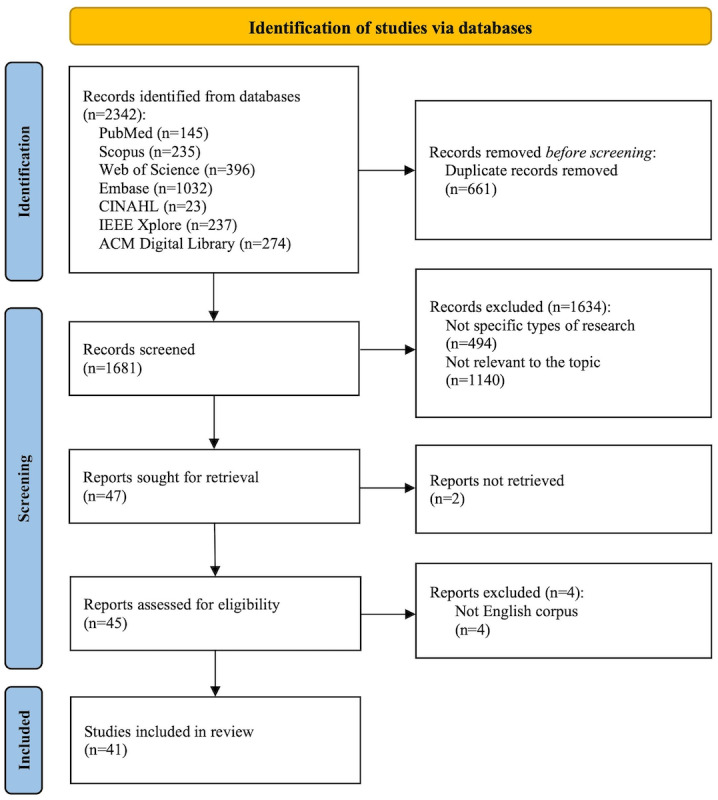
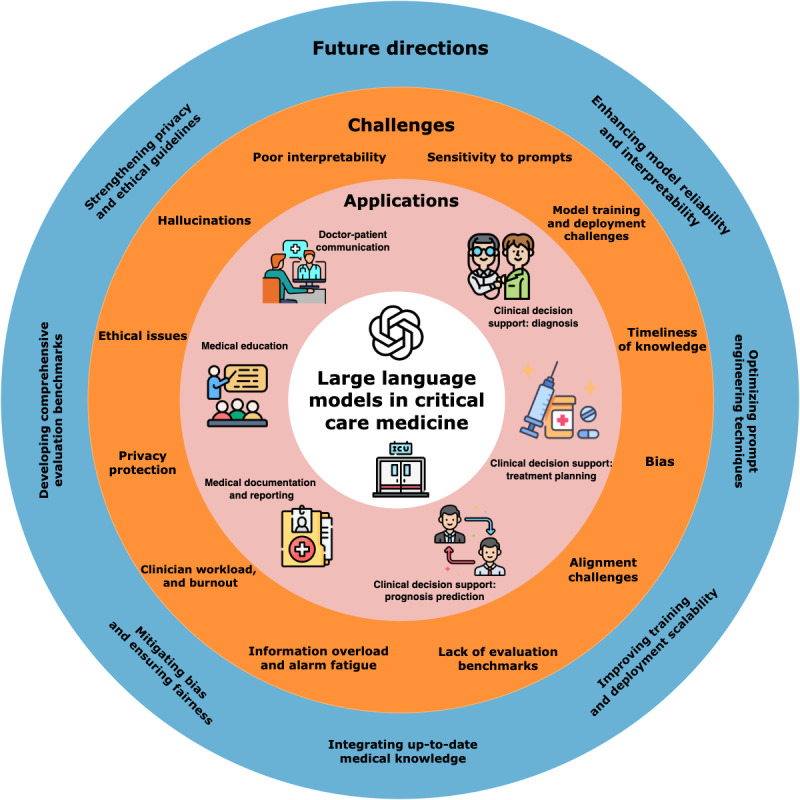
Background: With the rapid development of artificial intelligence, large language models (LLMs) have shown strong capabilities in natural language understanding, reasoning, and generation, attracting much research interest in applying LLMs to health and medicine. Critical care medicine (CCM) provides diagnosis and treatment for patients with critical illness who often require intensive monitoring and interventions in intensive care units (ICUs). Whether LLMs can be applied to CCM, and whether they can operate as ICU experts in assisting clinical decision-making rather than “stochastic parrots,” remains uncertain. Objective: This scoping review aims to provide a panoramic portrait of the application of LLMs in CCM, identifying the advantages, challenges, and future potential of LLMs in this field. Methods: This study was conducted in accordance with the PRISMA-ScR (Preferred Reporting Items for Systematic Reviews and Meta-Analyses extension for Scoping Reviews) guidelines. Literature was searched across 7 databases, including PubMed, Embase, Scopus, Web of Science, CINAHL, IEEE Xplore, and ACM Digital Library, from the first available paper to August 22, 2025. Results: From an initial 2342 retrieved papers, 41 were selected for final review. LLMs played an important role in CCM through the following 3 main channels: clinical decision support, medical documentation and reporting, and medical education and doctor-patient communication. Compared to traditional artificial intelligence models, LLMs have advantages in handling unstructured data and do not require manual feature engineering. Meanwhile, applying LLMs to CCM has faced challenges, including hallucinations and poor interpretability, sensitivity to prompts, bias and alignment challenges, and privacy and ethical issues. Conclusions: Although LLMs are not yet ICU experts, they have the potential to become valuable tools in CCM, helping to improve patient outcomes and optimize health care delivery. Future research should enhance model reliability and interpretability, improve model training and deployment scalability, integrate up-to-date medical knowledge, and strengthen privacy and ethical guidelines, paving the way for LLMs to fully realize their impact in critical care. Trial Registration: OSF Registries yn328; https://osf.io/yn328/
Overview
The claims and statistics of this paper haven’t been checked yet.
Free: it reads the open-access text and checks the first 5 claims that cite a source we can check. Create a free account to check every claim.
Integrity signals
Registry
Cites
Statistics
Figures
Verification
Claims the paper makes
The claims and statistics of this paper haven’t been checked yet.
Free: it reads the open-access text and checks the first 5 claims that cite a source we can check. Create a free account to check every claim.
Claims other papers make about this one
Each is checked against this paper’s own text: does it say what the citing paper says it does?
The cited source says what the claim attributes to it.
In the citing paper
“with potential to entrench inequities if not carefully governed [4]”
From From promising prototypes to “instructions for use”: embedding LLMs safely in perioperative and intensive care (2026) · cites this paper as [4]
In the citing paper
“In critical care, where decisions are time-sensitive and high-risk, the application of LLMs is rapidly expanding across clinical decision support, documentation, and education, including their use in generating scientific writing and research backgrounds (10, 11).”
From Hallucination Rate of Peer-Reviewed Citations Generated by Large Language Models in Neurocritical Care (2026) · cites this paper as [11]
Self-check
Percentages, sums and reported differences re-computed from the paper’s own numbers.
The self-check needs the paper’s full text.
Citations
Cites
1 retracted
Tran, C. G., Chang, J., Sherman, S. K., & Andrade, J. P. D. (2024) · Journal of Surgical Research · doi:10.1016/j.jss.2024.04.060 · Cited by 29
RetractedHochreiter, S., & Schmidhuber, J. (1997) · Neural Computation · doi:10.1162/neco.1997.9.8.1735 · Cited by 102,318
BERT: Pre-training of Deep Bidirectional Transformers for Language Understanding
Devlin, J., Chang, M.-W., Lee, K., & Toutanova, K. (2019) · Proceedings of the 2019 Conference of the North American Chapter of the Association for Computational Linguistics: Human Language Technologies, Volume 1 (Long and Short Papers) · doi:10.18653/v1/n19-1423 · Cited by 54,325
PRISMA Extension for Scoping Reviews (PRISMA-ScR): Checklist and Explanation
Tricco, A. C., Lillie, E., Zarin, W., O'Brien, K. K., Colquhoun, H., Levac, D., Moher, D., Peters, M. D. J., Horsley, T., Weeks, L., et al. (2018) · Annals of Internal Medicine · doi:10.7326/m18-0850 · Cited by 43,565
Generative adversarial networks
Goodfellow, I., Pouget-Abadie, J., Mirza, M., Xu, B., Warde-Farley, D., Ozair, S., Courville, A., & Bengio, Y. (2020) · Communications of the ACM · doi:10.1145/3422622 · Cited by 18,384
Deep Contextualized Word Representations
Peters, M., Neumann, M., Iyyer, M., Gardner, M., Clark, C., Lee, K., & Zettlemoyer, L. (2018) · Proceedings of the 2018 Conference of the North American Chapter of the Association for Computational Linguistics: Human Language Technologies, Volume 1 (Long Papers) · doi:10.18653/v1/n18-1202 · Cited by 11,983
Scaling Laws for Neural Language Models
Kaplan, J., McCandlish, S., Henighan, T., Brown, T. B., Chess, B., Child, R., Gray, S., Radford, A., Wu, J., & Amodei, D. (2020) · arXiv · doi:10.48550/arxiv.2001.08361 · Cited by 9,550
Lewis, M., Liu, Y., Goyal, N., Ghazvininejad, M., Mohamed, A., Levy, O., Stoyanov, V., & Zettlemoyer, L. (2020) · Proceedings of the 58th Annual Meeting of the Association for Computational Linguistics · doi:10.18653/v1/2020.acl-main.703 · Cited by 8,821
Lewis, M., Liu, Y., Goyal, N., Ghazvininejad, M., Mohamed, A., Levy, O., Stoyanov, V., & Zettlemoyer, L. (2019) · arXiv · doi:10.48550/arxiv.1910.13461 · Cited by 8,816
MIMIC-III, a freely accessible critical care database
Johnson, A. E. W., Pollard, T. J., Shen, L., Lehman, L.-W. H., Feng, M., Ghassemi, M., Moody, B., Szolovits, P., Anthony Celi, L., & Mark, R. G. (2016) · Scientific Data · doi:10.1038/sdata.2016.35 · Cited by 8,141
Research works printed but not linked: 11
- Xu H Liu W Shi T Kong G Neural granger causal discovery for derangements in icu-acquired acute kidney injury patients AMIA Annu Symp Proc 2024 2024 1265 1274 40417474 4705 40417474 PMC12099353
- Liu W Shi T Xu H Zhao H Hao J Kong G Identifying acute kidney injury subtypes based on serum electrolyte data in ICU via K-medoids clustering AMIA Annu Symp Proc 2024 2024 733 737 40417583 4952 40417583 PMC12099402
- Vaswani A Shazeer N Parmar N Uszkoreit J Jones L Gomez A Attention is all you need 2017 NIPS'17: Proceedings of the 31st International Conference on Neural Information Processing Systems December 4-9, 2017 Long Beach California USA 6000 6010
- VaswaniAShazeerNParmarNUszkoreitJJonesLGomezAAttention is all you need2017NIPS'17: Proceedings of the 31st International Conference on Neural Information Processing SystemsDecember 4-9, 2017Long Beach California USA60006010
- Brown T Mann B Ryder N Subbiah M Kaplan JD Dhariwal P Neelakantan A Shyam P Sastry G Askell A Language models are few-shot learners Adv Neural Inf Process Syst 2020 NIPS'20: Proceedings of the 34th International Conference on Neural Information Processing Systems December 6 - 12, 2020 Vancouver BC Canada 1877 1901 10.5555/3495724.3495883 · doi:10.5555/3495724.3495883
- Chowdhery A Narang S Devlin J Bosma M Mishra G Roberts A Barham P Chung HW Sutton C Gehrmann S Palm: scaling language modeling with pathways J Mach Learn Res 2023 24 240 1 113 10.5555/3648699.3648939 · doi:10.5555/3648699.3648939
- Hu Z Yang Z Liang X Salakhutdinov R Xing EP Toward controlled generation of text 2017 Proceedings of the 34 th International Conference on Machine Learning March 02, 2017 Sydney, Australia 1587 1596
- Radford A Wu J Child R Luan D Amodei D Sutskever I Language models are unsupervised multitask learners OpenAI Blog 2019 1 8 9
- Wei J Wang X Schuurmans D Bosma M Ichter B Xia F Chi EH Le QV Zhou D Chain-of-thought prompting elicits reasoning in large language models 2022 NIPS'22: Proceedings of the 36th International Conference on Neural Information Processing Systems November 28, 2022 Red Hook, NY, United States 24824 24837 10.5555/3600270.3602070 · doi:10.5555/3600270.3602070
- Bhardwaj M Xie T Boots B Jiang N Adversarial model for offline reinforcement learning 2023 NIPS '23: Proceedings of the 37th International Conference on Neural Information Processing Systems December 10-16, 2023 New Orleans, LA 1245 1269
- BhardwajMXieTBootsBJiangNAdversarial model for offline reinforcement learning2023NIPS '23: Proceedings of the 37th International Conference on Neural Information Processing SystemsDecember 10-16, 2023New Orleans, LA12451269
Cited by
Role of Artificial Intelligence in Critical Care Medicine: A Literature Review
ABDELBAKY, A., Elmasry, W. G., Awad, A. H., & Khan, S. (2025) · Cureus · doi:10.7759/cureus.90149 · Cited by 15
Shi, T., Xu, H., Ma, J., & Kong, G. (2024) · Conference proceedings/Conference proceedings - IEEE International Conference on Systems, Man, and Cybernetics · doi:10.1109/smc54092.2024.10831750 · Cited by 9
Self-citationEvaluating Large Language Models as Post Hoc Explainability Interfaces for Credit Risk Models
Geng, W., Liu, D., Li, L., & Wang, Y. (2026) · Expert Systems · doi:10.1111/exsy.70351 · Cited by 7
Jiang, Z., Peng, Q., Li, L., & Xiang, S. (2025) · MedComm – Future Medicine · doi:10.1002/mef2.70042 · Cited by 5
Federated Large Language Models in Healthcare: A Systematic Review, Opportunities and ChallengesPreprint
Nascimento, L. D. F., Awaysheh, F. M., Alawadi, S., Zomaya, A. Y., & Guizani, M. (2025) · Research Square · doi:10.21203/rs.3.rs-7841356/v1 · Cited by 4
Stamm, T., Bader-El-Den, M. B., McNicholas, J., Briggs, J., & Zhao, P. F. (2025) · Frontiers in Digital Health · doi:10.3389/fdgth.2025.1633458 · Cited by 3
Can LLMs Perceive Time? An Empirical InvestigationPreprint
Garikaparthi, A. (2026) · arXiv (Cornell University) · doi:10.48550/arxiv.2604.00010 · Cited by 3
LLM-Empowered Patient-Provider Communication: A Data-Centric Survey From a Clinical Perspective
Shao, R., Seraj, M. S., Zhao, K., Luo, Y., Li, L., Shen, B., Bates, A., Zhao, Y., Pan, C., Hightow-Weidman, L., et al. (2025) · International Joint Conference on Natural Language Processing and Conference of the Asia-Pacific Chapter of the Association for Computational Linguistics (IJCNLP-AACL) · doi:10.18653/v1/2025.findings-ijcnlp.40 · Cited by 2
Shang, W., Shi, T., Ma, Q., & Kong, G. (2026) · Cell Reports Medicine · doi:10.1016/j.xcrm.2026.102986 · Cited by 4
Self-citationSeifi, A., & Seyfi, A. (2026) · Critical Care Explorations · doi:10.1097/cce.0000000000001474 · Cited by 1
Fanning, C., Verkouteren, C., Sawadogo, D., & Aktas, M. E. (2026) · Studies in computational intelligence · doi:10.1007/978-3-032-16649-4_12 · Cited by 1
Hu, S., 林邠芬, & 林丰兰 (2026) · Frontiers in Public Health · doi:10.3389/fpubh.2026.1850486 · Cited by 1
Ruan, H., Lee, J.-K., Xiong, J., Zou, L.-J., & Li, S.-S. (2026) · Digital Health · doi:10.1177/20552076261481028 · Cited by 1
Cui, X., Zhang, H., Wang, B., Luo, W., Guo, D., & Liu, X. (2026) · Anaesthesia and Intensive Care · doi:10.1177/0310057x261494610 · Cited by 1
Tang, G., Zhao, Q., Nie, G., Xiao, Y., Geng, S., Xie, D., Huang, S., Zhang, D., Yao, X., Wang, J., et al. (2026) · arXiv (Cornell University) · doi:10.48550/arxiv.2603.14177 · Cited by 1
Bignami, E. G., & Russo, M. (2026) · Journal of Clinical Monitoring and Computing · doi:10.1007/s10877-026-01418-y
“The Xu et al. classifier reproduces an institutional triage standard [1], and similar tools in ICU will learn from local thresholds for escalation, end-of-life decisions, and resource constraints, with potential to entrench inequities if not carefully gov - erned [4].”
Yu, Z. (2026) · Future Integrative Medicine · doi:10.14218/fim.2026.00005
Self-citationSubramaniam, A., Wong, J., Ku, D., Carr, C., Gupta, S., Ku, S., Kuroda, Y., Yunos, N. M., Nhan, L. D., Pradian, E., et al. (2026) · Journal of Critical Care · doi:10.1016/j.jcrc.2026.155529
Comparing prognostic performance and reasoning between physicians and large language models
Gjertsen, M., Yoon, W., Afshar, M., Temte, B., Leding, B., Halliday, S., Bradley, K., Kim, J., Mitchell, J., Sanders, A. K., et al. (2026) · Journal of Pain and Symptom Management · doi:10.1016/j.jpainsymman.2026.04.182
Yeh, Y., Shih, M., Backer, D. D., Celi, L. A., See, K. C., Fujii, T., Ling, L., Mongkolpun, W., Hu, H.-W., Chen, H.-Y., et al. (2026) · Annals of Intensive Care · doi:10.1016/j.aicoj.2026.100078
Zhou, Y., Xiong, W., Liu, H., Wang, Q., Luo, H., Yang, Y., Liu, S., & Long, Y. (2026) · Frontiers in Medicine · doi:10.3389/fmed.2026.1875770
Generative artificial intelligence for outcome prediction in critical care: the future is now?
Workum, J. D., Jung, C., & Beil, M. (2026) · Current Opinion in Critical Care · doi:10.1097/mcc.0000000000001408
Amrin, S. T., SATBAYEVA, A. S., Abdussemyatova, A. A., & DUISEN, Y. A. (2026) · Vestnik · doi:10.53065/kaznmu.2026.77.2.005
Topological graph learning on healthcare networks for critical care prediction
Fanning, C., Guler, A., Verkouteren, C., Sawadogo, D., & Aktas, M. E. (2026) · Network Modeling Analysis in Health Informatics and Bioinformatics · doi:10.1007/s13721-026-00824-1
Kim, T.-H., Hong, J. H., Hyun, J., Song, S. G., Yoon, E. J., Jeong, E., Kim, J. W., Kim, H. J., & Kim, H. C. (2026) · BMC Medical Imaging · doi:10.1186/s12880-026-02557-z
郑, 立., Lin, Z., Liu, X., Fan, Z., He, Z., Xu, J., & Yin, L. (2026) · Journal of Medical Internet Research · doi:10.2196/98026
Pratiwi, M. D., Yuniarto, P. F., Putri, E. M., Mawarni, O. I., Winartiana, Hidayati, E. N., Dhafin, A. A., & Herman (2026) · ADIMASKA JURNAL PENGABDIAN MASYARAKAT KESEHATAN · doi:10.30737/mavfpf13
Teng, M. Y., Tsuei, S. H., Koblanski, M. E., & Celi, L. A. (2026) · Critical Care Science · doi:10.62675/2965-2774.20260040
Large language model–based patient handoff tools relevant to intensive care: a scoping review
Bains, S. S., Kolesnikov, M. R., Bedrick, S., Mohan, V., & Gold, J. A. (2026) · Considerations in Medicine · doi:10.1136/conmed-2026-000046
Klug, J., Burger, R., Bonnemain, J., Carrel, L., Raboud, M., Montaut, V., Leuenberger, A., Bikfalvi, A., Carra, G., Hartley, M., et al. (2026) · doi:10.2196/preprints.109644
Contreras, M., Siegel, S., Nerella, S., Sena, J., Zhang, J., Sun, H., Akkaladevi, H. T., Lu, P., Rosen, J., Kapoor, S., et al. (2026) · Research Square · doi:10.21203/rs.3.rs-11157053/v1
Azamfirei, L., Oiaga, M. C., & Pui, M. C. (2026) · Healthcare · doi:10.3390/healthcare14172834
Park, B. H., Soria, C. S., Suresh, P., Broderick, R. C., & Sandler, B. J. (2026) · Research Square · doi:10.21203/rs.3.rs-10438275/v1
Cho, S., Choi, S., Choi, Y., Kim, M., Panitchote, A., Ketdao, N., Ratchatorn, A., Jung, H. D., Gu, C., Park, T., et al. (2026) · Research Square · doi:10.21203/rs.3.rs-11428570/v1
Imanov, G. O. Y. L.-F. L. (2026) · Artificial Intelligence in Emergency Medicine · doi:10.1016/j.aiemed.2026.100039
Metadata
- Authors
- Shi, T., Ma, J., Yu, Z., Xu, H., Yang, R., Xiong, M., Xiao, M., Li, Y., Zhao, H., & Kong, G.
- Affiliations
- Peking University (CN)
- Peking University Third Hospital (CN)
- University of Liverpool (GB)
- Johns Hopkins University (US)
- University of California, Los Angeles (US)
- Peking University People's Hospital (CN)
- Corresponding author
- Kong, Guilan
- ORCID
- Venue
- JMIR Medical Informatics
- Publisher
- JMIR Publications Inc.
- Published
- 2025-11-24
- Volume
- 13
- Pages
- e76326
- ISSN
- 2291-9694 (ISSN-L)
- PMC
- PMC12778902
- OpenAlex
- W4416590420
- Semantic Scholar
- 96a6dc4b13b6757da59e3ef5b6a61f7984138f9b
- Cited by
- 21
- References
- 163
- Citations by year
- 2026: 21
- FWCI
- 1.24
- Type
- journal article
- Language
- en
- Open access
- gold
- doi.org
- Licence
- cc-by
- Locations
- JMIR Medical Informatics (publishedVersion, cc-by)
- PubMed (publishedVersion)
- PubMed Central (publishedVersion, cc-by)
- Topics
- Health Sciences › Medicine › Health Informatics › Artificial Intelligence in Healthcare and Education
- Physical Sciences › Computer Science › Artificial Intelligence › Machine Learning in Healthcare
- Health Sciences › Health Professions › Health Information Management › Artificial Intelligence in Healthcare
- Keywords
- large language models, intensive care, intensive care unit, clinical decision support, clinical documentation, medical education, physician-patient communication, hallucinations, interpretability, privacy and ethics, unstructured clinical data
- MeSH terms
- Large Language Models, Artificial Intelligence, Critical Care, Humans, Intensive Care Units, Natural Language Processing
About these checks
Registry, retraction, Cites and statistics results are computed, not judged, with one exception: a printed reference that no index lists is read once by a model before it counts as a citation error. Claims are extracted by a model and kept only when their quote appears verbatim in the text; each cited source is then checked, with a model’s help, for whether it says what the claim relies on. Those verdicts can be wrong — read the claim’s quote and the cited source before relying on one.
Statistics and arithmetic are recomputed, not judged.
Confidence bands are shown only for fields calibrated on our annotated test set. None is calibrated yet, so no band is shown.
What counts as a claim ›How we measure confidence ›How we check this ›
Are you an author, or do you see a problem with this page? Request a review
Data sources
Bibliographic data: Semantic Scholar, OpenAlex, Crossref.
Contains information from the Semantic Scholar Academic Graph Datasets, made available under the ODC Attribution License (ODC-BY 1.0).
Semantic Scholar’s data is described in: Kinney, R., et al. (2023). The Semantic Scholar Open Data Platform. arXiv:2301.10140.
