

Large Language Models in Critical Care Medicine: Scoping Review
Open accessPublished version of a preprint
The DOI matches its Crossref record; 169 of the 171 references it cites were found in a registry or an index, and 2 are not checked yet.
Abstract
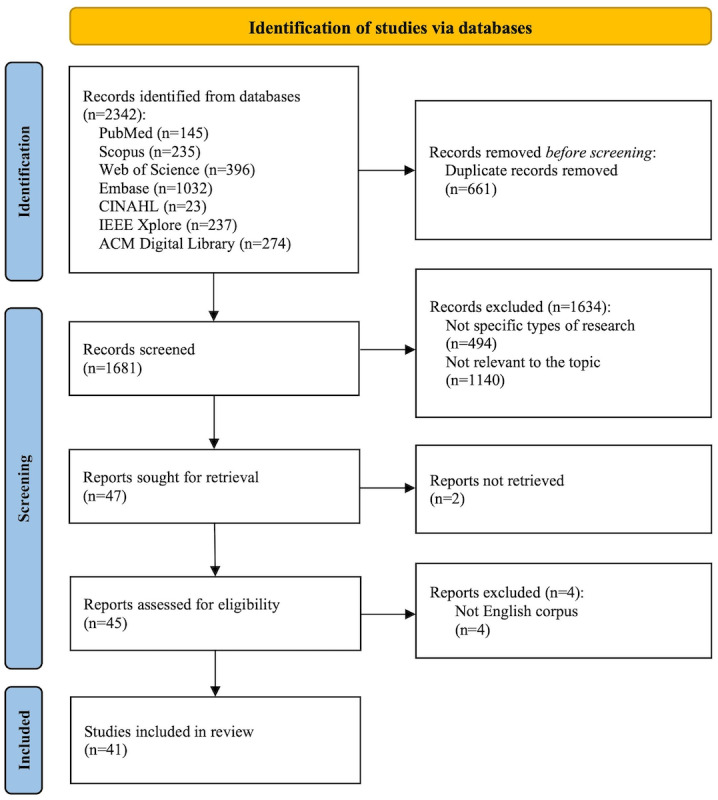
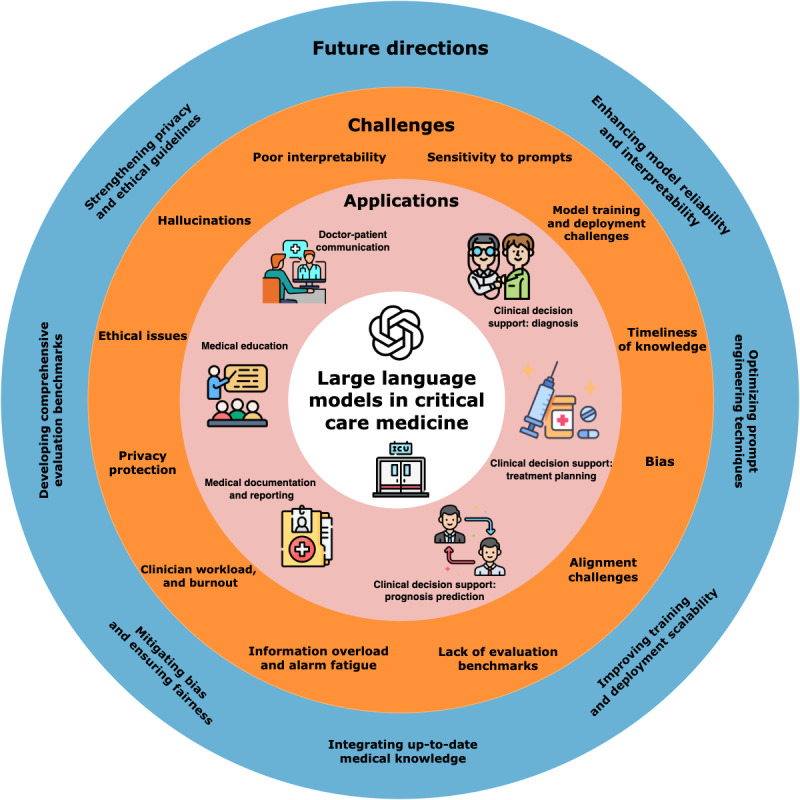
Background: With the rapid development of artificial intelligence, large language models (LLMs) have shown strong capabilities in natural language understanding, reasoning, and generation, attracting much research interest in applying LLMs to health and medicine. Critical care medicine (CCM) provides diagnosis and treatment for patients with critical illness who often require intensive monitoring and interventions in intensive care units (ICUs). Whether LLMs can be applied to CCM, and whether they can operate as ICU experts in assisting clinical decision-making rather than “stochastic parrots,” remains uncertain. Objective: This scoping review aims to provide a panoramic portrait of the application of LLMs in CCM, identifying the advantages, challenges, and future potential of LLMs in this field. Methods: This study was conducted in accordance with the PRISMA-ScR (Preferred Reporting Items for Systematic Reviews and Meta-Analyses extension for Scoping Reviews) guidelines. Literature was searched across 7 databases, including PubMed, Embase, Scopus, Web of Science, CINAHL, IEEE Xplore, and ACM Digital Library, from the first available paper to August 22, 2025. Results: From an initial 2342 retrieved papers, 41 were selected for final review. LLMs played an important role in CCM through the following 3 main channels: clinical decision support, medical documentation and reporting, and medical education and doctor-patient communication. Compared to traditional artificial intelligence models, LLMs have advantages in handling unstructured data and do not require manual feature engineering. Meanwhile, applying LLMs to CCM has faced challenges, including hallucinations and poor interpretability, sensitivity to prompts, bias and alignment challenges, and privacy and ethical issues. Conclusions: Although LLMs are not yet ICU experts, they have the potential to become valuable tools in CCM, helping to improve patient outcomes and optimize health care delivery. Future research should enhance model reliability and interpretability, improve model training and deployment scalability, integrate up-to-date medical knowledge, and strengthen privacy and ethical guidelines, paving the way for LLMs to fully realize their impact in critical care. Trial Registration: OSF Registries yn328; https://osf.io/yn328/
Overview
The claims and statistics of this paper haven’t been checked yet.
Free: it reads the open-access text and checks the first 5 claims that cite a source we can check. Create a free account to check every claim.
Integrity signals
Registry
Cites
Statistics
Figures
Verification
Claims the paper makes
The claims and statistics of this paper haven’t been checked yet.
Free: it reads the open-access text and checks the first 5 claims that cite a source we can check. Create a free account to check every claim.
Claims other papers make about this one
Each is checked against this paper’s own text: does it say what the citing paper says it does?
The cited source says what the claim attributes to it.
In the citing paper
“with potential to entrench inequities if not carefully governed [4]”
From From promising prototypes to “instructions for use”: embedding LLMs safely in perioperative and intensive care (2026) · cites this paper as [4]
In the citing paper
“In critical care, where decisions are time-sensitive and high-risk, the application of LLMs is rapidly expanding across clinical decision support, documentation, and education, including their use in generating scientific writing and research backgrounds (10, 11).”
From Hallucination Rate of Peer-Reviewed Citations Generated by Large Language Models in Neurocritical Care (2026) · cites this paper as [11]
Self-check
Percentages, sums and reported differences re-computed from the paper’s own numbers.
The self-check needs the paper’s full text.
Citations
Cites
1 retracted
Tran, C. G., Chang, J., Sherman, S. K., & Andrade, J. P. D. (2024) · Journal of Surgical Research · doi:10.1016/j.jss.2024.04.060 · Cited by 29
RetractedHochreiter, S., & Schmidhuber, J. (1997) · Neural Computation · doi:10.1162/neco.1997.9.8.1735 · Cited by 102,318
BERT: Pre-training of Deep Bidirectional Transformers for Language Understanding
Devlin, J., Chang, M.-W., Lee, K., & Toutanova, K. (2019) · Proceedings of the 2019 Conference of the North American Chapter of the Association for Computational Linguistics: Human Language Technologies, Volume 1 (Long and Short Papers) · doi:10.18653/v1/n19-1423 · Cited by 54,325
PRISMA Extension for Scoping Reviews (PRISMA-ScR): Checklist and Explanation
Tricco, A. C., Lillie, E., Zarin, W., O'Brien, K. K., Colquhoun, H., Levac, D., Moher, D., Peters, M. D. J., Horsley, T., Weeks, L., et al. (2018) · Annals of Internal Medicine · doi:10.7326/m18-0850 · Cited by 43,565
Generative adversarial networks
Goodfellow, I., Pouget-Abadie, J., Mirza, M., Xu, B., Warde-Farley, D., Ozair, S., Courville, A., & Bengio, Y. (2020) · Communications of the ACM · doi:10.1145/3422622 · Cited by 18,384
Deep Contextualized Word Representations
Peters, M., Neumann, M., Iyyer, M., Gardner, M., Clark, C., Lee, K., & Zettlemoyer, L. (2018) · Proceedings of the 2018 Conference of the North American Chapter of the Association for Computational Linguistics: Human Language Technologies, Volume 1 (Long Papers) · doi:10.18653/v1/n18-1202 · Cited by 11,983
Scaling Laws for Neural Language Models
Kaplan, J., McCandlish, S., Henighan, T., Brown, T. B., Chess, B., Child, R., Gray, S., Radford, A., Wu, J., & Amodei, D. (2020) · arXiv · doi:10.48550/arxiv.2001.08361 · Cited by 9,550
Lewis, M., Liu, Y., Goyal, N., Ghazvininejad, M., Mohamed, A., Levy, O., Stoyanov, V., & Zettlemoyer, L. (2020) · Proceedings of the 58th Annual Meeting of the Association for Computational Linguistics · doi:10.18653/v1/2020.acl-main.703 · Cited by 8,821
Lewis, M., Liu, Y., Goyal, N., Ghazvininejad, M., Mohamed, A., Levy, O., Stoyanov, V., & Zettlemoyer, L. (2019) · arXiv · doi:10.48550/arxiv.1910.13461 · Cited by 8,816
MIMIC-III, a freely accessible critical care database
Johnson, A. E. W., Pollard, T. J., Shen, L., Lehman, L.-W. H., Feng, M., Ghassemi, M., Moody, B., Szolovits, P., Anthony Celi, L., & Mark, R. G. (2016) · Scientific Data · doi:10.1038/sdata.2016.35 · Cited by 8,141
Rudd, K. E., Johnson, S. C., Agesa, K. M., Shackelford, K. A., Tsoi, D., Kievlan, D. R., Colombara, D. V., Ikuta, K. S., Kissoon, N., Finfer, S., et al. (2020) · The Lancet · doi:10.1016/s0140-6736(19)32989-7 · Cited by 7,971
On the Dangers of Stochastic Parrots: Can Language Models Be Too Big? 🦜
Bender, E. M., Gebru, T., McMillan-Major, A., & Shmitchell, S. (2021) · Proceedings of the 2021 ACM Conference on Fairness, Accountability, and Transparency · doi:10.1145/3442188.3445922 · Cited by 6,988 · cited 1×
“Among them, hallucinations are one of the biggest drawbacks of LLMs, which make them act like stochastic parrots [62].”
Weiss, K., Khoshgoftaar, T. M., & Wang, D. (2016) · Journal of Big Data · doi:10.1186/s40537-016-0043-6 · Cited by 6,260
Large Language Models Encode Clinical Knowledge
Singhal, K., Azizi, S., Tu, T., Mahdavi, S. S., Wei, J., Chung, H. W., Scales, N., Tanwani, A., Cole-Lewis, H., Pfohl, S., et al. (2022) · arXiv · doi:10.48550/arxiv.2212.13138 · Cited by 4,083
Large language models encode clinical knowledge
Singhal, K., Azizi, S., Tu, T., Mahdavi, S. S., Wei, J., Chung, H. W., Scales, N., Tanwani, A., Cole-Lewis, H., Pfohl, S., et al. (2023) · Nature · doi:10.1038/s41586-023-06291-2 · Cited by 4,083 · cited 1×
“In the ICU, biased outputs could result in suboptimal or even harmful decisions.”
Large language models in medicine
Thirunavukarasu, A. J., Ting, D. S. J., Elangovan, K., Gutierrez, L., Tan, T. F., & Ting, D. S. W. (2023) · Nature Medicine · doi:10.1038/s41591-023-02448-8 · Cited by 3,944
MIMIC-IV, a freely accessible electronic health record dataset
Johnson, A. E. W., Bulgarelli, L., Shen, L., Gayles, A., Shammout, A., Horng, S., Pollard, T. J., Hao, S., Moody, B., Gow, B., et al. (2023) · Scientific Data · doi:10.1038/s41597-022-01899-x · Cited by 3,401
Visualizing Bibliometric Networks
van Eck, N. J., & Waltman, L. (2014) · Measuring Scholarly Impact · doi:10.1007/978-3-319-10377-8_13 · Cited by 3,342
Sagi, O., & Rokach, L. (2018) · WIREs Data Mining and Knowledge Discovery · doi:10.1002/widm.1249 · Cited by 3,103
Ayers, J. W., Poliak, A., Dredze, M., Leas, E. C., Zhu, Z., Kelley, J. B., Faix, D. J., Goodman, A. M., Longhurst, C. A., Hogarth, M., et al. (2023) · JAMA Internal Medicine · doi:10.1001/jamainternmed.2023.1838 · Cited by 2,613
Acute respiratory distress syndrome
Matthay, M. A., Zemans, R. L., Zimmerman, G. A., Arabi, Y. M., Beitler, J. R., Mercat, A., Herridge, M., Randolph, A. G., & Calfee, C. S. (2019) · Nature Reviews Disease Primers · doi:10.1038/s41572-019-0069-0 · Cited by 2,387
A Survey of Large Language Models
Zhao, W. X., Zhou, K., Li, J., Tang, T., Dong, Z., Hou, Y., Zhang, B., Min, Y., Zhang, J., Liu, P., et al. (2026) · Frontiers of Computer Science · doi:10.1007/s11704-026-60308-3 · Cited by 2,093 · cited 2×
“Among these LLMs, OpenAI’s ChatGPT [16] has become a focal point since its launch in November 2022.”
Self-citationA Critical Review of Recurrent Neural Networks for Sequence Learning
Lipton, Z. C., Berkowitz, J. A., & Elkan, C. (2015) · arXiv (Cornell University) · doi:10.48550/arxiv.1506.00019 · Cited by 1,996
Pollard, T. J., Johnson, A. E. W., Raffa, J. D., Celi, L. A., Mark, R. G., & Badawi, O. (2018) · Scientific Data · doi:10.1038/sdata.2018.178 · Cited by 1,993
Moons, K. G. M., Wolff, R. F., Riley, R. D., Whiting, P. F., Westwood, M., Collins, G. S., Reitsma, J. B., Kleijnen, J., & Mallett, S. (2019) · Annals of Internal Medicine · doi:10.7326/m18-1377 · Cited by 1,669 · cited 1×
“We critically appraised all included studies using the PROBAST-AI (Prediction Model Risk of Bias Assessment Tool-Artificial Intelligence) [67], rating Risk of Bias (RoB) across 4 domains (participants, predictors, outcome, and analysis) and applicability across 3 domains (participants, predictors,…”
Extensions of recurrent neural network language model
Mikolov, T., Kombrink, S., Burget, L., Cernocky, J., & Khudanpur, S. (2011) · 2011 IEEE International Conference on Acoustics, Speech and Signal Processing (ICASSP) · doi:10.1109/icassp.2011.5947611 · Cited by 1,568
Global epidemiology and outcomes of acute kidney injury
Hoste, E. A. J., Kellum, J. A., Selby, N. M., Zarbock, A., Palevsky, P. M., Bagshaw, S. M., Goldstein, S. L., Cerdá, J., & Chawla, L. S. (2018) · Nature Reviews Nephrology · doi:10.1038/s41581-018-0052-0 · Cited by 1,486
Tutorial on Variational Autoencoders
Doersch, C. (2016) · arXiv · doi:10.48550/arxiv.1606.05908 · Cited by 1,470
Unifying Large Language Models and Knowledge Graphs: A Roadmap
Pan, S., Luo, L., Wang, Y., Chen, C., Wang, J., & Wu, X. (2024) · IEEE Transactions on Knowledge and Data Engineering · doi:10.1109/tkde.2024.3352100 · Cited by 1,376
Bias and Fairness in Large Language Models: A Survey
Gallegos, I. O., Rossi, R. A., Barrow, J., Tanjim, M. M., Kim, S., Dernoncourt, F., Yu, T., Zhang, R., & Ahmed, N. K. (2024) · Computational Linguistics · doi:10.1162/coli_a_00524 · Cited by 1,245
Finetuned Language Models Are Zero-Shot Learners
Wei, J., Bosma, M., Zhao, V. Y., Guu, K., Yu, A. W., Lester, B., Du, N., Dai, A. M., & Le, Q. V. (2021) · arXiv · doi:10.48550/arxiv.2109.01652 · Cited by 1,101
ChatGPT and other large language models are double-edged swords
Shen, Y., Heacock, L., Elias, J., Hentel, K. D., Reig, B., Shih, G., & Moy, L. (2023) · Radiology · doi:10.1148/radiol.230163 · Cited by 1,008
Pre-trained models: Past, present and future
Han, X., Zhang, Z., Ding, N., Gu, Y., Liu, X., Huo, Y., Qiu, J., Yao, Y., Zhang, A., Zhang, L., et al. (2021) · AI Open · doi:10.1016/j.aiopen.2021.08.002 · Cited by 994
Can artificial intelligence help for scientific writing?
Salvagno, M., Taccone, F. S., & Gerli, A. G. (2023) · Critical Care · doi:10.1186/s13054-023-04380-2 · Cited by 827 · cited 1×
“Additionally, excessive reliance on AI-generated alerts can lead to “alarm fatigue,” where clinicians become desensitized to frequent, nonurgent predictions, potentially missing critical care events [134].”
Evaluation and mitigation of the limitations of large language models in clinical decision-making
Hager, P., Jungmann, F., Holland, R., Bhagat, K., Hubrecht, I., Knauer, M., Vielhauer, J., Makowski, M., Braren, R., Kaissis, G., et al. (2024) · Nature Medicine · doi:10.1038/s41591-024-03097-1 · Cited by 798
Yeo, Y. H., Samaan, J. S., Ng, W. H., Ting, P.-S., Trivedi, H., Vipani, A., Ayoub, W., Yang, J. D., Liran, O., Spiegel, B., et al. (2023) · doi:10.1101/2023.02.06.23285449 · Cited by 666
Yeo, Y. H., Samaan, J. S., Ng, W. H., Ting, P.-S., Trivedi, H., Vipani, A., Ayoub, W., Yang, J. D., Liran, O., Spiegel, B., et al. (2023) · Clinical and Molecular Hepatology · doi:10.3350/cmh.2023.0089 · Cited by 662
VOS: A New Method for Visualizing Similarities between Objects
van Eck, N. J., & Waltman, L. (2006) · RePub (Erasmus University Rotterdam) · Cited by 633
Accuracy and Reliability of Chatbot Responses to Physician Questions
Goodman, R. S., Patrinely, J. R., Stone, C. A., Zimmerman, E., Donald, R. R., Chang, S. S., Berkowitz, S. T., Finn, A. P., Jahangir, E., Scoville, E. A., et al. (2023) · JAMA Network Open · doi:10.1001/jamanetworkopen.2023.36483 · Cited by 484
Harrer, S. (2023) · eBioMedicine · doi:10.1016/j.ebiom.2023.104512 · Cited by 480
A comprehensive survey and analysis of generative models in machine learning
GM, H., Gourisaria, M. K., Pandey, M., & Rautaray, S. S. (2020) · Computer Science Review · doi:10.1016/j.cosrev.2020.100285 · Cited by 432
Large language models in healthcare and medical domain: A review
Nazi, Z. A., & Peng, W. (2024) · Informatics · doi:10.3390/informatics11030057 · Cited by 415
The application of large language models in medicine: A scoping review
Meng, X., Yan, X., Zhang, K., Liu, D., Cui, X., Yang, Y., Zhang, M., Cao, C., Wang, J., Wang, X., et al. (2024) · iScience · doi:10.1016/j.isci.2024.109713 · Cited by 414 · cited 2×
“Additionally, excessive reliance on AI-generated alerts can lead to “alarm fatigue,” where clinicians become desensitized to frequent, nonurgent predictions, potentially missing critical care events [134].”
Ostermann, M., Lumlertgul, N., Jeong, R., See, E., Joannidis, M., & James, M. (2025) · The Lancet · doi:10.1016/s0140-6736(24)02385-7 · Cited by 396
LViT: Language Meets Vision Transformer in Medical Image Segmentation
Li, Z., Li, Y., Li, Q., Wang, P., Guo, D., Lu, L., Jin, D., Zhang, Y., & Hong, Q. (2024) · IEEE Transactions on Medical Imaging · doi:10.1109/tmi.2023.3291719 · Cited by 374
Self-citationLarge Language Models in Medicine: The Potentials and Pitfalls: A Narrative Review
Omiye, J. A., Gui, H., Rezaei, S. J., Zou, J., & Daneshjou, R. (2024) · Annals of Internal Medicine · doi:10.7326/m23-2772 · Cited by 361
VOS: A New Method for Visualizing Similarities Between Objects
van Eck, N. J., & Waltman, L. (2007) · Studies in classification, data analysis, and knowledge organization · doi:10.1007/978-3-540-70981-7_34 · Cited by 361
Armoundas, A. A., Narayan, S. M., Arnett, D. K., Spector-Bagdady, K., Bennett, D. A., Celi, L. A., Friedman, P. A., Gollob, M. H., Hall, J. L., Kwitek, A. E., et al. (2024) · Circulation · doi:10.1161/cir.0000000000001201 · Cited by 347
AI-Generated Content (AIGC): A SurveyPreprint
Wu, J., Gan, W., Chen, Z., Wan, S., & Hong, L. (2023) · arXiv (Cornell University) · doi:10.48550/arxiv.2304.06632 · Cited by 339
Large language models and the perils of their hallucinations
Azamfirei, R., Kudchadkar, S. R., & Fackler, J. (2023) · Critical Care · doi:10.1186/s13054-023-04393-x · Cited by 323
Enhancing clinical concept extraction with contextual embeddings
Si, Y., Wang, J., Xu, H., & Roberts, K. (2019) · Journal of the American Medical Informatics Association · doi:10.1093/jamia/ocz096 · Cited by 322
Self-citationEmpowering biomedical discovery with AI agents
Gao, S., Fang, A., Huang, Y., Giunchiglia, V., Noori, A., Schwarz, J. R., Ektefaie, Y., Kondic, J., & Zitnik, M. (2024) · Cell · doi:10.1016/j.cell.2024.09.022 · Cited by 315
Performance of an Artificial Intelligence Chatbot in Ophthalmic Knowledge Assessment
Mihalache, A., Popovic, M. M., & Muni, R. H. (2023) · JAMA Ophthalmology · doi:10.1001/jamaophthalmol.2023.1144 · Cited by 304
Rosenbloom, L. (2019) · The Charleston Advisor · doi:10.5260/chara.21.2.8 · Cited by 284
Health, T. L. D. (2023) · The Lancet Digital Health · doi:10.1016/s2589-7500(23)00023-7 · Cited by 257
Use of machine learning to analyse routinely collected intensive care unit data: a systematic review
Shillan, D., Sterne, J. A. C., Champneys, A., & Gibbison, B. (2019) · Critical Care · doi:10.1186/s13054-019-2564-9 · Cited by 251 · cited 1×
“Moreover, aligning LLM behavior with clinical guidelines and ethical standards is also a challenge, as models may not always adhere to best practices when generating recommendations [81,84,132].”
Duggan, M. J., Gervase, J., Schoenbaum, A., Hanson, W., Howell, J. T., Sheinberg, M., & Johnson, K. B. (2025) · JAMA Network Open · doi:10.1001/jamanetworkopen.2024.60637 · Cited by 249
Large language models in medical and healthcare fields: applications, advances, and challenges
Wang, D., & Zhang, S. (2024) · Artificial Intelligence Review · doi:10.1007/s10462-024-10921-0 · Cited by 246
A Survey of Large Language Models in Medicine: Progress, Application, and Challenge
Zhou, H., Liu, F., Gu, B., Zou, X., Huang, J., Wu, J., Li, Y., Chen, S. S., Zhou, P., Liu, J., et al. (2023) · arXiv · doi:10.48550/arxiv.2311.05112 · Cited by 240
Self-citationRetrieval-Augmented Generation for AI-Generated Content: A Survey
Zhao, P., Zhang, H., Yu, Q., Wang, Z., Geng, Y., Fu, F., Yang, L., Zhang, W., Jiang, J., & Cui, B. (2024) · arXiv · doi:10.48550/arxiv.2402.19473 · Cited by 240 · cited 1×
“However, applying LLMs in CCM is still in its early stages, with very few large models specifically designed and fine-tuned for this domain.”
Towards Generalist Foundation Model for RadiologyPreprint
Wu, C., Zhang, X., Zhang, Y., et al. (2023) · arXiv.org · doi:10.48550/arxiv.2308.02463 · Cited by 236
Akinci D’Antonoli, T., Stanzione, A., Bluethgen, C., Vernuccio, F., Ugga, L., Klontzas, M. E., Cuocolo, R., Cannella, R., & Koçak, B. (2024) · Diagnostic and Interventional Radiology · doi:10.4274/dir.2023.232417 · Cited by 227
FloWaveNet : A Generative Flow for Raw AudioPreprint
Kim, S., Lee, S.-G., Song, J., Kim, J., & Yoon, S. (2018) · arXiv (Cornell University) · doi:10.48550/arxiv.1811.02155 · Cited by 211
Qureshi, R., Shaughnessy, D., Gill, K. A. R., Robinson, K. A., Li, T., & Agai, E. (2023) · Systematic Reviews · doi:10.1186/s13643-023-02243-z · Cited by 201
Assessing the research landscape and clinical utility of large language models: a scoping review
Park, Y.-J., Pillai, A., Deng, J., Guo, E., Gupta, M., Paget, M., & Naugler, C. (2024) · BMC Medical Informatics and Decision Making · doi:10.1186/s12911-024-02459-6 · Cited by 187 · cited 1×
“To navigate these issues, health care systems must establish clear guidelines for the responsible use of LLMs, ensuring that patient privacy is upheld and ethical standards are maintained.”
Can Generalist Foundation Models Outcompete Special-Purpose Tuning? Case Study in Medicine
Nori, H., Lee, Y. T., Zhang, S., Carignan, D., Edgar, R., Fusi, N., King, N., Larson, J., Li, Y., Liu, W., et al. (2023) · arXiv · doi:10.48550/arxiv.2311.16452 · Cited by 178 · cited 6×
“For instance, the MIMIC-IV-CDM (Medical Information Mart for Intensive Care-IV-Clinical Decision Making) dataset and evaluation framework, focusing on 2400 real patient cases with acute abdominal pain, offers a new benchmark for evaluating LLMs in clinical decision-making, highlighting the need for more rigorous testi…”
InfluentialSelf-citationClinical reasoning of a generative artificial intelligence model compared with physicians
Cabral, S., Restrepo, D., Kanjee, Z., Wilson, P., Crowe, B., Abdulnour, R.-E., & Rodman, A. (2024) · JAMA Internal Medicine · doi:10.1001/jamainternmed.2024.0295 · Cited by 168
The promise of large language models in health care
Arora, A., & Arora, A. (2023) · The Lancet · doi:10.1016/s0140-6736(23)00216-7 · Cited by 153
Usable XAI: 10 Strategies Towards Exploiting Explainability in the LLM Era
Wu, X., Zhao, H., Zhu, Y., Shi, Y., Yang, F., Hu, L., Liu, T., Zhaı, X., Yao, W., Li, J., et al. (2026) · ACM Transactions on Knowledge Discovery from Data · doi:10.1145/3816150 · Cited by 150
Self-citationZhu, L., Mou, W., & Chen, R. (2023) · Journal of Translational Medicine · doi:10.1186/s12967-023-04123-5 · Cited by 143
Towards generalist foundation model for radiology by leveraging web-scale 2D&3D medical data
Wu, C., Zhang, X., Zhang, Y., Hui, H., Wang, Y., & Xie, W. (2025) · Nature Communications · doi:10.1038/s41467-025-62385-7 · Cited by 142
Clinical requirements of future patient monitoring in the intensive care unit: qualitative study
Poncette, A.-S., Spies, C., Mosch, L., Schieler, M., Weber-Carstens, S., Krampe, H., & Balzer, F. (2019) · JMIR Medical Informatics · doi:10.2196/13064 · Cited by 136 · cited 1×
“Additionally, the use of methods, such as chain-of-thought reasoning, tree-of-thoughts, and retrieval-augmented generation (RAG), can offer greater interpretability, allowing clinicians to understand how LLMs arrive at specific recommendations [150].”
Huang, Q., Dong, X., Zhang, P., Wang, B., He, C., Wang, J., Lin, D., Zhang, W., & Yu, N. (2024) · 2024 IEEE/CVF Conference on Computer Vision and Pattern Recognition (CVPR) · doi:10.1109/cvpr52733.2024.01274 · Cited by 136
Large language models for medicine: a survey
Zheng, Y., Gan, W., Chen, Z., Qi, Z., Liang, Q., & Yu, P. S. (2024) · International Journal of Machine Learning and Cybernetics · doi:10.1007/s13042-024-02318-w · Cited by 132
Doshi, R., Amin, K. S., Khosla, P., Bajaj, S., Chheang, S., & Forman, H. P. (2024) · Radiology · doi:10.1148/radiol.231593 · Cited by 128
Large Language Model Capabilities in Perioperative Risk Prediction and Prognostication
Chung, P., Fong, C. T., Walters, A. M., Aghaeepour, N., Yetisgen, M., & O’Reilly-Shah, V. N. (2024) · JAMA Surgery · doi:10.1001/jamasurg.2024.1621 · Cited by 118
Multicenter Studies: Relevance, Design and Implementation
Das, M. K. (2022) · Indian Pediatrics · doi:10.1007/s13312-022-2561-y · Cited by 110
A comprehensive evaluation of large Language models on benchmark biomedical text processing tasks
Jahan, I., Laskar, M. T. R., Peng, C., & Huang, J. X. (2024) · Computers in Biology and Medicine · doi:10.1016/j.compbiomed.2024.108189 · Cited by 106
Li, A., Ling, L., Qin, H., Arabi, Y. M., Myatra, S. N., Egi, M., Kim, J. H., Nor, M. B. M., Son, D. N., Fang, W., et al. (2022) · American Journal of Respiratory and Critical Care Medicine · doi:10.1164/rccm.202112-2743oc · Cited by 105
Physician- and Large Language Model–Generated Hospital Discharge Summaries
Williams, C. Y. K., Subramanian, C. R., Ali, S. S., Apolinario, M., Askin, E., Barish, P., Cheng, M., Deardorff, W. J., Donthi, N., Ganeshan, S., et al. (2025) · JAMA Internal Medicine · doi:10.1001/jamainternmed.2025.0821 · Cited by 101
Moazemi, S., Vahdati, S., Li, J., Kalkhoff, S., Castano, L. J. V., Dewitz, B., Bibo, R., Sabouniaghdam, P., Tootooni, M. S., Bundschuh, R. A., et al. (2023) · Frontiers in Medicine · doi:10.3389/fmed.2023.1109411 · Cited by 97
Application of large language models in medicine
Liu, F., Zhou, H., Gu, B., Zou, X., Huang, J., Wu, J., Li, Y., Chen, S. S., Hua, Y., Zhou, P., et al. (2025) · Nature Reviews Bioengineering · doi:10.1038/s44222-025-00279-5 · Cited by 94
Self-citationE, K., S, P., R, G., R, K. L., A, B., M, G., T, O., S, R., V, R., H, M., et al. (2023) · BMC Medical Education · doi:10.1186/s12909-023-04752-w · Cited by 89
Thirunavukarasu, A. J., Mahmood, S., Malem, A., Foster, W. P., Sanghera, R., Hassan, R., Zhou, S., Wong, S. W., Wong, Y. L., Chong, Y. J., et al. (2024) · PLOS Digital Health · doi:10.1371/journal.pdig.0000341 · Cited by 88
Global critical care: a call to action
Crawford, A. M., Shiferaw, A. A., Ntambwe, P., Milan, A. O., Khalid, K., Rubio, R., Nizeyimana, F., Ariza, F., Mohammed, A. D., Baker, T., et al. (2023) · Critical Care · doi:10.1186/s13054-022-04296-3 · Cited by 87
HumanGAN: A Generative Model of Human Images
Sarkar, K., Liu, L., Golyanik, V., & Theobalt, C. (2021) · International Conference on 3D Vision (3DV) · doi:10.1109/3dv53792.2021.00036 · Cited by 83
Wu, J., Zhu, J., Qi, Y., Chen, J., Xu, M., Menolascina, F., Jin, Y., & Grau, V. (2025) · Proceedings of the 63rd Annual Meeting of the Association for Computational Linguistics (Volume 1: Long Papers) · doi:10.18653/v1/2025.acl-long.1381 · Cited by 79
Abdullahi, T., Singh, R., & Eickhoff, C. (2024) · JMIR Medical Education · doi:10.2196/51391 · Cited by 76 · cited 1×
“We must standardize clinician-centered metrics, such as time-in-note, click or keystroke counts, handoff completion time, and note quality (accuracy, completeness, consistency, and readability), and report them alongside patient outcomes in prospective, preregistered ICU studies [159].”
Guillen-Grima, F., Guillen-Aguinaga, S., Guillen-Aguinaga, L., Alas-Brun, R., Onambele, L., Ortega, W., Montejo, R., Aguinaga-Ontoso, E., Barach, P., & Aguinaga-Ontoso, I. (2023) · Clinics and Practice · doi:10.3390/clinpract13060130 · Cited by 72
Social Media Use and Depressive Symptoms During Early Adolescence
Nagata, J. M., Otmar, C. D., Shim, J., Balasubramanian, P., Cheng, C. M., Li, E. J., Al-Shoaibi, A. A. A., Shao, I. Y., Ganson, K. T., Testa, A., et al. (2025) · JAMA Network Open · doi:10.1001/jamanetworkopen.2025.11704 · Cited by 71
Yuan, M., Bao, P., Yuan, J., Shen, Y., Chen, Z., Xie, Y., Zhao, J., Li, Q., Chen, Y., Zhang, L., et al. (2024) · Medicine Plus · doi:10.1016/j.medp.2024.100030 · Cited by 70
Syed, M., Syed, S., Sexton, K., Syeda, H. B., Garza, M., Zozus, M., Syed, F., Begum, S., Syed, A. U., Sanford, J., et al. (2021) · Informatics · doi:10.3390/informatics8010016 · Cited by 68
Puladi, B., Gsaxner, C., Kleesiek, J., Hölzle, F., Röhrig, R., & Egger, J. (2024) · International Journal of Oral and Maxillofacial Surgery · doi:10.1016/j.ijom.2023.09.005 · Cited by 63
How to approach machine learning-based prediction of drug/compound–target interactions
Ataş, H., & Doğan, T. (2023) · Journal of Cheminformatics · doi:10.1186/s13321-023-00689-w · Cited by 62
Comparing semantic representation methods for keyword analysis in bibliometric research
Chen, G., Hong, S., Du, C., Wang, P., Yang, Z., & Xiao, L. (2024) · Journal of Informetrics · doi:10.1016/j.joi.2024.101529 · Cited by 62
Artificial intelligence to advance acute and intensive care medicine
Biesheuvel, L. A., Dongelmans, D. A., & Elbers, P. (2024) · Current Opinion in Critical Care · doi:10.1097/mcc.0000000000001150 · Cited by 56
Evaluating Hospital Course Summarization by an Electronic Health Record–Based Large Language Model
Small, W. R., Austrian, J. S., O’Donnell, L., Burk‐Rafel, J., Hochman, K. A., Goodman, A. J., Zaretsky, J., Martin, J. A., Johnson, S. B., Major, V. J., et al. (2025) · JAMA Network Open · doi:10.1001/jamanetworkopen.2025.26339 · Cited by 54
What can GPT-4 do for Diagnosing Rare Eye Diseases? A Pilot Study
Hu, X., Ran, A. R., Nguyen, T. X., Szeto, S., Yam, J. C., Chan, C. K. M., & Cheung, C. Y. (2023) · Ophthalmology and Therapy · doi:10.1007/s40123-023-00789-8 · Cited by 52
ChatGPT, Large Language Models, and Generative AI as Future Augments of Surgical Cancer Care
Kothari, A. N. (2023) · Annals of Surgical Oncology · doi:10.1245/s10434-023-13442-2 · Cited by 51
Rethinking Interpretability in the Era of Large Language Models
Singh, C., Inala, J. P., Galley, M., Caruana, R., & Gao, J. (2024) · arXiv · doi:10.48550/arxiv.2402.01761 · Cited by 50
Artificial Intelligence in Intensive Care Medicine: Toward a ChatGPT/GPT-4 Way?
Lu, Y., Wu, H., Qi, S., & Cheng, K. (2023) · Annals of Biomedical Engineering · doi:10.1007/s10439-023-03234-w · Cited by 49
Diverse Models, United Goal: A Comprehensive Survey of Ensemble Learning
Fan, Z., Yu, Z., Yang, K., Chen, W., Liu, X., Li, G., Yang, X., & Chen, C. L. P. (2025) · CAAI Transactions on Intelligence Technology · doi:10.1049/cit2.70030 · Cited by 49
Self-citationRetrieval augmentation of large language models for lay language generation
Guo, Y., Qiu, W., Leroy, G., Wang, S., & Cohen, T. (2024) · Journal of Biomedical Informatics · doi:10.1016/j.jbi.2023.104580 · Cited by 48
AI and machine learning in resuscitation: Ongoing research, new concepts, and key challenges
Okada, Y., Mertens, M., Liu, N., Lam, S. S. W., & Ong, M. E. H. (2023) · Resuscitation Plus · doi:10.1016/j.resplu.2023.100435 · Cited by 47
Bushuven, S., Bentele, M., Bentele, S., Gerber, B., Bansbach, J., Ganter, J., Trifunovic-Koenig, M., & Ranisch, R. (2023) · Journal of Medical Systems · doi:10.1007/s10916-023-02019-x · Cited by 47
Pelletier, J. H., Watson, K. L., Michel, J., McGregor, R. S., & Rush, S. Z. (2025) · JAMIA Open · doi:10.1093/jamiaopen/ooaf068 · Cited by 47
Yang, H., li, J., Zhang, C., Pazos, A., & Shen, B. (2025) · Journal of Medical Internet Research · doi:10.2196/65537 · Cited by 46
Wynants, L., Kent, D. M., Timmerman, D., Lundquist, C. M., & Van Calster, B. (2019) · Diagnostic and Prognostic Research · doi:10.1186/s41512-019-0046-9 · Cited by 45
Almazyad, M., Aljofan, F., Abouammoh, N. A., Muaygil, R., Malki, K. H., Aljamaan, F., Alturki, A., Alayed, T., Alshehri, S. S., Alrbiaan, A., et al. (2023) · Cureus · doi:10.7759/cureus.38249 · Cited by 45
Yoon, D., Han, C., Kim, D. W., Kim, S., Bae, S., Ryu, J. A., & Choi, Y. (2024) · Journal of Medical Internet Research · doi:10.2196/56614 · Cited by 43
Distilling the knowledge from large-language model for health event prediction
Ding, S., Ye, J., Hu, X., & Zou, N. (2024) · Scientific Reports · doi:10.1038/s41598-024-75331-2 · Cited by 43
Workum, J. D., Volkers, B. W. S., van de Sande, D., Arora, S., Goeijenbier, M., Gommers, D., & van Genderen, M. E. (2025) · Critical Care · doi:10.1186/s13054-025-05302-0 · Cited by 43
Frosolini, A., Catarzi, L., Benedetti, S., Latini, L., Chisci, G., Franz, L., Gennaro, P., & Gabriele, G. (2024) · Diagnostics · doi:10.3390/diagnostics14080839 · Cited by 41
Yang, H., Hu, M., Most, A. K., Hawkins, W. A., Murray, B., Smith, S. E., Li, S., & Sikora, A. N. (2025) · Frontiers in Artificial Intelligence · doi:10.3389/frai.2024.1514896 · Cited by 37
Practical Evaluation of ChatGPT Performance for Radiology Report Generation
Soleimani, M., Seyyedi, N., Ayyoubzadeh, S. M., Kalhori, S. R. N., & Keshavarz, H. (2024) · Academic Radiology · doi:10.1016/j.acra.2024.07.020 · Cited by 36
Shi, T., Lin, Y., Zhao, H., & Kong, G. (2025) · JAMIA Open · doi:10.1093/jamiaopen/ooaf065 · Cited by 35
Self-citationBenboujja, F., Hartnick, E., Zablah, E. J., Hersh, C. J., Callans, K. M., Villamor, P., Yager, P. H., & Hartnick, C. J. (2024) · Frontiers in Public Health · doi:10.3389/fpubh.2024.1337395 · Cited by 34
Levin, C., Kagan, T., Rosen, S., & Saban, M. (2024) · International Journal of Nursing Studies · doi:10.1016/j.ijnurstu.2024.104771 · Cited by 34
Acute Kidney Injury Prognosis Prediction Using Machine Learning Methods: A Systematic Review
Lin, Y., Shi, T., & Kong, G. (2024) · Kidney Medicine · doi:10.1016/j.xkme.2024.100936 · Cited by 34
Self-citationMadden, M. G., McNicholas, B. A., & Laffey, J. G. (2023) · Intensive Care Medicine · doi:10.1007/s00134-023-07128-2 · Cited by 33
Human-centered visualization technologies for patient monitoring are the future: a narrative review
Gasciauskaite, G., Lunkiewicz, J., Roche, T. R., Spahn, D. R., Nöthiger, C. B., & Tscholl, D. W. (2023) · Critical Care · doi:10.1186/s13054-023-04544-0 · Cited by 33
Accuracy Evaluation of GPT-Assisted Differential Diagnosis in Emergency Department
Shah-Mohammadi, F., & Finkelstein, J. (2024) · Diagnostics · doi:10.3390/diagnostics14161779 · Cited by 33
Savage, T., Wang, J., & Shieh, L. (2023) · JMIR Medical Informatics · doi:10.2196/49886 · Cited by 30
Surpassing GPT-4 Medical Coding with a Two-Stage ApproachPreprint
Yang, Z., Batra, S. S., Stremmel, J., & Halperin, E. (2023) · arXiv (Cornell University) · doi:10.48550/arxiv.2311.13735 · Cited by 30
Li, S., Miao, D., Wu, Q., Hong, C., D’Agostino, D., Li, X., Ning, Y., Shang, Y., Wang, Z., Liu, M., et al. (2024) · Health Data Science · doi:10.34133/hds.0196 · Cited by 29
Yoshiyasu, Y., Wu, F. M., Dhanda, A. K., Gorelik, D., Takashima, M., & Ahmed, O. G. (2023) · International Forum of Allergy & Rhinology · doi:10.1002/alr.23201 · Cited by 28
Suwała, S., Szulc, P., Guzowski, C., Kaminska, B. A., Dorobiała, J., Wojciechowska, K., Berska, M., Kubicka, O., Kosturkiewicz, O., Kosztulska, B., et al. (2024) · SAGE Open Medicine · doi:10.1177/20503121241257777 · Cited by 28
Huespe, I. A., Echeverri, J., Khalid, A., Carboni Bisso, I., Musso, C. G., Surani, S., Bansal, V., & Kashyap, R. (2023) · Critical Care Explorations · doi:10.1097/cce.0000000000000975 · Cited by 27
Prediction of outcomes after cardiac arrest by a generative artificial intelligence model
Amacher, S. A., Arpagaus, A., Sahmer, C., Becker, C., Groß, S., Urben, T., Tisljar, K., Sutter, R., Marsch, S. C. U., & Hunziker, S. (2024) · Resuscitation Plus · doi:10.1016/j.resplu.2024.100587 · Cited by 27
Lokker, C., Bagheri, E., Abdelkader, W., Parrish, R., Afzal, M., Navarro, T., Cotoi, C., Germini, F., Linkins, L. A., Haynes, R. B., et al. (2023) · Journal of Biomedical Informatics · doi:10.1016/j.jbi.2023.104384 · Cited by 26
Balta, K. Y., Javidan, A. P., Walser, E., Arntfield, R., & Prager, R. (2025) · Journal of Intensive Care Medicine · doi:10.1177/08850666241267871 · Cited by 26
Benchmarking vision-language models for diagnostics in emergency and critical care settings
Kurz, C., Merzhevich, T., Eskofier, B. M., Kather, J. N., & Gmeiner, B. (2025) · npj Digital Medicine · doi:10.1038/s41746-025-01837-2 · Cited by 26
Shah-Mohammadi, F., & Finkelstein, J. (2024) · JMIR Medical Informatics · doi:10.2196/56243 · Cited by 24
Akhondi‐Asl, A., Yang, Y., Luchette, M., Burns, J. P., Mehta, N. M., & Geva, A. (2024) · Pediatric Critical Care Medicine · doi:10.1097/pcc.0000000000003468 · Cited by 22
Pham, C., Govender, R., Tehami, S., Chavez, S., Adepoju, O. E., & Liaw, W. R. (2024) · Journal of Medical Internet Research · doi:10.2196/55037 · Cited by 22
Khalpey, Z. I., Kumar, U. A., King, N. C., Abraham, A., & Khalpey, A. (2024) · Cureus · doi:10.7759/cureus.65083 · Cited by 22
Oh, N., Cha, W. C., Seo, J., Choi, S.-G., Kim, J. M., Chung, C. R., Suh, G. Y., Lee, S. Y., Oh, D. K., Park, M. H., et al. (2024) · Healthcare Informatics Research · doi:10.4258/hir.2024.30.3.266 · Cited by 22
Bardají-Carrillo, M., López-Herrero, R., Aguilar, G., Arroyo-Hernantes, I., Gómez‐Sánchez, E., Camporota, L., Villar, J., & Tamayo, E. (2025) · Journal of Intensive Care · doi:10.1186/s40560-025-00781-3 · Cited by 22
Artificial intelligence in acute medicine: a call to action
Cecconi, M., Greco, M., Shickel, B., Vincent, J., & Bihorac, A. (2024) · Critical Care · doi:10.1186/s13054-024-05034-7 · Cited by 21
Nolan, V. J., Balch, J. A., Baskaran, N. P., Shickel, B., Efron, P. A., Upchurch, G. R., Bihorac, A., Tignanelli, C. J., Moseley, R., & Loftus, T. J. (2024) · Critical Care Explorations · doi:10.1097/cce.0000000000001131 · Cited by 20
Walker, A. L., Thorne, A., Das, S., Love, J. S., Cooper, H. L. F., Livingston, M. D., & Sarker, A. (2024) · Journal of the American Medical Informatics Association · doi:10.1093/jamia/ocae310 · Cited by 19
Shi, B., Chen, L., Pang, S., Wang, Y., Wang, S., Li, F., Zhao, W., Guo, P., Zhang, L., Fan, C., et al. (2025) · Journal of Medical Internet Research · doi:10.2196/67253 · Cited by 19
Urquhart, E., Ryan, J., Hartigan, S., Nita, C., Hanley, C., Moran, P., Bates, J., Jooste, R., Judge, C., Laffey, J. G., et al. (2024) · Intensive Care Medicine Experimental · doi:10.1186/s40635-024-00656-1 · Cited by 18 · cited 2×
“Therefore, improving the interpretability and transparency of LLMs remains a critical challenge in their integration into clinical workflows [123,124].”
Turan, E. İ., Baydemir, A. E., Balıtatlı, A. B., & Şahin, A. S. (2025) · Journal of Clinical Anesthesia · doi:10.1016/j.jclinane.2025.111787 · Cited by 18
Nawab, K., Fernbach, M., Atreya, S., Asfandiyar, S., Khan, G., Arora, R., Hussain, I., Hijjawi, S. B., & Schreiber, R. (2024) · Journal of Medical Artificial Intelligence · doi:10.21037/jmai-24-60 · Cited by 18
Chen, C. L., Dong, Y., Zambrano, C. C., Bencheqroun, H., Barwise, A. K., Hoffman, A., Nalaie, K., Qiu, Y., Boulekbache, O., & Niven, A. S. (2025) · BMC Medical Education · doi:10.1186/s12909-025-07452-9 · Cited by 18
MAIRA-1: A specialised large multimodal model for radiology report generation
Hyland, S. L., Bannur, S., Bouzid, K., Castro, D. C., Ranjit, M., Schwaighofer, A., Pérez‐García, F., Salvatelli, V., Srivastav, S., Thieme, A., et al. (2023) · arXiv (Cornell University) · doi:10.48550/arxiv.2311.13668 · Cited by 16
Clinical Informatics in Critical Care Medicine
Nadkarni, G. N., & Sakhuja, A. (2023) · The Yale Journal of Biology and Medicine · doi:10.59249/wttu3055 · Cited by 14
Autocompletion of Chief Complaints in the Electronic Health Records using Large Language Models
Islam, K. M. S., Nipu, A. S., Madiraju, P., & Deshpande, P. (2023) · IEEE International Conference on Big Data (BigData) · doi:10.1109/bigdata59044.2023.10386778 · Cited by 14
Mitigating Large Language Model Bias: Automated Dataset Augmentation and Prejudice Quantification
Mondal, D., & Lipizzi, C. (2024) · Computers · doi:10.3390/computers13060141 · Cited by 14
Liu, J., Wang, L., He, X., Xia, Y., Gong, X., Wu, R., Li, S., & Wu, L. (2025) · Clinical Simulation in Nursing · doi:10.1016/j.ecns.2025.101770 · Cited by 14
Williams, B., & Erstad, B. L. (2025) · American Journal of Health-System Pharmacy · doi:10.1093/ajhp/zxaf075 · Cited by 13
More isn’t always better: Technology in the intensive care unit
Olsen, E., Novikov, Z., Sakata, T., Lambert, M. H., Lorenzo, J., Bohn, R. E., & Singer, S. J. (2024) · Health Care Management Review · doi:10.1097/hmr.0000000000000398 · Cited by 12
Pathak, A., Marshall, C. E., Davis, C., Yang, P., & Kamaleswaran, R. (2024) · IEEE Journal of Biomedical and Health Informatics · doi:10.1109/jbhi.2024.3502575 · Cited by 12
Liu, J., Nguyen, A. N., Capurro, D., & Verspoor, K. M. (2025) · IEEE Journal of Biomedical and Health Informatics · doi:10.1109/jbhi.2025.3574254 · Cited by 12
Igarashi, Y., Nakahara, K., Norii, T., Miyake, N., Tagami, T., & Yokobori, S. (2024) · Journal of Nippon Medical School · doi:10.1272/jnms.jnms.2024_91-205 · Cited by 11
Large Language Model in Critical Care Medicine: Opportunities and Challenges
Juneja, D., Nasa, P., & Hajijama, S. (2024) · Indian Journal of Critical Care Medicine · doi:10.5005/jp-journals-10071-24743 · Cited by 11
Gandomi, A., Wu, P., Clement, D. R., Xing, J., Aviv, R., Federbush, M., Yuan, Z., Jing, Y., Wei, G., & Hajizadeh, N. (2024) · BMC Medical Informatics and Decision Making · doi:10.1186/s12911-024-02573-5 · Cited by 11
Pabón, M. A., Vaduganathan, M., Claggett, B. L., Chatur, S., Siqueira, S., Castellote, P.-M. M., de Boer, R. A., Hernandez, A. F., Inzucchi, S. E., Kosiborod, M., et al. (2024) · European Journal of Heart Failure · doi:10.1002/ejhf.3410 · Cited by 11
Zhu, H., Wang, R., Qian, J., Wu, Y., Jin, Z., Shan, X., Ji, F., Yuan, Z., & Pan, T. (2025) · BME Frontiers · doi:10.34133/bmef.0111 · Cited by 11
ChatICD: Prompt Learning for Few-shot ICD Coding through ChatGPT
Liu, J., Yang, S., Peng, T., Hu, X., & Zhu, Q. (2023) · IEEE International Conference on Bioinformatics and Biomedicine (BIBM) · doi:10.1109/bibm58861.2023.10385482 · Cited by 9
Liu, T., Duan, Y., Li, Y., Hu, Y., Su, L., & Zhang, A. (2024) · Heliyon · doi:10.1016/j.heliyon.2024.e31750 · Cited by 9
Self-citationShi, T., Xu, H., Ma, J., & Kong, G. (2024) · Conference proceedings/Conference proceedings - IEEE International Conference on Systems, Man, and Cybernetics · doi:10.1109/smc54092.2024.10831750 · Cited by 9
Self-citationÜçdal, M. T., Bakhshandehpour, A., Durak, M. B., Balaban, Y. H., Kekilli, M., & Şimşek, C. (2025) · Journal of Clinical Medicine · doi:10.3390/jcm14124347 · Cited by 9
Large Language Model–Based Critical Care Big Data Deployment and Extraction: Descriptive Analysis
Zhong-bao, Y., Xu, S.-S., Liu, X., Xu, N., Chen, Y., Wang, S., Miao, M.-Y., Hou, M., Liu, S., Zhou, Y., et al. (2025) · JMIR Medical Informatics · doi:10.2196/63216 · Cited by 7
Shi, T., Guo, L., Shen, Z., & Kong, G. (2024) · Health Data Science · doi:10.34133/hds.0128 · Cited by 6
Self-citationCan ChatGPT-4 perform as a competent physician based on the Chinese critical care examination?
Wang, X., Tang, J., Feng, Y., Tang, C., & Wang, X. (2025) · Journal of Critical Care · doi:10.1016/j.jcrc.2024.155010 · Cited by 6
When shortcuts fall short: The hidden danger of abbreviations in critical care
Berger, S., Grzonka, P., Hunziker, S., Frei, A. I., & Sutter, R. (2025) · Journal of Critical Care · doi:10.1016/j.jcrc.2025.155236 · Cited by 5
Yitzhaki, S., Peled, N., Kaplan, E., Kadmon, G., Nahum, E., Gendler, Y., & Weissbach, A. (2025) · Journal of Paediatrics and Child Health · doi:10.1111/jpc.70080 · Cited by 4
Shi, T., Zhang, Z., Liu, W., Fang, J., Hao, J., Jin, S., Zhao, H., & Kong, G. (2023) · arXiv (Cornell University) · doi:10.48550/arxiv.2306.02121 · Cited by 3
Self-citationPham, H. Q. T., Vo, T. T., Nguyen, T. T., Nguyen, N. T. K., Nguyen, P. M. T., Tran, N.-H., Khoa, H. D., & Nguyen, T.-T. (2025) · Cureus · doi:10.7759/cureus.82300 · Cited by 1
Research works printed but not linked: 11
- Xu H Liu W Shi T Kong G Neural granger causal discovery for derangements in icu-acquired acute kidney injury patients AMIA Annu Symp Proc 2024 2024 1265 1274 40417474 4705 40417474 PMC12099353
- Liu W Shi T Xu H Zhao H Hao J Kong G Identifying acute kidney injury subtypes based on serum electrolyte data in ICU via K-medoids clustering AMIA Annu Symp Proc 2024 2024 733 737 40417583 4952 40417583 PMC12099402
- Vaswani A Shazeer N Parmar N Uszkoreit J Jones L Gomez A Attention is all you need 2017 NIPS'17: Proceedings of the 31st International Conference on Neural Information Processing Systems December 4-9, 2017 Long Beach California USA 6000 6010
- VaswaniAShazeerNParmarNUszkoreitJJonesLGomezAAttention is all you need2017NIPS'17: Proceedings of the 31st International Conference on Neural Information Processing SystemsDecember 4-9, 2017Long Beach California USA60006010
- Brown T Mann B Ryder N Subbiah M Kaplan JD Dhariwal P Neelakantan A Shyam P Sastry G Askell A Language models are few-shot learners Adv Neural Inf Process Syst 2020 NIPS'20: Proceedings of the 34th International Conference on Neural Information Processing Systems December 6 - 12, 2020 Vancouver BC Canada 1877 1901 10.5555/3495724.3495883 · doi:10.5555/3495724.3495883
- Chowdhery A Narang S Devlin J Bosma M Mishra G Roberts A Barham P Chung HW Sutton C Gehrmann S Palm: scaling language modeling with pathways J Mach Learn Res 2023 24 240 1 113 10.5555/3648699.3648939 · doi:10.5555/3648699.3648939
- Hu Z Yang Z Liang X Salakhutdinov R Xing EP Toward controlled generation of text 2017 Proceedings of the 34 th International Conference on Machine Learning March 02, 2017 Sydney, Australia 1587 1596
- Radford A Wu J Child R Luan D Amodei D Sutskever I Language models are unsupervised multitask learners OpenAI Blog 2019 1 8 9
- Wei J Wang X Schuurmans D Bosma M Ichter B Xia F Chi EH Le QV Zhou D Chain-of-thought prompting elicits reasoning in large language models 2022 NIPS'22: Proceedings of the 36th International Conference on Neural Information Processing Systems November 28, 2022 Red Hook, NY, United States 24824 24837 10.5555/3600270.3602070 · doi:10.5555/3600270.3602070
- Bhardwaj M Xie T Boots B Jiang N Adversarial model for offline reinforcement learning 2023 NIPS '23: Proceedings of the 37th International Conference on Neural Information Processing Systems December 10-16, 2023 New Orleans, LA 1245 1269
- BhardwajMXieTBootsBJiangNAdversarial model for offline reinforcement learning2023NIPS '23: Proceedings of the 37th International Conference on Neural Information Processing SystemsDecember 10-16, 2023New Orleans, LA12451269
Cited by
Role of Artificial Intelligence in Critical Care Medicine: A Literature Review
ABDELBAKY, A., Elmasry, W. G., Awad, A. H., & Khan, S. (2025) · Cureus · doi:10.7759/cureus.90149 · Cited by 15
Shi, T., Xu, H., Ma, J., & Kong, G. (2024) · Conference proceedings/Conference proceedings - IEEE International Conference on Systems, Man, and Cybernetics · doi:10.1109/smc54092.2024.10831750 · Cited by 9
Self-citationEvaluating Large Language Models as Post Hoc Explainability Interfaces for Credit Risk Models
Geng, W., Liu, D., Li, L., & Wang, Y. (2026) · Expert Systems · doi:10.1111/exsy.70351 · Cited by 7
Jiang, Z., Peng, Q., Li, L., & Xiang, S. (2025) · MedComm – Future Medicine · doi:10.1002/mef2.70042 · Cited by 5
Federated Large Language Models in Healthcare: A Systematic Review, Opportunities and ChallengesPreprint
Nascimento, L. D. F., Awaysheh, F. M., Alawadi, S., Zomaya, A. Y., & Guizani, M. (2025) · Research Square · doi:10.21203/rs.3.rs-7841356/v1 · Cited by 4
Metadata
- Authors
- Shi, T., Ma, J., Yu, Z., Xu, H., Yang, R., Xiong, M., Xiao, M., Li, Y., Zhao, H., & Kong, G.
- Affiliations
- Peking University (CN)
- Peking University Third Hospital (CN)
- University of Liverpool (GB)
- Johns Hopkins University (US)
- University of California, Los Angeles (US)
- Peking University People's Hospital (CN)
- Corresponding author
- Kong, Guilan
- ORCID
- Venue
- JMIR Medical Informatics
- Publisher
- JMIR Publications Inc.
- Published
- 2025-11-24
- Volume
- 13
- Pages
- e76326
- ISSN
- 2291-9694 (ISSN-L)
- PMC
- PMC12778902
- OpenAlex
- W4416590420
- Cited by
- 21
- References
- 163
- Citations by year
- 2026: 21
- FWCI
- 1.24
- Type
- journal article
- Language
- en
- Open access
- gold
- doi.org
- Licence
- cc-by
- Locations
- JMIR Medical Informatics (publishedVersion, cc-by)
- PubMed (publishedVersion)
- PubMed Central (publishedVersion, cc-by)
- Topics
- Health Sciences › Medicine › Health Informatics › Artificial Intelligence in Healthcare and Education
- Physical Sciences › Computer Science › Artificial Intelligence › Machine Learning in Healthcare
- Health Sciences › Health Professions › Health Information Management › Artificial Intelligence in Healthcare
- Keywords
- large language models, intensive care, intensive care unit, clinical decision support, clinical documentation, medical education, physician-patient communication, hallucinations, interpretability, privacy and ethics, unstructured clinical data
- MeSH terms
- Large Language Models, Artificial Intelligence, Critical Care, Humans, Intensive Care Units, Natural Language Processing
About these checks
Registry, retraction, Cites and statistics results are computed, not judged, with one exception: a printed reference that no index lists is read once by a model before it counts as a citation error. Claims are extracted by a model and kept only when their quote appears verbatim in the text; each cited source is then checked, with a model’s help, for whether it says what the claim relies on. Those verdicts can be wrong — read the claim’s quote and the cited source before relying on one.
Statistics and arithmetic are recomputed, not judged.
Confidence bands are shown only for fields calibrated on our annotated test set. None is calibrated yet, so no band is shown.
What counts as a claim ›How we measure confidence ›How we check this ›
Are you an author, or do you see a problem with this page? Request a review
Data sources
Bibliographic data: Semantic Scholar, OpenAlex, Crossref.
Contains information from the Semantic Scholar Academic Graph Datasets, made available under the ODC Attribution License (ODC-BY 1.0).
Semantic Scholar’s data is described in: Kinney, R., et al. (2023). The Semantic Scholar Open Data Platform. arXiv:2301.10140.
