

The DOI matches its Crossref record; 30 of the 30 references it cites were found in a registry or an index.
Design of an mHealth App for the Self-management of Adolescent Type 1 Diabetes: A Pilot Study
Open accessAbstract
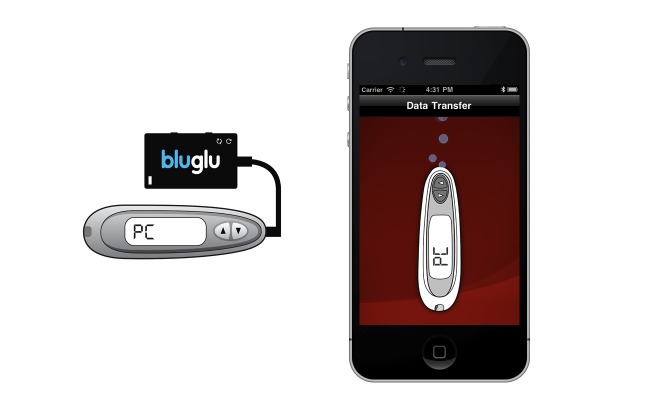
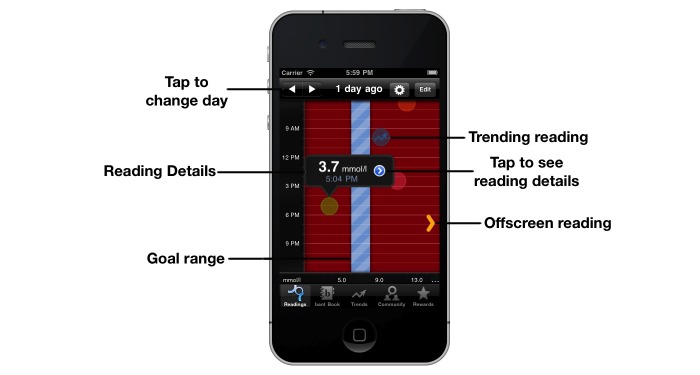
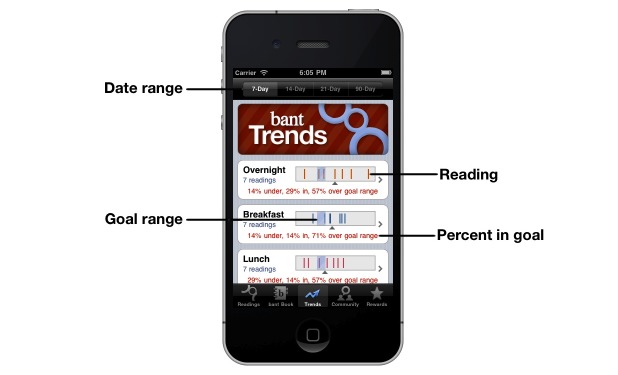
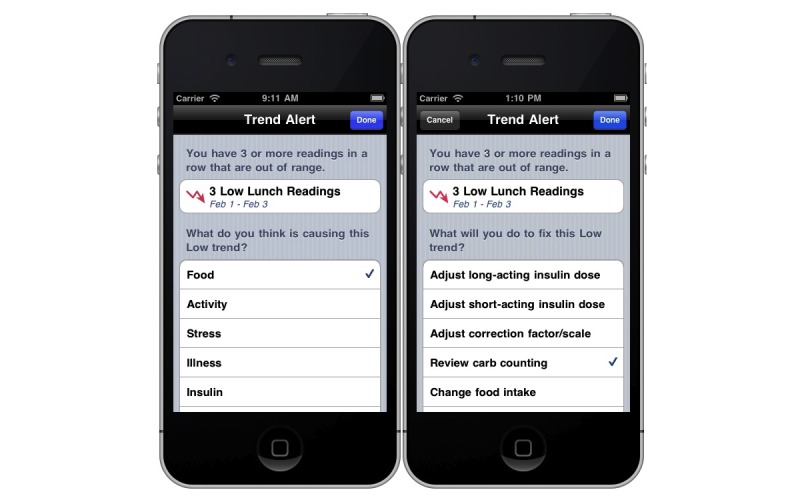
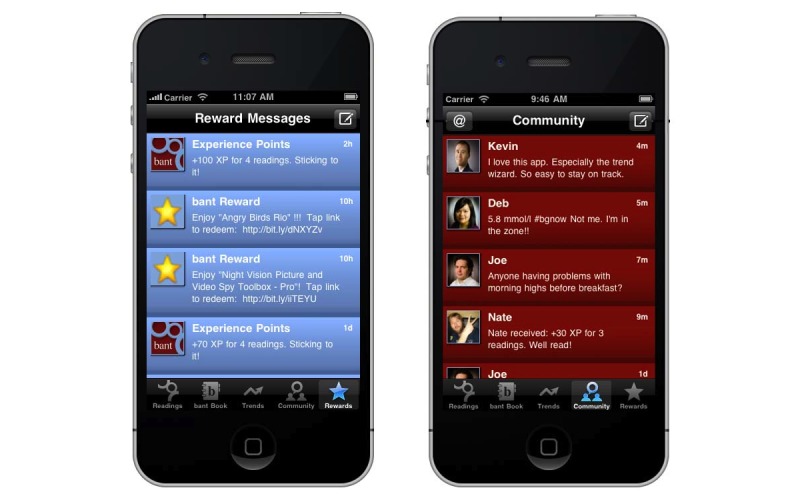
BACKGROUND: The use of mHealth apps has shown improved health outcomes in adult populations with type 2 diabetes mellitus. However, this has not been shown in the adolescent type 1 population, despite their predisposition to the use of technology. We hypothesized that a more tailored approach and a strong adherence mechanism is needed for this group. OBJECTIVE: To design, develop, and pilot an mHealth intervention for the management of type 1 diabetes in adolescents. METHODS: We interviewed adolescents with type 1 diabetes and their family caregivers. Design principles were derived from a thematic analysis of the interviews. User-centered design was then used to develop the mobile app bant. In the 12-week evaluation phase, a pilot group of 20 adolescents aged 12-16 years, with a glycated hemoglobin (HbA(1c)) of between 8% and 10% was sampled. Each participant was supplied with the bant app running on an iPhone or iPod Touch and a LifeScan glucometer with a Bluetooth adapter for automated transfers to the app. The outcome measure was the average daily frequency of blood glucose measurement during the pilot compared with the preceding 12 weeks. RESULTS: Thematic analysis findings were the role of data collecting rather than decision making; the need for fast, discrete transactions; overcoming decision inertia; and the need for ad hoc information sharing. Design aspects of the resultant app emerged through the user-centered design process, including simple, automated transfer of glucometer readings; the use of a social community; and the concept of gamification, whereby routine behaviors and actions are rewarded in the form of iTunes music and apps. Blood glucose trend analysis was provided with immediate prompting of the participant to suggest both the cause and remedy of the adverse trend. The pilot evaluation showed that the daily average frequency of blood glucose measurement increased 50% (from 2.4 to 3.6 per day, P = .006, n = 12). A total of 161 rewards (average of 8 rewards each) were distributed to participants. Satisfaction was high, with 88% (14/16 participants) stating that they would continue to use the system. Demonstrating improvements in HbA(1c) will require a properly powered study of sufficient duration. CONCLUSIONS: This mHealth diabetes app with the use of gamification incentives showed an improvement in the frequency of blood glucose monitoring in adolescents with type 1 diabetes. Extending this to improved health outcomes will require the incentives to be tied not only to frequency of blood glucose monitoring but also to patient actions and decision making based on those readings such that glycemic control can be improved.
Overview
The claims and statistics of this paper haven’t been checked yet.
Run the check — free, no account needed. It reads the open-access text and checks the sources it cites.
Integrity signals
Registry
Cites
Statistics
Figures
Verification
Claims the paper makes
The claims and statistics of this paper haven’t been checked yet.
Run the check — free, no account needed. It reads the open-access text and checks the sources it cites.
Claims other papers make about this one
Each is checked against this paper’s own text: does it say what the citing paper says it does?
The cited source says what the claim attributes to it.
In the citing paper
“Cafazzo et al. (2012) saw rewards (in the form of points that could be redeemed for prizes) to contribute to the frequency of blood glucose measurement among individuals with type 1 diabetes.”
From Gamification for health and wellbeing: A systematic review of the literature (2016) · cites this paper as Cafazzo et al. (2012)
The cited source says what the claim attributes to it.
In the citing paper
“Gamification was found to have a positive influence on healthcare utilization (Allam et al., 2015), the reduction of medication misuse (Allam et al., 2015, Riva et al., 2014) and blood glucose monitoring (Cafazzo et al., 2012).”
From Gamification for health and wellbeing: A systematic review of the literature (2016) · cites this paper as Cafazzo et al., 2012
Self-check
Percentages, sums and reported differences re-computed from the paper’s own numbers.
The self-check needs the paper’s full text.
Citations
Cites
Health Belief Model and Personal Health Behavior
Becker, M. H. (1976) · Medical Entomology and Zoology · Cited by 3,065
Lorig, K. R., Sobel, D. S., Stewart, A. L., Brown, B. W., Bandura, A., Ritter, P., Gonzalez, V. M., Laurent, D. D., & Holman, H. R. (1999) · Medical Care · doi:10.1097/00005650-199901000-00003 · Cited by 2,261
Chronic disease management: what will it take to improve care for chronic illness?
Eh, W. (1998) · PubMed · Cited by 2,095
Heron, K. E., & Smyth, J. M. (2010) · British Journal of Health Psychology · doi:10.1348/135910709x466063 · Cited by 1,438
Quinn, C. C., Shardell, M. D., Terrin, M. L., Barr, E. A., Ballew, S. H., & Gruber-Baldini, A. L. (2011) · Diabetes Care · doi:10.2337/dc11-0366 · Cited by 650
Karter, A. J., Ackerson, L. M., Darbinian, J. A., D’Agostino, R. B., Ferrara, A., Liu, J., & Selby, J. V. (2001) · The American Journal of Medicine · doi:10.1016/s0002-9343(01)00742-2 · Cited by 595
Assessing Family Sharing of Diabetes Responsibilities
Anderson, B. J., Auslander, W., Jung, K. C., Miller, J. P., & Santiago, J. V. (1990) · Journal of Pediatric Psychology · doi:10.1093/jpepsy/15.4.477 · Cited by 496
Skinner, H. A., Biscope, S., Poland, B. D., & Goldberg, E. (2003) · Journal of Medical Internet Research · doi:10.2196/jmir.5.4.e32 · Cited by 371
Association between adherence and glycemic control in pediatric type 1 diabetes: a meta-analysis
Hood, K. K., Peterson, C. M., Rohan, J. M., & Drotar, D. (2009) · Pediatrics · doi:10.1542/peds.2009-0207 · Cited by 347
Research works printed but not linked: 2
- Wagner, EH, 1998, Eff Clin Pract, 1, 2
- Cafazzo, JA, 2010, Biomed Instrum Technol, Suppl Home Healthcare, 47
Cited by
Sorted by citations
Items 601–675 of 675
Davis, S. (2018) · UVic’s Research and Learning Repository (University of Victoria)
A System for Efficient Communication between Patients and PharmaciesPreprint
Sarmento, R. P., Tarrinho, A., Câmara, P., & Costa, V. (2018) · arXiv (Cornell University) · doi:10.48550/arxiv.1812.01499
Explore the relations between personality and gamification
Jia, Y. (2018) · IUScholarWorks (Indiana University) · doi:10.7912/c2994v · Cited by 1
“Squeeze and Lift”: A Design Ethnography of Learning and Teaching Pelvic Floor Exercises
Barnard, R. E. (2017) · Open Access Victoria University of Wellington | Te Herenga Waka (Figshare) · doi:10.26686/wgtn.17069159
Sonnet, E. (2019) · Springer eBooks · doi:10.1007/978-3-319-98119-2_8
Mueller, M., Heger, O., Kordyaka, B., & Niehaves, B. (2019) · Journal of the Association for Information Systems
Anglada-Martínez, H. (2016) · Dialnet (Universidad de la Rioja)
Addressing data accuracy and information integrity in mHealth using ML
Sako, Z. Z. (2019) · Own your potential (DEAKIN)
Lilley, M. (2019) · University of Minnesota Digital Conservancy (University of Minnesota)
Machado, D., Carvalho, R., & Brandão, P. (2020) · Advances in medical technologies and clinical practice book series · doi:10.4018/978-1-7998-7472-0.ch016
Baum, A., & Giunti, G. (2015) · Evidencia actualizacion en la práctica ambulatoria · doi:10.51987/evidencia.v18i3.6330
Gentilini, L. (2018) · The Journal of AMD · doi:10.36171/jamd18.21.2.06
DİYABET HASTALIĞI BAĞLAMINDA OYUNLAŞTIRMA
Ekingen, E. (2021) · Kesit Akademi · doi:10.29228/kesit.52116
Cuestionario pop [a] Carlos Iglesias: "'Un franco, 14 pesetas' es la 'peli' que más veces he visto"
Crespo, I. (2011) · Cinemanía
Modelado y gestión de la motivación en sistemas computacionales
Pedraza, D. F.-A. (2021) · doi:10.20868/upm.thesis.69044
Geldsetzer, P., Flores, S., Wang, G., Flores, B., Rogers, A. B., Bunker, A., Chang, A. Y., & Tisdale, R. L. (2022) · SSRN Electronic Journal · doi:10.2139/ssrn.3982580
Stress Management A Study in Covid 19 Era
Sharma, D. A. (2022) · International Journal of Advanced Research in Science Communication and Technology · doi:10.48175/ijarsct-3301
The Impact of Gamification on Motivation
Vadodkar, A. (2022) · UC Merced Undergraduate Research Journal · doi:10.5070/m414157328
Brizel, F. (2015) · IGI Global eBooks · doi:10.4018/978-1-4666-8756-1.ch014
(2016) · Elsevier eBooks · doi:10.1016/b978-1-78548-091-1.50017-8
Mehdizadeh, H., Asadi, F., Emami, H., Mehrvar, A., & Nazemi, E. (2021) · doi:10.2196/preprints.30830
The Extended Mobile Health Acceptance Model in Thailand: A Conceptual Framework
(2019) · International Workshop on Computer Science and Engineering (WCSE) · doi:10.18178/wcse.2019.06.009
Oleari, E., Pozzi, C., Sardu, F., Sacchitelli, F., Sanchini, V., & Sanna, A. (2019) · IADIS International Conference on e-Health (EH) · doi:10.33965/eh2019_201910l018
Rezaee, R., Moazzen, H., Jahromi, S. E., & Marzaleh, M. A. (2022) · Shiraz E-Medical Journal · doi:10.5812/semj-121368
Martelletti, P. (2022) · Springer eBooks · doi:10.1007/978-3-030-97359-9_5
Penaforte-Saboia, J. G., Couri, C. E. B., Albuquerque, N. V., Neto, J. S. D. C., Carvalho, G. C., Olegário, N. B. D. C., Linard, L. L. P., Alves, F. G. R., Fernandes, V. O., Montenegro, A. P. D. R., et al. (2022) · doi:10.2196/preprints.40505
Yeke, S., & Selçuk, A. G. (2022) · Nevşehir Hacı Bektaş Veli Üniversitesi SBE Dergisi · doi:10.30783/nevsosbilen.932088
A Novel Method for Compression of Pressure Ulcer Image using Region of Interest Method
Raja, S., & Dhas, C. S. G. (2017) · Asian Journal of Computer Science and Technology · doi:10.51983/ajcst-2017.6.1.1777
An, Q., Gebart-Hedman, K., & Wadell, K. (2023) · International Conference on Engineering and Product Design Education (EPDE) · doi:10.35199/epde.2023.40
Gamifying Diabetes — An Education Game Teaching People with Diabetes About Physical Activity
Rauchensteiner, M. A., Colsman, T., Fatykhova, A., Faizan, N., Utesch, M. C., Wittges, H., & Krcmar, H. (2023) · Lecture notes in networks and systems · doi:10.1007/978-3-031-41637-8_35
Gamification: A non-Duty Incentive
Sev, Ç. Ö., & Sev, Y. G. (2023) · Beytulhikme An International Journal of Philosophy · doi:10.29228/beytulhikme.71502
Gamification in Crowdsourcing Applications
Prandi, C., Salomoni, P., & Mirri, S. (2024) · Encyclopedia of Computer Graphics and Games · doi:10.1007/978-3-031-23161-2_46
Adibi, S. (2024) · doi:10.2196/preprints.62784 · Cited by 1
Gamification in personal health record systems: a regulatory fit perspective
Taşbaş, E. H. O., Yildirim, B. F., & Attila, M. R. (2024) · Psychology and Health · doi:10.1080/08870446.2024.2370312
Arthurs, N., Browne, S., Boardman, R., O’Donnell, S., Doyle, G., Kechadi, T., Shahid, A., Tully, L., & O’Malley, G. (2024) · Computational and Structural Biotechnology Journal · doi:10.1016/j.csbj.2024.06.034
Singal, V., Gary, K. A., Piña, A., Stoll, R. D., & Amresh, A. (2024) · SeGAH ... IEEE ... International Conference on Serious Games and Applications for Health/IEEE International Conference on Serious Games and Applications for Health · doi:10.1109/segah61285.2024.10639564
Schreiner, B., & Ponder, S. W. (2017) · American Diabetes Association eBooks · doi:10.2337/9781580405690.ch28
Reddy, P. S., Locke, M., & Badawy, S. M. (2024) · doi:10.2196/preprints.69584
Sha, W., Wang, X., Zhu, Y., Xie, F., Ihnaini, B., & Abdalla, H. B. (2024) · International Symposium on Computer Science and Intelligent Control (ISCSIC) · doi:10.1109/iscsic64297.2024.00032
Rodríguez-Jiménez, E., Martín-Ávila, J., Valero‐Moreno, S., & Pérez‐Marín, M. (2025) · Frontiers in Digital Health · doi:10.3389/fdgth.2025.1540362
Bedregal, J. V., & Bedregal, J. P. V. (2025) · Information systems engineering and management · doi:10.1007/978-3-031-91481-2_3
Leão, M., Jerónimo, A. M., Calado, R., Galo, E., Galhardo, J., Neves, J. F., Sousa, M., Carvalho, I., Andrada, M., Santos, M., et al. (2025) · Research Square · doi:10.21203/rs.3.rs-6991234/v1
Compañ, P., Arnedo, C.-J. V., Gallego-Durán, F. J., Tomás, D., & Viudes-Carbonell, S. J. (2025) · Lecture notes in educational technology · doi:10.1007/978-981-96-5658-5_68
Jahanzeb, S., & Davoody, N. (2025) · doi:10.2196/preprints.80890
Let’s Play! The Use of Online Games in Systemic Family Therapy
Dalai, J., Campaioli, G., & Pomini, V. (2025) · European Family Therapy Association series · doi:10.1007/978-3-031-92225-1_9
Meng, Y., Liu, B., Liu, Z., & Lu, H. (2025) · doi:10.2196/preprints.83435
Enhancing Child Digital Dietary Self-Monitoring via Positive Reinforcement: Proof-of-Concept Trial
León, L. G., Steeves, E. A., Reinbolt, J. A., Wyatt, T. H., & Raynor, H. A. (2025) · Nutrients · doi:10.3390/nu17213341
Reddy, P. S., Locke, M., & Badawy, S. M. (2025) · JMIR Pediatrics and Parenting · doi:10.2196/69584
Zhong, S., Jiang, J., Liu, H., & Pan, Y. (2024) · Figshare · doi:10.6084/m9.figshare.25132096
Hussein, R. N., Killeen, R. M., & Grindrod, K. (2022) · Figshare · doi:10.6084/m9.figshare.19549802
Hussein, R. N., Killeen, R. M., & Grindrod, K. (2022) · Figshare · doi:10.6084/m9.figshare.19549799
Enhancing diabetes monitoring systems’ reports: A novel integrated diabetes report (IDR)
Aldaghi, T., Bém, R., & Mužík, J. (2026) · International Journal of Medical Informatics · doi:10.1016/j.ijmedinf.2026.106288
George, S. M. S., Esquives, B. S. N., Leite, R. O., Aubry, V. P., Saber, R., Agosto, Y., Kobayashi, M. A., & Prado, G. J. (2026) · JMIR Formative Research · doi:10.2196/73848
Chang, C.-S., Li, Y., & Kuo, T. (2026) · Health Informatics Journal · doi:10.1177/14604582261427924
Davis, T. L., McCracken, C. M., Fisher, L., Graetz, I., Barzilay, J. I., Vellanki, P., Haw, J. S., Paz, L. G., Wolf, R. A., Crawford, M., et al. (2026) · Pilot and Feasibility Studies · doi:10.1186/s40814-026-01776-z
Analysis of the design, evaluation and the adoption of a personal health record
Ngassam, R. G. N. (2021) · theses.fr (ABES) · doi:10.70675/5962edf7z6353z4cfcza757zd801dc436ba0
Solat, R., Pourhosein, R., Ehsan, H. B., Pourabbasi, A., Hashemi, A., & Hatami, J. (2026) · JMIR XR and spatial computing. · doi:10.2196/81402
Quality and Guideline Adherence of Mobile Nutrition Management Apps for Diabetes: Evaluation Study
Jahanzeb, S., & Davoody, N. (2026) · JMIR Diabetes · doi:10.2196/80890
Ngai, S. S., Cheung, C., Ng, Y., Leung, P. P. Y., Cheung, M. K.-T., Hanlei, D. U., Guo, H., He, Y., Ngai, H.-L., Wong, L., et al. (2026) · Journal of Employment Counseling · doi:10.1002/joec.70018
Application of gamified interventions in children with type 1 diabetes: a scoping review
Guan, Y., Xie, J., Wang, F., Ouyang, Y., Tian, J., Wang, Q., & Guo, H. (2026) · BMC Pediatrics · doi:10.1186/s12887-026-07142-5
Lu, Q., Liu, Y., Shao, M., & Wang, L. (2026) · JMIR Human Factors · doi:10.2196/92738
Aydın, T., İnci, F., Kilic, M., Yiğit, N., Kahve, Y., & Ceyhan, E. (2026) · Journal of Children s Orthopaedics · doi:10.1177/18632521261466900
Mavroeidi, A., Diamantopoulou, V., Kalloniatis, C., & Gritzalis, S. (2026) · Lecture notes in computer science · doi:10.1007/978-3-032-35586-7_28
Villena-Esponera, M. P., Aguilar, H., Jerves-Córdova, C., Molina‐Recio, G., & Caballero, M. (2026) · Digital Health · doi:10.1177/20552076261460352
Alves, I., Conceição, N., & Esteves, A. (2026) · International Journal of Human-Computer Interaction · doi:10.1080/10447318.2026.2728236
Józwik, K., Sarek, F., Kucharczyk, S., Rak, Z., Ignatowska, Z., Wielogórska, A. M., Kamecki, A., & Dzień, K. (2026) · International Journal of Innovative Technologies in Social Science · doi:10.31435/ijitss.3(51).2026.6506
McDonnell, E. J., Jones, T. E., & Pratt, W. (2026) · International ACM SIGACCESS Conference on Computers and Accessibility (ASSETS) · doi:10.1145/3797867.3829045
Silva, C., Budgell, D., & Amed, S. (2026) · Digital Health · doi:10.1177/20552076261489478
Metadata
- Authors
- Cafazzo, J. A., Casselman, M., Hamming, N., Katzman, D. K., & Palmert, M. R.
- Affiliations
- University Health Network (CA)
- University of Toronto (CA)
- Corresponding author
- Cafazzo, Joseph A
- Venue
- Journal of Medical Internet Research
- Publisher
- JMIR Publications Inc.
- Published
- 2012-05-08
- Volume
- 14
- Issue
- 3
- Pages
- e70
- ISSN
- 1438-8871 (ISSN-L)
- PMC
- PMC3799540
- OpenAlex
- W2142564124
- Cited by
- 676
- References
- 30
- Citations by year
- 2026: 21 · 2025: 22 · 2024: 37 · 2023: 29 · 2022: 54 · 2021: 55 · 2020: 49 · 2019: 66 · 2018: 79 · 2017: 74 · 2016: 69 · 2015: 57 · 2014: 32 · 2013: 24 · 2012: 7
- FWCI
- 68.18
- Type
- journal article
- Language
- en
- Open access
- gold
- doi.org
- Licence
- cc-by
- Locations
- Journal of Medical Internet Research (publishedVersion, cc-by)
- Europe PMC (PubMed Central) (publishedVersion, cc-by)
- PubMed Central (publishedVersion, cc-by)
- PubMed (publishedVersion)
- DOAJ (DOAJ: Directory of Open Access Journals) (submittedVersion, cc-by-sa)
- Funders
- University Health Network
- Hospital for Sick Children
- Topics
- Health Sciences › Health Professions › General Health Professions › Mobile Health and mHealth Applications
- Health Sciences › Medicine › Endocrinology, Diabetes and Metabolism › Diabetes Management and Education
- Health Sciences › Medicine › Endocrinology, Diabetes and Metabolism › Diabetes Management and Research
- Keywords
- type 1 diabetes, adolescents, mobile health apps, self-management, blood glucose monitoring, gamification, user-centered design, HbA1c, social community, family caregivers, user interviews, user satisfaction, health behavior change, decision inertia, health data sharing, rewards and incentives
- MeSH terms
- Adolescent, Diabetes Mellitus, Type 1, Glycated Hemoglobin, Humans, Pilot Projects, Self Care, Software, Cell Phone
About these checks
Registry, retraction, Cites and statistics results are computed, not judged, with one exception: a printed reference that no index lists is read once by a model before it counts as a citation error. Claims are extracted by a model and kept only when their quote appears verbatim in the text; each cited source is then checked, with a model’s help, for whether it says what the claim relies on. Those verdicts can be wrong — read the claim’s quote and the cited source before relying on one.
Statistics and arithmetic are recomputed, not judged.
Confidence bands are shown only for fields calibrated on our annotated test set. None is calibrated yet, so no band is shown.
What counts as a claim ›How we measure confidence ›How we check this ›
Are you an author, or do you see a problem with this page? Request a review
