

The DOI matches its Crossref record; 36 of the 36 references it cites were found in a registry or an index.
The Effect of Technology-Based Interventions on Pain, Depression, and Quality of Life in Patients With Cancer: A Systematic Review of Randomized Controlled Trials
Open accessAbstract
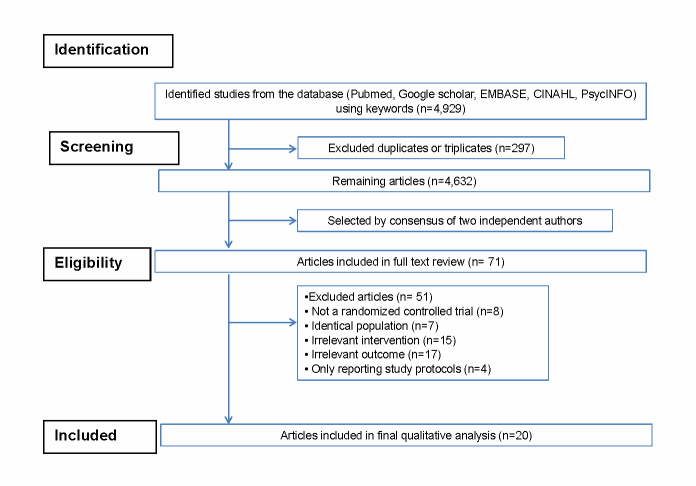
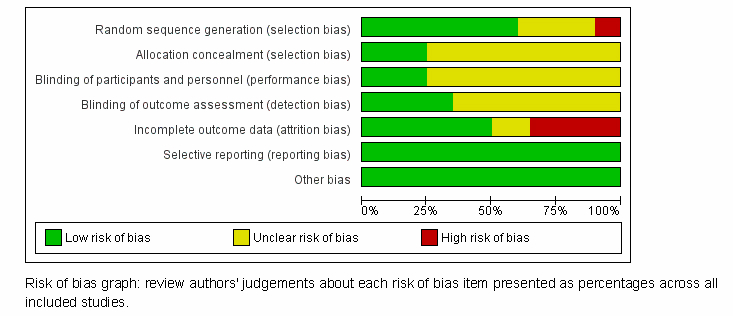
BACKGROUND: The burden of cancer is increasing; projections over the next 2 decades suggest that the annual cases of cancer will rise from 14 million in 2012 to 22 million. However, cancer patients in the 21st century are living longer due to the availability of novel therapeutic regimens, which has prompted a growing focus on maintaining patients' health-related quality of life. Telehealth is increasingly being used to connect with patients outside of traditional clinical settings, and early work has shown its importance in improving quality of life and other clinical outcomes in cancer care. OBJECTIVE: The aim of this study was to systematically assess the literature for the effect of supportive telehealth interventions on pain, depression, and quality of life in cancer patients via a systematic review of clinical trials. METHODS: We searched PubMed, EMBASE, Google Scholar, CINAHL, and PsycINFO in July 2013 and updated the literature search again in January 2015 for prospective randomized trials evaluating the effect of telehealth interventions in cancer care with pain, depression, and quality of life as main outcomes. Two of the authors independently reviewed and extracted data from eligible randomized controlled trials, based on pre-determined selection criteria. Methodological quality of studies was assessed by the Cochrane Collaboration risk of bias tool. RESULTS: Of the 4929 articles retrieved from databases and relevant bibliographies, a total of 20 RCTs were included in the final review. The studies were largely heterogeneous in the type and duration of the intervention as well as in outcome assessments. A majority of the studies were telephone-based interventions that remotely connected patients with their health care provider or health coach. The intervention times ranged from 1 week to 12 months. In general, most of the studies had low risk of bias across the domains of the Cochrane Collaboration risk of bias tool, but most of the studies had insufficient information about the allocation concealment domain. Two of the three studies focused on pain control reported significant effects of the intervention; four of the nine studies focus on depression reported significant effects, while only the studies that were focused on quality of life reported significant effects. CONCLUSIONS: This systematic review demonstrates the potential of telehealth interventions in improving outcomes in cancer care. However, more high-quality large-sized trials are needed to demonstrate cogent evidence of its effectiveness.
Overview
The claims and statistics of this paper haven’t been checked yet.
Run the check — free, no account needed. It reads the open-access text and checks the sources it cites.
Integrity signals
Registry
Cites
Statistics
Figures
Verification
Claims the paper makes
The claims and statistics of this paper haven’t been checked yet.
Run the check — free, no account needed. It reads the open-access text and checks the sources it cites.
Claims other papers make about this one
Each is checked against this paper’s own text: does it say what the citing paper says it does?
The source backs part of the claim, not all of it — or backs it for a different population, condition or comparison.
In the citing paper
“Although promising effects of such interventions have been documented concerning anxiety, depression [25,26], distress [27], fatigue [28], physical activity [29], symptom management [30], insomnia [31,32], sexual dysfunction [33], and quality of life [34,35], the overall benefit of such interventions for BCSs is still unclear.”
From Development and Evaluation of the Usefulness, Usability, and Feasibility of iNNOV Breast Cancer: Mixed Methods Study (2022) · cites this paper as [26]
Experimental — accuracy not yet measured
Self-check
Percentages, sums and reported differences re-computed from the paper’s own numbers.
The self-check needs the paper’s full text.
Citations
Cites
Eysenbach, G., & CONSORT-EHEALTH Group (2011) · Journal of Medical Internet Research · doi:10.2196/jmir.1923 · Cited by 1,863
Effect of Telecare Management on Pain and Depression in Patients With Cancer
Kroenke, K., Theobald, D., Wu, J., Norton, K., Morrison, G. C., Carpenter, J. S., & Tu, W. (2010) · JAMA · doi:10.1001/jama.2010.944 · Cited by 336
Loprinzi, C. E., Prasad, K., Schroeder, D. R., & Sood, A. (2011) · Clinical Breast Cancer · doi:10.1016/j.clbc.2011.06.008 · Cited by 283 · cited 7×
“Thirteen (65%) of the 20 trials, were conducted among patients with breast cancer [12,16-18,21,22,25-31], followed by four trials in patients with any solid cancer [13-15,23], and one trial each with focus on cervical [24], colorectal [19], and colorectal/prostate cancers [20].”
InfluentialSharpe, M., Walker, J., Hansen, C. H., Martin, P., Symeonides, S., Gourley, C., Wall, L., Weller, D., & Murray, G. (2014) · The Lancet · doi:10.1016/s0140-6736(14)61231-9 · Cited by 269
Hart, S. L., Hoyt, M., Diefenbach, M., Anderson, D. R., Kilbourn, K., Craft, L., Steel, J., Cuijpers, P., Mohr, D., Berendsen, M., et al. (2012) · Journal of the National Cancer Institute · doi:10.1093/jnci/djs256 · Cited by 217
Børøsund, E., Cvancarova, M., Moore, S. M., Ekstedt, M., & Ruland, C. M. (2014) · Journal of Medical Internet Research · doi:10.2196/jmir.3348 · Cited by 148
Using technology to deliver cancer follow-up: a systematic review
Dickinson, R., Hall, S., Sinclair, J. E., Bond, C., & Murchie, P. (2014) · BMC Cancer · doi:10.1186/1471-2407-14-311 · Cited by 146
Stress, Immunity, and Cervical Cancer: Biobehavioral Outcomes of a Randomized Clinical Trail
Nelson, E. L., Wenzel, L. B., Osann, K., Doğan, A., Chantana, N., Reina-Patton, A., Laust, A. K., Nishimoto, K. P., Chicz-DeMet, A., du Pont, N., et al. (2008) · Clinical Cancer Research · doi:10.1158/1078-0432.ccr-07-1632 · Cited by 137
Badger, T., Segrin, C., Hepworth, J., Pasvogel, A., Weihs, K., & Lopez, A. (2013) · Psycho-Oncology · doi:10.1002/pon.3101 · Cited by 120
Marcus, A. C., Garrett, K. M., Cella, D., Wenzel, L., Brady, M. J., Fairclough, D., Pate‐Willig, M., Barnes, D., Powell Emsbo, S., Kluhsman, B. C., et al. (2010) · Psycho-Oncology · doi:10.1002/pon.1653 · Cited by 115
Cited by
Sorted by citations
Cancer Survivors’ Experience With Telehealth: A Systematic Review and Thematic Synthesis.
Cox, A., Lucas, G., Marcu, A., Piano, M., Grosvenor, W., Mold, F., Maguire, R., & Ream, E. (2017) · Journal of Medical Internet Research · doi:10.2196/jmir.6575 · Cited by 330
Digital health and telehealth in cancer care: A scoping review of reviews
Shaffer, K. M., Turner, K. L., Siwik, C., Gonzalez, B. D., Upasani, R., Glazer, J. V., Ferguson, R. J., Joshua, C., & Low, C. A. (2023) · The Lancet Digital Health · doi:10.1016/s2589-7500(23)00049-3 · Cited by 263
The increasing value of eHealth in the delivery of patient-centred cancer care
Penedo, F. J., Oswald, L. B., Kronenfeld, J. P., Garcia, S. F., Cella, D., & Yanez, B. (2020) · The Lancet Oncology · doi:10.1016/s1470-2045(20)30021-8 · Cited by 252
Rouleau, G., Gagnon, M.-P., Côté, J., Payne-Gagnon, J., Hudson, E., & Dubois, C.-A. (2017) · Journal of Medical Internet Research · doi:10.2196/jmir.6686 · Cited by 244
“Despite this, there are several systematic reviews on the effects of ICTs on patients’outcomes [68-71].”
Lunde, P., Nilsson, B. B., Bergland, A., Kværner, K. J., & Bye, A. (2018) · Journal of Medical Internet Research · doi:10.2196/jmir.9751 · Cited by 214
Metadata
- Authors
- Agboola, S. O., Ju, W., Elfiky, A., Kvedar, J. C., & Jethwani, K.
- Affiliations
- Brigham and Women's Hospital (US)
- Ewha Womans University (KR)
- Corresponding author
- Agboola, Stephen O
- Venue
- Journal of Medical Internet Research
- Publisher
- JMIR Publications Inc.
- Published
- 2015-03-13
- Volume
- 17
- Issue
- 3
- Pages
- e65
- ISSN
- 1438-8871 (ISSN-L)
- PMC
- PMC4381812
- OpenAlex
- W2064490092
- Cited by
- 132
- References
- 36
- Citations by year
- 2026: 2 · 2025: 6 · 2024: 5 · 2023: 12 · 2022: 22 · 2021: 18 · 2020: 19 · 2019: 9 · 2018: 12 · 2017: 15 · 2016: 11 · 2015: 1
- FWCI
- 1.89
- Type
- journal article
- Language
- en
- Open access
- gold
- doi.org
- Licence
- cc-by
- Locations
- Journal of Medical Internet Research (publishedVersion, cc-by)
- PubMed Central (publishedVersion, cc-by)
- PubMed (publishedVersion)
- DOAJ (DOAJ: Directory of Open Access Journals) (submittedVersion, cc-by-sa)
- Topics
- Health Sciences › Medicine › Public Health, Environmental and Occupational Health › Telemedicine and Telehealth Implementation
- Health Sciences › Medicine › Oncology › Cancer survivorship and care
- Health Sciences › Health Professions › General Health Professions › Mobile Health and mHealth Applications
- Keywords
- telemedicine, cancer patients, cancer pain, depression, health-related quality of life, telephone-delivered intervention, health coaching, supportive care
- MeSH terms
- Depression, Humans, Neoplasms, Pain, Prospective Studies, Quality of Life, Technology, Randomized Controlled Trials as Topic, Telemedicine, Pain Management
About these checks
Registry, retraction, Cites and statistics results are computed, not judged, with one exception: a printed reference that no index lists is read once by a model before it counts as a citation error. Claims are extracted by a model and kept only when their quote appears verbatim in the text; each cited source is then checked, with a model’s help, for whether it says what the claim relies on. Those verdicts can be wrong — read the claim’s quote and the cited source before relying on one.
Statistics and arithmetic are recomputed, not judged.
Confidence bands are shown only for fields calibrated on our annotated test set. None is calibrated yet, so no band is shown.
What counts as a claim ›How we measure confidence ›How we check this ›
Are you an author, or do you see a problem with this page? Request a review
