

The DOI matches its Crossref record; 31 of the 31 references it cites were found in a registry or an index.
The Potential of Mobile Apps for Improving Asthma Self-Management: A Review of Publicly Available and Well-Adopted Asthma Apps
Open accessAbstract
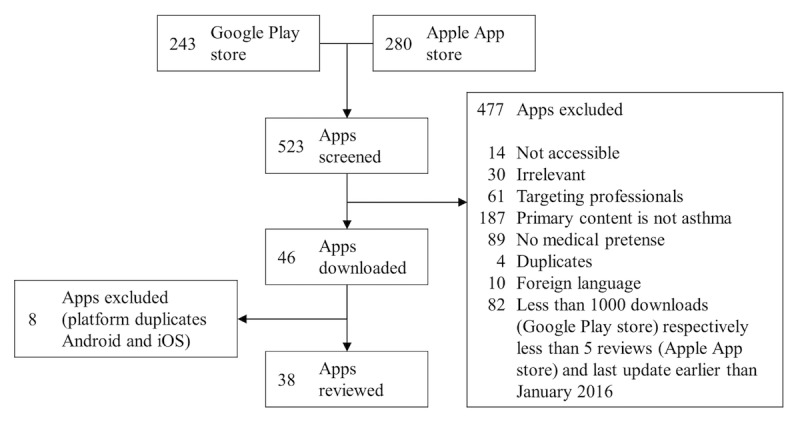
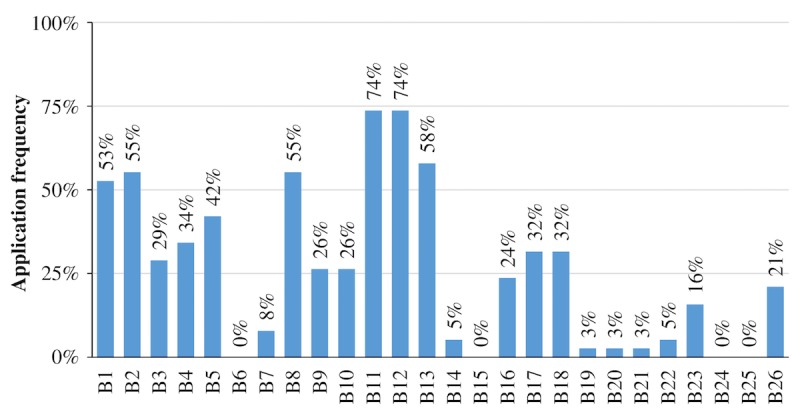
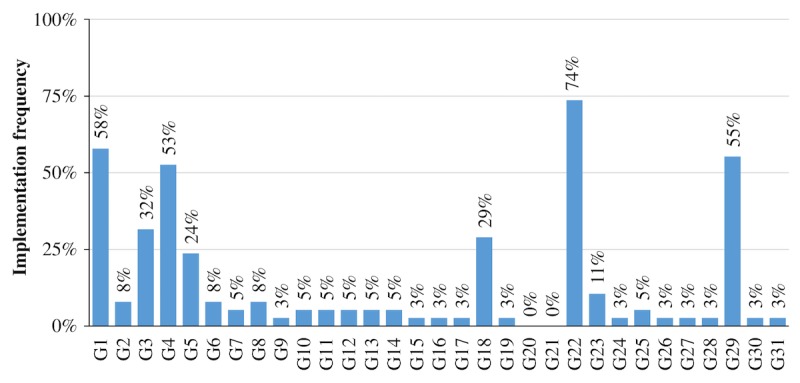
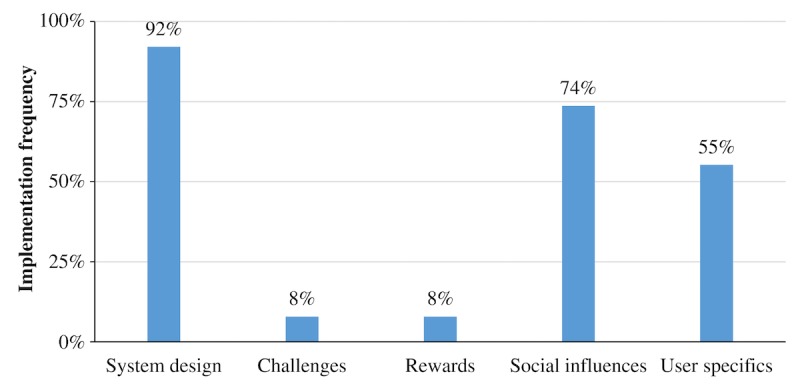
Background: Effective disease self-management lowers asthma’s burden of disease for both individual patients and health care systems. In principle, mobile health (mHealth) apps could enable effective asthma self-management interventions that improve a patient’s quality of life while simultaneously reducing the overall treatment costs for health care systems. However, prior reviews in this field have found that mHealth apps for asthma lack clinical evaluation and are often not based on medical guidelines. Yet, beyond the missing evidence for clinical efficacy, little is known about the potential apps might have for improving asthma self-management. Objective: The aim of this study was to assess the potential of publicly available and well-adopted mHealth apps for improving asthma self-management. Methods: The Apple App store and Google Play store were systematically searched for asthma apps. In total, 523 apps were identified, of which 38 apps matched the selection criteria to be included in the review. Four requirements of app potential were investigated: app functions, potential to change behavior (by means of a behavior change technique taxonomy), potential to promote app use (by means of a gamification components taxonomy), and app quality (by means of the Mobile Application Rating Scale [MARS]). Results: The most commonly implemented functions in the 38 reviewed asthma apps were tracking (30/38, 79%) and information (26/38, 68%) functions, followed by assessment (20/38, 53%) and notification (18/38, 47%) functions. On average, the reviewed apps applied 7.12 of 26 available behavior change techniques (standard deviation [SD]=4.46) and 4.89 of 31 available gamification components (SD=4.21). Average app quality was acceptable (mean=3.17/5, SD=0.58), whereas subjective app quality lied between poor and acceptable (mean=2.65/5, SD=0.87). Additionally, the sum scores of all review frameworks were significantly correlated (lowest correlation: r36=.33, P=.04 between number of functions and gamification components; highest correlation: r36=.80, P<.001 between number of behavior change techniques and gamification components), which suggests that an app’s potential tends to be consistent across review frameworks. Conclusions: Several apps were identified that performed consistently well across all applied review frameworks, thus indicating the potential mHealth apps offer for improving asthma self-management. However, many apps suffer from low quality. Therefore, app reviews should be considered as a decision support tool before deciding which app to integrate into a patient’s asthma self-management. Furthermore, several research-practice gaps were identified that app developers should consider addressing in future asthma apps.
Overview
The claims and statistics of this paper haven’t been checked yet.
Run the check — free, no account needed. It reads the open-access text and checks the sources it cites.
Integrity signals
Registry
Cites
Statistics
Figures
Verification
Claims the paper makes
The claims and statistics of this paper haven’t been checked yet.
Run the check — free, no account needed. It reads the open-access text and checks the sources it cites.
Claims other papers make about this one
Each is checked against this paper’s own text: does it say what the citing paper says it does?
In the citing paper
“Although these mobile health apps offer a range of features (eg, automated personalized texts, interactive websites, and online modules) to inform patients about asthma, they have not included scalable text-based health care conversational agents to support communication with health care professionals.”
Self-check
Percentages, sums and reported differences re-computed from the paper’s own numbers.
The self-check needs the paper’s full text.
Citations
Cites
Does Gamification Work? -- A Literature Review of Empirical Studies on Gamification
Hamari, J., Koivisto, J., & Sarsa, H. (2014) · 2014 47th Hawaii International Conference on System Sciences · doi:10.1109/hicss.2014.377 · Cited by 5,201
A taxonomy of behavior change techniques used in interventions
Abraham, C., & Michie, S. (2008) · Health Psychology · doi:10.1037/0278-6133.27.3.379 · Cited by 2,525
Mobile app rating scale: a new tool for assessing the quality of health mobile apps
Stoyanov, S. R., Hides, L., Kavanagh, D. J., Zelenko, O., Tjondronegoro, D., & Mani, M. (2015) · JMIR mHealth and uHealth · doi:10.2196/mhealth.3422 · Cited by 2,233
Self-management education and regular practitioner review for adults with asthma
Gibson, P. G., Powell, H. A., Wilson, A., Abramson, M. J., Haywood, P., Bauman, A. E., Hensley, M., Walters, E. H., & Roberts, J. J. (2002) · Cochrane Database of Systematic Reviews · doi:10.1002/14651858.cd001117 · Cited by 1,373
National surveillance for asthma--United States, 1980-2004.
Moorman, J. E., Rudd, R. A., Johnson, C. A., King, M., Minor, P., Bailey, C., Scalia, M. R., & Akinbami, L. J. (2007) · PubMed · Cited by 1,340
Research Commentary —The Digital Transformation of Healthcare: Current Status and the Road Ahead
Agarwal, R., Gao, G. G., DesRoches, C. M., & Jha, A. K. (2010) · Information Systems Research · doi:10.1287/isre.1100.0327 · Cited by 1,088
Clinical management of asthma in 1999: the Asthma Insights and Reality in Europe (AIRE) study
Rabe, K. F., Vermeire, P., Soriano, J. B., & Maier, W. (2000) · European Respiratory Journal · doi:10.1183/09031936.00.16580200 · Cited by 1,024
Dennison, L., Morrison, L., Conway, G., & Yardley, L. (2013) · Journal of Medical Internet Research · doi:10.2196/jmir.2583 · Cited by 895
Kirby, R. S. (2014) · Annals of Epidemiology · doi:10.1016/j.annepidem.2014.01.010 · Cited by 681
Nahum-Shani, I., Hekler, E. B., & Spruijt-Metz, D. (2015) · Health Psychology · doi:10.1037/hea0000306 · Cited by 568
Gardner, B., Smith, L., Lorencatto, F., Hamer, M., & Biddle, S. (2015) · Health Psychology Review · doi:10.1080/17437199.2015.1082146 · Cited by 518
Mobile Health Apps to Facilitate Self-Care: A Qualitative Study of User Experiences
Anderson, K., Burford, O., & Emmerton, L. (2016) · PLOS ONE · doi:10.1371/journal.pone.0156164 · Cited by 502
Staddon, J. E. R., & Cerutti, D. T. (2002) · Annual Review of Psychology · doi:10.1146/annurev.psych.54.101601.145124 · Cited by 464
National surveillance of asthma: United States, 2001-2010.
Moorman, J. E., Akinbami, L. J., Bailey, C. M., Zahran, H. S., King, M. E., Johnson, C. A., & Liu, X. (2012) · PubMed · Cited by 346
Behavior Change Techniques Present in Wearable Activity Trackers: A Critical Analysis
Mercer, K., Li, M., Giangregorio, L., Burns, C., & Grindrod, K. (2016) · JMIR mHealth and uHealth · doi:10.2196/mhealth.4461 · Cited by 304
Smartphone and tablet self management apps for asthma
Marcano Belisario, J. S., Huckvale, K., Greenfield, G., Car, J., & Gunn, L. H. (2013) · Cochrane Database of Systematic Reviews · doi:10.1002/14651858.cd010013.pub2 · Cited by 288
Apps for asthma self-management: a systematic assessment of content and tools
Huckvale, K., Car, M., Morrison, C. P., & Car, J. (2012) · BMC Medicine · doi:10.1186/1741-7015-10-144 · Cited by 252
Ornstein, S. M., Garr, D. R., Jenkins, R., Rust, P. F., & Arnon, A. (1991) · PubMed · Cited by 238
Merchant, R. K., Inamdar, R., & Quade, R. (2016) · The Journal of Allergy and Clinical Immunology In Practice · doi:10.1016/j.jaip.2015.11.022 · Cited by 221
Digital medicine's march on chronic disease
Kvedar, J. C., Fogel, A. L., Elenko, E., & Zohar, D. (2016) · Nature Biotechnology · doi:10.1038/nbt.3495 · Cited by 218
Watson, A., Bickmore, T., Cange, A., Kulshreshtha, A., & Kvedar, J. (2012) · Journal of Medical Internet Research · doi:10.2196/jmir.1629 · Cited by 180
Effective behaviour change techniques in the prevention and management of childhood obesity
Martin, J., Chater, A., & Lorencatto, F. (2013) · International Journal of Obesity · doi:10.1038/ijo.2013.107 · Cited by 176
The evolution of mobile apps for asthma: an updated systematic assessment of content and tools
Huckvale, K., Morrison, C., Ouyang, J., Ghaghda, A., & Car, J. (2015) · BMC Medicine · doi:10.1186/s12916-015-0303-x · Cited by 166
Improvement in Asthma Control Using a Minimally Burdensome and Proactive Smartphone Application
Cook, K. A., Modena, B. D., & Simon, R. A. (2016) · The Journal of Allergy and Clinical Immunology In Practice · doi:10.1016/j.jaip.2016.03.005 · Cited by 94
Ahmed, S., Ernst, P., Bartlett, S. J., Valois, M., Zaihra, T., Paré, G., Grad, R. M., Eilayyan, O., Perreault, R. B., & Tamblyn, R. M. (2016) · Journal of Medical Internet Research · doi:10.2196/jmir.5866 · Cited by 85
Mobile health applications for asthma
Wu, A. C., Carpenter, J. F., & Himes, B. E. (2015) · The Journal of Allergy and Clinical Immunology In Practice · doi:10.1016/j.jaip.2014.12.011 · Cited by 73
Long-Term Engagement With a Mobile Self-Management System for People With Type 2 Diabetes
Tatara, N., Årsand, E., Skrøvseth, S. O., & Hartvigsen, G. (2013) · JMIR mHealth and uHealth · doi:10.2196/mhealth.2432 · Cited by 62
Al-Durra, M., Torio, M.-B., & Cafazzo, J. A. (2015) · Journal of Medical Internet Research · doi:10.2196/jmir.4110 · Cited by 50
The Promise of Improving Asthma Control Using Mobile Health
Wu, A. C. (2016) · The Journal of Allergy and Clinical Immunology In Practice · doi:10.1016/j.jaip.2016.04.003 · Cited by 16
Barata, F., Kowatsch, T., Tinschert, P., & Filler, A. (2016) · ACM International Joint Conference on Pervasive and Ubiquitous Computing (UbiComp) · doi:10.1145/2968219.2972713 · Cited by 11
Self-citation22nd European Conference on Information Systems (ECIS), Tel Aviv, Israel, 9-11 June, 2014
Hekkala, R., Stein, M., & Rossi, M. (2014) · European Conference on Information Systems · Cited by 1
Research works printed but not linked: 3
- Moorman, JE, 2012, Vital Health Stat 3, 1
- Ornstein, SM, 1991, J Fam Pract, 32, 82
- TinschertPBarataFKowatschTEnhancing asthma control through IT: design, implementation and planned evaluation of the mobile asthma companion201713th International Conference on WirtschaftsinformatikFebruary 12-15, 2017St Gallen, Switzerland
Cited by
Sorted by citations
Infodemiology and Infoveillance: Scoping Review
Mavragani, A. (2020) · Journal of Medical Internet Research · doi:10.2196/16206 · Cited by 232
Tofighi, B., Chemi, C., Ruiz-Valcarcel, J., Hein, P. N., & Hu, L. (2018) · JMIR mhealth and uhealth · doi:10.2196/11831 · Cited by 131
Mobile health app usability and quality rating scales: a systematic review
Azad‐Khaneghah, P., Neubauer, N., Cruz, A. M., & Liu, L. (2020) · Disability and Rehabilitation Assistive Technology · doi:10.1080/17483107.2019.1701103 · Cited by 119
Najm, A., Nikiphorou, E., Kostine, M., Richez, C., Pauling, J. D., Finckh, A., Ritschl, V., Prior, Y., Balážová, P., Stones, S. R., et al. (2019) · RMD Open · doi:10.1136/rmdopen-2019-001014 · Cited by 114
Kowatsch, T., Schachner, T., Harperink, S., Barata, F., Dittler, U., Xiao, G., Stanger, C., v Wangenheim, F., Fleisch, E., Oswald, H., et al. (2021) · Journal of Medical Internet Research · doi:10.2196/25060 · Cited by 103
“Asthma apps targeted at children often include a gamification component to increase engagement, and to familiarize them with aspects of asthma monitoring and management such as medication intake [46,47].”
Self-citation
Metadata
- Authors
- Tinschert, P., Jakob, R., Barata, F., Kramer, J.-N., & Kowatsch, T.
- Affiliations
- University of St.Gallen (CH)
- Technical University of Munich (DE)
- ETH Zurich (CH)
- Corresponding author
- Kowatsch, Tobias
- Venue
- JMIR mHealth and uHealth
- Publisher
- JMIR Publications Inc.
- Published
- 2017-08-02
- Volume
- 5
- Issue
- 8
- Pages
- e113
- ISSN
- 2291-5222 (ISSN-L)
- PMC
- PMC5559650
- OpenAlex
- W2739586802
- Cited by
- 156
- References
- 31
- Citations by year
- 2026: 4 · 2025: 6 · 2024: 17 · 2023: 11 · 2022: 14 · 2021: 26 · 2020: 30 · 2019: 26 · 2018: 22
- FWCI
- 34.58
- Type
- journal article
- Language
- en
- Open access
- gold
- doi.org
- Licence
- cc-by
- Locations
- JMIR mhealth and uhealth (publishedVersion, cc-by)
- PubMed Central (publishedVersion, cc-by)
- PubMed (publishedVersion)
- Alexandria (UniSG) (University of St.Gallen) (acceptedVersion)
- Alexandria (UniSG) (University of St.Gallen) (submittedVersion)
- DOAJ (DOAJ: Directory of Open Access Journals) (submittedVersion, cc-by-sa)
- Repository for Publications and Research Data (ETH Zurich) (submittedVersion, cc-by)
- ETH Zürich Research Collection (cc-by)
- Topics
- Health Sciences › Health Professions › General Health Professions › Mobile Health and mHealth Applications
- Social Sciences › Psychology › Applied Psychology › Digital Mental Health Interventions
- Health Sciences › Medicine › Pulmonary and Respiratory Medicine › Asthma and respiratory diseases
- Keywords
- asthma, mobile health apps, asthma self-management, behaviour change techniques, gamification, app quality, Mobile App Rating Scale, digital health interventions, app adoption, quality of life, health care costs, clinical guidelines adherence, symptom monitoring, medication adherence
About these checks
Registry, retraction, Cites and statistics results are computed, not judged, with one exception: a printed reference that no index lists is read once by a model before it counts as a citation error. Claims are extracted by a model and kept only when their quote appears verbatim in the text; each cited source is then checked, with a model’s help, for whether it says what the claim relies on. Those verdicts can be wrong — read the claim’s quote and the cited source before relying on one.
Statistics and arithmetic are recomputed, not judged.
Confidence bands are shown only for fields calibrated on our annotated test set. None is calibrated yet, so no band is shown.
What counts as a claim ›How we measure confidence ›How we check this ›
Are you an author, or do you see a problem with this page? Request a review
