

The DOI matches its Crossref record; 37 of the 37 references it cites were found in a registry or an index.
Mobile Breast Cancer e-Support Program for Chinese Women With Breast Cancer Undergoing Chemotherapy (Part 2): Multicenter Randomized Controlled Trial
Open accessPublished version of a preprint
Abstract
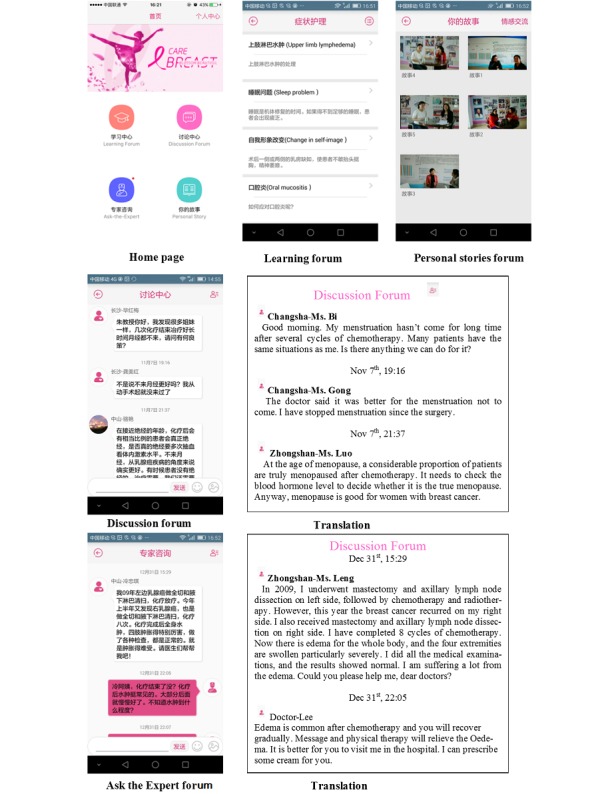
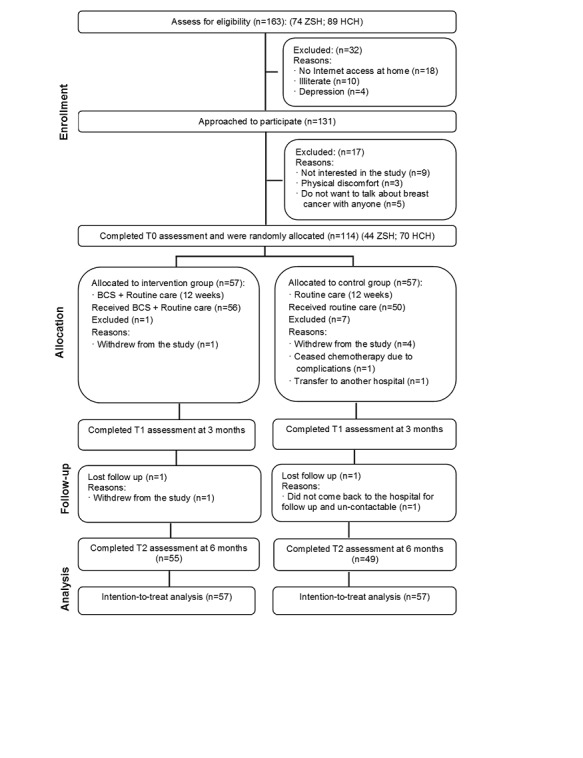
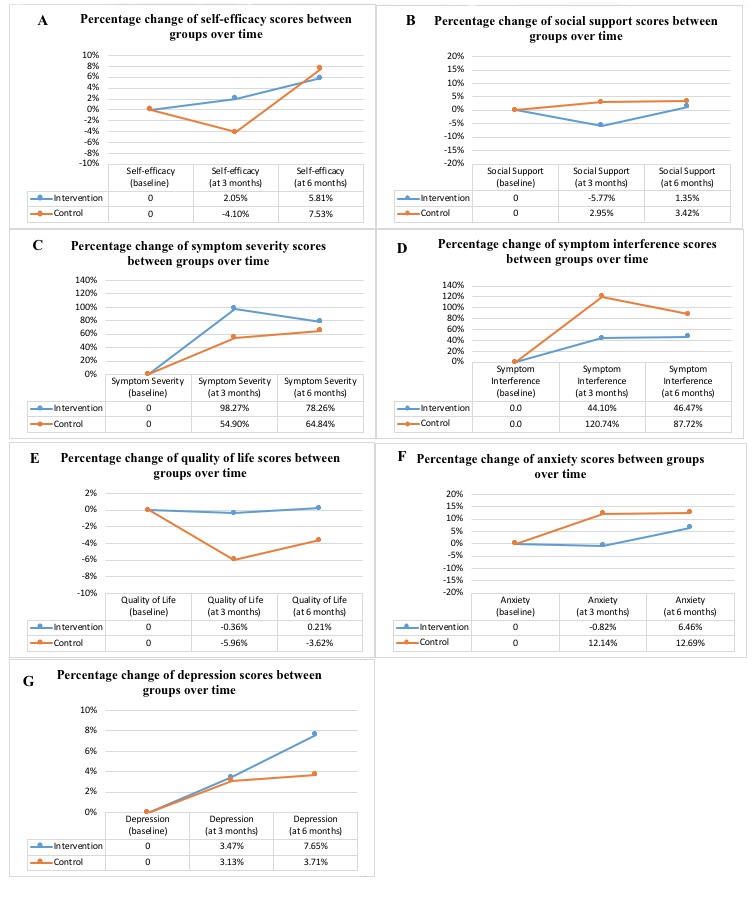
BACKGROUND: Women undergoing chemotherapy for the treatment of breast cancer have frequently reported unmet supportive care needs. Moreover, easily accessible and innovative support is lacking. OBJECTIVE: The purpose of this trial was to determine the effectiveness of an app-based breast cancer e-support program to address women's self-efficacy (primary outcome), social support, symptom distress, quality of life, anxiety, and depression. Secondary objectives included exploring the association between women's health outcomes and the breast cancer e-support usage data. METHODS: A multicenter, single-blinded, randomized controlled trial was conducted. A total of 114 women with breast cancer, who were commencing chemotherapy and were able to access internet through a mobile phone, were recruited in the clinics from 2 university-affiliated hospitals in China. Women were randomized either to the intervention group (n=57) receiving breast cancer e-support plus care as usual or the control group (n=57) receiving care as usual alone. The health care team and research assistants collecting data were blinded to the women's group allocation. Bandura's self-efficacy theory and the social exchange theory guided the development of the breast cancer e-support program, which has 4 components: (1) a Learning forum, (2) a Discussion forum, (3) an Ask-the-Expert forum, and (4) a Personal Stories forum. Moderated by an experienced health care professional, the breast cancer e-support program supported women for 12 weeks covering 4 cycles of chemotherapy. Health outcomes were self-assessed through paper questionnaires in clinics at baseline before randomization (T0), after 3 (T1), and 6 months (T2) of follow-ups. RESULTS: Fifty-five participants in the intervention group and 49 in the control group completed the follow-up assessments (response rate: 91.2%). During the 12-week intervention, the log-in frequency ranged from 0 to 774 times (mean 54.7; SD 131.4; median 11; interquartile range, IQR 5-27), and the total usage duration ranged from 0 to 9371 min (mean 1072.3; SD 2359.5; median 100; IQR 27-279). Repeated measures multivariate analysis of covariance (intention-to-treat) found that breast cancer e-support + care as usual participants had significant better health outcomes at 3 months regarding self-efficacy (21.05; 95% CI 1.87-40.22; P=.03; d=0.53), symptom interference (-0.73; 95% CI -1.35 to -.11; P=.02; d=-0.51), and quality of life (6.64; 95% CI 0.77-12.50; P=.03, d=0.46) but not regarding social support, symptom severity, anxiety, and depression compared with care as usual participants. These beneficial effects were not sustained at 6 months. Spearman rank-order correlation showed that the breast cancer e-support usage duration was positively correlated with self-efficacy (r=.290, P=.03), social support (r=.320, P=.02), and quality of life (r=.273, P=.04) at 3 months. CONCLUSIONS: The breast cancer e-support program demonstrated its potential as an effective and easily accessible intervention to promote women's self-efficacy, symptom interference, and quality of life during chemotherapy. TRIAL REGISTRATION: Australian New Zealand Clinical Trials Registry (ANZCTR): ACTRN12616000639426; www.ANZCTR.org.au/ACTRN12616000639426.aspx (Archived by Webcite at http://www.webcitation.org/6v1n9hGZq).
Overview
The claims and statistics of this paper haven’t been checked yet.
Run the check — free, no account needed. It reads the open-access text and checks the sources it cites.
Integrity signals
Registry
Cites
Statistics
Figures
Verification
Claims the paper makes
The claims and statistics of this paper haven’t been checked yet.
Run the check — free, no account needed. It reads the open-access text and checks the sources it cites.
Claims other papers make about this one
Each is checked against this paper’s own text: does it say what the citing paper says it does?
In the citing paper
“The app-based intervention was found to be more effective than usual care in promoting women’s self-efficacy and quality of life and decreasing symptom burden during chemotherapy.”
From Research-Tested Mobile Apps for Breast Cancer Care: Systematic Review (2019) · cites this paper as [36]
In the citing paper
“The mHealth app did not show any advantage over usual care in terms of social support, symptom severity, anxiety, and depression.”
From Research-Tested Mobile Apps for Breast Cancer Care: Systematic Review (2019) · cites this paper as [36]
Self-check
Percentages, sums and reported differences re-computed from the paper’s own numbers.
The self-check needs the paper’s full text.
Citations
Cites
The Hospital Anxiety and Depression Scale
Zigmond, A. S., & Snaith, R. P. (1983) · Acta Psychiatrica Scandinavica · doi:10.1111/j.1600-0447.1983.tb09716.x · Cited by 47,139
Self-efficacy: the exercise of control
(1997) · Choice Reviews Online · doi:10.5860/choice.35-1826 · Cited by 24,451
Depression and quality of life in older persons: A review
Sivertsen, H., Bjørkløf, G. H., Engedal, K., Selbæk, G., & Helvik, A.-S. (2015) · Dementia and Geriatric Cognitive Disorders · doi:10.1159/000437299 · Cited by 14,152
CONSORT 2010 Statement: updated guidelines for reporting parallel group randomised trials
the CONSORT Group, Schulz, K. F., Altman, D. G., & Moher, D. (2010) · BMC Medicine · doi:10.1186/1741-7015-8-18 · Cited by 13,371
The Multidimensional Scale of Perceived Social Support
Zimet, G. D., Dahlem, N. W., Zimet, S. G., & Farley, G. K. (1988) · Journal of Personality Assessment · doi:10.1207/s15327752jpa5201_2 · Cited by 13,339
Health Promotion by Social Cognitive Means
Bandura, A. (2004) · Health Education & Behavior · doi:10.1177/1090198104263660 · Cited by 7,238 · cited 1×
“To better support women with breast cancer undergoing chemotherapy, health promotion efforts must provide appropriate symptom management strategies, as well as build a sense of self-efficacy and social support to initiate and maintain such desired strategies [4].”
BackgroundPsychometric Characteristics of the Multidimensional Scale of Perceived Social Support
Zimet, G. D., Powell, S. S., Farley, G. K., Werkman, S., & Berkoff, K. A. (1990) · Journal of Personality Assessment · doi:10.1080/00223891.1990.9674095 · Cited by 4,855
CONSORT 2010 statement: updated guidelines for reporting parallel group randomized trials
Schulz, K. F., Altman, D. G., Moher, D., & for the CONSORT Group* (2010) · Annals of Internal Medicine · doi:10.7326/0003-4819-152-11-201006010-00232 · Cited by 3,824
Eysenbach, G., & CONSORT-EHEALTH Group (2011) · Journal of Medical Internet Research · doi:10.2196/jmir.1923 · Cited by 1,863 · cited 1×
“These usage data could be helpful to explain why the BCS program achieves or fails in the desired outcomes [34].”
BackgroundBrady, M. J., Cella, D. F., Mo, F., Bonomi, A. E., Tulsky, D. S., Lloyd, S. R., Deasy, S., Cobleigh, M., & Shiomoto, G. (1997) · Journal of Clinical Oncology · doi:10.1200/jco.1997.15.3.974 · Cited by 1,752 · cited 1×
“QoL was assessed with a Chinese version of the Functional Assessment of Cancer Treatment-B (FACT-B), which is a 37-item instrument to evaluate the impact of breast cancer and its chemotherapy on dimension of QoL [22].”
Method
Research works printed but not linked: 1
- Blau, P, 1964, Exchange in power in social life
Cited by
Sorted by citations
Research-Tested Mobile Apps for Breast Cancer Care: Systematic Review
Jongerius, C., Russo, S., Mazzocco, K., & Pravettoni, G. (2019) · JMIR mHealth and uHealth · doi:10.2196/10930 · Cited by 146
“Zhu et al explored the effectiveness of Breast Cancer e-Support , an app-based program, to address women’s self-efficacy, social support, symptom distress, quality of life, anxiety, and depression [35,36].”
InfluentialElectronic Health Interventions for Patients With Breast Cancer: Systematic Review and Meta-Analyses
Singleton, A. C., Raeside, R., Hyun, K. K., Partridge, S. R., Tanna, G. L. D., Hafiz, N., Tu, Q., Tat-Ko, J., Sum, S. C. M., Sherman, K. A., et al. (2022) · Journal of Clinical Oncology · doi:10.1200/jco.21.01171 · Cited by 141
“1%) evaluated participants’ intervention engagement (logins, completed modules, and usage tracking).(34-36,38,39,41-50,52,53,56-59,61,62,64-67,69,72) Participants’ engagement was broad, completing 0%-100% modules.”
BackgroundInfluentialGhanbari, E., Yektatalab, S., & Mehrabi, M. (2021) · JMIR mHealth and uHealth · doi:10.2196/19262 · Cited by 104
“A simple app-based e-support program was also found to improve quality of life, self-efficacy, and symptom interference in women with breast cancer during their chemotherapy [59].”
BackgroundBunevičienė, I., Mekary, R. A., Smith, T. R., Onnela, J.-P. “., & Bunevičius, A. (2020) · Critical Reviews in Oncology/Hematology · doi:10.1016/j.critrevonc.2020.103123 · Cited by 117
“We identified 17 RCTs (Willems et al., 2017; Mendoza et al., 2017; Graetz et al., 2018; Ferrante et al., 2018; Admiraal et al., 2017; Compen et al., 2018; Frensham et al., 2018; Galiano-Castillo et al., 2016; Greer et al., 2019; Ham et al., 2019; Ji et al., 2019; Kubo et al., 2019; Rosen et al., 2018; Uhm et al., 2017…”
InfluentialChronic Disease Management, Self-Efficacy and Quality of Life
Chan, S. W. (2021) · Journal of Nursing Research · doi:10.1097/jnr.0000000000000422 · Cited by 110
“Patients with high self-efficacy in coping with their chronic diseases reflect a perceived ability to manage challenges related to their diseases and a sense of control over their lives (Zhu et al., 2018).”
BackgroundSelf-citation
Metadata
- Authors
- Zhu, J., Ebert, L., Liu, X., Wei, D., & Chan, S. W.-C.
- Affiliations
- Xiamen University (CN)
- University of Newcastle Australia (AU)
- Central South University (CN)
- Corresponding author
- Zhu, Jiemin
- Venue
- JMIR mHealth and uHealth
- Publisher
- JMIR Publications Inc.
- Published
- 2018-04-30
- Volume
- 6
- Issue
- 4
- Pages
- e104
- ISSN
- 2291-5222 (ISSN-L)
- PMC
- PMC5952114
- OpenAlex
- W2800575252
- Cited by
- 124
- References
- 37
- Citations by year
- 2026: 7 · 2025: 27 · 2024: 17 · 2023: 18 · 2022: 17 · 2021: 17 · 2020: 13 · 2019: 7 · 2018: 1
- FWCI
- 3.57
- Type
- journal article
- Language
- en
- Open access
- gold
- doi.org
- Licence
- cc-by
- Locations
- JMIR mhealth and uhealth (publishedVersion, cc-by)
- Europe PMC (PubMed Central) (publishedVersion, cc-by)
- PubMed Central (publishedVersion, cc-by)
- PubMed (publishedVersion)
- Cross Connect (Southern Cross University) (submittedVersion, cc-by)
- DOAJ (DOAJ: Directory of Open Access Journals) (submittedVersion, cc-by-sa)
- Figshare (submittedVersion, cc-by)
- NOVA (University of Newcastle Australia) (submittedVersion, other-oa)
- NOVA (University of Newcastle Australia) (submittedVersion, cc-by)
- Funders
- Hunter Cancer Research Alliance
- University of Newcastle Australia
- National Natural Science Foundation of China (71503219)
- Topics
- Health Sciences › Medicine › Oncology › Cancer survivorship and care
- Health Sciences › Health Professions › General Health Professions › Mobile Health and mHealth Applications
- Social Sciences › Psychology › Applied Psychology › Digital Mental Health Interventions
- Keywords
- breast cancer, chemotherapy, mobile health apps, self-efficacy, social support, symptom distress, quality of life, anxiety, depression, supportive care needs, Chinese women, app usage, moderated mediation, social exchange theory, self-efficacy theory, online learning forums, online forums
About these checks
Registry, retraction, Cites and statistics results are computed, not judged, with one exception: a printed reference that no index lists is read once by a model before it counts as a citation error. Claims are extracted by a model and kept only when their quote appears verbatim in the text; each cited source is then checked, with a model’s help, for whether it says what the claim relies on. Those verdicts can be wrong — read the claim’s quote and the cited source before relying on one.
Statistics and arithmetic are recomputed, not judged.
Confidence bands are shown only for fields calibrated on our annotated test set. None is calibrated yet, so no band is shown.
What counts as a claim ›How we measure confidence ›How we check this ›
Are you an author, or do you see a problem with this page? Request a review
