

The DOI matches its Crossref record; 1 of the 1 references it cites were found in a registry or an index.
Nature Engagement Outcomes of Viewing Nature Through a 360° Video or a Tablet Screen: Randomized Trial (Preprint)
Open accessPreprint — published as 10.2196/63424
Abstract
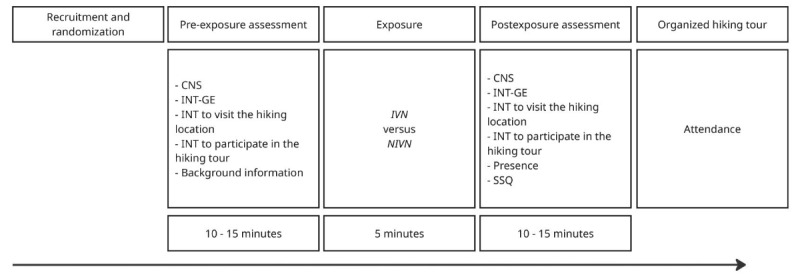
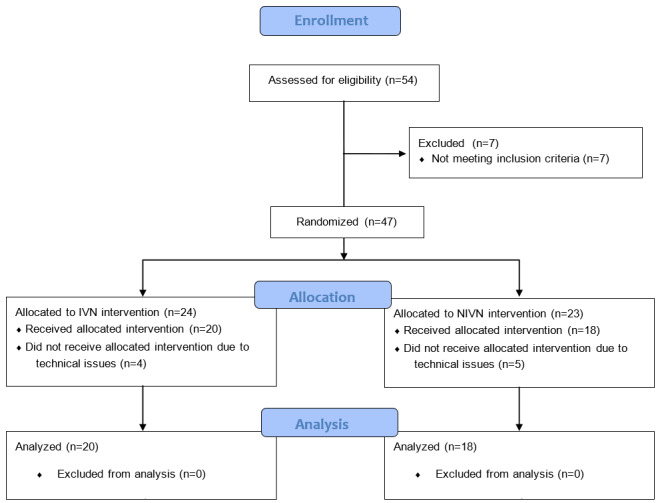
BACKGROUND: Nature engagement, including affective and physical interactions with nature, is linked to a multitude of health and well-being benefits. Unfortunately, opportunities for engaging with nature are decreasing worldwide. University students, especially, are a demographic group that tends to engage little with nature. Immersive virtual nature (IVN; ie, digital nature content delivered through immersive devices, such as head-mounted displays) has been proposed as a medium to facilitate nature experiences and engagement. In recent years, 360° nature videos have emerged as an accessible way to create IVN content, although it is still unclear whether they can elicit presence and increase nature engagement to a greater extent than nature videos delivered through nonimmersive media. OBJECTIVE: We aimed to investigate the effectiveness of nature videos as a medium to promote nature engagement among university students, comparing devices with different levels of immersion. Specifically, 2 experimental conditions were tested: a 360° nature video delivered through a head-mounted display (IVN) and a matching video displayed on a tablet screen (nonimmersive virtual nature). METHODS: In total, 38 students were recruited at the library of a university campus and invited to participate in an organized hiking tour at the location displayed during the virtual nature experience. They were then randomized, using a random number generator, to either the IVN (n=20, 53%) or the nonimmersive virtual nature condition (n=18, 47%). Pre- and postexposure assessments of nature connectedness, intention to perform green exercise, intention to visit the hiking location, and intention to participate in the organized hiking tour were collected. Presence, cybersickness, and actual attendance on the tour were also assessed. RESULTS: A mixed ANOVA showed statistically significant pre- to postexposure assessment increases in nature connectedness (F1,36=33.49; P<.001; η p2=0.48); intention to perform green exercise (F1,36=5.55; P=.02); intention to visit the hiking location (F1,36=15.34; P<.001; η p2=0.26); and intention to participate in the hiking tour (F1,36=12.45; P=.001; η p2=0.30). Both conditions were associated with medium to high ratings of “being there” and “sense of reality” but low ratings of “realism.” The cybersickness levels were generally low. Of the 38 students, 6 (16%) participated in the organized tour. The mixed ANOVA found no statistical differences between the two conditions for any of the outcomes. The participants’ changes in nature connectedness (ρ=0.35; P=.03) and attendance on the hiking tour (ρ=.37; P=.02) correlated with the presence item “being there.” CONCLUSIONS: This study provides novel evidence on the potential of virtual nature as a medium to improve nature engagement among university students, adding to the current debate on the effectiveness of 360° videos. These findings can inform future research as well as initiatives seeking to promote nature engagement.
Overview
The claims and statistics of this paper haven’t been checked yet.
Run the check — free, no account needed. It reads the open-access text and checks the sources it cites.
Integrity signals
Registry
Cites
Statistics
Figures
Verification
Claims the paper makes
The claims and statistics of this paper haven’t been checked yet.
Run the check — free, no account needed. It reads the open-access text and checks the sources it cites.
Self-check
Percentages, sums and reported differences re-computed from the paper’s own numbers.
The self-check needs the paper’s full text.
Citations
Cites
CONSORT 2010 Statement: updated guidelines for reporting parallel group randomised trials
the CONSORT Group, Schulz, K. F., Altman, D. G., & Moher, D. (2010) · Trials · doi:10.1186/1745-6215-11-32 · Cited by 1,871
Research works printed but not linked: 77
- 10.1017/S0033291716001665 · DOI · Paper page
- 10.1097/nmd.0000000000000586 · DOI · Paper page
- 10.1038/s41598-019-44097-3 · DOI · Paper page
- 10.3390/ijerph13111165 · DOI
- 10.1123/jpah.7.5.685 · DOI
- 10.1177/0013916518806686 · DOI
- 10.3390/ijerph17051738 · DOI
- 10.4324/9781315180144-15 · DOI
- 10.1186/1471-2458-10-456 · DOI · Paper page
- 10.1126/sciadv.aax0903 · DOI · Paper page
- 10.1016/j.landurbplan.2014.05.003 · DOI
- 10.1146/annurev-publhealth-032013-182443 · DOI · Paper page
- 10.4324/9781315180144-4 · DOI
- 10.4324/9781315750941 · DOI
- 10.3389/fpsyg.2014.00976 · DOI · Paper page
- 10.1177/1359105311416873 · DOI
- 10.1016/j.ufug.2009.02.003 · DOI
- 10.1177/1359105307071734 · DOI
- 10.1016/j.jenvp.2004.10.001 · DOI · Paper page
- 10.1016/j.paid.2011.03.037 · DOI
- 10.1016/j.jenvp.2020.101389 · DOI · Paper page
- 10.1007/s10902-019-00118-6 · DOI · Paper page
- 10.1177/0013916508319745 · DOI · Paper page
- 10.3109/11038128.2013.832794 · DOI
- 10.1016/j.healthplace.2016.01.003 · DOI
- 10.1177/00139165231212321 · DOI
- 10.1002/fee.2035 · DOI
- 10.1080/21711976.2019.1643663 · DOI
- 10.3390/ijerph13040439 · DOI
- 10.3389/fpsyg.2018.01055 · DOI
- 10.3390/su141912494 · DOI
- 10.1177/0013916517751009 · DOI
- 10.1177/0013916507300119 · DOI
- 10.1186/1471-2458-14-873 · DOI
- 10.1016/j.jenvp.2022.101863 · DOI
- 10.1016/j.ufug.2020.126744 · DOI
- 10.1162/pres.1997.6.6.603 · DOI · Paper page
- 10.1007/s11920-017-0788-4 · DOI · Paper page
- 10.1109/mc.2007.257 · DOI · Paper page
- 10.3389/fpsyg.2020.01743 · DOI
- 10.1111/j.1460-2466.1992.tb00812.x · DOI · Paper page
- 10.1089/cyber.2014.0054 · DOI
- 10.3389/fpsyg.2015.00026 · DOI
- 10.1093/obo/9780199756797-0004 · DOI
- 10.1016/j.apergo.2009.11.006 · DOI
- 10.3390/ijerph120911486 · DOI
- 10.1177/20552076241234639 · DOI
- 10.1038/s41598-022-09622-x · DOI
- 10.1007/978-3-319-64027-3_7 · DOI
- 10.1145/3010915.3011854 · DOI
- 10.1016/j.tourman.2017.12.003 · DOI
- 10.1111/jcc4.12173 · DOI
- 10.1016/j.jenvp.2020.101500 · DOI
- 10.3390/su12093823 · DOI
- 10.1027/1864-1105/a000213 · DOI
- 10.1136/bmj.c869 · DOI · Paper page
- 10.1016/j.jenvp.2023.102102 · DOI
- 10.3390/ijerph14101172 · DOI
- 10.1162/pres.1994.3.2.130 · DOI · Paper page
- 10.3389/fpsyg.2017.02321 · DOI
- 10.1006/ijhc.1999.0343 · DOI · Paper page
- 10.1207/s15327108ijap0303_3 · DOI · Paper page
- 10.3389/fpsyg.2019.02436 · DOI
- 10.4324/9781003117452 · DOI
- 10.4324/9780203771587 · DOI · Paper page
- 10.1080/09647775.2014.888818 · DOI
- 10.1007/s10055-021-00604-4 · DOI
- 10.1177/0956797611418527 · DOI · Paper page
- 10.3390/ijerph14040377 · DOI · Paper page
- 10.1016/j.jenvp.2023.102044 · DOI
- 10.1038/s41598-022-05184-0 · DOI
- 10.1016/j.chb.2021.107008 · DOI
- 10.17011/ht/urn.201611174652 · DOI
- 10.1007/s10055-022-00670-2 · DOI
- 10.1080/15213269.2015.1015740 · DOI · Paper page
- 10.1080/10447318.2012.668131 · DOI
- 10.3389/fnhum.2020.00096 · DOI
Metadata
- Authors
- Brambilla, E., Stendal, K., Sundling, V., & Calogiuri, G.
- Affiliations
- University of South-Eastern Norway (NO)
- Corresponding author
- Brambilla, Elena
- Venue
- JMIR Serious Games
- Publisher
- JMIR Publications Inc.
- Published
- 2024-06-20
- Volume
- 13
- Pages
- e63424-e63424
- ISSN
- 2291-9279 (ISSN-L)
- PMC
- PMC12209722
- OpenAlex
- W4410038208
- Cited by
- 5
- References
- 1
- Citations by year
- 2026: 1 · 2025: 4
- FWCI
- 2.13
- Type
- journal article
- Language
- en
- Open access
- gold
- doi.org
- Licence
- cc-by
- Locations
- JMIR Serious Games (publishedVersion, cc-by)
- PubMed Central (publishedVersion, cc-by)
- PubMed (publishedVersion)
- DOAJ (DOAJ: Directory of Open Access Journals) (submittedVersion, cc-by-sa)
- Topics
- Social Sciences › Urban Studies › Urban Green Space and Health
- Physical Sciences › Computer Science › Human-Computer Interaction › Virtual Reality Applications and Impacts
- Social Sciences › Psychology › Developmental and Educational Psychology › Flow Experience in Various Fields
- Keywords
- nature engagement, 360-degree video, head-mounted displays, nature connection, presence, cybersickness, green exercise, university students, well-being, sense of reality, realism (computer graphics), being there, immersion
About these checks
Registry, retraction, Cites and statistics results are computed, not judged, with one exception: a printed reference that no index lists is read once by a model before it counts as a citation error. Claims are extracted by a model and kept only when their quote appears verbatim in the text; each cited source is then checked, with a model’s help, for whether it says what the claim relies on. Those verdicts can be wrong — read the claim’s quote and the cited source before relying on one.
Statistics and arithmetic are recomputed, not judged.
Confidence bands are shown only for fields calibrated on our annotated test set. None is calibrated yet, so no band is shown.
What counts as a claim ›How we measure confidence ›How we check this ›
Are you an author, or do you see a problem with this page? Request a review
How to cite
Cite CoChat for the checks on this page, and the paper for its own findings.
- This page
- CoChat. (2026). Citation check: Nature Engagement Outcomes of Viewing Nature Through a 360° Video or a Tablet Screen: Randomized Trial (Preprint). https://app.cochat.ai/papers/10.2196/preprints.63424
- The paper
- Brambilla, E., Stendal, K., Sundling, V., & Calogiuri, G. (2024). Nature Engagement Outcomes of Viewing Nature Through a 360° Video or a Tablet Screen: Randomized Trial (Preprint). JMIR Serious Games. https://doi.org/10.2196/preprints.63424
