

The DOI matches its Crossref record.
In-vitro evaluation of drug release and antioxidant activity of aloe loaded chitosan nanoparticles.
Abstract
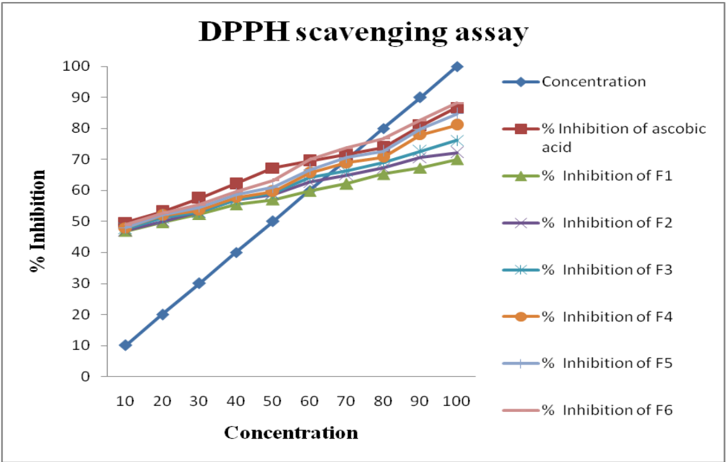
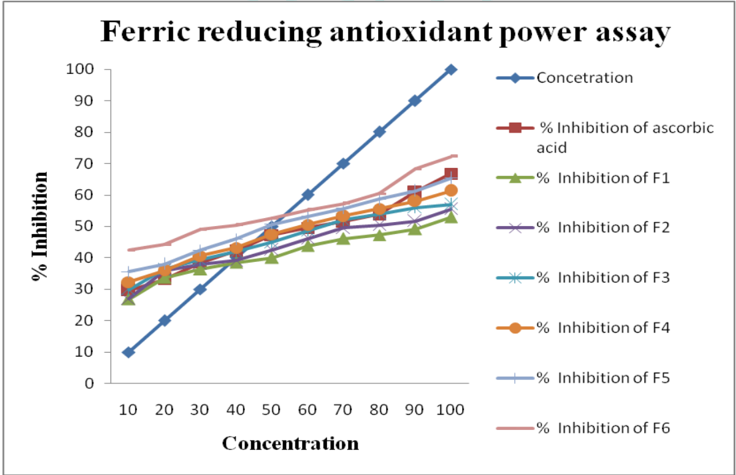
Antioxidants play significant responsibility during the treatment of cancer and it’s adverse effects, because in the treatment of cancer by using chemotherapy, free radicals are generated and these free radicals accumulated in the body and cause damage, side effect (such as neurodegenerated disease, atherosclerosis, depression, leukemia, skin disease, diabetes etc.) and even death due to the biological consequence. So, antioxidant inhibits the generation of new and destroys previously present free radicals. A recent study was aimed for novel approach of herbal nanoparticles to get improved efficacy of the drug with fewer side effects. In-vitro Evaluation of Drug Release and Antioxidant Activity of Aloe Loaded Chitosan Nanoparticles were includes in this research. Aloe has good antioxidant property, but in the form of nanoparticles formed with the help of chitosan polymer, it’s enhancing their stability, in-vitro release property. Chitosan is one of the best polymer for nanomedicine formulation because of their low toxicity and high compatibility. Six formulations of aloe loaded chitosan nanopaticles were prepared and evaluated as antioxidant study, in-vitro release and stability studies. Results have shown that the F6 was most stable, good release and high antioxidant property. So, it found that F6 was good formulation among all batches and these nanoparticles can be used as antioxidant agent during the treatment of cancer along with chemotherapeutic drugs for improve their effectiveness and reduce adverse effects. Keywords: Cancer, Chemotherapy, Herbal, Chitosan nanoparticles, Antioxidant.
Overview
The claims and statistics of this paper haven’t been checked yet.
Run the check — free, no account needed. It reads the open-access text and checks the sources it cites.
Integrity signals
Registry
Cites
Statistics
Figures

Verification
Claims the paper makes
The claims and statistics of this paper haven’t been checked yet.
Run the check — free, no account needed. It reads the open-access text and checks the sources it cites.
Claims other papers make about this one
Each is checked against this paper’s own text: does it say what the citing paper says it does?
In the citing paper
“Some literature indicated that the antioxidant activity of plant extracts was enhanced and acquired more stability when encapsulated with ChNPs (Kesharwani et al., 2019; Yahya et al., 2022).”
From Induction role of chitosan nanoparticles to Anethum graveolens extract against food-borne bacteria, oxidant, and diabetic activities in vitro (2023) · cites this paper as Kesharwani et al., 2019
Self-check
Percentages, sums and reported differences re-computed from the paper’s own numbers.
The self-check needs the paper’s full text.
Citations
Cites
No references could be resolved yet.
Research works printed but not linked: 26
- Gadad AP, Vijay Kumar SV, Dandagi PM, Bolmol UB, Pavani Pallavi N, Nanoparticles and their Therapeutic Application in Pharmacy, International Journal of Pharmaceutical Sciences and Nanotechnology, 2014; 7(3):2509-2019.
- Patel Jitendra S, Bhatt Medha M, Patel Foram A, Dhoru Minakshi M, Patel Madhabhai M, Nanotechnology: A New Approach In Herbal Medicine, American Journal of Pharmtech Research, 2013; 3(4):275-288.
- Mathur Manish, Vyas Govind, Role of nanoparticles for production of smart herbal drug-An overview, Indian Journal of Natural Products and Resources, 2013: 4(4):329-338.
- Sharma Parth, Verma Surajpal, Misri Plakshi, Global Need for Novel Herbal Drug Formulations, International Journal of Pharmacognosy and Phytochemical Research, 2016; 8(9):1535- 1544.
- Ravi Krittika, Ganapathy Dhanraj, Sherlyn Sheeba P, Antioxidants and cancer prevention -A review, Journal of Pharmacy Research, 2018; 12(1):35-38.
- Nuria Mut-Salud, Pablo Juan Álvarez, Jose Manuel Garrido, Esther Carrasco, Antonia Aránega, and Fernando Rodríguez- Serrano, Antioxidant Intake and Antitumor Therapy: Toward Nutritional Recommendations for Optimal Results, Oxidative Medicine and Cellular Longevity, 2016; 1(1):1-19.
- Ray Sarbani Dey, Potential aspects of chitosan as pharmaceutical excipients, Acta Poloniae Pharmaceutica -Drug Research, 2011; 68(1):619-622.
- Yashwanth Radhakrishnan, Ganesh Gopal, Chittur C Lakshmanan and Krishna S Nandakumar, Chitosan Nanoparticles for Generating Novel Systems for Better Applications: A Review, Journal of Molecular and Genetic Medicine, 2015; 48:1-10.
- Harlev Eli, Nevo Eviatar, Lansky Ephraim P, Ofir Rivka, Bishayee Anupam, Anticancer Potential of Aloes: Antioxidant, Antiproliferative, and Immunostimulatory Attributes, Planta Med, 2012; 78:843-852.
- Hussain Arif, Sharma Chhavi, Khan Saniyah, Shah Kruti, Haque Shafiul, Aloe vera Inhibits Proliferation of Human Breast and Cervical Cancer Cells and Acts Synergistically with Cisplatin, Asian Pacific Journal of Cancer Prevention, 2015;16 (7):2939- 2946.
- Sampath Kumar KP, Bhowmik Debjit, Chiranjib, Biswajit, Aloe vera : A Potential Herb and its Medicinal Importance, Journal of Chemical and Pharmaceutical Research , 2010; 2(1): 21-29.
- Rajeswari R, Umadevi M, Sharmila Rahale C, Pushpa R, Selvavenkadesh S, Sampath Kumar K P, Bhowmik Debjit, Aloe vera: The Miracle Plant Its Medicinal and Traditional Uses in India, Journal of Pharmacognosy and Phytochemistry, 2012; 1(4):118-124.
- Sanders Brian, Ray Anna M, Goldberg Sharon, Clark Tyler, Reginald McDaniel H, Atlas Steven E, Farooqi Ashar, Konefal Janet, Lages Lucas C, Lopez Johanna, Rasul Ammar, Tiozzo Eduard, Woolger Judi M, Lewis John E, Anti-cancer effects of aloe-emodin: A systematic review, Journal of Clinical and Translational Research, 2017; 3(4):1-14.
- Lucini Luigi, Pellizzoni Marco, Molinari Gian Pietro, Franchi Fabrizio, Aloe anthraquninones against cancer, Medical and Aromatic Plant Science and Biotechnology, 2012; 6(2):20-24.
- Abd El-Aziz Abeer Ramadan Mohamed, Al-Othman Monira Rashed, Mahmoud Mohamed Abobakr, Shehata Shereen Mohamed and Abdelazim Nahla Shazli, Chitosan nanoparticles as a carrier for Mentha longifolia extract: synthesis, characterization and antifungal activity, 2018; 114(10):2116- 2122.
- Khan A, Shaheen A, Mahmood T, Rehman W and Yaqoob, Novel Synthesis and Characterization of Silver Nanoparticles from Leaf Aqueous Extract of Aloe Vera and their Anti-Microbial Activity, Journal of Nanoscience and Nanotechnology Applications, 2017; 1(1):1-9.
- Praseena K and Junise V "Formulation and evaluation of chitosan nanoparticle loaded with phyllanthin" 2018; 5(04):2644-2649.
- Salim Khan, Fahad Al-Qurainy, Mauji Ram, Sayeed Ahmad and Malik Zainul Abdin, Phyllanthin biosynthesis in Phyllanthus amarus: Schum and Thonn growing at different altitudes, Journal of Medicinal Plants Research, 2010; 4(1):41-48.
- Chitravadivu C, Manian S and Kalaichelvi K, Qualitative Analysis of Selected Medicinal Plants, Tamilnadu, India, Middle-East Journal of Scientific Research, 2009; 4 (3): 144-146.
- Wu Y, Luo Y and Wang Q, Antioxidant and antimicrobial properties of essential oils encapsulated in zein nanoparticles prepared by liquid dispersion method, LWT. Food Sci. Technol., 2012; 48:283-290.
- Da Silva SB, Amorim M, Pedro F, Madureira R, Ferreira D, Pintado M, Sarmento B, Natural extracts into chitosan nanocarriers for rosmarinic acid drug delivery, Pharm. Biol., 2015;53:642-652.
- Kulani MJ, Chitosan nanoparticles functionalized with methanol medicinal plant extracts for the inhibition of the toxic effects of aflatoxin B1 and ochratoxin A, Master Thesis, University of Johannesburg, 2013, p. 97
- Shah M, Solid Lipid Nanoparticles of a Water Soluble Drug, Ciprofloxacin Hydrochloride, Indian J Pharm Sci., 2012; 74(5):434-442.
- Pisoschi Aurelia Magdalena, Negulescu Gheorghe Petre, Methods for Total Antioxidant Activity Determination: A Review, Biochem & Anal Biochem, 2011;1(1):1-10.
- Kumawat Bhupendra K, Gupta Mahesh, Singh Tarachand, Singh Yogendra, Free radical scavenging effect of various extracts of leaves of Balanites aegyptiaca(L.) Delile by DPPH method, Asian Journal of Plant Science and Research, 2012; 2(3):323-329.
- Phromsopha T, Chitosan microparticles prepared by water in oil emulsion solvent diffusion method for drug delivery, Biotechnology, 2010; 9(1): 61-66.
Cited by
Mashraqi, A. (2023) · Frontiers in Microbiology · doi:10.3389/fmicb.2023.1209524 · Cited by 16
Metadata
- Authors
- Kesharwani, S., Gupta, D. K., & Gupta, M. K.
- Venue
- Journal of Drug Delivery and Therapeutics
- Publisher
- Society of Pharmaceutical Tecnocrats
- Published
- 2019-07-15
- Volume
- 9
- Issue
- 4
- Pages
- 43-52
- ISSN
- 2250-1177
- Cited by
- 3
- References
- 0
About these checks
Registry, retraction, Cites and statistics results are computed, not judged, with one exception: a printed reference that no index lists is read once by a model before it counts as a citation error. Claims are extracted by a model and kept only when their quote appears verbatim in the text; each cited source is then checked, with a model’s help, for whether it says what the claim relies on. Those verdicts can be wrong — read the claim’s quote and the cited source before relying on one.
Statistics and arithmetic are recomputed, not judged.
Confidence bands are shown only for fields calibrated on our annotated test set. None is calibrated yet, so no band is shown.
What counts as a claim ›How we measure confidence ›How we check this ›
Are you an author, or do you see a problem with this page? Request a review
Data sources
Bibliographic data: Semantic Scholar, OpenAlex, Crossref.
Contains information from the Semantic Scholar Academic Graph Datasets, made available under the ODC Attribution License (ODC-BY 1.0).
Semantic Scholar’s data is described in: Kinney, R., et al. (2023). The Semantic Scholar Open Data Platform. arXiv:2301.10140.
