

The DOI matches its Crossref record; 44 of the 44 references it cites were found in a registry or an index; none of the 37 sources its claims cite is checked for support yet.
Induction role of chitosan nanoparticles to Anethum graveolens extract against food-borne bacteria, oxidant, and diabetic activities in vitro
Open accessAbstract
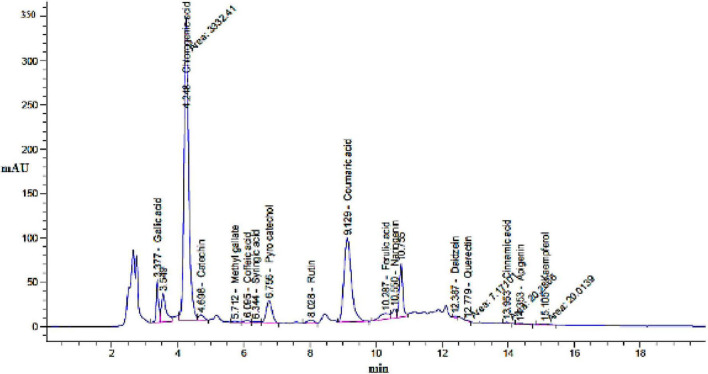
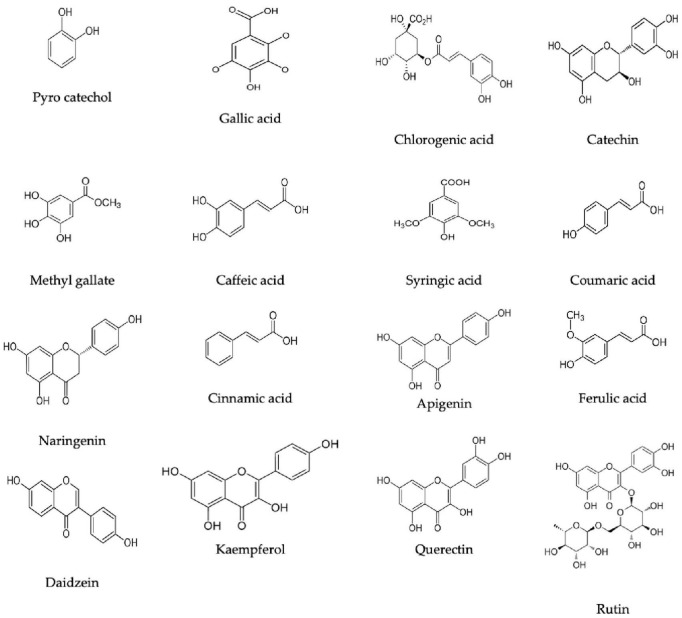
Foodborne diseases as well as Foodborne pathogens are a global issue with significant effects on human health and economy. Therefore, several investigators have tried to find new alternative approaches to prevent and control this problem. In this context, the present study aimed to find some possible and effective approaches for controlling food-borne bacteria via Dill (Anethum graveolens L.) extract (DE) loaded with chitosan nanoparticles (ChNPs) besides its anti-oxidant and anti-diabetic activities. Flavonoid and phenolic contents of DE were detected by HPLC, indicating the presence of 18 constituents, high content (22526.51 μg/mL) of chlorogenic acid, followed by 2236.21 μg/mL of coumaric acid and 2113.81 μg/mL of pyrocatechol. In contrast, low contents of cinnamic acid, methyl gallate, apigenin, daidzein, quercetin, syringic acid, and kaempferol were detected.B. cereus,Staphylococcus aureus, E. coli, S. typhi, E. faecalis, and C. albicans were highly inhibited by DE loaded ChNPs (DELChNPs) with inhibition zones (IZs) of 28.50 ± 0.87, 30.33 ± 0.58, 29.33 ± 0.58, 23.17 ± 0.76, 25.76 ± 0.58, and 24.17 ± 0.29 mm with MIC 15.41 ± 0.36, 7.70 ± 0.17, 15.58 ± 0.07, 31.08 ± 0.07, 31.04 ± 0.07 and 62.33 ± 0.29 μg/mL compared with inhibitory activity caused by DE, where the IZs were 25.83 ± 1.44, 29.67 ± 0.85, 24.83 ± 0.76, 20.33 ± 1.53, 21.17 ± 0.29, and 19.67 ± 1.15 mm with MIC 62.33 ± 0.29, 31.08 ± 0.07, 62.50 ± 0.29, 31.08 ± 0.07, 31.04 ± 0.07, and 249.0 ± 1.73 μg/mL, respectively. Also, the minimum bactericidal concentration (MBC) of DELChNPs was less than DE against all tested microorganisms. The MBC/MIC index documented that DELChNPs were more effective than DE. The biofilm of tested bacteria was inhibited by DE and DELChNPs but with different levels of anti-biofilm activity. For example, the anti-biofilm activity was 79.26 and 86.15% against B. cereus using DE and DELChNPs, respectively. DELChNPs and DE, compared with the ascorbic acid, exhibited DPPH scavenging % with IC 50 values of 7.8 μg/mL, 13.96 μg/mL, and 4.83 μg/mL, respectively. Anti-diabetic activity in vitro via inhibition of amylase indicated that IC 50 was 164.2 μg/mL and 164.3 μg/mL using DE and DELChNPs, respectively. This investigation highlights the vital DE phytoconstituents, particularly DELChNPs which possess important therapeutic effects against food-borne microorganisms and could be utilized as a safe alternative to synthetic drugs.
Overview
CoChat Summary
Written by AI from the paper’s full text.
TL;DR
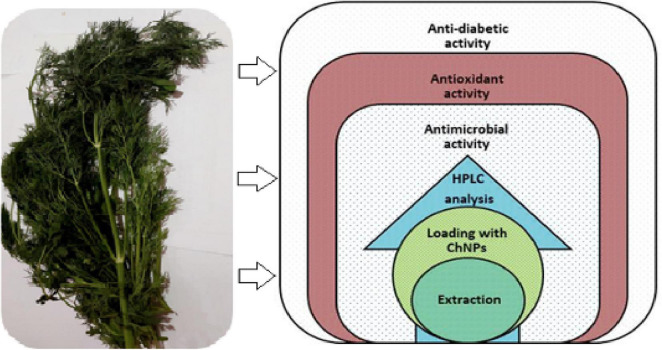
This in vitro study characterized Anethum graveolens extract (DE) by HPLC and tested DE loaded with chitosan nanoparticles (DELChNPs) against food-borne microorganisms, oxidant activity, and α-amylase inhibition. Loading DE into chitosan nanoparticles improved antimicrobial, anti-biofilm, and antioxidant activity, but did not meaningfully improve anti-diabetic activity.
Key findings
- HPLC detected 18 phenolic/flavonoid constituents in DE, with chlorogenic acid highest at 22,526.51 μg/mL, followed by coumaric acid at 2,236.21 μg/mL and pyrocatechol at 2,113.81 μg/mL; lower levels included cinnamic acid (18.45 μg/mL), methyl gallate (24.44 μg/mL), apigenin (32.62 μg/mL), daidzein (34.93 μg/mL), quercetin (46.19 μg/mL), syringic acid (58.06 μg/mL), and kaempferol (71.18 μg/mL).
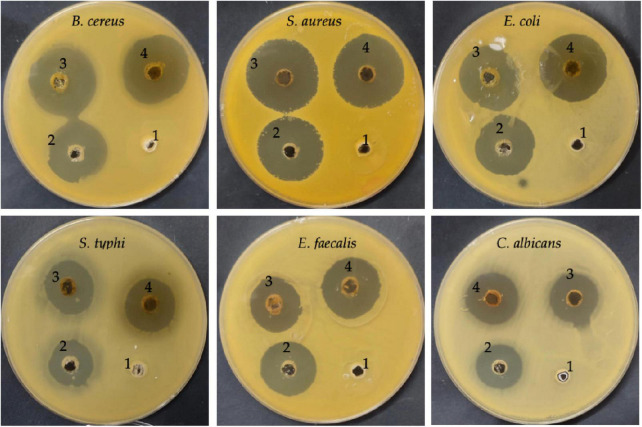
- DELChNPs produced larger inhibition zones than DE against B. cereus (28.50 ± 0.87 vs 25.83 ± 1.44 mm), S. aureus (30.33 ± 0.58 vs 29.67 ± 0.85 mm), E. coli (29.33 ± 0.58 vs 24.83 ± 0.76 mm), S. typhi (23.17 ± 0.76 vs 20.33 ± 1.53 mm), E. faecalis (25.76 ± 0.58 vs 21.17 ± 0.29 mm), and C. albicans (24.17 ± 0.29 vs 19.67 ± 1.15 mm). MIC values were also lower for DELChNPs, e.g., S. aureus 7.70 ± 0.17 vs 31.08 ± 0.07 μg/mL and C. albicans 62.33 ± 0.29 vs 249.0 ± 1.73 μg/mL.
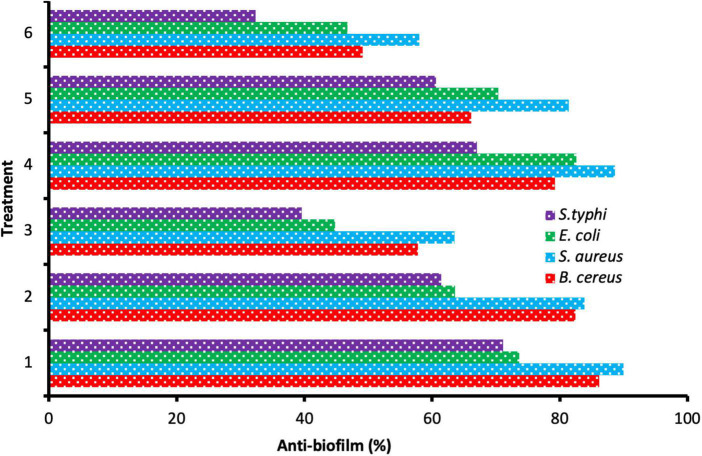
- Anti-biofilm activity against B. cereus at 75% MBC was 79.26% for DE and 86.15% for DELChNPs. DPPH IC50 values were 7.8 μg/mL for DELChNPs, 13.96 μg/mL for DE, and 4.83 μg/mL for ascorbic acid.
- α-Amylase inhibition IC50 values were 164.2 μg/mL for DE and 164.3 μg/mL for DELChNPs, indicating negligible enhancement of anti-diabetic activity by chitosan loading.
Methods
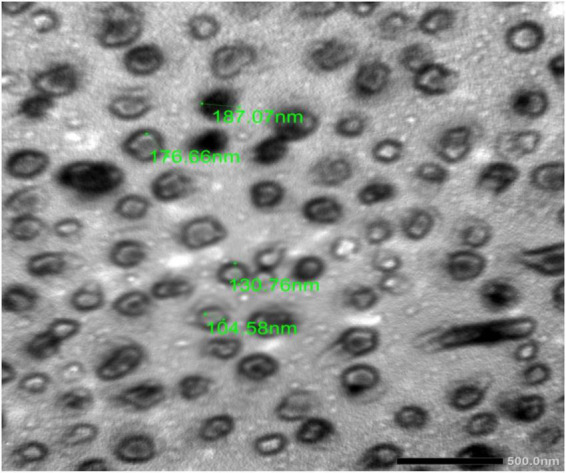
- In vitro experimental study using aerial parts of A. graveolens collected from Jazan, Saudi Arabia; methanol extract was prepared, and DE was loaded into chitosan nanoparticles, with TEM showing DELChNPs diameters between 100 and 200 nm.
- Phenolic/flavonoid constituents were identified and quantified by HPLC with standards. Antimicrobial activity was assessed by well diffusion, MIC by microdilution, MBC, and anti-biofilm activity by crystal violet assay against food-borne microorganisms; antioxidant activity used DPPH scavenging, and anti-diabetic activity used α-amylase inhibition with DNSA.
- Experiments were performed in triplicate; standard deviation and variance were analyzed with SPSS v22.0, and IC50 values were calculated using GraphPad Prism v5.0.
Limitations
- The paper does not state a limitations section.
- Evident from the text: all assays were in vitro, with no in vivo, food-matrix, toxicity, or clinical validation reported.
- Evident from the text: the methods list five microbial strains, but results include six organisms (including S. typhi), and the anti-diabetic effect showed no meaningful improvement with chitosan loading.
Model-written summary. Check it against the paper before relying on it.
Integrity signals
Registry
Cites
Statistics
Figures
Verification
Claims the paper makes
43 Own result · 11 Check pending · 11 No full text of the sources · 9 Sources not found · 6 Own interpretation · 3 Not checked yet · 1 Own method
A result the paper reports from its own data — it cites no other source for it, so there is none to check. The quote shows it is in the paper.
In the paper
“The obtained results indicated that DE possesses anti-diabetic activity in vitro via inhibition of amylase activity that raised with the rise of the extract concentration (Table 5).”
§ Induction role of chitosan nanoparticles to Anethum graveolens extract against food-borne bacteria, oxidant, and diabetic activities in vitro > 3. Result and discussion > 3.4. Anti-diabetic activity of DE and DELChNPs
hedgedstates a cause- Asserted: passes — The authors put it forward as true.
- Checkable: passes — It can be checked against evidence.
- Load-bearing: passes — The paper’s conclusions depend on it.
- Based: passes — The paper gives a reason why it holds.
A result the paper reports from its own data — it cites no other source for it, so there is none to check. The quote shows it is in the paper.
In the paper
“while gallic acid and catechin were detected in moderate concentration 1013.10 μg/mL and 821.73 μg/mL.”
§ Induction role of chitosan nanoparticles to Anethum graveolens extract against food-borne bacteria, oxidant, and diabetic activities in vitro > 3. Result and discussion > 3.1. Chemical characterization of dill extract and DELChNPs characterization
plain- Asserted: passes — The authors put it forward as true.
- Checkable: passes — It can be checked against evidence.
- Load-bearing: unclear — It is unclear whether the paper’s conclusions depend on it.
- Based: passes — The paper gives a reason why it holds.
A result the paper reports from its own data — it cites no other source for it, so there is none to check. The quote shows it is in the paper.
In the paper
“Also, by studying the MBC of the DE and DELChNPs, it was found that DELChNPs were more effective than DE against also all tested microorganisms, particularly S. aureus (7.73 ± 0.12 μg/mL and 62.33 ± 0.29 μg/mL, respectively), S. typhi (62.50 ± 1.0 μg/mL and 503.33 ± 5.77 μg/mL, respectively) and E. faecalis (31.23 ± 0.03 μg/mL and 246.67 ± 5.77 μg/mL, respectively).”
§ Induction role of chitosan nanoparticles to Anethum graveolens extract against food-borne bacteria, oxidant, and diabetic activities in vitro > 3. Result and discussion > 3.2. Antimicrobial activity of DE and DELChNPs
plainstates a cause- Asserted: passes — The authors put it forward as true.
- Checkable: passes — It can be checked against evidence.
- Load-bearing: passes — The paper’s conclusions depend on it.
- Based: passes — The paper gives a reason why it holds.
A result the paper reports from its own data — it cites no other source for it, so there is none to check. The quote shows it is in the paper.
In the paper
“For example, the anti-biofilm activity was 79.26 and 86.15% against B. cereus using DE and DELChNPs, respectively.”
§ Induction role of chitosan nanoparticles to Anethum graveolens extract against food-borne bacteria, oxidant, and diabetic activities in vitro > Abstract
plainstates a cause- Asserted: passes — The authors put it forward as true.
- Checkable: passes — It can be checked against evidence.
- Load-bearing: passes — The paper’s conclusions depend on it.
- Based: passes — The paper gives a reason why it holds.
A result the paper reports from its own data — it cites no other source for it, so there is none to check. The quote shows it is in the paper.
In the paper
“The encapsulation of the extract ChNPs provides a remarkable potential for boosting the activity of the extract alone against the growth of microorganisms.”
- Also stated in: § 3.2. Antimicrobial activity of DE and DELChNPs · hedged
“The antimicrobial activity of the DE alone and DELChNPs was compared with the activity of standard antibiotics against bacteria and antifungal against C. albicans which gave less inhibition zones in all tested microorganisms except E. faecalis (25.33 ± 1.15 mm), indicating that ChNPs enhanced the activity of DE.”
- Also stated in: § 4. Conclusion · plain
“Antimicrobial activity against food-borne microorganisms, including MIC, MBC, and anti-biofilm of DE were enhanced when DE was loaded with ChNPs.”
§ Induction role of chitosan nanoparticles to Anethum graveolens extract against food-borne bacteria, oxidant, and diabetic activities in vitro > 3. Result and discussion > 3.2. Antimicrobial activity of DE and DELChNPs
plainstates a cause- Asserted: passes — The authors put it forward as true.
- Checkable: passes — It can be checked against evidence.
- Load-bearing: passes — The paper’s conclusions depend on it.
- Based: passes — The paper gives a reason why it holds.
- Also stated in: § 3.2. Antimicrobial activity of DE and DELChNPs · hedged
- It may state two separate claims as one. 26
- Probably not a substantial claim. 31
Create a free account to see these claims.
Create a free account to see these assumptions.
35 more claims
Create a free account to see all 84 claims and to verify the 16 references still open.
Self-check
Percentages, sums and reported differences re-computed from the paper’s own numbers.
Each contradiction between two passages listed here was confirmed by an independent check.
Rated major: it would touch a result — a value a result rests on, reported and recomputed p-values on opposite sides of the significance level, two passages that conflict with no sign which is right, or a cited work retracted before this paper was published.
In the paper
§ Induction role of chitosan nanoparticles to Anethum graveolens extract against food-borne bacteria, oxidant, and diabetic activities in vitro > 3. Result and discussion > 3.2. Antimicrobial activity of DE and DELChNPs
“while it was 62.33 ± 0.29, 31.08 ± 0.07, 62.50 ± 0.29, 31.08 ± 0.07, 31.04 ± 0.07, and 249.0 ± 1.73 μg/mL against B. cereus, S. aureus, E. coli, S. typhi, E. faecalis, and C. albicans, respectively.”
§ Induction role of chitosan nanoparticles to Anethum graveolens extract against food-borne bacteria, oxidant, and diabetic activities in vitro > 3. Result and discussion > 3.2. Antimicrobial activity of DE and DELChNPs
“| S. typhi | 124.33 ± 1.15 | 31.08 ± 0.07 | 503.33 ± 5.77 | 62.50 ± 1.0 | 4.04 | 2.01 | | E. faecalis | 125.33 ± 0.58 | 31.04 ± 0.07 | 246.67 ± 5.77 | 31.23 ± 0.03 | 1.97 | 1.01 |”
Rated major: it would touch a result — a value a result rests on, reported and recomputed p-values on opposite sides of the significance level, two passages that conflict with no sign which is right, or a cited work retracted before this paper was published.
In the paper
§ Induction role of chitosan nanoparticles to Anethum graveolens extract against food-borne bacteria, oxidant, and diabetic activities in vitro > 3. Result and discussion > 3.2. Antimicrobial activity of DE and DELChNPs
“The values of MIC were 15.41 ± 0.36, 7.70 ± 0.17, 15.58 ± 0.07, 31.08 ± 0.07, 31.04 ± 0.07, and 62.33 ± 0.29 μg/mL using DELChNPs, while it was 62.33 ± 0.29, 31.08 ± 0.07, 62.50 ± 0.29, 31.08 ± 0.07, 31.04 ± 0.07, and 249.0 ± 1.73 μg/mL against B. cereus, S. aureus, E. coli, S. typhi, E. faecalis, and C. albicans, respectively.”
§ Induction role of chitosan nanoparticles to Anethum graveolens extract against food-borne bacteria, oxidant, and diabetic activities in vitro > 3. Result and discussion > 3.2. Antimicrobial activity of DE and DELChNPs
“| E. coli | 15.58 ± 0.07 | 62.50 ± 0.29 | 62.60 ± 0.17 | 248.33 ± 2.89 | 4.01 | 3.97 |”
Rated minor: it would not touch a result — a value no result rests on, a p-value that stays on the same side of the significance level, or a conflict that is clerical, resolved elsewhere in the paper, or outside its own findings.
In the paper
§ Induction role of chitosan nanoparticles to Anethum graveolens extract against food-borne bacteria, oxidant, and diabetic activities in vitro > Abstract
“Also, the minimum bactericidal concentration (MBC) of DELChNPs was less than DE against all tested microorganisms.”
§ Induction role of chitosan nanoparticles to Anethum graveolens extract against food-borne bacteria, oxidant, and diabetic activities in vitro > 3. Result and discussion > 3.2. Antimicrobial activity of DE and DELChNPs
“| E. coli | 15.58 ± 0.07 | 62.50 ± 0.29 | 62.60 ± 0.17 | 248.33 ± 2.89 | 4.01 | 3.97 |”
Rated minor: it would not touch a result — a value no result rests on, a p-value that stays on the same side of the significance level, or a conflict that is clerical, resolved elsewhere in the paper, or outside its own findings.
In the paper
§ Induction role of chitosan nanoparticles to Anethum graveolens extract against food-borne bacteria, oxidant, and diabetic activities in vitro > 2. Materials and methods > 2.5. Susceptibility test for determining antimicrobial activity and MIC
“Five microbial strains, including Bacillus cereus, Staphylococcus aureus (ATCC 6538), Escherichia coli (ATCC 8739), Enterococcus faecalis (ATCC 10541), and Candida albicans (ATCC 10221), were used as a test organism to determine the inhibitory activity of tested samples.”
§ Induction role of chitosan nanoparticles to Anethum graveolens extract against food-borne bacteria, oxidant, and diabetic activities in vitro > 3. Result and discussion > 3.2. Antimicrobial activity of DE and DELChNPs
“The inhibitory activity of DE was examined alone and DE loaded with ChNPs (DELChNPs) using B. cereus, S. aureus, E. coli, S. typhi, E. faecalis, and C. albicans.”
Citations
Cites
Therapeutic Potential of Quercetin: New Insights and Perspectives for Human Health
Salehi, B., Machín, L., Monzote, L., Sharifi‐Rad, J., Ezzat, S. M., Salem, M. A., Merghany, R. M., Elsayyad, N. M. E., Kılıç, C. S., Sytar, O., et al. (2020) · ACS Omega · doi:10.1021/acsomega.0c01818 · Cited by 744
Preparation, characterization and in vitro release study of carvacrol-loaded chitosan nanoparticles
Keawchaoon, L., & Yoksan, R. (2011) · Colloids and Surfaces B Biointerfaces · doi:10.1016/j.colsurfb.2010.12.031 · Cited by 674
Potential of Cameroonian plants and derived products against microbial infections: A review.
Kuete, V. (2010) · Planta Medica · doi:10.1055/s-0030-1250027 · Cited by 586
Bactericidal agents in the treatment of MRSA infections--the potential role of daptomycin
French, G. L. (2006) · Journal of Antimicrobial Chemotherapy · doi:10.1093/jac/dkl393 · Cited by 447
Abdelghany, T. M., Al‐Rajhi, A. M. H., Abboud, M. A. A., Alawlaqi, M. M., Ganash, M., Helmy, E. A. M., & Mabrouk, A. S. (2017) · BioNanoScience · doi:10.1007/s12668-017-0413-3 · Cited by 445
p-Coumaric acid kills bacteria through dual damage mechanisms.
Lou, Z., Wang, H., Rao, S., Sun, J., Ma, C., & Li, J. (2012) · Food Control · doi:10.1016/j.foodcont.2011.11.022 · Cited by 406
In-vitro alpha amylase inhibitory activity of the leaf extracts of Adenanthera pavonina
Wickramaratne, M. N., Punchihewa, J. C., & Wickramaratne, D. B. M. (2016) · BMC Complementary and Alternative Medicine · doi:10.1186/s12906-016-1452-y · Cited by 366
Anethum graveolens: An Indian traditional medicinal herb and spice
Shekhawat, G., & Jana, S. (2010) · Pharmacognosy Reviews · doi:10.4103/0973-7847.70915 · Cited by 269
Hasanin, M. S., Abboud, M. A. A., Alawlaqi, M. M., Abdelghany, T. M., & Hashem, A. H. (2021) · Biological Trace Element Research · doi:10.1007/s12011-021-02812-0 · Cited by 170
Abdelghany, T. M., Al‐Rajhi, A. M. H., Yahya, R. O., Bakri, M. M., Abboud, M. A. A., Yahya, R. O., Qanash, H., Bazaid, A. S., & Salem, S. S. (2022) · Biomass Conversion and Biorefinery · doi:10.1007/s13399-022-03412-1 · Cited by 151
Research works printed but not linked: 4
- Devi, 2015, Encapsulation of Staphylokinase and Leucasaspera plant extracts using chitosan nanoparticles., Int. J. Pharmtech. Res., 7, 654
- Ebrahim Abbasi, 2012, Effects of walnut on lipid profile as well as the expression of sterol-regulatory element binding protein-1c (SREBP-1c) and peroxisome proliferator activated receptors α (PPARα) in diabetic rat., Food Nutr. Sci., 3
- Peerakam, 2014, Chemical compositions, antioxidant and antibacterial activities of essential oils from Anethum graveolens L. and Trachyspermum roxburghianum (DC.) Craib grown in Thailand., J. Nat. Sci. Res., 4, 62
- Tanruean, 2014, Antibacterial and antioxidant activities of Anethum graveolens L. dried fruit extracts., Chiang Mai J. Sci., 41, 649
Cited by
Al‐Rajhi, A. M. H., Bakri, M. M., Qanash, H., Alzahrani, H. Y., Halawani, H., Algaydi, M. A., & Abdelghany, T. M. (2023) · Molecules · doi:10.3390/molecules28217402 · Cited by 33
Hadi, N., Drioiche, A., Bouchra, E. M., Baammi, S., Abdelaziz Shahat, A., Tagnaout, I., Radi, M., Remok, F., Bouzoubaa, A., & Zair, T. (2024) · Pharmaceuticals · doi:10.3390/ph17070862 · Cited by 30
Dongmo, F. F. D., Mawamba, A. D., Etame, R. M. E., Asongni, W. D., Lienou, L. L., Tamgue, O., Sameza, M. L., Ngane, R. A. N., & Gouado, I. (2025) · Applied Food Research · doi:10.1016/j.afres.2025.100837 · Cited by 13
An Overview of the Spices Used for the Prevention and Potential Treatment of Gastric Cancer
Kostelecka, K., Bryliński, Ł., Komar, O., Michalczyk, J., Miłosz, A., Biłogras, J., Woliński, F., Forma, A., & Baj, J. (2024) · Cancers · doi:10.3390/cancers16081611 · Cited by 13
Nano-Enhanced Antifungal Therapy in Diabetic Patients with Candidiasis
Adwani, G., Bharti, S., & Kumar, A. (2025) · BioNanoScience · doi:10.1007/s12668-025-01840-7 · Cited by 11
Metadata
- Authors
- Mashraqi, A.
- Affiliations
- Jazan University (SA)
- Corresponding author
- Mashraqi, Abdullah
- ORCID
- Mashraqi, Abdullah
- Venue
- Frontiers in Microbiology
- Publisher
- Frontiers Media SA
- Published
- 2023-07-04
- Volume
- 14
- Pages
- 1209524-1209524
- ISSN
- 1664-302X (ISSN-L)
- PMC
- PMC10352794
- OpenAlex
- W4383069066
- Cited by
- 16
- References
- 44
- Citations by year
- 2026: 2 · 2025: 8 · 2024: 3 · 2023: 3
- FWCI
- 1.82
- Type
- journal article
- Language
- en
- Open access
- gold
- doi.org
- Licence
- Locations
- Frontiers in Microbiology (publishedVersion, cc-by)
- PubMed Central (publishedVersion, cc-by)
- PubMed (publishedVersion)
- DOAJ (DOAJ: Directory of Open Access Journals) (submittedVersion, cc-by-sa)
- Topics
- Life Sciences › Agricultural and Biological Sciences › Food Science › Essential Oils and Antimicrobial Activity
- Physical Sciences › Materials Science › Biomaterials › Nanocomposite Films for Food Packaging
- Physical Sciences › Materials Science › Materials Chemistry › Nanoparticles: synthesis and applications
- Keywords
- chitosan nanoparticles, dill, dill extract, foodborne bacteria, antibacterial activity, antifungal activity, antioxidant activity, antidiabetic activity, chlorogenic acid, phenolic compounds, flavonoids, Bacillus cereus, Staphylococcus aureus, Escherichia coli, Salmonella typhi, Enterococcus faecalis, Candida albicans, food preservation, natural food preservatives, oxidative stress, blood glucose, lipid profile, HOMA-IR
About these checks
Registry, retraction, Cites and statistics results are computed, not judged, with one exception: a printed reference that no index lists is read once by a model before it counts as a citation error. Claims are extracted by a model and kept only when their quote appears verbatim in the text; each cited source is then checked, with a model’s help, for whether it says what the claim relies on. Those verdicts can be wrong — read the claim’s quote and the cited source before relying on one.
A language model drew the claims from the paper on 2026-11-12, under version 3 of the claim definition (model deepseek-v4.1-flash, prompt extract-v3).
A second model labelled each claim on 2026-11-12 (model jev-1.13-20260917, definition revision gold-guideline-v0.2).
Statistics and arithmetic are recomputed, not judged.
Confidence bands are shown only for fields calibrated on our annotated test set. None is calibrated yet, so no band is shown.
What counts as a claim ›How we measure confidence ›How we check this ›
Are you an author, or do you see a problem with this page? Request a review
How to cite
Cite CoChat for the checks on this page, and the paper for its own findings.
- This page
- CoChat. (2026). Citation check: Induction role of chitosan nanoparticles to Anethum graveolens extract against food-borne bacteria, oxidant, and diabetic activities in vitro. https://app.cochat.ai/papers/10.3389/fmicb.2023.1209524
- The paper
- Mashraqi, A. (2023). Induction role of chitosan nanoparticles to Anethum graveolens extract against food-borne bacteria, oxidant, and diabetic activities in vitro. Frontiers in Microbiology. https://doi.org/10.3389/fmicb.2023.1209524
