

Randomized Trial of the Effect of Mindfulness-Based Stress Reduction on Pain-Related Disability, Pain Intensity, Health-Related Quality of Life, and A1C in Patients With Painful Diabetic Peripheral Neuropathy
Open accessThe DOI matches its Crossref record; 38 of the 39 references it cites were found in a registry or an index.
Abstract
Painful diabetic peripheral neuropathy (PDPN) has a large negative impact on patients' physical and mental functioning, and pharmacological therapies rarely provide more than partial relief. Mindfulness-based stress reduction (MBSR) is a group psychosocial intervention that was developed for patients with chronic illness who were not responding to existing medical treatments. This study tested the effects of community-based MBSR courses for patients with PDPN. Among patients whose PDPN pharmacotherapy had been optimized in a chronic pain clinic, those randomly assigned to treatment with MBSR experienced improved function, better health-related quality of life, and reduced pain intensity, pain catastrophizing, and depression compared to those receiving usual care.
Overview
The claims and statistics of this paper haven’t been checked yet.
Free: it reads the open-access text and checks the first 5 claims that cite a source we can check. Create a free account to check every claim.
Integrity signals
Registry
Cites
Statistics
Figures
Verification
Claims the paper makes
The claims and statistics of this paper haven’t been checked yet.
Free: it reads the open-access text and checks the first 5 claims that cite a source we can check. Create a free account to check every claim.
Claims other papers make about this one
Each is checked against this paper’s own text: does it say what the citing paper says it does?
The cited source says what the claim attributes to it.
In the citing paper
“Encouragingly, the benefits of MBI for psychological disorders have been found in people with diabetes 12 , 13 , 14 .”
From Effects of mindfulness-based intervention on glycemic control and psychological outcomes in people with diabetes: a systematic review and meta-analysis (2021) · cites this paper as [14]
The cited source says what the claim attributes to it.
In the citing paper
“Five studies carried out intention‐to‐treat analysis, Six studies 12 , 13 , 14 , 27 , 33 , 41 reported attrition rates of <20%, and two studies 26 , 40 reported attrition rates of >20%, but no significant difference between groups regarding attrition rates.”
From Effects of mindfulness-based intervention on glycemic control and psychological outcomes in people with diabetes: a systematic review and meta-analysis (2021) · cites this paper as [14]
The cited source says what the claim attributes to it.
In the citing paper
“Seven studies detailed their random sequence generation process, and four studies carried out allocation concealment 12 , 14 , 27 , 40 .”
From Effects of mindfulness-based intervention on glycemic control and psychological outcomes in people with diabetes: a systematic review and meta-analysis (2021) · cites this paper as [14]
In the citing paper
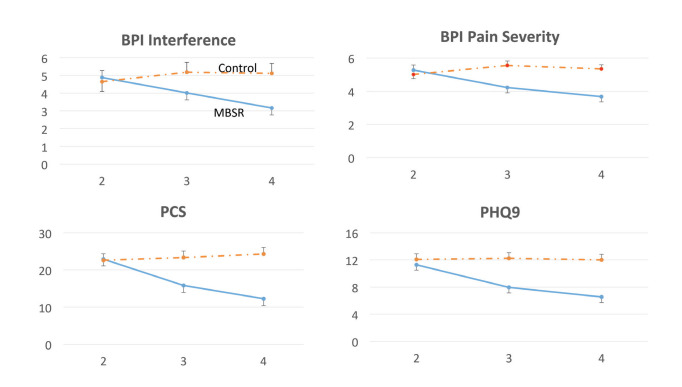
“In this case, once chronic pain had been medically managed as best as possible, mindfulness training added value over usual care in terms of further reducing pain intensity and improving coping, functioning, and quality of life.”
From Mindfulness and physical disease: a concise review (2019) · cites this paper as [27]
In the citing paper
“Three studies blinded the outcome assessors and were rated a low risk of detection bias 14 , 27 , 40 .”
From Effects of mindfulness-based intervention on glycemic control and psychological outcomes in people with diabetes: a systematic review and meta-analysis (2021) · cites this paper as [14]
1 more claim about this paper
Create a free account to see every claim other papers make about this one.
Self-check
Percentages, sums and reported differences re-computed from the paper’s own numbers.
The self-check needs the paper’s full text.
Citations
Cites
WARE, J. E., KOSINSKI, M., & KELLER, S. D. (1996) · Medical Care · doi:10.1097/00005650-199603000-00003 · Cited by 17,392
International Diabetes Federation 2017
Carracher, A. M., Marathe, P. H., & Close, K. L. (2018) · Journal of Diabetes · doi:10.1111/1753-0407.12644 · Cited by 13,418
The Pain Catastrophizing Scale: Development and validation.
Sullivan, M. J. L., Bishop, S. R., & Pivik, J. (1995) · Psychological Assessment · doi:10.1037//1040-3590.7.4.524 · Cited by 8,227 · cited 2×
“• The Pain Catastrophizing Scale (PCS) (22), a well-validated 13-item instrument designed to evaluate the degree to which patients have negative self-statements and catastrophizing thoughts and ideations when in pain.”
BackgroundFarrar, J. T., Young, J. P., LaMoreaux, L., Werth, J. L., & Poole, M. R. (2001) · Pain · doi:10.1016/s0304-3959(01)00349-9 · Cited by 5,808
Kabat-Zinn, J. (1982) · General Hospital Psychiatry · doi:10.1016/0163-8343(82)90026-3 · Cited by 4,255 · cited 1×
“Mindfulness-based stress reduction (MBSR) is a group psychosocial intervention that was first developed by Kabat-Zinn (9) for patients with chronic illness who were not responding to existing medical treatments.”
BackgroundPharmacotherapy for neuropathic pain in adults: a systematic review and meta-analysis
Finnerup, N. B., Attal, N., Haroutounian, S., McNicol, E., Baron, R., Dworkin, R. H., Gilron, I., Haanpää, M., Hansson, P., Jensen, T. S., et al. (2015) · The Lancet Neurology · doi:10.1016/s1474-4422(14)70251-0 · Cited by 3,980
Self-citationDworkin, R. H., Turk, D. C., Wyrwich, K. W., Beaton, D., Cleeland, C. S., Farrar, J. T., Haythornthwaite, J. A., Jensen, M. P., Kerns, R. D., Ader, D. N., et al. (2008) · The Journal of Pain · doi:10.1016/j.jpain.2007.09.005 · Cited by 3,471
The biopsychosocial approach to chronic pain: Scientific advances and future directions.
Gatchel, R. J., Peng, Y. B., Peters, M. L., Fuchs, P. N., & Turk, D. C. (2007) · Psychological Bulletin · doi:10.1037/0033-2909.133.4.581 · Cited by 3,392 · cited 1×
“This finding supports the biopsychosocial model of pain (37), which postulates that the pain experienced by a patient depends on affective-motivational and cognitive-evaluative processes in the central nervous system and not only on the degree of nociceptor activation.”
ResultSearle, S. R., & Searle, S. R. (1971) · Cited by 3,229
The summary of diabetes self-care activities measure: results from 7 studies and a revised scale.
Toobert, D. J., Hampson, S. E., & Glasgow, R. E. (2000) · Diabetes Care · doi:10.2337/diacare.23.7.943 · Cited by 2,561 · cited 4×
“Severe pain (n [%]) 17 (27) 8 (25) 9 (30)”
MethodInfluential
Research works printed but not linked: 1
- National Institute for Health and Care Excellence Neuropathic pain in adults: pharmacological management in non-specialist settings (NICE clinical guideline 173). Available from https://www.nice.org.uk/guidance/cg173/chapter/1-recommendations?unlid=773239836201724223722. Accessed 5 February 2017 31961628
Cited by
Moisset, X., Bouhassira, D., Avez Couturier, J., Alchaar, H., Conradi, S., Delmotte, M. H., Lanteri-Minet, M., Lefaucheur, J. P., Mick, G., Piano, V., et al. (2020) · Revue Neurologique · doi:10.1016/j.neurol.2020.01.361 · Cited by 450
Mindfulness and physical disease: a concise review
Greeson, J. M., & Chin, G. R. (2019) · Current Opinion in Psychology · doi:10.1016/j.copsyc.2018.12.014 · Cited by 85
İzgü, N., Metin, Z. G., Karadaş, C., Özdemir, L., Metinarikan, N., & Çorapçıoğlu, D. (2020) · Journal of Nursing Scholarship · doi:10.1111/jnu.12580 · Cited by 78
Ni, Y., Ma, L., & Li, J. (2021) · Journal of Diabetes Investigation · doi:10.1111/jdi.13439 · Cited by 59
Fisher, V., Li, W. W., & Malabu, U. H. (2023) · Applied Psychology Health and Well-Being · doi:10.1111/aphw.12441 · Cited by 74
van Laake-Geelen, C. C. M., Smeets, R. J. E. M., Quadflieg, S. P. A. B., Kleijnen, J., & Verbunt, J. A. (2019) · Scandinavian Journal of Pain · doi:10.1515/sjpain-2019-0001 · Cited by 51
Ni, Y., Ma, L., & Li, J. (2020) · Journal of Nursing Scholarship · doi:10.1111/jnu.12560 · Cited by 54
Rowan University, Chin, G., Anyanso, V., University of Pennsylvania, Greeson, J., & Rowan University (2019) · The Cooper Rowan Medical Journal · doi:10.31986/issn.2578-3343_vol1iss1.1.2 · Cited by 42
“18 In people with a traumatic brain injury (TBI; n=76) a 10-week RCT found that Mindfulness-Based Supportive Therapy decreased depressive symptoms compared with the waitlist control group.”
Shergill, Y., Rice, D. B., Khoo, E., Jarvis, V., Zhang, T., Taljaard, M., Wilson, K. G., Romanow, H. C., Glynn, B. A., Small, R., et al. (2022) · Pain Research and Management · doi:10.1155/2022/4020550 · Cited by 50
Jamal, A., Ahmad, I., Ahamed, N. M. B., Azharuddin, M., Alam, F., & Hussain, M. E. (2019) · Journal of Diabetes & Metabolic Disorders · doi:10.1007/s40200-019-00476-1 · Cited by 38
“PDPN has a major impact on physical and mental functioning, thereby compromising the ability to work, attend to household responsibilities and enjoy social relationships [8].”
BackgroundSayed, D., Deer, T. R., Hagedorn, J. M., Sayed, A., D'Souza, R. S., Lam, C. M., Khatri, N., Hussaini, Z., Pritzlaff, S. G., Abdullah, N. M., et al. (2024) · Journal of Pain Research · doi:10.2147/jpr.s451006 · Cited by 40
Higgins, D. M., Heapy, A. A., Buta, E., LaChappelle, K. M., Serowik, K. L., Czlapinski, R. A., & Kerns, R. D. (2020) · Journal of Health Psychology · doi:10.1177/1359105320962262 · Cited by 35
“We conducted a randomized controlled trial (RCT) of CBT for DPNP with an active comparator, diabetes education.”
BackgroundMethodInfluentialBai, Y., Ma, J.-H., Yu, Y., & Wang, Z. (2022) · Pain Management Nursing · doi:10.1016/j.pmn.2022.05.005 · Cited by 30
When ESKD complicates the management of pain
Jhamb, M., Tucker, L., & Liebschutz, J. M. (2020) · Seminars in Dialysis · doi:10.1111/sdi.12881 · Cited by 25
Review of the Treatments for Central Neuropathic Pain
Sheldon, B. L., Olmsted, Z. T., Sabourin, S., Heydari, E. S., Harland, T., & Pilitsis, J. G. (2022) · Brain Sciences · doi:10.3390/brainsci12121727 · Cited by 24
“With the goal of distinguishing one’s thoughts about pain from the physiologic experience of the pain itself, meditation-mediated stress reduction has been shown to alter brain activity on fMRI and reduce pain in multiple etiologies of chronic pain [80,81].”
BackgroundDavoudi, M., Allame, Z., nia, R. T., Taheri, A. A., & Ahmadi, S. M. (2021) · Journal of Diabetes & Metabolic Disorders · doi:10.1007/s40200-020-00700-3 · Cited by 24
“Some studies showed the efficacy of mindfulness on neuropathic pain [18], and others showed inefficacy [19].”
BackgroundHamasaki, H. (2023) · Medicines · doi:10.3390/medicines10090053 · Cited by 45
“Ni et al. [16] showed that MBSR or MBCT reduced depression scores measured by various scales (standardized mean difference (SMD) = − 0.84; 95% CI, − 1.16 to − 0.51, p < 0.0001) and improved the mental health composite of quality of life (MD = 7.06, 95% CI, 5.19 to 9.03, p < 0.0001).”
BackgroundMethodInfluentialMindfulness-Based Interventions: Focus on Pediatric Type 1 and Type 2 Diabetes
Inverso, H., Moore, H. R., Lupini, F., Wang, C. H., Streisand, R. M., Shomaker, L. B., & Mackey, E. R. (2022) · Current Diabetes Reports · doi:10.1007/s11892-022-01492-x · Cited by 22
Ogle, T., Alexander, K. E., Miaskowski, C. A., & Yates, P. M. (2020) · Journal of Cancer Survivorship · doi:10.1007/s11764-020-00861-3 · Cited by 19
Characteristics of frequent users of the emergency department with chronic pain
Shergill, Y., Rice, D. B., Smyth, C. E., Tremblay, S., Nelli, J., Small, R., Hebert, G., Singer, L. N., Rash, J. A., & Poulin, P. A. (2020) · Canadian Journal of Emergency Medicine · doi:10.1017/cem.2019.464 · Cited by 23
“The highest standard of care for chronic pain involves a longitudinal and interdisciplinary approach along with self-management efforts, similar to other chronic diseases such as chronic obstructive pulmonary disease (COPD)(10) and diabetesmellitus.(11) Given the episodic nature of ED care, it is not an appropriate se…”
BackgroundGreenberg, J., Bakhshaie, J., Lovette, B. C., & Vranceanu, A.-M. (2022) · Journal of Pain Research · doi:10.2147/jpr.s350024 · Cited by 19
Tong, G., Taljaard, M., & Li, F. (2023) · Statistics in Medicine · doi:10.1002/sim.9811 · Cited by 21
“05 (8, 77) (25, 249) (7, 69) (10, 96) (31, 310) 0.”
MethodInfluentialKioskli, K., Winkley, K., & McCracken, L. M. (2019) · Journal of Contextual Behavioral Science · doi:10.1016/j.jcbs.2019.07.002 · Cited by 18
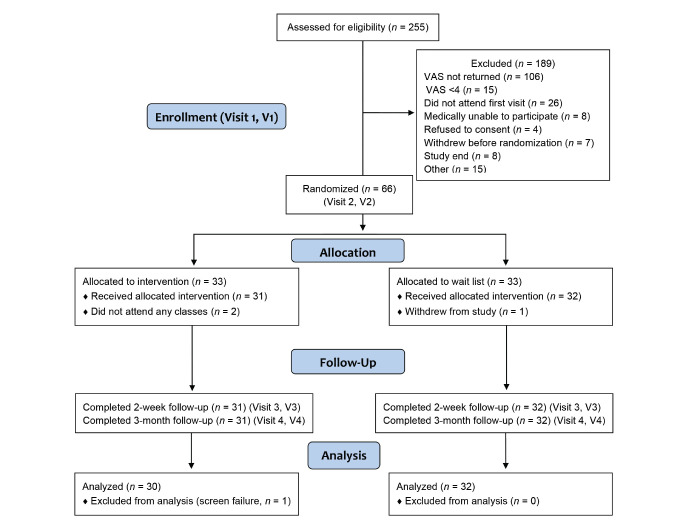
“Results from the MBSR study (Nathan et al., 2017) showed that more than half of participants in the experimental group (19/30) improved in depression, pain interference, quality of life, catastrophizing and function.”
BackgroundXia, T., Lopes, S. S., Chen, L., Roth, R., Zinzow, H. M., Jones, K. O., Zhang, L., Shi, L., & Jindal, M. (2022) · Complementary Therapies in Medicine · doi:10.1016/j.ctim.2022.102810 · Cited by 22
Meditation for the primary and secondary prevention of cardiovascular disease
Rees, K., Takeda, A., Court, R. A., Kudrna, L., Hartley, L., & Ernst, E. (2024) · Cochrane Database of Systematic Reviews · doi:10.1002/14651858.cd013358.pub2 · Cited by 23
Disparities in mental health, social support and coping among individuals with mobility impairment
Na, L., & Singh, S. (2020) · Disability and health journal · doi:10.1016/j.dhjo.2020.101047 · Cited by 18
Moreira, M. D. F., Gamboa, O. L., & Oliveira, M. A. P. (2023) · European Journal of Pain · doi:10.1002/ejp.2149 · Cited by 20
“…with our result, prior RCTs evidenced that standard 8 weeks mindfulness training improves PC in patients with rheumatoid arthritis, chronic low back pain and diabetic peripheral neuropathy compared with passive and active controls (Davis et al., 2015; Nathan et al., 2017; Turner et al., 2016).”
ResultRacaru, S., Sturt, J. A., & Celik, A. (2020) · Pain Management Nursing · doi:10.1016/j.pmn.2020.11.001 · Cited by 17
Bäckryd, E., Ghafouri, N., Gerdle, B. U. C., & Dragioti, E. (2024) · Journal of Rehabilitation Medicine · doi:10.2340/jrm.v56.40188 · Cited by 23
Rozworska, K. A., Poulin, P. A., Carson, A., Tasca, G. A., & Nathan, H. J. (2019) · Journal of Behavioral Medicine · doi:10.1007/s10865-019-00079-4 · Cited by 16
“The primary results of the RCT are reported in Nathan et al. (2017).”
BackgroundMethodInfluentialPsychologic Impacts on Diabetic Neuropathic Pain
Zhang, R., Lai, M., & Wang, D. (2022) · Current Pain and Headache Reports · doi:10.1007/s11916-022-01040-y · Cited by 11
“This modality encourages patients to develop the ability to take a meta-cognitive position of witness to their own experiences, allowing a more objective assessment of pain and other stressors and greater self-regulation [18].”
BackgroundHeo, S., Kang, J., Umeakunne, E., Lee, S., Bertulfo, T. F., Barbé, T., Kim, J., Black, V., An, M., & Randolph, J. (2023) · The Journal of Cardiovascular Nursing · doi:10.1097/jcn.0000000000000973 · Cited by 15
Psychologically based interventions for adults with chronic neuropathic pain: a scoping review
Oguchi, M., Nicholas, M. K., Asghari, A., Sanders, D., & Wrigley, P. J. (2024) · Pain Medicine · doi:10.1093/pm/pnae006 · Cited by 12
“These interventions consisted of studies that used mindfulness/meditation techniques as a standalone intervention individually or in groups (18%, n ¼ 6), 54–59 group-based mindfulness-based stress reduction therapy (9%, n ¼ 3), 60–62 or group-based mindfulness-based cognitive therapy (3%, n ¼ 1).”
Diabetic Neuropathy: a Critical, Narrative Review of Published Data from 2019
Nagpal, A., Leet, J., Egan, K. E., & Garza, R. (2021) · Current Pain and Headache Reports · doi:10.1007/s11916-020-00928-x · Cited by 13
Diabetic Peripheral Neuropathy Associated with Foot Ulcer: One of a Kind
Sen, C. K., Roy, S., & Khanna, S. (2023) · Antioxidants and Redox Signaling · doi:10.1089/ars.2022.0093 · Cited by 19
Painful diabetic polyneuropathy: evidence-based diagnosis and treatment
Khramilin, V. N., & Давыдов, О. С. (2021) · Russian Journal of Pain · doi:10.17116/pain20211904144 · Cited by 11
Multimodal Approaches in the Treatment of Chronic Peripheral Neuropathy—Evidence from Germany
Romeyke, T., & Stummer, H. (2024) · International Journal of Environmental Research and Public Health · doi:10.3390/ijerph21010066 · Cited by 46
“They can contribute to reducing pain intensity, pain catastrophization, depression and perceived stress and thus contribute to improving the quality of life [19,20].”
BackgroundBonhof, C. S., van de Poll-Franse, L. V., de Hingh, I. H. J. T., Vreugdenhil, G., & Mols, F. (2022) · Supportive Care in Cancer · doi:10.1007/s00520-022-07340-8 · Cited by 7
“In other chronic pain-related conditions, mindfulness-based interventions have been shown promising [18, 40, 41].”
BackgroundJavadi, T. H. S., Parast, N. A., Shahsavani, S., Chehraghi, M. J., Razavi, L., Rahmani, S., & Nejati, S. (2019) · International Clinical Neuroscience Journal · doi:10.15171/icnj.2019.21 · Cited by 7
Quality of life of persons with painful diabetic neuropathy: How can we improve it?
Vileikytė, L. (2023) · Diabetes Research and Clinical Practice · doi:10.1016/j.diabres.2023.110756 · Cited by 5
Moreira, M. D. F., Gamboa, O. L., & Oliveira, M. A. P. (2024) · Mindfulness · doi:10.1007/s12671-024-02381-y · Cited by 3
“…part, and the outward, connected by a curved gray line, is the between-person (stable) part last intervention period of brief (McClintock et al., 2019; de França Moreira et al., 2022, 2023) and standard (Burns et al., 2023; Nathan et al., 2017; Seng et al., 2019; Turner et al., 2016) MBIs.”
Mindfulness training for cardiovascular health in type 2 diabetes: A critical review
Gandhi, A., Rajkumar, R., Dakka, S. N., Sania, J., Khurram, F., Cabrera, J., & Swathi, N. L. (2024) · Current Problems in Cardiology · doi:10.1016/j.cpcardiol.2024.102833 · Cited by 4
Fan, Q., Yu, S., Sun, X. S., Dong, Y., Chen, Y., & Jia, L. (2025) · Psychology Research and Behavior Management · doi:10.2147/prbm.s533200 · Cited by 5
Park, R., Mohiuddin, M., Poulin, P. A., Salomons, T. V., Edwards, R. R., Nathan, H., Haley, C., & Gilron, I. (2019) · PAIN Reports · doi:10.1097/pr9.0000000000000793 · Cited by 2
Park, R., Mohiuddin, M., Poulin, P. A., Salomons, T. V., Edwards, R. R., Nathan, H., Haley, C., & Gilron, I. (2020) · PAIN Reports · doi:10.1097/pr9.0000000000000868 · Cited by 2
Syahriyani, S., Yusuf, S., & Syam, Y. (2021) · Public Health of Indonesia · doi:10.36685/phi.v7i1.385 · Cited by 4
“…Two studies used The McGill Main Questionnaire (Bunner et al., 2015; Vakilinia et al., 2020), two studies used the Brief Pain Inventory (BPI) (Nathan et al., 2017) and the BPI modified painful diabetic peripheral neuropathy (BPI-DPN Q4) (Hussain & Said, 2019), Two studies used the Needs…”
BackgroundMethodInfluentialBuren, R., Ponzano, M., Adams, N. T., Jun, J., & Ginis, K. A. M. (2026) · Epidemiologic Reviews · doi:10.1093/epirev/mxag002 · Cited by 1
Ogle, T., Alexander, K. E., Yates, P. M., Paul, S. M., Kober, K. M., Conley, Y. P., Schumacher, M. A., Levine, J. D., & Miaskowski, C. A. (2021) · European Journal of Oncology Nursing · doi:10.1016/j.ejon.2021.102025 · Cited by 1
Tosti, G. (2023) · Oxford University Press eBooks · doi:10.1093/med/9780197616345.003.0032 · Cited by 1
LLácer, L. A., & Ramos‐Campos, M. (2018) · Revista de Investigación y Educación en Ciencias de la Salud (RIECS) · doi:10.37536/riecs.2018.3.2.101 · Cited by 4
“Estudios previos muestran mayores niveles de esta variable en personas que utilizan la meditación frente a los que no practican [24,29,30,46,47].”
BackgroundMiniszewska, J. (2019) · Wydawnictwo Uniwersytetu Łódzkiego eBooks · doi:10.18778/8142-277-2 · Cited by 2
Living with painful diabetic neuropathy: physical activity and quality of life
van Laake‐Geelen, C. C. M. (2021) · Research Publications (Maastricht University) · doi:10.26481/dis.20210923cg
Diversity faultlines and team learning: does psychological safety help?
Rupert, J., & Jehn, K. A. (2012)
nia, R. T., Davoudi, M., Ahmadi, S. M., & Taheri, A. A. (2020) · doi:10.21203/rs.3.rs-64795/v1
Reangsing, C., Punsuwun, S., Pitchalard, K., & Oerther, S. E. (2026) · Diabetes Research and Clinical Practice · doi:10.1016/j.diabres.2026.113322 · Cited by 2
Pharmacological Interventions in Diabetic Neuropathy
Singh, S., Yadav, A., Sonker, P., Chandrakar, R., Tiwari, N. N., & Vishwakarma, V. (2026) · Springer eBooks · doi:10.1007/978-981-95-9326-2_21
Mental Health Strategies for Managing Diabetic Neuropathy
Pramanik, S., Yadav, M. K., Patel, D., Shrivastava, A., Saxena, N., & Negi, S. S. (2026) · Springer eBooks · doi:10.1007/978-981-95-9326-2_20
Azer, A., Lally, T., Fried, A., Shah, A., & Radice-Vella, G. (2026) · Hand Clinics · doi:10.1016/j.hcl.2026.03.012 · Cited by 1
Tiems, M. R. A., Raasveld, F. V., Johnston, B. R., Moussa, O., Valerio, I. L., Hao, D., Coert, J. H., & Eberlin, K. R. (2026) · Journal of Plastic Reconstructive & Aesthetic Surgery · doi:10.1016/j.bjps.2026.08.009
Traitements médicamenteux de la neuropathie diabétique douloureuse
Laroche, S., & Phan, F. (2026) · Médecine des Maladies Métaboliques · doi:10.1016/j.mmm.2026.08.001
Metadata
- Authors
- Nathan, H. J., Poulin, P., Wozny, D., Taljaard, M., Smyth, C., Gilron, I., Sorisky, A., Lochnan, H., & Shergill, Y.
- Affiliations
- University of Ottawa (CA)
- Ottawa Hospital Research Institute (CA)
- Queen's University (CA)
- Ottawa Hospital Research Institute, Ottawa, Ontario, Canada
- Corresponding author
- Nathan, Howard J.
- Venue
- Clinical Diabetes
- Publisher
- American Diabetes Association
- Published
- 2017-12-01
- Volume
- 35
- Issue
- 5
- Pages
- 294-304
- ISSN
- 0891-8929 (ISSN-L)
- 1945-4953
- PMC
- PMC5734176
- OpenAlex
- W2771252002
- Cited by
- 61
- References
- 39
- Citations by year
- 2026: 7 · 2025: 1 · 2024: 7 · 2023: 7 · 2022: 9 · 2021: 7 · 2020: 12 · 2019: 8 · 2018: 2
- FWCI
- 7.46
- Type
- journal article
- Language
- en
- Open access
- hybrid
- doi.org
- Licence
- Locations
- Clinical Diabetes (publishedVersion, cc-by-nc-nd)
- Europe PMC (PubMed Central) (publishedVersion, cc-by-nc-nd)
- PubMed Central (publishedVersion, cc-by-nc-nd)
- PubMed (publishedVersion)
- Funders
- University of Ottawa
- Topics
- Social Sciences › Psychology › Clinical Psychology › Mindfulness and Compassion Interventions
- Health Sciences › Medicine › Physiology (medical) › Pain Mechanisms and Treatments
- Health Sciences › Medicine › Anesthesiology and Pain Medicine › Pain Management and Treatment
- Keywords
- mindfulness-based stress reduction, diabetic neuropathic pain, chronic pain, pain-related disability, health-related quality of life, pain intensity, pain catastrophizing, depression, psychosocial interventions, glycemic control, HbA1c
About these checks
Registry, retraction, Cites and statistics results are computed, not judged, with one exception: a printed reference that no index lists is read once by a model before it counts as a citation error. Claims are extracted by a model and kept only when their quote appears verbatim in the text; each cited source is then checked, with a model’s help, for whether it says what the claim relies on. Those verdicts can be wrong — read the claim’s quote and the cited source before relying on one.
Statistics and arithmetic are recomputed, not judged.
Confidence bands are shown only for fields calibrated on our annotated test set. None is calibrated yet, so no band is shown.
What counts as a claim ›How we measure confidence ›How we check this ›
Are you an author, or do you see a problem with this page? Request a review
Data sources
Bibliographic data: Semantic Scholar, OpenAlex, Crossref.
Contains information from the Semantic Scholar Academic Graph Datasets, made available under the ODC Attribution License (ODC-BY 1.0).
Semantic Scholar’s data is described in: Kinney, R., et al. (2023). The Semantic Scholar Open Data Platform. arXiv:2301.10140.
