

The DOI matches its Crossref record.
Optimizing the Provision of Public Services By Local Administration as a Component of the Smart City Concept on the Example of Zabrze
Open accessAbstract
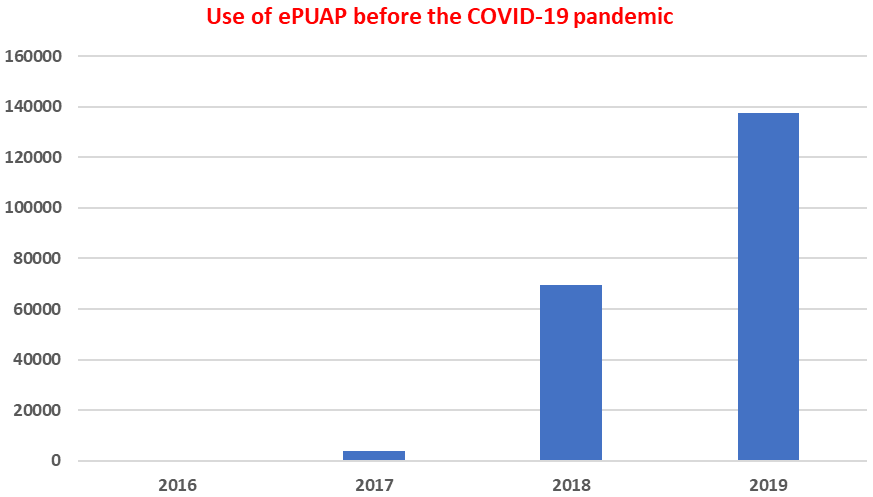
Surveys performed among the residents of Zabrze indicate that in 2021 the majority of respondents (67%), wishing to use public services provided by the local government, still preferred to visit the office in person. Residents noticed negative aspects of direct service, such as queues of people waiting for the case to be completed (26%), excessive bureaucracy (24%) or lack of parking spaces (18%). However, they counted on help in completing the necessary formalities by officials who should be: professional (20%), communicative (18%) and kind (17%). The use of the digital platform (ePUAP) dedicated to customer service was reported by 32% of respondents. At the same time, as much as 40% of the respondents, in order to save time and to simplify procedures, declared their will to use innovative methods of remote contact with public administration (e.g. via social media). The COVID-19 pandemic showed that it was possible to increase (even by 250%) the number of cases handled remotely, which with over 90% of households in Poland with access to a computer network creates opportunities for integrated development as part of the Smart City idea. The aim of the paper was to identify the residents’ expectations related to the provision of public services by local administration. Precise determination of the ways of perception of both direct and remote customer service has not only an application value. It also allows for further research study on the management of local government, including the organization of management control, as well as social communication of local governments.
Overview
The claims and statistics of this paper haven’t been checked yet.
Run the check — free, no account needed. It reads the open-access text and checks the sources it cites.
Integrity signals
Registry
Cites
Statistics
Figures
Verification
Claims the paper makes
The claims and statistics of this paper haven’t been checked yet.
Run the check — free, no account needed. It reads the open-access text and checks the sources it cites.
Claims other papers make about this one
Each is checked against this paper’s own text: does it say what the citing paper says it does?
The source backs part of the claim, not all of it — or backs it for a different population, condition or comparison.
In the citing paper
“The implementation of interoperable systems in these cities not only streamlines administrative processes but also enhances transparency and accessibility, strengthening trust and fostering greater citizen participation (Mańka-Szulik and Krawczyk, 2022).”
From Smart city governance and interoperability: enhancing human security in Yogyakarta and Makassar, Indonesia (2025) · cites this paper as Mańka-Szulik and Krawczyk, 2022
Experimental — accuracy not yet measured
Self-check
Percentages, sums and reported differences re-computed from the paper’s own numbers.
The self-check needs the paper’s full text.
Citations
Cites
No references could be resolved yet.
Research works printed but not linked: 34
- [1] A. Kuzior, B. Sobotka, The role of social capital in the development of smart cities. Zeszyty Naukowe. Organizacja i Zarządzanie, 134, 2019. pp. 109-11910.29119/1641-3466.2019.134.9 · DOI
- [2] A.E. Oke, S.S. Stephen, C.O. Aigbavboa, D.R. Ogunsemi and I.O. Aje, The Smart City Process, Smart Cities: A Panacea for Sustainable Development, Emerald Publishing Limited, Bingley, 2022. pp. 23-43. https://doi.org/10.1108/978-1-80382-455-020221004.10.1108/978-1-80382-455-020221004 · DOI
- [5] M. Czupich, M. Kola-Bezka and A. Ignasiak-Szulc. Czynniki i bariery wdrażania koncepcji Smart City w Polsce, Studia Ekonomiczne. Zeszyty Naukowe Uniwersytetu Ekonomicznego w Katowicach, 276, 2016. pp. 223-235.
- [6] A. Kuzior, J. Ober and J. Karwot, Stakeholder Expectation of Corporate Social Responsibility Practices: A Case Study of PWiK Rybnik, Poland. Energies 14(11), 2021, 3337. https://doi.org/10.3390/en1411333710.3390/en14113337 · DOI
- [7] J. Winkowska, Koncepcje zarządzania rozwojem miast w świetle idei smart city, Academy of Management, 5, 2021. pp. 92-18.
- [8] A. Kuzior and P. Kuzior, The quadruple helix model as a smart city design principle. Virtual Economics 3 (1), 2020. pp. 39-57.10.34021/ve.2020.03.01(2) · DOI
- [9] I. Jonek-Kowalska, Kondycja finansowa jednostek samorządu terytorialnego jako determinanta rozwoju inteligentnych miast w Polsce, Zeszyty Naukowe. Organizacja i Zarządzanie, 120, 2018. pp. 131-140.10.29119/1641-3466.2018.120.10 · DOI
- [10] K. Midor, A. Kuzior, G. Płaza, M. Molenda and D. Krawczyk, Reception of the Smart City Concept in the Opinion of Local Administration Officials – A Case Study. Management Systems in Production Engineering 29 (4), 2021. pp. 320-326.10.2478/mspe-2021-0040 · DOI
- [11] D. Felszer, Funkcjonowanie elektronicznej administracji na przykładzie ePUAP, Roczniki Administracji i Prawa, 12, 2012. pp. 119-138.
- [12] A. Kuzior and B. Sobotka, New ICT solutions in public administration. In: Khalid S. Soliman (Ed.), Proceedings of the 37th International Business Information Management Association (IBIMA), 2021. pp. 6743-6750.
- [14] E. Ziemba, T. Papaj and J. Będkowski (2013), Egzemplifikacja e-government w Polsce – analiza porównawcza SEKAP i ePUAP, Roczniki Kolegium Analiz Ekonomicznych 29, 2013. pp. 427-445.
- [15] A. Kuzior, B. Sobotka, A. Filipenko and P. Kuzior (2019). Marketing Communications of Administrative Organs of Local Governance and Local Community. Marketing and Management of Innovations, 2, 2019. pp. 314-325. http://doi.org/10.21272/mmi.2019.2-2610.21272/mmi.2019.2-26 · DOI
- [16] Informacja o wynikach kontroli: Realizacja usług publicznych dla obywateli z wykorzystaniem platformy ePUAP, Warszawa, Departament Administracji Publicznej Najwyż-szej Izby Kontroli KAP.430.022.2020, Nr ewid. 200/2020/P/20/004/KAP, 2021. pp. 94.
- [17] D. Cendrowicz, Rozwój e-kompetencji w administracji publicznej na przykładzie pomocy społecznej, [w:] Ewolucja elektronicznej administracji publicznej, (red.) R. Kusiak-Winter, J. Korczak, Wrocław: E-Wydawnictwo. Prawnicza i Ekonomiczna Biblioteka Cyfrowa. Wydział Prawa, Administracji i Ekonomii Uniwersytetu Wrocławskiego, 2021. pp. 73-86.
- [18] A. Kuzior, M. Mańka-Szulik and D. Krawczyk, Changes in the management of electronic public services in the Metropolis during the COVID-19 pandemic, Polish Journal of Management Studies 24(2), 2021. pp. 261-275.10.17512/pjms.2021.24.2.16 · DOI
- [19] A. Laska, Idea Smart City – między innowacyjnością publiczną a technokratycznym zagrożeniem. In: Innowacyjność w warunkach współczesnych miast, Kaszkur A., Laska A. (eds.), Bydgoszcz, Wydawnictwo Uniwersytetu Kazimierza Wielkiego 2017.
- [20] A. Kuzior, Zastosowanie Modelu Quintuple Helix w projektowaniu Smart Sustainable City. In: Inteligentny rozwój inteligentnych miast, CeDeWu, Warszawa 2020. pp. 15-26.
- [21] A.S. Ibrahim, K.Y. Youssef, A.H. Eldeeb, M. Abouelatta and H. Kamel, Adaptive aggregation based IoT traffic patterns for optimizing smart city network performance. Alexandria Engineering Journal, 61(12), 2022. pp. 9553-956810.1016/j.aej.2022.03.037 · DOI
- [22] H. Zhao, Y. Wang and X. Liu, The assessment of smart city information security risk in China based on zGT2FSs and IAA method. Scientific Reports 12(1), 2022, 3281.10.1038/s41598-022-07197-1888565235228589 · DOI
- [23] M. Guo, M. Xia and Q. Chen, A review of regional energy internet in smart city from the perspective of energy community. Energy Reports 8, 2022. pp. 161-182.10.1016/j.egyr.2021.11.286 · DOI
- [24] R. Sharma and R. Arya, UAV based long range environment monitoring system with Industry 5.0 perspectives for smart city infrastructure. Computers and Industrial Engineering 168, 2022, 108066.10.1016/j.cie.2022.108066 · DOI
- [25] H. Zhu, L. Shen and Y. Ren, How can smart city shape a happier life? The mechanism for developing a Happiness Driven Smart City. Sustainable Cities and Society 80, 2022, 103791.10.1016/j.scs.2022.103791 · DOI
- [26] K. Kuppa, A. Dayal, S. Gupta, A. Dua, P. Chaudhary and S. Rathore, ConvXSS: A deep learning-based smart ICT framework against code injection attacks for HTML5 web applications in sustainable smart city infrastructure. Sustainable Cities and Society 80, 2022, 10376510.1016/j.scs.2022.103765 · DOI
- [27] E. Dizon and B. Pranggono, Smart streetlights in Smart City: a case study of Sheffield. Journal of Ambient Intelligence and Humanized Computing 13(4), 2022. pp. 2045-2060.10.1007/s12652-021-02970-y · DOI
- [28] A.L.A. Vaz, F.A.F. Ferreira, L.F. Pereira, R.J.C. Correia and A. Banaitis, Strategic visualization: the (real) usefulness of cognitive mapping in smart city conceptualization. Management Decision 60(4), 2022. pp. 916-939.10.1108/MD-11-2020-1512 · DOI
- [29] K.K. Bhardwaj, S. Banyal, D.K. Sharma and W. Al-Numay, Internet of things based smart city design using fog computing and fuzzy logic. Sustainable Cities and Society 79, 103712.10.1016/j.scs.2022.103712 · DOI
- [30] M. Janicki and K. Kubiak, SEO PR w kontekście employer brandingu. In: Employer Branding w teorii i praktyce, K. Kubiak (ed.), Warszawa, Wyższa Szkoła Promocji 2014. pp. 143-160.
- [31] M. Szmigiero, Oblicza innowacji miejskiej. In: Metropolie wobec wyzwań i problemów społecznych, R. Mędrzycki (ed.), Gdańsk, Instytut Metropolitalny 2021. pp. 29-49.
- [32] M. Pięta-Kanurska, Smart City a rozwój inkluzywny, Biuletyn Komitet Przestrzennego Zagospodarowania Kraju Polskiej Akademii Nauk 273, 2019. pp. 59-70.
- [33] A. Kuzior and J. Zozulak, Adaptation of the Idea of Phronesis in Contemporary Approach to Innovation. Management Systems in Production Engineering, 27(2), 2019. pp. 84-87. https://doi.org/10.1515/mspe-2019-001410.1515/mspe-2019-0014 · DOI
- [34] J. Kwaśny, Rozwój e-administracji w polskich miastach w następstwie kryzysu związanego z pandemią COVID-19, Horyzonty Polityki, 13(42), 2022. pp. 71-90.10.35765/hp.2180 · DOI
- [35] Z.J. Makieła, M.M. Stuss, K. Mucha-Kuś, G. Kinelski, M. Budziński and J. Michałek (2022), Smart City 4.0: Sustainable Urban Development in the Metropolis GZM. Sustainability, 14 (35160), 2022. pp. 1-19. https://doi.org/10.3390/su14063516.10.3390/su14063516 · DOI
- [36] J. Papińska-Kacperek and A.Z. Wassilew, Zastosowanie idei Smart City w czasie pandemii COVID-19 i izolacji społecznej w Polsce w 2020 roku. Konwersatorium Wiedzy o Mieście, 34 · DOI
- (6) 2021.pp. 63-72.10.18778/2543-9421.06.06 · DOI
Cited by
Sorted by citations
Hardi, R., Nurmandi, A., Purwaningsih, T., & Manaf, H. A. (2025) · Frontiers in Political Science · doi:10.3389/fpos.2025.1553177 · Cited by 38
Metadata
- Authors
- Mańka-Szulik, M., & Krawczyk, D.
- Affiliations
- Silesian University of Technology (PL)
- Venue
- Management Systems in Production Engineering
- Publisher
- Walter de Gruyter GmbH
- Published
- 2022-05-19
- Volume
- 30
- Issue
- 2
- Pages
- 192-199
- ISSN
- 2299-0461 (ISSN-L)
- 2450-5781
- OpenAlex
- W4280582721
- Cited by
- 16
- References
- 0
- Citations by year
- 2026: 2 · 2025: 2 · 2024: 4 · 2023: 2 · 2022: 6
- FWCI
- 7.47
- Type
- journal article
- Language
- en
- Open access
- gold
- doi.org
- Locations
- Management Systems in Production Engineering (publishedVersion, cc-by)
- DOAJ (DOAJ: Directory of Open Access Journals) (submittedVersion, cc-by-sa)
- Topics
- Social Sciences › Political Science and International Relations › E-Government and Public Services
- Social Sciences › Urban Studies › Smart Cities and Technologies
- Social Sciences › Geography, Planning and Development › Local Governance and Planning
- Keywords
- public services, local government, smart cities, digital public services, remote customer service, resident expectations, bureaucracy, COVID-19 pandemic, Zabrze, social media, local government communication
About these checks
Registry, retraction, Cites and statistics results are computed, not judged, with one exception: a printed reference that no index lists is read once by a model before it counts as a citation error. Claims are extracted by a model and kept only when their quote appears verbatim in the text; each cited source is then checked, with a model’s help, for whether it says what the claim relies on. Those verdicts can be wrong — read the claim’s quote and the cited source before relying on one.
Statistics and arithmetic are recomputed, not judged.
Confidence bands are shown only for fields calibrated on our annotated test set. None is calibrated yet, so no band is shown.
What counts as a claim ›How we measure confidence ›How we check this ›
Are you an author, or do you see a problem with this page? Request a review
How to cite
Cite CoChat for the checks on this page, and the paper for its own findings.
- This page
- CoChat. (2026). Citation check: Optimizing the Provision of Public Services By Local Administration as a Component of the Smart City Concept on the Example of Zabrze. https://app.cochat.ai/papers/10.2478/mspe-2022-0024
- The paper
- Mańka-Szulik, M., & Krawczyk, D. (2022). Optimizing the Provision of Public Services By Local Administration as a Component of the Smart City Concept on the Example of Zabrze. Management Systems in Production Engineering. https://doi.org/10.2478/mspe-2022-0024
