

The DOI matches its Crossref record.
Bioactivity of wine prepared from ripened and over-ripened kiwifruit
Open accessAbstract
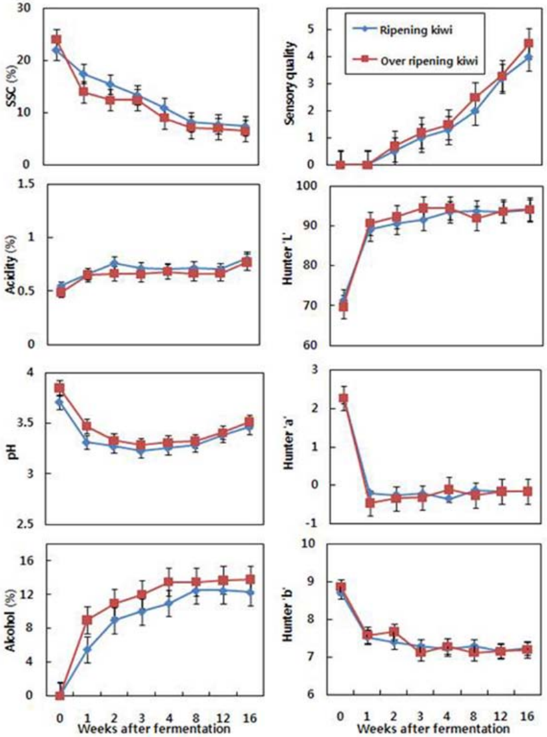
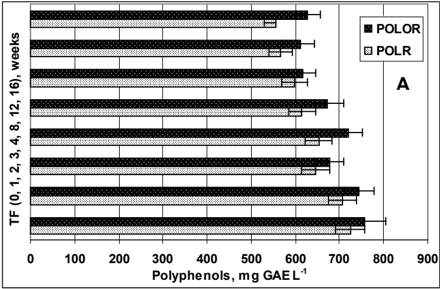
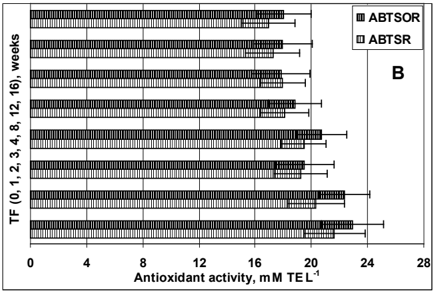
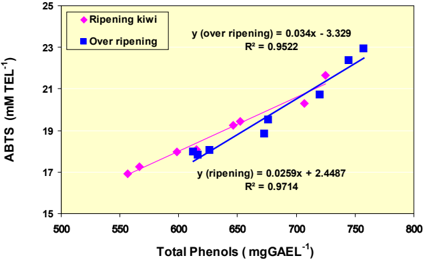
In order to evaluate the fruit maturity value of ‘Hayward’ kiwifruit (Actinidia deliciosa) as material for wine production, ripened and over-ripened fruit samples were analyzed. In addition, the effect of pectinase enzyme treatment on physicochemical characteristics of the wine during the fermentation process was also examined. The results showed that wine production from ripening kiwifruit took almost twice as long as from over-ripened fruit. The yield of wine production was increased from 63.35% to 66.19% by using riper kiwifruits and adding pectinase before amelioration. The soluble solid content (13.5%) in the wine produced from over-ripened fruits increased in comparison with the wine produced from ripened samples (10.3%). In both groups there was a decrease to 5° Brix at the end of fermentation. Difference of fruit maturity did not have a significant effect on acidy, pH, nor color of wine. The highest scores of total acceptance estimated during fermentation were for wine made from over-ripened fruits. Total phenolics content and antioxidant activities were similar in both wine groups while the mineral content, especially potassium, in wine made from over-ripened kiwifruit was higher than wine produced from ripened fruits. In conclusion, the quality characteristics of kiwifruit wine made from over-ripened fruit treated with pectinase showed higher values of wine in many aspects such as sensory value, alcohol and total phenolics content, antioxidant activity, minerals and production yield.
Overview
The claims and statistics of this paper haven’t been checked yet.
Run the check — free, no account needed. It reads the open-access text and checks the sources it cites.
Integrity signals
Registry
Cites
Statistics
Figures
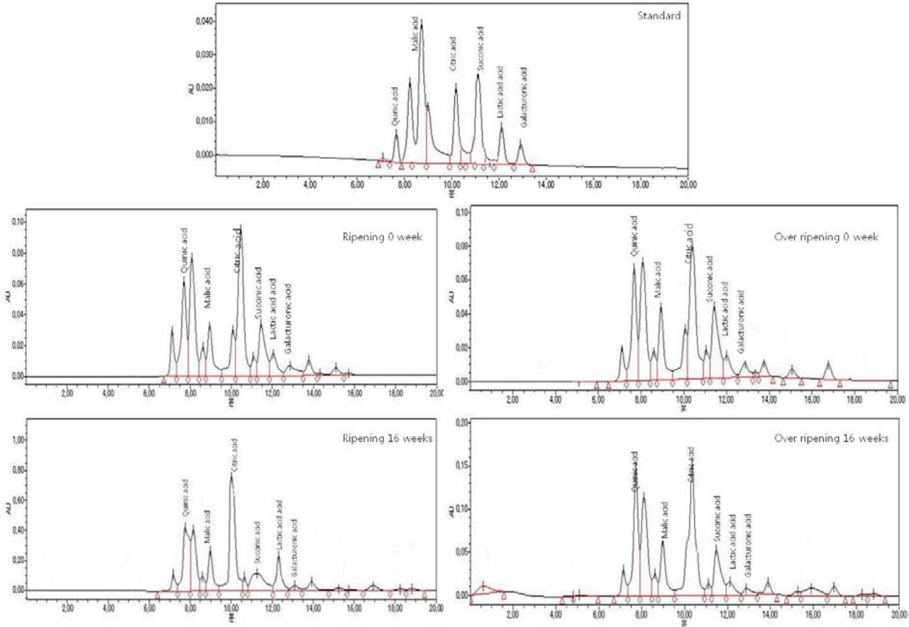
Verification
Claims the paper makes
The claims and statistics of this paper haven’t been checked yet.
Run the check — free, no account needed. It reads the open-access text and checks the sources it cites.
Claims other papers make about this one
Each is checked against this paper’s own text: does it say what the citing paper says it does?
The source backs part of the claim, not all of it — or backs it for a different population, condition or comparison.
In the citing paper
“the decrease in the total phenol levels could have been due to fermentation process condensation and polymerization reactions as well as the formation of oxidative products and precipitation.”
From Physicochemical properties and antioxidant activity of banana vinegar produced using one-stage and two-stage fermentation (2019) · cites this paper as Towantakavanit et al. (2011)
Experimental — accuracy not yet measured
Self-check
Percentages, sums and reported differences re-computed from the paper’s own numbers.
The self-check needs the paper’s full text.
Citations
Cites
No references could be resolved yet.
Research works printed but not linked: 48
- Renaud S., De Lorgeril M., Wine, alcohol, platelets, and the French paradox for coronary heart disease, Lancet, 1992, 339, 1523-1526
- Gorinstein S., Letter to the editor. Comments on "potential explanation for the French paradox", Nutr. Res., 1999, 19, 1599-1602
- Gorinstein S., Caspi A., Libman I., Trakhtenberg S. Mechanism of cardioprotective effect and the choice of alcoholic beverage, Amer. J. Cardiology, 2000, 85, 280-281
- Gorinstein S., Trakhtenberg S., Alcohol beverages and biochemical changes in blood, Addict. Biol., 2003, 8, 445-454
- Gorinstein S., Caspi A., Libman I., Trakhtenberg S., Cardioprotective effect of alcohol consumption: contemporary concepts, Nutr. Res., 2002, 22, 659-666
- Gorinstein S., Caspi A., Zemser M., Trakhtenberg S., Comparative contents of some phenolics in beer, red and white wines, Nutr. Res., 2000, 20, 131-139
- Venskavicius I.I., Gorinstein S., Maksteliene Z.B., Change of total and organic nitrogen in fruit and berry wines, Sadovodstvo, Vinogradarstvo i Vinodelie Moldavii, 1971, 26, 33-35
- Gorinstein S, Goldblum A., Kitov S., Deutsch J., Loinger C., Cohen S., et al., The relationship between metals, polyphenols, nitrogenous substances and treatment of red and white wines, Am. J. Enol. Vitic., 1984, 35, 9-15
- Gorinstein S., Goldblum A., Kitov S., Deutsch J., Fermentation and post-fermentation changes in Israeli wines, J. Food Sci., 1984, 49, 251-256
- Gorinstein S., Moshe R., Deutsch J., Wolfe F.H., Tilis K., Stiller A., et al., Determination of basic components in white wines by HPLC, FT-IR spectroscopy, and electrophoretic techniques, J. Food Compos. Anal., 1994, 5, 236-245
- De Villiers A., Majek P., Lynen F., Crouch A., Lauer H., Sandra P., Classification of South African red and white wines according to grape variety based on the non-coloured phenolic content, Eur. Food Res. Technol., 2005, 221, 520-528
- Cunha S.C., Fernandes J.O., Faria M.A., Ferreira I.M.P.L.V.O., Ferreira M.A., Quantification of organic acids in grape musts and port wines, Ciencia y Tecnologia Alimentaria, 2002, 3, 212-216
- Carbonneau A., Champagnol F., Deloire A., Sevila F., Récolte et qualité du raisin (Quality of grapes in harvest), In: Flanzy C., (Ed.), OEnologie. Fondements Scientifiques et Technologiques, Lavoisier Tec & Doc eds., 1998, 649-670, (in French)
- Bai Y.H., Roh J.H., The properties of proteolytic enzymes in fruits (pear, kiwifruit, fig, pineapple and papaya), Korean J. Soc. Food Sci., 2000, 16, 363- 366
- Revilla I., Gonzalez-San Jose M.L., Compositional changes during the storage of red wine treated with pectolytic enzymes: low molecular-weight phenols and flavan-3-ol derivate levels, Food Chem., 2003, 80, 205-214
- Association of Official Analytical Chemists (AOAC), Methods 920.39, 950.01, 954.01, 962.09 and 968.08, In: Helrich K., (Ed.), Official methods of analysis (15 th Ed.), AOAC, Arlington, VA, USA, 1990
- Towantakavanit K., Park Y.K., Park Y.S., Quality changes in 'Hayward' kiwifruit wine fermented by different yeast strains, Korean J. Food Preser., 2010, 17, 174-181
- Singleton V.L., Orthofer R., Lamuela-Raventos R.M., Analysis of total phenols and other oxidation substrates and antioxidants by means of Folin- Ciocalteu reagent, Methods Enzymol., 1999, 299, 152-158
- Miller N.J., Sampson J., Candeias L.P., Bramley P.M., Rice-Evans C.A., Antioxidant activities of carotenes and xanthophylls, FEBS Lett., 1996, 384, 625-632
- Withy L.M., Lodge N., Kiwifruit wine: production and evaluation, Am. J. Enol. Viticult., 1982, 33, 191-194
- Luh, B.S., Wang Z., Kiwifruit, Adv. Food Res., 1984, 29, 279-307
- Heatherbell D.A., Struebi P., Eschenbruch R., Withy L.M., A new fruit wine from kiwifruit: a wine of unusual composition and Riesling Sylvaner character, Am. J. Enol. Viticult., 1980, 31, 114-121
- Martimez M.V., Whitaker J.R., The biochemistry and control of enzymatic browning, Trends Food Sci. Technol., 1995, 6, 195-200
- Villiers A., Majek P., Lynen F., Crouch A., Lauer H., Sandra P., Classification of South African red and white wines according to grape variety based on the non-coloured phenolic content, Eur. Food Res. Technol., 2005, 221, 520-528
- Pereira V., Caamara J.S., Cacho J., Marques J.C., HPLC-DAD methodology for the quantification of organic acids, furans and polyphenols by direct injection of wine samples, J. Sep. Sci., 2010, 33, 1204-1215
- Gorinstein S., Zemser M., Weisz M., Haruenkit R., Trakhtenberg S., The influence of dry matter of different alcoholic beverages on lipids, proteins, and antioxidant activity in serum of rats, J. Nutr. Biochem., 1998, 9, 131-135
- Rupasinghe Vasantha H.P., Steve C., Total antioxidant capacity, total phenolic content, mineral elements, and histamine concentrations in wines of different fruit sources, Food Comp. Anal., 2007, 20, 133-137
- Frias F., Conde, J.E., Rodriguez M.A., Dohnal V., Perez-Trujillo J.P., Metallic content of wine from the Canary Islands (Spain). Application of artificial neural networks to the data analysis, Nahrung, 2002, 46, 370-375
- Gorinstein S. Dependence of fruit-berry wines' stability on the content of mineral and nitrogenous components, J. Food Sci, 1973, 38, 1264-1266
- Jackman R.L., Stanley D.W., Perspectives in the textural evaluation of plant foods, Trends Food Sci. Technol., 1995, 6, 187-194
- Numan K.J., Sims I.M., Bacic A., Robinson S.P., Fincher G.B., Changes in cell wall composition during ripening of grape berries, Plant Physiol, 1998, 118, 783-792
- Ough C.S., Baker G.A., Small panel sensory evaluation of wines by scoring, Hilgardia, 1961, 30, 587-619
- Amerine M.A., Roessler E.B., Wines: Their sensory evaluation (2 nd Ed.), W.H. Freeman & Co., San Francisco, USA, 1983
- International Organisation of Vine and Wine (OIV), Normes des concours internationaux des vins (International standards of wines examination), Bulletin L'OIV, 1994, 67, 558-597, (in French)
- Pérez Elortondo F.J., Ojeda M., Albisu M., Salmerón J., Etayo I., Molina M., Food quality certification: An approach for the development of accredited sensory evaluation methods, Food Quality and Preference, 2007, 18, 425-439
- Etaio I., Albisu M., Ojeda M., Gil P.F., Salmerón J., Pérez Elortondo F.J., Sensory quality control for food certification: A case study on wine. Method development, Food Control 2010, 21, 533-541
- Ugliano M., Enzymes in winemaking, In: Polo M.C., Moreno-Arribas M.V., (Eds.), Wine Chemistry and Biochemistry, Springer, New York, NY, 2009, 103- 126
- Bagger-Jørgensen R., Meyer A.S., Effects of different enzymatic pre-press maceration treatments on the release of phenols into blackcurrant juice, Eur. Food Res. Technol. 2004, 219, 620-629
- Bautista-Ortin A.B., Martinez-Cutillas A., Ros- Garcia J.M., Lopez-Roca J.M., Gomez-Plaza E., Improving color extraction and stability in red wines: the use of maceration enzymes and enological tannins, Intern. J. Food Sci. Technol., 2005, 40, 867-878
- Bucelli P., Scotti B., Bergaglio F., Piracci A., Faviere V., Giannetti F., Effect of the application of maceration enzymes on red wine colour stability, The Australian & New Zealand Grapegrower & Winemaker, 2006, 514, 71-75
- Munoz O., Sepulveda M., Schwartz M., Effects of enzymatic treatment on anthocyanic pigments from grapes skin from Chilean wine, Food Chem., 2004, 87, 487-490
- Revilla I., Gonzalez-San Jose M.L., Compositional changes during the storage of red, wines treated with pectolytic enzymes: low molecular-weight phenols and flavan-3-ol derivative levels, Food Chem., 2003, 80, 205-214
- Jeong Y.J., Kim H.I., Whang K., Lee O.S., Park N.Y., Effects of pectinase treatment on alcohol fermentation of persimmon, Korean Soc. Food Sci. Nutr., 2002, 31, 578-582
- Antonelli A., Arfelli G., Masino F., Sartini E., Comparison of traditional and reductive winemaking: influence on some fixed components and sensorial characteristics, Eur. Food Res. Technol., 2010, 231, 85-91
- Czyzowska A., Pogorzelski E., Changes to polyphenols in the process of production of must and wines from blackcurrants and cherries. Part I. Total polyphenols and phenolic acids, Eur. Food Res. Technol. 2002, 214, 148-154
- Withy L.M., Lodge N., Kiwifruit wine: production and evaluation, Am. J. Enol. Viticul., 1982, 33, 191- 193
- Esteves V.I., Lima S.S.F., Lima D.L.D., Duarte A.C., Using capillary electrophoresis for the determination of organic acids in Port wine, Anal. Chim. Acta , 2004, 513, 163-167
- López-Tamames E., Puig-Deu M.A., Teixeira E., Buxaderas S., Organic acids, sugars, and glycerol content in white winemaking products determined by HPLC: Relationship to climate and varietal factors, Am. J. Enol. Vitic., 1996, 47, 193-198
Cited by
Sorted by citations
(2019) · Agriculture and Natural Resources · doi:10.34044/j.anres.2019.53.3.12 · Cited by 4
“The total phenolic contents decreased from 229.10 µg/mL to 172.92 µg/mL (day 1 to day 3), which was consistent with Towantakavanit et al. (2011), elucidating that the decrease in the total phenol levels could have been due to fermentation process condensation and polymerization reactions as well as…”
BackgroundInfluential
Metadata
- Authors
- Towantakavanit, K., Park, Y., & Gorinstein, S.
- Affiliations
- Mokpo National University (KR)
- Hebrew University of Jerusalem (IL)
- ORCID
- Gorinstein, Shela
- Venue
- Open Life Sciences
- Publisher
- Walter de Gruyter GmbH
- Published
- 2011-02-04
- Volume
- 6
- Issue
- 2
- Pages
- 205-215
- ISSN
- 1895-104X (ISSN-L)
- 2391-5412
- OpenAlex
- W2051769321
- Cited by
- 12
- References
- 0
- Citations by year
- 2025: 1 · 2024: 1 · 2023: 1 · 2019: 3 · 2016: 1 · 2014: 4
- FWCI
- 2.33
- Type
- journal article
- Language
- en
- Open access
- gold
- doi.org
- Licence
- Locations
- Open Life Sciences (publishedVersion, cc-by-nc-nd)
- DOAJ (DOAJ: Directory of Open Access Journals) (submittedVersion, cc-by-sa)
- Topics
- Life Sciences › Agricultural and Biological Sciences › Food Science › Fermentation and Sensory Analysis
- Life Sciences › Agricultural and Biological Sciences › Food Science › Food Quality and Safety Studies
- Health Sciences › Medicine › Biochemistry (medical) › Phytochemicals and Antioxidant Activities
- Keywords
- kiwifruit wine, fruit ripening, pectinase treatment, wine fermentation, fruit maturity, total phenolic content, antioxidant activity, mineral content, potassium, wine yield, soluble solids
About these checks
Registry, retraction, Cites and statistics results are computed, not judged, with one exception: a printed reference that no index lists is read once by a model before it counts as a citation error. Claims are extracted by a model and kept only when their quote appears verbatim in the text; each cited source is then checked, with a model’s help, for whether it says what the claim relies on. Those verdicts can be wrong — read the claim’s quote and the cited source before relying on one.
Statistics and arithmetic are recomputed, not judged.
Confidence bands are shown only for fields calibrated on our annotated test set. None is calibrated yet, so no band is shown.
What counts as a claim ›How we measure confidence ›How we check this ›
Are you an author, or do you see a problem with this page? Request a review
