

The DOI matches its Crossref record; 3 of the 3 references it cites were found in a registry or an index.
From Imposter Syndrome to Heroic Tales: Doctoral Students’ Backgrounds, Study Aims, and Experiences
Abstract
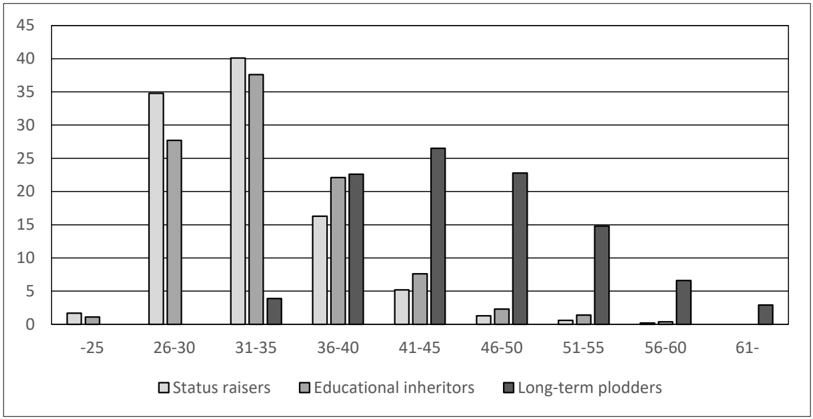
Aim/Purpose: The aim of this study is to provide a comprehensive picture of doctoral students’ dissertation journeys using Finland as a case country. More specifically, the article examines (1) the students’ backgrounds, (2) their study motives and experiences, and (3) whether or not these elements are related. Background: Despite the massification of higher education (HE), there is a shortage of detailed mixed-methods studies about PhD students’ backgrounds and their experiences of doctoral study. Existing research does not give a clear indication of the extent to which home background is reflected in PhD applications and whether or not that background is related to the subsequent experience of doctoral students. Methodology: This paper is based on both quantitative and qualitative data. We utilize a person-based register (N = 18,585) and a survey (n = 1,651). Our main methods are k-means cluster analysis, t-test, and directed content analysis. Our theoretical approach is Bourdieuian. We use the concept of doctoral capital when evaluating the backgrounds, resources, and success of PhD students through the dissertation process. Contribution: This study uses a mixed-methods approach and is the first to incorporate quantitative data about the entire doctoral student population in Finland. In addition, open-ended responses in the survey make the PhD students’ own experiences visible. By approaching our research subject through a mixed methods lens, we aim to create a comprehensive understanding about their dissertation journeys. With this study, we also contribute to the debate initiated by Falconer and Djokic (2019). They found that age, race, and socioeconomic status (SES) do not influence academic self-efficacy and academic self-handicapping behaviors in doctoral students. However, in this study, a link was found between the PhD students’ backgrounds (age and parents’ SES), and their study aims and experiences. Findings: Cluster analysis revealed three different groups of PhD students: Status Raisers, Educational Inheritors, and Long-term Plodders. PhD students in these groups have different resources, experiences, and chances to survive in the academic community. There are two main findings. First, the influence of the childhood family extends all the way to doctoral education, even in Finland, which is considered to have one of the most equal HE systems in the world. Some PhD students from low-educated families even experienced so-called imposter syndrome. They described experiences of inadequacy, incompetence, and inferiority in relation to doctoral studies and fellow students. Second, the influence of family background may diminish with age and life experiences. In our study, many mature doctoral students had become empowered and emancipated to such an extent that they relied more on their own abilities and skills than on their family backgrounds. Many felt that their own persistence and resilience have played an important role in their doctoral studies. There were also a few ‘heroic tales’ about hard work and survival in spite of all the hurdles and distresses. Recommendations for Practitioners: PhD students are a very heterogeneous group. Their motives and goals for applying for doctoral studies vary, and their backgrounds and life situations affect their studies. There are three critical points educational practitioners should pay special attention to (1) supervision and support (mentoring), (2) length of funding, and (3) granted research periods. Recommendation for Researchers: Because Finland and the other Nordic countries have a long tradition of equal educational opportunities, we need comparative studies on the same topic from countries with higher educational disparities. Impact on Society: Inequalities in educational opportunities and experiences originate at the very beginning of the educational path, and they usually cumulate over the years. For this reason, the achievement of educational equality should be promoted not only through education policy but also through family, regional, and social policy decisions. Future Research: The Bourdieuian concepts of cultural, social, and economic capitals are also relevant in doctoral education. PhD students’ family backgrounds are reflected in their motives, experiences, and interpretations in the academic community. Future research should explore how to best support and reinforce the self-confidence of doctoral students from lower SES backgrounds.
Overview
The claims and statistics of this paper haven’t been checked yet.
Run the check — free, no account needed. It reads the open-access text and checks the sources it cites.
Integrity signals
Registry
Cites
Statistics
Figures


Verification
Claims the paper makes
The claims and statistics of this paper haven’t been checked yet.
Run the check — free, no account needed. It reads the open-access text and checks the sources it cites.
Claims other papers make about this one
Each is checked against this paper’s own text: does it say what the citing paper says it does?
In the citing paper
“The support and encouragement of supervisors and mentors is also crucial (Craddock et al., 2011;Nori et al., 2020).”
From Too stupid for PhD? Doctoral impostor syndrome among Finnish PhD students (2023) · cites this paper as Nori et al., 2020
Self-check
Percentages, sums and reported differences re-computed from the paper’s own numbers.
The self-check needs the paper’s full text.
Citations
Cites
Whose culture has capital? A critical race theory discussion of community cultural wealth
Yosso *, T. J. (2005) · Race Ethnicity and Education · doi:10.1080/1361332052000341006 · Cited by 8,663 · cited 1×
“This kind of attitude resembles the aspirational capital described by Yosso (2005), which is the ability to maintain one’s hopes and dreams for the future even in the face of real and perceived barriers.”
BackgroundThe imposter phenomenon in high achieving women: Dynamics and therapeutic intervention.
Clance, P. R., & Imes, S. A. (1978) · Psychotherapy: Theory, Research & Practice · doi:10.1037/h0086006 · Cited by 2,212
Sverdlik, A., C. Hall, N., McAlpine, L., & Hubbard, K. (2018) · International Journal of Doctoral Studies · doi:10.28945/4113 · Cited by 616
Research works printed but not linked: 66
- Archer, L. (2008). The new neoliberal subjects? Younger academics' construction of professional identity. Jour- nal of Education Policy, 23(3), 265-285. https://doi.org/10.1080/02680930701754047 · DOI
- Bachsleitner, A., Becker, M., Neumann, M., & Maaz, K. (2018). Social background effects in the transition to a doctoral degree -Empirical evidence from a German prospective study. Research in Social Stratification and Mobility, 57, 24-34. https://doi.org/10.1016/j.rssm.2018.07.004 · DOI
- Bahr, P. R., Bielby, R., & House, E. (2011). The use of cluster analysis in typological research on community college students. New Directions for Institutional Research. Special Issue: Using Typological Approaches to Understand College Student Experiences and Outcomes, 2011(S1), 67-81. https://doi.org/10.1002/ir.417 · DOI
- Becker, R., & Hecken, A. E. (2009). Why are working-class children diverted from universities? An empirical assessment of the diversion thesis. European Sociological Review, 25(2), 233-250. https://doi.org/10.1093/esr/jcn039 · DOI
- Bourdieu, P. (1986). The forms of capital. In J. G. Richardson (Ed.), Handbook of theory and research for the sociology of education (pp. 241-258).
- Bourdieu, P. (1988). Homo academicus. (P. Collier, Trans.). Polity Press. (Original work published in 1984.)
- Bourdieu, P. (1996). The state nobility. Stanford University Press.
- Breen, R., & Johnson, J. O. (2005). Inequality of opportunity in comparative perspective: Recent research on educational attainment and social mobility. Annual Review of Sociology, 31(1), 223-243. https://doi.org/10.1146/annurev.soc.31.041304.122232 · DOI
- Carruthers Thomas, K. (2019). Rethinking student belonging in higher education. From Bourdieu to borderlands. Routledge. https://doi.org/10.4324/9780429458903 · DOI
- Chakraverty, D. (2020). PhD student experiences with the imposter phenomenon in STEM. International Journal of Doctoral Studies, 15, 159-179. https://doi.org/10.28945/4513 · DOI · Paper page
- Cisco, J. (2020). Exploring the connection between imposter phenomenon and postgraduate students feeling academically-unprepared. Higher Education Research & Development, 39(2), 200-214. https://doi.org/10.1080/07294360.2019.1676198 · DOI · Paper page
- Clegg, S. (2012). Conceptualising higher education research and/or academic development as 'fields': A critical analysis. Higher Education Research & Development, 31(5), 667-678. https://doi.org/10.1080/07294360.2012.690369 · DOI
- Corcelles, M., Cano, M., Liesa, E., Gonzáles-Ocampo, G., & Castelló, M. (2019). Positive and negative experi- ences related to doctoral study conditions. Higher Education Research and Development, 38(5), 922-939. https://doi.org/10.1080/07294360.2019.1602596 · DOI · Paper page
- Cotterall, S. (2015). The rich get richer: international doctoral candidates and scholarly identity. Innovations in Education and Teaching International, 52(4), 360-370. https://doi.org/10.1080/14703297.2013.839124 · DOI
- Deem, R., & Brehony, K. (2000). Doctoral students' access to research cultures -Are some more unequal than others? Studies in Higher Education, 25(2), 149-165. https://doi.org/10.1080/713696138 · DOI
- Djajadikerta, H. G., & Trireksani, T. (2010). Factors influencing academic capital of women academics. Interna- tional Journal of Knowledge, Culture and Change Management, 9(12), 1-15. https://doi.org/10.18848/1447- 9524/CGP/v09i12/49859 · DOI
- Emmioğlu, E., McAlpine, L., & Amundsen, C. (2017). Doctoral students' experiences of feeling (or not) like an academic. International Journal of Doctoral Studies, 12, 73-90. https://doi.org/10.28945/3727 · DOI
- Falconer, A., & Djokic, B. (2019). Factors affecting academic self-efficacy and academic self-handicapping be- haviors in doctoral students. International Journal of Doctoral Studies, 14, 637-649. https://doi.org/10.28945/4414 · DOI
- Fung, A. S. K., Southcott, J., & Siu, F. (2017). Exploring mature-aged students' motives for doctoral study and their challenges: A cross border research collaboration. International Journal of Doctoral Studies, 12, 175-195. https://doi.org/10.28945/3790 · DOI
- Gardner, S. K. (2010). Contrasting the socialization experiences of doctoral students in high-and low-complet- ing departments: A qualitative analysis of disciplinary contexts at one institution. The Journal of Higher Edu- cation, 81(1), 61-81. https://doi.org/10.1080/00221546.2010.11778970 · DOI
- Gardner, S. K., & Holley, K. A. (2011). "Those invisible barriers are real": The progression of first-generation students through doctoral education. Equity & Excellence in Education, 44(1), 77-92. https://doi.org/10.1080/10665684.2011.529791 · DOI · Paper page
- Gopaul, B. (2011). Distinction in doctoral education: Using Bourdieu's tools to assess the socialization of doc- toral students. Equity & Excellence in Education, 44(1), 10-21. https://doi.org/10.1080/10665684.2011.539468 · DOI
- Gopaul, B. (2015). Inequality and doctoral education: Exploring the "rules" of doctoral study through Bour- dieu's notion of field. Higher Education, 70(1), 73-88. https://doi.org/10.1007/s10734-014-9824-z · DOI
- Gopaul, B. (2016). Applying cultural capital and field to doctoral student socialization. International Journal for Researcher Development, 7(1), 46-62. https://doi.org/10.1108/IJRD-03-2015-0009 · DOI
- Hakala, J. (2009). The future of the academic calling? Junior researchers in the entrepreneurial university. Higher Education, 57(2), 173-190. https://doi.org/10.1007/s10734-008-9140-6 · DOI
- Harvey, A., Burnheim, C., & Brett, M. (2016). Towards a fairer chance for all: Revising the Australian student equity framework. In A. Harvey, C. Burnheim, & M. Brett (Eds.), Student equity in Australian higher education: Twenty-five years of a fair chance for all (pp. 3-20). Springer Singapore. https://doi.org/10.1007/978-981-10- 0315-8_1 · DOI
- Holley, K. A., & Caldwell, M. L. (2012). The challenges of designing and implementing a doctoral student men- toring program. Innovative Higher Education 37, 243-253. https://doi.org/10.1007/s10755-011-9203-y · DOI · Paper page
- Holley, K. A., & Gardner, S. K. (2012). Navigating the pipeline: How socio-cultural influences impact first-gen- eration doctoral students. Journal of Diversity in Higher Education, 5(2), 112-121. https://doi.org/10.1037/a0026840 · DOI
- Hsieh, H.-F., & Shannon, S. E. (2005). Three approaches to qualitative content analysis. Qualitative Health Re- search, 15(9), 1277-1288. https://doi.org/10.1177/1049732305276687 · DOI · Paper page
- Isopahkala-Bouret, U., Börjesson, M., Beach, D., Haltia, N., Jóhansson, J. T., Jauhiainen, A., Jauhiainen, A., Kosunen, S., Nori, H., & Vabø, A. (2018). Access and stratification in Nordic higher. A review of cross- cutting research themes and issues. Education Inquiry, 9(1), 142-154. https://doi.org/10.1080/20004508.2018.1429769 · DOI
- Kehm, B. M. (2007). Quo vadis doctoral education? New European approaches in the context of global changes. European Journal of Education, 42(3), 307-319. https://doi.org/10.1111/j.1465-3435.2007.00308.x · DOI
- Lahenius, K., & Martinsuo, M. (2011). Different types of doctoral study processes. Scandinavian Journal of Educa- tional Research, 55(6), 609-623. https://doi.org/10.1080/00313831.2011.555924 · DOI
- Mantai, L. (2017). Feeling like a researcher: Experiences of early doctoral students in Australia. Studies in Higher Education, 42(4), 636-650. https://doi.org/10.1080/03075079.2015.1067603 · DOI
- Mare, R. D. (1980). Social background and school continuation decisions. Journal of the American Statistical Associ- ation, 75, 295-305. https://doi.org/10.1080/01621459.1980.10477466 · DOI
- Marizt, J., & Prinsloo, P. (2015). A Bourdieusian perspective on becoming and being a postgraduate supervisor: The role of capital. Higher Education Research & Development, 34(5), 972-985. https://doi.org/10.1080/07294360.2015.1011085 · DOI
- Mastekaasa, A. (2006). Educational transitions at graduate level. Social origins and enrollment in PhD programs in Norway. Acta Sociologica, 49(3), 437-453. https://doi.org/10.1177/0001699306071683 · DOI
- Matheka, H. M., Jansen, E. P. W. A., & Hofman, W. A. (2020). PhD students' background and program char- acteristics as related to success in Kenyan universities. International Journal of Doctoral Studies, 15, 57-71. https://doi.org/10.28945/4467 · DOI
- McAlpine, L., Amundsen, C., & Turner, G. (2014). Identity-trajectory: Reframing early career academic experi- ence. British Educational Research Journal, 40(6), 952-969. https://doi.org/10.1002/berj.3123 · DOI
- McAlpine, L., & Norton, J. (2006). Reframing our approach to doctoral programs: An integrative framework for action and research. Higher Education Research & Development, 25(1), 3-17. https://doi.org/10.1080/07294360500453012 · DOI
- McAlpine, L., & Turner, G. (2012). Imagined and emerging career patterns: Perceptions of doctoral students and research staff. Journal of Further and Higher Education, 36(4), 535-548. https://doi.org/10.1080/0309877X.2011.643777 · DOI
- Mullen, A. L., Goyette, K. A., & Soares, J. A. (2003). Who goes to graduate school? Social and academic corre- lates of educational continuation after college. Sociology of Education, 76(2), 143-169. https://doi.org/10.2307/3090274 · DOI
- Neumann, R. (2005). Doctoral differences: Professional doctorates and PhDs compared. Journal of Higher Educa- tion Policy and Management 27(2), 173-188. https://doi.org/10.1080/13600800500120027 · DOI
- Peixoto, A. (2014). De mest lämpade -En studie av doktoranders habituering på det vetenskapliga fältet [Survival of the fittest -A study of doctoral students' habituation on the scientific field]. Gothenburg Studies in Work Sci- ence Nr. 14. Peura, M., & Jauhiainen, A. (2018). Tohtoriopintojen monet merkitykset suomalaisille ja ulkomaalaisille jatko- opiskelijoille [Many meanings of doctoral studies for Finnish and foreign doctoral students]. Aikuiskasvatus, 3(38), 223-236. https://doi.org/10.33336/aik.88351 · DOI
- Pfeffer, F. (2008). Persistent inequality in educational attainment and its institutional context. European Sociologi- cal Review, 24(5), 543-565. https://doi.org/10.1093/esr/jcn026 · DOI · Paper page
- Pifer, M. J., & Baker, V. L. (2014). "It could be just because I'm different": Otherness and its outcomes in doc- toral education. Journal of Diversity in Higher Education, 7(1), 14-30. https://doi.org/10.1037/a0035858 · DOI
- Posselt, J. (2018). Normalizing struggle: Dimensions of faculty support for doctoral students and implications for persistence and well-being. The Journal of Higher Education, 89(6), 988-1013. https://doi.org/10.1080/00221546.2018.1449080 · DOI · Paper page
- Pritchard, R. (2004). Humboldtian values in a changing world: Staff and students in German universities. Ox- ford Review of Education, 30(4), 509-528. https://doi.org/10.1080/0305498042000303982 · DOI
- Reay, D., Crozier, G., & Clayton, J. (2009). 'Strangers in Paradise'? Working-class students in elite universities. Sociology, 43(6), 1103-1121. https://doi.org/10.1177/0038038509345700 · DOI · Paper page
- Robertson, M. J. (2017). Team modes and power: Supervision of doctoral students. Higher Education Research & Development, 36(2), 358-371. https://doi.org/10.1080/07294360.2016.1208157 · DOI
- Roksa, J., Feldon, D. F., & Maher, M. (2018). First-generation students in pursuit of the PhD: Comparing so- cialization experiences and outcomes to continuing-generation peers. The Journal of Higher Education, 89(5), 728-752. https://doi.org/10.1080/00221546.2018.1435134 · DOI
- Rowlands, J. (2018). Deepening understandings of Bourdieu's academic and intellectual capital through a study of academic voice within academic governance. Studies in Higher Education, 43(11), 1823-1836. https://doi.org/10.1080/03075079.2017.1284192 · DOI
- Sakulku, J., & Alexander, J. (2011). The impostor phenomenon. International Journal of Behavioral Science, 6(1), 75- 97. https://doi.org/10.14456/ijbs.2011. · DOI · Paper page
- Sauermann, H., & Roach, M. (2012). Science PhD career preferences: Levels, changes and advisor encourage- ment. Plos ONE, 7(5), e36307. https://doi.org/10.1371/journal.pone.0036307 · DOI
- Shavit, Y., & Blossfeld, H-P. (1993). Persistent inequality: Changing educational attainment in thirteen countries. Westview Press.
- Silvennoinen, H., & Laiho, I. (1994). The hierarchy of academic education, gender and social background. Scan- dinavian Journal of Educational Research, 38(1), 15-32. https://doi.org/10.1080/0031383940380102 · DOI
- John, E. P., Hu, S., & Fisher, A. S. (2011). Breaking through the access barrier: How academic capital formation can improve policy in higher education. Routledge. https://doi.org/10.4324/9780203849019 · DOI
- Teeuwsen, P., Ratković, S., & Tilley, S. A. (2014). Becoming academics: Experiencing legitimate peripheral par- ticipation in part-time doctoral studies. Studies in Higher Education, 39(4), 680-694. https://doi.org/10.1080/03075079.2012.729030 · DOI
- Triventi, M. (2013). Stratification in higher education and its relationship with social inequality: A comparative study of 11 European countries. European Sociological Review, 29(3), 489-502. https://doi.org/10.1093/esr/jcr092 · DOI
- Turner, R. H. (1960). Sponsored and contest mobility and the school system. American Sociological Review, 25(6), 855-867. https://doi.org/10.2307/2089982 · DOI
- Vuolanto, P., Pasanen, H-M., & Aittola, H. (2006). Employment of PhDs in Finland. Prospects and expecta- tions of doctoral students. VEST: Journal of Science and Technology Studies, 19(1-2), 31-56.
- Wagstaff, K., Cardie, C., Rogers, S., & Schroedl, S. (2001). Constrained K-means clustering with background knowledge. Proceedings of the Eighteenth International Conference on Machine Learning, San Francisco, 577-584.
- Wakeling, P. (2005). La noblesse d'état anglaise? Social class and progression to postgraduate study. British Jour- nal of Sociology of Education, 26(4), 505-522. https://doi.org/10.1080/01425690500200020 · DOI
- Wakeling, P., & Laurison, D. (2017). Are postgraduate qualifications the "new frontier of social mobility"? The British Journal of Sociology, 68(3), 533-555. https://doi.org/10.1111/1468-4446.12277 · DOI
- Walker, J., & Yoon, E. S. (2017). Becoming an academic: The role of doctoral capital in the field of education. Higher Education Research & Development, 36(2), 401-415. https://doi.org/10.1080/07294360.2016.1207616 · DOI
- Winkle-Wagner, R., & McCoy, D. L. (2016). Entering the (postgraduate) field: Underrepresented students' ac- quisition of cultural and social capital in graduate school preparation programs. Journal of Higher Education, 87(2), 178-205. https://doi.org/10.1080/00221546.2016.11777399 · DOI
- Winkler, C., & Sriram, R. (2015). Development of a scale to measure academic capital in high-risk college stu- dents. Review of Higher Education, 38(4), 565-587. https://doi.org/10.1353/rhe.2015.0032 · DOI
Cited by
Sorted by citations
Too stupid for PhD? Doctoral impostor syndrome among Finnish PhD students
Nori, H., & Vanttaja, M. (2023) · Higher Education · doi:10.1007/s10734-022-00921-w · Cited by 73
Self-citation
Metadata
- Authors
- Nori, H., H Peura, M., & Jauhiainen, A.
- Affiliations
- University of Turku
- Venue
- International Journal of Doctoral Studies
- Publisher
- Informing Science Institute
- Published
- 2020
- Volume
- 15
- Pages
- 517-539
- ISSN
- 1556-8881
- 1556-8873
- Cited by
- 21
- References
- 3
- Language
- en
About these checks
Registry, retraction, Cites and statistics results are computed, not judged, with one exception: a printed reference that no index lists is read once by a model before it counts as a citation error. Claims are extracted by a model and kept only when their quote appears verbatim in the text; each cited source is then checked, with a model’s help, for whether it says what the claim relies on. Those verdicts can be wrong — read the claim’s quote and the cited source before relying on one.
Statistics and arithmetic are recomputed, not judged.
Confidence bands are shown only for fields calibrated on our annotated test set. None is calibrated yet, so no band is shown.
What counts as a claim ›How we measure confidence ›How we check this ›
Are you an author, or do you see a problem with this page? Request a review
