

Application of Tuned Mass Dampers for Structural Vibration Control: A State-of-the-art Review
Open accessThe DOI matches its Crossref record; 164 of the 165 references it cites were found in a registry or an index; 6 of the 146 sources its claims cite were checked for support.
Abstract
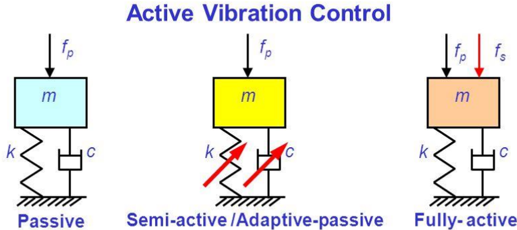
This paper presents a critical review of active, passive, semi-active and hybrid control systems of TMD used for preserving structures against forces induced by earthquake or wind.
Overview
CoChat Summary
## TL;DR
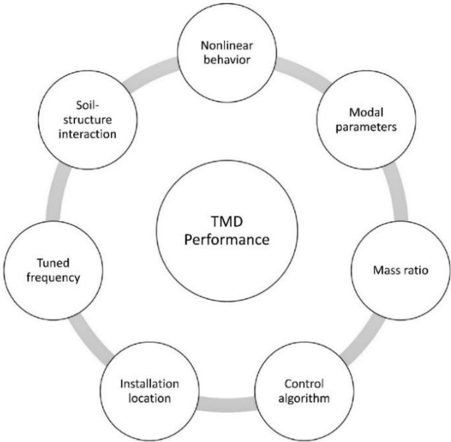
This paper is a state-of-the-art review of tuned mass dampers (TMDs) and related passive, semi-active, active, and hybrid vibration control systems for structural vibration mitigation under wind and earthquake loading. It argues that active TMDs generally outperform passive TMDs in reducing structural response, while also identifying key research gaps such as uncertainty in tuning, nonlinear behavior, and soil-structure interaction.
## Key findings
- The review states that active TMDs have significantly better performance than passive TMDs, especially in reducing storey displacement; they also perform well when the excitation frequency is close to the structure’s fundamental frequency.
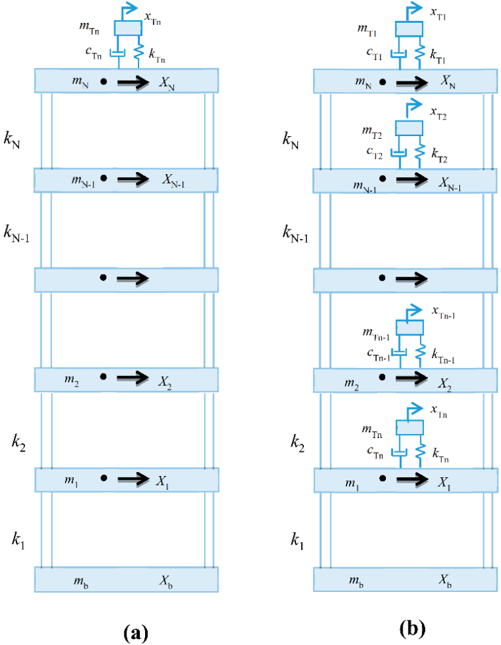
- The paper reports that single TMDs are the most commonly used and are often placed at the top floor; they work well for wind excitation in flexible structures but are less effective for earthquakes because they are tuned mainly to the dominant mode.
- It says multiple TMDs (MTMDs) can be more effective than a single TMD with equal mass and damping ratio and are less sensitive to parameter uncertainty; one cited study reports MTMD systems give an average 10% improvement in acceleration reduction over a single-TMD system, with similar displacement reduction.
- In bridge applications, the review notes that TMDs and MTMDs reduce responses such as buffeting and vibration; one cited study reports TMD use in a 101-storey building was materially effective in reducing wind-induced vibrations but not as effective for remote seismic vibrations.
## Methods
- This is a state-of-the-art literature review rather than an original experimental or numerical study.
- The paper synthesizes prior work on passive, semi-active, active, and hybrid TMD systems, including analytical formulations, numerical studies, experimental methods, optimization approaches, soil-structure interaction, and bridge applications.
- The analysis is a comparative narrative review of published studies, with some tabulated comparisons of system features and reported performance.
## Limitations
- The paper explicitly notes that previous review studies focused only on either passive or active TMDs, which this review seeks to address.
- The paper states that current practices in determining the principal natural frequency of TMDs need improvement and that more complex methods considering nonlinear behavior are needed to better predict structural response and optimize TMDs.
- Evident from the text: the review is qualitative and literature-based, so its conclusions depend on the scope and quality of the cited studies rather than on a new unified dataset or meta-analysis.
Model-written summary. Check it against the paper before relying on it.
Integrity signals
Registry
Cites
Statistics
Figures

Verification
Claims the paper makes
5 Valid · 6 Not valid · 132 Not checked · 59 Own results and interpretations
The cited sources that could be checked couldn’t confirm or dispute this claim.
In the paper
“Pinelli and Gutierrez [58] showed that MTMDs effectively control the structural response during earthquakes of various periods and energy contents.”
§ Application of Tuned Mass Dampers for Structural Vibration Control: A State-of-the-art Review > 3.1.2. Multi TMD
What the sources say
- Could not verifycites Pinelli and Gutierrez [58] 58. Pinelli, J.-P. and H. Gutierrez. Experimental Study of Tuned Mass Dampers. In Proceedings of the US National Conference on Earthquake Engineering. 2002. Earthquake Engineering Research Institute. doi:10.1088/1742-6596/744/1/012045. sourceExperimental — accuracy not yet measured
Our copy of Wu, Qiong, Zhao & Xilu (2016) is an experimental study of a SINGLE passive tuned-mass damper on a 1:200 four-column jack-up offshore platform, tested under exactly two records (El-Centro NS 1940, M6.9; Taft EW 1952, M7.7) — see Abstract and Section 4 'Prototype Experiment'. No passage in the paper discusses multiple tuned-mass dampers (MTMD) or control 'during earthquakes of various periods and energy contents'; searches for 'MTMD / multiple tuned mass damper', 'Pinelli', 'Gutierrez' and 'energy content' returned nothing (the introduction mentions only double TMDs of Li et al. [11] in passing). On the contrary, Section 5.2 states 'a single damper, tuned to the fundamental mode, is adequate for reducing the structural vibration under earthquake excitations', and the paper does not cite Pinelli and Gutierrez at all, so the attributed finding cannot be checked here. (LLM, conf=0.72)
plainstates a cause- Asserted: passes — The authors put it forward as true.
- Checkable: passes — It can be checked against evidence.
- Load-bearing: passes — The paper’s conclusions depend on it.
- Based: passes — The paper gives a reason why it holds.
- Could not verify
Every source the paper cites for this claim was checked and supports it.
In the paper
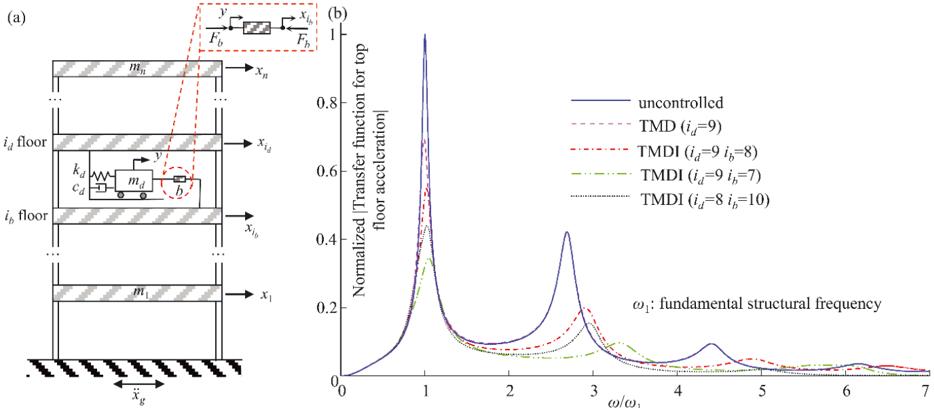
“Analytically shown that optimally designed TMDI outperforms the classical TMD in minimizing the displacement variance of un-damped singledegree-of-freedom (SDOF) white-noise excited primary structures.”
§ Application of Tuned Mass Dampers for Structural Vibration Control: A State-of-the-art Review > 3-TMD parameters reduce the displacement and acceleration responses significantly (50 percent).
What the sources say
- Supportedcites [77] 77. Marian, L. and A. Giaralis, Optimal Design of a Novel Tuned Mass-Damper-Inerter (Tmdi) Passive Vibration Control Configuration for Stochastically Support-Excited Structural Systems. Probabilistic Engineering Mechanics, 2014. 38: p. 156- 164. doi:10.1016/j.probengmech.2014.03.007. source
The Abstract (p. 3) states the claim directly. The concluding discussion (p. 29) also says that, for a fixed TMD mass, an optimally designed TMDI is more effective than a classical TMD at suppressing displacement variance in undamped SDOF structures under white-noise excitation. (LLM, conf=0.95)
plainstates a cause- Asserted: passes — The authors put it forward as true.
- Checkable: passes — It can be checked against evidence.
- Load-bearing: passes — The paper’s conclusions depend on it.
- Based: passes — The paper gives a reason why it holds.
- Supported
Every source the paper cites for this claim was checked and supports it.
In the paper
“[156] experimentally demonstrated that performance of the TMD is optimum when the natural frequency of the TMD is tuned to the predominant modal frequency of the soil-structure system.”
§ Application of Tuned Mass Dampers for Structural Vibration Control: A State-of-the-art Review > 8. Soil-structure Interaction and TMD Performance
What the sources say
- Supportedcites [156] 156. Jabary, R.N. and G.S. Madabhushi, Tuned Mass Damper Positioning Effects on the Seismic Response of a Soil-Mdof- Structure System. Journal of Earthquake Engineering, 2018. 22(2): p. 281-302. doi:10.1016/j.soildyn.2015.06.013. source
The Conclusions report that centrifuge tests found tuning the TMD to the soil-structure system’s fundamental frequency more beneficial than tuning it to the fixed-base frequency. The Introduction also states the claimed optimum-tuning relationship, citing earlier shaking-table tests; this paper’s own tests support the same point. (LLM, conf=0.92)
boostedstates a cause- Asserted: passes — The authors put it forward as true.
- Checkable: passes — It can be checked against evidence.
- Load-bearing: passes — The paper’s conclusions depend on it.
- Based: passes — The paper gives a reason why it holds.
- Supported
In the paper
“Hybrid control systems are effective to protect structures subjected to different types of excitation with dissimilar intensity and frequency range [13].”
§ Application of Tuned Mass Dampers for Structural Vibration Control: A State-of-the-art Review > 2.4. Hybrid Control Systems
What the sources say
- Not checked — no full text of the sourcecites [13] 13. Wu, S.-T., Y.-R. Chen, and S.-S. Wang, Two-Degree-of-Freedom Rotational-Pendulum Vibration Absorbers. Journal of Sound and Vibration, 2011. 330(6): p. 1052-1064. doi:10.1016/j.jsv.2010.09.028. source
plainstates a cause- Asserted: passes — The authors put it forward as true.
- Checkable: passes — It can be checked against evidence.
- Load-bearing: unclear — It is unclear whether the paper’s conclusions depend on it.
- Based: passes — The paper gives a reason why it holds.
In the paper
“Active control systems have been developed to enhance the capabilities of passive and semi-active systems in seismic structural response control [9].”
§ Application of Tuned Mass Dampers for Structural Vibration Control: A State-of-the-art Review > 2.3. Active Control Systems
What the sources say
- Not checked — no full text of the sourcecites [9] 9. Symans, M.D. and M.C. Constantinou, Semi-Active Control Systems for Seismic Protection of Structures: A State-of-the-Art Review. Engineering structures, 1999. 21(6): p. 469-487. doi:10.1016/S0141-0296(97)00225-3. source
plainstates a cause- Asserted: passes — The authors put it forward as true.
- Checkable: passes — It can be checked against evidence.
- Load-bearing: unclear — It is unclear whether the paper’s conclusions depend on it.
- Based: passes — The paper gives a reason why it holds.
94 more claims
Create a free account to see all 202 claims and to verify the 16 references still open.
- It may state two separate claims as one. 57
- Probably not a substantial claim. 66
- The quote only partly states this claim. 1
Citations
Cites
Chapter 12: What does the Anthropocene hold for citizenship?
(2019) · edoc (University of Basel) · doi:10.1007/978-3 · Cited by 11,533
Mechanical Vibrations: Applications to Equipment
Mori, Y. (2017) · Wiley eBooks · doi:10.1002/9781119384502 · Cited by 882
Marian, L., & Giaralis, A. (2014) · Probabilistic Engineering Mechanics · doi:10.1016/j.probengmech.2014.03.007 · Cited by 828 · cited 4×
“[32] Giaralis, A. and A. Taflanidis, Optimal Tuned Mass‐Damper‐Inerter (TMDI) Design for Seismically Excited Mdof Structures with Model Uncertainties Based on Reliability Criteria.”
BackgroundInfluentialSemi-active control systems for seismic protection of structures: a state-of-the-art review
Symans, M. D., & Constantinou, M. C. (1999) · Engineering Structures · doi:10.1016/s0141-0296(97)00225-3 · Cited by 706
Parametric study and simplified design of tuned mass dampers
Rana, R., & Soong, T. T. (1998) · Engineering Structures · doi:10.1016/s0141-0296(97)00078-3 · Cited by 651 · cited 3×
“Rana and Soong [64] Parametric study and simplified design of TMD 1- When damping and mass ratio is increasing, the effect of detuning in TMDs parameters becomes less detrimental 2- During time-history analysis, when damping is getting large, TMD performance is reducing.”
BackgroundInfluentialJournal of Wind Engineering and Industrial Aerodynamics
Solari, G. (1998) · CINECA IRIS Institutial Research Information System (University of Genoa) · Cited by 636
Research developments in vibration control of structures using passive tuned mass dampers
Elias, S., & Matsagar, V. (2017) · Annual Reviews in Control · doi:10.1016/j.arcontrol.2017.09.015 · Cited by 556
Soil-structure-interaction analysis in time domain
Wolf, J. P. (1989) · Nuclear Engineering and Design · doi:10.1016/0029-5493(89)90249-5 · Cited by 537 · cited 1×
“It is well known that the structural response is affected by soil flexibility owing to the effects of SSI [138].”
BackgroundArchives of Computational Methods in Engineering
(2013) · Archives of Computational Methods in Engineering · doi:10.1007/11831.1886-1784 · Cited by 529
Optimal tuned mass damper for seismic applications and practical design formulas
Hoang, N., Fujino, Y., & Warnitchai, P. (2008) · Engineering Structures · doi:10.1016/j.engstruct.2007.05.007 · Cited by 382
Research works printed but not linked: 9
- [57]57. Kamrani-Moghaddam, B., M. Rahimian, and A.K. Ghorbani-Tanha, Performance of Tuned Mass Dampers for Response Reduction of Structures under near-Field and Far-Field Seismic Excitations, in 4th International Conference on Earthquake Engineering. 2006: Taipei, Taiwan.
- [59]59. Lee, J., The Role of the Aerodynamic Modifications of the Shapes of Tall Buildings, 2011.Master's Thesis, Civil and Environmental Engineering, Massachusetts Institute of Technology, Massachusetts Available online: http://hdl.handle.net/1721.1/66869 (Accessed on: 9 Apr 2020).
- [131]131. Desu, N.B., S. Deb, and A. Dutta, Coupled Tuned Mass Dampers for Control of Coupled Vibrations in Asymmetric Buildings. Structural Control and Health Monitoring: The Official Journal of the International Association for Structural Control and Monitoring and of the European Association for the Control of Structures, 2006. 13(5): p. 897-916.
- [133]133. Islam, B. and R. Ahsan. Optimization of Tuned Mass Damper Parameters Using Evolutionary Operation Algorithm. in 15th World Conference in Earthquake Engineering (WCEE). 2012. Lisbon, Portugal.
- [134]134. Brock, J.E., A Note on the Damped Vibration Absorber. Trans. ASME, Journal of Applied Mechanics, A, 1946. 284.
- [139]139. Samali, B., K. Kwok, G. Young, and Y. Xu. Effectiveness of Optimised Tuned Liquid Column Dampers in Controlling Vibration of Tall Buildings Subject to Strong Ground Motions. In Proc. 2nd International Conf. on Highrise Buildings. 1992.
- [141]141. Chouw, N. Behaviour of Soil-Structure System with Tuned-Mass Dampers During near-Source Earthquakes. in 13th World Conference on Earthquake Engineering, Vancouver, BC, Canada. 2004.
- [146]146. Gao, H., B. Samali, and K. Kwok. Structural Vibration Control by Passive Dampers Considering Soil-Structure Interaction. in Proc. 2nd Int. Workshop on Structural Control, HJUST, Hong Kong. 1996.
- [155]155. Zoka, H. and S. Soheili, Tmd Effects on Drift for Earthquake Oscillations of Tall Building Including Soil Effects, in 2nd National Conference on New Material and Structures. 2018: Isfahan, Iran.
Cited by
Optimum Parameters of Tuned Inerter Damper for Damped Structures
Islam, N. U., & Jangid, R. S. (2022) · Journal of Sound and Vibration · doi:10.1016/j.jsv.2022.117218 · Cited by 82
Tuned mass damper inerter for seismic control of multi-story buildings: Ten years since inception
Konar, T., & Ghosh, A. (. (2024) · Structures · doi:10.1016/j.istruc.2024.106459 · Cited by 69
Train-induced vibration mitigation based on foundation improvement
Li, X., Chen, Y., Zou, C., et al. (2023) · Journal of Building Engineering · doi:10.1016/j.jobe.2023.107106 · Cited by 39
Experimental study on seismic retrofit of a RC frame using viscoelastic dampers
Nasab, M. S. E., Javidan, M. M., Chun, S., et al. (2021) · Structures · doi:10.1016/j.istruc.2021.08.044 · Cited by 36
Xu, S., Fang, G., Zhang, M., Øiseth, O. A., Zhao, L., & Ge, Y. (2023) · Mechanical Systems and Signal Processing · doi:10.1016/j.ymssp.2023.110857 · Cited by 43
Tiwary, A. K. (2022) · Innovative Infrastructure Solutions · doi:10.1007/s41062-022-00946-1 · Cited by 34
“The analytical study of the most effective conventional outrigger and virtual outrigger system to resist lateral load was conducted in the previous study [27, 28].”
MethodKäfer, M., Dohnal, F., Goettgens, V. S., Stajkovic, J., Brunner, M., & Leichtfried, G. J. (2023) · Mechanical Systems and Signal Processing · doi:10.1016/j.ymssp.2023.111065 · Cited by 34
Structural Vibration Comfort: A Review of Recent Developments
Xie, W., & Hua, Y. L. (2024) · Buildings · doi:10.3390/buildings14061592 · Cited by 33
“TMDs currently serve as a primary technology for mitigating wind-induced vibrations in super tall buildings, human-induced vibrations in large-span floors and pedestrian bridges [238,239], and occasionally, vibrations caused by machinery within structures [240].”
Zhang, Y., Schauer, T., & Bleicher, A. (2022) · Journal of Building Engineering · doi:10.1016/j.jobe.2022.104416 · Cited by 40
Damping-enabling technologies for broadband control of piezo-stages: A survey
Chen, Z., Zhong, X., Shi, J., & Zhang, X. (2021) · Annual Reviews in Control · doi:10.1016/j.arcontrol.2021.10.007 · Cited by 30
Vibration control of a cantilever beam coupled with magnetic tri-stable nonlinear energy sink
Fu, J., Wan, S., Li, W., Shen, J., Venugopal, H., Loccufier, M., & Dekemele, K. (2024) · Nonlinear Dynamics · doi:10.1007/s11071-024-09849-5 · Cited by 32
“However, as the dynamic properties of the host structure change, the damping effectiveness of the TMD diminishes [3, 4].”
Fu, J., Wan, S., Zhou, P., Shen, J., Loccufier, M., & Dekemele, K. (2024) · Engineering Structures · doi:10.1016/j.engstruct.2024.117517 · Cited by 32
Liu, K., Liu, L., Zhu, Q., et al. (2021) · Structures · doi:10.1016/j.istruc.2021.08.079 · Cited by 23
Farsijani, D., Gholam, S., Karampour, H., & Talebian, N. (2024) · Structures · doi:10.1016/j.istruc.2024.105925 · Cited by 28
Lin, G., Lin, C., Chen, Y., & Hung, T. (2021) · Earthquake Engineering & Structural Dynamics · doi:10.1002/eqe.3519 · Cited by 21
State-of-the-Art Review of Structural Vibration Control: Overview and Research Gaps
Neethu, B., & AlHamaydeh, M. H. (2025) · Applied Sciences · doi:10.3390/app15147966 · Cited by 35
Lavassani, S. H. H., Ebadijalal, M., Shahrouzi, M., Gharehbaghi, V., Farsangi, E. N., & Yang, T. Y. (2022) · Engineering Structures · doi:10.1016/j.engstruct.2022.114286 · Cited by 20
Sabetahd, R., Ghasemi, S. A. M., Poursorkhabi, R. V., Mohammadzadeh, A., & Zandi, Y. (2022) · Computational Intelligence and Neuroscience · doi:10.1155/2022/5832043 · Cited by 21
Ao, W. K., Lu, Y., Wang, Y.-L., et al. (2025) · Journal of Building Engineering · doi:10.1016/j.jobe.2025.113168 · Cited by 17
Zheng, H., Qin, J., Zhang, M., et al. (2024) · Structures · doi:10.1016/j.istruc.2024.106522 · Cited by 17
Active Noise Control for PVC Duct Using Robust Feedback Neutralization F×LMS Approach
Turpati, S., & Venkatanarayana, M. (2021) · Journal of Control Automation and Electrical Systems · doi:10.1007/s40313-021-00753-6 · Cited by 17
“The ANC has been an emanate research topic with a wide range of applications in various fields for the last two decades (Nelson & Elliott, 1991; Kuo & Morgan, 1996, 1999; Burián & Fuchs, 2005; Ettefagh et al., 2019; Rahimi et al., 2020; Franken et al., 2020; Fawzy, 2019).”
BackgroundAl-Sadoon, Z. A., & Almohammad-albakkar, M. (2024) · Civil Engineering Journal · doi:10.28991/cej-2024-010-04-019 · Cited by 19
“Common passive control devices include tuned mass dampers [25].”
BackgroundJafarzadeh, O., Ghasemi, S. A. M., Zahrai, S. M., Mohammadzadeh, A., & Poursorkhabi, R. V. (2023) · International Journal of Intelligent Systems · doi:10.1155/2023/8460498 · Cited by 17
Impedance estimation for robot contact with uncalibrated environments
Wang, W., Li, Q., Lu, C., et al. (2021) · Mechanical Systems and Signal Processing · doi:10.1016/j.ymssp.2021.107819 · Cited by 16
Gheni, E. Z., Al-Khafaji, H. M. H., & Alwan, H. M. (2024) · Open Engineering · doi:10.1515/eng-2022-0496 · Cited by 15
Katsimpini, P. S., Papagiannopoulos, G. A., & Hatzigeorgiou, G. D. (2025) · Applied Sciences · doi:10.3390/app15031226 · Cited by 15
Yan, L., Li, Y., Chang, W., & Huang, H. (2023) · Structures · doi:10.1016/j.istruc.2023.105093 · Cited by 18
Hosseinkhani, A., Panahi, E., Khansanami, M. F., et al. (2023) · Archive of Applied Mechanics · doi:10.1007/s00419-023-02430-3 · Cited by 11
“Another example of passive control methods is using vibration-absorbing systems which only work on a certain narrow frequency and impose extra weight on the original system [4].”
BackgroundAl-Rawashdeh, M., Yousef, I., & Al-Nawaiseh, M. (2022) · Civil Engineering Journal · doi:10.28991/cej-2022-08-06-07 · Cited by 11
“A similar conclusion regarding this issue was observed by previous studies [42, 43].”
ResultSadeghian, M. A., Yang, J., Wang, F., & Wang, X.-E. (2022) · Applied Sciences · doi:10.3390/app12084028 · Cited by 12
Sabetahd, R., & Jafarzadeh, O. (2024) · Expert Systems with Applications · doi:10.1016/j.eswa.2024.126048 · Cited by 12
Ayyash, A.-J. N. A., & Hejazi, F. (2023) · Archives of Civil and Mechanical Engineering · doi:10.1007/s43452-023-00665-z · Cited by 10
“Therefore, to enhance the safety and functionality of structures, control of vibrations in structural systems has long been considered by structural designers, and serves as a major source of technological competitiveness [1].”
BackgroundZhang, Y., Wulff, W., Wernicke, L., Engelmann, M., Schauer, T., & Bleicher, A. (2022) · Journal of Building Engineering · doi:10.1016/j.jobe.2022.105712 · Cited by 11
Qian, F., & Liao, Y. (2026) · Engineering Structures · doi:10.1016/j.engstruct.2026.122188 · Cited by 12
Optimization of column-in-column system based on non-conventional TMD concept
Fang, X., Hao, H., Bi, K., Song, J. G., Cao, Y., & Chen, Z. (2024) · International Journal of Mechanical Sciences · doi:10.1016/j.ijmecsci.2024.109497 · Cited by 9
Antoniou, M., Alvertos, A., Sapountzakis, E. J., & Anastasopoulos, I. (2023) · Journal of Earthquake Engineering · doi:10.1080/13632469.2023.2250463 · Cited by 9
“It is considered one of the most reliable devices for reducing structural vibrations (Dai et al. 2019; Rahimi et al. 2020; St ǎ ncioiu and Ouyang 2012) and has been used to control the seismic response of a variety of bridges (Emami and Tayefeh Mohammad Ali 2022; Hoang et al., 2008; Matin et al.,…”
MethodParameter Optimization and Application for the Inerter-Based Tuned Type Dynamic Vibration Absorbers
Wu, X., Liu, X., Chen, J., Liu, K., & Pang, C. (2022) · Buildings · doi:10.3390/buildings12060703 · Cited by 11
BehkamRad, K., & Azizi, M. (2021) · Structures · doi:10.1016/j.istruc.2021.08.063 · Cited by 8
Saleem, O., Filograno, M. L., Alharbi, S. A., & Iqbal, J. (2025) · Mathematics · doi:10.3390/math13172816 · Cited by 9
Konar, T. (2024) · Journal of Earthquake and Tsunami · doi:10.1142/s1793431124500076 · Cited by 7
Bartos, M., & Habib, G. (2023) · Meccanica · doi:10.1007/s11012-023-01731-9 · Cited by 8
“Den Hartog’s equal-peak method is still popular and extensively used nowadays, 90 years later [8].”
MethodBarrera-Vargas, C. A., Naranjo-Pérez, J., Díaz, I. M., et al. (2022) · Actuators · doi:10.3390/act11040101 · Cited by 7
“In order to reduce the excessive vibrations, the incorporation of a TMD is an excellent solution to cancel vibrations when its parameters are tuned to a particular vibration mode of the structure [4,5], whose modal properties do not change significantly [6].”
BackgroundKatsimpini, P. S. (2024) · Modelling—International Open Access Journal of Modelling in Engineering Science · doi:10.3390/modelling6010001 · Cited by 6
Valencia, L. A. L., Echavarría-Montaña, S., & González, Y. V. (2024) · Journal of Building Engineering · doi:10.1016/j.jobe.2024.109537 · Cited by 9
Vibration Suppression in the Underactuated Dynamics of ATMD Systems Under Earthquake Excitation
Huang, A., & Cheng, J.-H. (2023) · Journal of Vibration Engineering & Technologies · doi:10.1007/s42417-023-01224-9 · Cited by 6
“On the other hand, the active TMDs (ATMDs) equip with powerful actuators to provide dynamic compensations on vibration control of structures in a wider range of spectrum under the regulation of control algorithms implemented in computers [2, 3].”
Energy regeneration of active pendulum system in tall buildings subjected to wind and seismic loads
BeladiPour, M. A., Soleymani, M., Abolmasoumi, A. H., & Ebadi, M. (2022) · Applied Energy · doi:10.1016/j.apenergy.2022.120206 · Cited by 5
Liao, Y., Tang, H., Guo, T., Li, R., & Xie, L. (2024) · Structures · doi:10.1016/j.istruc.2024.107379 · Cited by 7
On the cybersecurity of smart structures under wind
Montoya, M. C., Rubio-Medrano, C. E., & Kareem, A. (2024) · Journal of Wind Engineering and Industrial Aerodynamics · doi:10.1016/j.jweia.2024.105777 · Cited by 10
Stacked multi-wedge acoustic black holes for low-frequency attenuation of flexible beams
Käfer, M., & Dohnal, F. (2024) · Archive of Applied Mechanics · doi:10.1007/s00419-024-02551-3 · Cited by 5
“The damping of vibrations can take place actively, semi-actively or passively [6].”
Investigation on vibration control of flexible two-link mechanism based on nonlinear energy sink
Wang, F., Yang, Y., Zeng, J., Yang, Y., & Li, Y. (2023) · Archive of Applied Mechanics · doi:10.1007/s00419-023-02491-4 · Cited by 5
“Relative to vibration isolators with high-static-low-dynamic stiffness (HSLDS) [26] and tuned mass dampers (TMD) [27], NES has the advantages of feasibility and absorbing vibration in wide frequency [28].”
BackgroundMatinrad, P., Banazadeh, M., & Taslimi, A. (2023) · Asian Journal of Civil Engineering · doi:10.1007/s42107-023-00752-9 · Cited by 5
“An extensive state-of-the-art review on the application of TMDs to suppress the structural vibrations can be found in (Rahimi et al., 2020; Yang et al., 2021).”
Response control of adjoining structures interconnected with Lead damper
Patel, C. C. (2021) · Innovative Infrastructure Solutions · doi:10.1007/s41062-021-00660-4 · Cited by 5
Zhao, B., Manici, L. D., Ardito, R., Chatzi, E., Colombi, A., & Zhu, S. (2025) · Journal of Sound and Vibration · doi:10.1016/j.jsv.2025.119609 · Cited by 6
“Unlike conventional single-degree-of-freedom tuned mass dampers [1], nonlinear vibration absorbers [2], and electromechanical shunting [3], locally resonant metamaterials rely on the collective behavior of local resonators to tailor wave propagation in a frequency-and direction-dependent manner.”
Noise and vibration as environmental impacts of transportation: comprehensive review
Khan, D., & Burdzik, R. (2025) · Transportation Research Interdisciplinary Perspectives · doi:10.1016/j.trip.2025.101578 · Cited by 25
Suppression of self-excited vibrations using tuned mass damper or nonlinear energy sink
Chao, C., Dai, W., Shi, B., Branson, D. T., & Yang, J. M. (2025) · Nonlinear Dynamics · doi:10.1007/s11071-025-11769-x · Cited by 9
“It is further sensitive to variations in frequency detuning and damping ratios, as well as system parameter errors, which may minimize the effect [19].”
Dai, X., Wei, X., & Tang, L. (2025) · International Journal of Non-Linear Mechanics · doi:10.1016/j.ijnonlinmec.2025.105242 · Cited by 5
Kiran, K. K., Al-Osta, M. A., Ahmad, S., & Bahraq, A. A. (2025) · Arabian Journal for Science and Engineering · doi:10.1007/s13369-025-10352-1 · Cited by 6
“In practical applications, various config-urations of TMDs, such as single TMDs, multiple TMDs, distributed TMDs, and active TMDs, have been proposed for seismic mitigation in structures [47–49].”
Pappalardo, C. M., Isola, G., Donadio, A., Regina, R. L., Berardi, V. P., & Guida, D. (2025) · Dynamics · doi:10.3390/dynamics5020019 · Cited by 6
Semi-active control of tool vibration in hard turning using magnetorheological fluid damper
Aralikatti, S. S., & Kumar, H. (2024) · JMST Advances · doi:10.1007/s42791-024-00070-4 · Cited by 4
“One such passive technique is attaching a single-tuned mass damper (TMD) or multiple-tuned mass damper [3] to the cutting tool [4] or introducing particle impact damping to dampen the unsteady resonating vibration in boring [5] and milling operation [6].”
Analogous piezoelectric network for multimodal vibration attenuation of a thin circular ring
Luo, A., Lossouarn, B., & Ertürk, A. (2023) · Smart Materials and Structures · doi:10.1088/1361-665x/ad0139 · Cited by 4
“Some of the simplest vibration control methods are purely mechanical, like the tuned mass damper [5], which can mitigate these undesired vibrations by tuning the oscillation frequency of the mass to the target mode of the structure.”
BackgroundTheoretical study on a linkage-based bidirectional TMD for vortex-induced vibration mitigation
Chen, W., Chen, Y., Gao, D., & Li, H. (2025) · Engineering Structures · doi:10.1016/j.engstruct.2025.121793 · Cited by 3
Uttachee, C., Punyakaew, S., Mai, N. T., et al. (2025) · Machines · doi:10.3390/machines13050365 · Cited by 3
Amrani, H., & Grine, F. (2025) · Mechanics of Advanced Materials and Structures · doi:10.1080/15376494.2025.2475375 · Cited by 3
Mustafa, A. E., Javed, A., & Ali, K. (2024) · Structures · doi:10.1016/j.istruc.2024.106319 · Cited by 3
RetractedOptimization of VEDs for Vibration Control of Transmission Line Tower
Huang, G., Hu, J., He, Y., et al. (2021) · Advances in Civil Engineering · doi:10.1155/2021/9060414 · Cited by 3
Tarih, Y. S. (2026) · Polymer Composites · doi:10.1002/pc.70925 · Cited by 2
Ta, Q.-B., & Amjadian, M. (2026) · Engineering Structures · doi:10.1016/j.engstruct.2026.122428 · Cited by 12
Towards a data-driven experimental modal analysis tool: An SDOF approach
Iglesias-Pordomingo, Á., Magdaleno, Á., Pereira, E., & Lorenzana, A. (2025) · Alexandria Engineering Journal · doi:10.1016/j.aej.2025.10.030 · Cited by 3
Kousar, I., & Alam, M. M. (2025) · Journal of Building Engineering · doi:10.1016/j.jobe.2025.114440 · Cited by 7
Vehicle Induced Vibration Analysis on Floor Building: A State of the A rt Review
Mai, R., Ibrahim, I. S., Padil, K. H., Sarbini, N. N., Fu, H., Chiew, S. M., & Jiang, S. (2025) · Journal of Vibration Engineering & Technologies · doi:10.1007/s42417-025-02052-9 · Cited by 2
“[115] reviewed the advancements in the application of tuned mass dampers for structural vibration control until 2020.”
Golpayegani, M., Razmkhah, M. H., & Gerami, M. (2025) · Journal of Building Engineering · doi:10.1016/j.jobe.2025.113560 · Cited by 2
A novel active vibration suppression device based on momentum wheel and pendulum-tuned mass damper
Huang, Y., Zhou, J., Shen, L., et al. (2025) · Journal of low frequency noise, vibration and active control · doi:10.1177/14613484251352177 · Cited by 2
Pawar, S., & Salgar, P. B. (2025) · Asian Journal of Civil Engineering · doi:10.1007/s42107-025-01436-2 · Cited by 4
Çerçevik, A. E., & Kazak, N. (2025) · Applied Sciences · doi:10.3390/app15052870 · Cited by 7
“Because of its low horizontal rigidity, the structure has a longer period Because of its low horizontal rigidity, the structure has a longer period, which reduces spectral acceleration (Figure 1) [4,5].”
Humbert, C., Monthoil, H., & Nicolay, P. (2023) · Engineering Research Express · doi:10.1088/2631-8695/ad176a · Cited by 2
Selection of the optimal design for a vibro-impact nonlinear energy sink
Лізунов, П., Pogorelova, O., & Postnikova, T. (2023) · Strength of Materials and Theory of Structures · doi:10.32347/2410-2547.2023.111.13-24 · Cited by 8
“In particular, a tuned mass damper (TMD) is a traditional and popular mechanical vibrational absorber that isoften implemented in high-rise buildings and towers [1,2].”
BackgroundAlnayhoum, F., Camara, I. K., Nigdeli, S. M., & Bekdaş, G. (2023) · Engineering World · doi:10.37394/232025.2023.5.19 · Cited by 2
Chu, M., Yin, W., Dong, F., et al. (2023) · Buildings · doi:10.3390/buildings13071686 · Cited by 2
Control of Underactuated Dynamics in Active Tuned Mass Damper Systems*
Huang, A., & Cheng, J.-H. (2023) · International Symposium on Computer, Consumer and Control · doi:10.1109/is3c57901.2023.00080 · Cited by 3
Alvis, T., Mesh, M., & Abdelkefi, A. (2023) · Energies · doi:10.3390/en16031272 · Cited by 2
Dai, X., Wei, X., Xue, Z., Mottershead, J. E., & He, X. (2026) · Mechanical Systems and Signal Processing · doi:10.1016/j.ymssp.2026.114390 · Cited by 3
Advanced damping devices for tall buildings under seismic and wind loads: A state-of-the-art review
Arabzai, S., Ahmad, M., Sajid, M., & Tee, K. F. (2026) · Architecture Structures and Construction · doi:10.1007/s44150-026-00192-4 · Cited by 3
“…capacity, where the damper behav - ior is controlled by a system consisting of sensors, control computer, control actuators and a damping device with a low power source compared to active control system which collects information on the excitation and response of the structure [ 5 , 6, 26 ].”
Xiao, X., Dong, J., Zhu, Q., & Ren, W. (2026) · Computers & Structures · doi:10.1016/j.compstruc.2026.108184 · Cited by 1
Zhang, C., He, S., & Mohammadzadeh, A. (2026) · Engineering Structures · doi:10.1016/j.engstruct.2026.122419 · Cited by 1
Kang, X., Hu, M., Chen, D., Hu, J., Ke, Z., Dai, C., Zhu, X., & Wei, J. (2026) · Journal of Earthquake Engineering · doi:10.1080/13632469.2026.2616737 · Cited by 1
“Structural vibration (Chai, Bian, and Li 2024; Chai and Jing 2022; Chen, Zhou, and Li 2025; Huang et al. 2025; Rahimi, Aghayari, and Samali 2020; Song, Sethi, and Li 2006; Yao 1972; N. Zhang et al. 2025; Wu, Ge, et al. 2025) control technology is an effective means of suppressing the unfavourable…”
Robustness Analysis of the Output Redefined ATMD with Comparison to its Adaptive Design
Huang, A. M., & Cheng, J.-H. (2026) · Journal of Vibration Engineering & Technologies · doi:10.1007/s42417-025-02263-0 · Cited by 1
Kim, N., & Ahn, H.-J. (2025) · International Journal of Precision Engineering and Manufacturing · doi:10.1007/s12541-025-01270-1 · Cited by 1
“Processes such as photolithography, etching, and deposition are particularly sensitive to even microscopic vibrations, which can lead to alignment errors and pattern distortions [3].”
InfluentialControlling vibration propagation in a thin beam using a neutraliser
Carneiro, J. P., Brennan, M. J., Gonçalves, P. J. P., Sorokin, V., Cleante, V. G., & Mace, B. R. (2025) · Journal of Sound and Vibration · doi:10.1016/j.jsv.2025.118947 · Cited by 2
Mousavi, S. D., Sadeghi, J., Zakeri, J. A., et al. (2024) · Iranian Journal of Science and Technology Transactions of Civil Engineering · doi:10.1007/s40996-024-01679-0 · Cited by 1
Cao, M., Fu, Y., Zhu, S., Ling, L., & Li, L. (2024) · Journal of Vibration and Control · doi:10.1177/10775463241283180 · Cited by 1
“Nevertheless, state-space (linearized) methods still have a series of inherent limitations (Beddig et al., 2023; Rahimi et al., 2020; Semm et al., 2020), including problems such as matrix structure destruction and loss of physical meaning after dimension reduction.”
Semi-active Control of a Banded Rotary Friction Device
Huggins, P., Cao, L., Downey, A. R. J., Ricles, J. M., & Laflamme, S. (2024) · Conference proceedings of the Society for Experimental Mechanics · doi:10.1007/978-3-031-68889-8_15 · Cited by 2
Vibration control of a cantilever beam coupled with MTNESPreprint
Fu, J., Wan, S., Li, W., Shen, J., Venugopal, H., Loccufier, M., & Dekemele, K. (2024) · Research Square · doi:10.21203/rs.3.rs-4171243/v1 · Cited by 1
Natesan, S., & Ramasamy, S. (2023) · Journal of Physics Conference Series · doi:10.1088/1742-6596/2484/1/012033 · Cited by 1
“Rahimi et al [14] have carried out the critical review on tuned mass damper system under the classification of passive, semi-active, active, and hybrid control systems.”
BackgroundCastro-Osorio, M., Vallejo-Paniagua, D., Valencia-Valencia, V., Valencia, L. A. L., & Blandón, J. J. (2023) · COMPDYN Proceedings · doi:10.7712/120123.10743.20231 · Cited by 2
Moveable Facade Elements for Sustainable High-rise Buildings
Zhang, Y., Wulff, W., Bleicher, A., Wernicke, L., Schauer, T., & Engelmann, M. (2022) · Report · doi:10.2749/nanjing.2022.1046 · Cited by 2
Seismic Response Elimination of Structure by Using Passive Devices: An Overview
Jadhav, R. P., Patil, D., & Sohoni, P. (2021) · Lecture notes in civil engineering · doi:10.1007/978-981-16-4617-1_25 · Cited by 1
On the Estimation of the Moving Mass of a TMD Installed on a Lively Structure
Magdaleno, Á., Peláez-Rodríguez, C., Iglesias-Pordomingo, Á., & Lorenzana, A. (2021) · Applied Sciences · doi:10.3390/app11104712 · Cited by 1
Iwanicki, W., Musiałek, I., Osowski, K., et al. (2021) · Advances in Science and Technology – Research Journal · doi:10.12913/22998624/132214 · Cited by 1
“The theoretical analysis of the issue allows defining the number of knowledge gaps in the existing research methods and indicating new areas to be examined [30, 31].”
BackgroundDynamic Performance Evaluation of Concrete Building Using Low‐Yield Point Steel Shear Panels
Marzban, N., & Nesheli, P. E. (2021) · Shock and Vibration · doi:10.1155/2021/1129327 · Cited by 1
“Again, those buildings which have been designed and built before 1983 were destroyed [11].”
BackgroundVallejo, J. F., Caballero-Castro, L. F., Miguel, L. F. F., Arroyo, O., & Villalba-Morales, J. D. (2026) · Structures · doi:10.1016/j.istruc.2026.113031
Metadata
- Authors
- Rahimi, F., Aghayari, R., & Samali, B.
- Affiliations
- Western Sydney University (AU)
- Razi University (IR)
- Venue
- Civil Engineering Journal
- Publisher
- Ital Publication
- Published
- 2020-08-01
- Volume
- 6
- Issue
- 8
- Pages
- 1622-1651
- ISSN
- 2476-3055 (ISSN-L)
- 2676-6957
- OpenAlex
- W3049331051
- Semantic Scholar
- 84c9d7415a2e3315f2eabb556022e0a28954e47d
- Cited by
- 138
- References
- 163
- Citations by year
- 2026: 28 · 2025: 30 · 2024: 32 · 2023: 21 · 2022: 14 · 2021: 13
- FWCI
- 7.01
- Type
- journal article
- Language
- en
- Open access
- diamond
- doi.org
- Locations
- Civil Engineering Journal (publishedVersion, cc-by)
- Topics
- Physical Sciences › Engineering › Civil and Structural Engineering › Vibration Control and Rheological Fluids
- Physical Sciences › Engineering › Civil and Structural Engineering › Structural Engineering and Vibration Analysis
- Physical Sciences › Engineering › Civil and Structural Engineering › Seismic and Structural Analysis of Tall Buildings
- Keywords
- tuned mass damper, structural vibration control, passive vibration control, active vibration control, semi-active vibration control, hybrid control systems, earthquake response, wind-induced vibration, high-rise buildings, vibration isolation, vibration absorber, natural frequency tuning, nonlinear structural response
About these checks
Registry, retraction, Cites and statistics results are computed, not judged, with one exception: a printed reference that no index lists is read once by a model before it counts as a citation error. Claims are extracted by a model and kept only when their quote appears verbatim in the text; each cited source is then checked, with a model’s help, for whether it says what the claim relies on. Those verdicts can be wrong — read the claim’s quote and the cited source before relying on one.
The claim verdicts this report counts are experimental: their accuracy is not yet measured.
A language model drew the claims from the paper on 2026-10-10, under version 3 of the claim definition (model deepseek-v4.1-flash, prompt extract-v3).
A second model labelled each claim on 2026-10-10 (model jev-1.13-20260917, definition revision gold-guideline-v0.2).
Cited sources are checked with a language model’s help (qwen3.8-omni-flash and gpt-6-sol).
Statistics and arithmetic are recomputed, not judged.
Confidence bands are shown only for fields calibrated on our annotated test set. None is calibrated yet, so no band is shown.
What counts as a claim ›How we measure confidence ›How we check this ›
Are you an author, or do you see a problem with this page? Request a review
Data sources
Bibliographic data: Semantic Scholar, OpenAlex, Crossref.
Contains information from the Semantic Scholar Academic Graph Datasets, made available under the ODC Attribution License (ODC-BY 1.0).
Semantic Scholar’s data is described in: Kinney, R., et al. (2023). The Semantic Scholar Open Data Platform. arXiv:2301.10140.
