

The DOI matches its Crossref record.
Risk management frameworks for financial institutions in a rapidly changing economic landscape
Open accessAbstract
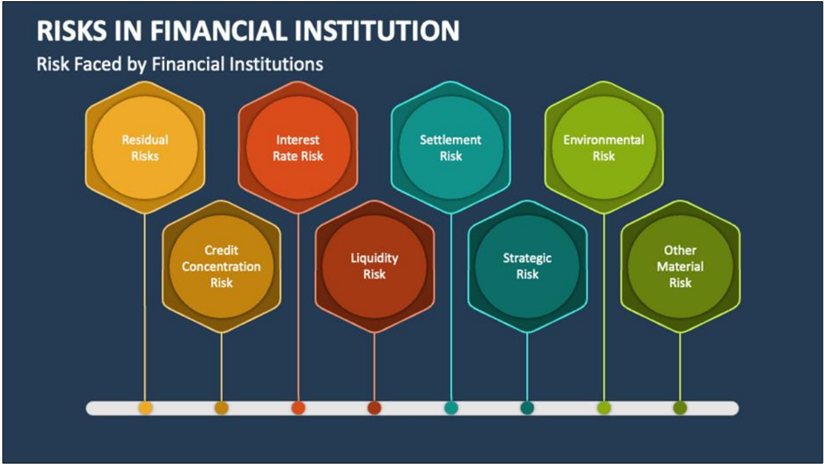
We have seen significant changes in the global economic environment over recent years, and as the complexity of financial relationships increases, these go hand-in-hand with increased requirements for effective risk management frameworks by financial institutions. In boom/bust economic cycles, economic or political crises, and potential systemic risks in the financial markets, they help institutions navigate through various challenges surrounding market volatility, regulatory changes, and emerging risks. In this article, we will cover the basics of risk management frameworks, provide an overview of all types, and how they are successfully applied in a financial institution, while maintaining the picture of interruption and sustainable growth. The discussion starts by addressing the fundamental elements of risk management, including credit, market, and operational risks, along with newer risks like climate change, cyber, and geopolitical risks. It analyses how these tools, advanced tools like big data analytics and artificial intelligence, are integrated into each aspect of human resources management as a transformative way of predicting and mitigating risk. It also covers the key challenges such as regulatory compliance, technological integration, and organizational resistance. It also explores strategic measures to modernize the risk management framework, focusing on agility, partnerships with FinTechs, and governance improvements. Successful frameworks are exemplified in case studies that demonstrate how institutions can adapt to new realities with compliance and operational efficiency. By looking into future themes, this article predicts the implications of digital transformation, the rise of green finance, and changing regulations, to offer actionable insights to the stakeholders. The article ends with some actionable advice for financial institutions and regulators on how to develop effective, flexible, forward-looking risk management approaches.
Overview
The claims and statistics of this paper haven’t been checked yet.
Run the check — free, no account needed. It reads the open-access text and checks the sources it cites.
Integrity signals
Registry
Cites
Statistics
Figures

Verification
Claims the paper makes
The claims and statistics of this paper haven’t been checked yet.
Run the check — free, no account needed. It reads the open-access text and checks the sources it cites.
Claims other papers make about this one
Each is checked against this paper’s own text: does it say what the citing paper says it does?
In the citing paper
“This refinement aligns with financial and operational risk assessment practices where uncertainty in threat evolution is explicitly modeled [27,47].”
From Harvest-Now, Decrypt-Later: A Temporal Cybersecurity Risk in the Quantum Transition (2025) · cites this paper as [47]
Self-check
Percentages, sums and reported differences re-computed from the paper’s own numbers.
The self-check needs the paper’s full text.
Citations
Cites
Still being checked.
Research works printed but not linked: 44
- Bessis J. Risk management in banking. John Wiley & Sons; 2011 Dec 1.
- Challoumis C, Eriotis N. A historical analysis of the banking system and its impact on Greek economy. Edelweiss Applied Science and Technology. 2024;8(6):1598-617.
- Beyani M, Kasonde R. Financial innovation and the importance of modern risk management systems-a case of Zambia. InProceedings of the IFC Conference on "Measuring Financial Innovation and Its Impact 2009 (Vol. 31, pp. 283-293).
- Iriani N, Agustianti A, Sucianti R, Rahman A, Putera W. Understanding Risk and Uncertainty Management: A Qualitative Inquiry into Developing Business Strategies Amidst Global Economic Shifts, Government Policies, and Market Volatility. Golden Ratio of Finance Management. 2024 Jun 16;4(2):62-77.
- Dupont B. The cyber-resilience of financial institutions: significance and applicability. Journal of cybersecurity. 2019;5(1):tyz013.
- Chukwunweike JN, Adewale AA, Osamuyi O 2024. Advanced modelling and recurrent analysis in network security: Scrutiny of data and fault resolution. DOI: 10.30574/wjarr.2024.23.2.2582 · DOI
- Aliyu Enemosah. Enhancing DevOps efficiency through AI-driven predictive models for continuous integration and deployment pipelines. International Journal of Research Publication and Reviews. 2025 Jan;6(1):871-887. Available from: https://ijrpr.com/uploads/V6ISSUE1/IJRPR37630.pdf
- Olalekan Kehinde A. Leveraging Machine Learning for Predictive Models in Healthcare to Enhance Patient Outcome Management. Int Res J Mod Eng Technol Sci. 2025;7(1):1465. Available from: https://doi.org/10.56726/IRJMETS66198 · DOI
- Mba JU. Advancing sustainability and efficiency in maritime operations: Integrating green technologies and autonomous systems in global shipping. Int J Sci Res Arch. 2024;13(02):2059-2079. doi: 10.30574/ijsra.2024.13.2.2419. · DOI
- Ben Selma Mokni R, Echchabi A, Azouzi D, Rachdi H. Risk management tools practiced in Islamic banks: evidence in MENA region. Journal of Islamic Accounting and Business Research. 2014 Apr 8;5(1):77-97.
- Bouman FJ, Hospes O. Financial landscapes reconstructed. InFinancial Landscapes Reconstructed 2019 Mar 11 (pp. 3-16). Routledge.
- Bello HO, Idemudia C, Iyelolu TV. Navigating financial compliance in small and medium-sized enterprises (smes): overcoming challenges and implementing effective solutions. World Journal of Advanced Research and Reviews. 2024;23(1):042-55.
- Ayorinde OB, Daudu CD, Etukudoh EA, Adefemi A, Adekoya OO, Okoli CE. Climate risk assessment in petroleum operations: A review of CSR practices for sustainable resilience in the United States and Africa. Engineering Science & Technology Journal. 2024 Feb 17;5(2):385-401.
- Andrew Nii Anang and Chukwunweike JN, Leveraging Topological Data Analysis and AI for Advanced Manufacturing: Integrating Machine Learning and Automation for Predictive Maintenance and Process Optimization https://dx.doi.org/10.7753/IJCATR1309.1003 · DOI
- Balboa E, Ladesma M, Manguerra AN. Digital Financing Innovations and Their Impact on the Financial Performance of SMEs in the Digital Economy Era. JMM17: Jurnal Ilmu ekonomi dan manajemen. 2024 May 15;11(1):88-98.
- Wu Y, Xu K, Xia H, Wang B, Sang N. Adaptive Feature Interaction Model for Credit Risk Prediction in the Digital Finance Landscape. Journal of Computer Science and Software Applications. 2023 Jan 1;3(1):31-8.
- Hassan AO, Ewuga SK, Abdul AA, Abrahams TO, Oladeinde M, Dawodu SO. Cybersecurity in banking: a global perspective with a focus on Nigerian practices. Computer Science & IT Research Journal. 2024 Jan 9;5(1):41-59.
- Chukwunweike JN, Stephen Olusegun Odusanya , Martin Ifeanyi Mbamalu and Habeeb Dolapo Salaudeen .Integration of Green Energy Sources Within Distribution Networks: Feasibility, Benefits, And Control Techniques for Microgrid Systems. DOI: 10.7753/IJCATR1308.1005 · DOI
- Olalekan Kehinde A, Jegede O. Enhancing Healthcare Delivery: Process Improvement via Machine Learning- Driven Predictive Project Management Techniques. Int J Comput Appl Technol Res. 2025;14(1):93-106. Available from: https://doi.org/10.7753/IJCATR1401.1007 · DOI
- Makai CC, Fadola AB, Sholademi DB. Beyond security failures: The complexities of addressing Boko Haram in Nigeria. World J Adv Res Rev. 2024;24(1):503-517. doi:10.30574/wjarr.2024.24.1.3080. · DOI
- Lipton M, Neff DA, Brownstein AR, Rosenblum SA, Emmerich AO, Fain SL. Risk management and the board of directors. Bank and Corporate Governance Law Reporter. 2011 Feb;45(6):793-9.
- Aripin Z, Agusiady R, Saepudin D. POST COVID: WHAT LESSONS CAN BE LEARNED FOR THE BANKING AND MSME INDUSTRY. Journal of Economics, Accounting, Business, Management, Engineering and Society. 2023 Dec 11;1(1):25-36.
- Bakare OA, Aziza OR, Uzougbo NS, Oduro P. A human resources and legal risk management framework for labour disputes in the petroleum industry. Open Access Research Journal of Science and Technology. 2024;12(01):104- 20.
- Sanyaolu TO, Adeleke AG, Azubuko CF, Osundare OS. Exploring fintech innovations and their potential to transform the future of financial services and banking. International Journal of Scholarly Research in Science and Technology. 2024 Aug;5(01):054-73.
- Joseph Chukwunweike, Andrew Nii Anang, Adewale Abayomi Adeniran and Jude Dike. Enhancing manufacturing efficiency and quality through automation and deep learning: addressing redundancy, defects, vibration analysis, and material strength optimization Vol. 23, World Journal of Advanced Research and Reviews. GSC Online Press; 2024. Available from: https://dx.doi.org/10.30574/wjarr.2024.23.3.2800 · DOI
- Ugwueze VU, Chukwunweike JN. Continuous integration and deployment strategies for streamlined DevOps in software engineering and application delivery. Int J Comput Appl Technol Res. 2024;14(1):1-24. doi:10.7753/IJCATR1401.1001. Available from: www.ijcat.com · DOI
- Jegede O, Kehinde OA. Project management strategies for implementing predictive analytics in healthcare process improvement initiatives. Int J Res Publ Rev. 2025 Jan;6(1):1574-88. Available from: https://ijrpr.com/certificate/download.php?paper_id=23755
- Aliyu Enemosah. Integrating machine learning and IoT to revolutionize self-driving cars and enhance SCADA automation systems. International Journal of Computer Applications Technology and Research. 2024;13(5):42-57. Available from: https://doi.org/10.7753/IJCATR1305.1009 · DOI
- Falola TR. Leveraging artificial intelligence and data analytics for enhancing museum experiences: exploring historical narratives, visitor engagement, and digital transformation in the age of innovation. Int Res J Mod Eng Technol Sci. 2024 Jan;6(1):4221. Available from: https://www.doi.org/10.56726/IRJMETS49059 · DOI
- Chukwunweike JN, Praise A, Bashirat BA, 2024. Harnessing Machine Learning for Cybersecurity: How Convolutional Neural Networks are Revolutionizing Threat Detection and Data Privacy. https://doi.org/10.55248/gengpi.5.0824.2402. · DOI
- Jegede O, Kehinde A O. Project Management Strategies for Implementing Predictive Analytics in Healthcare Process Improvement Initiatives. Int J Res Publ Rev. 2025;6(1):1574-88. Available from: https://ijrpr.com/uploads/V6ISSUE1/IJRPR37734.pdf
- Olatunji, Michael Abayomi and Olatunji, M. A. and Oladele, R. O. and Bajeh, A. O., Software Security Vulnerability Prediction Modeling for PHP Systems. Available at SSRN: https://ssrn.com/abstract=4606665
- Mba JU. Optimizing maritime operations: Strategies for navigational accuracy and accident prevention at sea. Int J Res Publ Rev. 2025;6(1):149-165. doi: 10.55248/gengpi.6.0125.0206. · DOI
- Enemosah A, Ifeanyi OG. Cloud security frameworks for protecting IoT devices and SCADA systems in automated environments. World Journal of Advanced Research and Reviews. 2024;22(03):2232-2252. doi: 10.30574/wjarr.2024.22.3.1485. · DOI
- Bakos L, Dumitrașcu DD. Decentralized enterprise risk management issues under rapidly changing environments. Risks. 2021 Sep 10;9(9):165.
- Moşteanu NR. Adapting to the Unpredictable: Building Resilience for Business Continuity in an Ever-Changing Landscape. European Journal of Theoretical and Applied Sciences. 2024 Jan 1;2(1):444-57.
- Claessens S, Glaessner T, Klingebiel D. Electronic finance: reshaping the financial landscape around the world. Journal of Financial Services Research. 2002 Aug;22:29-61.
- Omowole BM, Urefe O, Mokogwu C, Ewim SE. Strategic approaches to enhancing credit risk management in microfinance institutions. International Journal of Frontline Research in Multidisciplinary Studies. 2024;4(1):053-62.
- Sharma S, Soederberg S. Redesigning the business of development: the case of the World Economic Forum and global risk management. Review of International Political Economy. 2020 Jul 3;27(4):828-54.
- Challoumis C. INVESTING IN THE FUTURE-HOW AI IS RESHAPING CORPORATE FINANCIAL LANDSCAPES. InXIV International Scientific Conference 2024 (pp. 205-244).
- Obeng S, Iyelolu TV, Akinsulire AA, Idemudia C. The transformative impact of financial technology (FinTech) on regulatory compliance in the banking sector. World Journal of Advanced Research and Reviews. 2024;23(1):2008-18.
- Joseph Nnaemeka Chukwunweike and Opeyemi Aro. Implementing agile management practices in the era of digital transformation [Internet]. Vol. 24, World Journal of Advanced Research and Reviews. GSC Online Press; 2024. Available from: DOI: 10.30574/wjarr.2024.24.1.3253 · DOI
- Soremekun YM, Abioye KM, Sanyaolu TO, Adeleke AG, Efunniyi CP. Conceptual framework for assessing the impact of financial access on SME growth and economic equity in the US. Comprehensive Research and Reviews Journal. 2024;2(1).
- Scott AO, Amajuoyi P, Adeusi KB. Advanced risk management solutions for mitigating credit risk in financial operations. Magna Scientia Advanced Research and Reviews. 2024;11(1):212-23.
Cited by
Sorted by citations
Debbadi, R. K., & Boateng, O. (2025) · International Journal of Science and Research Archive · doi:10.30574/ijsra.2025.14.2.0448 · Cited by 39
Alemede, V. O. (2025) · International Journal of Research Publication and Reviews · doi:10.55248/gengpi.6.0225.0904 · Cited by 36
Debbadi, R. K., & Boateng, O. (2025) · International Journal of Science and Research Archive · doi:10.30574/ijsra.2025.14.2.0449 · Cited by 35
Banking Sector Transformation: Disruptions, Challenges and Opportunities
Gaviyau, W., & Godi, N. J. (2025) · FinTech · doi:10.3390/fintech4030048 · Cited by 40
Albannai, N. A. A., & Raziq, M. M. (2025) · Service Industries Journal · doi:10.1080/02642069.2025.2534360 · Cited by 25
Metadata
- Authors
- Oko-Odion, C., & Angela, O.
- Affiliations
- Western Illinois University (US)
- Corresponding author
- Courage Oko-Odion
- Venue
- International Journal of Science and Research Archive
- Publisher
- GSC Online Press
- Published
- 2025-01-30
- Volume
- 14
- Issue
- 1
- Pages
- 1182-1204
- ISSN
- 2582-8185 (ISSN-L)
- OpenAlex
- W4406802556
- Cited by
- 21
- References
- 0
- Citations by year
- 2026: 10 · 2025: 11
- FWCI
- 54.81
- Type
- journal article
- Language
- en
- Open access
- hybrid
- doi.org
- Licence
- cc-by
- Locations
- International Journal of Science and Research Archive (publishedVersion, cc-by)
- Topics
- Social Sciences › Business, Management and Accounting › Accounting › Risk Management in Financial Firms
- Social Sciences › Economics, Econometrics and Finance › General Economics, Econometrics and Finance › Digital Transformation in Financial Services
- Social Sciences › Economics, Econometrics and Finance › Finance › Banking stability, regulation, efficiency
- Keywords
- risk management framework, financial institutions, credit risk, market risk, operational risk, climate risk, cybersecurity risks, geopolitical risk, big data analytics, artificial intelligence, regulatory compliance, fintech partnerships, risk governance, digital transformation, green finance, systemic risk, business cycles
About these checks
Registry, retraction, Cites and statistics results are computed, not judged, with one exception: a printed reference that no index lists is read once by a model before it counts as a citation error. Claims are extracted by a model and kept only when their quote appears verbatim in the text; each cited source is then checked, with a model’s help, for whether it says what the claim relies on. Those verdicts can be wrong — read the claim’s quote and the cited source before relying on one.
Statistics and arithmetic are recomputed, not judged.
Confidence bands are shown only for fields calibrated on our annotated test set. None is calibrated yet, so no band is shown.
What counts as a claim ›How we measure confidence ›How we check this ›
Are you an author, or do you see a problem with this page? Request a review
How to cite
Cite CoChat for the checks on this page, and the paper for its own findings.
- This page
- CoChat. (2026). Citation check: Risk management frameworks for financial institutions in a rapidly changing economic landscape. https://app.cochat.ai/papers/10.30574/ijsra.2025.14.1.0155
- The paper
- Oko-Odion, C., & Angela, O. (2025). Risk management frameworks for financial institutions in a rapidly changing economic landscape. International Journal of Science and Research Archive. https://doi.org/10.30574/ijsra.2025.14.1.0155
