

ChatGPT in physics education: A pilot study on easy-to-implement activities
Open accessThe DOI matches its Crossref record; 36 of the 36 references it cites were found in a registry or an index.
Abstract
Large language models, such as ChatGPT, have great potential to enhance learning and support teachers, but they must be used with care to tackle limitations and biases. This paper presents two easy-to-implement examples of how ChatGPT can be used in physics classrooms to foster critical thinking skills at the secondary school level. A pilot study (n=53) examining the implementation of these examples found that the intervention had a positive impact on students’ perceptions of ChatGPT, with an increase in agreement with statements related to its benefits and incorporation into their daily lives.
Overview
The claims and statistics of this paper haven’t been checked yet.
Free: it reads the open-access text and checks the first 5 claims that cite a source we can check. Create a free account to check every claim.
Integrity signals
Registry
Cites
Statistics
Figures


Verification
Claims the paper makes
The claims and statistics of this paper haven’t been checked yet.
Free: it reads the open-access text and checks the first 5 claims that cite a source we can check. Create a free account to check every claim.
Claims other papers make about this one
Each is checked against this paper’s own text: does it say what the citing paper says it does?
The source backs part of the claim, not all of it — or backs it for a different population, condition or comparison.
In the citing paper
“More importantly , many studies report enhanced critical thinking [70,77,99,100,103,111,114,119,132,142,145,150], reflection, and problem-solving [70,128,141].”
From A Systematic Review of Generative AI in K–12: Mapping Goals, Activities, Roles, and Outcomes via the 3P Model (2025) · cites this paper as [100]
Experimental — accuracy not yet measuredThe source backs part of the claim, not all of it — or backs it for a different population, condition or comparison.
In the citing paper
“Additionally, enhancing students' critical thinking and real-world problem-solving practices remains a key objective. GenAI-supported interactive learning and analytical tasks are designed to promote critical analysis, logical reasoning, and the generative use of knowledge to authentic challenges in science and mathematics.”
From A Systematic Review of Generative AI in K–12: Mapping Goals, Activities, Roles, and Outcomes via the 3P Model (2025) · cites this paper as [100]
Experimental — accuracy not yet measuredThe source backs part of the claim, not all of it — or backs it for a different population, condition or comparison.
In the citing paper
“Several studies also require students to identify incorrect or fabricated AI outputs, which cultivates critical thinking and information discrimination skills [100,101,133].”
From A Systematic Review of Generative AI in K–12: Mapping Goals, Activities, Roles, and Outcomes via the 3P Model (2025) · cites this paper as [100]
Experimental — accuracy not yet measuredThe cited source says what the claim attributes to it.
In the citing paper
“Also, earlier studies among primary and secondary school pupils found that in general, pupils were positive about the use of ChatGPT as a contemporary learning environment tool belonging to generative AI [14,15].”
From Generative AI and ChatGPT in School Children’s Education: Evidence from a School Lesson (2023) · cites this paper as [15]
The cited source says what the claim attributes to it.
In the citing paper
“Concerns have been raised regarding the potential biases and limitations of large language models, emphasizing the need for careful and critical use to address these issues (Bitzenbauer, 2023).”
From Investigating the Use of chatGPT as a Tool for Enhancing Critical Thinking and Argumentation Skills in International Relations Debates among Undergraduate Students (2024) · cites this paper as Bitzenbauer, 2023
Self-check
Percentages, sums and reported differences re-computed from the paper’s own numbers.
The self-check needs the paper’s full text.
Citations
Cites
ChatGPT for Good? On Opportunities and Challenges of Large Language Models for Education
Kasneci, E., Seßler, K., Küchemann, S., Bannert, M., Dementieva, D., Fischer, F., Gasser, U., Groh, G., Günnemann, S., Hüllermeier, E., et al. (2023) · doi:10.35542/osf.io/5er8f · Cited by 7,552
ChatGPT for good? On opportunities and challenges of large language models for education
Kasneci, E., Sessler, K., Küchemann, S., Bannert, M., Dementieva, D., Fischer, F., Gasser, U., Groh, G., Günnemann, S., Hüllermeier, E., et al. (2023) · Learning and Individual Differences · doi:10.1016/j.lindif.2023.102274 · Cited by 7,326
BAİDOO-ANU, D., & OWUSU ANSAH, L. (2023) · Journal of AI · doi:10.61969/jai.1337500 · Cited by 3,939
Sallam, M. (2023) · Healthcare · doi:10.3390/healthcare11060887 · Cited by 3,126
Baidoo-Anu, D., & Owusu Ansah, L. (2023) · doi:10.2139/ssrn.4337484 · Cited by 3,004
GPT-3: Its Nature, Scope, Limits, and Consequences
Floridi, L., & Chiriatti, M. (2020) · Minds and Machines · doi:10.1007/s11023-020-09548-1 · Cited by 2,519 · cited 5×
“Generative pre-trained transformer (GPT) models, such as GPT-3 (Floridi & Chiriatti, 2020), use a “ large amount of publicly available digital content data ” (Baidoo-Anu & Ansah, 2023, p. 3) to perform “ a wide range of natural-language tasks ranging from translation to question answering, writing…”
BackgroundMethodInfluentialA SWOT analysis of ChatGPT: Implications for educational practice and research
Farrokhnia, M., Banihashem, S. K., Noroozi, O., & Wals, A. (2024) · Innovations in Education and Teaching International · doi:10.1080/14703297.2023.2195846 · Cited by 1,384 · cited 3×
“One particularly relevant limitation of AI tools is the lack of higher-order thinking skills as outlined by Farrokhnia et al. (2023).”
BackgroundInfluentialRevolutionizing education with AI: Exploring the transformative potential of ChatGPT
Adiguzel, T., Kaya, M. H., & Cansu, F. K. (2023) · Contemporary Educational Technology · doi:10.30935/cedtech/13152 · Cited by 975 · cited 1×
“…(Ahuja, 2019; Veloso et al., 2021) research investigating the implementation of chatbots into classroom practice is still in its infancy (Hwang & Chang, 2021), especially with respect to secondary schools (Adiguzel et al., 2023; Salas-Pilco & Yang, 2022; Salas-Pilco et al., 2022; Halaweh, 2023).”
BackgroundPavlik, J. V. (2023) · Journalism & Mass Communication Educator · doi:10.1177/10776958221149577 · Cited by 972 · cited 1×
“In the end, it is noteworthy that while ChatGPT can enrich classroom practice as shown in this paper, learning will always remain a social process that requires teachers ’ authority and guidance (Pavlik, 2023).”
Background
Cited by
ChatGPT: A revolutionary tool for teaching and learning mathematics
Wardat, Y., Tashtoush, M. A., AlAli, R., & Jarrah, A. M. (2023) · Eurasia Journal of Mathematics, Science and Technology Education · doi:10.29333/ejmste/13272 · Cited by 470
“Secondly, it exacerbates the phenomenon known as the AI effect (Walker & Noorden, 2023), where the widespread use of AI-based products leads people to dismiss its behavior as not being true intelligence (Bitzenbauer, 2023).”
BackgroundThe Influence of ChatGPT on Student Engagement: A Systematic Review and Future Research Agenda
Lo, C. K., Hew, K. F., & Jong, M. S.-Y. (2024) · Computers & Education · doi:10.1016/j.compedu.2024.105100 · Cited by 392
Higher education students’ perceptions of ChatGPT: A global study of early reactions
Ravšelj, D., Keržič, D., Tomaževič, N., Umek, L., Brezovar, N., A. Iahad, N., Abdulla, A. A., Akopyan, A., Aldana Segura, M. W., AlHumaid, J., et al. (2025) · PLOS ONE · doi:10.1371/journal.pone.0315011 · Cited by 376
Wang, J., & Fan, W. (2025) · Humanities and Social Sciences Communications · doi:10.1057/s41599-025-04787-y · Cited by 322
“At the level of secondary education, scholars have primarily explored the use of ChatGPT to assist students in solving dif fi cult problems (Bitzenbauer, 2023; Levine et al. 2025; Yang et al. 2025) and support knowledge review (Wu et al. 2023).”
RetractedA systematic review of ChatGPT use in K‐12 education
Zhang, P., & Tur, G. (2024) · European Journal of Education · doi:10.1111/ejed.12599 · Cited by 280
Leveraging ChatGPT for Enhancing Critical Thinking Skills
Guo, Y., & Lee, D. (2023) · Journal of Chemical Education · doi:10.1021/acs.jchemed.3c00505 · Cited by 250
Generative AI and ChatGPT in School Children’s Education: Evidence from a School Lesson
Jauhiainen, J. S., & Guerra, A. G. (2023) · Sustainability · doi:10.3390/su151814025 · Cited by 234
Samala, A. D., Rawas, S., Wang, T., Reed, J. M., Kim, J., Howard, N.-J., & Ertz, M. (2025) · Education and Information Technologies · doi:10.1007/s10639-024-12936-0 · Cited by 229
“It can assist in tasks such as mathematics, information retrieval, providing advice and guidance, generating ideas, creating outlines for written work, and facilitating discussions related to mental health (Bitzenbauer, 2023; Crompton & Burke, 2023; Sánchez-Ruiz et al., 2023; Sullivan et al., 2023).”
The use of ChatGPT in teaching and learning: a systematic review through SWOT analysis approach
Mai, D. T. T., Da, C. V., & Hanh, N. V. (2024) · Frontiers in Education · doi:10.3389/feduc.2024.1328769 · Cited by 213
“The benefits of ChatGPT extend beyond the classroom, as students realize its relevance and integration into their daily lives (Bitzenbauer, 2023).”
BackgroundEnhancing STEM learning with ChatGPT and Bing Chat as objects to think with: A case study
Vasconcelos, M. A. R., & dos Santos, R. P. (2023) · Eurasia Journal of Mathematics, Science and Technology Education · doi:10.29333/ejmste/13313 · Cited by 123
Students' perceptions of using ChatGPT in a physics class as a virtual tutor
Ding, L., Li, T., Jiang, S., & Gapud, A. (2023) · International Journal of Educational Technology in Higher Education · doi:10.1186/s41239-023-00434-1 · Cited by 208
“Beyond language support, ChatGPT has served as a pedagogi - cal tool to foster students’ critical thinking skills in a physics class (Bitzenbauer, 2023).”
MethodGenerative AI use in K-12 education: a systematic review
Alfarwan, A. M. (2025) · Frontiers in Education · doi:10.3389/feduc.2025.1647573 · Cited by 190
“Based on the retrieved data, five papers (Jauhiainen and Guerra, 2023; Chen and Zhu, 2023; Vartiainen et al., 2023; Bitzenbauer, 2023; Alneyadi and Wardat, 2023) were published in 2023.”
Riady, Y., Habibi, A., Mailizar, M., Alqahtani, T. M., Riady, H., & Al-Adwan, A. S. (2025) · Library Management · doi:10.1108/lm-06-2024-0065 · Cited by 170
New Examination Approach for Real-World Creativity and Problem-Solving Skills in Mathematics
Nilimaa, J. (2023) · Trends in Higher Education · doi:10.3390/higheredu2030028 · Cited by 199
“The rapid recent development in technologies such as machine learning, AI, and robotics [18,19] has also accelerated the need for computational thinking (CT) in education [20].”
BackgroundHow understanding large language models can inform the use of ChatGPT in physics education
Polverini, G., & Gregorcic, B. (2023) · European Journal of Physics · doi:10.1088/1361-6404/ad1420 · Cited by 200
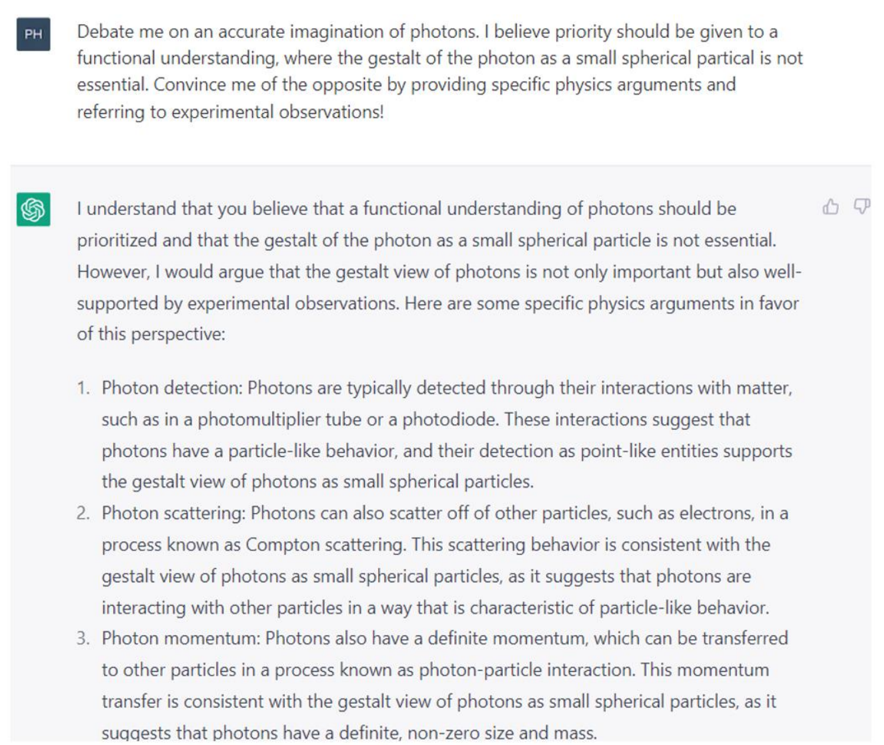
“Bitzenbauer [92] proposed using the chatbot in high school classrooms to foster students’ critical thinking skills by asking students to use ChatGPT to generate a text about photons, evaluate its consistency and correctness, and revise it using additional sources.”
BackgroundUniversity students’ self-reported reliance on ChatGPT for learning: A latent profile analysis
Stojanov, A., Liu, Q., & Koh, J. H. L. (2024) · Computers and Education: Artificial Intelligence · doi:10.1016/j.caeai.2024.100243 · Cited by 87
Dahlkemper, M. N., Lahme, S. Z., & Klein, P. (2023) · Physical Review Physics Education Research · doi:10.1103/physrevphyseducres.19.010142 · Cited by 100
“In a recent pilot-study [24], two activities with ChatGPT regarding the critical thinking skills of students were implemented in the physics classroom.”
A Systematic Review of the Limitations and Associated Opportunities of ChatGPT
Cong‐Lem, N., Soyoof, A., & Tsering, D. (2024) · International Journal of Human-Computer Interaction · doi:10.1080/10447318.2024.2344142 · Cited by 177
“Studies by Bitzenbauer (2023) suggest that ChatGPT can enhance critical thinking skills among secondary school students in Germany.”
Tassoti, S. (2024) · Journal of Chemical Education · doi:10.1021/acs.jchemed.4c00212 · Cited by 129
The impact of AI in physics education: a comprehensive review from GCSE to university levels
Yeadon, W., & Hardy, T. (2024) · Physics Education · doi:10.1088/1361-6552/ad1fa2 · Cited by 139
“A growing body of research suggests the importance of equipping students with skills and experience to interact effectively with AI [6, 11, 12].”
BackgroundBhat, M. A., Tiwari, C. K., Bhaskar, P., & Khan, S. T. (2024) · Journal of Information Communication and Ethics in Society · doi:10.1108/jices-03-2024-0033 · Cited by 111
Jauhiainen, J. S., & Garagorry Guerra, A. (2024) · Frontiers in Education · doi:10.3389/feduc.2024.1288723 · Cited by 87
Krupp, L., Steinert, S., Kiefer-Emmanouilidis, M., Avila, K. E., Lukowicz, P., Kuhn, J., Küchemann, S., & Karolus, J. (2024) · Frontiers in Artificial Intelligence and Applications · doi:10.3233/faia240195 · Cited by 82
“While these articles provide interesting findings and show that using ChatGPT for answering questions present great demands on students, the results were either not verified with real students (Santos 2023; Gregorcic and Pendrill 2023) or the problem solving strategies when using ChatGPT were not studied (Bitzenbauer…”
InfluentialNelson, A. S., Santamaría, P. V., Javens, J. S., & Ricaurte, M. (2025) · Education Sciences · doi:10.3390/educsci15050611 · Cited by 79
Chen, J., Zhuo, Z., & Lin, J. (2023) · Sustainability · doi:10.3390/su152416928 · Cited by 84
Abdalla, A. A., Bhat, M. A., Tiwari, C. K., Khan, S. T., & Wedajo, A. D. (2024) · Computers and Education Artificial Intelligence · doi:10.1016/j.caeai.2024.100257 · Cited by 102
(2023) · International Research Journal of Modernization in Engineering Technology and Science · doi:10.56726/irjmets45212 · Cited by 74
Performance of ChatGPT on the test of understanding graphs in kinematics
Polverini, G., & Gregorcic, B. (2024) · Physical Review Physics Education Research · doi:10.1103/physrevphyseducres.20.010109 · Cited by 70
“Activities aimed at improving students ’ critical thinking and reading skills in relation to AI and physics content (e.g., [52]) will likely play an increasingly important role in preparing students for the future.”
BackgroundAI-generated content tools and students’ critical thinking: Insights from a Chinese university
Zou, X., Su, P., Li, L., & Fu, P. (2023) · IFLA Journal · doi:10.1177/03400352231214963 · Cited by 70
“Bitzenbauer (2023) reports on a pilot study investigating ChatGPT’s application in physics education to foster critical thinking skills among secondary school students.”
The effect of ChatGPT on EFL students' social and emotional learning
Bin-Hady, W. R. A., Ali, J. K. M., & Al-humari, M. A. (2024) · Journal of Research in Innovative Teaching & Learning · doi:10.1108/jrit-02-2024-0036 · Cited by 70
The Role of ChatGPT in Education: Applications, Challenges: Insights From a Systematic Review
Dimeli, M., & Κώστας, Α. (2025) · Journal of Information Technology Education Research · doi:10.28945/5422 · Cited by 64
“…was enhanced (Jauhiainen & Guerra, 2023), and in Physics, where students benefited from improved conceptual understanding (Alneyadi & Wardat, 2023; Bitzenbauer, 2023), as well as across the broader spectrum of primary (Abdelghani et al., 2024) and secondary education (Forman et al., 2023).”
InfluentialRahmatullah, R., Habibi, A., Khaeruddin, K., Yaqin, L. N., Alharmali, T. M., Fauzee, M. S. O., & Mahat, J. (2025) · Discover Sustainability · doi:10.1007/s43621-025-01645-4 · Cited by 50
“In light of the feedback obtained from the pilot study and interviews, we made revisions to particular items on the questionnaire to enhance its clarity and comprehensibility [22, 33].”
Famaye, T., Bailey, C. S., Adisa, I. O., & Irgens, G. A. (2024) · International Journal of Technology in Education · doi:10.46328/ijte.651 · Cited by 53
“Several other studies have explored the usefulness of ChatGPT indicating its potential for personalized learning (Murgia et al., 2023) and supporting teaching tasks (Bitzenbauer, 2023; Smith et al., 2023) .”
Backgroundde la Puente, M., Torres, J., Troncoso, A. L. B., Meza, Y. Y. H., & Carrascal, J. X. M. (2024) · Smart Learning Environments · doi:10.1186/s40561-024-00347-0 · Cited by 46
“Concerns have been raised regarding the potential biases and limitations of large language models, emphasizing the need for careful and critical use to address these issues (Bitzenbauer, 2023).”
Zha, S., Qiao, Y., Hu, Q., Li, Z., Gong, J., & Xu, Y. (2025) · International Journal of Human-Computer Studies · doi:10.1016/j.ijhcs.2025.103602 · Cited by 49
Challenging ChatGPT with Different Types of Physics Education Questions
Simó, V. L., & Rezende, M. F. (2024) · The Physics Teacher · doi:10.1119/5.0160160 · Cited by 48
Challenges and Opportunities of Moderating Usage of Large Language Models in Education
Krupp, L., Steinert, S., Kiefer-Emmanouilidis, M., Avila, K. E., Lukowicz, P., Kühn, J., Küchemann, S., & Karolus, J. (2024) · International Conference on Mobile and Ubiquitous Multimedia (MUM) · doi:10.1145/3701571.3701590 · Cited by 48
Students’ Holistic Reading of Socio-Scientific Texts on Climate Change in a ChatGPT Scenario
Cheung, K. K. C., Pun, J., & Kenneth-Li, W. (2024) · Research in Science Education · doi:10.1007/s11165-024-10177-2 · Cited by 43
Otto, S., Lavi, R., & Bertel, L. B. (2025) · Computers & Education · doi:10.1016/j.compedu.2025.105444 · Cited by 47
A Comparative Analysis of the Rating of College Students’ Essays by ChatGPT versus Human Raters
Jackaria, P. M., Hajan, B. H., & Mastul, A.-R. H. (2024) · International Journal of Learning Teaching and Educational Research · doi:10.26803/ijlter.23.2.23 · Cited by 43
“Hence, ChatGPT should be used with caution, a finding which is consistent with the conclusion of some previous studies (Bitzenbauer, 2023; Ferrouhi, 2023; Kasneci et al., 2023; Lo, 2023).”
BackgroundResultAsy’ari, M., & Шаров, С. (2024) · International Journal of Essential Competencies in Education · doi:10.36312/ijece.v3i2.2424 · Cited by 63
“For example, studies by Koubaa et al. (2023) and Bitzenbauer (2023) emphasize the importance of institutional support in fostering effective and ethical use of ChatGPT in classrooms.”
Lee, H., Huang, Y., & Wu, T. (2025) · European Journal of Education · doi:10.1111/ejed.70262 · Cited by 41
Zhong, T., Zhu, G., Hou, C., Wang, Y., & Fan, X. (2024) · Education and Information Technologies · doi:10.1007/s10639-024-12787-9 · Cited by 42
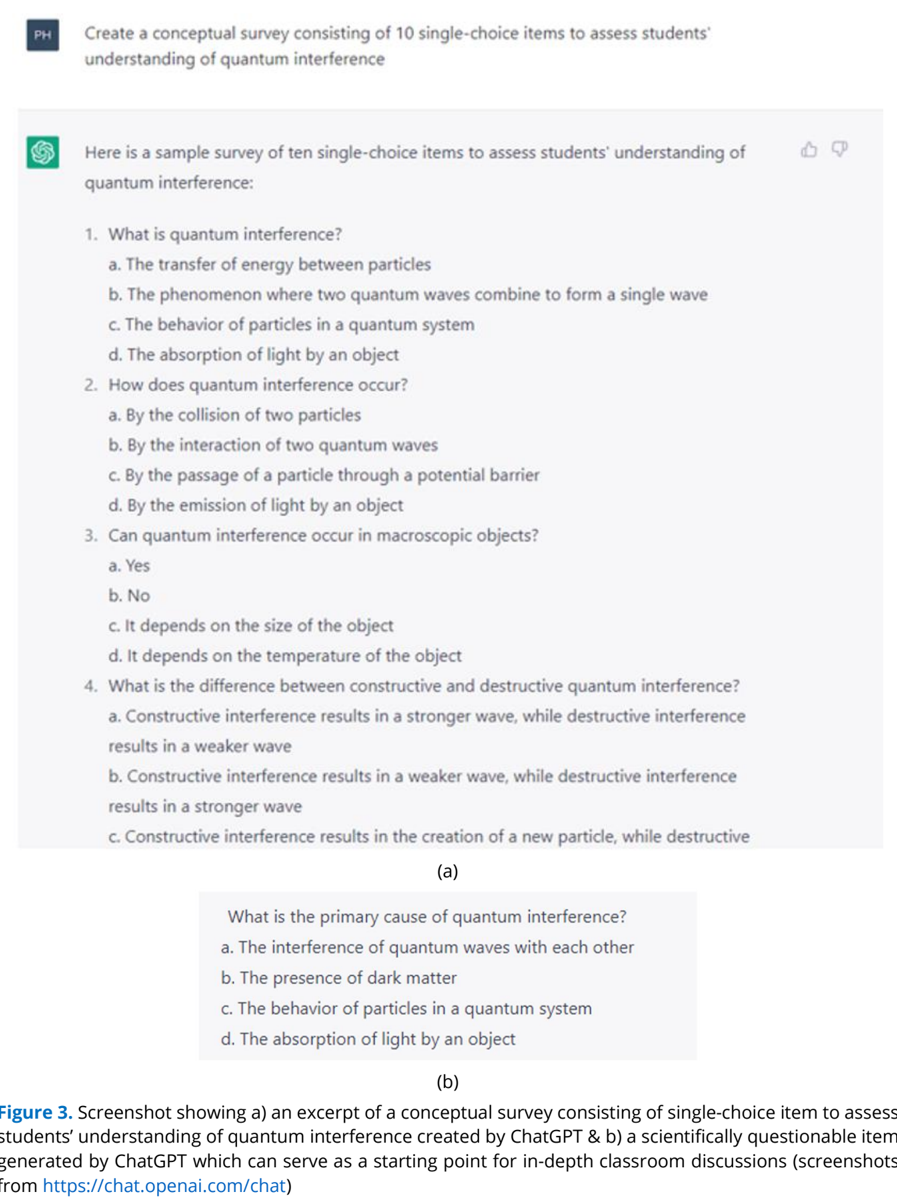
“For instance, one researcher, aware of ChatGPT’s limitation in providing accurate information, asked secondary school students to critically review ChatGPT’s explanations of physics concepts or use ChatGPT to generate concept quizzes for self-assessment (Bitzenbauer, 2023).”
Trindade, M. A. M., Edirisinghe, G. S., & Luo, L. (2024) · The International Journal of Management Education · doi:10.1016/j.ijme.2024.101104 · Cited by 41
Wulff, P. (2023) · European Journal of Physics · doi:10.1088/1361-6404/ad0f9c · Cited by 43
One year in the classroom with ChatGPT: empirical insights and transformative impacts
Guo, F., Li, T., & Cunningham, C. J. L. (2025) · Frontiers in Education · doi:10.3389/feduc.2025.1574477 · Cited by 41
ChatGPT as a tool for honing teachers’ Socratic dialogue skills
Gregorcic, B., Polverini, G., & Sarlah, A. (2024) · Physics Education · doi:10.1088/1361-6552/ad3d21 · Cited by 36
“On the other hand, teachers could take advantage of a time-saving assistant for tasks such as grading [10], or lesson planning [11], as well as a source of material for classroom or homework activities [12].”
BackgroundPolverini, G., Melin, J., Önerud, E., & Gregorcic, B. (2025) · Physical Review Physics Education Research · doi:10.1103/physrevphyseducres.21.010154 · Cited by 44
“They can use ChatGPT to generate material for fostering critical discussion in the classroom, educating students on the importance of critical reading and evaluating the reliability of AI-generated information [69].”
Exploring the role of human-AI collaboration in solving scientific problems
Tong, D., Jin, B., Tao, Y., Ren, H., Islam, A. Y. M. A., & Bao, L. (2025) · Physical Review Physics Education Research · doi:10.1103/physrevphyseducres.21.010149 · Cited by 40
Kortemeyer, G., Babayeva, M., Polverini, G., Widenhorn, R., & Gregorcic, B. (2025) · Physical Review Physics Education Research · doi:10.1103/98hg-rkrf · Cited by 43
Correcting Students' Misconceptions in Physics Using Experiments Designed by ChatGPT
Kotsis, K. Τ. (2024) · European Journal of Contemporary Education and E-Learning · doi:10.59324/ejceel.2024.2(2).07 · Cited by 36
“ChatGPT can help students in physics education create experiments that clear up their doubts and help them comprehend important ideas more thoroughly (Bitzenbauer, 2023).”
BackgroundEğitimde Yapay Zekâ Kullanımı: ChatGPT’nin KEFE ve PEST Analizi
Kutlucan, E., & Seferoğlu, S. S. (2024) · Türk Eğitim Bilimleri Dergisi · doi:10.37217/tebd.1368821 · Cited by 41
Cheung, K. K. C., Zerouali, A., Koenen, J., & Erduran, S. (2025) · Studies in Science Education · doi:10.1080/03057267.2025.2578091 · Cited by 40
Panit, N. M. (2025) · Environment and Social Psychology · doi:10.59429/esp.v9i11.3141 · Cited by 36
Beltozar-Clemente, S., & Díaz-Vega, E. (2024) · International Journal of Engineering Pedagogy (iJEP) · doi:10.3991/ijep.v14i6.47127 · Cited by 31
Pacheco, M. A. D. L. P., Torres, J., Troncoso, A. L. B., Murillo, H. J. G., & Carrascal, J. X. M. (2025) · Journal of Political Science Education · doi:10.1080/15512169.2025.2449936 · Cited by 33
“In the context of developing nations, Bitzenbauer (2023) found that students using LLM-powered platforms demonstrated better understanding of complex scientific concepts compared to those using traditional textbooks.”
ChatGPT as a Digital Tool in the Transformation of Digital Teaching Competence: A Systematic Review
Cerero, J. F., Rueda, M. M., Graván, P. R., & Fernández‐Batanero, J. M. (2025) · Technologies · doi:10.3390/technologies13050205 · Cited by 39
“In the context of secondary and primary education, research in Germany [48], the Philippines [49], and the United Arab Emirates [14], Wardat [51] highlights its role in fostering critical thinking, language teaching, and personalising learning to the individual needs of learners.”
dos Santos, R. P. (2023) · arXiv (Cornell University) · doi:10.48550/arxiv.2306.00724 · Cited by 31
“Research indicates that these tools can be valuable in homework, problem-solving and fostering student engagement (Bitzenbauer, 2023; MacIsaac, 2023).”
BackgroundChatGPT and Global Higher Education: Using Artificial Intelligence in Teaching and Learning
Lin, X., Chan, R. Y., Sharma, S., & Bista, K. (2024) · doi:10.32674/rh27qv16 · Cited by 39
Can rule-based educational chatbots be an acceptable alternative for students in higher education?
Güldal, H., & Dinçer, E. O. (2024) · Education and Information Technologies · doi:10.1007/s10639-024-12977-5 · Cited by 32
“Regarding the use of chatbots in physics education, Bitzenbauer (2023) conducted a pilot study and discovered that using ChatGPT in physics classes improved critical thinking skills in secondary school students, leading to positive perceptions and increased participation in discussions about…”
Physics on autopilot: exploring the use of an AI assistant for independent problem-solving practice
Ryabko, A. V., & Вакалюк, Т. А. (2024) · Educational Technology Quarterly · doi:10.55056/etq.671 · Cited by 29
Making a revolution in physics learning in high schools with ChatGPT: A case study in UAE
Alarbi, K., Halaweh, M., Tairab, H., Alsalhi, N. R., Annamalai, N., & Aldarmaki, F. (2024) · Eurasia Journal of Mathematics, Science and Technology Education · doi:10.29333/ejmste/14983 · Cited by 28
“Nevertheless, the field of physics education is in an excellent position to investigate the functionality and applications of ChatGPT and other AI systems (AlAbidi et al., 2023a; Alneyadi & Wardat, 2023; Bitzenbauer, 2023).”
BackgroundMethodInfluentialLiu, C., & Yang, S. (2024) · International Journal of Mechanical Engineering Education · doi:10.1177/03064190241272728 · Cited by 28
“9 This paper aims to explore the application and implementation of Large Language Models (LLMs) in interdisciplinary engineering courses.”
Bernuy, J. B. V., Nolasco-Mamani, M. A., Rodríguez, N. C. V., Quelopana, R. L. G., Valdivia, A. N. M., & Vidaurre, S. M. E. (2025) · Sustainability · doi:10.3390/su17188329 · Cited by 29
Generative artificial intelligence in K-12 education: A systematic review
Zhang, T., Lai, Y. C., & Yu, P. L. H. (2025) · Research and Practice in Technology Enhanced Learning · doi:10.58459/rptel.2026.21034 · Cited by 34
“Bitzenbauer (2023) introduced ChatGPT examples in middle school physics classes, effectively improved students ’ perception of ChatGPT, and explored the feasibility of meeting the needs of critical thinking cultivation.”
Enhancing Classroom Learning: ChatGPT's Integration and Educational Challenges
AlAli, R. M., & Wardat, Y. (2024) · International Journal of Religion · doi:10.61707/znwnxd43 · Cited by 32
A Review of use of Artificial Intelligence in Teaching and Learning of Mathematics
-, P. B., & -, A. C. B. (2024) · International Journal on Science and Technology · doi:10.71097/ijsat.v15.i4.1190 · Cited by 32
“ChatGPT exemplifies this progress, using large language models to enhance user interaction, yet it also highlights the so-called "AI effect," where advanced AI capabilities are underestimated due to their perceived simplicity (Walker & Noorden, 2023; Bitzenbauer, 2023).”
Baucon, A., & de Carvalho, C. N. (2024) · Geoheritage · doi:10.1007/s12371-024-01011-2 · Cited by 26
“…and Pimentel 2023 ; Wollowski 2023 ; Emenike and Emenike 2023 ; Humphry and Fuller 2023 ; Lubowitz 2023 ; Yeadon et al. 2023 ; Szabo 2023 ; Pawlak 2023 ; Bhayana et al. 2023 ; Elyoseph et al. 2023 ; Munoz-Zuluaga et al. 2023 ; Bitzenbauer 2023 ; Wardat et al. 2023 ; Agathokleous et al. 2023 ).”
Lin, X., & Tan, H. (2025) · Systems · doi:10.3390/systems13100840 · Cited by 22
Worthing, K. A., Roberts, M., & Šlapeta, J. (2024) · Veterinary Record Open · doi:10.1002/vro2.80 · Cited by 21
“19 Despite less than half of the respondents perceiving Chat-GPT output to be accurate, more than half agreed that ChatGPT output was relevant and practical for veterinary students, indicating that they perceive this technology to be useful and easy to use, respectively.”
Chat GPT and Creative Writing: Experiences of Master's Students in Enhancing
ELKATMIŞ, M. (2024) · International Journal of Contemporary Educational Research · doi:10.52380/ijcer.2024.11.3.597 · Cited by 21
“Second, it corresponds to the understanding that affective factors positively influence the learning process (Bloom, 1979; Senemoğlu, 1987).”
Valentine Joseph Owan, P. D., Mohammed, I. A., Bello, A., & Shittu, T. A. (2025) · Contemporary Educational Technology · doi:10.30935/cedtech/17243 · Cited by 23
Digital Learning Management using OpenAI ChatGPT: A Systematic Literature Review
Faruq, M. S. S. A., Sunoko, A., Ibda, H., & Wahyudi, K. (2023) · International Journal of Learning Teaching and Educational Research · doi:10.26803/ijlter.22.12.2 · Cited by 33
University teachers at the crossroads: unpacking their intentions toward ChatGPT's instructional use
Jaffar, M., Jogezai, N. A., Latiff, A. R. A., Baloch, F. A., & Khilji, G. K. (2024) · Journal of Applied Research in Higher Education · doi:10.1108/jarhe-10-2023-0463 · Cited by 19
“…fostering positive learning attitudes and sparking interest in the use of ChatGPT in instructions could be the main aspect amid the debate of whether it is supportive of learning (Bitzenbauer, 2023) or threatening critical thinking and promoting learners’ overreliance on ChatGPT (Iskender, 2023).”
BackgroundIntegrating large language models into project-based learning based on self-determination theory
Zhang, L., & Zhang, W. (2025) · Interactive Learning Environments · doi:10.1080/10494820.2024.2446535 · Cited by 18
“Despite the potential of LLMs in education, most research is still in the theoretical exploration or case study stage (e.g. Bitzenbauer, 2023; Cooper, 2023; Zhou & Lee, 2024).”
Ridho, W. F. (2023) · Review of Business and Economics Studies · doi:10.26794/2308-944x-2023-11-3-6-17 · Cited by 23
AI-supported data analysis boosts student motivation and reduces stress in physics education
Henze, J., Lademann, J., Becker, S., & Bresges, A. (2026) · Frontiers in Education · doi:10.3389/feduc.2026.1719670 · Cited by 19
“…like Excel on specific tasks (Halaweh, 2023), other research emphasizes that these advantages often depend on how AI is embedded into the learning environment, the nature of the task, and the learner’s ability to engage critically with the tool’s output (Bitzenbauer, 2023; Gada and Chudasana, 2024).”
Assessing the Impact of ChatGPT in a PHP Programming Course
Hajj, J. A., & Şah, M. (2023) · International Symposium on Innovative Approaches in Smart Technologies (ISAS) · doi:10.1109/isas60782.2023.10391549 · Cited by 18
“23 Philipp(2023)[13] To show how ChatGPT can be utilized in physics lessons to boost students’ intellectual ability in elementary school.”
BackgroundEnglish Education Students' Perception of the Use of ChatGPT in Writing Articles
Hasanah, U., & Nurcholis, I. A. (2024) · Pubmedia Jurnal Pendidikan Bahasa Inggris · doi:10.47134/jpbi.v1i2.298 · Cited by 20
“Student papers are a form of academic evaluation that requires in-depth understanding of a topic and scientific communication skills (Bitzenbauer, 2023; Cooper, 2023; Keiper, 2023).”
BackgroundThe potential of ChatGPT technology in education: advantages, obstacles and future growth
Al-Ghonmein, A. M., & Al-Moghrabi, K. G. (2024) · IAES International Journal of Artificial Intelligence · doi:10.11591/ijai.v13.i2.pp1206-1213 · Cited by 18
AI in the genetics classroom: A useful tool but not a replacement for creative writing
Behrens, K. A., Marbach-Ad, G., & Kocher, T. D. (2025) · Journal of Science Education and Technology · doi:10.1007/s10956-024-10160-6 · Cited by 15
“Already literature exists on how one might use this approach and other similar exercises in the classroom (Bitzenbauer, 2023; Mogali, 2023; Naumova, 2023; Tlili et al., 2023; Yang, 2023).”
ChatGPT for Teachers and Students in Science Learning: A Systematic Literature Review
Purnama, I., Edi, F., Ruth Rize Paas Megahati, S., & Wijanarko, T. (2023) · Jurnal Penelitian Pendidikan IPA · doi:10.29303/jppipa.v9i10.5259 · Cited by 18
“Below are some examples of its use as follows: Looking for Material in Teaching: Teachers can use GPT Chat to explain or develop lesson material.”
MethodInfluentialCabuquin, J. C., Acidre, M. A. S. T., Manabat, M. A. A., Aruta, M. G. H., Sangutan, J., & Yu, R. F. B. (2024) · Salud Ciencia y Tecnología - Serie de Conferencias · doi:10.56294/sctconf2024.1205 · Cited by 17
Co-Creating With AI: How Communication Students Learn, Think, and Rely on Intelligent Systems
Lin, L. C.-S. (2025) · Journal of Educational Computing Research · doi:10.1177/07356331251385944 · Cited by 16
“Critical thinking enables students to evaluate AI-generated content and use it in meaningful ways (Bitzenbauer, 2023).”
Jere, S., Bessong, R. O., Mpeta, M., & Litshani, N. F. (2024) · International Journal of Learning Teaching and Educational Research · doi:10.26803/ijlter.23.11.24 · Cited by 15
Implementing ChatGPT as Tutor, Tutee, and Tool in Physics and Chemistry
Sirisathitkul, C., & Jaroonchokanan, N. (2025) · Substantia · doi:10.36253/substantia-2808 · Cited by 15
“Bitzenbauer uses ChatGPT to teach quantum physics to 53 secondary school students [25].”
Al-Kamzari, F., & Alias, N. (2025) · Interactive Learning Environments · doi:10.1080/10494820.2025.2508323 · Cited by 16
“They also illustrate AI ’ s role in fostering critical thinking (Bitzenbauer, 2023) and linking student achievements to physics and mathematics (Sanchez & Ponce, 2020).”
Influentialdos Santos, R. P. (2023) · arXiv (Cornell University) · doi:10.48550/arxiv.2311.00709 · Cited by 14
Li, H., & Balinas, E. S. (2025) · International Journal of Latest Technology in Engineering Management & Applied Science · doi:10.51583/ijltemas.2025.1402004 · Cited by 14
Festiyed, F., Desnita, D., Natasya, Z., Fadillah, M. A., & Novitra, F. (2026) · The Electronic Journal of e-Learning · doi:10.34190/ejel.24.1.4416 · Cited by 13
“Furthermore, unresolved concerns regarding academic integrity (Cotton, Cotton, & Shipway, 2024; Kortemeyer & Bauer, 2024), algorithmic bias (Bolukbasi et al., 2016), and governance of AI in education (European Parliament, 2023; Najdawi et al., 2024) have yet to be addressed comprehensively in the context of student-le…”
InfluentialChatGPT as a New Frontier in Arabic Education Technology
Sulaeman, I., Syuhadak, S., & Sulaeman, I. (2023) · Al-Arabi Jurnal Bahasa Arab dan Pengajarannya = Al-Arabi Journal of Teaching Arabic as a Foreign Language · doi:10.17977/um056v7i1p83-105 · Cited by 15
A psychometric analysis of the artificial intelligence skills scale developed through chat gpt
Görgülü, D., Coşkun, F., Demir, M., & Sipahioğlu, M. (2025) · Education and Information Technologies · doi:10.1007/s10639-024-13294-7 · Cited by 13
“As Bitzenbauer (2023) points out, large language models like Chat GPT, which draw from extensive datasets, run the risk of spreading highly persuasive but inaccurate information.”
Lee, Y.-F., Hwang, G., & Cheng, L. (2025) · Interactive Learning Environments · doi:10.1080/10494820.2025.2523395 · Cited by 14
“Additionally, Bitzenbauer (2023) pointed out that using ChatGPT in physical classrooms can help cultivate middle school students ’ critical thinking skills.”
Gonzales, J. D. R., Reyna, J. T., Pajuelo, J. I. T., Gómez, R. J. M., & Zavaleta, A. R. S. (2025) · International Journal of Learning Teaching and Educational Research · doi:10.26803/ijlter.24.7.20 · Cited by 12
Rehman, N., Huang, X., Zhang, Y., & Mahmood, A. (2026) · Journal of Computer Assisted Learning · doi:10.1002/jcal.70312 · Cited by 12
Kieser, F., Tschisgale, P., Rauh, S., Bai, X., Maus, H., Petersen, S., Stede, M., Neumann, K., & Wulff, P. (2024) · Frontiers in Artificial Intelligence · doi:10.3389/frai.2024.1408817 · Cited by 11
“However, it is argued that this apparent weakness of ChatGPT in answering physics questions can be utilized as a learning experience to promote critical thinking skills among students (Bitzenbauer, 2023).”
BackgroundCail, J. (2024) · Teaching of Psychology · doi:10.1177/00986283241289551 · Cited by 12
“The collaborative nature of the assignment tested in the current study meets the criteria of Carvalho et al. (2022), while the modality is like the mistake-fi nding assignments created by Bitzenbauer (2023) and Naumova (2023).”
LLMs beyond the lab: the ethics and epistemics of real-world AI research
Mollen, J. (2024) · Ethics and Information Technology · doi:10.1007/s10676-024-09819-w · Cited by 12
“Other examples include studies that have explored the impact of LLMs on the development of critical thinking skills in high school classes level (Bitzenbauer, 2023) and their potential to identify errors in student homework and provide them with personalized feedback to streamline the assessment…”
Andrade, C. F. O., Espinal, E. A., & Gallego, J. A. G. (2024) · Revista Guillermo de Ockham · doi:10.21500/22563202.6961 · Cited by 11
Can ChatGPT Pass a Physics Test?
Rēvalde, G., Zholdakhmet, M., Abola, A., & Murzagaliyeva, A. (2025) · Technology Knowledge and Learning · doi:10.1007/s10758-025-09814-0 · Cited by 15
“The importance of evaluation is a common warning given by scientists, teachers, and other chatbot users (Bitzenbauer, 2023; Gregorcic & Pendrill, 2023; Kasneci et al., 2023).”
Metadata
- Authors
- Bitzenbauer, P.
- Affiliations
- Leipzig University (DE)
- Corresponding author
- Bitzenbauer, Philipp
- ORCID
- Bitzenbauer, Philipp
- Venue
- Contemporary Educational Technology
- Publisher
- Bastas Publications
- Published
- 2023-07-01
- Volume
- 15
- Issue
- 3
- Pages
- ep430
- ISSN
- 1309-517X (ISSN-L)
- OpenAlex
- W4364377381
- Cited by
- 181
- References
- 32
- Citations by year
- 2026: 34 · 2025: 65 · 2024: 60 · 2023: 22
- FWCI
- 42.49
- Type
- journal article
- Language
- en
- Open access
- hybrid
- doi.org
- Licence
- cc-by
- Locations
- Contemporary Educational Technology (publishedVersion, cc-by)
- Topics
- Social Sciences › Education › Artificial Intelligence in Education
- Health Sciences › Medicine › Health Informatics › Artificial Intelligence in Healthcare and Education
- Physical Sciences › Computer Science › Artificial Intelligence › Intelligent Tutoring Systems and Adaptive Learning
- Keywords
- ChatGPT, large language models, physics education, high school students, critical thinking skills, student perceptions, AI in the classroom
About these checks
Registry, retraction, Cites and statistics results are computed, not judged, with one exception: a printed reference that no index lists is read once by a model before it counts as a citation error. Claims are extracted by a model and kept only when their quote appears verbatim in the text; each cited source is then checked, with a model’s help, for whether it says what the claim relies on. Those verdicts can be wrong — read the claim’s quote and the cited source before relying on one.
Statistics and arithmetic are recomputed, not judged.
Confidence bands are shown only for fields calibrated on our annotated test set. None is calibrated yet, so no band is shown.
What counts as a claim ›How we measure confidence ›How we check this ›
Are you an author, or do you see a problem with this page? Request a review
Data sources
Bibliographic data: Semantic Scholar, OpenAlex, Crossref.
Contains information from the Semantic Scholar Academic Graph Datasets, made available under the ODC Attribution License (ODC-BY 1.0).
Semantic Scholar’s data is described in: Kinney, R., et al. (2023). The Semantic Scholar Open Data Platform. arXiv:2301.10140.
