

The DOI matches its Crossref record; 123 of the 124 references it cites were found in a registry or an index.
Toxicological evaluation of proteins introduced into food crops
Open accessAbstract
This manuscript focuses on the toxicological evaluation of proteins introduced into GM crops to impart desired traits. In many cases, introduced proteins can be shown to have a history of safe use. Where modifications have been made to proteins, experience has shown that it is highly unlikely that modification of amino acid sequences can make a non-toxic protein toxic. Moreover, if the modified protein still retains its biological function, and this function is found in related proteins that have a history of safe use (HOSU) in food, and the exposure level is similar to functionally related proteins, then the modified protein could also be considered to be "as-safe-as" those that have a HOSU. Within nature, there can be considerable evolutionary changes in the amino acid sequence of proteins within the same family, yet these proteins share the same biological function. In general, food crops such as maize, soy, rice, canola etc. are subjected to a variety of processing conditions to generate different food products. Processing conditions such as cooking, modification of pH conditions, and mechanical shearing can often denature proteins in these crops resulting in a loss of functional activity. These same processing conditions can also markedly lower human dietary exposure to (functionally active) proteins. Safety testing of an introduced protein could be indicated if its biological function was not adequately characterized and/or it was shown to be structurally/functionally related to proteins that are known to be toxic to mammals.
Overview
The claims and statistics of this paper haven’t been checked yet.
Run the check — free, no account needed. It reads the open-access text and checks the sources it cites.
Integrity signals
Registry
Cites
Statistics
Figures
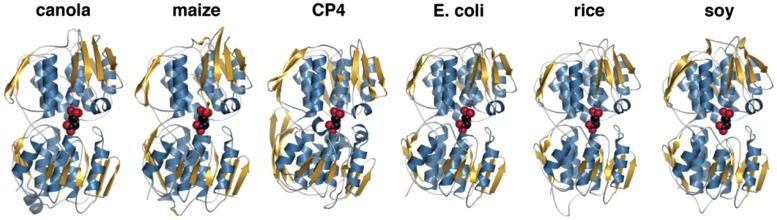
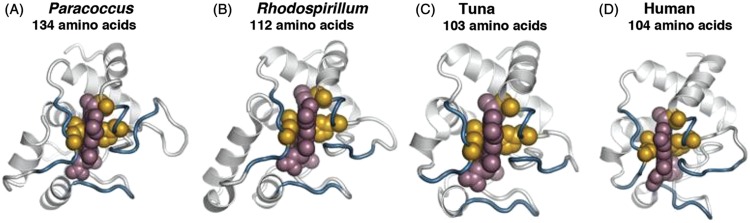
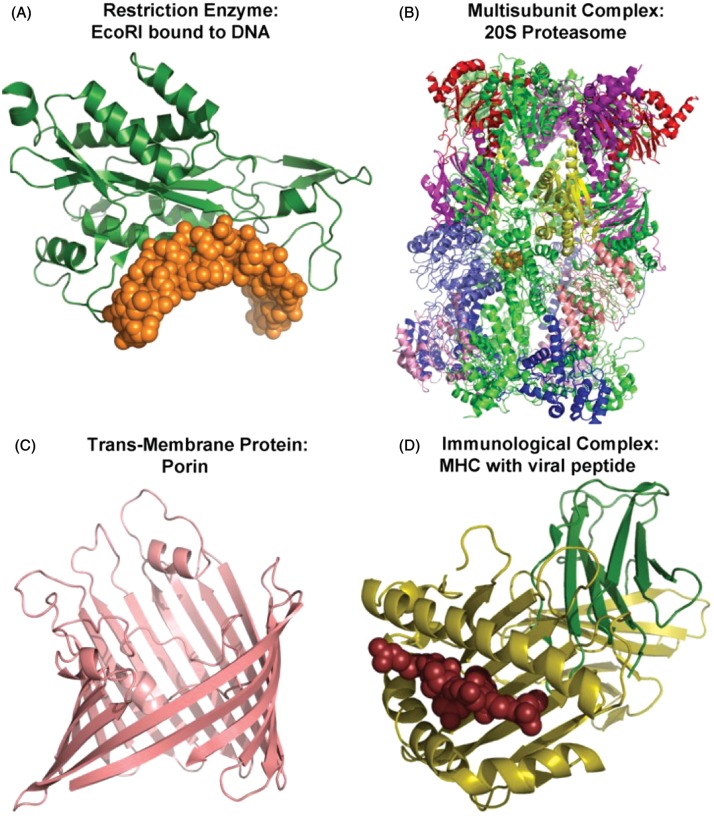
Verification
Claims the paper makes
The claims and statistics of this paper haven’t been checked yet.
Run the check — free, no account needed. It reads the open-access text and checks the sources it cites.
Claims other papers make about this one
Each is checked against this paper’s own text: does it say what the citing paper says it does?
In the citing paper
“Several groups reviewing the evidence for health hazards of genetic modification have found no evidence for harms;130-134 however, methods for such evaluation remain heterogeneous.135-139”
From Dietary and Policy Priorities for Cardiovascular Disease, Diabetes, and Obesity: A Comprehensive Review (2016) · cites this paper as [136]
Self-check
Percentages, sums and reported differences re-computed from the paper’s own numbers.
The self-check needs the paper’s full text.
Citations
Cites
The Pfam Protein Families Database
Bateman, A. G. (2002) · Nucleic Acids Research · doi:10.1093/nar/30.1.276 · Cited by 14,075
The Pfam protein families database
Punta, M., Coggill, P. C., Eberhardt, R. Y., Mistry, J., Tate, J., Boursnell, C., Pang, N., Forslund, K., Ceric, G., Clements, J., et al. (2012) · Nucleic Acids Research · doi:10.1093/nar/gkr1065 · Cited by 3,719
Proteins: Structures and Molecular Properties
Creighton, T. E. (1986) · Medical Entomology and Zoology · Cited by 2,645
Introduction to Protein Structure
Brändén, C.-I., & Tooze, J. (2012) · Garland Science eBooks · doi:10.1201/9781136969898 · Cited by 2,398
Implications of antinutritional components in soybean foods
Liener, I. E. (1994) · Critical Reviews in Food Science and Nutrition · doi:10.1080/10408399409527649 · Cited by 946
Textbook of Biochemistry with Clinical Correlations
(1983) · Biochemical Education · doi:10.1016/0307-4412(83)90121-8 · Cited by 918
Biophysical Chemistry: Part II: Techniques for the Study of Biological Structure and Function
Cantor, C. R., & SCHIMMEL, P. R. (1980) · Cited by 861
Kroes, R., Renwick, A. G. C., Cheeseman, M. A., Kleiner, J., Mangelsdorf, I., Piersma, A. H., Schilter, B., Schlatter, J. R., van Schothorst, F., Vos, J. G., et al. (2003) · Food and Chemical Toxicology · doi:10.1016/j.fct.2003.08.006 · Cited by 810
Proteins: Structures and molecular properties
Rb, F. (1985) · Trends in Biochemical Sciences · doi:10.1016/0968-0004(85)90239-7 · Cited by 669
Physiology and pathophysiology of intestinal absorption
Caspary, W. (1992) · American Journal of Clinical Nutrition · doi:10.1093/ajcn/55.1.299s · Cited by 612
Research works printed but not linked: 22
- Concon JM, 1988, Food toxicology, part a. principles and concepts, 405
- European Food Safety Authority (EFSA), 2005, EFSA J, 251, 1
- EFSA, 2005, EFSA J, 255, 1
- EFSA, 2005, EFSA J, 256, 1
- EFSA, 2005, EFSA J, 182, 1
- EFSA, 2006, EFSA J, 9, 1
- EFSA, 2007, EFSA J, 470, 1
- EFSA, 2007, EFSA J, 541, 1
- EFSA, 2008, Food Chem Toxicol, 46, S2
- EFSA, 2009, EFSA Sci Rep, 293, 1
- EFSA, 2009, EFSA J, 1074, 1
- EFSA, 2009, EFSA J, 1050, 1
- EFSA, 2009, EFSA J, 1137, 1
- EFSA, 2010, EFSA J, 8, 1564
- Hammond B, 2008, Food Safety of Proteins in Agricultural Biotechnology, 259
- ILSI, 2007, Sampling and Detection Methods for Products of Modern Agricultural Biotechnology in NAFTA Countries. ILSI International Food Biotechnology Committee (IFBiC) Workshop, October 11–12, 2007
- IPCS (International Programme on Chemical Safety), 1999, Environmental Health Criteria, 217, Microbial Pest Control Agent Bacillus thuringiensis
- O’Hagan DT, 1988, Crit Rev Ther Drug Carrier Syst, 4, 197
- Pearce RJ, 1989, Bull Int Dairy Fed, 238, 17
- Pyler EJ, 2009, Baking science & technology Vol. II: formulation and production
- US EPA, 2009, Position Paper on Scientific Issues Associated with the Data Required to Register Plant-Incorporated Protectants
- US EPA, 2010, Biopesticides Registration Action Document: Modified Cry3A Protein and the Genetic Material Necessary for its Production (Via Elements of pZM26) in Event MIR604 Corn SYN-IR604–8
Cited by
Sorted by citations
Items 101–110 of 110
Chappell, G. A. (2020) · Elsevier eBooks · doi:10.1016/b978-0-12-813724-6.00010-4
Genetically Modified Organisms (GMOs)
Miljuš‐Ðukić, J., & Đeri, B. B. (2020) · Encyclopedia of the UN sustainable development goals · doi:10.1007/978-3-319-95981-8_54
Zimmermann, C., Thundivalappil, S. R., Wilson-Mifsud, B., Boyle, S., Wang, Y., Lamb, I. M., Merrell, M., Mathesius, C. A., Fallers, M. N., Bultman, J., et al. (2025) · Food and Chemical Toxicology · doi:10.1016/j.fct.2025.115850
(GMO), E. P. O. G. M. O., Casacuberta, J., Barro, F., Braeuning, A., de Maagd, R. A., Epstein, M. M., Frenzel, T., Gallois, J., Koning, F., Messéan, A., et al. (2025) · EFSA Journal · doi:10.2903/j.efsa.2025.9753
(GMO), E. P. O. G. M. O., Casacuberta, J., Barro, F., Braeuning, A., de Maagd, R. A., Epstein, M. M., Frenzel, T., Gallois, J., Koning, F., Messéan, A., et al. (2025) · EFSA Journal · doi:10.2903/j.efsa.2025.9752
Birch, A. N., Casacuberta, J., De Schrijver, A., Gathmann, A., Gralak, M. A., Guerche, P., Jones, H., Manachini, B., Messéan, A., Naegeli, H., et al. (2015) · Zurich Open Repository and Archive (University of Zurich) · doi:10.5167/uzh-119992
Next-generation cry proteins for climate-resilient mosquito control and antimicrobial strategies
Annamalai, A. (2026) · Chemosphere · doi:10.1016/j.chemosphere.2026.144884
Expanding the weight of evidence for insecticidal protein risk assessment
Ferrari, A., Dumont, A. F., Moreno, F. J., Terron, A., Dewhurst, I. C., Goumperis, T., & Ardizzone, M. (2026) · Regulatory Toxicology and Pharmacology · doi:10.1016/j.yrtph.2026.106223
Nanotechnology and Genetically Modified Organisms for Agricultural Sustainability
Fernández-Bunster, G. C. (2026) · doi:10.1002/9781119808527.ch17
Wang, C., Brown, C. R., White, T., Anderson, B., Yin, Y., Bal, H. K., Preftakes, C. J., Wang, R., Saracco, S. A., Hodge-Bell, K., et al. (2026) · Plants · doi:10.20944/preprints202609.0346.v1
Metadata
- Authors
- Hammond, B., Kough, J., Herouet-Guicheney, C., Jez, J. M., & on behalf of the ILSI International Food Biotechnology Committee Task Force on the Use of Mammalian Toxicology Studies in the Safety Assessment of GM Foods
- Affiliations
- Monsanto (United States) (US)
- Environmental Protection Agency (US)
- Washington University in St. Louis (US)
- Corresponding author
- Hammond, Bruce
- ORCID
- Jez, Joseph M.
- Venue
- Critical Reviews in Toxicology
- Publisher
- Informa UK Limited
- Published
- 2013-10-28
- Volume
- 43
- Issue
- sup2
- Pages
- 25-42
- ISSN
- 0045-6446 (ISSN-L)
- 1040-8444
- 1547-6898
- PMC
- PMC3835160
- OpenAlex
- W2101621051
- Cited by
- 110
- References
- 124
- Citations by year
- 2026: 4 · 2025: 9 · 2024: 4 · 2023: 3 · 2022: 8 · 2021: 7 · 2020: 8 · 2019: 16 · 2018: 13 · 2017: 11 · 2016: 13 · 2015: 9 · 2014: 5
- FWCI
- 0.96
- Type
- journal article
- Language
- en
- Open access
- bronze
- doi.org
- Locations
- Critical Reviews in Toxicology (publishedVersion)
- Europe PMC (PubMed Central) (publishedVersion, cc-by-nc)
- PubMed Central (publishedVersion, cc-by-nc)
- PubMed (publishedVersion)
- Funders
- PepsiCo
- Daegu Haany University
- Universität Wien
- Chinese Center for Disease Control and Prevention
- Medizinische Universität Wien
- Novus International
- University of Illinois at Urbana-Champaign
- Topics
- Life Sciences › Agricultural and Biological Sciences › Plant Science › Genetically Modified Organisms Research
- Life Sciences › Agricultural and Biological Sciences › Food Science › Agricultural safety and regulations
- Life Sciences › Biochemistry, Genetics and Molecular Biology › Cancer Research › Carcinogens and Genotoxicity Assessment
- Keywords
- genetically modified crops, food safety, protein modification, protein denaturation, food processing, dietary exposure, toxicological evaluation
- MeSH terms
- Amino Acid Sequence, Animals, Humans, Plant Proteins, Proteins, Risk Assessment, Toxicity Tests, Plants, Genetically Modified, Food, Genetically Modified, Food Safety
About these checks
Registry, retraction, Cites and statistics results are computed, not judged, with one exception: a printed reference that no index lists is read once by a model before it counts as a citation error. Claims are extracted by a model and kept only when their quote appears verbatim in the text; each cited source is then checked, with a model’s help, for whether it says what the claim relies on. Those verdicts can be wrong — read the claim’s quote and the cited source before relying on one.
Statistics and arithmetic are recomputed, not judged.
Confidence bands are shown only for fields calibrated on our annotated test set. None is calibrated yet, so no band is shown.
What counts as a claim ›How we measure confidence ›How we check this ›
Are you an author, or do you see a problem with this page? Request a review
