

Prominent Misinformation Interventions Reduce Misperceptions but Increase Skepticism
Open accessThe DOI matches its Crossref record; 40 of the 40 references it cites were found in a registry or an index.
Abstract
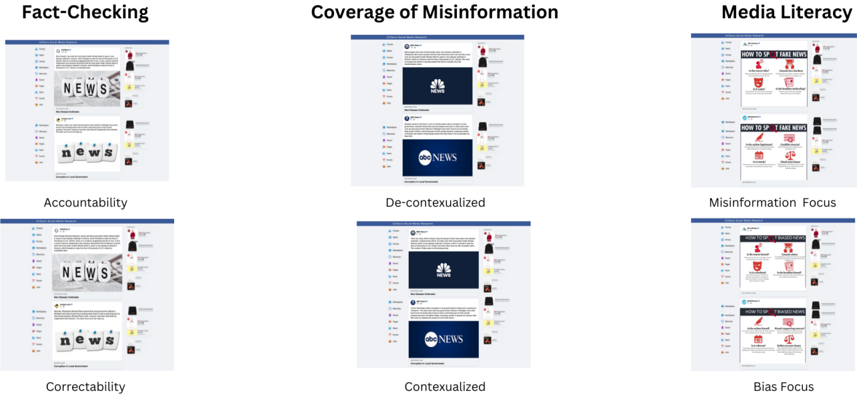
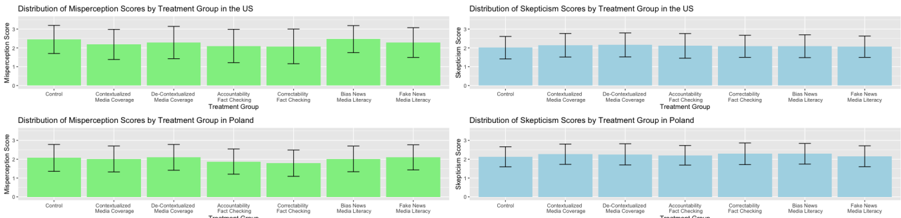
Current interventions to combat misinformation, including fact-checking, media literacy tips, and media coverage of misinformation, may have unintended democratic consequences. We propose that these interventions may increase skepticism toward all information, including accurate information. Across three online survey experiments in three diverse countries (the US, Poland, and Hong Kong, total N = 6127), we test the unintended consequences of existing strategies and compare them with three alternative interventions against misinformation. We examine how exposure to fact-checking, media literacy tips, and media coverage of misinformation affects individuals' perception of both factual and false information, as well as their trust in key democratic institutions. Our results show that while all interventions successfully reduce belief in false information, they also negatively impact the credibility of factual information. This highlights the need for further improved strategies that minimize the harms and maximize the benefits of interventions against misinformation.
Overview
The claims and statistics of this paper haven’t been checked yet.
Free: it reads the open-access text and checks the first 5 claims that cite a source we can check. Create a free account to check every claim.
Integrity signals
Registry
Cites
Statistics
Figures



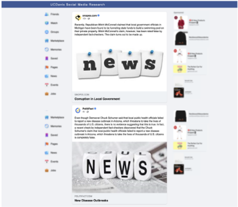
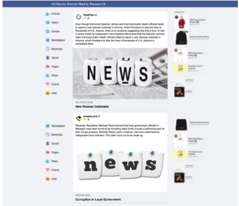
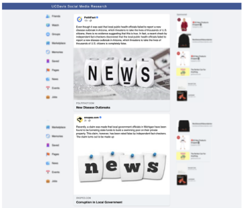
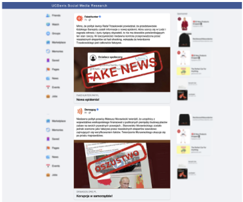


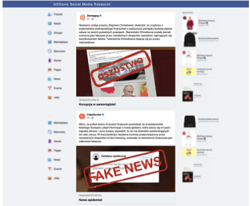
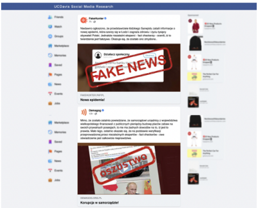


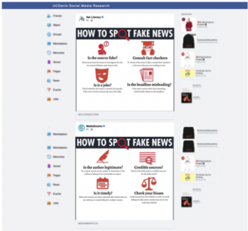
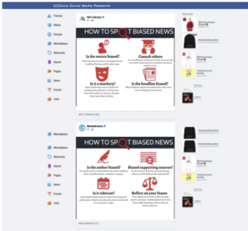






Verification
Claims the paper makes
The claims and statistics of this paper haven’t been checked yet.
Free: it reads the open-access text and checks the first 5 claims that cite a source we can check. Create a free account to check every claim.
Claims other papers make about this one
Each is checked against this paper’s own text: does it say what the citing paper says it does?
In the citing paper
“recent research finds that this not only reduces belief in false information, but in all information (Hoes et al., 2023).”
From On manipulation by emotional AI: UK adults’ views and governance implications (2024) · cites this paper as Hoes et al., 2023
Self-check
Percentages, sums and reported differences re-computed from the paper’s own numbers.
The self-check needs the paper’s full text.
Citations
Cites
Attitudinal Effects of Mere Exposure
Zajonc, R. B. (1968) · Journal of Personality and Social Psychology · doi:10.1037/h0025848 · Cited by 6,745
(1999) · Cited by 6,104
Lazer, D. M. J., Baum, M. A., Benkler, Y., Berinsky, A. J., Greenhill, K. M., Menczer, F., Metzger, M. J., Nyhan, B., Pennycook, G., Rothschild, D., et al. (2018) · Science · doi:10.1126/science.aao2998 · Cited by 4,160
When Corrections Fail: The Persistence of Political Misperceptions
Nyhan, B., & Reifler, J. (2010) · Political Behavior · doi:10.1007/s11109-010-9112-2 · Cited by 3,173
Pennycook, G., & Rand, D. G. (2019) · Cognition · doi:10.1016/j.cognition.2018.06.011 · Cited by 2,022
Fake news on Twitter during the 2016 U.S. presidential election
Grinberg, N., Joseph, K., Friedland, L., Swire-Thompson, B., & Lazer, D. (2019) · Science · doi:10.1126/science.aau2706 · Cited by 1,803
Measuring the impact of COVID-19 vaccine misinformation on vaccination intent in the UK and USA
Loomba, S., de Figueiredo, A., Piatek, S. J., de Graaf, K., & Larson, H. J. (2021) · Nature Human Behaviour · doi:10.1038/s41562-021-01056-1 · Cited by 1,800
Less than you think: Prevalence and predictors of fake news dissemination on Facebook
Guess, A., Nagler, J., & Tucker, J. (2019) · Science Advances · doi:10.1126/sciadv.aau4586 · Cited by 1,652
Susceptibility to misinformation about COVID-19 around the world
Roozenbeek, J., Schneider, C. R., Dryhurst, S., Kerr, J., Freeman, A. L. J., Recchia, G., van der Bles, A. M., & van der Linden, S. (2020) · Royal Society Open Science · doi:10.1098/rsos.201199 · Cited by 1,447
Shifting attention to accuracy can reduce misinformation online
Pennycook, G., Epstein, Z., Mosleh, M., Arechar, A. A., Eckles, D., & Rand, D. G. (2021) · Nature · doi:10.1038/s41586-021-03344-2 · Cited by 1,155
Research works printed but not linked: 1
- Guess, A., Lockett, D., Lyons, B., Montgomery, J., Nyhan, B., & Reifler, J. (2020). "fake news" may have limited effects beyond increasing beliefs in false claims. Harvard Kennedy School Misinformation Review , 1 (1).
Cited by
Why misinformation must not be ignored.
Ecker, U. K. H., Tay, L. Q., Roozenbeek, J., van der Linden, S., Cook, J., Орескес, Н., & Lewandowsky, S. (2025) · American Psychologist · doi:10.1037/amp0001448 · Cited by 92
Exposure to Higher Rates of False News Erodes Media Trust and Fuels Overconfidence
Altay, S., Lyons, B. A., & Modirrousta-Galian, A. (2024) · Mass Communication & Society · doi:10.1080/15205436.2024.2382776 · Cited by 84
Labeling AI-Generated Content: Promises, Perils, and Future Directions
Wittenberg, C., Epstein, Z., Berinsky, A. J., & Rand, D. G. (2024) · An MIT Exploration of Generative AI · doi:10.21428/e4baedd9.0319e3a6 · Cited by 74
Altay, S., Angelis, A. D., & Hoes, E. (2024) · Communications Psychology · doi:10.1038/s44271-024-00121-5 · Cited by 66
Self-citationCountering misinformation through psychological inoculation
van der Linden, S. (2023) · Advances in experimental social psychology · doi:10.1016/bs.aesp.2023.11.001 · Cited by 70
van der Linden, S., Albarracín, D., Fazio, L. K., Freelon, D., Roozenbeek, J., Swire‐Thompson, B., & Bavel, J. J. V. (2026) · American Psychologist · doi:10.1037/amp0001598 · Cited by 61
Following news on social media boosts knowledge, belief accuracy and trust
Altay, S., Hoes, E., & Wojcieszak, M. (2025) · Nature Human Behaviour · doi:10.1038/s41562-025-02205-6 · Cited by 52
Self-citationSpotting false news and doubting true news: a systematic review and meta-analysis of news judgements
Pfänder, J., & Altay, S. (2025) · Nature Human Behaviour · doi:10.1038/s41562-024-02086-1 · Cited by 41
Unmasking AI: Informing Authenticity Decisions by Labeling AI-Generated Content
Burrus, O., Curtis, A., & Herman, L. M. (2024) · interactions · doi:10.1145/3665321 · Cited by 41
A signal detection theory meta-analysis of psychological inoculation against misinformation
Simchon, A., Zipori, T., Teitelbaum, L., Lewandowsky, S., & van der Linden, S. (2025) · Current Opinion in Psychology · doi:10.1016/j.copsyc.2025.102194 · Cited by 39
Lyons, B. A., King, A. J., & Kaphingst, K. A. (2024) · Annals of Behavioral Medicine · doi:10.1093/abm/kaae054 · Cited by 35
Mapping, understanding and reducing belief in misinformation about electric vehicles
Bretter, C., Pearson, S. G., Hornsey, M. J., MacInnes, S., Sassenberg, K., Wade, B., & Winter, K. (2025) · Nature Energy · doi:10.1038/s41560-025-01790-0 · Cited by 35
On manipulation by emotional AI: UK adults’ views and governance implications
Bakir, V., Laffer, A., McStay, A., Miranda, D., & Urquhart, L. (2024) · Frontiers in Sociology · doi:10.3389/fsoc.2024.1339834 · Cited by 34
Epistemic Vulnerability: Theory and Measurement at the System Level
Labarre, J. (2024) · Political Communication · doi:10.1080/10584609.2024.2363545 · Cited by 34
Investigating the long-term impact of misinformation interventions in upper secondary education
Nygren, T., & Efimova, E. (2025) · PLoS ONE · doi:10.1371/journal.pone.0326928 · Cited by 29
When Truth Trumps Facts: Studies on Partisan Moral Flexibility in American Politics
Kim, M. J., Hahl, O., Poskanzer, E. J., & Zuckerman, E. W. (2024) · American Journal of Sociology · doi:10.1086/730763 · Cited by 28
Kuru, O. (2024) · Journal of Communication · doi:10.1093/joc/jqae032 · Cited by 28
Counteracting socially endorsed misinformation through an emotion-fallacy inoculation
Traberg, C. S., Morten, T., & van der Linden, S. (2024) · advances.in/psychology · doi:10.56296/aip00017 · Cited by 26
The Psychology of Misinformation Across the Lifespan
Edelson, S. M., Reyna, V. F., Singh, A., & Roue, J. E. (2024) · Annual Review of Developmental Psychology · doi:10.1146/annurev-devpsych-010923-093547 · Cited by 21
Shibuya, Y., Nakazato, T., & Takagi, S. (2025) · International Journal of Human-Computer Studies · doi:10.1016/j.ijhcs.2025.103485 · Cited by 19
Conducting ethical misinformation research: Deception, dialogue, and debriefing
Murphy, G., & Greene, C. M. (2023) · Current Opinion in Psychology · doi:10.1016/j.copsyc.2023.101713 · Cited by 18
Alyukov, M., & Zavadskaya, M. (2026) · Perspectives on Politics · doi:10.1017/s153759272610454x · Cited by 18
Community Notes are Vulnerable to Rater Bias and ManipulationPreprint
Truong, B. T., Wu, S., Flammini, A., Menczer, F., & Stewart, A. J. (2025) · arXiv (Cornell University) · doi:10.48550/arxiv.2511.02615 · Cited by 18
Specific media literacy tips improve AI-generated visual misinformation discernment
Guo, S., Swire‐Thompson, B., & Hu, X. (2025) · Cognitive Research Principles and Implications · doi:10.1186/s41235-025-00648-z · Cited by 19
International AI Safety Report
Bengio, Y., Mindermann, S., Privitera, D., Besiroglu, T., Bommasani, R., Casper, S., Choi, Y., Fox, P., Garfinkel, B., Goldfarb, D., et al. (2025) · arXiv · doi:10.48550/arxiv.2501.17805 · Cited by 16
Science and the crisis of trust
van der Meer, T. G. L. A., & Hameleers, M. (2025) · Current Opinion in Psychology · doi:10.1016/j.copsyc.2025.102202 · Cited by 17
Media Literacy in a Digital Age: Taking Stock and Empowering Action
d’Haenens, L., & Joris, W. (2025) · Media and Communication · doi:10.17645/mac.9759 · Cited by 17
Moruzzi, C., Tallyn, E., Liddell, F., Dixon, B., Collomosse, J. P., & Elsden, C. (2025) · Creativity and Cognition · doi:10.1145/3698061.3726918 · Cited by 15
Who is concerned about online false news and why? Evidence from 46 countries between 2018 and 2023
Altay, S. (2025) · Information Communication & Society · doi:10.1080/1369118x.2025.2551615 · Cited by 15
Designing Effective Digital Literacy Interventions for Boosting Deepfake Discernment
Geissler, D., Robertson, C. E., & Feuerriegel, S. (2026) · CHI Conference on Human Factors in Computing Systems · doi:10.1145/3772318.3790428 · Cited by 15
(Media Attention to) Misinformation can Undermine Trust in Information ScientistsPreprint
Hoes, E., von Hohenberg, B. C., Gessler, T., Qian, S., & Wojcieszak, M. (2022) · PsyArXiv (OSF Preprints) · doi:10.31234/osf.io/4m92p · Cited by 14
Self-citationMadrid‐Morales, D., & Wasserman, H. (2024) · African Journalism Studies · doi:10.1080/23743670.2025.2475761 · Cited by 13
Rethinking the problem of misinformation and its solutions
Altay, S. (2026) · New Media & Society · doi:10.1177/14614448261428635 · Cited by 12
Kiili, C., Kiili, K. J. M., Räikkönen, E., & Coiro, J. (2025) · Computers & Education · doi:10.1016/j.compedu.2025.105252 · Cited by 11
Lamprou, E., & Αντωνόπουλος, Ν. (2023) · Studies in Media and Communication · doi:10.11114/smc.v11i6.6166 · Cited by 11
Analysis of pseudoscientific beliefs in quantum mechanics of high school students and teachers
Sciarretta, W., Bondani, M., Galano, S., Malgieri, M., Onorato, P., & Testa, I. (2024) · Physical Review Physics Education Research · doi:10.1103/physrevphyseducres.20.020145 · Cited by 11
Visual deception in online dating: How gender shapes AI-generated image detection
Ivan, L. (2025) · Computers in Human Behavior Artificial Humans · doi:10.1016/j.chbah.2025.100208 · Cited by 10
Bypassing versus correcting misinformation: Efficacy and fundamental processes.
Samayoa, J. A. G., & Albarracín, D. (2025) · Journal of Experimental Psychology General · doi:10.1037/xge0001687 · Cited by 10
Populist Attitudes and Misinformation Challenging Trust: The Case of Turkey
Erişen, C., & Erişen, E. (2024) · International Journal of Public Opinion Research · doi:10.1093/ijpor/edae056 · Cited by 11
Understanding AI Disclosure Needs for News Production and Journalism
Venkatraj, K. P., Morosoli, S., Cools, H., Naudts, L., de Vreese, C. H., Helberger, N., Cesar, P. S., & Ali, A. E. (2025) · International Conference on Mobile and Ubiquitous Multimedia (MUM) · doi:10.1145/3771882.3771899 · Cited by 9
The complexity of misinformation extends beyond virus and warfare analogies
Frischlich, L., Olsson, H., Roy, A., Schulze, H., Rhodes, S., & Mansheim, A. S. (2025) · npj Complexity · doi:10.1038/s44260-025-00053-z · Cited by 9
Independent fact-checking organizations exhibit a departure from political neutralityPreprint
Singh, S., Masud, S., & Chakraborty, T. (2024) · arXiv (Cornell University) · doi:10.48550/arxiv.2407.19498 · Cited by 9
Automated Propaganda: Labeling AI ‐Generated Political Content Should Not be Required by Law
Chomanski, B., & Lauwaert, L. (2025) · Journal of Applied Philosophy · doi:10.1111/japp.70002 · Cited by 9
(Media Attention to) Misinformation Can Undermine Trust in Scientists
Hoes, E., von Hohenberg, B. C., Gessler, T., Qian, S., & Wojcieszak, M. (2025) · Political Behavior · doi:10.1007/s11109-025-10090-y · Cited by 8
Self-citationXue, H., Zhang, J., & Zhang, X. (2025) · Social Media + Society · doi:10.1177/20563051251318172 · Cited by 8
Self-citationČejková, L., & Macková, A. (2025) · Journal of Information Technology & Politics · doi:10.1080/19331681.2025.2465317 · Cited by 7
Hameleers, M., & van der Meer, T. G. L. A. (2025) · Political Communication · doi:10.1080/10584609.2025.2514595 · Cited by 7
O’Mahony, C., Murphy, G., & Linehan, C. (2024) · advances.in/psychology · doi:10.56296/aip00030 · Cited by 7
Causal Inference with Unobserved Confounding: Leveraging Negative Control Outcomes Using Lavaan
Loh, W. W. (2025) · Multivariate Behavioral Research · doi:10.1080/00273171.2025.2507742 · Cited by 7
Unbundling Digital Media Literacy Tips: Results from Two Experiments
Guess, A. M., McGregor, S. C., Pennycook, G., & Rand, D. G. (2026) · Political Behavior · doi:10.1007/s11109-026-10165-4 · Cited by 7
Children and digital misinformation: A scoping review
Berg, F. S. A., Lundtofte, T. E., Heiselberg, L., & Frischlich, L. (2025) · Global Studies of Childhood · doi:10.1177/20436106251398608 · Cited by 6
Effects of a News Literacy Video on News Literacy Perceptions and Misinformation Evaluation
Tang, R., Tully, M., Bode, L., & Vraga, E. K. (2025) · Media and Communication · doi:10.17645/mac.8983 · Cited by 6
Following News on Social Media Boosts Knowledge, Belief Accuracy, and TrustPreprint
Altay, S., Hoes, E., & Wojcieszak, M. (2025) · PsyArXiv (OSF Preprints) · doi:10.31234/osf.io/hq5ru_v2 · Cited by 6
Self-citationStrengthening the foundation: Extending beyond moral framing to overcome DEI backlash
Bogart, S. M., & Dhanani, L. Y. (2025) · Industrial and Organizational Psychology · doi:10.1017/iop.2025.5 · Cited by 5
Time is the fire in which message effects burn: Decay and sustenance of correction effects over time
Chae, J. H., Groeling, T. J., & Song, H. (2025) · Journal of Communication · doi:10.1093/joc/jqaf030 · Cited by 6
Loh, W. W., & Ren, D. (2025) · Advances in Methods and Practices in Psychological Science · doi:10.1177/25152459251359623 · Cited by 5
The limits of epidemiological models of misinformation
Yee, A. K. (2025) · Synthese · doi:10.1007/s11229-025-05246-6 · Cited by 5
Qian, S., Shen, C., Wang, H., & Cho, H. (2026) · New Media & Society · doi:10.1177/14614448261448549 · Cited by 5
(Media Attention to) Misinformation can Undermine Trust in ScientistsPreprint
Hoes, E., von Hohenberg, B. C., Gessler, T., Qian, S., & Wojcieszak, M. (2025) · PsyArXiv (OSF Preprints) · doi:10.31234/osf.io/4m92p_v2 · Cited by 5
Self-citationDigital Literacy Interventions Can Boost Humans in Discerning DeepfakesPreprint
Geissler, D., Robertson, C. E., & Feuerriegel, S. (2025) · SSRN Electronic Journal · doi:10.2139/ssrn.5368742 · Cited by 5
Ghazi, M., Lemaire, M., Stanc, L. L., Létang, M., Citron, P., Decrombecque, E., Mousset, C., Cassotti, M., & Borst, G. (2025) · Computers in Human Behavior Reports · doi:10.1016/j.chbr.2025.100788 · Cited by 4
Scantamburlo, T., & Zollo, F. (2026) · ACM Transactions on the Web · doi:10.1145/3796546 · Cited by 4
Does fact-checking influence media trust? Longitudinal evidence from Flanders
Wouters, F., Franckx, L. W., Zarouali, B., & Opgenhaffen, M. (2025) · European Journal of Communication · doi:10.1177/02673231251400203 · Cited by 4
Echoes of Doubt: Exposure to Information About Generative AI Decreases Believability of News
Tulin, M., Pantazi, M., Starke, C., Sivolap, M., & Dobber, T. (2025) · International journal of communication · Cited by 6
An inductive learning intervention to improve news veracity discernment.
Modirrousta-Galian, A., Seabrooke, T., Hanoch, Y., Kelley, N. J., & Higham, P. A. (2026) · Journal of Experimental Psychology Applied · doi:10.1037/xap0000580 · Cited by 4
Altay, S., Hoes, E., & Wojcieszak, M. (2024) · PsyArXiv (OSF Preprints) · doi:10.31234/osf.io/hq5ru · Cited by 6
Self-citationCountering information pollution to protect democracyPreprint
Sinanoğlu, S., & Breuer, A. (2024) · RePEc: Research Papers in Economics · doi:10.23661/ipb29.2024 · Cited by 4
Höltervennhoff, S., Ricker, J., Raphael, M. M., Schwedes, C., Weil, R., Fischer, A., Holz, T., Schönherr, L., & Fahl, S. (2026) · Proceedings of the 2026 CHI Conference on Human Factors in Computing Systems · doi:10.1145/3772318.3791006 · Cited by 3
Is trust a zero-sum game? What happens when institutional sources get it wrong
Dawson, A., Bista, A., & Wilson, A. E. (2025) · PLoS ONE · doi:10.1371/journal.pone.0321743 · Cited by 3
Chao, F., Zhou, Q., Yu, G., & Sun, Y. (2025) · Humanities and Social Sciences Communications · doi:10.1057/s41599-025-05772-1 · Cited by 3
Platform-generated misinformation warning labels during disasters: A U.S.-China comparative study
Zhang, C. S., & Kim, S. (2025) · Telematics and Informatics · doi:10.1016/j.tele.2025.102356 · Cited by 3
Let’s dismiss the term ‘fake news’ to combat misinformation
Acharya, U. (2025) · Nepali Media Issue of Ethics and Sustainability · doi:10.62657/pcnj25a · Cited by 3
Calabrese, C. R., Xue, H., Zhang, X., & Oh, Y. J. (2026) · Science Communication · doi:10.1177/10755470261418533 · Cited by 4
Gong, Z., Peng, D., Cui, J., & Lv, Z. (2026) · Frontiers in Psychology · doi:10.3389/fpsyg.2026.1751670 · Cited by 3
Video inoculation against election misinformation across 12 EU nations
Biddlestone, M., Goldberg, B., Basol, M., Washington, K. O., Elnusairi, S., Sharpley, A., Graham, M., van der Linden, S., Green, R., Roozenbeek, J., et al. (2026) · Communications Psychology · doi:10.1038/s44271-025-00379-3 · Cited by 3
Prosocial Design in Trust and Safety
Gruning, D., & Kamin, J. (2026) · Routledge eBooks · doi:10.1201/9781003621072-16 · Cited by 4
Correlates of and counterstrategies to news non-use: systematic review and prescriptive framework
Wertz, B., & Wojcieszak, M. (2026) · Annals of the International Communication Association · doi:10.1093/anncom/wlag023 · Cited by 3
Self-citationWhy the marketplace of ideas needs more markets
Chomanski, B. (2025) · Episteme · doi:10.1017/epi.2024.48 · Cited by 3
A Vision for Reinventing Credible Elections with Artificial Intelligence
Srivastava, B. (2025) · Proceedings of the AAAI Conference on Artificial Intelligence · doi:10.1609/aaai.v39i27.35086 · Cited by 3
Regaining Scientific Authority in a Post-Truth Landscape
Petzold, A. M., & Nichols, M. D. (2025) · Publications · doi:10.3390/publications13040065 · Cited by 3
Enhancing public support for international sanctions: An information provision experiment
Kantorowicz, J., & Kantorowicz‐Reznichenko, E. (2026) · European Journal of Political Research · doi:10.1017/s1475676526100656 · Cited by 3
Hoes, E. (2024) · PsyArXiv (OSF Preprints) · doi:10.31234/osf.io/c5gzd · Cited by 3
Self-citationAn Inductive Learning Intervention to Improve News Veracity DiscernmentPreprint
Modirrousta-Galian, A., Seabrooke, T., Hanoch, Y., Kelley, N. J., & Higham, P. A. (2024) · PsyArXiv (OSF Preprints) · doi:10.31234/osf.io/6j7fr · Cited by 3
Shoves, nudges and combating misinformation: evidence on a new approach
Porter, E. V., Wood, T., Broniatowski, D. A., & Hosseini, P. (2024) · Behavioural Public Policy · doi:10.1017/bpp.2024.42 · Cited by 2
The role of epistemic norms in mitigating the spread of misinformation
Barnoy, A., Bakbani-Elkayam, S., Miller, B., & Keren, A. (2025) · New Media & Society · doi:10.1177/14614448251385917 · Cited by 2
Evaluation Metrics for Misinformation Warning Interventions: Challenges and Prospects
Zubairu, H. A., Abdou, A., & Matrawy, A. (2025) · International Journal of Human-Computer Interaction · doi:10.1080/10447318.2025.2597504 · Cited by 2
Dobber, T., Hameleers, M. M. T. L., Starke, C., & van der Meer, T. G. L. A. (2025) · International journal of communication · Cited by 2
Academic Librarians’ Responses to Mis/Disinfomation: A Cross-Country Study
Boustany, J., Saunders, L., Brylska, K., Chowdhury, S., Fontanin, M., Franke, F., Fujita, M. S. L., Hakon, L., Henninger, M., Johnston, N., et al. (2026) · Communications in computer and information science · doi:10.1007/978-3-032-17272-3_50 · Cited by 2
Gatri, E. (2026) · Sustainability · doi:10.3390/su18094589 · Cited by 2
Mistrust as a precondition for critical thinking and media literacy
Park, S., Notley, T., Thomson, T. J., Hourigan, A., & Dezuanni, M. (2026) · Information Communication & Society · doi:10.1080/1369118x.2026.2678363 · Cited by 2
La ciudadanía digital en el siglo XXI: un desafío educativo en la era de la inteligencia artificial
Ahumada, F. S. (2026) · Calidad en la educación · doi:10.31619/caledu.n64.1558 · Cited by 2
Kanniainen, L., Tolvanen, A. J., Räikkönen, E., Anttonen, R., Kendeou, P., & Kiili, C. (2026) · Educational Assessment Evaluation and Accountability · doi:10.1007/s11092-026-09513-z · Cited by 2
Hart, W., Lambert, J. T., & Hall, B. T. (2025) · The Journal of Psychology · doi:10.1080/00223980.2025.2538176 · Cited by 2
Altay, S., Angelis, A. D., & Hoes, E. (2023) · PsyArXiv (OSF Preprints) · doi:10.31234/osf.io/5gckb_v1 · Cited by 2
Self-citationSpotting false news and doubting true news: a systematic review and meta-analysis of news judgementsPreprint
Pfänder, J., & Altay, S. (2023) · OSF Preprints (OSF Preprints) · doi:10.31219/osf.io/n9h4y_v1 · Cited by 2
A cognitive perspective on trust in science
Pfänder, J. (2025) · theses.fr (ABES) · doi:10.70675/d7e5dff4zccb2z468dz99d0z25a55d405ce5 · Cited by 2
Community corrections have divergent downstream effects across corrected accountsPreprint
Chuai, Y., Renault, T., Pröllochs, N., Lenzini, G., & Mosleh, M. (2026) · arXiv (Cornell University) · doi:10.48550/arxiv.2608.27526 · Cited by 2
Spiridonova, T., Stavrova, O., & van Beest, I. (2025) · Journal of Experimental Social Psychology · doi:10.1016/j.jesp.2025.104806 · Cited by 1
Information Integrity in a Digital Age
Huskey, R., Hether, H. J., & Kim, S. (2025) · Journal of Media Psychology Theories Methods and Applications · doi:10.1027/1864-1105/a000477 · Cited by 1
Known Unknowns in Motivated Reasoning: A Closer Look at Three Open Questions
Hutmacher, F., Reichardt, R., & Altenmüller, M. S. (2025) · Collabra Psychology · doi:10.1525/collabra.147252 · Cited by 1
Metadata
- Authors
- Hoes, E., Aitken, B., Zhang, J., Gackowski, T., & Wojcieszak, M.
- Affiliations
- University of Zurich (CH)
- University of California, Davis (US)
- University of Warsaw (PL)
- Publisher
- Center for Open Science
- Published
- 2023-05-10
- OpenAlex
- W4376143771
- Cited by
- 21
- References
- 39
- Citations by year
- 2026: 3 · 2025: 3 · 2024: 9 · 2023: 5
- Type
- posted content
- Language
- en
- Open access
- green
- doi.org
- Locations
- PsyArXiv (OSF Preprints) (submittedVersion)
- PsyArXiv (OSF Preprints) (submittedVersion, cc-by)
- Funders
- H2020 European Research Council (756301)
- Topics
- Social Sciences › Sociology and Political Science › Misinformation and Its Impacts
- Social Sciences › Communication › Communication and COVID-19 Impact
- Social Sciences › Sociology and Political Science › Media Influence and Politics
- Keywords
- misinformation interventions, fact-checking, media literacy, skepticism, misunderstanding, trust in democratic institutions, unintended consequences
About these checks
Registry, retraction, Cites and statistics results are computed, not judged, with one exception: a printed reference that no index lists is read once by a model before it counts as a citation error. Claims are extracted by a model and kept only when their quote appears verbatim in the text; each cited source is then checked, with a model’s help, for whether it says what the claim relies on. Those verdicts can be wrong — read the claim’s quote and the cited source before relying on one.
Statistics and arithmetic are recomputed, not judged.
Confidence bands are shown only for fields calibrated on our annotated test set. None is calibrated yet, so no band is shown.
What counts as a claim ›How we measure confidence ›How we check this ›
Are you an author, or do you see a problem with this page? Request a review
Data sources
Bibliographic data: Semantic Scholar, OpenAlex, Crossref.
Contains information from the Semantic Scholar Academic Graph Datasets, made available under the ODC Attribution License (ODC-BY 1.0).
Semantic Scholar’s data is described in: Kinney, R., et al. (2023). The Semantic Scholar Open Data Platform. arXiv:2301.10140.
