

Gold deposits of the Carolina Slate Belt, southeastern United States--Age and origin of the major gold producers
Open accessThe DOI matches its Crossref record; 33 of the 35 references it cites were found in a registry or an index; none of the 38 sources its claims cite is checked for support yet.
Abstract
applied to rocks of the Carolina Slate Belt, and by extension, the Carolinian-Avalonian tectonic zone of North America, benefit from applying subvolcanic
Overview
CoChat Summary
TL;DR
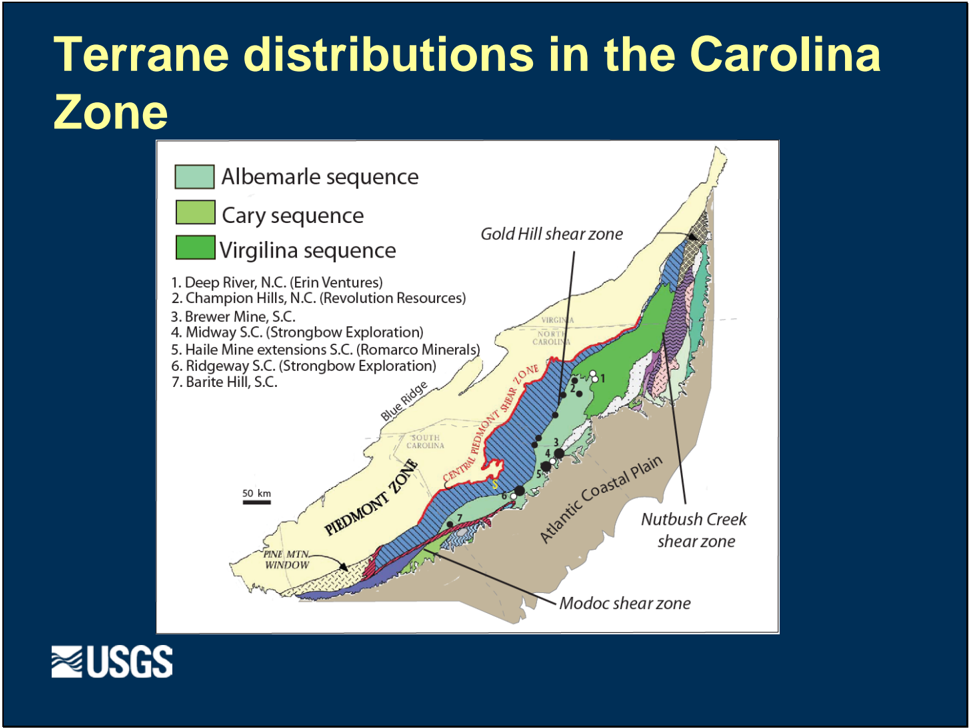
The report synthesizes the age and origin of major gold deposits in the Carolina Slate Belt, arguing that the largest deposits, Haile and Ridgeway, are low-sulfidation epithermal systems, while Brewer is high-sulfidation and Barite Hill is Au-VMS. It combines geochronology, isotopes, fluid inclusions, and ore textures to support epithermal models and regional exploration potential.
Key findings
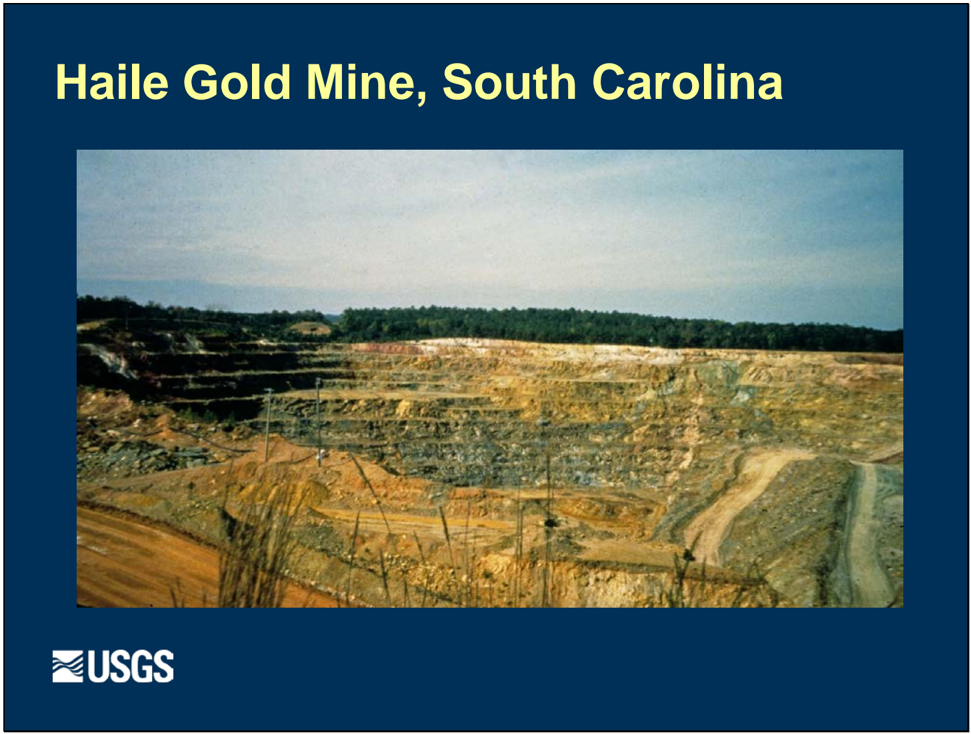
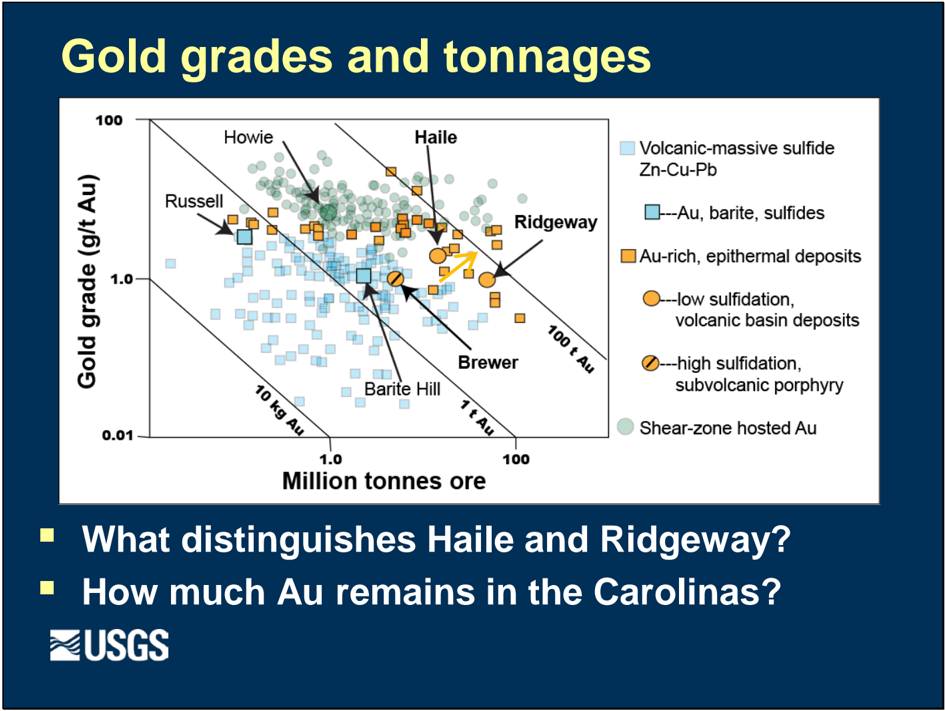
- Major historic deposits include Haile (~4.2 Moz Au), Ridgeway (~1.5 Moz Au), Brewer (~0.25 Moz Au), and Barite Hill (0.6 Moz Au). For Haile, the report lists Measured and Indicated resources of 71.2 million tonnes at 1.77 g/t for 4,000,000 oz Au, Inferred resources of 20.1 million tonnes at 1.24 g/t for 800,000 oz Au, and Proven and Probable reserves of 30.5 million tonnes at 2.06 g/t for 2,000,000 oz Au; the text also states historic production of ~50 metric tons plus ~115 metric tons newly delineated, totaling well over 160 metric tons (~5.6 Moz Au).
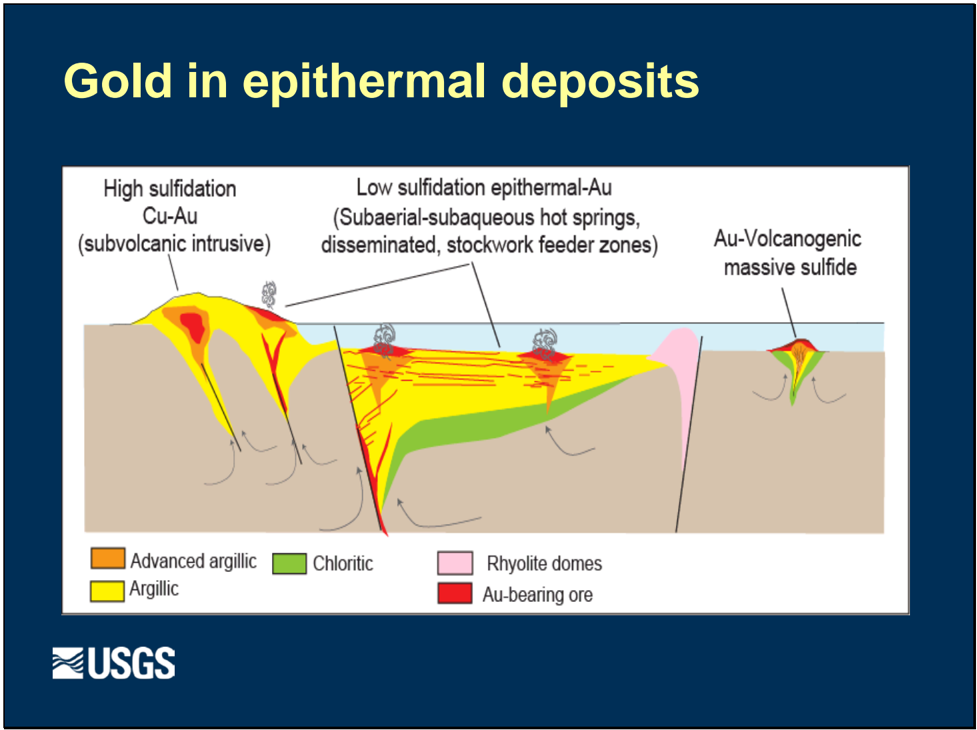
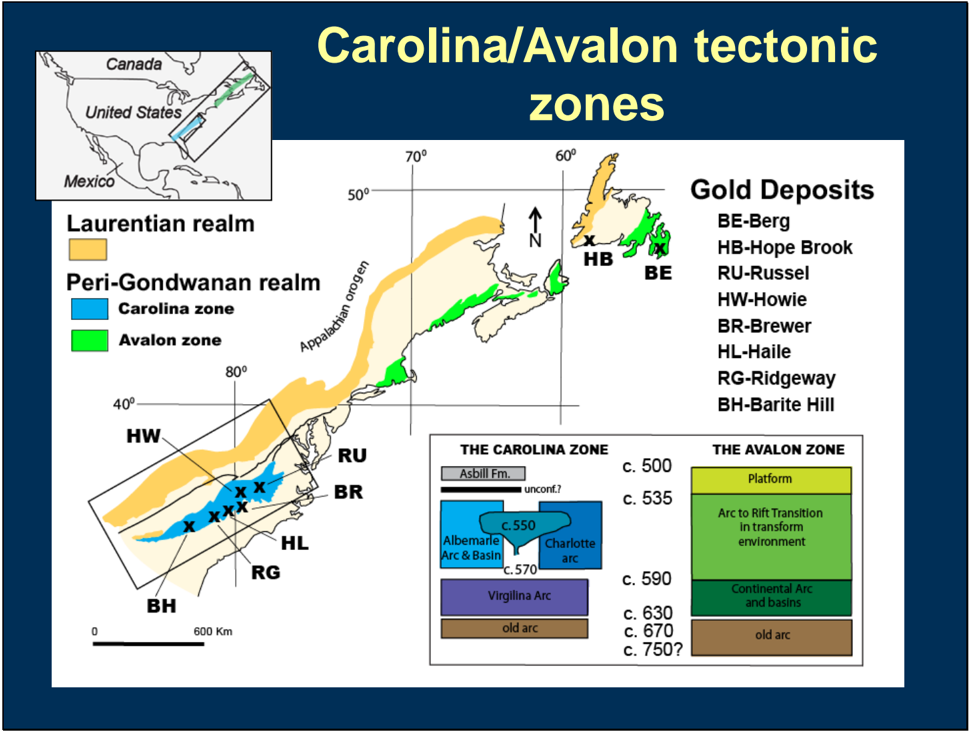
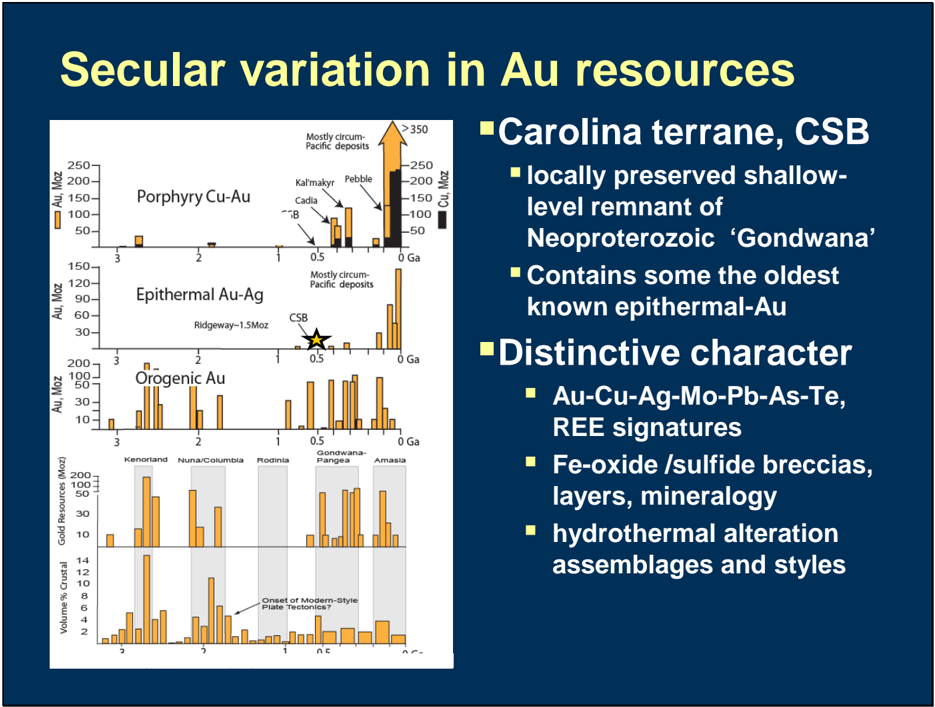
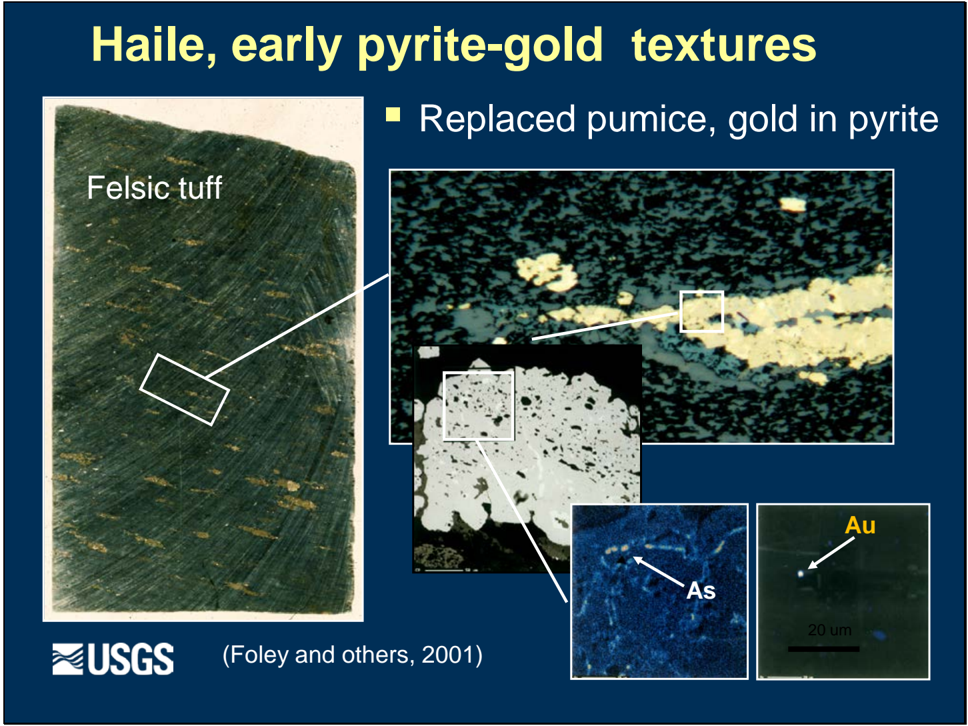
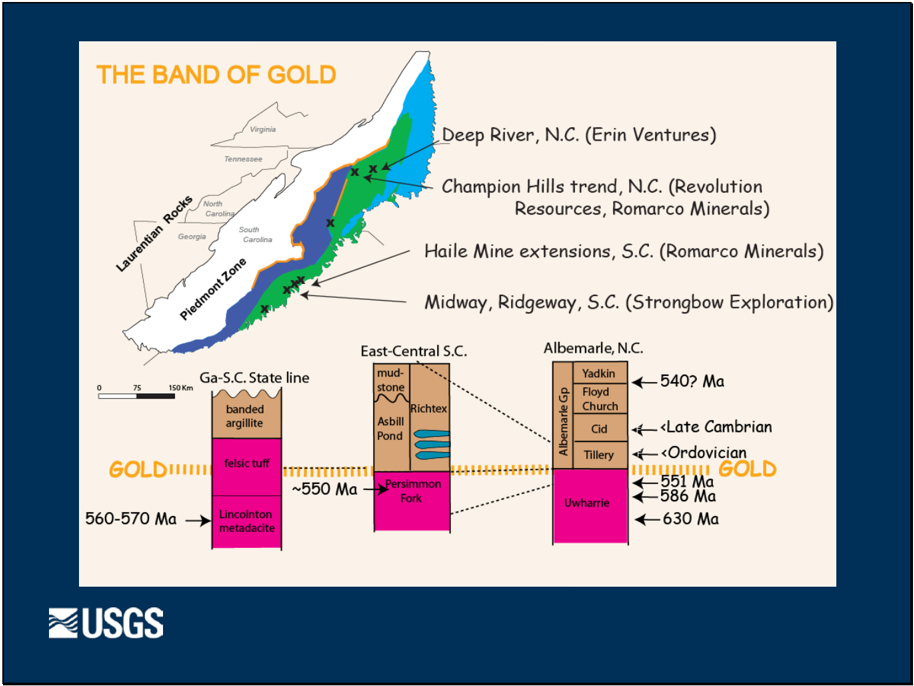
- Deposit models are assigned as follows: Brewer is high-sulfidation epithermal with enargite-pyrite-chalcopyrite-gold; Haile and Ridgeway are low-sulfidation epithermal with pyrite-gold and colloform textures; Barite Hill is Au-VMS; Howie and Gold Hill shear-zone deposits are orogenic-style. A major gold mineralizing event at about 550 Ma is coeval with mature arc-related volcanism dated at 556–550 Ma, while Deep River molybdenite ages are 543 and 532 Ma.
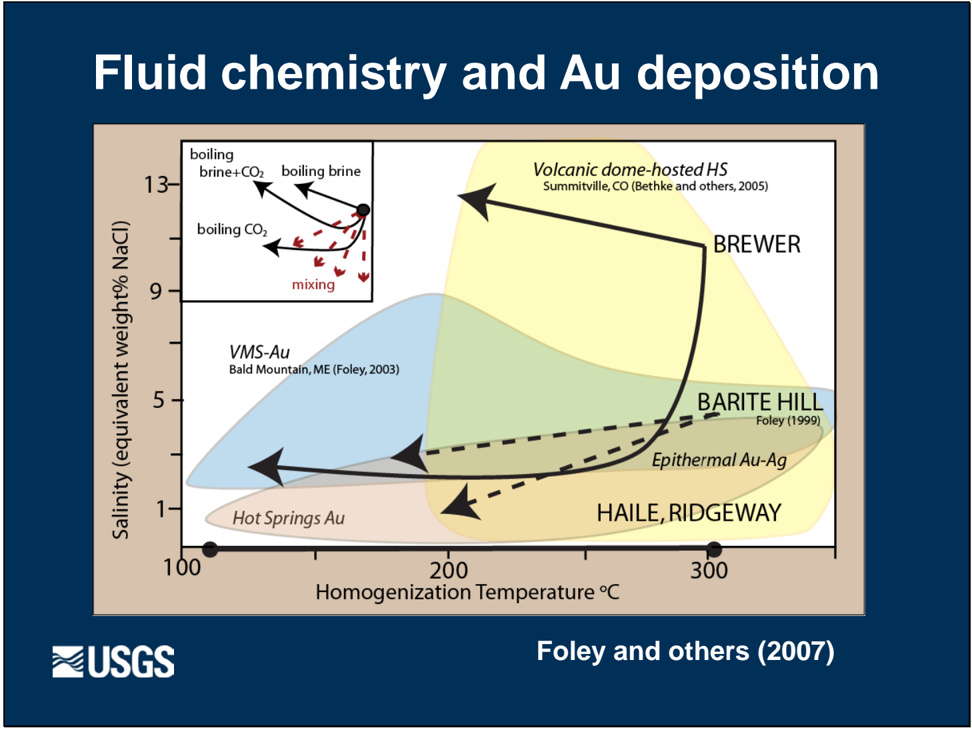
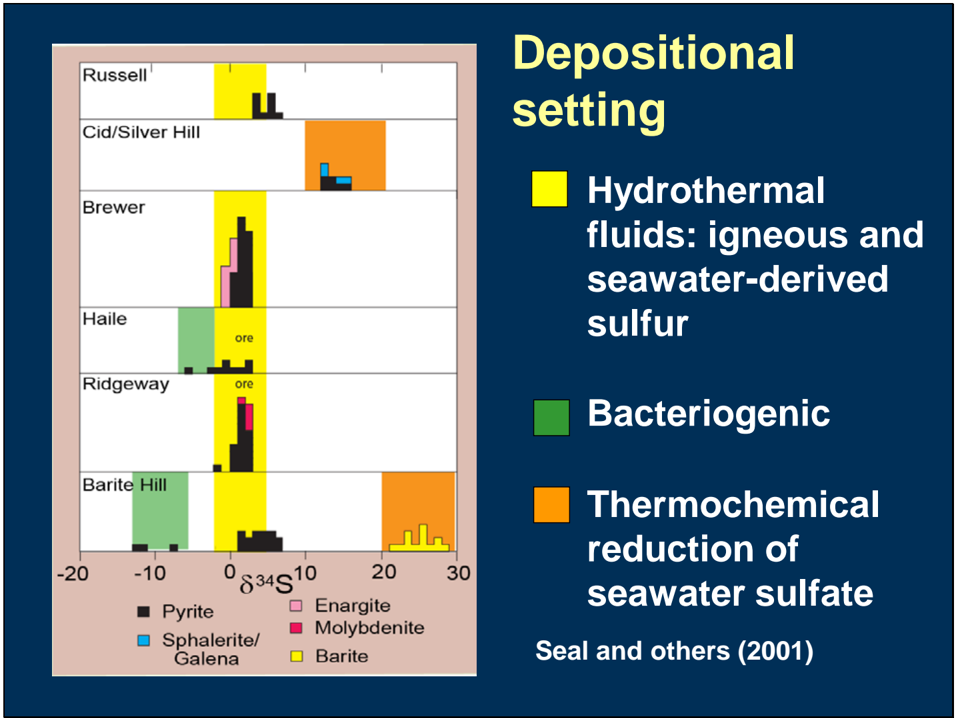
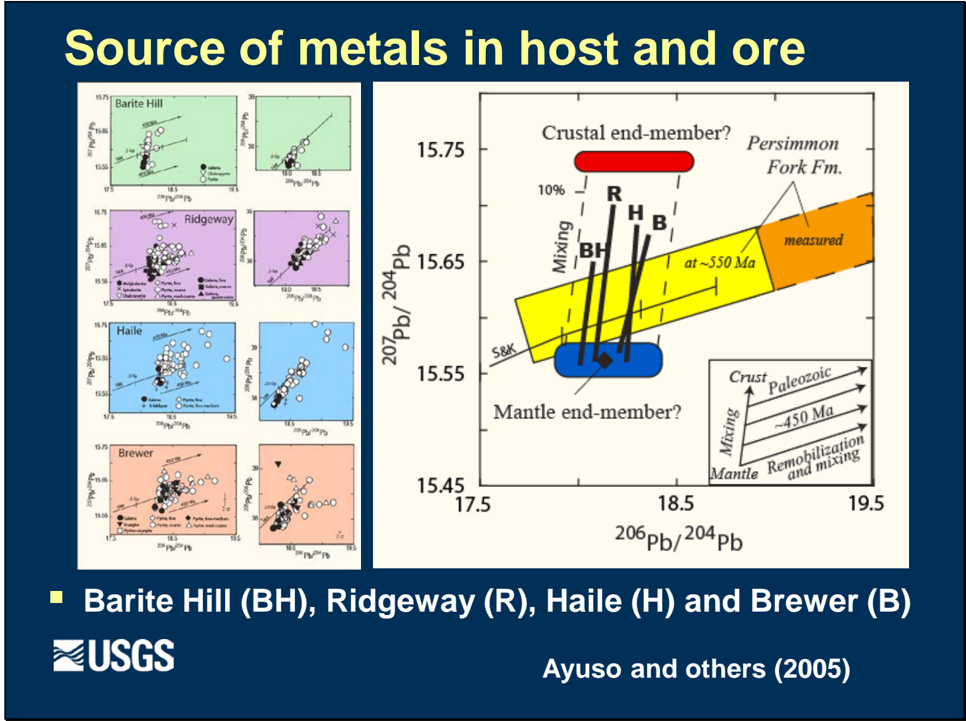
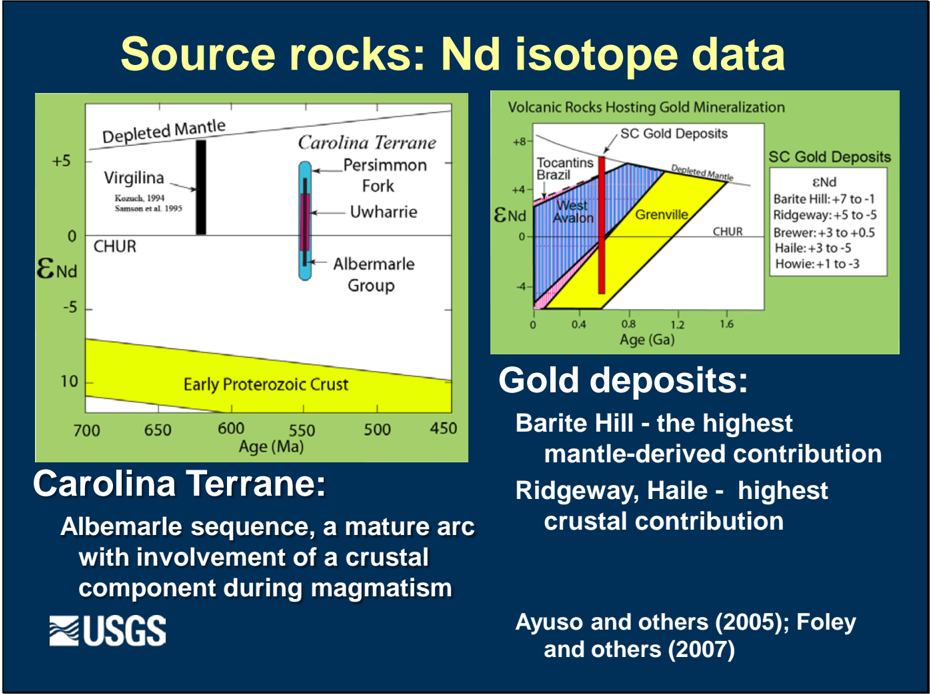
- Pb and Nd isotope data indicate a mature arc with a continental crustal component for Ridgeway, Haile, and Brewer, whereas Barite Hill has a stronger mantle-derived, rift-related signature. Sulfur isotope data indicate hydrothermal fluids with significant igneous and seawater-derived sulfur; fluid inclusions show Brewer salinities near 11 weight percent NaCl equivalent, and Ridgeway/Haile homogenization temperatures generally less than 300 °C.
- Recent exploration identified new Haile zones (Horseshoe, Mustang, Palomino), the Deep River porphyry-style gold-copper-molybdenum prospect, and the 25-kilometer-long Champion Hills trend, supporting potential for large low-grade deposits and high-grade feeder zones at depth.
Methods
- The report is a synthesis of U.S. Geological Survey studies and an invited 2012 PDAC presentation, integrating regional geology, stratigraphic correlations, ore petrography, mineralogy, grade-tonnage/resource data, and exploration summaries for deposits including Haile, Ridgeway, Brewer, Barite Hill, Howie, and Deep River.
- Geochronology includes U-Pb zircon dating of host rocks and hydrothermal zircon populations, with reported ages such as Haile host rock at 553 Ma and Brewer subvolcanic intrusive at 550 Ma, plus Re-Os molybdenite ages from Haile, Ridgeway, and Deep River.
- Geochemical and isotopic analyses include fluid inclusion microthermometry, sulfur isotopes, Pb isotopes measured on galena, potassium-feldspar, pyrite, chalcopyrite, molybdenite, quartz, sphalerite, and muscovite from ore and host rock, and Nd isotope data for host rocks and deposits.
Limitations
- The paper states that for Ridgeway and Haile, fluid inclusion data are limited to homogenization temperatures from a small number of inclusions and are “not definitive”; it also states that metamorphic overprints obscure many original mineralogical and textural clues to genesis, and that deformation, metamorphism, and saprolitic alteration make stratigraphic correlations difficult.
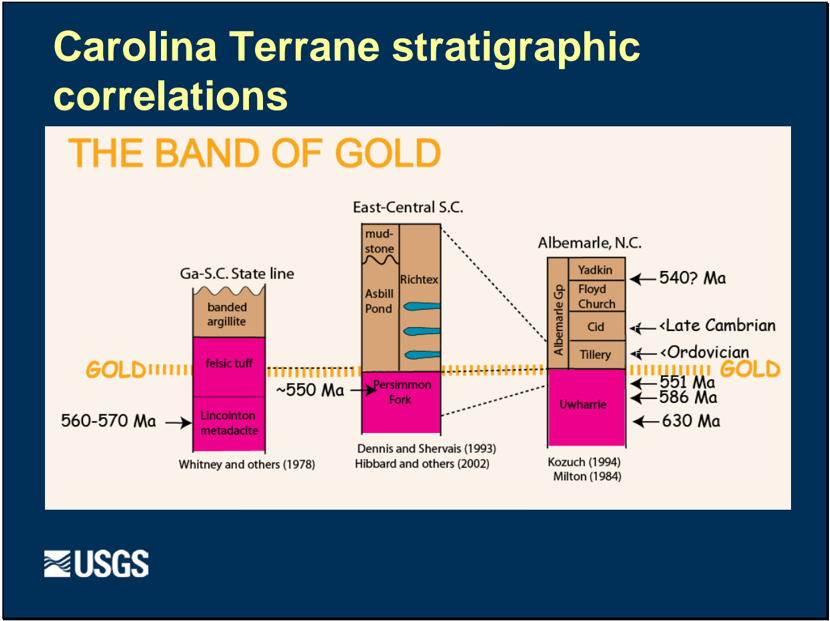
- The paper notes that the Tillery and Richtex Formations are generally undated, that age-dating errors make the duration of mineralization uncertain, and that Table 2 lists some deposit ages as unknown.
- Evident from the text: this is a USGS Open-File Report based on an invited presentation with numbered figures originally prepared as slides, not a full peer-reviewed research article; many findings rely on previously published studies and unpublished data, with limited new methodological detail.
Model-written summary. Check it against the paper before relying on it.
Integrity signals
Registry
Cites
Statistics
Figures
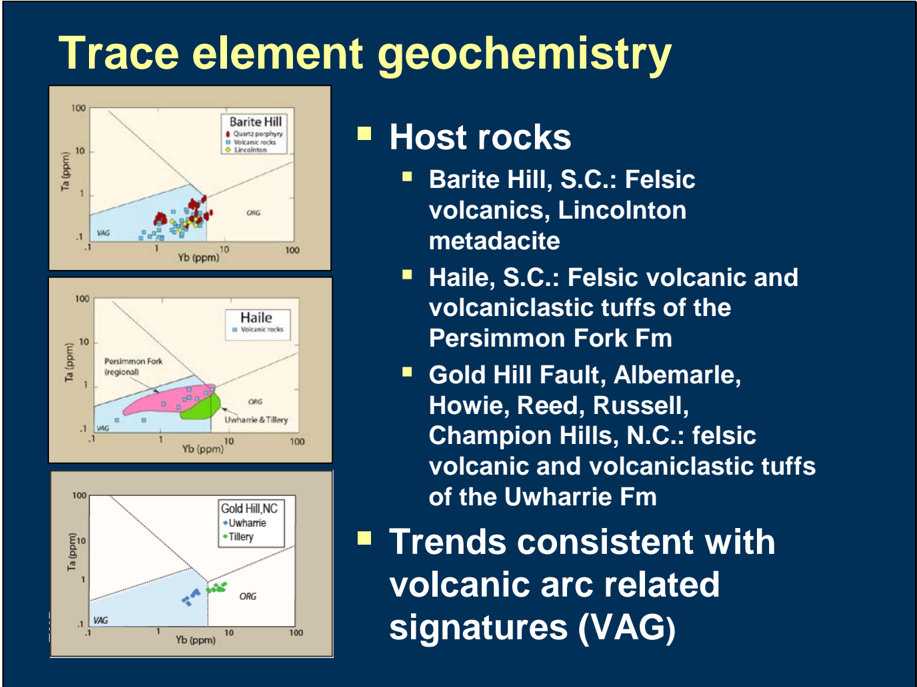
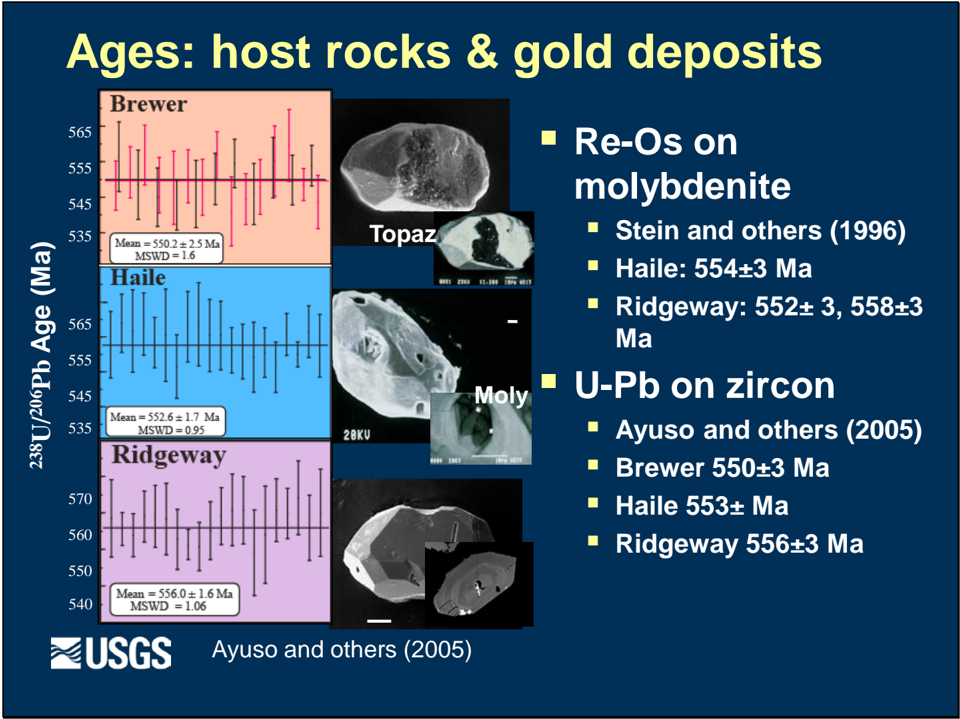
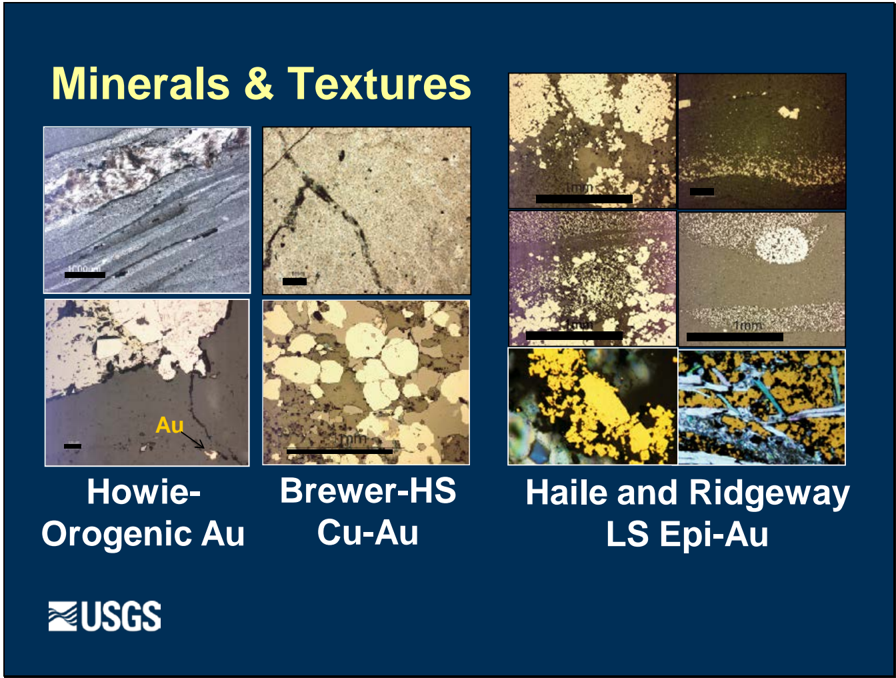
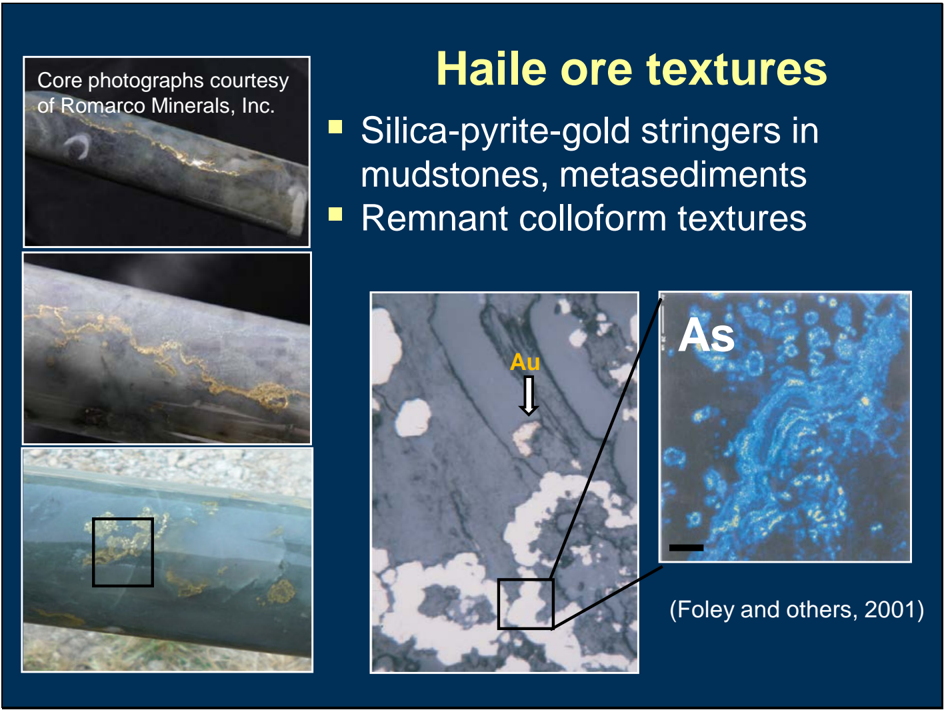
Verification
Claims the paper makes
0 Valid · 4 Not valid · 31 Not checked · 80 Own results and interpretations
A result the paper reports from its own data — it cites no other source for it, so there is none to check. The quote shows it is in the paper.
In the paper
“The main point to be made here is that the data are consistent with typical epithermal-volcanogenic models for gold.”
plainstates an association- Asserted: passes — The authors put it forward as true.
- Checkable: passes — It can be checked against evidence.
- Load-bearing: passes — The paper’s conclusions depend on it.
- Based: passes — The paper gives a reason why it holds.
None of the sources cited for this claim could be matched to a paper, so there is nothing to check it against.
In the paper
“The sequences consist mainly of Late Proterozoic to Cambrian metavolcanic rocks and associated epizonal plutons.”
What the sources say
- Not matchedcites Hibbard and others, 2002
An author–year citation the paper’s reference list doesn’t settle. We don’t search these by name.
- Not matchedcites Hibbard and others, 2005
An author–year citation the paper’s reference list doesn’t settle. We don’t search these by name.
plain- Asserted: passes — The authors put it forward as true.
- Checkable: passes — It can be checked against evidence.
- Load-bearing: unclear — It is unclear whether the paper’s conclusions depend on it.
- Based: passes — The paper gives a reason why it holds.
- Not matched
A result the paper reports from its own data — it cites no other source for it, so there is none to check. The quote shows it is in the paper.
In the paper
“For example, Ridgeway and Haile have the highest crustal contribution (εNd 554 ~+5 to -5, crustal residence ~0.7-1.9 Ga).”
plainstates an association- Asserted: passes — The authors put it forward as true.
- Checkable: passes — It can be checked against evidence.
- Load-bearing: passes — The paper’s conclusions depend on it.
- Based: passes — The paper gives a reason why it holds.
A result the paper states — it cites no source for it, so there is none to check. The quote shows it is in the paper.
In the paper
“For Ridgeway and Haile, the available data are limited to homogenization temperatures collected on a small number of inclusions.”
plain- Asserted: passes — The authors put it forward as true.
- Checkable: passes — It can be checked against evidence.
- Load-bearing: unclear — It is unclear whether the paper’s conclusions depend on it.
- Based: passes — The paper gives a reason why it holds.
A result the paper states — it cites no source for it, so there is none to check. The quote shows it is in the paper.
In the paper
“A major influx of gold mineralization across the Slate Belt at about 550 Ma is generally coeval with mature arc-related volcanism dated at 556-550 Ma.”
hedgedstates an association- Asserted: passes — The authors put it forward as true.
- Checkable: passes — It can be checked against evidence.
- Load-bearing: passes — The paper’s conclusions depend on it.
- Based: passes — The paper gives a reason why it holds.
64 more claims
Create a free account to see all 115 claims and to verify the 1 reference still open.
- It may state two separate claims as one. 29
- Probably not a substantial claim. 22
- The quote only partly states this claim. 1
Citations
Cites
Volcanogenic Massive Sulfide Deposits
Franklin, J. M., Gibson, H. L., Jonasson, I. R., & Galley, A. G. (2005) · One Hundredth Anniversary Volume · doi:10.5382/av100.17 · Cited by 681
Comparative anatomy of volcanic-hosted epithermal deposits; acid-sulfate and adularia-sericite types
Heald, P., Foley, N. K., & Hayba, D. O. (1987) · Economic Geology · doi:10.2113/gsecongeo.82.1.1 · Cited by 598
Self-citation(2005) · Volcanic, Geothermal, and Ore-Forming Fluids · doi:10.5382/sp.10.16 · Cited by 531
Groves, D. I. (2005) · Economic Geology · doi:10.2113/100.2.203 · Cited by 262
John, D. A. (2001) · Economic Geology · doi:10.2113/gsecongeo.96.8.1827 · Cited by 187 · cited 1×
“In general, these Neoproterozic epithermal gold deposits have important differences relative to, for example, the much younger, circum-Pacific type epithermal gold deposits and those occurring throughout the western United States (for example, John, 2001).”
BackgroundHibbard, J. (2002) · Earth-Science Reviews · doi:10.1016/s0012-8252(01)00079-4 · Cited by 160
Secular Variation in Economic Geology
Goldfarb, R. J., Bradley, D. C., & Leach, D. L. (2010) · Economic Geology · doi:10.2113/gsecongeo.105.3.459 · Cited by 142
Bethke, P. M., Rye, R. O., Stoffregen, R. E., & Vikre, P. G. (2005) · Chemical Geology · doi:10.1016/j.chemgeo.2004.06.041 · Cited by 87
Neoproterozoic-early Paleozoic evolution of Avalonia
Murphy, J. B., Keppie, J. D., Dostal, J., & Nance, R. D. (1999) · Laurentia-Gondwana connections before Pangea · doi:10.1130/0-8137-2336-1.253 · Cited by 86
Links among Carolinia, Avalonia, and Ganderia in the Appalachian peri-Gondwanan realm
Hibbard, J. P., van Staal, C. R., & Miller, B. V. (2007) · Geological Society of America eBooks · doi:10.1130/2007.2433(14 · Cited by 80
(2010) · doi:10.1130/2010.1206(03 · Cited by 73
Saunders, J. A. (1990) · Geology · doi:10.1130/0091-7613(1990)018<0757:ctogas>2.3.co;2 · Cited by 66
Dubé, B., Dunning, G., & Lauzière, K. (1998) · Economic Geology · doi:10.2113/gsecongeo.93.4.405 · Cited by 61
REMNANT COLLOFORM PYRITE AT THE HAILE GOLD DEPOSIT, SOUTH CAROLINA: A TEXTURAL KEY TO GENESIS
Foley, N. K., Ayuso, R. A., & Seal, R. R. (2001) · Economic Geology · doi:10.2113/gsecongeo.96.4.891 · Cited by 29
Self-citationAyuso, R. A., Wooden, J. L., Foley, N. K., et al. (2005) · Economic Geology · doi:10.2113/gsecongeo.100.2.225 · Cited by 22
Self-citationFeiss, P. G., Vance, R. K., & Wesolowski, D. J. (1993) · Geology · doi:10.1130/0091-7613(1993)021<0439:vrhgab>2.3.co;2 · Cited by 19
Arc rifting of the Carolina terrane in northwestern South Carolina
Dennis, A. J., & Shervais, J. W. (1991) · Geology · doi:10.1130/0091-7613(1991)019<0226:arotct>2.3.co;2 · Cited by 19
Worthington, J. E., & Kiff, I. T. (1970) · Economic Geology · doi:10.2113/gsecongeo.65.5.529 · Cited by 19
Pollock, J. C., Hibbard, J. P., & Sylvester, P. (2010) · Geological Society of America eBooks · doi:10.1130/2010.1206(29 · Cited by 17
Dennis, A. J., Shervais, J. W., Mauldin, J., et al. (2004) · Geological Society of America Bulletin · doi:10.1130/b25240.1 · Cited by 17
Seal, R. R., Ayuso, R. A., Foley, N. K., et al. (2001) · Mineralium Deposita · doi:10.1007/s001260050294 · Cited by 13
Self-citationThe Appalachian peri-Gondwanan realm: a palaeogeographical perspective from the south
Hibbard, J. P., Miller, B. V., Tracy, R. J., et al. (2005) · Geological Society London Special Publications · doi:10.1144/gsl.sp.2005.246.01.03 · Cited by 12
The Russell Gold Deposit, Carolina Slate Belt, North Carolina
Klein, T. L., Cunningham, C. G., Logan, M. A. V., et al. (2007) · Economic Geology · doi:10.2113/gsecongeo.102.2.239 · Cited by 6
Foley, N. K. (2003) · Massive Sulfide Deposits of the Bathurst Mining Camp, New Brunswick, and Northern Maine · doi:10.5382/mono.11.24 · Cited by 5
Self-citationGeology of the Ridgeway Gold Deposits, Ridgeway, South Carolina
(1995) · doi:10.5382/gb.24.09 · Cited by 4
Geology of the Haile Gold Mine
(1995) · doi:10.5382/gb.24.11 · Cited by 4
Research works printed but not linked: 2
- Kozuch, M., 1994, Age, isotopic, and geochemical characterization of the Carolina slate and Charlotte belts-Implications for stratigraphy and petrogenesis: Unpublished M.S. thesis, Gainesville, Florida, University of Florida, 114 p.
- Milton, D., 1984, Revision of the Albemarle Group, North Carolina: U.S. Geological Survey Bulletin 1537-A, p. 69-72.
Cited by
Paleozoic gold in the Appalachians and Variscides
(2017) · doi:10.1016/j.oregeorev.2017.11.021 · Cited by 36
(2015) · doi:10.3133/sir20155084 · Cited by 2
“Foley and Ayuso (2012) describe gold deposits within the Carolina Slate Belt as ore-hosted within quartz-sericite-pyrite-altered volcanic rocks and juvenile metasedimentary rocks and in associated shear zones.”
Background
Metadata
- Authors
- Foley, N. K., & Ayuso, R. A.
- Venue
- Open-File Report
- Publisher
- US Geological Survey
- Published
- 2012
- ISSN
- 0196-1497 (ISSN-L)
- 2331-1258
- OpenAlex
- W1542260296
- Cited by
- 5
- References
- 35
- Citations by year
- 2020: 1 · 2019: 1 · 2017: 1 · 2015: 2
- Type
- report
- Language
- en
- Open access
- bronze
- doi.org
- Locations
- Antarctica A Keystone in a Changing World (publishedVersion)
- Topics
- Physical Sciences › Earth and Planetary Sciences › Geochemistry and Petrology › Geological and Geochemical Analysis
- Physical Sciences › Earth and Planetary Sciences › Geochemistry and Petrology › Geochemistry and Geochronology of Asian Mineral Deposits
- Physical Sciences › Earth and Planetary Sciences › Geochemistry and Petrology › Geochemistry and Geologic Mapping
- Keywords
- gold deposits, Carolina slate belt, epithermal gold mineralization, southeastern United States
About these checks
Registry, retraction, Cites and statistics results are computed, not judged, with one exception: a printed reference that no index lists is read once by a model before it counts as a citation error. Claims are extracted by a model and kept only when their quote appears verbatim in the text; each cited source is then checked, with a model’s help, for whether it says what the claim relies on. Those verdicts can be wrong — read the claim’s quote and the cited source before relying on one.
A language model drew the claims from the paper on 2026-10-12, under version 3 of the claim definition (model deepseek-v4.1-flash, prompt extract-v3).
A second model labelled each claim on 2026-10-12 (model jev-1.13-20260917, definition revision gold-guideline-v0.2).
Statistics and arithmetic are recomputed, not judged.
Confidence bands are shown only for fields calibrated on our annotated test set. None is calibrated yet, so no band is shown.
What counts as a claim ›How we measure confidence ›How we check this ›
Are you an author, or do you see a problem with this page? Request a review
Data sources
Bibliographic data: Semantic Scholar, OpenAlex, Crossref.
Contains information from the Semantic Scholar Academic Graph Datasets, made available under the ODC Attribution License (ODC-BY 1.0).
Semantic Scholar’s data is described in: Kinney, R., et al. (2023). The Semantic Scholar Open Data Platform. arXiv:2301.10140.
