

Psychostimulants in the therapy of treatment-resistant depression: review of the literature and findings from a retrospective study in 65 depressed patients
Open accessThe DOI matches its Crossref record; 58 of the 58 references it cites were found in a registry or an index.
Abstract
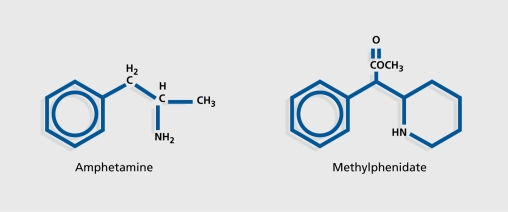
The use of psychostimulants as an adjuvant therapy in treatment-resistant depression is not very common nowadays and has been the subject of much criticism. This article gives a brief review of the literature and reports on the findings from a retrospective study carried out in 65 depressed patients treated with psychostimulants (amphetamine and methylphenidate) in addition to conventional antidepressants. Thirty-eight out of 65 patients showed significant improvement, in particular with respect to energy mood, and psychomotor activity. The best response to psychostimulants was seen in inhibited types of depression and in combination with a tricyclic antidepressant. None of the patients developed drug dependency. The incidence of side effects was low, and agitation and restlessness improved with an additional short-term treatment with benzodiazepines. It is concluded that the rapid onset of action (2-3 hours) after administration may help cover the therapeutic latency period of conventional antidepressants and probably potentiates their effect. In view of their potential benefits in treatment-resistant depressive states, psychostimulants should be tried more often.
Overview
The claims and statistics of this paper haven’t been checked yet.
Free: it reads the open-access text and checks the first 5 claims that cite a source we can check. Create a free account to check every claim.
Integrity signals
Registry
Cites
Statistics
Figures
Verification
Claims the paper makes
The claims and statistics of this paper haven’t been checked yet.
Free: it reads the open-access text and checks the first 5 claims that cite a source we can check. Create a free account to check every claim.
Self-check
Percentages, sums and reported differences re-computed from the paper’s own numbers.
The self-check needs the paper’s full text.
Citations
Cites
Amphetamine Abuse: Pattern and Effects of High Doses Taken Intravenously
Kramer, J. C. (1967) · JAMA · doi:10.1001/jama.1967.03130050039011 · Cited by 197
The Use of Psychostimulants in General Psychiatry: A Reconsideration
Chiarello, R. J. (1987) · Archives of General Psychiatry · doi:10.1001/archpsyc.1987.01800150110013 · Cited by 184
Stimulants in the treatment of depression: a critical overview.
Satel, S. L., & Nelson, J. C. (1989) · PubMed · Cited by 153
Amphetamine and Phenmetrazine Addiction
Oswald, I., & Thacore, V. R. (1963) · BMJ · doi:10.1136/bmj.2.5354.427 · Cited by 141
Amphetamine Withdrawal: Affective State, Sleep Patterns, and MHPG Excretion
WATSON, R., HARTMANN, E., & SCHILDKRAUT, J. J. (1972) · American Journal of Psychiatry · doi:10.1176/ajp.129.3.263 · Cited by 141 · cited 2×
“Addiction was reported by Kramer et al3 and Edison,36 and a withdrawal syndrome characterized by apathy, decreased activity, and sleep disturbances with an increase in rapid eye movement (REM) sleep by Oswald and Thacore37 and Watson et al.38 Most studies, however, report little or no dependence in depressed patients…”
MethodCombined MAOI-Tricyclic Antidepressant Treatment: A Reevaluation*
WHITE, K., & SIMPSON, G. (1981) · Journal of Clinical Psychopharmacology · doi:10.1097/00004714-198109000-00002 · Cited by 136
A Potential Clinical Use for Methylphenidate with Tricyclic Antidepressants
WHARTON, R. N., PEREL, J. M., DAYTON, P. G., & MALITZ, S. (1971) · American Journal of Psychiatry · doi:10.1176/ajp.127.12.1619 · Cited by 134 · cited 2×
“Because their acute effects develop within less than a few hours,(20) they may be used in combination with traditional antidepressants in order to cover the latter's therapeutic latency period and potentiate their effect.(13,35) In a review of the literature, Chiarello and Cole(2) showed that the majority of studies—e…”
BackgroundPsychostimulant treatment of depressive disorders secondary to medical illness.
Woods, S., Tesar, G. E., Murray, G. B., & Cassem, N. H. (1986) · PubMed · Cited by 133
Methylphenidate for depressive disorders in cancer patients
Fernandez, F., Adams, F., Holmes, V. F., Levy, J. K., & Neidhart, M. (1987) · Psychosomatics · doi:10.1016/s0033-3182(87)72476-1 · Cited by 123 · cited 2×
“Psychostimulants are suggested to be of significant value in the management of depression in the elderly as well as in depressed patients with concomitant somatic disorders,(14,21,22,60) and good results have been reported in the treatment of secondary depressions triggered by preexisting somatic diseases.(4,21,40,61)…”
BackgroundTreatment of depression in the medically ill elderly with methylphenidate
Katon, W., & Raskind, M. (1980) · American Journal of Psychiatry · doi:10.1176/ajp.137.8.963 · Cited by 116
Research works printed but not linked: 13
- Leake CD. The Amphetamines, Their Actions and Uses. Springfield, III: Thomas, CQ 1958
- Ayd FJ. Psychostimulant therapy for depressed medically ill patients. PsychiatrAnn. 1985 15 462 465
- Trott GE. Das Hyperkinetische Syndrom des Kindes- und Jugenda Iters. Therapeutische Mogiichkeiten und deren Evaluation [Hyperkinetic Syndrome in Children and Youths. Therapeutic Possibilities and Their Evaluation]. (Thesis). Wurzburg, Germany; 1991
- Goodman LS. Gilman AG. The Pharmacological Basis of Therapeutics. 8th ed. New York, NY: McGraw-Hill Companies, Inc; 1990
- Forth H. Henschler D. Rummel W. Allgemeine und Spezielle Pharmakologie und Toxikologie. 4th ed. Mannheim, Germany: Bibliographisches Institut-Wissenschaftsverlag; 1983
- Ban TA. The use of the amphetamines in adult psychiatry. Semin Psychiatry 1969 1 129 143
- Perel JM. Black N. Wharton RN. Malitz S. Inhibition of imipramine metabolism by methylphenidate. Fed Proc. 1969 28 418
- Natenshon AL. Clinical evaluation of Ritalin. Dis Nerv Syst. 1956 17 392 396
- Wilson JD. Braunwald E. Isselbacher KJ. et al. Harrisons' Principles of Internal Medicine, 12th ed. New York, NY: McGraw-Hill Companies, Inc; 1991
- Woggon B. Somatische Therapien: Psychopharmakotherapie [Somatic Therapies: Psychopharmacotherapy]. In: Kisker KP, Lauter H, Meyer JE, Mûller C, Strômgren E, eds. Psychiatrie der Gegenwart b:Affektive Psychosen. 1987 289
- Woggon B. Psychopharmakologische Behandlung therapieresistenter Depressionen [Psychopharmacological management of treatment-resistant depressions]. Fundam Psychiatrica. 1926 6 210 215
- Dub LA. Lurie LA. Use of benzedrine in the depressed phase of the psychotic state. Ohio State Med J. 1939 35 39 45
- Woggon B. Gibt es Antidepressiva, die bei bestimmten Depressionen speziell indiziert sind? [Are there any antidepressant agents that are specially indicated in specific types of depression?] Schweiz Med Wochenschr. 1993 123 1312 1319 8342000
Cited by
Treatment-resistant depression: therapeutic trends, challenges, and future directions
Al-harbi (2012) · Patient Preference and Adherence · doi:10.2147/ppa.s29716 · Cited by 796
“It was concluded that their rapid onset of action (2–3 hours) after administration may help cover the therapeutic latency period of conventional antidepressants and probably potentiates their effect.(143) According to some studies, augmentation with atypical antipsychotics has had mixed results,(23,85,96) but quetiapi…”
Faraone, S. V. (2018) · Neuroscience & Biobehavioral Reviews · doi:10.1016/j.neubiorev.2018.02.001 · Cited by 631
“…the use of stimulants as augmentation agents in combination with tricyclic antidepressants and MAO inhibitors is controversial, with issues concerning the possible development of an adrenergic crisis, the emergence of serotonin syndrome, or a hypertensive crisis being raised (Stotz et al., 1999).”
Salamone, J. D., Yohn, S. E., López-Cruz, L., San Miguel, N., & Correa, M. (2016) · Brain · doi:10.1093/brain/aww050 · Cited by 350
Emerging mechanisms and treatments for depression beyond SSRIs and SNRIs
Dale, E., Bang-Andersen, B., & Sánchez, C. (2015) · Biochemical Pharmacology · doi:10.1016/j.bcp.2015.03.011 · Cited by 234
“This hypothesis was further supported by positive clinical augmentation studies with DA-enhancing drugs [37].”
BackgroundResultNitrous Oxide for Treatment-Resistant Major Depression: A Proof-of-Concept Trial
Nagele, P., Duma, A., Kopec, M., Gebara, M. A., Parsoei, A., Walker, M., Janski, A., Panagopoulos, V. N., Cristancho, P., Miller, J. P., et al. (2015) · Biological Psychiatry · doi:10.1016/j.biopsych.2014.11.016 · Cited by 230
“Symptom “masking” has been observed with rapidly acting psychostimulants (methylphenidate and cocaine), which promote a transient alteration in mood but not a true antidepressant effect (33,34).”
Background
Metadata
- Authors
- Stotz, G., Woggon, B., & Angst, J.
- Affiliations
- München Klinik (DE)
- Psychiatrische Universitätsklinik Zürich (CH)
- Corresponding author
- Stotz, Gabriele
- ORCID
- Angst, Jules
- Venue
- Dialogues in Clinical Neuroscience
- Publisher
- Informa UK Limited
- Published
- 1999-12-31
- Volume
- 1
- Issue
- 3
- Pages
- 165-174
- ISSN
- 1294-8322 (ISSN-L)
- 1958-5969
- PMC
- PMC3181580
- OpenAlex
- W6567312
- Semantic Scholar
- 0d86aefe3a9719f8bf4b4ff5bfdd3ee248e65675
- Cited by
- 45
- References
- 56
- Citations by year
- 2026: 1 · 2025: 1 · 2024: 3 · 2023: 2 · 2022: 3 · 2021: 1 · 2020: 2 · 2019: 2 · 2018: 4 · 2017: 5 · 2016: 6 · 2015: 7 · 2014: 1 · 2013: 1 · 2012: 2
- FWCI
- 0.43
- Type
- journal article
- Language
- en
- Open access
- hybrid
- doi.org
- Licence
- Locations
- Dialogues in Clinical Neuroscience (publishedVersion, cc-by-nc-nd)
- Europe PMC (PubMed Central) (publishedVersion, cc-by-nc-nd)
- PubMed Central (publishedVersion, cc-by-nc-nd)
- PubMed (publishedVersion)
- Topics
- Health Sciences › Medicine › Pharmacology (medical) › Treatment of Major Depression
- Health Sciences › Medicine › Psychiatry and Mental health › Attention Deficit Hyperactivity Disorder
- Health Sciences › Medicine › Psychiatry and Mental health › Electroconvulsive Therapy Studies
- Keywords
- psychostimulants, treatment-resistant depression, amphetamine, methylphenidate, adjuvant therapy, antidepressants, tricyclic antidepressants, psychomotor activity, benzodiazepines, agitation, drug addiction
About these checks
Registry, retraction, Cites and statistics results are computed, not judged, with one exception: a printed reference that no index lists is read once by a model before it counts as a citation error. Claims are extracted by a model and kept only when their quote appears verbatim in the text; each cited source is then checked, with a model’s help, for whether it says what the claim relies on. Those verdicts can be wrong — read the claim’s quote and the cited source before relying on one.
Statistics and arithmetic are recomputed, not judged.
Confidence bands are shown only for fields calibrated on our annotated test set. None is calibrated yet, so no band is shown.
What counts as a claim ›How we measure confidence ›How we check this ›
Are you an author, or do you see a problem with this page? Request a review
Data sources
Bibliographic data: Semantic Scholar, OpenAlex, Crossref.
Contains information from the Semantic Scholar Academic Graph Datasets, made available under the ODC Attribution License (ODC-BY 1.0).
Semantic Scholar’s data is described in: Kinney, R., et al. (2023). The Semantic Scholar Open Data Platform. arXiv:2301.10140.
