

The DOI matches its Crossref record; 5 of the 5 references it cites were found in a registry or an index.
The hygiene hypothesis for allergy – conception and evolution
Abstract
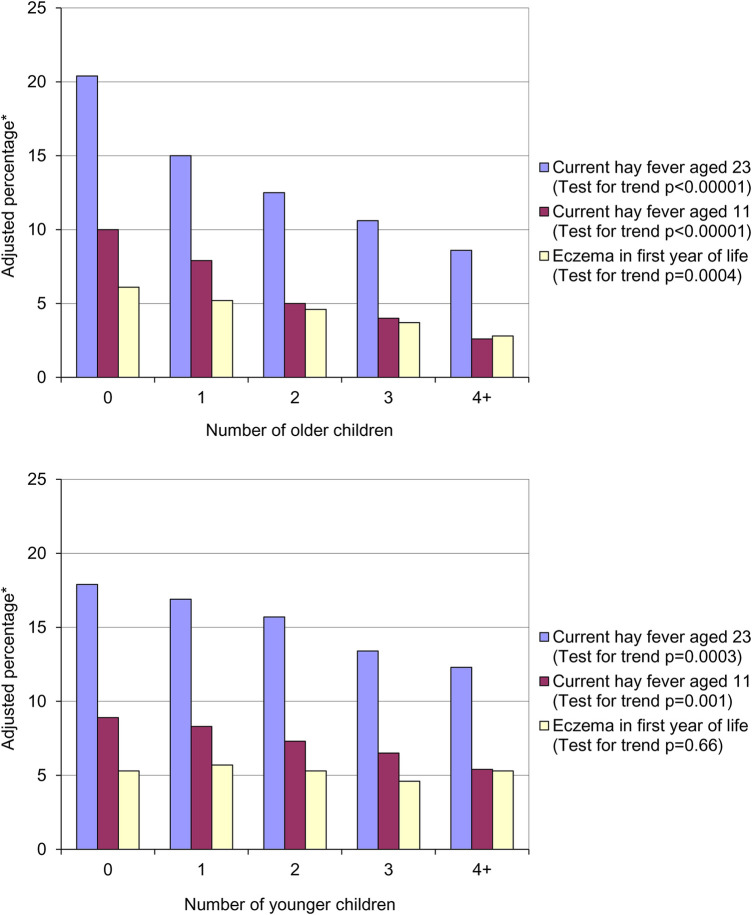
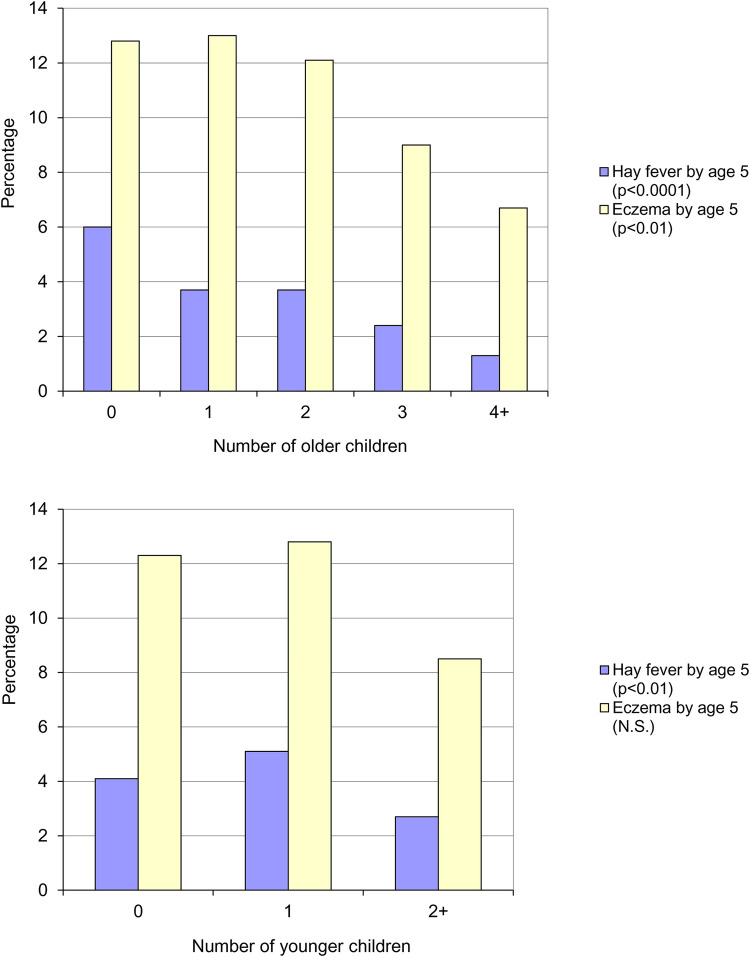
In 1989, a short paper entitled “Hay fever, hygiene and household size” observed that British children from larger families were less likely to develop hay fever and suggested that this could be because early exposure to infection prevents allergy. This sibship size association for hay fever, since replicated many times in Britain and other affluent countries and confirmed by objective measures of atopy, prompted what has come to be known as the “hygiene hypothesis for allergy”, although that term was not specifically used in the 1989 paper. The present paper reviews the historical roots of the “hygiene hypothesis” and charts its development over more than 30 years. Initial scepticism among immunologists turned to enthusiasm in the mid-1990s as the Th1/Th2 paradigm for allergic sensitisation emerged from animal experiments and the concept of “immunological old friends” became popular from the early 2000s. From the late 1990s, observations of reduced allergy risk among children of anthroposophic families and those brought up on farms suggested that the sibship size effects formed part of a broader range of “hygiene-related” determinants of allergy. Children from large families with farming exposure have approximately sixfold reduction in prevalence of hay fever, indicating the potential strength and epidemiological importance of these environmental determinants. During the 21st century, a wide range of specific microbial, environmental and lifestyle factors have been investigated as possible underlying mechanisms, but sadly none have emerged as robust explanations for the family size and farming effects. Thus, while the “hygiene hypothesis” led to a fundamental reappraisal of our relationship with our microbial environment and to the concept that early exposure, rather than avoidance, is beneficial for developing a healthy immune system, the underlying mechanism for variations in allergy prevalence with family size remains, in Churchillian terms, “a riddle wrapped in a mystery inside an enigma”.
Overview
The claims and statistics of this paper haven’t been checked yet.
Run the check — free, no account needed. It reads the open-access text and checks the sources it cites.
Integrity signals
Registry
Cites
Statistics
Figures
Verification
Claims the paper makes
The claims and statistics of this paper haven’t been checked yet.
Run the check — free, no account needed. It reads the open-access text and checks the sources it cites.
Claims other papers make about this one
Each is checked against this paper’s own text: does it say what the citing paper says it does?
In the citing paper
“It should also be emphasized that none of these hypotheses has been fully confirmed, and current evidence highlights the complexity of interactions between endoparasites, ectoparasites, microorganisms, and the human immune system (Maizels 2020; Perkin and Strachan 2022).”
From Parasites and allergies: a complex bidirectional relationship from evolutionary origins to modern therapeutics (2026) · cites this paper as Perkin and Strachan 2022
In the citing paper
“Species that are poorly adapted to humans, recently introduced into human hosts, or involved in accidental host–parasite interactions may be more likely to induce intense inflammatory and allergic-type responses.”
From Parasites and allergies: a complex bidirectional relationship from evolutionary origins to modern therapeutics (2026) · cites this paper as Perkin and Strachan 2022
In the citing paper
“In such cases, the parasite may fail to establish effective immune regulation, leading to stronger tissue inflammation, eosinophilia, IgE production, and allergy-like manifestations.”
From Parasites and allergies: a complex bidirectional relationship from evolutionary origins to modern therapeutics (2026) · cites this paper as Perkin and Strachan 2022
In the citing paper
“The allergenic potential of parasitic worms may also depend on the degree of host–parasite adaptation.”
From Parasites and allergies: a complex bidirectional relationship from evolutionary origins to modern therapeutics (2026) · cites this paper as Perkin and Strachan 2022
In the citing paper
“In contrast, helminths that have coevolved with their hosts over long periods may more efficiently induce regulatory pathways that facilitate chronic persistence and limit excessive inflammatory responses (Maizels and McSorley 2016; Perkin and Strachan 2022; Rook 2008).”
From Parasites and allergies: a complex bidirectional relationship from evolutionary origins to modern therapeutics (2026) · cites this paper as Perkin and Strachan 2022
Self-check
Percentages, sums and reported differences re-computed from the paper’s own numbers.
The self-check needs the paper’s full text.
Citations
Cites
Exposure to farming in early life and development of asthma and allergy: a cross-sectional survey
Riedler, J., Braun-Fahrländer, C., Eder, W., Schreuer, M., Waser, M., Maisch, S., Carr, D., Schierl, R., Nowak, D., & von Mutius, E. (2001) · The Lancet · doi:10.1016/s0140-6736(01)06252-3 · Cited by 1,520
Family size, infection and atopy: the first decade of the 'hygiene hypothesis'
Strachan, D. (2000) · Thorax · doi:10.1136/thorax.55.suppl_1.s2 · Cited by 1,183
Self-citationRespiratory Health Hazards in Agriculture
(1998) · American Journal of Respiratory and Critical Care Medicine · doi:10.1164/ajrccm.158.supplement_1.rccm1585s1 · Cited by 495
Lødrup Carlsen, K. C., Roll, S., Carlsen, K.-H., Mowinckel, P., Wijga, A. H., Brunekreef, B., Torrent, M., Roberts, G., Arshad, S. H., Kull, I., et al. (2012) · PLoS ONE · doi:10.1371/journal.pone.0043214 · Cited by 400
Ramasamy, A., Curjuric, I., Coin, L. J., Kumar, A., McArdle, W. L., Imboden, M., Leynaert, B., Kogevinas, M., Schmid-Grendelmeier, P., Pekkanen, J., et al. (2011) · Journal of Allergy and Clinical Immunology · doi:10.1016/j.jaci.2011.08.030 · Cited by 222 · cited 2×
“No statistically significant interaction effects were found (70).”
BackgroundSelf-citation
Research works printed but not linked: 89
- Strachan, 1989, Hay fever, hygiene, and household size, Br Med J, 299, 1259, 10.1136/bmj.299.6710.1259 · DOI · Paper page
- Emanuel, 1988, Hay fever, a post industrial revolution epidemic: a history of its growth during the 19th century, Clin Allergy, 18, 295, 10.1111/j.1365-2222.1988.tb02872.x · DOI
- Bostock, 1828, On the catarrhus aestivus or summer catarrh, Medico-Chir Trans, 437, 10.1177/09595287280140P204 · DOI
- Gerrard, 1976, Serum IgE levels in white and metis communities in Saskatchewan, Ann Allergy, 37, 91
- Barker, 1985, Acute appendicitis and dietary fibre: an alternative hypothesis, Br Med J (Clin Res Ed), 290, 1125, 10.1136/bmj.290.6475.1125 · DOI
- Morris, 1987, Diet, infection, and acute appendicitis in britain and Ireland, J Epidemiol Community Health, 41, 44, 10.1136/jech.41.1.44 · DOI
- Barker, 1988, Acute appendicitis and bathrooms in three samples of British children, Br Med J (Clin. Res. Ed), 296, 956, 10.1136/bmj.296.6627.956 · DOI
- Golding, 1986, Eczema and hay fever, 171
- Golding, 1986, The end of the beginning, 320
- Martinez, 1999, Role of microbial burden in aetiology of allergy and asthma, Lancet, 354, SII12, 10.1016/S0140-6736(99)90437-3 · DOI
- Openshaw, 1999, Infections prevent the development of asthma–true, false or both?, J R Soc Med, 92, 495, 10.1177/014107689909201001 · DOI
- Rotmagnani, 1998, The Th1/Th2 paradigm and allergic disorders, Allergy, 53, 12, 10.1111/j.1398-9995.1998.tb04951.x · DOI
- Romagnani, 1992, Human TH1 and TH2 subsets: regulation of differentiation and role in protection and immunopathology, Int Arch Allergy Immunol, 98, 279, 10.1159/000236199 · DOI
- Renz, 2002, Maturation of the immune system and development of immune responses to allergens, Eur Respir Mon, 19, 25
- Holt, 1997, Allergic respiratory disease: strategic targets for primary prevention during childhood, Thorax, 52, 1, 10.1136/thx.52.1.1 · DOI
- Romagnani, 1992, Induction of TH1 and TH2 responses: a key role for the “natural” immune response?, Immunol Today, 13, 379, 10.1016/0167-5699(92)90083-J · DOI
- Prescott, 1999, Development of allergen-specific T-cell memory in atopic and Normal children, Lancet, 353, 196, 10.1016/S0140-6736(98)05104-6 · DOI
- Sudo, 1997, The requirement of intestinal bacterial flora for the development of an IgE production system fully susceptible to oral tolerance induction, J Immunol, 159, 1739, 10.4049/jimmunol.159.4.1739 · DOI
- Sheikh, 2004, The hygiene theory: fact or fiction?, Curr Opin Otolaryngol Head Neck Surg, 12, 232, 10.1097/01.moo.0000122311.13359.30 · DOI
- Johansson, 2004, Revised nomenclature for allergy for global use: report of the nomenclature review committee of the world allergy organization, october 2003, J Allergy Clin Immunol, 113, 832, 10.1016/j.jaci.2003.12.591 · DOI · Paper page
- von Mutius, 1994, Skin test reactivity and number of siblings, Br Med J, 308, 692, 10.1136/bmj.308.6930.692 · DOI
- Strachan, 1996, Family structure, neonatal infection, and hay fever in adolescence, Arch Dis Child, 74, 422, 10.1136/adc.74.5.422 · DOI
- Strachan, 1997, Childhood antecedents of allergic sensitization in young British adults, J Allergy Clin Immunol, 99, 6, 10.1016/s0091-6749(97)70294-x · DOI
- Forastiere, 1997, Socioeconomic status, number of siblings, and respiratory infections in early life as determinants of atopy in children, Epidemiology, 8, 566, 10.1097/00001648-199709000-00015 · DOI
- Jarvis, 1997, The association of family size with atopy and atopic disease, Clin Exp Allergy, 27, 240, 10.1111/j.1365-2222.1997.tb00701.x · DOI
- Matricardi, 1998, Sibship size, birth order, and atopy in 11,371 Italian young men, J Allergy Clin Immunol, 101, 439, 10.1016/S0091-6749(98)70350-1 · DOI
- Svanes, 1999, Childhood environment and adult atopy: results from the European community respiratory health survey, J Allergy Clin Immunol, 103, 415, 10.1016/S0091-6749(99)70465-3 · DOI
- Strachan, 1997, Allergy and family size: a riddle worth solving, Clin Exp Allergy, 27, 235, 10.1111/j.1365-2222.1997.tb00699.x · DOI
- Strachan, 1995, Epidemiology of hay fever: towards a community diagnosis, Clin Exp Allergy, 25, 296, 10.1111/j.1365-2222.1995.tb01046.x · DOI
- Strachan, 2015, Siblings, asthma, rhinoconjunctivitis and eczema: a worldwide perspective from the international study of asthma and allergies in childhood, Clin Exp Allergy, 45, 126, 10.1111/cea.12349 · DOI · Paper page
- Bråbäck, 1994, Atopic sensitization and respiratory symptoms among Polish and Swedish school children, Clin Exp Allergy, 24, 826, 10.1111/j.1365-2222.1994.tb01805.x · DOI
- Backman, 1984, Do infections in infancy affect sensitization to airborne allergens and development of atopic disease?, Allergy, 39, 309, 10.1111/j.1398-9995.1984.tb00867.x · DOI
- Krämer, 1999, Age of entry to day nursery and allergy in later childhood, Lancet, 353, 450, 10.1016/S0140-6736(98)06329-6 · DOI
- Busse, 1989, The relationship between viral infections and onset of allergic diseases and asthma, Clin Exp Allergy, 19, 1, 10.1111/j.1365-2222.1989.tb02336.x · DOI
- Rook, 1998, Give us this day our daily germs, Immunol Today, 19, 113, 10.1016/S0167-5699(98)80008-X · DOI
- Shaheen, 1996, Measles and atopy in Guinea-Bissau, Lancet, 347, 1792, 10.1016/S0140-6736(96)91617-7 · DOI
- Bodner, 1998, Family size, childhood infections and atopic diseases. The Aberdeen WHEASE group, Thorax, 53, 28, 10.1136/thx.53.1.28 · DOI
- Matricardi, 1997, Cross sectional retrospective study of prevalence of atopy among Italian military students with antibodies against hepatitis A virus, Br Med J, 314, 999, 10.1136/bmj.314.7086.999 · DOI
- Lionetti, 2014, Helicobacter pylori infection and atopic diseases: is there a relationship? A systematic review and meta-analysis, World J Gastroenterol, 20, 17635, 10.3748/wjg.v20.i46.17635 · DOI
- Matricardi, 2000, Exposure to foodborne and orofecal microbes versus airborne viruses in relation to atopy and allergic asthma: epidemiological study, Br Med J, 320, 412, 10.1136/bmj.320.7232.412 · DOI
- von Mutius, 2001, The increase in asthma can be ascribed to cleanliness, Am J Respir Crit Care Med, 164, 1106, 10.1164/ajrccm.164.7.2107130a · DOI
- Farooqi, 1998, Early childhood infection and atopic disorder, Thorax, 53, 927, 10.1136/thx.53.11.927 · DOI
- Martinez, 1994, Role of viral infections in the inception of asthma and allergies during childhood: could they be protective?, Thorax, 49, 1189, 10.1136/thx.49.12.1189 · DOI
- Bjorksten, 1999, The intestinal microflora in allergic Estonian and Swedish 2-year-old children, Clin Exp Allergy, 29, 342, 10.1046/j.1365-2222.1999.00560.x · DOI
- Matricardi, 2000, High microbial turnover rate preventing atopy: a solution to inconsistencies impinging on the hygiene hypothesis?, Clin Exp Allergy, 30, 1506, 10.1046/j.1365-2222.2000.00994.x · DOI
- Alm, 1999, Atopy in children of families with an anthroposophic lifestyle, Lancet, 353, 1485, 10.1016/S0140-6736(98)09344-1 · DOI
- Alfvén, 2006, Allergic diseases and atopic sensitization in children related to farming and anthroposophic lifestyle - the PARSIFAL study, Allergy, 61, 414, 10.1111/j.1398-9995.2005.00939.x · DOI
- Flöistrup, 2006, Allergic disease and sensitization in steiner school children, J Allergy Clin Immunol, 117, 59, 10.1016/j.jaci.2005.09.039 · DOI
- Blackley, 1873, Experimental researches on the causes and nature of catarrhus aestivus (hay-fever or hay-asthma)
- Genuneit, 2012, Exposure to farming environments in childhood and asthma and wheeze in rural populations: a systematic review with meta-analysis, Pediatr Allergy Immunol, 23, 509, 10.1111/j.1399-3038.2012.01312.x · DOI
- Campbell, 2015, Exposure to “farming” and objective markers of atopy: a systematic review and meta-analysis, Clin Exp Allergy, 45, 744, 10.1111/cea.12429 · DOI · Paper page
- von Mutius, 2000, Exposure to endotoxin or other bacterial components might protect against the development of atopy, Clin Exp Allergy, 30, 1230, 10.1046/j.1365-2222.2000.00959.x · DOI
- Perkin, 2006, Which aspects of the farming lifestyle explain the inverse association with childhood allergy?, J Allergy Clin Immunol, 117, 1374, 10.1016/j.jaci.2006.03.008 · DOI
- Genuneit, 2013, The combined effects of family size and farm exposure on childhood hay fever and atopy, Pediatr Allergy Immunol, 24, 293, 10.1111/pai.12053 · DOI
- Heinrich, 2001, Pets and vermin are associated with high endotoxin levels in house dust, Clin Exp Allergy, 31, 1839, 10.1046/j.1365-2222.2001.01220.x · DOI
- Hesselmar, 1999, Does early exposure to cat or dog protect against later allergy development?, Clin Exp Allergy, 29, 611, 10.1046/j.1365-2222.1999.00534.x · DOI
- Lodge, 2012, Perinatal cat and dog exposure and the risk of asthma and allergy in the urban environment: a systematic review of longitudinal studies, Clin Dev Immunol, 2012, 176484, 10.1155/2012/176484 · DOI · Paper page
- Bloomfield, 2016, Time to abandon the hygiene hypothesis: new perspectives on allergic disease, the human microbiome, infectious disease prevention and the role of targeted hygiene, Perspect Public Health, 136, 213, 10.1177/1757913916650225 · DOI
- Adlerberth, 2007, Gut microbiota and development of atopic eczema in 3 European birth cohorts, J Allergy Clin Immunol, 120, 343, 10.1016/j.jaci.2007.05.018 · DOI
- Wang, 2008, Reduced diversity in the early fecal microbiota of infants with atopic eczema, J Allergy Clin Immunol, 121, 129, 10.1016/j.jaci.2007.09.011 · DOI
- Cooper, 2003, Reduced risk of atopy among school-age children infected with geohelminth parasites in a rural area of the tropics, J Allergy Clin Immunol, 111, 995, 10.1067/mai.2003.1348 · DOI
- Cooper, 2016, Effects of maternal geohelminth infections on allergy in early childhood, J Allergy Clin Immunol, 137, 899, 10.1016/j.jaci.2015.07.044 · DOI · Paper page
- Cooper, 2018, Effect of early-life geohelminth infections on the development of wheezing at 5 years of age, Am J Respir Crit Care Med, 197, 364, 10.1164/rccm.201706-1222OC · DOI
- Flohr, 2006, Poor sanitation and helminth infection protect against skin sensitization in Vietnamese children: a cross-sectional study, J Allergy Clin Immunol, 118, 1305, 10.1016/j.jaci.2006.08.035 · DOI
- Flohr, 2010, Reduced helminth burden increases allergen skin sensitization but not clinical allergy: a randomized, double-blind, placebo-controlled trial in Vietnam, Clin Exp Allergy, 40, 131, 10.1111/j.1365-2222.2009.03346.x · DOI · Paper page
- Karmaus, 2002, Does a higher number of siblings protect against the development of allergy and asthma? A review, J Epidemiol Community Health, 56, 209, 10.1136/jech.56.3.209 · DOI · Paper page
- Lisik, 2021, Sibship size, birth order and risk of asthma and allergy: protocol for a systematic review and meta-analysis, BMJ Open, 11, e045795, 10.1136/bmjopen-2020-045795 · DOI
- Strachan, 1997, Sibship size and self-reported inhalant allergy among adult women, Clin Exp Allergy, 27, 151, 10.1111/j.1365-2222.1997.tb00686.x · DOI
- von Hertzen, 2007, Microbial content of drinking water in Finnish and Russian Karelia - implications for atopy prevalence, Allergy, 62, 288, 10.1111/j.1398-9995.2006.01281.x · DOI
- Hanski, 2012, Environmental biodiversity, human microbiota, and allergy are interrelated, Proc Natl Acad Sci U S A, 109, 8334, 10.1073/pnas.1205624109 · DOI · Paper page
- Sherriff, 2002, Factors associated with different hygiene practices in the homes of 15 month old infants, Arch Dis Child, 87, 30, 10.1136/adc.87.1.30 · DOI
- Sherriff, 2002, Hygiene levels in a contemporary population cohort are associated with wheezing and atopic eczema in preschool infants, Arch Dis Child, 87, 26, 10.1136/adc.87.1.26 · DOI
- Soriano, 2021, Infant pacifier sanitization and risk of challenge-proven food allergy: a cohort study, J Allergy Clin Immunol, 147, 1823, 10.1016/j.jaci.2021.01.032 · DOI
- Bloomfield, 2006, Too clean, or not too clean: the hygiene hypothesis and home hygiene, Clin Exp Allergy, 36, 402, 10.1111/j.1365-2222.2006.02463.x · DOI
- Wickens, 1999, The magnitude of the effect of smaller family sizes on the increase in the prevalence of asthma and hay fever in the United Kingdom and New Zealand, J Allergy Clin Immunol, 104, 554, 10.1016/S0091-6749(99)70323-4 · DOI
- Okada, 2010, The “hygiene hypothesis” for autoimmune and allergic diseases: an update, Clin Exp Immunol, 160, 1, 10.1111/j.1365-2249.2010.04139.x · DOI
- Ponsonby, 2005, Exposure to infant siblings during early life and risk of multiple sclerosis, JAMA, 293, 463, 10.1001/jama.293.4.463 · DOI
- Patterson, 1996, Epidemiology of childhood IDDM in Northern Ireland 1989–1994: low incidence in areas with highest population density and most household crowding, Diabetologia, 39, 1063, 10.1007/BF00400655 · DOI
- Greaves, 2018, A causal mechanism for childhood acute lymphoblastic leukaemia, Nat Rev Cancer, 18, 471, 10.1038/s41568-018-0015-6 · DOI
- Dekker, 1999, Risk factors for preeclampsia, Clin Obstet Gynecol, 42, 422, 10.1097/00003081-199909000-00002 · DOI
- Karmaus, 2001, Does the sibling effect have its origin in utero? Investigating birth order, cord blood immunoglobulin E concentration, and allergic sensitization at age 4 years, Am J Epidemiol, 154, 909, 10.1093/aje/154.10.909 · DOI
- Woodcock, 2004, Early life environmental control, Am J Respir Crit Care Med, 170, 433, 10.1164/rccm.200401-083OC · DOI
- Haahtela, 2017, The finnish allergy programme 2008–2018 works, Eur Respir J, 49, 1700470, 10.1183/13993003.00470-2017 · DOI
- 2000, Hypoallergenic infant formulas, Pediatrics, 106, 346, 10.1542/peds.106.2.346 · DOI
- Perkin, 2016, Randomized trial of introduction of allergenic foods in breast-fed infants, N Engl J Med, 374, 1733, 10.1056/NEJMoa1514210 · DOI
- Du Toit, 2015, Randomized trial of peanut consumption in infants at risk for peanut allergy, N Engl J Med, 372, 803, 10.1056/NEJMoa1414850 · DOI · Paper page
- Rook, 2010, 99th Dahlem conference on infection, inflammation and chronic inflammatory disorders: darwinian medicine and the “hygiene” or “old friends” hypothesis, Clin Exp Immunol, 160, 70, 10.1111/j.1365-2249.2010.04133.x · DOI · Paper page
- Björkstén, 2012, Diverse microbial exposure – consequences for vaccine development, Vaccine, 30, 4336, 10.1016/j.vaccine.2011.10.074 · DOI
- Haahtela, 2019, A biodiversity hypothesis, Allergy, 74, 1445, 10.1111/all.13763 · DOI · Paper page
Cited by
Sorted by citations
Packi, K., Świerczewski, D., Klimczak, S., Ochab, D., Gałęziewska, J., Gromek, P., Kruczkowska, W., Płuciennik, E., Kałuzińska-Kołat, Ż., & Kołat, D. (2026) · Antonie van Leeuwenhoek · doi:10.1007/s10482-026-02425-4
Metadata
- Authors
- Perkin, M. R., & Strachan, D. P.
- Venue
- Frontiers in Allergy
- Publisher
- Frontiers Media SA
- Published
- 2022-11-24
- Volume
- 3
- ISSN
- 2673-6101
- PMC
- PMC9731379
- Cited by
- 64
- References
- 5
About these checks
Registry, retraction, Cites and statistics results are computed, not judged, with one exception: a printed reference that no index lists is read once by a model before it counts as a citation error. Claims are extracted by a model and kept only when their quote appears verbatim in the text; each cited source is then checked, with a model’s help, for whether it says what the claim relies on. Those verdicts can be wrong — read the claim’s quote and the cited source before relying on one.
Statistics and arithmetic are recomputed, not judged.
Confidence bands are shown only for fields calibrated on our annotated test set. None is calibrated yet, so no band is shown.
What counts as a claim ›How we measure confidence ›How we check this ›
Are you an author, or do you see a problem with this page? Request a review
