

The DOI matches its Crossref record.
Nutritional management of food allergies: Prevention and treatment
Abstract
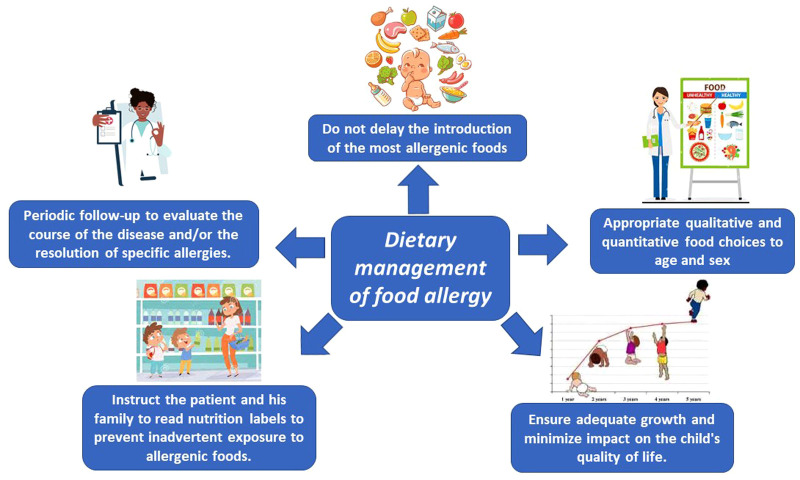
An individualized allergen avoidance plan is the cornerstone of the nutritional management of food allergy (FA). In pediatric age, the main objective is preventing the occurrence of acute and chronic symptoms by avoiding the offending food(s) and providing an adequate, nutritionally balanced and personalized diet at the same time. For this reason, the presence of a trained dietitian is recommended in order to meet nutritional needs of patients with FA and to provide a tailored nutritional plan, minimizing the impact of FA on quality of life and maintaining optimal growth.
Overview
The claims and statistics of this paper haven’t been checked yet.
Run the check — free, no account needed. It reads the open-access text and checks the sources it cites.
Integrity signals
Registry
Cites
Statistics
Figures
Verification
Claims the paper makes
The claims and statistics of this paper haven’t been checked yet.
Run the check — free, no account needed. It reads the open-access text and checks the sources it cites.
Claims other papers make about this one
Each is checked against this paper’s own text: does it say what the citing paper says it does?
In the citing paper
“This over-restriction can also negatively impact quality of life, contributing to anxiety around eating or fear of public dining [246].”
From Pollen–Food Allergy Syndrome: Allergens, Clinical Insights, Diagnostic and Therapeutic Challenges (2024) · cites this paper as [246]
Self-check
Percentages, sums and reported differences re-computed from the paper’s own numbers.
The self-check needs the paper’s full text.
Citations
Cites
No references could be resolved yet.
Research works printed but not linked: 30
- Sicherer, 2018, Food allergy: a review and update on epidemiology, pathogenesis, diagnosis, prevention, and management, J Allergy Clin Immunol, 141, 41, 10.1016/j.jaci.2017.11.003 · DOI
- Werfel, 2015, Position paper of the EAACI: food allergy due to immunological cross-reactions with common inhalant allergens, Allergy, 70, 1079, 10.1111/all.12666 · DOI · Paper page
- Kowalski, 2016, Risk and safety requirements for diagnostic and therapeutic procedures in allergology: world allergy organization statement, . World Allergy Organ. J, 9, 33, 10.1186/s40413-016-0122-3 · DOI
- Kattan, 2015, Optimizing the diagnosis of food allergy, Immunol. Allergy Clin. N. Am, 35, 61, 10.1016/j.iac.2014.09.009 · DOI
- Macchia, 2015, Guidelines for the use and interpretation of diagnosticmethods in adult food allergy, Clin Mol Allergy, 13, 27, 10.1186/s12948-015-0033-9 · DOI · Paper page
- Berni Canani, 2014, The effects of dietary counseling on children with food allergy: a prospective, multicenter intervention study, J Acad Nutr Diet, 114, 1432, 10.1016/j.jand.2014.03.018 · DOI
- Venter, 2017, Impact of elimination diets on nutrition and growth in children with multiple food allergies, Curr Opin Allergy Clin Immunol, 17, 220, 10.1097/ACI.0000000000000358 · DOI
- Du Toit, 2015, LEAP Study team. Randomized trial of peanut consumption in infants at risk for peanut allergy, Engl J Med, 372, 803, 10.1056/NEJMoa1414850 · DOI · Paper page
- Ierodiakonou, 2016, Timing of allergenic food Introduction to the infant diet and risk of allergic or autoimmune disease: a systematic review and meta-analysis, JAMA, 316, 1181, 10.1001/jama.2016.12623 · DOI
- Koplin, 2021, Real-World LEAP implementation, Curr Allergy Asthma Rep, 22, 61, 10.1007/s11882-022-01032-3 · DOI
- Halken, 2021, EAACI guideline: preventing the development of food allergy in infants and young children (2020 update), Pediatr Allergy Immunol, 32, 843, 10.1111/pai.13496 · DOI
- Roduit, 2014, PASTURE Study group. Increased food diversity in the first year of life is inversely associated with allergic diseases, J Allergy Clin Immunol, 133, 1056, 10.1016/j.jaci.2013.12.1044 · DOI
- Venter, 2012, Nutritional aspects in diagnosis and management of food hypersensitivity-the dietitians role, J Allergy, 2012, 269376, 10.1155/2012/269376 · DOI
- Mehta, 2013, Growth and nutritional concerns in children with food allergy, Opin Allergy Clin Immunol, 13, 275, 10.1097/ACI.0b013e328360949d · DOI
- Koletzko, 2012, Diagnostic approach and management of cow's-milk protein allergy in infants and children: eSPGHAN GI committee practical guidelines, J Pediatr Gastroenterol Nutr, 55, 221, 10.1097/MPG.0b013e31825c9482 · DOI
- Rudders, 2015, Sunlight, vitamin D and food allergy, Curr Opin Allergy Clin Immunol, 15, 350, 10.1097/ACI.0000000000000177 · DOI
- Yepes-Nuñez, 2018, Vitamin D supplementation in primary allergy prevention: systematic review of randomized and non-randomized studies, Allergy, 73, 37, 10.1111/all.13241 · DOI
- Paxton, 2013, Vitamin D and health in pregnancy, infants, children and adolescents in Australia and New Zealand: a position statement, Med J Aust, 198, 142, 10.5694/mja11.11592 · DOI
- Wjst, 2012, Is vitamin D supplementation responsible for the allergy pandemic?, Curr Opin Allergy Clin Immunol, 12, 257, 10.1097/ACI.0b013e3283535833 · DOI
- Allen, 2013, Vitamin D insufficiency is associated with challenge-proven food allergy in infants, J Allergy Clin Immunol, 131, 1109, 10.1016/j.jaci.2013.01.017 · DOI
- Osborne, 2012, Prevalence of eczema and food allergy is associated with latitude in Australia, J Allergy Clin Immunol, 129, 865, 10.1016/j.jaci.2012.01.037 · DOI
- Wjst, 2006, The vitamin D slant on allergy, Pediatr Allergy Immunol, 17, 477, 10.1111/j.1399-3038.2006.00456 · DOI
- Weisse, 2013, Maternal and newborn vitamin D status and its impact on food allergy development in the German LINA cohort study, Allergy, 68, 220, 10.1111/all.12081 · DOI
- Allen, 2015, VITALITY Trial: protocol for a randomised controlled trial to establish the role of postnatal vitamin D supplementation in infant immune health, BMJ Open, 5, e009377, 10.1136/bmjopen-2015-009377 · DOI
- Prescott, 2007, Prenatal fatty acid status and immune development: the pathways and the evidence, Lipids, 42, 801, 10.1007/s11745-007-3030-z · DOI
- Maslin, 2007, The effects of fish oil supplementation in pregnancy on breast milk fatty acid composition over the course of lactation: a randomized controlled trial, Pediatr Allergy ImmunolPediatr Res, 62, 689, 10.1111/pai.1242710.1203/PDR.0b013e318159a93a · DOI
- Krauss-Etschmann, 2008, Nutraceuticals for healthier life study group: decreased cord blood IL-4, IL-13, and CCR4 and increased TGF-beta levels after fish oil supplementation of pregnant women, J Allergy Clin Immunol, 121, 464, 10.1016/j.jaci.2007.09.018 · DOI
- Palmer, 2012, Effect of n-3 long chain polyunsaturated fatty acid supplementation in pregnancy on infants’ allergies in first year of life: randomised controlled trial, Br Med J, 344, e184, 10.1136/bmj.e184 · DOI
- D'Vaz, 2012, Postnatal fish oil supplementation in high-risk infants to prevent allergy: randomized controlled trial, Pediatrics, 130, 674, 10.1542/peds.2011-3104 · DOI
- D'Auria, 2020, Personalized nutrition in food allergy: tips for clinical practice, Front Pediatr, 8, 113, 10.3389/fped.2020.00 · DOI
Cited by
Sorted by citations
Pollen–Food Allergy Syndrome: Allergens, Clinical Insights, Diagnostic and Therapeutic Challenges
Haidar, L., Bănărescu, C. F., Uța, C., Moldovan, S. I., Zimbru, E.-L., Zimbru, R.-I., Ciurariu, E., Georgescu, M., & Panaitescu, C. (2024) · Applied Sciences · doi:10.3390/app15010066 · Cited by 21
Metadata
- Authors
- Leone, L., Mazzocchi, A., Maffeis, L., De Cosmi, V., & Agostoni, C.
- Venue
- Frontiers in Allergy
- Publisher
- Frontiers Media SA
- Published
- 2023-01-06
- Volume
- 3
- ISSN
- 2673-6101
- PMC
- PMC9853442
- Cited by
- 18
- References
- 0
About these checks
Registry, retraction, Cites and statistics results are computed, not judged, with one exception: a printed reference that no index lists is read once by a model before it counts as a citation error. Claims are extracted by a model and kept only when their quote appears verbatim in the text; each cited source is then checked, with a model’s help, for whether it says what the claim relies on. Those verdicts can be wrong — read the claim’s quote and the cited source before relying on one.
Statistics and arithmetic are recomputed, not judged.
Confidence bands are shown only for fields calibrated on our annotated test set. None is calibrated yet, so no band is shown.
What counts as a claim ›How we measure confidence ›How we check this ›
Are you an author, or do you see a problem with this page? Request a review
