

The DOI matches its Crossref record.
Living with food allergies: the experiences of adult patients and caregivers
Abstract
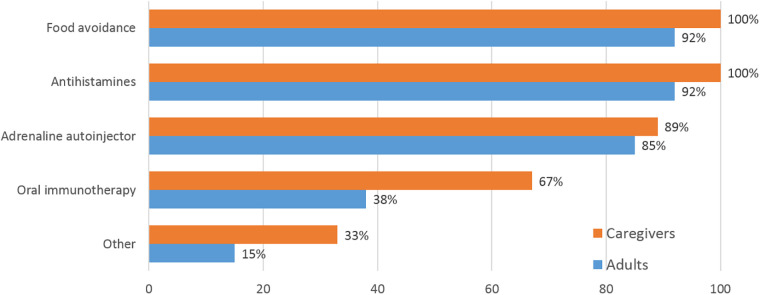
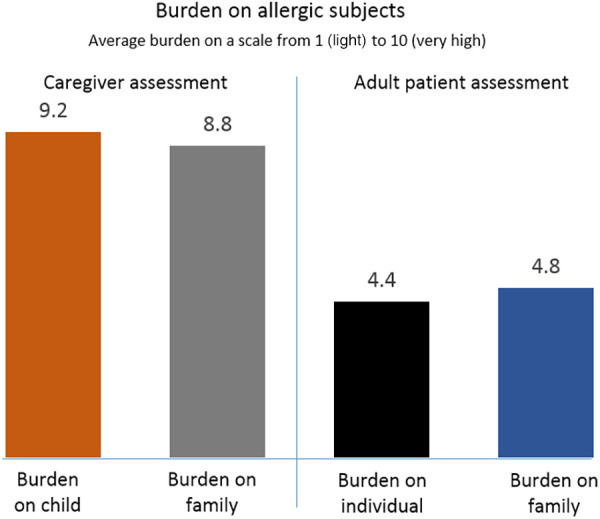
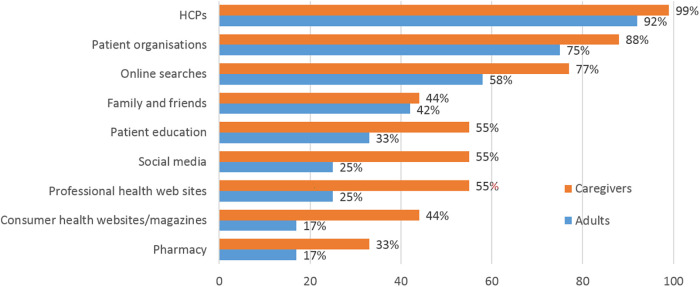
Background: Few studies have addressed how food allergy may impact differently on the daily lives of adults with food allergies and caregivers for food-allergic dependents. Objective: To explore similarities and differences in life experiences and unmet needs between individuals caring for a child with food allergy and adults with food allergy world-wide. Methods: Two multinational, virtual, interactive, moderated discussions of specific questions between respectively people with food allergies and caregivers for people with food allergies, with experienced clinicians participating. Results: Sixteen individuals living with food allergies and nine caregivers took part in the two roundtables. Food avoidance and antihistamines were the most common treatments for food-allergic reactions in both groups. Caregivers reported greater burden of disease on affected individuals and families than did adult patients. Adult panelists considered autoinjectors easy to use but caregivers reported additional emotional stress thinking about autoinjector use. Caregivers described an ever-present fear of inattention and of overlooking a risk factor for a severe reaction, whereas adult panelists showed a determination not to let their food allergies interfere with living their lives. Both groups had safety-conscious attitudes to treatments, but adult patients emphasized convenience while caregivers prioritized reduced severity of reactions and eliminated fear. Both groups confirmed the need for improved, trusted sources of information, and for resources and training programs for any new therapies. Conclusion: The interactive exchange provided insights into differences between adult patients and caregivers, notably in fear and confidence in daily life, severity of disease impact, and unmet needs for treatments.
Overview
The claims and statistics of this paper haven’t been checked yet.
Run the check — free, no account needed. It reads the open-access text and checks the sources it cites.
Integrity signals
Registry
Cites
Statistics
Figures
Verification
Claims the paper makes
The claims and statistics of this paper haven’t been checked yet.
Run the check — free, no account needed. It reads the open-access text and checks the sources it cites.
Claims other papers make about this one
Each is checked against this paper’s own text: does it say what the citing paper says it does?
In the citing paper
“Additionally, the potential for severe, life-threatening reactions such as anaphylaxis-though rare-further heightens the psychological burden, as patients may feel unprepared or anxious about the availability of emergency medical care [109][110][111].”
From Pollen–Food Allergy Syndrome: Allergens, Clinical Insights, Diagnostic and Therapeutic Challenges (2024) · cites this paper as [111]
Self-check
Percentages, sums and reported differences re-computed from the paper’s own numbers.
The self-check needs the paper’s full text.
Citations
Cites
No references could be resolved yet.
Research works printed but not linked: 33
- Nwaru, 2014, The epidemiology of food allergy in Europe: a systematic review and meta-analysis, Allergy, 69, 62, 10.1111/all.12305 · DOI
- Dunlop, 2018, Epidemiology of food allergy, Immunol Allergy Clin North Am, 38, 13, 10.1016/j.iac.2017.09.002 · DOI
- Worm, 2017, Food-induced anaphylaxis and cofactors - data from the anaphylaxis registry, Allergol Sel, 1, 21, 10.5414/ALX01401E · DOI
- Grabenhenrich, 2016, Anaphylaxis in children and adolescents: the European anaphylaxis registry, J Allergy Clin Immunol, 137, 1128, 10.1016/j.jaci.2015.11.015 · DOI
- Akarsu, 2021, Ige mediated food allergy in Turkey: different spectrum, similar outcome, Turk J Pediatr, 63, 554, 10.24953/turkjped.2021.04.002 · DOI
- Cummings, 2010, The psychosocial impact of food allergy and food hypersensitivity in children, adolescents and their families: a review: the psychosocial impact of food allergy, Allergy, 65, 933, 10.1111/j.1398-9995.2010.02342.x · DOI
- Springston, 2010, Variations in quality of life among caregivers of food allergic children, Ann Allergy Asthma Immunol, 105, 287, 10.1016/j.anai.2010.08.003 · DOI
- Howe, 2014, What affects quality of life among caregivers of food-allergic children?, Ann Allergy Asthma Immunol, 113, 69, 10.1016/j.anai.2014.04.016 · DOI
- Moen, 2019, Parents experiences raising a child with food allergy; a qualitative review, J Pediatr Nurs, 46, e52, 10.1016/j.pedn.2019.02.036 · DOI
- Lau, 2014, Anxiety and stress in mothers of food-allergic children, Pediatr Allergy Immunol, 25, 236, 10.1111/pai.12203 · DOI
- DunnGalvin, 2020, APPEAL-1: a multiple-country European survey assessing the psychosocial impact of peanut allergy, Allergy, 75, 2899, 10.1111/all.14363 · DOI
- Alanne, 2014, Living ordinary family life with an allergic child-the mother’s perspective, J Pediatr Nurs, 29, 679, 10.1016/j.pedn.2014.06.012 · DOI
- Birdi, 2016, Quality of life, stress, and mental health in parents of children with parentally diagnosed food allergy compared to medically diagnosed and healthy controls, J Allergy, 2016, 1, 10.1155/2016/1497375 · DOI
- Feng, 2019, Beyond avoidance: the psychosocial impact of food allergies, Clin Rev Allergy Immunol, 57, 74, 10.1007/s12016-018-8708-x · DOI
- DunnGalvin, 2008, Food allergy QoL questionnaire for children aged 0-12 years: content, construct, and cross-cultural validity, Clin Exp Allergy, 38, 977, 10.1111/j.1365-2222.2008.02978.x · DOI
- Knibb, 2022, Development and validation of the anaphylaxis quality of life scale for adults, J Allergy Clin Immunol Pract, 10, 1527, 10.1016/j.jaip.2022.02.023 · DOI
- Cao, 2021, Improvement in health-related quality of life in food-allergic patients: a meta-analysis, J Allergy Clin Immunol Pract, 9, 3705, 10.1016/j.jaip.2021.05.020 · DOI
- Herbert, 2021, Patients’ perspectives and needs on novel food allergy treatments in the United States, Curr Treat Options Allergy, 8, 9, 10.1007/s40521-020-00274-8 · DOI
- Brujic, 2022, Living with presbyopia: experiences from a virtual roundtable dialogue among impacted individuals and healthcare professionals, BMC Ophthalmol, 22, 204, 10.1186/s12886-022-02432-9 · DOI
- Caffery, 2022, Patient perspectives on dry eye disease and chronic ocular surface pain: insights from a virtual community-moderated dialogue, Eur J Ophthalmol, 11206721221125264, 10.1177/11206721221125263 · DOI
- Chinthrajah, 2022, Updating the CoFAR grading scale for systemic allergic reactions in food allergy, J Allergy Clin Immunol, 149, 2166, 10.1016/j.jaci.2021.12.789 · DOI
- Arasi, 2021, Consensus on definition of food allergy severity (DEFASE) an integrated mixed methods systematic review, World Allergy Organ J, 14, 100503, 10.1016/j.waojou.2020.100503 · DOI
- Dribin, 2021, Severity grading system for acute allergic reactions: a multidisciplinary Delphi study, J Allergy Clin Immunol, 148, 173, 10.1016/j.jaci.2021.01.003 · DOI
- Cardona, 2020, World allergy organization anaphylaxis guidance 2020, World Allergy Organ J, 13, 100472, 10.1016/j.waojou.2020.100472 · DOI
- Muraro, 2018, The urgent need for a harmonized severity scoring system for acute allergic reactions, Allergy, 73, 1792, 10.1111/all.13408 · DOI
- Umasunthar, 2013, Incidence of fatal food anaphylaxis in people with food allergy: a systematic review and meta-analysis, Clin Exp Allergy, 43, 1333, 10.1111/cea.12211 · DOI
- Baseggio Conrado, 2021, Food anaphylaxis in the United Kingdom: analysis of national data, 1998-2018, Br Med J, 372, n251, 10.1136/bmj.n251 · DOI
- Turner, 2017, Fatal anaphylaxis: mortality rate and risk factors, J Allergy Clin Immunol Pract, 5, 1169, 10.1016/j.jaip.2017.06.031 · DOI
- Jacobs, 2012, A survey study of index food-related allergic reactions and anaphylaxis management: a survey study of anaphylaxis management, Pediatr Allergy Immunol, 23, 582, 10.1111/j.1399-3038.2012.01315.x · DOI
- Umasunthar, 2015, Patients’ ability to treat anaphylaxis using adrenaline autoinjectors: a randomized controlled trial, Allergy, 70, 855, 10.1111/all.12628 · DOI
- Prince, 2018, Underuse of epinephrine for the treatment of anaphylaxis: missed opportunities, J Asthma Allergy, 11, 143, 10.2147/JAA.S159400 · DOI
- Turner, 2016, The emperor has no symptoms: the risks of a blanket approach to using epinephrine autoinjectors for all allergic reactions, J Allergy Clin Immunol Pract, 4, 1143, 10.1016/j.jaip.2016.05.005 · DOI
- Broome-Stone, 2012, The psychosocial impact of life-threatening childhood food allergies, Pediatr Nurs, 38, 327
Cited by
Sorted by citations
Pollen–Food Allergy Syndrome: Allergens, Clinical Insights, Diagnostic and Therapeutic Challenges
Haidar, L., Bănărescu, C. F., Uța, C., Moldovan, S. I., Zimbru, E.-L., Zimbru, R.-I., Ciurariu, E., Georgescu, M., & Panaitescu, C. (2024) · Applied Sciences · doi:10.3390/app15010066 · Cited by 21
Metadata
- Authors
- Santos, A. F., Worm, M., Kurita, S., Wong, T., Contato, D., Pirillo, E., Esteban, A. E., Tassinari, P., Perna, F., & Chinthrajah, R. S.
- Venue
- Frontiers in Allergy
- Publisher
- Frontiers Media SA
- Published
- 2023-11-06
- Volume
- 4
- ISSN
- 2673-6101
- PMC
- PMC10658712
- Cited by
- 13
- References
- 0
About these checks
Registry, retraction, Cites and statistics results are computed, not judged, with one exception: a printed reference that no index lists is read once by a model before it counts as a citation error. Claims are extracted by a model and kept only when their quote appears verbatim in the text; each cited source is then checked, with a model’s help, for whether it says what the claim relies on. Those verdicts can be wrong — read the claim’s quote and the cited source before relying on one.
Statistics and arithmetic are recomputed, not judged.
Confidence bands are shown only for fields calibrated on our annotated test set. None is calibrated yet, so no band is shown.
What counts as a claim ›How we measure confidence ›How we check this ›
Are you an author, or do you see a problem with this page? Request a review
How to cite
Cite CoChat for the checks on this page, and the paper for its own findings.
- This page
- CoChat. (2026). Citation check: Living with food allergies: the experiences of adult patients and caregivers. https://app.cochat.ai/papers/10.3389/falgy.2023.1272851
- The paper
- Santos, A. F., Worm, M., Kurita, S., Wong, T., Contato, D., Pirillo, E., Esteban, A. E., Tassinari, P., Perna, F., & Chinthrajah, R. S. (2023). Living with food allergies: the experiences of adult patients and caregivers. Frontiers in Allergy. https://doi.org/10.3389/falgy.2023.1272851
