

The DOI matches its Crossref record; 20 of the 20 references it cites were found in a registry or an index.
Stimuli-responsive injectable chitosan-based hydrogels for controlled drug delivery systems
Open accessAbstract
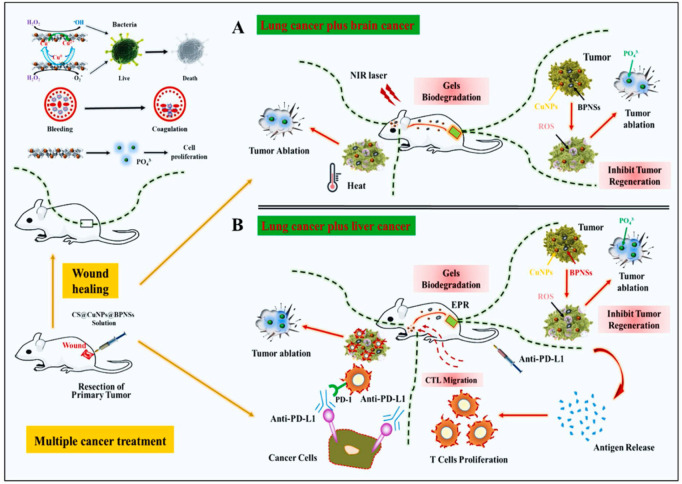
In the last decade, injectable hydrogels have attracted a lot of attention due to their excellent functional properties in the field of drug delivery for precise, non-invasive and focused tissue locations. Therefore, designing drug delivery systems (DDS) responsive to hydrogel stimuli to release a drug to an external stimulus with various advantages, can be very challenging. Due to their biocompatibility, mucosal adhesion, and hemostatic activity, chitosan (Chitosan)-based hydrogels offer a lot of potential for tissue engineering and drug delivery. It can be difficult to manage the structure of these stimuli-responsive CS hydrogels or they may require additional crosslinking agents, such as hydrogels with dual pH and thermo-responsiveness. Therefore, it is crucial to create these hydrogels for medicinal applications.
Overview
The claims and statistics of this paper haven’t been checked yet.
Free: it reads the open-access text and checks the first 5 claims that cite a source we can check. Create a free account to check every claim.
Integrity signals
Registry
Cites
Statistics
Figures

Verification
Claims the paper makes
The claims and statistics of this paper haven’t been checked yet.
Free: it reads the open-access text and checks the first 5 claims that cite a source we can check. Create a free account to check every claim.
Claims other papers make about this one
Each is checked against this paper’s own text: does it say what the citing paper says it does?
The source backs part of the claim, not all of it — or backs it for a different population, condition or comparison.
In the citing paper
“Chitosan, alginate, hyaluronic acid, dextran, xanthan, and gum-tragacanth are some examples of pH-sensitive biopolymers (Belscak-Cvitanovic et al., 2015; Garshasbi et al., 2023).”
From pH stimuli-responsive hydrogels from non-cellulosic biopolymers for drug delivery. (2023) · cites this paper as Garshasbi et al., 2023
Experimental — accuracy not yet measuredThe cited source says what the claim attributes to it.
In the citing paper
“This marks the first-ever instance of such crosslinking.”
From pH stimuli-responsive hydrogels from non-cellulosic biopolymers for drug delivery. (2023) · cites this paper as Garshasbi et al., 2023
The cited source says what the claim attributes to it.
In the citing paper
“After being loaded with Dox for a duration of 5 days, the hydrogels exhibited a release mechanism that was responsive to changes in pH. Notably, a greater amount of Dox was released at the acidic pH characteristic of tumor environments compared to the neutral pH typically found in healthy conditions.”
From pH stimuli-responsive hydrogels from non-cellulosic biopolymers for drug delivery. (2023) · cites this paper as Garshasbi et al., 2023
The cited source says what the claim attributes to it.
In the citing paper
“The non-toxicity of these hydrogels was confirmed by the use of MTT and hemolytic tests.”
From pH stimuli-responsive hydrogels from non-cellulosic biopolymers for drug delivery. (2023) · cites this paper as Garshasbi et al., 2023
The cited source says what the claim attributes to it.
In the citing paper
“The hydrogels exhibited favorable characteristics for the purpose of administering drugs by injection due to their remarkable viscoelastic, thixotropic, and self-healing qualities.”
From pH stimuli-responsive hydrogels from non-cellulosic biopolymers for drug delivery. (2023) · cites this paper as Garshasbi et al., 2023
2 more claims about this paper
Create a free account to see every claim other papers make about this one.
Self-check
Percentages, sums and reported differences re-computed from the paper’s own numbers.
The self-check needs the paper’s full text.
Citations
Cites
Liang, Y., Zhao, X., Ma, P. X., Guo, B., Du, Y., & Han, X. (2019) · Journal of Colloid and Interface Science · doi:10.1016/j.jcis.2018.10.056 · Cited by 433
Andrade, F., Roca-Melendres, M. M., Durán-Lara, E. F., Rafael, D., & Schwartz, S. (2021) · Cancers · doi:10.3390/cancers13051164 · Cited by 224
Stimuli‐Sensitive Injectable Hydrogels Based on Polysaccharides and Their Biomedical Applications
Thambi, T., Phan, V. H. G., & Lee, D. S. (2016) · Macromolecular Rapid Communications · doi:10.1002/marc.201600371 · Cited by 181
Pandit, A. H., Nisar, S., Imtiyaz, K., Nadeem, M., Mazumdar, N. A., Rizvi, M. M. A., & Ahmad, S. (2021) · Biomacromolecules · doi:10.1021/acs.biomac.1c00537 · Cited by 118
Chitosan/Pluronic F127 Thermosensitive Hydrogel as an Injectable Dexamethasone Delivery Carrier
García-Couce, J., Tomás, M., Fuentes, G., Que, I., Almirall, A., & Cruz, L. J. (2022) · Gels · doi:10.3390/gels8010044 · Cited by 116
Injectable chitosan hydrogel embedding modified halloysite nanotubes for bone tissue engineering
Kazemi-Aghdam, F., Jahed, V., Dehghan-Niri, M., Ganji, F., & Vasheghani‐Farahani, E. (2021) · Carbohydrate Polymers · doi:10.1016/j.carbpol.2021.118311 · Cited by 113
Yuan, F., Wang, H., Guan, J., Fu, J.-N., Yang, M., Zhang, J., Chen, Y., Wang, X., & Yu, J. (2021) · Pharmaceutics · doi:10.3390/pharmaceutics13091487 · Cited by 83
Hu, M., Yang, J., & Xu, J. (2021) · Drug Delivery · doi:10.1080/10717544.2021.1895906 · Cited by 79
Stimulus‐Responsive Hydrogel for Ophthalmic Drug Delivery
Lin, D., Lei, L., Shi, S., & Li, X. (2019) · Macromolecular Bioscience · doi:10.1002/mabi.201900001 · Cited by 73
Kaur, K., Paiva, S. S., Caffrey, D. F., Cavanagh, B., & Murphy, C. M. (2021) · Materials Science and Engineering C · doi:10.1016/j.msec.2021.112340 · Cited by 72
Cited by
Haider, A., Khan, S., Iqbal, D. N., Shrahili, M., Haider, S., Mohammad, K., Mohammad, A., Rizwan, M., Kanwal, Q., & Mustafa, G. (2024) · European Polymer Journal · doi:10.1016/j.eurpolymj.2024.112983 · Cited by 161
3D and 4D printing hydroxyapatite-based scaffolds for bone tissue engineering and regeneration
Soleymani, S., & Naghib, S. M. (2023) · Heliyon · doi:10.1016/j.heliyon.2023.e19363 · Cited by 136
Self-citationAn Overview of Biopolymers for Drug Delivery Applications
Opriș, O., Mormile, C., Lung, I., Stegarescu, A., Soran, M.-L., & Soran, A. P. (2024) · Applied Sciences · doi:10.3390/app14041383 · Cited by 113
pH-Responsive Hydrogels: Recent Advances in Pharmaceutical Applications
Patroklou, G., Triantafyllopoulou, E., Goula, P.-E., Karali, V., Chountoulesi, M., Valsami, G. N., Pispas, S., & Pippa, Ν. (2025) · Polymers · doi:10.3390/polym17111451 · Cited by 102
Recent Advancements in Chitosan-Based Biomaterials for Wound Healing
Shah, J., Patel, D., Rananavare, D., Hudson, D., Tran, M., Schloss, R. S., Langrana, N. A., Francois Berthiaume, B., & Kumar, S. (2025) · Journal of Functional Biomaterials · doi:10.3390/jfb16020045 · Cited by 95
Metadata
- Authors
- Garshasbi, H., Salehi, S., Naghib, S. M., Ghorbanzadeh, S., & Zhang, W.
- Affiliations
- Academic Center for Education, Culture and Research (IR)
- Dalian University of Technology (CN)
- Corresponding author
- Naghib, Seyed Morteza
- Zhang, Wei
- Venue
- Frontiers in Bioengineering and Biotechnology
- Publisher
- Frontiers Media SA
- Published
- 2023-01-06
- Volume
- 10
- Pages
- 1126774-1126774
- ISSN
- 2296-4185 (ISSN-L)
- PMC
- PMC9869377
- OpenAlex
- W4313649960
- Cited by
- 53
- References
- 20
- Citations by year
- 2026: 10 · 2025: 22 · 2024: 18 · 2023: 3
- FWCI
- 4.53
- Type
- journal article
- Language
- en
- Open access
- gold
- doi.org
- Licence
- Locations
- Frontiers in Bioengineering and Biotechnology (publishedVersion, cc-by)
- PubMed Central (publishedVersion, cc-by)
- PubMed (publishedVersion)
- DOAJ (DOAJ: Directory of Open Access Journals) (submittedVersion, cc-by-sa)
- Funders
- Fundamental Research Funds for the Central Universities (DUT22YG123, DUT22YG123, DUT21TD105, DUT21TD105)
- Topics
- Physical Sciences › Materials Science › Biomaterials › Hydrogels: synthesis, properties, applications
- Life Sciences › Pharmacology, Toxicology and Pharmaceutics › Pharmaceutical Science › Advanced Drug Delivery Systems
- Life Sciences › Agricultural and Biological Sciences › Agronomy and Crop Science › Polymer-Based Agricultural Enhancements
- Keywords
- chitosan hydrogel, injectable hydrogel, stimuli-responsive drug delivery, controlled drug release, pH-responsive hydrogels, thermosensitive hydrogel, dual-responsive hydrogels, tissue engineering, biocompatibility, hemostatic activity
About these checks
Registry, retraction, Cites and statistics results are computed, not judged, with one exception: a printed reference that no index lists is read once by a model before it counts as a citation error. Claims are extracted by a model and kept only when their quote appears verbatim in the text; each cited source is then checked, with a model’s help, for whether it says what the claim relies on. Those verdicts can be wrong — read the claim’s quote and the cited source before relying on one.
Statistics and arithmetic are recomputed, not judged.
Confidence bands are shown only for fields calibrated on our annotated test set. None is calibrated yet, so no band is shown.
What counts as a claim ›How we measure confidence ›How we check this ›
Are you an author, or do you see a problem with this page? Request a review
How to cite
Cite CoChat for the checks on this page, and the paper for its own findings.
- This page
- CoChat. (2026). Citation check: Stimuli-responsive injectable chitosan-based hydrogels for controlled drug delivery systems. https://app.cochat.ai/papers/10.3389/fbioe.2022.1126774
- The paper
- Garshasbi, H., Salehi, S., Naghib, S. M., Ghorbanzadeh, S., & Zhang, W. (2023). Stimuli-responsive injectable chitosan-based hydrogels for controlled drug delivery systems. Frontiers in Bioengineering and Biotechnology. https://doi.org/10.3389/fbioe.2022.1126774
Data sources
Bibliographic data: Semantic Scholar, OpenAlex, Crossref.
Contains information from the Semantic Scholar Academic Graph Datasets, made available under the ODC Attribution License (ODC-BY 1.0).
Semantic Scholar’s data is described in: Kinney, R., et al. (2023). The Semantic Scholar Open Data Platform. arXiv:2301.10140.
