

The DOI matches its Crossref record; 19 of the 22 references it cites were found in a registry or an index.
Process Advantages of Direct CO2 to Methanol Synthesis
Open accessAbstract
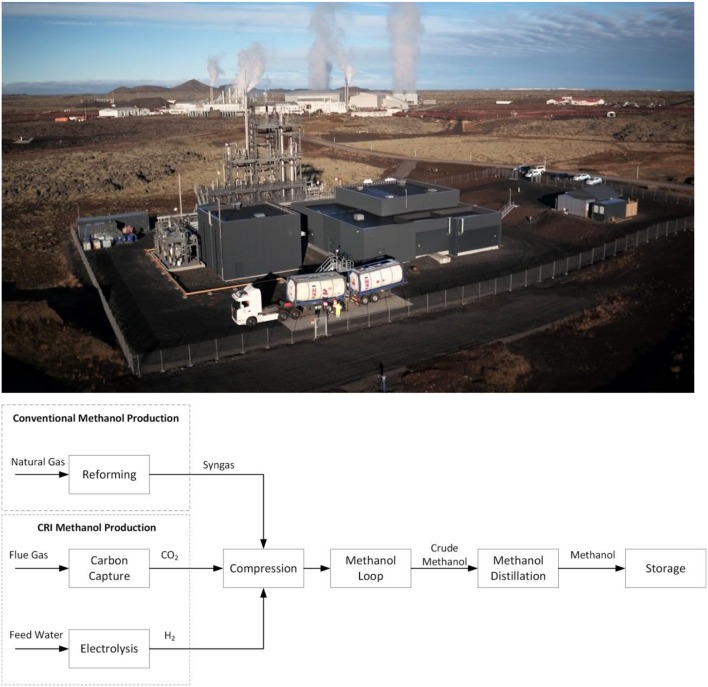
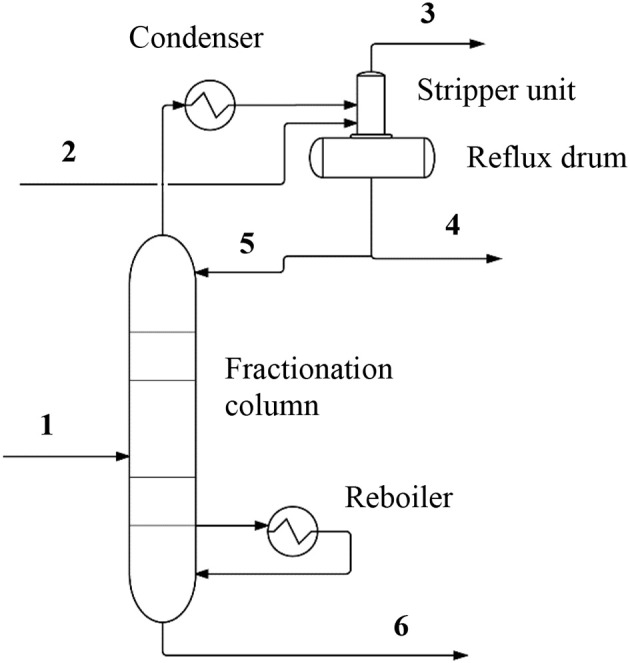
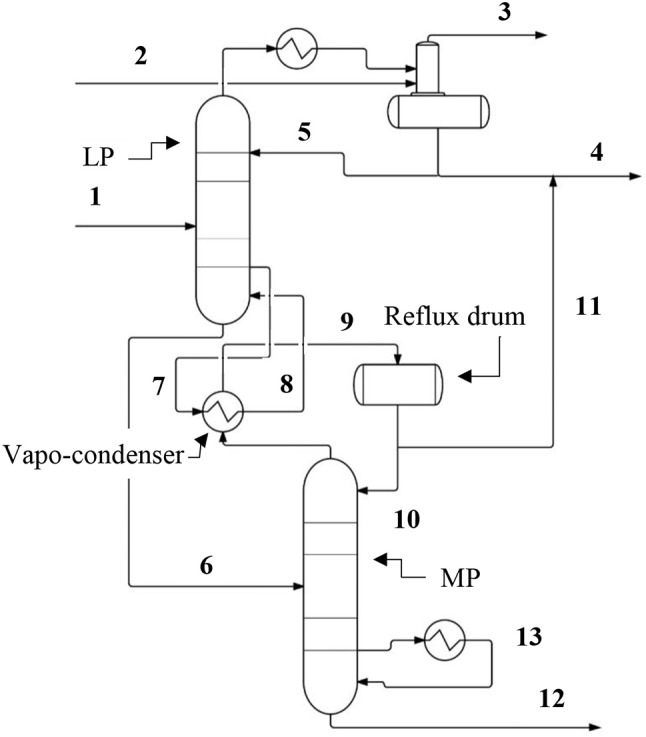
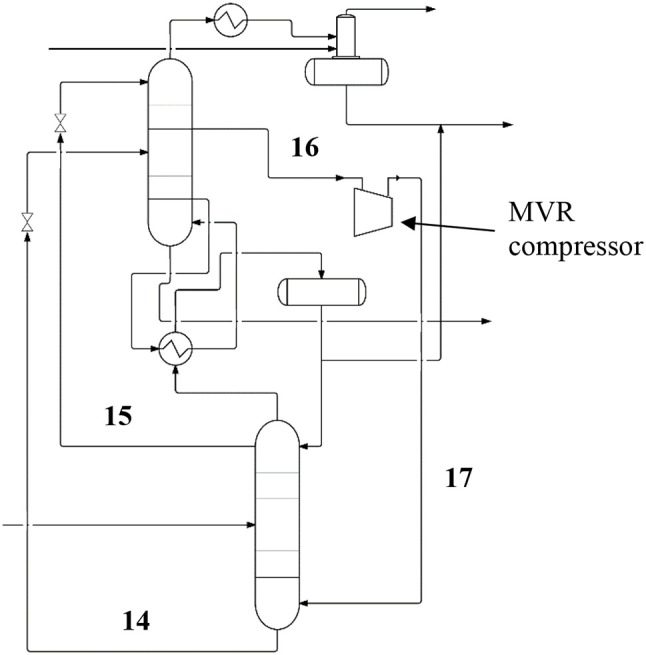
Developing a laboratory scale or pilot scale chemical process into industrial scale is not trivial. The direct conversion of CO2 to methanol, and concomitant production of hydrogen from water electrolysis on large scale, are no exception. However, when successful, there are certain benefits to this process over the conventional process for producing methanol, both economic and environmental. In this article, we highlight some aspects that are unique to the process of converting pure CO2 to methanol. Starting from pure CO2 and a separate pure source of H2, rather than a mixture of CO, CO2 and H2 as is the case with syngas, simplifies the chemistry, and therefore also changes the reaction and purification processes from conventional methanol producing industrial plants. At the core of the advantages is that the reaction impurities are essentially limited to only water and dissolved CO2 in the crude methanol. In this paper we focus on several aspects of the process that direct conversion of CO2 to methanol enjoys over existing methods from conventional syngas. In particular, we discuss processes for removing CO2 from a methanol synthesis intermediate product stream by way of a stripper unit in an overhead stream of a distillation column, as well as aspects of a split tower design for the distillation column with an integrated vapo-condenser and optionally also featuring mechanical vapor re-compression. Lastly, we highlight some differences in reactor design for the present system over those used in conventional plants.
Overview
The claims and statistics of this paper haven’t been checked yet.
Run the check — free, no account needed. It reads the open-access text and checks the sources it cites.
Integrity signals
Registry
Cites
Statistics
Figures
Verification
Claims the paper makes
The claims and statistics of this paper haven’t been checked yet.
Run the check — free, no account needed. It reads the open-access text and checks the sources it cites.
Claims other papers make about this one
Each is checked against this paper’s own text: does it say what the citing paper says it does?
The source backs part of the claim, not all of it — or backs it for a different population, condition or comparison.
In the citing paper
“With a high recycling ratio in the synthesis process, CO2-to-methanol conversion rates approach 100 % [29]”
From Locked in on RFNBOs – Will EU mandates for drop-in synthetic aviation fuels lead to decreased energy- and cost-efficiency? (2026) · cites this paper as [29]
Experimental — accuracy not yet measured
Self-check
Percentages, sums and reported differences re-computed from the paper’s own numbers.
The self-check needs the paper’s full text.
Citations
Cites
Wirtschafter, D. D. (2009) · Canadian Medical Association Journal · doi:10.1503/cmaj.109-2013 · Cited by 12,235
Artz, J., Müller, T. E., Thenert, K., Kleinekorte, J., Meys, R., Sternberg, A., Bardow, A., & Leitner, W. (2017) · Chemical Reviews · doi:10.1021/acs.chemrev.7b00435 · Cited by 2,489 · cited 1×
“One approach to a more sustainable future is to use CO2 as the carbon source for fuels and carbon-based materials that are currently only derived from coal, oil and natural gas (Peters et al., 2011; Aresta et al., 2016; Landälv, 2017; Artz et al., 2018).”
BackgroundBeyond Oil and Gas: The Methanol Economy
Prakash, G. S., Olah, G. A., & Goeppert, A. (2011) · ECS Transactions · doi:10.1149/1.3645178 · Cited by 2,258 · cited 3×
“…as a fuel or fuel additive or precursor for more complex transportation fuels, or even as an intermediate for a diverse array of industrial chemicals including plastics, paints, textiles, and other uses, is an effective alternative disposition for CO2 (Olah et al., 2006; Gnanamani et al., 2014).”
BackgroundUllmann ' s Encyclopedia of Industrial Chemistry
Godtfredsen, S., Wityshyn, M. G., Useng, A., & NON-AQUEOUSMEDIUM, L. I. A. (2017) · Choice Reviews Online · doi:10.5860/choice.26-1926 · Cited by 1,891 · cited 3×
“For example, the formation of methanol from CO is based on CO reacting directly with H2 to produce CH3OH; the conversion is significantly more exothermic at−90.77 kJ/mol relative to Reaction 2 above (Ott et al., 2012).”
BackgroundInfluentialStudies in Surface Science and Catalysis
Delmon, B., & Yates, J. (1988) · Studies in surface science and catalysis · doi:10.1016/s0167-2991(09)60842-9 · Cited by 1,360 · cited 1×
“Mitigating climate change is multifaceted and there are several viable options available for cleaner energy (Inui et al., 1998; Shindell et al., 2017).”
BackgroundChemical Technologies for Exploiting and Recycling Carbon Dioxide into the Value Chain
Peters, M., Köhler, B., Kuckshinrichs, W., Leitner, W., Markewitz, P., & Müller, T. E. (2011) · ChemSusChem · doi:10.1002/cssc.201000447 · Cited by 752 · cited 2×
“One approach to a more sustainable future is to use CO2 as the carbon source for fuels and carbon-based materials that are currently only derived from coal, oil and natural gas (Peters et al., 2011; Aresta et al., 2016; Landälv, 2017; Artz et al., 2018).”
BackgroundRahman, F. A., Aziz, M. M. A., Saidur, R., Bakar, W. A. W. A., Hainin, . R., Jaya, R. P., & Hassan, N. A. (2017) · Renewable and Sustainable Energy Reviews · doi:10.1016/j.rser.2017.01.011 · Cited by 690 · cited 1×
“and reusing what is emitted during combustion, thereby forming a static CO2 loop (Rahman et al., 2017).”
BackgroundAresta, M., Dibenedetto, A., & Quaranta, E. (2016) · Journal of Catalysis · doi:10.1016/j.jcat.2016.04.003 · Cited by 354 · cited 1×
“One approach to a more sustainable future is to use CO2 as the carbon source for fuels and carbon-based materials that are currently only derived from coal, oil and natural gas (Peters et al., 2011; Aresta et al., 2016; Landälv, 2017; Artz et al., 2018).”
BackgroundTowards energy efficient distillation technologies – Making the right choice
Kiss, A. A., Landaeta, S. J. F., & Ferreira, C. I. (2012) · doi:10.1016/j.energy.2012.09.038 · Cited by 291 · cited 2×
“The massive energy consumption of distillation operations is at least partly due to the inefficiency of existing distillation processes which operate with approximately 5–10 % efficiency (Kiss et al., 2012).”
BackgroundRichardson, K., Steffen, W., & Liverman, D. (2011) · Cambridge University Press eBooks · doi:10.1017/cbo9780511973444 · Cited by 252 · cited 2×
“The carbon captured in the deposits of fossilized vegetation, along with ancient marine life, degraded and stored in the earth’s crust, have been pivotal to human population growth and development, and indeed, have become essential to our existence (Richardson et al., 2011).”
BackgroundSchemme, S., Samsun, R. C., Peters, R., & Stolten, D. (2017) · Fuel · doi:10.1016/j.fuel.2017.05.061 · Cited by 196 · cited 1×
“One obvious way of storing and transporting electricity is by converting it into chemical energy (Peters et al., 2011; Landälv, 2017; Schemme et al., 2017).”
BackgroundA climate policy pathway for near- and long-term benefits
Shindell, D. T., Borgford‐Parnell, N., Brauer, M. D., Haines, A., Kuylenstierna, J. C. I., Leonard, S. A., Ramanathan, V., Ravishankara, A. R., Amann, M. C., & Srivastava, L. (2017) · Science · doi:10.1126/science.aak9521 · Cited by 164 · cited 1×
“Mitigating climate change is multifaceted and there are several viable options available for cleaner energy (Inui et al., 1998; Shindell et al., 2017).”
BackgroundMethanol Production ‐ A Technical History
Sheldon, D. (2017) · doi:10.1595/205651317x695622 · Cited by 126 · cited 1×
“Conventionally, methanol is produced on industrial scale from synthesis gas “syngas,” which is a combination of varying amounts of H2, CO, and CO2 frequently derived from gasified coal or natural gas (Ott et al., 2012; Sheldon, 2017).”
BackgroundClimate change : observed impacts on planet Earth
(2016) · Choice Reviews Online · doi:10.5860/choice.47-2012 · Cited by 104
Global climate change - the technology challenge
Princiotta, F. (2007) · Advances in global change research · doi:10.1007/978-90-481-3153-2 · Cited by 38
Hansen, J., & Nielsen, P. (2008) · Handbook of Heterogeneous Catalysis · doi:10.1002/9783527610044.hetcat0148 · Cited by 36
Observing Global Climate Change
Kondratyev, K., & Cracknell, A. (1998) · doi:10.1201/9780203983485 · Cited by 30
Climate Change and Air Pollution: The Impact on Human Health in Developed and Developing Countries
Akhtar, R., & Palagiano, C. (2018) · doi:10.1007/978-3-319-61346-8 · Cited by 23 · cited 1×
“…their depletion represents a reversal of atmospheric composition to a time when atmospheric CO2 concentrations were much higher, and a regeneration of a climate that much of the present-day biosphere is not accustomed to (Letcher, 2016; Kondratyev and Cracknell, 1998; Akhtar and Palagiano, 2018).”
BackgroundHydrogenation of Carbon Dioxide to Liquid Fuels
Gnanamani, M. K., Jacobs, G., Pendyala, V. R., Ma, W.-P., & Davis, B. (2014) · doi:10.1002/9781118831922.ch4 · Cited by 13 · cited 1×
“…as a fuel or fuel additive or precursor for more complex transportation fuels, or even as an intermediate for a diverse array of industrial chemicals including plastics, paints, textiles, and other uses, is an effective alternative disposition for CO2 (Olah et al., 2006; Gnanamani et al., 2014).”
Background
Research works printed but not linked: 3
- Alvarado, 2016, The changing face of the global methanol industry, IHS Chem. Bull., 3, 10
- Landälv, 2017, Methanol as a Renewable Fuel – a Knowledge Synthesis
- Lorenz, 2014, Methanol production from CO2, Section 4.8.2.3, 271
Cited by
Sorted by citations
Recent Advances in Carbon Dioxide Hydrogenation to Methanol via Heterogeneous Catalysis
Jiang, X., Nie, X., Guo, X., Song, C., & Chen, J. G. (2020) · Chemical Reviews · doi:10.1021/acs.chemrev.9b00723 · Cited by 1,596
Transforming carbon dioxide into jet fuel using an organic combustion-synthesized Fe-Mn-K catalyst
Yao, B., Xiao, T., Makgae, O. A., Jie, X. M., González-Cortés, S. L., Guan, S., Kirkland, A. I., Dilworth, J. R., Al‐Megren, H. A., Alshihri, S. M., et al. (2020) · Nature Communications · doi:10.1038/s41467-020-20214-z · Cited by 360
Methanol Synthesis from CO2: A Review of the Latest Developments in Heterogeneous Catalysis
Guil-López, R., Mota, N., Llorente, J., Ordóñez, E. M., Pawelec, B., Fierro, J. L. G., & Navarro, R. M. (2019) · Materials · doi:10.3390/ma12233902 · Cited by 346
“A simple tube-cooled reactor is sufficient to control the temperature in the synthesis of methanol from CO2 which makes it possible to lower the cost and the efficiency of operation [46].”
BackgroundA Review of The Methanol Economy: The Fuel Cell Route
Araya, S. S., Liso, V., Cui, X., Li, N., Zhu, J., Sahlin, S. L., Jensen, S. H., Nielsen, M. P., & Kær, S. K. (2020) · Energies · doi:10.3390/en13030596 · Cited by 316
“Additionally, the tube-cooled reactor is also an option for this process [51].”
BackgroundMethodInfluentialSchorn, F., Breuer, J., Samsun, R. C., Schnorbus, T., Heuser, B., Peters, R., & Stolten, D. (2021) · Advances in Applied Energy · doi:10.1016/j.adapen.2021.100050 · Cited by 215
Metadata
- Authors
- Marlin, D. S., Sarron, E., & Sigurbjörnsson, Ó.
- Corresponding author
- Marlin, Dana S.
- Venue
- Frontiers in Chemistry
- Publisher
- Frontiers Media SA
- Published
- 2018-09-27
- Volume
- 6
- Pages
- 446-446
- ISSN
- 2296-2646 (ISSN-L)
- PMC
- PMC6170633
- OpenAlex
- W2892805921
- Cited by
- 257
- References
- 22
- Citations by year
- 2026: 17 · 2025: 36 · 2024: 50 · 2023: 36 · 2022: 43 · 2021: 41 · 2020: 27 · 2019: 7
- FWCI
- 4.49
- Type
- journal article
- Language
- en
- Open access
- gold
- doi.org
- Locations
- Frontiers in Chemistry (publishedVersion, cc-by)
- Europe PMC (PubMed Central) (publishedVersion, cc-by)
- PubMed Central (publishedVersion, cc-by)
- PubMed (publishedVersion)
- DOAJ (DOAJ: Directory of Open Access Journals) (submittedVersion, cc-by-sa)
- Topics
- Physical Sciences › Chemical Engineering › Catalysis › Catalysts for Methane Reforming
- Physical Sciences › Engineering › Control and Systems Engineering › Process Optimization and Integration
- Physical Sciences › Chemical Engineering › Process Chemistry and Technology › Carbon dioxide utilization in catalysis
- Keywords
- methanol synthesis, scale-up, methanol purification, distillation column, mechanical vapor recompression, reactor design
About these checks
Registry, retraction, Cites and statistics results are computed, not judged, with one exception: a printed reference that no index lists is read once by a model before it counts as a citation error. Claims are extracted by a model and kept only when their quote appears verbatim in the text; each cited source is then checked, with a model’s help, for whether it says what the claim relies on. Those verdicts can be wrong — read the claim’s quote and the cited source before relying on one.
Statistics and arithmetic are recomputed, not judged.
Confidence bands are shown only for fields calibrated on our annotated test set. None is calibrated yet, so no band is shown.
What counts as a claim ›How we measure confidence ›How we check this ›
Are you an author, or do you see a problem with this page? Request a review
