

The DOI matches its Crossref record; 8 of the 8 references it cites were found in a registry or an index.
What kind of a problem is loneliness? Representations of connectedness and participation from a study of telepresence technologies in the UK
Abstract
Loneliness is represented in UK policy as a public health problem with consequences in terms of individual suffering, population burden and service use. However, loneliness is historically and culturally produced; manifestations of loneliness and social isolation also require social and cultural analysis. We explored meanings of loneliness and social isolation in the UK 2020–2022 and considered what the solutions of telepresence technologies reveal about the problems they are used to address. Through qualitative methods we traced the introduction and use of two telepresence technologies and representations of these, and other technologies, in policy and UK media. Our dataset comprises interviews, fieldnotes, policy documents, grey literature and newspaper articles. We found loneliness was represented as a problem of individual human connection and of collective participation in social life, with technology understood as having the potential to enhance and inhibit connections and participation. Technologically-mediated connections were frequently perceived as inferior to in-person contact, particularly in light of the enforced social isolation of the COVID-19 pandemic. We argue that addressing loneliness requires attending to other, related, health and social problems and introducing technological solutions requires integration into the complex social and organisational dynamics that shape technology adoption. We conclude that loneliness is primarily understood as a painful lack of co-presence, no longer regarded as simply a subjective experience, but as a social and policy problem demanding resolution.
Overview
The claims and statistics of this paper haven’t been checked yet.
Run the check — free, no account needed. It reads the open-access text and checks the sources it cites.
Integrity signals
Registry
Cites
Statistics
Figures
Verification
Claims the paper makes
The claims and statistics of this paper haven’t been checked yet.
Run the check — free, no account needed. It reads the open-access text and checks the sources it cites.
Claims other papers make about this one
Each is checked against this paper’s own text: does it say what the citing paper says it does?
In the citing paper
“Because both loneliness and intimacy are intertwined with psychological dispositions and social conditions (Hughes et al. 2024;Mund et al. 2020;Reis & Shaver 1988), it is implausible that intimacy with AI companions develops uniformly.”
From Not a Silver Bullet for Loneliness: How Attachment and Age Shape Intimacy with AI Companions (2026) · cites this paper as Hughes et al. 2024
Self-check
Percentages, sums and reported differences re-computed from the paper’s own numbers.
The self-check needs the paper’s full text.
Citations
Cites
Greenhalgh, T., Wherton, J., Papoutsi, C., Lynch, J., Hughes, G., A'Court, C., Hinder, S., Fahy, N., Procter, R., & Shaw, S. (2017) · Journal of Medical Internet Research · doi:10.2196/jmir.8775 · Cited by 2,887
Self-citationCaplan, S. E. (2003) · Communication Research · doi:10.1177/0093650203257842 · Cited by 1,026
Loneliness and Social Internet Use: Pathways to Reconnection in a Digital World?
Nowland, R., Necka, E. A., & Cacioppo, J. T. (2018) · Perspectives on Psychological Science · doi:10.1177/1745691617713052 · Cited by 783 · cited 2×
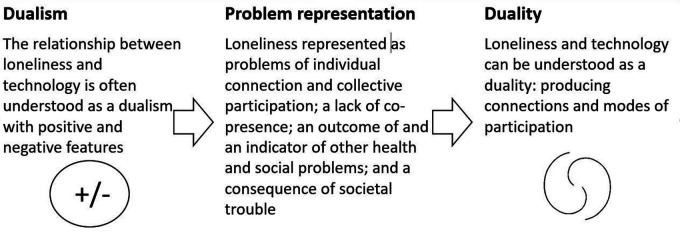
“…captured this dualism in their representation of the relationship between social internet use and loneliness as bidirectional and dynamic ; when used for social connections the internet can enhance relationships but when used to withdraw from social interaction it can exacerbate loneliness (12).”
BackgroundHow the COVID-19 pandemic is focusing attention on loneliness and social isolation
Smith, B., & Lim, M. (2020) · Public Health Research and Practice · doi:10.17061/phrp3022008 · Cited by 460
Hoang, P., King, J. A., Moore, S., Moore, K., Reich, K., Sidhu, H., Tan, C. V., Whaley, C., & McMillan, J. (2022) · JAMA Network Open · doi:10.1001/jamanetworkopen.2022.36676 · Cited by 315
Boursier, V., Gioia, F., Musetti, A., & Schimmenti, A. (2020) · Frontiers in Psychiatry · doi:10.3389/fpsyt.2020.586222 · Cited by 309
Gorenko, J. A., Moran, C., Flynn, M., Dobson, K., & Konnert, C. (2021) · Journal of Applied Gerontology · doi:10.1177/0733464820958550 · Cited by 262
Problematic Social Media Use and Perceived Social Isolation in Older Adults: A Cross-Sectional Study
Meshi, D., Cotten, S. R., & Bender, A. R. (2020) · Gerontology · doi:10.1159/000502577 · Cited by 173
Research works printed but not linked: 75
- Murthy, 2021, Together: Loneliness, Health & What Happens When We Find Connection
- Taylor, 2023, The state of loneliness and social isolation research: current knowledge and future directions, BMC Public Health, 23, 1049, 10.1186/s12889-023-15967-3 · DOI
- Hertz, 2021, The Lonely Century: Currency
- 2018, A Connected Society: A Strategy for Tackling Loneliness—Laying the Foundations for Change
- Bound Alberti, 2019, A Biography of Loneliness: The History of an Emotion
- Malli, 2023, Experiences and meaning of loneliness beyond age and group identity, Sociol Health Illn, 45, 70, 10.1111/1467-9566.13539 · DOI
- Franklin, 2019, Towards an understanding of loneliness among Australian men: gender cultures, embodied expression and the social bases of belonging, J Sociol, 55, 124, 10.1177/1440783318777309 · DOI
- Cacioppo, 2008, Loneliness
- McGraw, 1995, Loneliness, its nature and forms: an existential perspective, Man World, 28, 43, 10.1007/BF01278458 · DOI
- Perlman, 1981, Towards a social psychology of loneliness, 31
- Bacchi, 2012, Introducing the “what’s the problem represented to be?” approach, 21, 10.1017/UPO9780987171856.003 · DOI · Paper page
- Jackson, 1999, Dualism, duality and the complexity of economic institutions, Int J Soc Econ, 26, 545, 10.1108/03068299910215997 · DOI
- Giddens, 2013, The Constitution of Society : Outline of the Theory of Structuration
- Bowlby, 1973, Affectional bonds: their nature and origin, 38
- Kraut, 1998, Internet paradox. A social technology that reduces social involvement and psychological well-being?, Am Psychol, 53, 1017, 10.1037/0003-066X.53.9.1017 · DOI · Paper page
- Turkle, 2011, Alone Together : Why We Expect More from Technology and Less from Each Other
- Yildirim, 2023, Examining online behaviors of young adults during the COVID-19 pandemic social isolation period with regard to life satisfaction, loneliness, and hostility, Psychol Rep, 332941231169671, 10.1177/00332941231169671 · DOI
- Fang, 2019, Loneliness shapes the relationship between information and communications technology use and psychological adjustment among older adults, Gerontology, 65, 198, 10.1159/000495461 · DOI
- Horst, 2021, Demographic and psychographic factors of social isolation during the COVID-19 pandemic: the importance of technology confidence, Front Public Health, 9, 749515, 10.3389/fpubh.2021.749515 · DOI
- Doryab, 2019, Identifying behavioral phenotypes of loneliness and social isolation with passive sensing: statistical analysis, data mining and machine learning of smartphone and fitbit data, JMIR Mhealth Uhealth, 7, e13209, 10.2196/13209 · DOI
- Latikka, 2021, Older adults’ loneliness, social isolation, and physical information and communication technology in the era of ambient assisted living: a systematic literature review, J Med Internet Res, 23, e28022, 10.2196/28022 · DOI
- Prabhu, 2022, Sensor-based assessment of social isolation and loneliness in older adults: a survey, Sensors, 22, 9944, 10.3390/s22249944 · DOI
- Qirtas, 2022, Loneliness and social isolation detection using passive sensing techniques: scoping review, JMIR Mhealth Uhealth, 10, e34638, 10.2196/34638 · DOI
- Site, 2022, Managing perceived loneliness and social-isolation levels for older adults: a survey with focus on wearables-based solutions, Sensors, 22, 1108, 10.3390/s22031108 · DOI
- Gadbois, 2022, Findings from talking tech: a technology training pilot intervention to reduce loneliness and social isolation among homebound older adults, Innov Aging, 6, igac040, 10.1093/geroni/igac040 · DOI
- Mullins, 2020, Internet programming to reduce loneliness and social isolation in aging, Res Gerontol Nurs, 13, 233, 10.3928/19404921-20200320-01 · DOI
- Murugan, 2022, Severity of loneliness, depression and perceived social support in adults in the empty nest stage of the family life cycle and the influence of using digital technology, Asian J Psychiatr, 76, 103245, 10.1016/j.ajp.2022.103245 · DOI
- Zamir, 2018, Video-calls to reduce loneliness and social isolation within care environments for older people: an implementation study using collaborative action research, BMC Geriatr, 18, 62, 10.1186/s12877-018-0746-y · DOI
- Prophater, 2021, Alzheimer’s association project VITAL: a Florida statewide initiative using technology to impact social isolation and well-being, Front Public Health, 9, 720180, 10.3389/fpubh.2021.720180 · DOI
- Wang, 2023, CATCH-ON connect: a tablet intervention to address social isolation and loneliness, Aging Ment Health, 6, 1, 10.1080/13607863.2023.2217501 · DOI
- Cotterell, 2018, Preventing social isolation in older people, Maturitas, 113, 80, 10.1016/j.maturitas.2018.04.014 · DOI
- Poscia, 2018, Interventions targeting loneliness and social isolation among the older people: an update systematic review, Exp Gerontol, 102, 133, 10.1016/j.exger.2017.11.017 · DOI · Paper page
- Ibarra, 2020, A systematic review on technology-supported interventions to improve old-age social wellbeing: loneliness, social isolation, and connectedness, J Healthc Eng, 2020, 2036842, 10.1155/2020/2036842 · DOI
- Freedman, 2020, Social isolation and loneliness: the new geriatric giants: approach for primary care, Can Fam Physician, 66, 176
- Döring, 2022, Can communication technologies reduce loneliness and social isolation in older people? A scoping review of reviews, Int J Environ Res Public Health, 19, 11310, 10.3390/ijerph191811310 · DOI
- Rai, 2022, Digital technologies to prevent social isolation and loneliness in dementia: a systematic review, J Alzheimers Dis, 90, 513, 10.3233/JAD-220438 · DOI
- Chen, 2016, The effect of information communication technology interventions on reducing social isolation in the elderly: a systematic review, J Med Internet Res, 18, e18, 10.2196/jmir.4596 · DOI · Paper page
- Casanova, 2021, The effect of information and communication technology and social networking site use on older people’s well-being in relation to loneliness: review of experimental studies, J Med Internet Res, 23, e23588, 10.2196/23588 · DOI
- Shah, 2021, Evaluation of the effectiveness of digital technology interventions to reduce loneliness in older adults: systematic review and meta-analysis, J Med Internet Res, 23, e24712, 10.2196/24712 · DOI
- Todd, 2022, Using information and communication technology learnings to alleviate social isolation for older people during periods of mandated isolation: a review, Australas J Ageing, 41, e227, 10.1111/ajag.13041 · DOI
- Kadowaki, 2023, Older adults and social isolation and loneliness during the COVID-19 pandemic: an integrated review of patterns, effects, and interventions, Can J Aging, 42, 199, 10.1017/S0714980822000459 · DOI
- Kasar, 2021, Life in lockdown: social isolation, loneliness and quality of life in the elderly during the COVID-19 pandemic: a scoping review, Geriatr Nurs, 42, 1222, 10.1016/j.gerinurse.2021.03.010 · DOI
- Wu, 2020, Social isolation and loneliness among older adults in the context of COVID-19: a global challenge, Glob Health Res Policy, 5, 27, 10.1186/s41256-020-00154-3 · DOI · Paper page
- Toh, 2022, Digital interventions for subjective and objective social isolation among individuals with mental health conditions: a scoping review, BMC Psychiatry, 22, 331, 10.1186/s12888-022-03889-0 · DOI
- Saltzman, 2020, Loneliness, isolation, and social support factors in post-COVID-19 mental health, Psychol Trauma, 12, S55, 10.1037/tra0000703 · DOI
- Gillard, 2021, Experiences of living with mental health problems during the COVID-19 pandemic in the UK: a coproduced, participatory qualitative interview study, Soc Psychiatry Psychiatr Epidemiol, 56, 1447, 10.1007/s00127-021-02051-7 · DOI
- Thangavel, 2022, Customized information and communication technology for reducing social isolation and loneliness among older adults: scoping review, JMIR Ment Health, 9, e34221, 10.2196/34221 · DOI
- Jutai, 2022, The role of assistive technology in addressing social isolation, loneliness and health inequities among older adults during the COVID-19 pandemic, Disabil Rehabil Assist Technol, 17, 248, 10.1080/17483107.2021.2021305 · DOI
- Masi, 2011, A meta-analysis of interventions to reduce loneliness, Pers Soc Psychol Rev, 15, 219, 10.1177/1088868310377394 · DOI · Paper page
- Kharicha, 2021, Managing loneliness: a qualitative study of older people’s views, Aging Ment Health, 25, 1206, 10.1080/13607863.2020.1729337 · DOI
- Ojembe, 2022, Understanding social and emotional loneliness among black older adults: a scoping review, J Appl Gerontol, 41, 2594, 10.1177/07334648221118357 · DOI
- Weiss, 1973, Loneliness: The Experience of Emotional and Social Isolation
- Burholt, 2020, Technology-mediated communication in familial relationships: moderated-mediation models of isolation and loneliness, Gerontologist, 60, 1202, 10.1093/geront/gnaa040 · DOI
- Adedeji, 2023, COVID-19 experiences of social isolation and loneliness among older adults in Africa: a scoping review, Front Public Health, 11, 1158716, 10.3389/fpubh.2023.1158716 · DOI
- Treadaway, 2023, HUG: a compassionate approach to designing for wellbeing in dementia care, Int J Environ Res Public Health, 20, 4410, 10.3390/ijerph20054410 · DOI
- Hung, 2019, The benefits of and barriers to using a social robot PARO in care settings: a scoping review, BMC Geriatr, 19, 232, 10.1186/s12877-019-1244-6 · DOI · Paper page
- Dhakal, 2023, Better together: social contact and loneliness among U.S. older adults during COVID-19, J Gerontol B Psychol Sci Soc Sci, 78, 359, 10.1093/geronb/gbac136 · DOI
- Johannessen, 2021, Protocol for “virtual presence”: a qualitative study of the cultural dialectic between loneliness and technology, BMJ Open, 11, e047157, 10.1136/bmjopen-2020-047157 · DOI
- Bacchi, 2000, Policy as discourse: what does it mean? Where does it get us?, Discourse: Stud Cult Politics Educ, 21, 45, 10.1080/01596300050005493 · DOI
- 2017, Combatting Loneliness One Conversation at a Time: A Call to Action, 1
- Kitchen, 2020, Can robots end isolation and disruption for unwell students?, Teach Times, 1, 6
- 2021, Evaluation of the Alternative Provision Innovation Fund (APIF)
- Jopling, 2015, Promising Approaches to Reducing Loneliness and Isolation in Later Life
- 2021, Loneliness Engagement Fund
- Mroz, 2021, Changing media depictions of remote consulting in COVID-19: analysis of UK newspapers, Br J Gen Pract, 71, e1, 10.3399/BJGP.2020.0967 · DOI
- 2022, Timeline of UK Government Coronavirus Lockdowns and Restrictions, 1
- Elliott, 2005, Using Narrative in Social Research: Qualitative and Quantitative Approaches, 10.4135/9780857020246 · DOI
- Rasmussen, 2021, Warm technology against loneliness among the elderly? A script analysis of the communication solution KOMP, Tidsskr Samfunnsforsk, 62, 353, 10.18261/issn.1504-291X-2021-04-03 · DOI
- Johannessen, 2023, Educational purity and technological danger: understanding scepticism towards the use of telepresence robots in school, Br J Sociol Educ, 44, 703, 10.1080/01425692.2023.2203360 · DOI
- Oborn, 2021, Institutional logics and innovation in times of crisis: telemedicine as digital “PPE”, Inf Organ, 31, 100340, 10.1016/j.infoandorg.2021.100340 · DOI
- Miller, 2016, How the World Changed Social Media, 10.2307/j.ctt1g69z35 · DOI
- Hobson, 2022, Reconceptualising Loneliness in London Neighbourly Lab, Campaign to End Loneliness, What Works Centre for Wellbeing, 1
- 2021, Emerging Together: The Tackling Loneliness Network Action Plan
- 2019, “Let’s Talk Loneliness” Campaign Launched to Tackle Stigma of Feeling Alone [Press Release]
- Barbosa Neves, 2023, When technologies are not enough: the challenges of digital interventions to address loneliness in later life, Sociol Res Online, 28, 150, 10.1177/13607804211029298 · DOI
Cited by
Sorted by citations
Not a Silver Bullet for Loneliness: How Attachment and Age Shape Intimacy with AI Companions
Ciriello, R., Gal, U., & Turel, O. (2026) · arXiv · doi:10.48550/arxiv.2602.12476 · Cited by 4
Metadata
- Authors
- Hughes, G., Moore, L., Hennessy, M., Sandset, T., Jentoft, E. E., & Haldar, M.
- Venue
- Frontiers in Digital Health
- Publisher
- Frontiers Media SA
- Published
- 2024-02-19
- Volume
- 6
- ISSN
- 2673-253X
- PMC
- PMC10910053
- Cited by
- 7
- References
- 8
- Funders
- Research Council of Norway (301840)
About these checks
Registry, retraction, Cites and statistics results are computed, not judged, with one exception: a printed reference that no index lists is read once by a model before it counts as a citation error. Claims are extracted by a model and kept only when their quote appears verbatim in the text; each cited source is then checked, with a model’s help, for whether it says what the claim relies on. Those verdicts can be wrong — read the claim’s quote and the cited source before relying on one.
Statistics and arithmetic are recomputed, not judged.
Confidence bands are shown only for fields calibrated on our annotated test set. None is calibrated yet, so no band is shown.
What counts as a claim ›How we measure confidence ›How we check this ›
Are you an author, or do you see a problem with this page? Request a review
