

Artificial intelligence in dentistry-a review
Open accessThe DOI matches its Crossref record; 91 of the 93 references it cites were found in a registry or an index.
Abstract
Artificial Intelligence (AI) is the ability of machines to perform tasks that normally require human intelligence. AI is not a new term, the concept of AI can be dated back to 1950. However, it did not become a practical tool until two decades ago. Owing to the rapid development of three cornerstones of current AI technology—big data (coming through digital devices), computational power, and AI algorithm—in the past two decades, AI applications have started to provide convenience to people's lives. In dentistry, AI has been adopted in all dental disciplines, i.e., operative dentistry, periodontics, orthodontics, oral and maxillofacial surgery, and prosthodontics. The majority of the AI applications in dentistry are for diagnosis based on radiographic or optical images, while other tasks are not as applicable as image-based tasks mainly due to the constraints of data availability, data uniformity, and computational power for handling 3D data. Evidence-based dentistry (EBD) is regarded as the gold standard for decision making by dental professionals, while AI machine learning (ML) models learn from human expertise. ML can be seen as another valuable tool to assist dental professionals in multiple stages of clinical cases. This review describes the history and classification of AI, summarizes AI applications in dentistry, discusses the relationship between EBD and ML, and aims to help dental professionals better understand AI as a tool to support their routine work with improved efficiency.
Overview
The claims and statistics of this paper haven’t been checked yet.
Free: it reads the open-access text and checks the first 5 claims that cite a source we can check. Create a free account to check every claim.
Integrity signals
Registry
Cites
Statistics
Figures
Verification
Claims the paper makes
The claims and statistics of this paper haven’t been checked yet.
Free: it reads the open-access text and checks the first 5 claims that cite a source we can check. Create a free account to check every claim.
Claims other papers make about this one
Each is checked against this paper’s own text: does it say what the citing paper says it does?
In the citing paper
“Dentistry served as an information-rich case because AI applications are increasingly visible across dental clinical practice, including image interpretation, treatment planning, digital design, CAD/CAM-supported workflows, and procedural decision support [48-50].”
From Role-Differentiated AI Competencies and Curriculum Implications for Health Professions Education: Qualitative Study (2026) · cites this paper as [48]
Self-check
Percentages, sums and reported differences re-computed from the paper’s own numbers.
The self-check needs the paper’s full text.
Citations
Cites
ImageNet classification with deep convolutional neural networks
Krizhevsky, A., Sutskever, I., & Hinton, G. E. (2017) · Communications of the ACM · doi:10.1145/3065386 · Cited by 112,155 · cited 2×
“In 2012, a graphics processing unit (GPU)-implemented deep learning (DL) network with eight layers was developed (17), The work won the ImageNet Large Scale Visual Recognition Challenge (ILSVRC) and achieved a classification top-5 error of 15.”
MethodLeCun, Y., Bengio, Y., & Hinton, G. (2015) · Nature · doi:10.1038/nature14539 · Cited by 84,126
ImageNet Large Scale Visual Recognition Challenge
Russakovsky, O., Deng, J., Su, H., Krause, J., Satheesh, S., Ma, S., Huang, Z., Karpathy, A., Khosla, A., Bernstein, M., et al. (2015) · International Journal of Computer Vision · doi:10.1007/s11263-015-0816-y · Cited by 39,380
I.—COMPUTING MACHINERY AND INTELLIGENCE
TURING, A. M. (1950) · Mind · doi:10.1093/mind/lix.236.433 · Cited by 10,290
Yang (2021) · doi:10.1038/s41598-020-79139-8 · Cited by 5,035 · cited 1×
“Orthodontic treatment results prediction (56) Facial 3D images DL 137 in total”
BackgroundELIZA—a computer program for the study of natural language communication between man and machine
Weizenbaum, J. (1966) · Communications of the ACM · doi:10.1145/365153.365168 · Cited by 4,452 · cited 1×
“Examples include ELIZA, a computer program that could interpret spoken language and solve problems via text (12).”
BackgroundThe future of digital health with federated learning
Rieke, N., Hancox, J., Li, W., Milletarì, F., Roth, H. R., Albarqouni, S., Bakas, S., Galtier, M. N., Landman, B. A., Maier-Hein, K., et al. (2020) · npj Digital Medicine · doi:10.1038/s41746-020-00323-1 · Cited by 4,015 · cited 1×
“The research on federated learning (94) of ML is a potential way to solve data privacy protection problems.”
BackgroundThe Future of Digital Health with Federated Learning
Rieke, N., Hancox, J., Li, W., Milletari, F., Roth, H., Albarqouni, S., Bakas, S., Galtier, M. N., Landman, B., Maier-Hein, K., et al. (2020) · arXiv · doi:10.48550/arxiv.2003.08119 · Cited by 3,495 · cited 1×
“The research on federated learning (94) of ML is a potential way to solve data privacy protection problems.”
BackgroundDeo, R. C. (2015) · Circulation · doi:10.1161/circulationaha.115.001593 · Cited by 3,466
Empirical Evaluation of Rectified Activations in Convolutional Network
Xu, B., Wang, N., Chen, T., & Li, M. (2015) · arXiv · doi:10.48550/arxiv.1505.00853 · Cited by 2,264 · cited 1×
“CNN algorithms were demonstrated to be a suitable tool for the automatically detecting cancers (73, 78).”
Method
Research works printed but not linked: 6
- McCarthy J Minsky M Rochester N Shannon CE. A proposal for the dartmouth summer research project on artificial intelligence. AI magazine. (2006) 27(4):12–14. http://jmc.stanford.edu/articles/dartmouth/dartmouth.pdf
- Tatnall A. History of computers: hardware and software development. In: Encyclopedia of Life Support Systems (EOLSS), Developed under the Auspices of the UNESCO. Paris, France: Eolss. (2012). https://www.eolss.net
- McDermott JP. RI: an expert in the computer systems domain. AAAI Conference on artificial intelligence (1980).
- Goodfellow I Pouget-Abadie J Mirza M Xu B Warde-Farley D Ozair S Generative adversarial nets. Adv Neural Inf Process Syst. (2014) 27. 2672– 80. 10.5555/2969033.2969125 · doi:10.5555/2969033.2969125
- Gui J Sun Z Wen Y Tao D Ye J. A review on generative adversarial networks: algorithms, theory, and applications. arXiv preprint arXiv:200106937 (2020).
- Huang Y-P Lee S-Y. An Effective and Reliable Methodology for Deep Machine Learning Application in Caries Detection. medRxiv (2021).
Cited by
Samaranayake, L., Tuygunov, N., Schwendicke, F., Osathanon, T., Khurshid, Z., Boymuradov, S. A., & Cahyanto, A. (2025) · International Dental Journal · doi:10.1016/j.identj.2025.02.005 · Cited by 240
ChatGPT in Dentistry: A Comprehensive Review
Alhaidry, H. M., Fatani, B., Alrayes, J. O., Almana, A. M., & Alfhaed, N. K. (2023) · Cureus · doi:10.7759/cureus.38317 · Cited by 126
“AI can be used by dental professionals as an extra tool to decrease their workload and enhance the precision and accuracy of diagnosis, decision-making, treatment planning, prediction of treatment outcomes, and disease prognosis [36].”
BackgroundTuygunov, N., Samaranayake, L., Khurshid, Z., Rewthamrongsris, P., Schwendicke, F., Osathanon, T., & Yahya, N. A. (2025) · International Dental Journal · doi:10.1016/j.identj.2025.02.006 · Cited by 192
Foundation models and intelligent decision-making: Progress, challenges, and perspectives
Huang, J., Xu, Y., Wang, Q., Wang, Q., Liang, X., Wang, F., Zhang, Z., Wei, W., Zhang, B., Huang, L., et al. (2025) · The Innovation · doi:10.1016/j.xinn.2025.100948 · Cited by 192
Application of Artificial Intelligence in Orthodontics: Current State and Future Perspectives
Liu, J., Zhang, C., & Shan, Z. (2023) · Healthcare · doi:10.3390/healthcare11202760 · Cited by 177
Artificial intelligence (AI) in restorative dentistry: current trends and future prospects
Najeeb, M., & Islam, S. (2025) · BMC Oral Health · doi:10.1186/s12903-025-05989-1 · Cited by 159
Morphology and mechanical performance of dental crown designed by 3D-DCGAN
Ding, H., Cui, Z., Maghami, E., Chen, Y., Matinlinna, J. P., Pow, E. H. N., Fok, A. S. L., Burrow, M. F., Wang, W., & Tsoi, J. K. H. (2023) · Dental Materials · doi:10.1016/j.dental.2023.02.001 · Cited by 114
Self-citationStafie, C. S., Sufaru, I.-G., Ghiciuc, C. M., Stafie, I.-I., Sufaru, E.-C., Solomon, S. M., & Hancianu, M. (2023) · Diagnostics · doi:10.3390/diagnostics13121995 · Cited by 93
“In orthodontics, AI systems have been applied in treatment planning and prediction of treatment outcomes, such as simulating changes in the appearance of pre- and post-treatment facial photographs [180] (Table 8).”
BackgroundThe Potential Usefulness of ChatGPT in Oral and Maxillofacial Radiology
Mago, J., & Sharma, M. (2023) · Cureus · doi:10.7759/cureus.42133 · Cited by 101
Turosz, N., Chęcińska, K., Chęciński, M. A., Brzozowska, A., Nowak, Z., & Sikora, M. (2023) · Dentomaxillofacial Radiology · doi:10.1259/dmfr.20230284 · Cited by 92
The Impact of Artificial Intelligence on Dental Implantology: A Narrative Review
Altalhi, A. M., Alharbi, F. S., Alhodaithy, M. A., Almarshedy, B. S., Al-saaib, M. Y., jfshar, R. M. A., Aljohani, A. S., Alshareef, A. H., Muhayya, M., & AL-harbi, N. H. (2023) · Cureus · doi:10.7759/cureus.47941 · Cited by 90
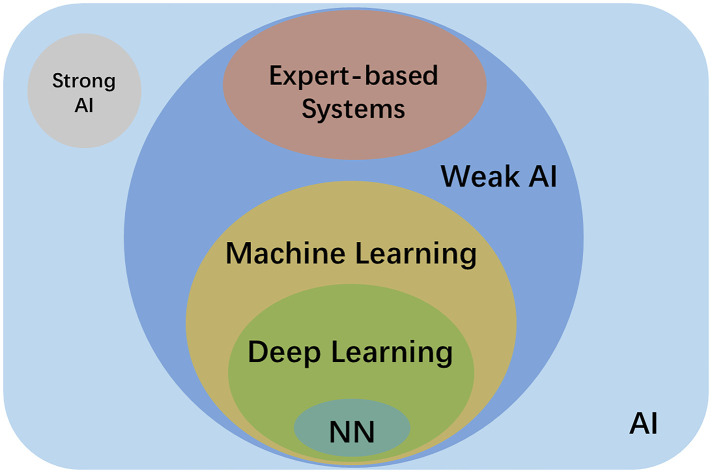
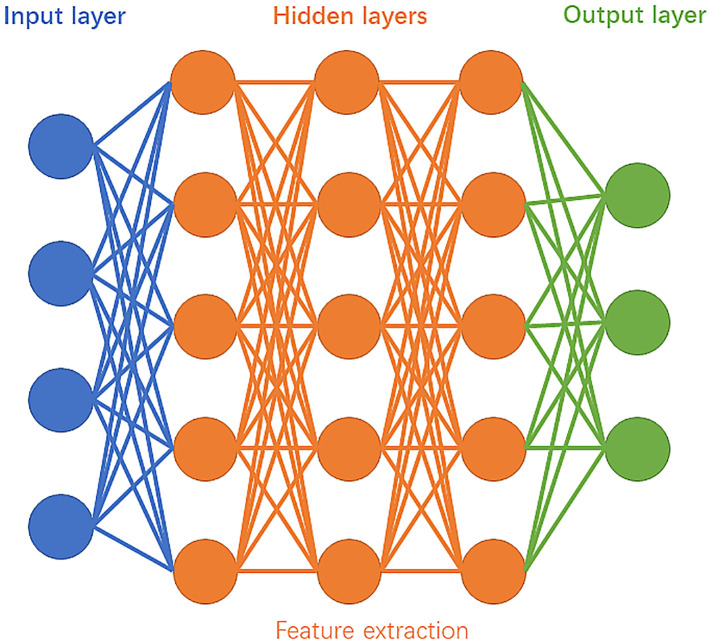
“The pooling layers then reduce the complexity of the network, making it stronger to the variations in the object position and scale [5].”
BackgroundYilmaz, B. E., Yılmaz, B., & Özbey, F. (2025) · BMC Oral Health · doi:10.1186/s12903-025-05926-2 · Cited by 86
“In the last twenty years, rapid advancements in big data, computational power, and AI algorithms have begun to simplify people’s lives [2].”
Nia, M. F., Ahmadi, M., & Irankhah, E. (2025) · Frontiers in Dental Medicine · doi:10.3389/fdmed.2024.1456208 · Cited by 82
Artificial intelligence in dentistry: Exploring emerging applications and future prospects
Lee, S. J., Poon, J., Jindarojanakul, A., Huang, C., Viera, O., Cheong, C. W., & Lee, J. D. (2025) · Journal of Dentistry · doi:10.1016/j.jdent.2025.105648 · Cited by 83
Tomášik, J., Zsoldos, M., Oravcová, Ľ., Lifková, M., Pavleová, G., Strunga, M., & Thurzo, A. (2024) · AI · doi:10.3390/ai5010009 · Cited by 77
Cho, J., Çakmak, G., Yi, Y., Yoon, H., Yılmaz, B., & Schimmel, M. (2023) · Journal of Dentistry · doi:10.1016/j.jdent.2023.104830 · Cited by 71
AI in Dentistry: Innovations, Ethical Considerations, and Integration Barriers
Liu, T., Lee, K.-H., Mukundan, A., Karmakar, R., Dhiman, H., & Wang, H. (2025) · Bioengineering · doi:10.3390/bioengineering12090928 · Cited by 70
“Advances in ML, such as deep learning (DL) and NLP, increasingly make AI useful for supporting dental professionals in decision-making and administration [5].”
Applied artificial intelligence in dentistry: emerging data modalities and modeling approaches
Fehér, B., Tussie, C., & Giannobile, W. V. (2024) · Frontiers in Artificial Intelligence · doi:10.3389/frai.2024.1427517 · Cited by 68
“Notably, several recent reviews have discussed the application of AI-enabled tools depending on different dental disciplines (e.g., periodontology, operative dentistry, oral radiology, etc.) (Nguyen et al., 2021a; Ding et al., 2023).”
BackgroundTaymour, N., Fouda, S. M., Abdelrahman, H., & Hassan, M. (2025) · Journal of Prosthetic Dentistry · doi:10.1016/j.prosdent.2024.12.016 · Cited by 59
Cho, J., Yi, Y., Choi, J., Ahn, J., Yoon, H., & Yılmaz, B. (2023) · Journal of Dentistry · doi:10.1016/j.jdent.2023.104739 · Cited by 58
Wong, K. F., Lam, X. Y., Jiang, Y., Yeung, A. W. K., & Lin, Y. (2023) · Head & Face Medicine · doi:10.1186/s13005-023-00383-0 · Cited by 56
“Currently, there are no strong AI applications in dentistry [25].”
BackgroundYeslam, H. E., Freifrau von Maltzahn, N., & Nassar, H. M. (2024) · PeerJ · doi:10.7717/peerj.17793 · Cited by 55
The paradigm of digital health: AI applications and transformative trends
Rashid, Z., Ahmed, H., Nadeem, N., Zafar, S. B., & Yousaf, M. Z. (2025) · Neural Computing and Applications · doi:10.1007/s00521-025-11081-0 · Cited by 59
Wu, Z., Zhang, C., Ye, X., Dai, Y., Zhao, J., Zhao, W., & Zheng, Y. (2024) · International Dental Journal · doi:10.1016/j.identj.2024.06.023 · Cited by 52
Self-citationDetection of Cavities from Dental Panoramic X-ray Images Using Nested U-Net Models
Alharbi, S. S., AlRugaibah, A. A., Alhasson, H. F., & Khan, R. U. (2023) · Applied Sciences · doi:10.3390/app132312771 · Cited by 50
Azadi, A., Gorjinejad, F., Mohammad‐Rahimi, H., Tabrizi, R., Alam, M. M. R., & Golkar, M. (2024) · Oral Surgery Oral Medicine Oral Pathology and Oral Radiology · doi:10.1016/j.oooo.2024.02.018 · Cited by 48
Hegde, S., Nanayakkara, S., Jordan, A., Jeha, O., Patel, U., Luu, V., & Gao, J. (2024) · European Journal Of Dental Education · doi:10.1111/eje.13042 · Cited by 50
“The opaque ‘black-box’ nature of the algorithm design has raised concerns about transparency and explainability in the decisions made by AI algorithms [28].”
Artificial intelligence-powered innovations in periodontal diagnosis: a new era in dental healthcare
Jundaeng, J., Chamchong, R., & Nithikathkul, C. (2025) · Frontiers in Medical Technology · doi:10.3389/fmedt.2024.1469852 · Cited by 42
Lin, G. S. S., Ng, Y. S., Ghani, N. R. N. A., & Chua, K. H. (2023) · BMC Oral Health · doi:10.1186/s12903-023-03389-x · Cited by 40
“…in denture cases [23], generation of prosthetic crown morphology that is similar to the natural tooth [9], shades selection with precise colour matching to the adjacent natural teeth in the aesthetic zones [24, 25], and prediction of debonding possibilities of the CAD/CAM restorations [26].”
BackgroundIosif, L., Țâncu, A. M. C., Amza, O. E., Gheorghe, G. F., Dimitriu, B. A., & Imre, M. M. (2024) · Prosthesis · doi:10.3390/prosthesis6060092 · Cited by 40
Toward Digital Periodontal Health: Recent Advances and Future Perspectives
Soheili, F., Delfan, N., Masoudifar, N., Ebrahimni, S., Moshiri, B., Glogauer, M., & Ghafar‐Zadeh, E. (2024) · Bioengineering · doi:10.3390/bioengineering11090937 · Cited by 40
“The advancement of AI models [91] is escalating for rehabilitative and prosthodontic purposes, encompassing the identification of various diseases such as tooth decay [92,93] or periapical lesions from X-ray images [72,73], streamlining of rehabilitative procedures like determining the tooth…”
BackgroundChatGPT to Enhance Learning in Dental Education at a Historically Black Medical College
Rahad, K., Martin, K., Amugo, I., Ferguson, S., Curtis, A., Davis, A., Gangula, P. R., & Wang, Q. (2024) · Dental Research and Oral Health · doi:10.26502/droh.0069 · Cited by 38
“Table 3 shows the main topics of four recently published papers (1 st column) [10,11,18,19].”
BackgroundDevelopment of Artificial Intelligence Models for Tooth Numbering and Detection: A Systematic Review
Maganur, P. C., Vishwanathaiah, S., Mashyakhy, M., Abumelha, A. S., Robaian, A., Almohareb, T., Almutairi, B., Alzahrani, K. M., Binalrimal, S., Marwah, N., et al. (2024) · International Dental Journal · doi:10.1016/j.identj.2024.04.021 · Cited by 36
“4,5 These advanced technologies prove to be invaluable in aiding decision-making processes pertaining to prognosis, forecasting, and various stages of diagnosis of disease and subsequent treatment.”
Aziz, A. A. A., Abdelrahman, H., & Hassan, M. G. (2024) · Journal of the World Federation of Orthodontists · doi:10.1016/j.ejwf.2024.09.004 · Cited by 36
Shirani, M. (2025) · Cureus · doi:10.7759/cureus.81836 · Cited by 36
“These models also create photorealistic simulations of treatment outcomes, such as smile design, and virtual reality environments for education and training [8,31].”
InfluentialClinical Applications of Artificial Intelligence in Periodontology: A Scoping Review
Chatzopoulos, G. S., Koidou, V. P., Tsalikis, L., & Kaklamanos, E. G. (2025) · Medicina · doi:10.3390/medicina61061066 · Cited by 36
Jundaeng, J., Chamchong, R., & Nithikathkul, C. (2025) · Frontiers in Dental Medicine · doi:10.3389/fdmed.2024.1509361 · Cited by 33
Arjumand, B. (2024) · The Saudi Dental Journal · doi:10.1016/j.sdentj.2024.03.017 · Cited by 33
“This level of precision minimizes complications and enhances the longevity of the restorations (Ding H et al., 2023).”
Singhal, I., Kaur, G., Neefs, D., & Pathak, A. (2023) · Cureus · doi:10.7759/cureus.45804 · Cited by 30
Zayed, S., Abd-Rabou, R. Y. M., Abdelhameed, G. M., Abdelhamid, Y., Khairy, K., Abulnoor, B. A. E., Ibrahim, S. H., & Khaled, H. (2024) · BMC Oral Health · doi:10.1186/s12903-024-04347-x · Cited by 28
“However, the appropriate feeding of input data images and selection of exact algorithms are essential for the achievement of prediction accuracy to overcome any potential biases in the AI model due to the dataset’s nature [35].”
BackgroundMethodAnnotated intraoral image dataset for dental caries detection
Ahmed, S. M. F., Ghori, M. H., Khalid, A., Nooruddin, A., Adnan, N., Lal, A., & Umer, F. (2025) · Scientific Data · doi:10.1038/s41597-025-05647-9 · Cited by 28
Kukreja, B. J., & Kukreja, P. (2025) · Cureus · doi:10.7759/cureus.79350 · Cited by 27
The Impetus of Artificial Intelligence on Periodontal Diagnosis: A Brief Synopsis
Cholan, P. K., Ramachandran, L., Umesh, S. G., Palanisamy, S., & Tadepalli, A. (2023) · Cureus · doi:10.7759/cureus.43583 · Cited by 25
Özkan, H. B., Çankaya, T. D., & Kölüş, T. (2025) · Healthcare · doi:10.3390/healthcare13101190 · Cited by 23
“As AI technologies continue to evolve, critically assessing their performance in providing accurate and clinically relevant information, particularly for emerging treatments such as REPs, is crucial [36,37].”
Othman, A. A., Sharqawi, A. J., MohammedAziz, A. A., Ali, W. A., Alatiyyah, A. A., & Mirah, M. A. (2025) · Healthcare · doi:10.3390/healthcare13172144 · Cited by 23
“In addition, AI can be used in detecting dental and craniofacial disorders, such as fractures, caries, and periodontal diseases, with improved diagnostic accuracy and time [3–6].”
Chen, W., Dhawan, M., Liu, J., Ing, D., Mehta, K., Tran, D., Lawrence, D., Ganhewa, M., & Cirillo, N. (2024) · Clinical and Experimental Dental Research · doi:10.1002/cre2.70035 · Cited by 23
Detecting Mandible Fractures in CBCT Scans Using a 3-Stage Neural Network
van Nistelrooij, N., Schitter, S., van Lierop, P., Ghoul, K. E., König, D., Hanisch, M. R., Tel, A., Xi, T., Thiem, D. G. E., Smeets, R., et al. (2024) · Journal of Dental Research · doi:10.1177/00220345241256618 · Cited by 22
“Artificial intelligence (AI) and deep learning have been introduced in dentistry, leading to significant changes in the digital workflow (Ding et al. 2023; Mahdi et al. 2023).”
Periodontitis diagnosis: A review of current and future trends in artificial intelligence
Jundaeng, J., Chamchong, R., & Nithikathkul, C. (2025) · Technology and Health Care · doi:10.3233/thc-241169 · Cited by 22
Avsar, D. B., & Ertan, A. A. (2024) · Turkiye Klinikleri Journal of Dental Sciences · doi:10.5336/dentalsci.2024-104610 · Cited by 21
Bamashmous, M. S. (2025) · The Open Dentistry Journal · doi:10.2174/0118742106363413250211053942 · Cited by 20
Application of Artificial Intelligence in Pediatric Dentistry: A Literature Review
Alessa, N. A. (2024) · Journal of Pharmacy And Bioallied Sciences · doi:10.4103/jpbs.jpbs_74_24 · Cited by 20
Cho, J., Çakmak, G., Jee, E.-B., Yoon, H., Yılmaz, B., & Schimmel, M. (2025) · Journal of Prosthetic Dentistry · doi:10.1016/j.prosdent.2025.06.005 · Cited by 18
Dissecting the Genetic Contribution of Tooth Agenesis
Fallea, A., Vinci, M., L’Episcopo, S., Bartolone, M., Musumeci, A., Ragalmuto, A., Treccarichi, S., & Calì, F. (2025) · International Journal of Molecular Sciences · doi:10.3390/ijms262110485 · Cited by 18
Qamar, W., Khaleeq, N., Nisar, A., Tariq, S. F., & Lajber, M. (2024) · BMC Oral Health · doi:10.1186/s12903-024-04305-7 · Cited by 18
“The incorporation of AI in the field of dentistry in blooming in recent years, unlike other industries [13].”
BackgroundResultRevolutionizing Dental Caries Diagnosis through Artificial Intelligence
Anil, S., Sudeep, K., Saratchandran, S., & Sweety, V. K. (2023) · Dentistry · doi:10.5772/intechopen.112979 · Cited by 18
Kim, P., Seo, B., & Silva, H. D. (2024) · Oral and Maxillofacial Surgery · doi:10.1007/s10006-024-01284-5 · Cited by 17
Artificial Intelligence and Hospitality: A Challenging Relationship
Khlusevich, A., Inversini, A., & Schegg, R. (2024) · Springer proceedings in business and economics · doi:10.1007/978-3-031-58839-6_27 · Cited by 15
Veerabhadrappa, S. K., Vengusamy, S., Padarha, S., Iyer, K., & Yadav, S. (2025) · Journal of Oral Medicine and Oral Surgery · doi:10.1051/mbcb/2025008 · Cited by 15
Impact of Artificial Intelligence on Periodontology: A Review
Patel, M. S., Kumar, S., Patel, B. N., Patel, S. N., Girdhar, G. A., Patadiya, H. H., Hirani, T., & Haque, M. (2025) · Cureus · doi:10.7759/cureus.81162 · Cited by 15
“It also aids in identifying abnormalities in radiographs, including oral nerves, tongue muscles, and salivary glands [12].”
Trehan, M., Bhanotia, D., Shaikh, T. A., Sharma, S., & Sharma, S. (2023) · Journal of Contemporary Orthodontics · doi:10.18231/j.jco.2023.048 · Cited by 14
Basso, Á., Salas, F., Hernández, M., Fernández, A., Sierra‐Cristancho, A., & Jiménez, C. (2024) · Clinical Oral Investigations · doi:10.1007/s00784-024-05989-5 · Cited by 14
Kapoor, D., Garg, D., & Tadakamadla, S. K. (2025) · Frontiers in Oral Health · doi:10.3389/froh.2025.1652422 · Cited by 14
Assiry, A. A., Alrehaili, R. S., Mahnashi, A., Alkam, H., Mahdi, R., Hakami, R., Alshammakhy, R., Almallahi, W., Alhawsah, Y., & Khalil, A. S. (2025) · Prosthesis · doi:10.3390/prosthesis7050119 · Cited by 14
“Addressing these diverse clinical demands, the application of AI is emerging as a complementary tool to support improvements in both clinical outcomes and patient experiences [6].”
Ingle, N. A., Alabsi, N. F., Al-Hashimi, H., Albuolayan, N. A., Alburidy, F., Alanazi, F., & Alhammad, A. T. (2025) · Advances in Human Biology · doi:10.4103/aihb.aihb_140_24 · Cited by 13
Pawar, A. R., Malaiappan, S., Yadalam, P. K., & Ganesh, P. (2025) · Journal of Indian Society of Periodontology · doi:10.4103/jisp.jisp_37_24 · Cited by 13
Use of Artificial Intelligence in Biology Education: A Systematic Review of Literature
Duran, T., & Dikmenli, M. (2025) · Journal of Education in Science Environment and Health · doi:10.55549/jeseh.864 · Cited by 14
PUE Attack Detection by Using DNN and Entropy in Cooperative Mobile Cognitive Radio Networks
Muñoz, E. C., Pedraza, G. A. C., Cubillos-Sánchez, R., Aponte-Moreno, A., & Buitrago, M. E. (2023) · Future Internet · doi:10.3390/fi15060202 · Cited by 13
“AI has been used in many fields, such as robots, mobile communications, autonomous cars, smart cities, financial analysis, and engineering problems such as decision support [23].”
BackgroundMethodJagtap, R., Samata, Y., Parekh, A., Tretto, P. H. W., Roach, M. D., Sethumanjusha, S., Tejaswi, C., Jaju, P. P., Friedel, A., Garrido, M. B., et al. (2024) · Bioengineering · doi:10.3390/bioengineering11101001 · Cited by 12
“A basic deep learning model consists of at least three layers [4].”
BackgroundInfluentialAlsheghri, A., Zhang, Y., Keren, J., Farida Cheriet, A., & Guibault, F. (2025) · Computers in Biology and Medicine · doi:10.1016/j.compbiomed.2025.110960 · Cited by 12
Artificial Intelligence–Driven Dentistry: A Systematic Review of Ethical and Legal Challenges
Ramnarayan, B., Luke, A. M., A., V. M., & Shetty, K. P. (2026) · International Journal of Dentistry · doi:10.1155/ijod/1870800 · Cited by 12
Pham, T. D., & Alhebshi, S. A. (2026) · Frontiers in Artificial Intelligence · doi:10.3389/frai.2026.1754498 · Cited by 12
A BRIEF EXPLORATION OF ARTIFICIAL INTELLIGENCE IN DENTAL HEALTHCARE: A Narrative review
Kamath, P., Kamath, P., Saldanha, S., Shetty, T. B., Rodrigues, S. J., Mahesh, M., Pai, U., Hegde, P., Bajantri, P., & Mukherjee, S. (2024) · F1000Research · doi:10.12688/f1000research.140481.1 · Cited by 12
Islam, A., Banerjee, A., Wati, S. M., Banerjee, S., Shrivastava, D., & Srivastava, K. C. (2024) · Journal of Pharmacy And Bioallied Sciences · doi:10.4103/jpbs.jpbs_1287_23 · Cited by 12
“[1] In recent years, AI has emerged as a powerful ally, augmenting human capabilities and driving unprecedented advancements in various fields.”
Ahmed, H. M. A., Al‐Maswary, A. A., Habaebi, M. H., Taşdelen, A., Husaini, M. A. S. A., Elnawawy, H. M., Buzayan, M. M., Yahya, N. A., Elkezza, A. H., Ahmed, H., et al. (2025) · European Endodontic Journal · doi:10.14744/eej.2025.37232 · Cited by 13
Goey, R., Elenbaas, L., Berkhout, E., Moin, D. A., van der Kleij, R., Forouzanfar, T., Chavannes, N. H., & Villalobos-Quesada, M. J. (2025) · International Dental Journal · doi:10.1016/j.identj.2025.103933 · Cited by 11
Sardou, S. S., Ghaemi, M. M., Rezvaninejad, F. S., Seyrfar, A., Shahravan, A., Navabi, N., & Rezvaninejad, R. (2025) · BMC Cancer · doi:10.1186/s12885-025-15334-y · Cited by 11
Danial, N. H., & Setiawati, D. (2024) · Interdental Jurnal Kedokteran Gigi (IJKG) · doi:10.46862/interdental.v20i1.8641 · Cited by 11
Automated periodontal assessment in orthodontic patients: a dual CNN framework
Yurdakurban, E., Bayırlı, A. B., Uytun, M., Suçeken, Ö., Karasoy, O., Özkaraca, O., & Topsakal, K. G. (2025) · Clinical Oral Investigations · doi:10.1007/s00784-025-06410-5 · Cited by 10
Sreeram, A., Balamurugan, R., & Aditya, M. N. (2025) · Journal of Soft Computing Paradigm · doi:10.36548/jscp.2025.2.004 · Cited by 10
Tunç, H., Akkaya, N., Aykanat, B., & Ünsal, G. (2025) · Diagnostics · doi:10.3390/diagnostics15202577 · Cited by 10
“Developing user-friendly interfaces and integrating AI tools with existing dental practice management software will be critical for widespread adoption [17].”
Nasti, S., Khan, F. A., Srivastava, T., Nalini, M. R., Ahmed, C. Z., & Tiwari, H. (2024) · International Journal of Maxillofacial Imaging · doi:10.18231/j.ijmi.2023.032 · Cited by 10
Sharka, R. M., Skatawi, B., Sayyam, G., Abutaleb, M., Alshareef, M., Alamar, M., Abualkhair, L. A., & Ezzat, Y. (2025) · Oral · doi:10.3390/oral5020028 · Cited by 9
Ezzeldin, N., Salama, A. A., & Shehab, K. A. (2025) · BMC Oral Health · doi:10.1186/s12903-025-06077-0 · Cited by 9
Emerging Trends and Future Perspectives in Digital Dentistry for Rural Areas: An Update
Asanza, D. M. (2024) · Advances in medical technologies and clinical practice book series · doi:10.4018/979-8-3693-7165-7.ch001 · Cited by 9
Ahmed, R. (2025) · Premier Journal of Dentistry · doi:10.70389/pjd.100001 · Cited by 9
ChatGPT in dentomaxillofacial radiology education
Öztürk, H. P., Avsever, H., Şenel, B., Ayran, Ş., Peker, M. Ç., Özgedik, H. S., & Baysal, N. (2024) · Journal of Health Sciences and Medicine · doi:10.32322/jhsm.1419341 · Cited by 8
Singh, S. B., Laishram, A., Thongam, K., & Singh, K. M. (2024) · Journal of Scientific & Industrial Research · doi:10.56042/jsir.v83i5.3994 · Cited by 8
Narrative review on artificially intelligent olfaction in halitosis
Mathur, A. S., Mehta, V., Obulareddy, V. T., & Kumar, P. (2024) · Journal of Oral and Maxillofacial Pathology · doi:10.4103/jomfp.jomfp_448_23 · Cited by 8
Bedia, S. V., Shapurwala, M. A., Kharge, B. P., Bedia, A. S., & Patil, A. (2025) · Cureus · doi:10.7759/cureus.78718 · Cited by 8
“Ongoing training is crucial to keep the team updated on software developments and new AI features, ensuring the clinic maximizes AI technology's potential in improving clinical outcomes and operational efficiencies [19].”
Rath, A. (2025) · Journal of Dental Education · doi:10.1002/jdd.13939 · Cited by 7
Sadr, H., Nazari, M., Koochaki, M., & Hendi, A. (2026) · Oral Radiology · doi:10.1007/s11282-025-00886-3 · Cited by 8
Impact of Digital Innovations in Preventive Dentistry: A Narrative Review
Asanza, D. M., Herrera, I. A. R., Mouloudj, K., Amable, O. G., & Muzzamil, M. (2024) · Advances in medical technologies and clinical practice book series · doi:10.4018/979-8-3693-3872-8.ch003 · Cited by 7
Chen, Y., Chen, L., Lai, Y., Chang, W., & Lee, S. (2025) · Journal Of Clinical Periodontology · doi:10.1111/jcpe.14164 · Cited by 7
“With advancements in artificial intelligence (AI) and computer technology, deep learning (DL) models are increasingly applied in dentistry for diagnosis, treatment planning and digital design (Corbella et al. 2021; Ding et al. 2023).”
An overview of the applications of AI for detecting anatomical configurations in endodontics
Fouad, E. M., Abu‐Seida, A. M., & Al-Sheshtawi, K. A. (2025) · Annals of Anatomy - Anatomischer Anzeiger · doi:10.1016/j.aanat.2025.152671 · Cited by 7
Weber, A. K., Berger, T., Meier, L. F., Keller, C. R., & Schmid, N. (2024) · Asian Journal of Periodontics and Orthodontics · doi:10.51847/z2hbhkun86 · Cited by 7
Admin, Tanveer, S. A., Fatima, B., & Ghafoor, R. (2024) · Journal of the Pakistan Medical Association · doi:10.47391/jpma.aku-9s-06 · Cited by 7
The Role and Impact of Artificial Intelligence on the Future of Dental Radiography - A Mini-Review
Sindi, A. S., Fiorillo, L., Mathur, A. S., Noorani, M. K., Morsy, M. S., Mattoo, K. A., & Mehta, V. (2023) · Advances in Artificial Intelligence and Machine Learning · doi:10.54364/aaiml.2023.1198 · Cited by 7
Scientific writing with artificial intelligence: key considerations and alerts
Fardim, K. A. C., Gonçalves, S. E. D. P., & Tribst, J. P. M. (2023) · Brazilian Dental Science · doi:10.4322/bds.2023.e3988 · Cited by 7
Impact of technology on orthodontic practice
Yadav, P. K., Verma, S. K., Aiswareya, G., & Bais, D. R. S. (2024) · Journal of Dental Specialities · doi:10.18231/j.jds.2024.006 · Cited by 6
A Survey of AI-Based Attack Detection Models on the Edge-IIoTset Dataset
Kulrujiphat, S., & Kulrujiphat, P. (2024) · doi:10.1109/icbim63313.2024.10823532 · Cited by 6
“DL utilizes similar learning approaches as ML, including Supervised Learning , Unsupervised Learning [18], and some researchs also mention about Semi-supervised Learning [19, 20]. c) Learning Approaches: ML and DL using Supervised Learning can be categorized into three types based on their learning…”
Metadata
- Authors
- Ding, H., Wu, J., Zhao, W., Matinlinna, J. P., Burrow, M. F., & Tsoi, J. K. H.
- Affiliations
- University of Hong Kong (HK)
- University of Manchester (GB)
- Corresponding author
- Tsoi, James K. H.
- Venue
- Frontiers in Dental Medicine
- Publisher
- Frontiers Media SA
- Published
- 2023-02-20
- Volume
- 4
- Pages
- 1085251-1085251
- ISSN
- 2673-4915 (ISSN-L)
- PMC
- PMC11811754
- OpenAlex
- W4321376147
- Cited by
- 297
- References
- 92
- Citations by year
- 2026: 91 · 2025: 114 · 2024: 62 · 2023: 30
- FWCI
- 15.79
- Type
- journal article
- Language
- en
- Open access
- gold
- doi.org
- Licence
- Locations
- Frontiers in Dental Medicine (publishedVersion, cc-by)
- PubMed Central (publishedVersion, cc-by)
- PubMed (publishedVersion)
- DOAJ (DOAJ: Directory of Open Access Journals) (submittedVersion, cc-by-sa)
- The HKU Scholars Hub (University of Hong Kong) (submittedVersion, cc-by-nc-nd)
- Research Explorer (The University of Manchester) (submittedVersion, other-oa)
- Funders
- University of Hong Kong
- Innovation and Technology Fund
- Topics
- Health Sciences › Dentistry › Oral Surgery › Dental Radiography and Imaging
- Health Sciences › Medicine › Health Informatics › Artificial Intelligence in Healthcare and Education
- Physical Sciences › Computer Science › Artificial Intelligence › AI in cancer detection
- Keywords
- artificial intelligence in dentistry, machine learning, evidence-based dentistry, dental diagnosis, diagnostic imaging, radiographic images, optical imaging, history of artificial intelligence, clinical decision support, big data, computational power, 3D data
About these checks
Registry, retraction, Cites and statistics results are computed, not judged, with one exception: a printed reference that no index lists is read once by a model before it counts as a citation error. Claims are extracted by a model and kept only when their quote appears verbatim in the text; each cited source is then checked, with a model’s help, for whether it says what the claim relies on. Those verdicts can be wrong — read the claim’s quote and the cited source before relying on one.
Statistics and arithmetic are recomputed, not judged.
Confidence bands are shown only for fields calibrated on our annotated test set. None is calibrated yet, so no band is shown.
What counts as a claim ›How we measure confidence ›How we check this ›
Are you an author, or do you see a problem with this page? Request a review
Data sources
Bibliographic data: Semantic Scholar, OpenAlex, Crossref.
Contains information from the Semantic Scholar Academic Graph Datasets, made available under the ODC Attribution License (ODC-BY 1.0).
Semantic Scholar’s data is described in: Kinney, R., et al. (2023). The Semantic Scholar Open Data Platform. arXiv:2301.10140.
