

Can glucagon-like peptide-1 receptor agonists cause acute kidney injury? An analytical study based on post-marketing approval pharmacovigilance data
Open accessThe DOI matches its Crossref record; 43 of the 44 references it cites were found in a registry or an index.
Abstract
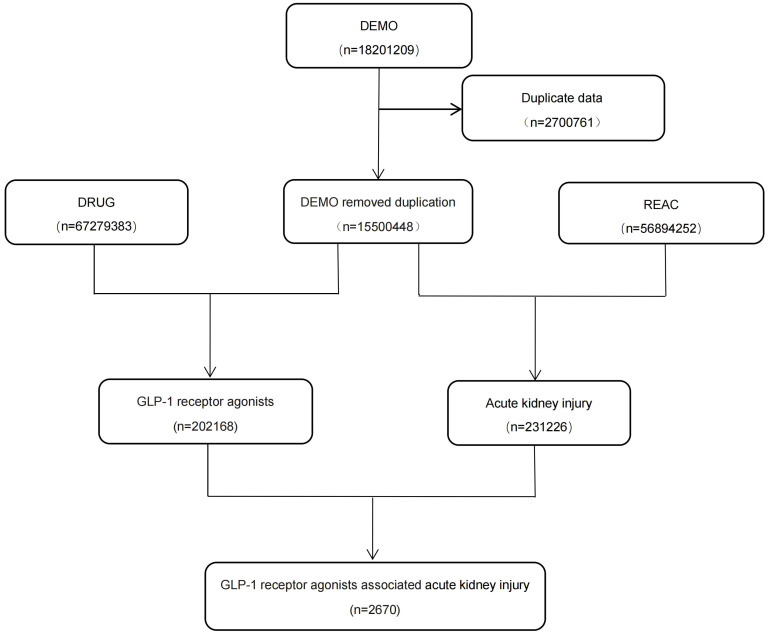
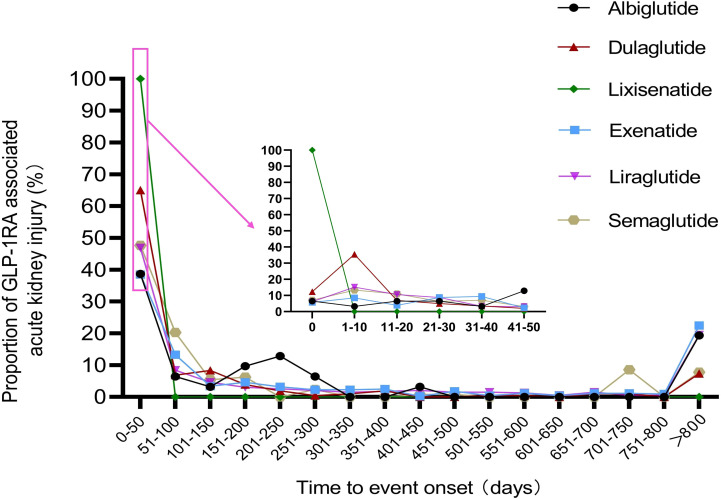
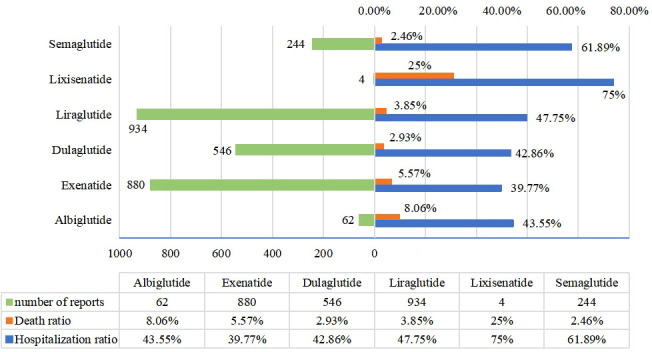
Clinical studies after marketing have shown that the use of glucagon-like peptide-1 receptor agonist(GLP-1RA) may lead to acute kidney injury(AKI). However, few epidemiological studies have investigated the risk, clinical features, and outcomes of AKI caused by different GLP-1RA. In this study, Adverse Event Reporting System (FAERS) data were used to compare the association between different GLP-1RA and AKI in the real world. Methods: FAERS data from January 2004 to December 2021 were mined using disproportionality analysis and Bayesian analysis to determine the correlation between different GLP-1RA and AKI, and the onset time, mortality, and hospitalization rate of different GLP-1RA were analyzed. Results: We identified 2670 cases of AKI events associated with GLP-1RA, of which liraglutide was the most commonly reported (34.98%). The patients with AKI were mainly males (47.94%), and the age group was mainly 45-84 years old (73.15%). obese patients with weight more than 99kg (24.42%) were more likely to have AKI. According to different signal mining methods, reporting odds ratio (ROR) (1.50, 95% confidence interval =1.41-1.60) and Bayesian confidence Propagation neural network (0.57, 95% confidence interval =0.54), liraglutide was more strongly associated with AKI than other GLP-1RA. The median time to onset of AKI was 63 days [quartile range (IQR): 15-458.5 days]. In addition, the hospitalization rate and fatality rate of patients with GLP-1RA-related AKI were 45.28% and 4.23% respectively. Conclusions: Based on the data in the FAERS database, we analyzed the risk, onset time, and adverse reaction outcomes of GLP-1RA-induced AKI in detail. The results showed that liraglutide had the highest risk of AKI. From the early stage of treatment, we need to monitor patients’ renal function regularly, especially for patients with high kidney risks such as obesity and age.
Overview
The claims and statistics of this paper haven’t been checked yet.
Free: it reads the open-access text and checks the first 5 claims that cite a source we can check. Create a free account to check every claim.
Integrity signals
Registry
Cites
Statistics
Figures
Verification
Claims the paper makes
The claims and statistics of this paper haven’t been checked yet.
Free: it reads the open-access text and checks the first 5 claims that cite a source we can check. Create a free account to check every claim.
Claims other papers make about this one
Each is checked against this paper’s own text: does it say what the citing paper says it does?
The source backs part of the claim, not all of it — or backs it for a different population, condition or comparison.
In the citing paper
“Postmarket reports—which may overestimate side effects—have noted renal impairment upon initiation and dose escalation of GLP‐1s, which appears due to volume depletion resulting from dehydration caused by nausea and vomiting [123].”
From Nutritional priorities to support GLP ‐1 therapy for obesity: A joint Advisory from the American College of Lifestyle Medicine, the American Society for Nutrition, the Obesity Medicine Association, and The Obesity Society (2025) · cites this paper as [123]
Experimental — accuracy not yet measuredThe cited source says what the claim attributes to it.
In the citing paper
“Concerns for acute kidney injury, however, have been raised among those with higher body weight (>99 kg) and older age (45–84 yrs).67”
From GLP-1 single, dual, and triple receptor agonists for treating type 2 diabetes and obesity: a narrative review (2024) · cites this paper as [67]
In the citing paper
“Post-market reports—which may overestimate side effects—have noted renal impairment upon initiation and dose escalation of GLP-1s, possibly due to dehydration from nausea and vomiting [115].”
In the citing paper
“Postmarket reports—which may overestimate side effects—have noted renal impairment upon initiation and dose escalation of GLP-1s, which appears due to volume depletion resulting from dehydration caused by nausea and vomiting [123].”
Self-check
Percentages, sums and reported differences re-computed from the paper’s own numbers.
The self-check needs the paper’s full text.
Citations
Cites
Liraglutide and Cardiovascular Outcomes in Type 2 Diabetes
Marso, S. P., Daniels, G. H., Brown-Frandsen, K., Kristensen, P., Mann, J. F. E., Nauck, M. A., Nissen, S. E., Pocock, S., Poulter, N. R., Ravn, L. S., et al. (2016) · New England Journal of Medicine · doi:10.1056/nejmoa1603827 · Cited by 7,629 · cited 1×
“A series of clinical trials, such as LEADER (5), SUSTAIN 6 (6), HARMONY (7), REWIND (8), and PIONEER 6 (9), proved that GLP-1RA could reduce the risk of cardiovascular events in addition to the effect of blood glucose reduction.”
BackgroundSemaglutide and Cardiovascular Outcomes in Patients with Type 2 Diabetes
Marso, S. P., Bain, S. C., Consoli, A., Eliaschewitz, F. G., Jódar, E., Leiter, L. A., Lingvay, I., Rosenstock, J., Seufert, J., Warren, M. L., et al. (2016) · New England Journal of Medicine · doi:10.1056/nejmoa1607141 · Cited by 6,900 · cited 1×
“A series of clinical trials, such as LEADER (5), SUSTAIN 6 (6), HARMONY (7), REWIND (8), and PIONEER 6 (9), proved that GLP-1RA could reduce the risk of cardiovascular events in addition to the effect of blood glucose reduction.”
BackgroundGerstein, H. C., Colhoun, H. M., Dagenais, G. R., Diaz, R., Lakshmanan, M., Pais, P., Probstfield, J., Riesmeyer, J. S., Riddle, M. C., Rydén, L., et al. (2019) · The Lancet · doi:10.1016/s0140-6736(19)31149-3 · Cited by 3,163
Epidemiology of Type 2 Diabetes – Global Burden of Disease and Forecasted Trends
Khan, M. A. B., Hashim, M. J., King, J. K., Govender, R. D., Mustafa, H., & Al Kaabi, J. (2019) · Journal of Epidemiology and Global Health · doi:10.2991/jegh.k.191028.001 · Cited by 3,130 · cited 1×
“48%), which may be related to the fact that the prevalence of type 2 diabetes mellitus in males is higher than that in female (31).”
BackgroundEffects of once-weekly exenatide on cardiovascular outcomes in type 2 diabetes
Holman, R. R., Bethel, M. A., Mentz, R. J., Thompson, V. P., Lokhnygina, Y., Buse, J. B., Chan, J. C., Choi, J., Gustavson, S. M., Iqbal, N., et al. (2017) · New England Journal of Medicine · doi:10.1056/nejmoa1612917 · Cited by 2,162 · cited 1×
“In addition, GLP-1RA, including liraglutide (10), dulaglutide (8), and exenatide (11), has shown renal benefits in clinical trials.”
BackgroundOral Semaglutide and Cardiovascular Outcomes in Patients with Type 2 Diabetes
Husain, M., Birkenfeld, A. L., Donsmark, M., Dungan, K., Eliaschewitz, F. G., Franco, D. R., Jeppesen, O. K., Lingvay, I., Mosenzon, O., Pedersen, S. D., et al. (2019) · New England Journal of Medicine · doi:10.1056/nejmoa1901118 · Cited by 1,997 · cited 1×
“A series of clinical trials, such as LEADER (5), SUSTAIN 6 (6), HARMONY (7), REWIND (8), and PIONEER 6 (9), proved that GLP-1RA could reduce the risk of cardiovascular events in addition to the effect of blood glucose reduction.”
BackgroundHernandez, A. F., Green, J. B., Janmohamed, S., D'Agostino, R. B., Granger, C. B., Jones, N. P., Leiter, L. A., Rosenberg, A. E., Sigmon, K. N., Somerville, M. C., et al. (2018) · The Lancet · doi:10.1016/s0140-6736(18)32261-x · Cited by 1,829
Liraglutide and renal outcomes in type 2 diabetes
Mann, J. F. E., Ørsted, D. D., Brown-Frandsen, K., Marso, S. P., Poulter, N. R., Rasmussen, S., Tornøe, K., Zinman, B., & Buse, J. B. (2017) · New England Journal of Medicine · doi:10.1056/nejmoa1616011 · Cited by 1,253 · cited 1×
“In addition, GLP-1RA, including liraglutide (10), dulaglutide (8), and exenatide (11), has shown renal benefits in clinical trials.”
BackgroundThe role of incretins in glucose homeostasis and diabetes treatment
Kim, W., & Egan, J. M. (2008) · Pharmacological Reviews · doi:10.1124/pr.108.000604 · Cited by 824 · cited 1×
“The incretin effect is a phenomenon, which shows that the insulin response caused by oral glucose is much larger than that caused by intravenous glucose infusion (1, 2).”
BackgroundFilippatos, T. D., Panagiotopoulou, T. V., & Elisaf, M. S. (2014) · The Review of Diabetic Studies · Cited by 560 · cited 1×
“In this study, the adverse signals of exenatide, dulaglutide, and albiglutide in AKI were not found, but some studies have confirmed the close connection between exenatide and AKI (38), and dulaglutide is also considered to cause a decrease in body fluid intake (14), which may be one of the reasons for AKI (28).”
Research works printed but not linked: 1
- Jiawei Han KM. Data Ming concepts and techniques. San Francisco: Morgan Kaufmann (2001).
Cited by
Efficacy and Safety of GLP-1 Medicines for Type 2 Diabetes and Obesity
Drucker, D. J. (2024) · Diabetes Care · doi:10.2337/dci24-0003 · Cited by 383
Alfaris, N., Waldrop, S., Johnson, V., Boaventura, B., Kendrick, K., & Stanford, F. C. (2024) · EClinicalMedicine · doi:10.1016/j.eclinm.2024.102782 · Cited by 224
Mozaffarian, D., Agarwal, M., Aggarwal, M., Alexander, L., Apovian, C. M., Bindlish, S., Bonnet, J., Butsch, W. S., Christensen, S., Gianos, E., et al. (2025) · The American Journal of Clinical Nutrition · doi:10.1016/j.ajcnut.2025.04.023 · Cited by 154
“Post-market reports — which may overestimate side effects — have noted renal impairment upon initiation and dose escalation of GLP-1s, possibly due to dehydration from nausea and vomiting [115].”
Mozaffarian, D., Agarwal, M., Aggarwal, M., Alexander, L., Apovian, C. M., Bindlish, S., Bonnet, J., Butsch, W. S., Christensen, S., Gianos, E., et al. (2025) · Obesity · doi:10.1002/oby.24336 · Cited by 143
“Post-market reports — which may overestimate side effects — have noted renal impairment upon initiation and dose escalation of GLP-1s, which appears due to volume depletion resulting from dehydration caused by nausea and vomiting [ 123].”
Urkon, M., Ferencz, E., Szász, J. A., Szabó, M. I. M., Orbán-Kis, K., Szatmári, S., & Nagy, E. E. (2025) · Pharmaceuticals · doi:10.3390/ph18050614 · Cited by 45
“More serious but rare complications of the therapy include acute kidney failure [121] and gallbladder and biliary diseases [122].”
Kunutsor, S. K., & Seidu, S. (2025) · Drugs · doi:10.1007/s40265-025-02263-0 · Cited by 45
“The median time to AKI onset was approximately 2 months, with 45% of cases requiring hospitalization and a fatality rate of 4.2% [164].”
InfluentialMozaffarian, D., Agarwal, M., Aggarwal, M., Alexander, L., Apovian, C. M., Bindlish, S., Bonnet, J. P., Butsch, W. S., Christensen, S. M., Gianos, E., et al. (2025) · Obesity Pillars · doi:10.1016/j.obpill.2026.100269 · Cited by 41
Semaglutide-associated kidney injury
Begum, F., Chang, K., Kapoor, K., Vij, R. S., Phadke, G. M., Hiser, W. M., Wanchoo, R., Sharma, P., Sutaria, N., & Jhaveri, K. D. (2024) · Clinical Kidney Journal · doi:10.1093/ckj/sfae250 · Cited by 38
“Some studies even suggest that these medications may reduce the progression of nephropathy in patients with diabetes, as can be seen from the evaluate renal function with semaglutide once weekly ( FLOW) trial [2 , 14 , 15 ].”
BackgroundEffect of GLP-1 receptor agonists on weight and cardiovascular outcomes: A review
Raza, F. A., Altaf, R., Bashir, T., Asghar, F., Altaf, R., Tousif, S., Goyal, A., Mohammed, A., Mohammad, M. F., Anan, M., et al. (2024) · Medicine · doi:10.1097/md.0000000000040364 · Cited by 37
“[125] Healthcare professionals should also be vigilant for common digestive side effects, including nausea, vomiting, and diarrhea, which can be addressed through gradual dose increases.”
BackgroundGlucagon-like peptide-1 receptor agonists in arthritis: current insights and future directions
Karacabeyli, D., & Lacaille, D. V. (2025) · Nature Reviews Rheumatology · doi:10.1038/s41584-025-01302-0 · Cited by 34
“If adverse effects lead to reduced oral intake, patients are at risk of acute kidney injury 127 .”
Dani, S. S., Makwana, B., Khadke, S., Kumar, A., Jhund, P., Nasir, K., Sattar, N., Al-Kindi, S., Fonarow, G., Butler, J., et al. (2025) · JACC: Advances · doi:10.1016/j.jacadv.2025.101740 · Cited by 30
Mozaffarian, D., Agarwal, M., Aggarwal, M., Alexander, L., Apovian, C. M., Bindlish, S., Bonnet, J., Butsch, W. S., Christensen, S., Gianos, E., et al. (2025) · Obesity Pillars · doi:10.1016/j.obpill.2025.100181 · Cited by 28
The Inappropriate Use of GLP-1 Analogs: Reflections from Pharmacoepidemiology
Echeverry-Guerrero, S., González-Vélez, S., Arévalo-Lara, A.-S., Calvache-Orozco, J.-C., Villarroel-Hagemann, S. K., Rojas-Rodríguez, L. C., Pérez-Acosta, A. M., & Calderón‐Ospina, C. (2024) · Pharmacoepidemiology · doi:10.3390/pharma3040025 · Cited by 21
“Adjusting fluid intake and the early management of gastrointestinal symptoms can reduce the risk of AKI [29,30].”
Bellos, I., Λάγιου, Π., Benetou, V., & Marinaki, S. (2024) · Journal of Clinical Medicine · doi:10.3390/jcm13206181 · Cited by 19
“It is important to note that GLP1-RA could also promote volume depletion and contribute to the development of acute kidney injury, mainly because of gastrointestinal losses in the context of adverse effects, such as vomiting and diarrhea [60].”
Weight Loss Blockbuster Development: A Role for Unimolecular Polypharmacology
Zhou, Q., Li, G., Hang, K., Li, J., Yang, D., & Wang, M. (2024) · The Annual Review of Pharmacology and Toxicology · doi:10.1146/annurev-pharmtox-061324-011832 · Cited by 16
Gandhi, A., Bhatt, N., & Parhizgar, A. (2025) · Journal of Clinical Medicine · doi:10.3390/jcm14217678 · Cited by 14
Murray, M., Schifano, F., Chiappini, S., Corkery, J., & Guirguis, A. (2025) · American Journal of Ophthalmology · doi:10.1016/j.ajo.2025.12.015 · Cited by 14
“5 With increasing use, additional ADRs have been reported, such as acute kidney injury 11 and nutritional deficiencies.”
Lee, N., & Kim, Y. (2026) · Diabetes/Metabolism Research and Reviews · doi:10.1002/dmrr.70163 · Cited by 14
Waqas, S. A., Ali, D., Afridi, M. K., Siddiqui, H. F., Nazir, A., Greene, S. J., & Khan, M. S. (2025) · Archives of Gerontology and Geriatrics · doi:10.1016/j.archger.2025.105981 · Cited by 11
Megerian, M. F., Reddy, R. P., Kim, B. I., White, A. E., Miller, M., Gulotta, L. V., Fu, M. C., & Taylor, S. A. (2025) · Seminars in Arthroplasty JSES · doi:10.1053/j.sart.2025.05.006 · Cited by 9
Salama, L., & Sinn, L. (2025) · American Journal of Health-System Pharmacy · doi:10.1093/ajhp/zxaf053 · Cited by 9
Dobbie, L. J., Tolvanen, L., Alves, D., Baker, J. L., Bez, N. S., Birney, S., Bogl, L. H., Brown, A., Bullo, M., Clare, K., et al. (2026) · The Lancet Diabetes & Endocrinology · doi:10.1016/s2213-8587(26)00122-1 · Cited by 8
Glucagon-like Peptide-1 Receptor Agonists: A New Frontier in Treating Alcohol Use Disorder
Oesterle, T., & Ho, M. (2025) · Brain Sciences · doi:10.3390/brainsci15070702 · Cited by 6
“These symptoms are generally dose-dependent and temporary but can lead to dehydration and, in rare instances, pre-renal acute kidney injury [28].”
Acute Kidney and Liver Injury Associated With Low-Dose Liraglutide in an Obese Adolescent Patient
Komargodski, R., Wittenberg, A., Bahat, H., & Rachmiel, M. (2024) · PEDIATRICS · doi:10.1542/peds.2023-063719 · Cited by 5
Lithium toxicity with GLP-1RA co-prescription: clinical considerations and recommendations
Seth, S., & Ramanathan, S. (2025) · Personalized Medicine in Psychiatry · doi:10.1016/j.pmip.2025.100177 · Cited by 4
Central nervous system stimulants and drugs that suppress appetite
Akgün, E. E., Uzumcu, M., & Bello, N. T. (2024) · Side effects of drugs annual · doi:10.1016/bs.seda.2024.09.003 · Cited by 4
Yang, W., Hao, C., Wang, N., Xie, J., Zhou, B., Yang, Z., Zheng, A., Wei, J., Li, C., Xie, C., et al. (2026) · Gut Microbes · doi:10.1080/19490976.2026.2661854 · Cited by 3
“233,234 Finally, retrospective cohort studies indicate that perioperative GLP-1RAs administration is associated with a lower incidence of pseudarthrosis after lumbar fusion, likely due to the mitigation of hyperglycemia—which inhibits osteogenesis—and direct stimulation of osteoblast…”
Wang, J., Xie, T., Zhang, Y., & Zhang, H. (2025) · Cardiorenal Medicine · doi:10.1159/000546238 · Cited by 2
“The fi ndings indicated that the correlation of liraglutide, semaglutide, and lixisenatide with AKI, as determined by the ROR and BCPNN methods, met the algorithmic thresholds [48].”
Itsathitpaisarn, R., Suksawad, N., Wongwikrom, W., Surintrspanont, J., & Thongsricome, T. (2025) · American Journal of Case Reports · doi:10.12659/ajcr.949913 · Cited by 1
“However, rare cases of biopsy-proven acute interstitial nephritis (AIN) have been reported with uncertain insights into the pathophysiology [9-11].”
Suastika, L. O. S., Bando, Y., Hoshino, K., Koitabashi, N., Saito, Y., Yuasa, S., & Nakamura, K. (2026) · Nutrients · doi:10.3390/nu18111688 · Cited by 1
“This dehydration may contribute to renal impairment, manifesting as either acute kidney injury or worsening of pre-existing chronic kidney disease [128].”
Fisch, S., Neugut, E. J., Cornet, N., Quigee, D., Neugut, A. I., & Freedberg, D. E. (2026) · Frontiers in Pharmacology · doi:10.3389/fphar.2026.1936967 · Cited by 1
“…events (AEs) (Sodhi et al., 2023), acute pancreatitis (Singh et al., 2013), gallbladder disease (Ramírez-Mejía et al., 2025), acute kidney injury (Dong and Sun, 2022), ophthalmic complications (Ramsey et al., 2025), thyroid cancer (Bezin et al., 2023), and rare reports of suicidal ideation (Tang…”
Arslan, T. (2026) · Endocrine · doi:10.1007/s12020-026-04840-z · Cited by 2
The role of GLP1R gene polymorphism in diabetic nephropathy in patients with type 2 diabetes
Gomaa, A. A., Zeid, A. M., & Nagy, I. M. (2025) · Gene Reports · doi:10.1016/j.genrep.2025.102205 · Cited by 1
Chao, C. (2024) · Internal and Emergency Medicine · doi:10.1007/s11739-024-03615-6
Yang, L., Chen, C., Ding, L., Lu, T., Li, X., & Xiao, J. (2025) · Frontiers in Pharmacology · doi:10.3389/fphar.2025.1556159 · Cited by 1
Zhu, J., Zhang, R., Wang, Y., Wu, F., Zhang, T., Li, D., & Du, Q. (2025) · International Journal of Pharmacology · doi:10.31083/ijp44094
“…has been widely used to understand the AKI risk of specific drugs [22,23], investigate the most common AKI pathogenic drugs [24], compare the risk differences of AKI among drugs in the same category [25–27], and explore risk characteristics of drug-induced AKI in the special population [28].”
EFFECTS OF WEIGHT LOSS MEDICATIONS IN COMBINATION WITH PSYCHOTROPIC MEDICATIONS
Hoffman, E. A. (2026) · CSUSB ScholarWorks (California State University, San Bernardino)
Joshi, S., Misra, A., Mithal, A., Saboo, B., Seshadri, K., Chowdhury, S., Bantwal, G., Sethi, B. K., Kesavadev, J., Bhattacharya, A. D., et al. (2026) · Obesity Pillars · doi:10.1016/j.obpill.2026.100296 · Cited by 1
“Sodium excretion also increases with liraglutide, which further impairs body fluid balance [41].”
Thandampallayam, M., Abusamra, K., Kini, T. A., & Vasireddy, R. P. (2026) · Indian Journal of Ophthalmology · doi:10.4103/ijo.ijo_1125_25
“[16] Emerging evidence also suggests a possible link between GLP‑1 receptor agonists and non‑arteritic anterior ischemic optic neuropathy (NAION).”
Bianchini, L., Martins, G. A. R., & Myatra, S. N. (2026) · Critical Care Science · doi:10.62675/2965-2774.20260166
Tomaszek, B., Aleksandra, Ł., Blok, A., Jakubczyk, I., Szkodziński, K., Wiater, D., Płodzień, G., Pempuś, W., Maternia, J., Majowicz-Czaszyńska, K. B., et al. (2026) · Medical Science · doi:10.54905/disssi.v30i174.e151ms3920
Adhikari, S., Carlyle, B. C., & de Wet, H. (2026) · The Journal of Precision Medicine Health and Disease · doi:10.1016/j.premed.2026.100057
Cheung, D. S. (2026) · Clinical Journal of the American Society of Nephrology · doi:10.2215/cjn.0000001252
李, 美., Zhou, C., & Zhou, J. (2026) · Therapeutic Advances in Drug Safety · doi:10.1177/20420986261492895
Estimation of some biochemical markers in diabetic patients with renal impairment
Bayat, N. S. (2025) · Open Herald: Periodical of Methodical Research
Decoding the Safety Profile of GLP-1 Receptor Agonists: Facts, Myths, and Ongoing Controversies
Kounatidis, D. C., Vallianou, N. G., Kouveletsou, M., Kontrafouri, P., Stamatopoulos, V., Rebelos, E., Diakoumopoulou, E., & Dalamaga, Μ. (2026) · Current Obesity Reports · doi:10.1007/s13679-026-00770-z
Metadata
- Authors
- Dong, S., & Sun, C.
- Affiliations
- Second Hospital of Tianjin Medical University (CN)
- Nanjing Children's Hospital (CN)
- Corresponding author
- Sun, Chuan
- Venue
- Frontiers in Endocrinology
- Publisher
- Frontiers Media SA
- Published
- 2022-12-13
- Volume
- 13
- Pages
- 1032199-1032199
- ISSN
- 1664-2392 (ISSN-L)
- PMC
- PMC9792852
- OpenAlex
- W4312138050
- Cited by
- 37
- References
- 44
- Citations by year
- 2026: 11 · 2025: 16 · 2024: 10
- FWCI
- 4.44
- Type
- journal article
- Language
- en
- Open access
- gold
- doi.org
- Licence
- Locations
- Frontiers in Endocrinology (publishedVersion, cc-by)
- PubMed Central (publishedVersion, cc-by)
- PubMed (publishedVersion)
- DOAJ (DOAJ: Directory of Open Access Journals) (submittedVersion, cc-by-sa)
- Topics
- Life Sciences › Pharmacology, Toxicology and Pharmaceutics › Toxicology › Pharmacovigilance and Adverse Drug Reactions
- Health Sciences › Medicine › Nephrology › Acute Kidney Injury Research
- Health Sciences › Medicine › Endocrinology, Diabetes and Metabolism › Diabetes Treatment and Management
- Keywords
- GLP-1 receptor agonists, acute kidney injury, liraglutide, drug-induced nephrotoxicity, pharmacovigilance, adverse drug reactions, obesity, renal function monitoring, drug safety
- MeSH terms
- Liraglutide, Glucagon-Like Peptide-1 Receptor Agonists, Aged, Aged, 80 and over, Bayes Theorem, Female, Humans, Male, Middle Aged, Obesity, Acute Kidney Injury, Pharmacovigilance
About these checks
Registry, retraction, Cites and statistics results are computed, not judged, with one exception: a printed reference that no index lists is read once by a model before it counts as a citation error. Claims are extracted by a model and kept only when their quote appears verbatim in the text; each cited source is then checked, with a model’s help, for whether it says what the claim relies on. Those verdicts can be wrong — read the claim’s quote and the cited source before relying on one.
Statistics and arithmetic are recomputed, not judged.
Confidence bands are shown only for fields calibrated on our annotated test set. None is calibrated yet, so no band is shown.
What counts as a claim ›How we measure confidence ›How we check this ›
Are you an author, or do you see a problem with this page? Request a review
Data sources
Bibliographic data: Semantic Scholar, OpenAlex, Crossref.
Contains information from the Semantic Scholar Academic Graph Datasets, made available under the ODC Attribution License (ODC-BY 1.0).
Semantic Scholar’s data is described in: Kinney, R., et al. (2023). The Semantic Scholar Open Data Platform. arXiv:2301.10140.
