

Safety issues of tirzepatide (pancreatitis and gallbladder or biliary disease) in type 2 diabetes and obesity: a systematic review and meta-analysis
Open accessThe DOI matches its Crossref record; 42 of the 44 references it cites were found in a registry or an index; 3 of the 11 sources its claims cite were checked for support.
Abstract
Purpose: A systematic review and meta-analysis was conducted to synthesize the available data from clinical trials and assess the safety issues of tirzepatide (pancreatitis and gallbladder or biliary disease) in type 2 diabetes (T2D) and obesity. Methods: A systematic search was conducted in three electronic databases, namely Embase, PubMed, and the Cochrane Library, up until March 1, 2023, to identify randomized controlled trials (RCTs) comparing tirzepatide to either placebo or active hypoglycemic drugs in individuals with T2D and obesity. Heterogeneity was assessed using the I2 value and Cochran's Q test, and a fixed effects model was employed to estimate the safety profile of tirzepatide. The safety outcomes of interest, including pancreatitis, the composite of gallbladder or biliary diseases, cholecystitis, and cholelithiasis and biliary diseases, were evaluated. (The composite of gallbladder or biliary diseases incorporated cholelithiasis, cholecystitis, other gallbladder disorders, and biliary diseases.). Results: A total of nine trials with 9871 participants (6828 in the tirzepatide group and 3043 in the control group) that met the pre-specified criteria were included. When compared to all control groups consisting of basal insulin (glargine or degludec), selective GLP1-RA (dulaglutide or semaglutide once weekly), and placebo, an increased risk of pancreatitis was not found to be significantly associated with tirzepatide (RR 1.46, [95% CI] 0.59 to 3.61; I2 = 0.0%, p = 0.436). For gallbladder or biliary disease, the composite of gallbladder or biliary disease was significantly associated with tirzepatide compared with placebo or basal insulin (RR 1.97, [95% CI] 1.14 to 3.42; I2 = 0.0%, p = 0.558), but not with the risk of cholelithiasis, cholecystitis or biliary diseases. Conclusion: Based on the currently available data, tirzepatide appears to be safe regarding the risk of pancreatitis. However, the increased risk of the composite outcome of gallbladder or biliary diseases observed in RCTs warrants further attention from physicians in clinical practice. Systematic review registration: https://www.crd.york.ac.uk/PROSPERO, identifier CRD42023412400.
Overview
CoChat Summary
TL;DR
This systematic review and meta-analysis of nine RCTs found tirzepatide was not significantly associated with increased pancreatitis risk, but it was associated with an increased composite risk of gallbladder or biliary diseases versus placebo or basal insulin. The authors conclude tirzepatide appears safe regarding pancreatitis, while the gallbladder/biliary signal warrants clinical attention.
Key findings
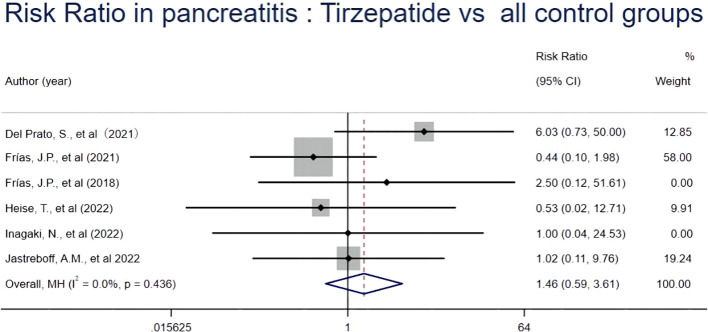
- Across nine trials with 9,871 participants (6,828 tirzepatide; 3,043 control), tirzepatide was not significantly associated with pancreatitis versus all controls: RR 1.46, 95% CI 0.59–3.61; I² = 0.0%, p = 0.436.
- The composite of gallbladder or biliary diseases was significantly associated with tirzepatide compared with placebo or basal insulin: RR 1.97, 95% CI 1.14–3.42; I² = 0.0%, p = 0.558.
- No significant association was found for cholelithiasis, cholecystitis, or biliary diseases individually, or for the composite when compared with GLP1-RA.
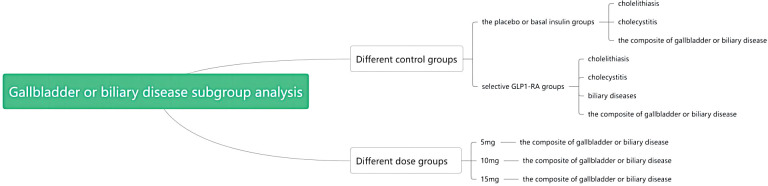
- In dosage subgroup analysis, 10 mg tirzepatide was associated with increased composite gallbladder or biliary disease risk versus all controls: RR 1.91, 95% CI 1.14–3.19; I² = 0.0%, p = 0.880; no significant association was observed for 5 mg or 15 mg.
Methods
- Systematic search of Embase, PubMed, and Cochrane Library up to March 1, 2023, for RCTs of at least 24 weeks comparing tirzepatide with placebo or active hypoglycemic drugs in T2D and obesity.
- Nine RCTs included; outcomes were pancreatitis, composite gallbladder or biliary diseases, cholecystitis, cholelithiasis, and biliary diseases.
- Fixed-effects meta-analysis using Stata 17; heterogeneity assessed with I² and Cochran’s Q; sensitivity and subgroup analyses by dose and control measure; publication bias assessed with Begg’s and Egger’s tests.
Limitations
- The paper states included studies were not specifically designed to evaluate tirzepatide safety for pancreatitis and gallbladder/biliary disease, which may have led to incomplete outcome ascertainment.
- The paper states some gallbladder or biliary diseases were not pre-specified safety outcomes in included studies, leading to potential under-reporting; population characteristics were somewhat heterogeneous.
- The paper also lists general meta-analysis limitations: bias/confounding, variability in data quality, publication bias, and heterogeneity. Evident from the text: only nine trials were included, funnel plots were not drawn because fewer than 10 studies were available, and three studies did not blind participants and personnel.
Model-written summary. Check it against the paper before relying on it.
Integrity signals
Registry
Cites
Statistics
Figures
Verification
Claims the paper makes
3 Valid · 0 Not valid · 4 Not checked · 29 Own results and interpretations
Every source the paper cites for this claim was checked and supports it.
In the paper
“In addition, GIP has recently been reported to play a role in gallbladder relaxation (41).”
§ Safety issues of tirzepatide (pancreatitis and gallbladder or biliary disease) in type 2 diabetes and obesity: a systematic review and meta-analysis > Discussion
What the sources say
- Supportedcites [41] Gasbjerg LS Helsted MM Hartmann B Sparre-Ulrich AH Veedfald S Stensen S. GIP and GLP-1 receptor antagonism during a meal in healthy individuals. J Clin Endocrinol Metab (2020) 105(3): dgz175. doi: 10.1210/clinem/dgz175 32077470 source
The Gallbladder volume section states that the higher gallbladder ejection fraction during GIP receptor antagonism suggests endogenous GIP is involved in gallbladder relaxation. The claim accurately presents this as a reported role, rather than a definitive mechanism. (LLM, conf=0.93)
hedgedstates a cause- Asserted: passes — The authors put it forward as true.
- Checkable: passes — It can be checked against evidence.
- Load-bearing: passes — The paper’s conclusions depend on it.
- Based: passes — The paper gives a reason why it holds.
- Supported
A result the paper reports from its own data — it cites no other source for it, so there is none to check. The quote shows it is in the paper.
In the paper
“Furthermore, our subgroup analysis showed no significant difference in the risk of pancreatitis between different drug doses and control measures (placebo or basal insulin group and selective GLP1-RA group)”
§ Safety issues of tirzepatide (pancreatitis and gallbladder or biliary disease) in type 2 diabetes and obesity: a systematic review and meta-analysis > Results > Pancreatitis
plain- Asserted: passes — The authors put it forward as true.
- Checkable: passes — It can be checked against evidence.
- Load-bearing: unclear — It is unclear whether the paper’s conclusions depend on it.
- Based: passes — The paper gives a reason why it holds.
A result the paper reports from its own data — it cites no other source for it, so there is none to check. The quote shows it is in the paper.
In the paper
“Subgroup analysis by dosage showed that the use of 10 mg tirzepatide was associated with an increased risk of the composite of gallbladder or biliary disease (RR 1.91, [95% CI] 1.14 to 3.19; I 2 = 0.0%, p = 0.880) compared with all control groups.”
§ Safety issues of tirzepatide (pancreatitis and gallbladder or biliary disease) in type 2 diabetes and obesity: a systematic review and meta-analysis > Results > Gallbladder or biliary disease
plainstates an association- Asserted: passes — The authors put it forward as true.
- Checkable: passes — It can be checked against evidence.
- Load-bearing: passes — The paper’s conclusions depend on it.
- Based: passes — The paper gives a reason why it holds.
A result the paper reports from its own data — it cites no other source for it, so there is none to check. The quote shows it is in the paper.
In the paper
“A total of nine trials with 9871 participants (6828 in the tirzepatide group and 3043 in the control group) that met the pre-specified criteria were included.”
- Also stated in: § Search results · plain
“finally included nine studies that met our inclusion criteria.”
§ Safety issues of tirzepatide (pancreatitis and gallbladder or biliary disease) in type 2 diabetes and obesity: a systematic review and meta-analysis > Abstract > Results
plainn = 9,871- Asserted: passes — The authors put it forward as true.
- Checkable: passes — It can be checked against evidence.
- Load-bearing: passes — The paper’s conclusions depend on it.
- Based: passes — The paper gives a reason why it holds.
- Also stated in: § Search results · plain
A result the paper reports from its own data — it cites no other source for it, so there is none to check. The quote shows it is in the paper.
In the paper
“In our meta-analysis of nine RCTs, eight studies documented occurrences of gallbladder or biliary disease within the study duration.”
§ Safety issues of tirzepatide (pancreatitis and gallbladder or biliary disease) in type 2 diabetes and obesity: a systematic review and meta-analysis > Results > Gallbladder or biliary disease
plain- Asserted: passes — The authors put it forward as true.
- Checkable: passes — It can be checked against evidence.
- Load-bearing: unclear — It is unclear whether the paper’s conclusions depend on it.
- Based: passes — The paper gives a reason why it holds.
11 more claims
Create a free account to see all 36 claims and every source verdict.
- Probably not a substantial claim. 8
- It may state two separate claims as one. 15
- Borderline: one of the tests for a substantial claim is unclear. 1
Claims other papers make about this one
Each is checked against this paper’s own text: does it say what the citing paper says it does?
The source backs part of the claim, not all of it — or backs it for a different population, condition or comparison.
In the citing paper
“however, tirzepatide was shown to portend an increased risk (RR 1.97, 95% CI 1.14–3.42, I2 = 0.0%, p = 0.558).75”
From GLP-1 single, dual, and triple receptor agonists for treating type 2 diabetes and obesity: a narrative review (2024) · cites this paper as [75]
Experimental — accuracy not yet measuredThe source backs part of the claim, not all of it — or backs it for a different population, condition or comparison.
In the citing paper
“A meta‐analysis of tirzepatide found an increased risk (albeit statistically imprecise) for gallbladder or biliary disease with this particular GLP‐1RA compared with the use of other GLP‐1RAs (RR 1.94; 95% CI 0.58–6.47). 96”
From Real‐world evidence on the utilization, clinical and comparative effectiveness, and adverse effects of newer GLP ‐ 1RA ‐based weight‐loss therapies (2025) · cites this paper as [96]
Experimental — accuracy not yet measured
Self-check
Percentages, sums and reported differences re-computed from the paper’s own numbers.
Rated minor: it would not touch a result — a value no result rests on, a p-value that stays on the same side of the significance level, or a conflict that is clerical, resolved elsewhere in the paper, or outside its own findings.
In the paper
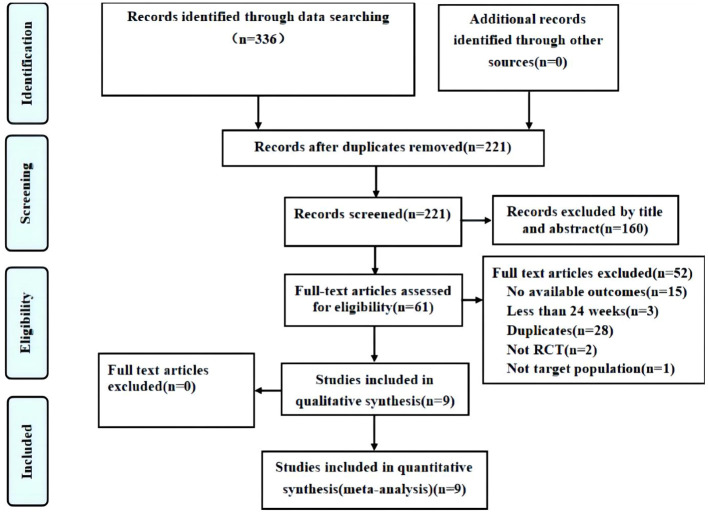
“Of the 52 excluded records, 28 were duplicates, 15 had no results, 3 had a study duration of less than 24 weeks, 2 were non-RCTs and one did not include patients with T2D”
§ Safety issues of tirzepatide (pancreatitis and gallbladder or biliary disease) in type 2 diabetes and obesity: a systematic review and meta-analysis > Results > Search results
Reported 52 · recomputed 49
Citations
Cites
The PRISMA 2020 statement: An updated guideline for reporting systematic reviews
Page, M. J., McKenzie, J. E., Bossuyt, P. M., Boutron, I., Hoffmann, T. C., Mulrow, C. D., Shamseer, L., Tetzlaff, J. M., Akl, E. A., Brennan, S. E., et al. (2021) · BMJ · doi:10.1136/bmj.n71 · Cited by 108,283
The Cochrane Collaboration's tool for assessing risk of bias in randomised trials
Higgins, J. P. T., Altman, D. G., Gotzsche, P. C., Juni, P., Moher, D., Oxman, A. D., Savovic, J., Schulz, K. F., Weeks, L., Sterne, J. A. C., et al. (2011) · BMJ · doi:10.1136/bmj.d5928 · Cited by 33,817
Dermyshi, E., Wang, Y., Yan, C., Hong, W., Qiu, G., Gong, X., & Zhang, T. (2017) · Neonatology · doi:10.1159/000454668 · Cited by 24,451
Saeedi, P., Petersohn, I., Salpea, P., Malanda, B., Karuranga, S., Unwin, N., Colagiuri, S., Guariguata, L., Motala, A. A., Ogurtsova, K., et al. (2019) · Diabetes Research and Clinical Practice · doi:10.1016/j.diabres.2019.107843 · Cited by 10,792
(2016) · The Lancet · doi:10.1016/s0140-6736(16)30054-x · Cited by 5,212 · cited 1×
“Since 1975, the prevalence of obesity has almost tripled, with a parallel increase in the incidence of T2D (2).”
BackgroundTirzepatide Once Weekly for the Treatment of Obesity
Jastreboff, A. M., Aronne, L. J., Ahmad, N. N., Wharton, S., Connery, L., Alves, B., Kiyosue, A., Zhang, S., Liu, B., Bunck, M. C., et al. (2022) · New England Journal of Medicine · doi:10.1056/nejmoa2206038 · Cited by 3,838 · cited 4×
“Of the 52 excluded records, 28 were duplicates, 15 had no results, 3 had a study duration of less than 24 weeks, 2 were non-RCTs and one did not include patients with T2D; the remaining nine studies (29 – 31, 34 – 39) satis fi ed the inclusion criteria and were included.”
BackgroundResultInfluentialBiology of Incretins: GLP-1 and GIP
Baggio, L. L., & Drucker, D. J. (2007) · Gastroenterology · doi:10.1053/j.gastro.2007.03.054 · Cited by 3,639 · cited 1×
“GLP-1 is produced and released by enteroendocrine L-cells located in the distal ileum and colon, whereas GIP is mainly secreted by enteroendocrine K-cells located in the proximal small intestine and is responsible for most of the insulinotropic incretin effect (15, 16).”
BackgroundTirzepatide versus Semaglutide Once Weekly in Patients with Type 2 Diabetes
Frías, J. P., Davies, M. J., Rosenstock, J., Pérez Manghi, F. C., Fernández Landó, L., Bergman, B. K., Liu, B., Cui, X., & Brown, K. (2021) · New England Journal of Medicine · doi:10.1056/nejmoa2107519 · Cited by 2,096
Sattar, N., Lee, M. M. Y., Kristensen, S. L., Branch, K. R. H., Del Prato, S., Khurmi, N. S., Lam, C. S. P., Lopes, R. D., McMurray, J. J. V., Pratley, R. E., et al. (2021) · The Lancet Diabetes & Endocrinology · doi:10.1016/s2213-8587(21)00203-5 · Cited by 1,599
Davies, M. J., Bergenstal, R., Bode, B., Kushner, R. F., Lewin, A., Skjøth, T. V., Andreasen, A. H., Jensen, C. B., DeFronzo, R. A., & for the NN8022-1922 Study Group (2015) · JAMA · doi:10.1001/jama.2015.9676 · Cited by 1,198
Rosenstock, J., Wysham, C., Frías, J. P., Kaneko, S., Lee, C. J., Fernández Landó, L., Mao, H., Cui, X., Karanikas, C. A., & Thieu, V. T. (2021) · The Lancet · doi:10.1016/s0140-6736(21)01324-6 · Cited by 1,080
Davies, M. J., Aroda, V. R., Collins, B. S., Gabbay, R. A., Green, J., Maruthur, N. M., Rosas, S. E., Del Prato, S., Mathieu, C., Mingrone, G., et al. (2022) · Diabetologia · doi:10.1007/s00125-022-05787-2 · Cited by 1,048
Lean, M. E. J., Leslie, W. S., Barnes, A. C., Brosnahan, N., Thom, G., McCombie, L., Peters, C., Zhyzhneuskaya, S., Al-Mrabeh, A., Hollingsworth, K. G., et al. (2019) · The Lancet Diabetes & Endocrinology · doi:10.1016/s2213-8587(19)30068-3 · Cited by 1,017
Incretin hormones: Their role in health and disease
Nauck, M. A., & Meier, J. J. (2018) · Diabetes, Obesity and Metabolism · doi:10.1111/dom.13129 · Cited by 950 · cited 1×
“Glucagon-like peptide-1 (GLP-1) and glucose-dependent insulinotropic peptide (GIP) are recognized as primary incretin hormones (14).”
BackgroundCoskun, T., Sloop, K. W., Loghin, C., Alsina-Fernandez, J., Urva, S., Bokvist, K. B., Cui, X., Briere, D. A., Cabrera, O., Roell, W. C., et al. (2018) · Molecular Metabolism · doi:10.1016/j.molmet.2018.09.009 · Cited by 882
Frias, J. P., Nauck, M. A., Van, J., Kutner, M. E., Cui, X., Benson, C., Urva, S., Gimeno, R. E., Milicevic, Z., Robins, D., et al. (2018) · The Lancet · doi:10.1016/s0140-6736(18)32260-8 · Cited by 815
Del Prato, S., Kahn, S. E., Pavo, I., Weerakkody, G. J., Yang, Z., Doupis, J., Aizenberg, D., Wynne, A. G., Riesmeyer, J. S., Heine, R. J., et al. (2021) · The Lancet · doi:10.1016/s0140-6736(21)02188-7 · Cited by 684
Ludvik, B., Giorgino, F., Jódar, E., Frias, J. P., Fernández Landó, L., Brown, K., Bray, R., & Rodríguez, Á. (2021) · The Lancet · doi:10.1016/s0140-6736(21)01443-4 · Cited by 639
Dahl, D., Onishi, Y., Norwood, P., Huh, R., Bray, R., Patel, H., & Rodríguez, Á. (2022) · JAMA · doi:10.1001/jama.2022.0078 · Cited by 597
Obesity management as a primary treatment goal for type 2 diabetes: time to reframe the conversation
Lingvay, I., Sumithran, P., Cohen, R. V., & le Roux, C. W. (2022) · The Lancet · doi:10.1016/s0140-6736(21)01919-x · Cited by 581 · cited 1×
“Given the strong association between obesity and T2D, weight loss in people with T2D may have favourable effects on glycaemic control, insulin sensitivity and cardiovascular-metabolic comorbidities (3, 5).”
BackgroundGastaldelli, A., Cusi, K., Fernández Landó, L., Bray, R., Brouwers, B., & Rodríguez, Á. (2022) · The Lancet Diabetes & Endocrinology · doi:10.1016/s2213-8587(22)00070-5 · Cited by 513
Leitner, D. R., Frühbeck, G., Yumuk, V., Schindler, K., Micic, D., Woodward, E., & Toplak, H. (2017) · Obesity Facts · doi:10.1159/000480525 · Cited by 431
How May GIP Enhance the Therapeutic Efficacy of GLP-1?
Samms, R. J., Coghlan, M. P., & Sloop, K. W. (2020) · Trends in Endocrinology & Metabolism · doi:10.1016/j.tem.2020.02.006 · Cited by 419
Nauck, M. A., & D‘Alessio, D. A. (2022) · Cardiovascular Diabetology · doi:10.1186/s12933-022-01604-7 · Cited by 407
Bettge, K., Kahle, M., Abd El Aziz, M. S., Meier, J. J., & Nauck, M. A. (2017) · Diabetes, Obesity and Metabolism · doi:10.1111/dom.12824 · Cited by 374
Thomas, M. K., Nikooienejad, A., Bray, R., Cui, X., Wilson, J., Duffin, K., Milicevic, Z., Haupt, A., & Robins, D. A. (2021) · The Journal of Clinical Endocrinology & Metabolism · doi:10.1210/clinem/dgaa863 · Cited by 345
Heise, T., Mari, A., DeVries, J. H., Urva, S., Li, J., Pratt, E. J., Coskun, T., Thomas, M. K., Mather, K. J., Haupt, A., et al. (2022) · The Lancet Diabetes & Endocrinology · doi:10.1016/s2213-8587(22)00085-7 · Cited by 268
The incretin system in healthy humans: The role of GIP and GLP-1
Holst, J. J. (2019) · Metabolism · doi:10.1016/j.metabol.2019.04.014 · Cited by 248
Inagaki, N., Takeuchi, M., Oura, T., Imaoka, T., & Seino, Y. (2022) · The Lancet Diabetes & Endocrinology · doi:10.1016/s2213-8587(22)00188-7 · Cited by 226
Tirzepatide, a new era of dual-targeted treatment for diabetes and obesity: A mini-review
Chavda, V. P., Ajabiya, J., Teli, D., Bojarska, J., & Apostolopoulos, V. (2022) · Molecules · doi:10.3390/molecules27134315 · Cited by 208 · cited 1×
“…from GLP-1, GIP, and semaglutide, and through the incorporation of two non-encoded amino acid residues, located at positions 2 and 13, and the addition of a C20 fatty acid molecule at position 20, Tirzepatide has exhibited a prolonged half-life and a high af fi nity towards albumin (20 – 22).”
BackgroundGIP as a Therapeutic Target in Diabetes and Obesity: Insight From Incretin Co-agonists
Holst, J. J., & Rosenkilde, M. M. (2020) · The Journal of Clinical Endocrinology & Metabolism · doi:10.1210/clinem/dgaa327 · Cited by 207 · cited 1×
“The synergistic activation of GIP and GLP-1 receptors has been recognized as a promising therapeutic approach in the treatment of T2D and obesity (17, 18).”
BackgroundKhunti, K., Ceriello, A., Cos, X., & De Block, C. (2018) · Diabetes Research and Clinical Practice · doi:10.1016/j.diabres.2017.12.004 · Cited by 200
Wilson, J. M., Lin, Y., Luo, M. J., Considine, G., Cox, A. L., Bowsman, L. M., Robins, D. A., Haupt, A., Duffin, K. L., & Ruotolo, G. (2022) · Diabetes Obesity and Metabolism · doi:10.1111/dom.14553 · Cited by 149 · cited 1×
“Furthermore, it has also demonstrated signi fi cant improvements in adipose tissue, lipoprotein metabolism, blood pressure, and cardioprotective effects (25 – 28).”
BackgroundSyed, Y. Y. (2022) · Drugs · doi:10.1007/s40265-022-01746-8 · Cited by 144 · cited 1×
“Tirzepatide, a novel dual agonist of GIP and GLP-1 receptors, is currently undergoing development for the management of T2D and obesity (19).”
BackgroundEfficacy and Safety of Tirzepatide in Type 2 Diabetes and Obesity Management
Sinha, R., Papamargaritis, D., Sargeant, J. A., & Davies, M. J. (2023) · Journal of Obesity & Metabolic Syndrome · doi:10.7570/jomes22067 · Cited by 138
Diagnosis and management of the metabolic syndrome in obesity
Liberopoulos, E. N., Mikhailidis, D. P., & Elisaf, M. S. (2005) · Obesity Reviews · doi:10.1111/j.1467-789x.2005.00221.x · Cited by 130
Tirzepatide: A Systematic Update
Forzano, I., Varzideh, F., Avvisato, R., Jankauskas, S. S., Mone, P., & Santulli, G. (2022) · International Journal of Molecular Sciences · doi:10.3390/ijms232314631 · Cited by 118
Gallwitz, B. (2022) · Frontiers in Endocrinology · doi:10.3389/fendo.2022.1004044 · Cited by 81 · cited 1×
“The synergistic activation of GIP and GLP-1 receptors has been recognized as a promising therapeutic approach in the treatment of T2D and obesity (17, 18).”
BackgroundGIP and GLP-1 receptor antagonism during a meal in healthy individuals
Gasbjerg, L. S., Helsted, M. M., Hartmann, B., Sparre-Ulrich, A. H., Veedfald, S., Stensen, S., Lanng, A. R., Bergmann, N. C., Christensen, M. B., Vilsbøll, T., et al. (2020) · The Journal of Clinical Endocrinology & Metabolism · doi:10.1210/clinem/dgz175 · Cited by 68
Rehfeld, J. F., Knop, F. K., Asmar, A., Madsbad, S., Holst, J. J., & Asmar, M. (2018) · Scandinavian Journal of Gastroenterology · doi:10.1080/00365521.2018.1530297 · Cited by 62 · cited 1×
“GLP-1 has been shown to impair gallbladder motility and contractility by inhibiting the secretion of cholecystokinin, a hormone involved in the digestion and absorption of fat, which may contribute to the development of gallbladder or biliary disease (40).”
BackgroundWang, L. (2022) · Drug Design, Development and Therapy · doi:10.2147/dddt.s358989 · Cited by 56 · cited 1×
“…from GLP-1, GIP, and semaglutide, and through the incorporation of two non-encoded amino acid residues, located at positions 2 and 13, and the addition of a C20 fatty acid molecule at position 20, Tirzepatide has exhibited a prolonged half-life and a high af fi nity towards albumin (20 – 22).”
BackgroundTirzepatide decreases systolic and diastolic blood pressure
Çöpür, S., Demiray, A., Cherney, D. Z. I., Tuttle, K. R., & Kanbay, M. (2023) · European Journal of Internal Medicine · doi:10.1016/j.ejim.2023.04.005 · Cited by 8
Cited by
Lingvay, I., Cohen, R. V., Roux, C. W. L., & Sumithran, P. (2024) · The Lancet · doi:10.1016/s0140-6736(24)01210-8 · Cited by 433
Alfaris, N., Waldrop, S., Johnson, V., Boaventura, B., Kendrick, K., & Stanford, F. C. (2024) · EClinicalMedicine · doi:10.1016/j.eclinm.2024.102782 · Cited by 224
“75 Regarding Metabolic Associated Steatotic Liver Disease (MASLD), both liraglutide and exenatide have shown signi fi cant reductions in liver fat as well as liver enzymes and indices of fi brosis, while semaglutide compared to placebo resulted in MASLD resolution in 59% and improvements in hepatic fi…”
BackgroundThomsen, R. W., Mailhac, A., Løhde, J. B., & Pottegård, A. (2025) · Diabetes Obesity and Metabolism · doi:10.1111/dom.16364 · Cited by 207
Caruso, I., Di Gioia, L., Di Molfetta, S., Caporusso, M., Cignarelli, A., Sorice, G. P., Laviola, L., & Giorgino, F. (2024) · Journal of Endocrinological Investigation · doi:10.1007/s40618-024-02441-z · Cited by 49
Arredouani, A. (2025) · Pharmacology & Therapeutics · doi:10.1016/j.pharmthera.2025.108824 · Cited by 36
Metadata
- Authors
- Zeng, Q., Xu, J., Mu, X., Shi, Y., Fan, H., & Li, S.
- Affiliations
- Sichuan University (CN)
- Corresponding author
- Fan, Hong
- Li, Shuangqing
- Venue
- Frontiers in Endocrinology
- Publisher
- Frontiers Media SA
- Published
- 2023-10-16
- Volume
- 14
- Pages
- 1214334-1214334
- ISSN
- 1664-2392 (ISSN-L)
- PMC
- PMC10613702
- OpenAlex
- W4387670410
- Cited by
- 66
- References
- 44
- Citations by year
- 2026: 18 · 2025: 34 · 2024: 14
- FWCI
- 2.37
- Type
- journal article
- Language
- en
- Update notices
- corrigendum (2024-03-14)
- Open access
- gold
- doi.org
- Licence
- Locations
- Frontiers in Endocrinology (publishedVersion, cc-by)
- PubMed Central (publishedVersion, cc-by)
- PubMed (publishedVersion)
- DOAJ (DOAJ: Directory of Open Access Journals) (submittedVersion, cc-by-sa)
- Topics
- Health Sciences › Medicine › Endocrinology, Diabetes and Metabolism › Diabetes Treatment and Management
- Health Sciences › Medicine › Pharmacology (medical) › Pharmacology and Obesity Treatment
- Health Sciences › Medicine › Endocrinology, Diabetes and Metabolism › Diabetes Management and Research
- Keywords
- tirzepatide, pancreatitis, gallbladder disease, biliary tract diseases, gallstones, cholecystitis, type 2 diabetes, obesity, drug safety, GLP-1 receptor agonists, basal insulin, dulaglutide, semaglutide, adverse events, drug-drug interactions, drug-disease interactions, pharmacovigilance
- MeSH terms
- Insulin Glargine, Tirzepatide, Cholecystitis, Cholelithiasis, Diabetes Mellitus, Type 2, Humans, Obesity, Pancreatitis
About these checks
Registry, retraction, Cites and statistics results are computed, not judged, with one exception: a printed reference that no index lists is read once by a model before it counts as a citation error. Claims are extracted by a model and kept only when their quote appears verbatim in the text; each cited source is then checked, with a model’s help, for whether it says what the claim relies on. Those verdicts can be wrong — read the claim’s quote and the cited source before relying on one.
The claim verdicts this report counts are experimental: their accuracy is not yet measured.
A language model drew the claims from the paper on 2026-10-10, under version 3 of the claim definition (model deepseek-v4.1-flash, prompt extract-v3).
A second model labelled each claim on 2026-10-10 (model jev-1.13-20260917, definition revision gold-guideline-v0.2).
Cited sources are checked with a language model’s help (gpt-6-sol).
Statistics and arithmetic are recomputed, not judged.
Confidence bands are shown only for fields calibrated on our annotated test set. None is calibrated yet, so no band is shown.
What counts as a claim ›How we measure confidence ›How we check this ›
Are you an author, or do you see a problem with this page? Request a review
Data sources
Bibliographic data: Semantic Scholar, OpenAlex, Crossref.
Contains information from the Semantic Scholar Academic Graph Datasets, made available under the ODC Attribution License (ODC-BY 1.0).
Semantic Scholar’s data is described in: Kinney, R., et al. (2023). The Semantic Scholar Open Data Platform. arXiv:2301.10140.
