

Effects of GLP-1 agonists and SGLT2 inhibitors during pregnancy and lactation on offspring outcomes: a systematic review of the evidence
Open accessThe DOI matches its Crossref record; 40 of the 41 references it cites were found in a registry or an index; 5 of the 14 sources its claims cite were checked for support.
Abstract
Aims/hypothesis: Glucagon-like peptide 1 (GLP-1) agonists and sodium-glucose co-transporter-2 (SGLT2) inhibitors are novel drugs which have recently seen rapid uptake in the treatment of type 2 diabetes and obesity. The paucity of data regarding their safety during pregnancy and lactation causes a dilemma for the physician. The aim of the present study was to systematically review all available data on the offspring effects of GLP-1 agonists and SGLT2 inhibitors during pregnancy and lactation. Methods: 2023. Eligible studies investigating the safety (including congenital anomalies, fetal growth, perinatal demise) in animals or humans, or reporting the degree of transfer of these drugs to the fetus, breast milk or breastfed neonate. Two reviewers independently assessed and selected studies for inclusion and subsequently resolved discrepancies by discussion. Results: We included 39 records (n=9 theoretical; based on drug properties, n=7 human; n=23 animal, including 76 human offspring, and an unknown number of animal offspring as these numbers could not be retrieved from the FDA and EMA product information). In animal studies, GLP1-agonists were associated with reduced fetal weight and/or growth, delayed ossification and skeletal variants, usually associated with a reduction in maternal weight gain and decreased food consumption. Exendin-4 (GLP1-agonist) was not transported across the maternal-fetal placental interface. In human studies, exenatide (GLP1-agonist) showed a fetal-to-maternal peptide concentration ratio of ≤ 0.017 in ex vivo human placental perfusion in a single placenta. Liraglutide (GLP1-agonist) showed no significant maternal to fetal transfer at least 3.5 hours after maternal exposure in a human study with one subject. In animal studies, GLP-1 agonists were excreted in breast milk; human data on excretion were not available. In animal studies, SGLT2 inhibitors were generally safe during the first trimester but exposure during postnatal day 21 to 90 in juvenile rats, a period coinciding with the late second and third trimester of human renal development, caused dilatation of the renal pelvis and tubules. Human data consisted of a pharmaceutical database of inadvertent pregnancies during SGLT2 inhibitor use, which found an increase in miscarriages and congenital malformations. In animal studies SGLT2 inhibitors were excreted in breast milk and affected neonatal growth, but human data are not available. Conclusion/interpretation: We found evidence for adverse offspring effects of GLP-1 agonists and SGLT2 inhibitors also in human studies. Our findings broadly support the advice to discontinue GLP-1 agonists and SGLT2 inhibitors during pregnancy and lactation, and also support the ongoing registration of pregnancy outcomes in pharmacological databases since the amount of available data is scarce and mostly limited to animal studies. Registration: https://www.crd.york.ac.uk/prospero/display_record.php?RecordID=219877.
Overview
CoChat Summary
TL;DR
This systematic review found adverse offspring effects of GLP-1 agonists and SGLT2 inhibitors in animal studies and limited human data, broadly supporting discontinuation during pregnancy and lactation. Available evidence is scarce, mostly animal-based, and human lactation data are absent.
Key findings
- GLP-1 agonists in animal studies were associated with reduced fetal weight/growth, delayed or irregular ossification, skeletal variants, reduced embryonic survival, and major congenital anomalies; semaglutide in rats caused visceral abnormalities and major skeletal malformations. Exendin-4 was not transported across the placenta in healthy pregnant mice, liraglutide showed no significant maternal-to-fetal transfer at least 3.5 hours after exposure in one human subject, and exenatide had a fetal-to-maternal peptide concentration ratio of ≤0.017 in ex vivo human placental perfusion.
- SGLT2 inhibitors were generally not developmentally toxic during first-trimester organogenesis in animals except canagliflozin, which caused metatarsal ossification delays. Exposure on postnatal day 21–90 in juvenile rats, coinciding with late second/third-trimester human renal development, caused dilatation of the renal pelvis and tubules, with reversibility varying by drug. Human pharmaceutical database data found an increase in miscarriages and congenital malformations; for dapagliflozin, 8 reported pregnancy outcomes included 1 congenital hydrocephalus, 2 encephalocele, and 1 infant with talipes, renal aplasia and oesophageal atresia.
- In animal lactation studies, GLP-1 agonists were excreted in milk (exenatide ≤2.5% of maternal plasma; semaglutide 8.3–33%; lixisenatide 9.4%; liraglutide 50%) and caused reduced fetal/neonatal growth. SGLT2 inhibitors were also excreted in animal milk and affected neonatal growth, but no human lactation data were available for either drug class.
- The review included 39 records per the abstract (n=9 theoretical, n=7 human, n=23 animal, including 76 human offspring and an unknown number of animal offspring); the results section separately reports 26 GLP-1 agonist records and 16 SGLT2 inhibitor records.
Methods
- Systematic review searching PubMed, clinicaltrials.gov, FDA and EMA product information from inception up to 19 April 2022 without language restrictions; the search was later updated to include Embase and Cochrane, and the authors contacted the Netherlands Pharmacovigilance Centre Lareb and the Teratology Information Service of Switzerland.
- Eligible studies investigated safety outcomes (congenital anomalies, fetal growth, perinatal demise) in animals or humans, or reported transfer of these drugs to fetus, breast milk, or breastfed neonate; animal and human studies including case reports were included.
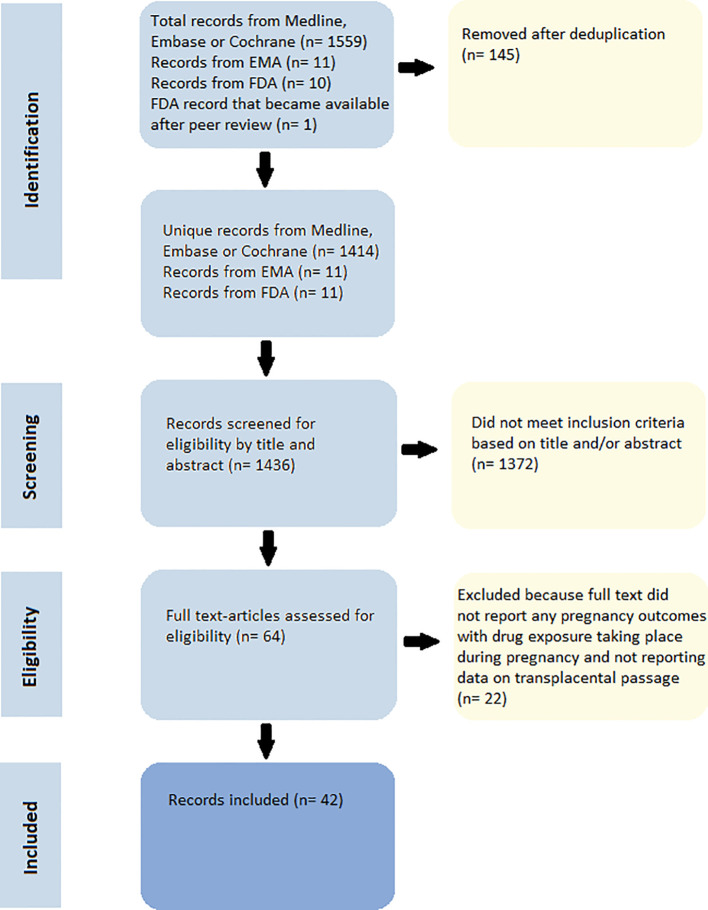
- Two reviewers independently selected studies and resolved discrepancies by discussion; one reviewer extracted data and assessed quality, with SYRCLE’s risk of bias tool used for animal studies. Out of 1436 unique records, 1372 were excluded.
Limitations
- Stated: the major limitation is limited availability of both animal and human studies; human studies had small numbers and often lacked data on BMI, age, smoking, drug dose, administration time, and trimester of exposure, and lacked long-term neonatal follow-up.
- Stated: EMA/FDA data extraction was limited to Europe and the USA, so data from other continents were not captured.
- Evident from the text: all included animal studies had a high risk of bias; no human lactation studies were found; and no data were received from Lareb or the Swiss TIS.
Model-written summary. Check it against the paper before relying on it.
Integrity signals
Registry
Cites
Statistics
Figures
Verification
Claims the paper makes
4 Valid · 4 Not valid · 12 Not checked · 32 Own results and interpretations
Every source the paper cites for this claim was checked and supports it.
In the paper
“Furthermore, a study describing the data in the pharmaceutical company safety databases on pregnant women exposed to glucose lowering drugs including SGLT2 inhibitors was found (46). For Canagliflozin 29 pregnancies were reported of which 14 listed the corresponding pregnancy outcomes:1 congenital anomaly, 2 abortions, 1 fetal demise, 8 normal live births, 2 ongoing pregnancies. For Empagliflozin”
§ Effects of GLP-1 agonists and SGLT2 inhibitors during pregnancy and lactation on offspring outcomes: a systematic review of the evidence > Results > SGLT2 inhibitors during pregnancy
What the sources say
- Supportedcites [46] Benhalima K Mathiesen ER Paldanius PM Mathieu C. The need for appropriate registration of pregnancy outcomes under newer oral glucose-lowering therapies. Diabetes Obes Metab (2018) 20(10): 2477–80. doi: 10.1111/dom.13386 29806119 source
The Methods describe searches of pharmaceutical company safety databases for pregnancies exposed to canagliflozin, empagliflozin and dapagliflozin. Table 1 (rendered under Conclusions in our copy) reports pregnancies for all three and lists outcomes including congenital anomalies, abortions, fetal demise and healthy live births. (LLM, conf=0.93)
plain- Asserted: passes — The authors put it forward as true.
- Checkable: passes — It can be checked against evidence.
- Load-bearing: passes — The paper’s conclusions depend on it.
- Based: passes — The paper gives a reason why it holds.
- Supported
A result the paper reports from its own data — it cites no other source for it, so there is none to check. The quote shows it is in the paper.
In the paper
“None of the SGLT2 inhibitors showed developmental toxicity when a dose not resulting in maternal toxicity was administered during the interval coinciding with the first trimester period of organogenesis except for canagliflozin, where ossification delays of the metatarsal bones were seen ( Table 2 ).”
§ Effects of GLP-1 agonists and SGLT2 inhibitors during pregnancy and lactation on offspring outcomes: a systematic review of the evidence > Results > SGLT2 inhibitors during pregnancy
plainstates a cause- Asserted: passes — The authors put it forward as true.
- Checkable: passes — It can be checked against evidence.
- Load-bearing: passes — The paper’s conclusions depend on it.
- Based: passes — The paper gives a reason why it holds.
In the paper
“In this case, after an uneventful pregnancy, the patient delivered an anatomically normal fetus despite exposure to exenatide during the period of organogenesis.”
§ Effects of GLP-1 agonists and SGLT2 inhibitors during pregnancy and lactation on offspring outcomes: a systematic review of the evidence > Results > GLP-1 agonists during pregnancy
What the sources say
- Not checked — no full text of the sourcecites [33] Williams J Pomeroy NE Pop-Busui R Lash R Douyon L Chames M. Case report: Exenatide use during pregnancy. Endocrinologist (2009) 19(3): 119–21. doi: 10.1097/TEN.0b013e3181a5875e source
plainSingle case- Asserted: passes — The authors put it forward as true.
- Checkable: passes — It can be checked against evidence.
- Load-bearing: unclear — It is unclear whether the paper’s conclusions depend on it.
- Based: passes — The paper gives a reason why it holds.
A result the paper states — it cites no source for it, so there is none to check. The quote shows it is in the paper.
In the paper
“In rats, more severe effects were seen after maternal exposure to semaglutide in the form of visceral abnormalities and major skeletal malformations ( Table 1 ).”
§ Effects of GLP-1 agonists and SGLT2 inhibitors during pregnancy and lactation on offspring outcomes: a systematic review of the evidence > Results > GLP-1 agonists during pregnancy
plainstates a cause- Asserted: passes — The authors put it forward as true.
- Checkable: passes — It can be checked against evidence.
- Load-bearing: passes — The paper’s conclusions depend on it.
- Based: passes — The paper gives a reason why it holds.
None of the sources cited for this claim have been checked yet.
In the paper
“Exendin-4 (GLP1-agonist) was not transported across the maternal-fetal placental interface.”
- Also stated in: § GLP-1 agonists during pregnancy · plain
“When healthy pregnant mice were injected once with fluorescence labeled exendin-4 on gestation day 16. One day later, after euthanasia, the exendin-4 was not detected in any of the fetal tissues (fetus, decidua, placenta, fetal membranes) or maternal uterus.”
§ Effects of GLP-1 agonists and SGLT2 inhibitors during pregnancy and lactation on offspring outcomes: a systematic review of the evidence > Abstract > Results
plain- Asserted: passes — The authors put it forward as true.
- Checkable: passes — It can be checked against evidence.
- Load-bearing: unclear — It is unclear whether the paper’s conclusions depend on it.
- Based: passes — The paper gives a reason why it holds.
- Also stated in: § GLP-1 agonists during pregnancy · plain
28 more claims
Create a free account to see all 52 claims and every source verdict.
- It may state two separate claims as one. 13
- Probably not a substantial claim. 10
- The quote only partly states this claim. 1
Claims other papers make about this one
Each is checked against this paper’s own text: does it say what the citing paper says it does?
The source backs part of the claim, not all of it — or backs it for a different population, condition or comparison.
In the citing paper
“An increased risk of malformations was observed for liraglutide and semaglutide at doses comparable to those administered in humans.13–17”
From Use of GLP1 receptor agonists in early pregnancy and reproductive safety: a multicentre, observational, prospective cohort study based on the databases of six Teratology Information Services (2024) · cites this paper as [17]
Experimental — accuracy not yet measuredThe cited source says what the claim attributes to it.
In the citing paper
“In animal studies, GLP-1RA exposure was associated with reduced fetal growth, delayed skeletal ossification, and reductions in maternal weight gain and food consumption (109).”
From The science of safety: adverse effects of GLP-1 receptor agonists as glucose-lowering and obesity medications (2026) · cites this paper as [109]
The cited source says what the claim attributes to it.
In the citing paper
“According to product labelling, animal studies have indicated a potential for reproductive toxicity at maternally toxic doses for semaglutide, dulaglutide, exenatide and liraglutide.”
Self-check
Percentages, sums and reported differences re-computed from the paper’s own numbers.
Each contradiction between two passages listed here was confirmed by an independent check.
Rated minor: it would not touch a result — a value no result rests on, a p-value that stays on the same side of the significance level, or a conflict that is clerical, resolved elsewhere in the paper, or outside its own findings.
In the paper
§ Effects of GLP-1 agonists and SGLT2 inhibitors during pregnancy and lactation on offspring outcomes: a systematic review of the evidence > Discussion
“For SGLT-2 inhibitors no studies regarding placental transfer were found.”
§ Effects of GLP-1 agonists and SGLT2 inhibitors during pregnancy and lactation on offspring outcomes: a systematic review of the evidence > Discussion
“The ability to cross the rat placenta has been described as low and very limited for sotagliflozin and empagliflozin respectively.”
Citations
Cites
Empagliflozin, Cardiovascular Outcomes, and Mortality in Type 2 Diabetes
Zinman, B., Wanner, C., Lachin, J. M., Fitchett, D., Bluhmki, E., Hantel, S., Mattheus, M., Devins, T., Johansen, O. E., Woerle, H. J., et al. (2015) · New England Journal of Medicine · doi:10.1056/nejmoa1504720 · Cited by 12,315
Liraglutide and Cardiovascular Outcomes in Type 2 Diabetes
Marso, S. P., Daniels, G. H., Brown-Frandsen, K., Kristensen, P., Mann, J. F. E., Nauck, M. A., Nissen, S. E., Pocock, S., Poulter, N. R., Ravn, L. S., et al. (2016) · New England Journal of Medicine · doi:10.1056/nejmoa1603827 · Cited by 7,629
SYRCLE’s risk of bias tool for animal studies
Hooijmans, C. R., Rovers, M. M., de Vries, R. B., Leenaars, M., Ritskes-Hoitinga, M., & Langendam, M. W. (2014) · BMC Medical Research Methodology · doi:10.1186/1471-2288-14-43 · Cited by 4,415
Macintosh, M. C. M., Fleming, K. M., Bailey, J. A., Doyle, P., Modder, J., Acolet, D., Golightly, S., & Miller, A. (2006) · BMJ · doi:10.1136/bmj.38856.692986.ae · Cited by 673
Fetal and neonatal outcomes of diabetic pregnancies
Yang, J., Cummings, E. A., OʼConnell, C., & Jangaard, K. (2006) · Obstetrics & Gynecology · doi:10.1097/01.aog.0000231688.08263.47 · Cited by 352
Poor pregnancy outcome in women with type 2 diabetes
Clausen, T. D., Mathiesen, E., Ekbom, P., Hellmuth, E., Mandrup-Poulsen, T., & Damm, P. (2005) · Diabetes Care · doi:10.2337/diacare.28.2.323 · Cited by 318
Hawthorne, G., Robson, S., Ryall, E. A., Sen, D., Roberts, S. H., & Platt, M. P. W. (1997) · BMJ · doi:10.1136/bmj.315.7103.279 · Cited by 276 · cited 2×
“The presence of type 2 diabetes or maternal obesity during pregnancy increases the risk of adverse pregnancy outcomes and birth defects (1 – 6).”
BackgroundPlacental structure, function and drug transfer
Griffiths, S. K., & Campbell, J. P. (2015) · Continuing Education in Anaesthesia Critical Care & Pain · doi:10.1093/bjaceaccp/mku013 · Cited by 272
Perinatal mortality in Type 2 diabetes mellitus
Cundy, T., Gamble, G., Townend, K., Henley, P. G., MacPherson, P., & Roberts, A. B. (2000) · Diabetic Medicine · doi:10.1046/j.1464-5491.2000.00215.x · Cited by 268
Glucagon-like peptide analogues for type 2 diabetes mellitus
Shyangdan, D. S., Royle, P., Clar, C., Sharma, P., Waugh, N., & Snaith, A. (2011) · Cochrane Database of Systematic Reviews · doi:10.1002/14651858.cd006423.pub2 · Cited by 246
Research works printed but not linked: 10
- Ertugliflozin Drugs and Lactation Database (2023). Available at: https://www.ncbi.nlm.nih.gov/books/NBK500973/pdf/Bookshelf_NBK500973.pdf (Accessed 2023 20th of March).
- Ivanišević M Herman M Horvatiček M Lovrenčić Vučić M Đelmiš J. Pregnancy outcome and liraglutide levels in serum and umbilical vein blood of a woman with type 2 diabetes. A case report. Gynaecol Perinatol (2018) 27(3-4): 70–2.
- Dulaglutide Drugs and Lactation Database (2023). Available at: https://www.ncbi.nlm.nih.gov/books/NBK500979/pdf/Bookshelf_NBK500979.pdf (Accessed 2023 20th of March).
- Exenatide Drugs and Lactation Database (2023). Available at: https://www.ncbi.nlm.nih.gov/books/NBK500978/pdf/Bookshelf_NBK500978.pdf (Accessed 2023 20th of March).
- Liraglutide Drugs and Lactation Database (2023). Available at: https://www.ncbi.nlm.nih.gov/books/NBK500977/pdf/Bookshelf_NBK500977.pdf (Accessed 2023 20th of March).
- Lixisenatide Drugs and Lactation Database (2023). Available at: https://www.ncbi.nlm.nih.gov/books/NBK500975/pdf/Bookshelf_NBK500975.pdf (Accessed 2023 20th of March).
- Semaglutide Drugs and Lactation Database (2023). Available at: https://www.ncbi.nlm.nih.gov/books/NBK500980/pdf/Bookshelf_NBK500980.pdf (Accessed 2023 20th of March).
- Canagliflozin Drugs and Lactation Database (2023). Available at: https://www.ncbi.nlm.nih.gov/books/NBK500623/pdf/Bookshelf_NBK500623.pdf (Accessed 2023 20th of March).
- Dapagliflozin Drugs and Lactation Database (2023). Available at: https://www.ncbi.nlm.nih.gov/books/NBK500971/pdf/Bookshelf_NBK500971.pdf (Accessed 2023 20th of March).
- Empagliflozin Drugs and Lactation Database (2023). Available at: https://www.ncbi.nlm.nih.gov/books/NBK500972/pdf/Bookshelf_NBK500972.pdf (Accessed 2023 20th of March).
Cited by
Items 101–168 of 168
Position Statement on Cardiometabolic Health Across the Woman's Life Course – 2025
de Oliveira, G. M. M., de Almeida, M. C. C., Valério, C. M., Giuffrida, F. M. A., Espíndola, L. N., Izar, M. C. D. O., Marques-Santos, C., Freire, C. M. V., Albuquerque, C. J. D. M., Chagas, A. C. P., et al. (2025) · Arquivos Brasileiros de Cardiologia · doi:10.36660/abc.20250615i · Cited by 2
Dib, S., Savage, M. J., Adams, D., Davies, M. J., Forde, R., Flynn, A. C., Franks, P. W., Harte, A., Mallik, R., Ozanne, S. E., et al. (2026) · The Lancet Obstetrics Gynaecology & Women s Health · doi:10.1016/s3050-5038(26)00266-9 · Cited by 1
Metabolic Dysfunction–Associated Steatotic Liver Disease in Pregnancy
Han, H., Marcus, P. S., & Fong, T. (2025) · Obstetrical & Gynecological Survey · doi:10.1097/ogx.0000000000001435 · Cited by 2
Kidney outcomes are altered by preconception weight modulation in rodent mothers with obesity
Rodrigo, N., Chen, H., Pollock, C. A., & Glastras, S. J. (2024) · Scientific Reports · doi:10.1038/s41598-024-68234-9 · Cited by 1
Vardhan, S., Arnott, C. G., Chen, A., Frolova, A. I., Meka, R. A., Raghuraman, N., Vijay, A., Yoo, S. G., & Mahmoud, Z. (2026) · American Journal of Preventive Cardiology · doi:10.1016/j.ajpc.2026.101471 · Cited by 4
Kettner, J. T., Donnelly, E. T., & Maes, M. L. (2025) · Journal of Pharmacy Practice · doi:10.1177/08971900251376795 · Cited by 10
Liu, X., Xiong, B., Yang, R., Wang, H., & Liu, Y. (2026) · Endocrine Connections · doi:10.1530/ec-26-0280 · Cited by 1
Posicionamento sobre a Saúde Cardiometabólica ao Longo do Ciclo de Vida da Mulher – 2025
de Oliveira, G. M. M., de Almeida, M. C. C., Valério, C. M., Giuffrida, F. M. A., Espíndola, L. N., Izar, M. C. D. O., Marques-Santos, C., Freire, C. M. V., Albuquerque, C. J. D. M., Chagas, A. C. P., et al. (2025) · Arquivos Brasileiros de Cardiologia · doi:10.36660/abc.20250615 · Cited by 5
Walter, J. M., Parajon, T., McDonough, E., Dambly, N., Sedgwick, A., & Choe, J. (2024) · Side effects of drugs annual · doi:10.1016/bs.seda.2024.08.001
Maternal Cardiac Function in Pregnancies with Metabolic Disorders
Patel, D., & Savvidou, M. D. (2024) · European Cardiology Review · doi:10.15420/ecr.2023.28 · Cited by 2
Maslin, K., Shawe, J., Blowers, S., Ceulemans, M., Hart, K. H., Schoenmakers, S., Rottenstreich, A., Hopper, H., Jensterle, M., Flynn, A. C., et al. (2026) · Obesity Reviews · doi:10.1111/obr.70203 · Cited by 4
Self-citationHariharan, S., Gallo, M., Roca, A. S., Crimmins, S. D., & Reece, E. A. (2026) · American Journal of Perinatology · doi:10.1055/a-2852-4938
Optimisation of maternal cardiometabolic outcomes after hypertensive disorders of pregnancy
Ling, H. Z., & Johnson, M. R. (2026) · Women s Health · doi:10.1177/17455057261484759
Liu, P., Huang, S., Xie, X., Chen, J., Wu, S., Huang, L., & Xiao-jie, H. (2026) · European Journal of Medicinal Chemistry · doi:10.1016/j.ejmech.2026.118794 · Cited by 2
Pregnancy and breastfeeding in the mother with cardiomyopathy
Coldea, B. M., Middleton, L., Aiken, C., & Bhagra, C. (2025) · JRSM Cardiovascular Disease · doi:10.1177/20480040251352901
Brophy, K., Nunes, J. A. W., Hawley, S. T., Hladunewich, M., Kalpakjian, C. Z., Powell, C. C., & Oliverio, A. L. (2025) · Kidney Medicine · doi:10.1016/j.xkme.2025.101222
Role of insulin in female reproduction
Tebeau, K. S., & Polotsky, A. J. (2026) · Current Opinion in Obstetrics & Gynecology · doi:10.1097/gco.0000000000001121
Zica, L. P., & Ramos, T. C. M. D. S. (2026) · Revista Contemporânea · doi:10.56083/rcv6n10-003
de Matos, S. M. S., Faccini, L. S., Vianna, F. S. L., & Fraga, L. R. (2026) · Frontiers in Endocrinology · doi:10.3389/fendo.2026.1911235
Varra, F., Theodosis‐Nobelos, P., Varra, V., & Varras, M. N. (2026) · Medicina · doi:10.3390/medicina62081445
Outcomes of pregnancies complicated by type 2 diabetes
Scairati, R., McEvoy, R. P., Newman, C., & Dunne, F. (2025) · Best Practice & Research Clinical Endocrinology & Metabolism · doi:10.1016/j.beem.2025.102054 · Cited by 4
Vlasak, A. L., Lindsey, P., Ilstad-Minnihan, A., & Rhoton-Vlasak, A. S. (2026) · Reproductive Sciences · doi:10.1007/s43032-026-02136-1
Glycemic Patterns and Breastfeeding With Type 1 or Type 2 Diabetes
Greenberg, V. (2025) · Diabetes Spectrum · doi:10.2337/dsi25-0012 · Cited by 2
Kozhukhov, N. D., Karpova, A. R., Sadretdinova, A. A., Kodoeva, D. G., Kardanova, A. S., Прошина, А. С., Avbakirova, A. S., Kilichev, D. R., Metov, I. S., Magomedov, L. M., et al. (2025) · Obstetrics Gynecology and Reproduction · doi:10.17749/2313-7347/ob.gyn.rep.2025.657 · Cited by 1
Zhong, Q., Wu, K. W., & Eri, J. (2026) · Elsevier eBooks · doi:10.1016/b978-0-443-44037-3.01001-0
Role of Incretin Mimetics in the Management of Obesity
Garcha, S. C., & Kalra, S. (2025) · Springer eBooks · doi:10.1007/978-981-96-1651-0_4 · Cited by 1
GLP-1 Receptor Agonists and Reproductive Health
Porterfield, F., Mulligan, J., Salim, K., Olubowale, O. O., & Stanford, F. C. (2026) · Endocrinology and Metabolism Clinics of North America · doi:10.1016/j.ecl.2026.07.003 · Cited by 1
Garabédian, C., Sénat, M., Sananès, N., Berveiller, P., Brillac, T., Lous, M. L., Lemaître, M., Mitanchez, D., Morel, O., Paquin, S., et al. (2025) · Gynécologie Obstétrique Fertilité & Sénologie · doi:10.1016/j.gofs.2025.12.001 · Cited by 1
Hashmani, F. N., Black, K. I., Sweeting, A., Hall, K. A., Ilomaki, J., & Grzeskowiak, L. E. (2026) · Pharmacoepidemiology and Drug Safety · doi:10.1002/pds.70320
Perspectives of Obstetricians and Gynaecologists on the Use of Weight Loss Medications
Nolan, C. E., Petch, S., Joyce, N., Glover, L. E., & Crosby, D. A. (2025) · Reproductive Female and Child Health · doi:10.1002/rfc2.70034
Sward, L. B., Phillips, A. M., Thurlby, A. C., Cooper, J., Wagner, T. W., & Magann, E. F. (2026) · Obstetrical & Gynecological Survey · doi:10.1097/ogx.0000000000001579
Hoffman, K. K., MITCHELL, J. A., Simkowski, J. M., Hameed, A. B., Waks, A. B., Faulkenberg, K. D., & Page, R. L., II (2025) · Journal of Cardiac Failure - Intersections · doi:10.1016/j.yjcafi.2025.10.012
The Role of SGLT2 Inhibitors in the Management of Diabetic Retinopathy: A Literature Review
Babović, S., Denda, N., Maletin, N., Kusturica, M. P., Zečević, D., & Raskovic, A. (2026) · Die Pharmazie · doi:10.31083/pharmazie51803
Effects of semaglutide on vessel morphology: Studies on the chicken chorioallantoic membrane
Chen, P.-H., Abood, S., & Bloom, S. H. (2025) · Microvascular Research · doi:10.1016/j.mvr.2025.104880 · Cited by 1
de Carvalho, G. F., de Sousa, G. M. B., Moraes, G., Dorneles, H. B. F., Ferreira, L. C. L., Cury, G. A. A., Carvalho, M. D. O. P., & Lima, M. C. T. L. (2025) · Contribuciones a las Ciencias Sociales · doi:10.55905/revconv.18n.1-235 · Cited by 1
Bally, L., & Karagounis, L. G. (2025) · Current Opinion in Clinical Nutrition & Metabolic Care · doi:10.1097/mco.0000000000001134
Balasubaramaniam, V., Scobie, M., O’Kane, M. P. M., Graham, Y., Robertson, A. G., & Mahawar, K. K. (2026) · Nutrients · doi:10.3390/nu18162643
Schäfer-Graf, U. (2024) · Geburtshilfe und Frauenheilkunde · doi:10.1055/a-2369-7654 · Cited by 1
Kuoni, S., Dolder, A., Lehmann, R., Steiner, R., Ochsenbein-Kölble, N., & Simões‐Wüst, A. P. (2026) · Biomedicine & Pharmacotherapy · doi:10.1016/j.biopha.2026.119097 · Cited by 1
Type 2 Diabetes in Pregnancy: Management and Novel Therapies
Wilkie, G. (2026) · Clinical Obstetrics & Gynecology · doi:10.1097/grf.0000000000001008
The Blood Pressure Postpartum trial: lifestyle, hypertensive disorders of pregnancy, and nuance
Ahmed, A. M., Jensen, E. T., & Pajewski, N. M. (2026) · The Lancet Obstetrics Gynaecology & Women s Health · doi:10.1016/s3050-5038(26)00017-8
Peel, A., Balalis, G., Sousa, S. D., & Norman, R. J. (2024) · Elsevier eBooks · doi:10.1016/b978-0-443-21477-6.00236-4
Phan, H. (2025) · Springer eBooks · doi:10.1007/978-3-031-88835-9_15
Che cosa non sappiamo sugli SGLT-2 inibitori
Chiriacò, M., Chatzianagnostou, K., Emdin, M., & Prato, S. D. (2024) · L Endocrinologo · doi:10.1007/s40619-024-01510-y
Vanlaer, Y., de Cauter, E. V., Embo, N., & Benhalima, K. (2026) · BMC Medicine · doi:10.1186/s12916-026-05182-3
SGLT2 inhibitors in type 2 diabetes mellitus: a pharmacist’s guide to optimised care
Jordaan, B., & Outhoff, K. (2025) · SA pharmaceutical journal. · doi:10.36303/sapj.2676
Coats, L., Campbell, N., Elsayed, N. S., do Carmo, J., & Alexander, B. T. (2026) · American Journal of Physiology-Renal Physiology · doi:10.1152/ajprenal.00126.2026
Agoniste du GLP-1 durant la grossesse. Quels risques ? Des données encore incomplètes
Halimi, S. (2026) · Médecine des Maladies Métaboliques · doi:10.1016/j.mmm.2026.06.014
Baletic, D., Božić, N., Kusturica, M. P., Tomić, L., Todorović, V. I., Vasović, S., & Rašković, A. (2026) · Current Medical Research and Opinion · doi:10.1080/03007995.2026.2690834 · Cited by 1
SGLT2 inhibitors: mechanisms, physiology and pharmacology, and clinical applications
Zheng, X.-T., Xie, H.-Y., Wang, X.-H., Zhao, Y., Yang, J.-Y., Liu, Y.-X., Yuan, X.-L., Tang, H.-F., Jiang, Z., & Hu, H.-J. (2026) · Molecular Biomedicine · doi:10.1186/s43556-026-00604-3
Glucagon-like receptor-1 agonists and impotence: A meta-analysis
Mirghani, H. O., & AlQurashi, A. (2026) · World Journal of Methodology · doi:10.5662/wjm.119385
Zajdenverg, L., Santos, V. M., Rodrigues, A. C. M., Previdelli, L. K., & Negrato, C. A. (2026) · Diabetology & Metabolic Syndrome · doi:10.1186/s13098-026-02235-8
Hidradenitis Suppurativa from Preconception to Lactation: Clinical Treatment Decision-Making Review
Lewandowski, M., Szablewska, W., Sławińska, M., Kujach, A., Nowicki, R. J., & Barańska‐Rybak, W. (2026) · Dermatology and Therapy · doi:10.1007/s13555-026-01909-5
Kamieniak, A., & Gieroba, D. (2025) · International Journal of Innovative Technologies in Social Science · doi:10.31435/ijitss.3(47).2025.3884
Weight management during pregnancy, what is new?
Dib, S., Jones, D. L., Vounzoulaki, E., & Meek, C. L. (2025) · Current Opinion in Clinical Nutrition & Metabolic Care · doi:10.1097/mco.0000000000001127 · Cited by 3
Targeting metabolism to protect fertility and healthy pregnancy with SGLT2 inhibitors and GLP-1RAs
Flanary, S. M., Yoshida, K., Alejandro, E. U., & Townsend, D. (2026) · Current Opinion in Physiology · doi:10.1016/j.cophys.2026.100956
Eine neue Ära der Diabetestherapie – Komorbiditäten im Fokus!
Lee-Barkey, Y. H., Arbi, A., Parizova, S., Danch, E., Willecke, F., Stratmann, B., & Tan, S. (2025) · Gefässchirurgie · doi:10.1007/s00772-025-01211-2
Freire-Agulleiro, Ó., Lee, T. H.-Y., & Quarta, C. (2026) · Reviews in Endocrine and Metabolic Disorders · doi:10.1007/s11154-026-10029-6
Adverse pregnancy outcomes and long-term cardiovascular risk: lifelong connections
Giorgione, V., Parikh, N. I., Pedicino, D., & Thilaganathan, B. (2026) · European Heart Journal · doi:10.1093/eurheartj/ehag654 · Cited by 2
Rajamoorthi, A., Hollingsworth, T., Guan, Y., Pinney, S. E., & Simmons, R. A. (2026) · bioRxiv (Cold Spring Harbor Laboratory) · doi:10.64898/2026.06.07.730723
Almaradweh, S., & Mousa, E. (2026) · Cureus · doi:10.7759/cureus.111915 · Cited by 1
EFEITOS DA LIRAGLUTIDA E SEMAGLUTIDA DURANTE A GESTAÇÃO
Souza, A. M., de Carvalho, A. D., da Silva, A. F., Molina, B. C., Almeida, B. S., de Barros, C. M. C. A., Lençone, G., da Silva, I. C. L., Casanova, J. T., de Campos, K. H. A. S., et al. (2024) · Brazilian Journal of Implantology and Health Sciences · doi:10.36557/2674-8169.2024v6n7p2485-2491
Markovic, E. S., Ward, H., Khanuja, K., & McLaren, R. A. (2026) · American Journal of Perinatology · doi:10.1055/a-2832-1764
Postpartum Care for Patients With Diabetes: A Comprehensive and Whole-Life Approach
Huynh, K. Z., & Han, C. S. (2026) · Clinical Obstetrics & Gynecology · doi:10.1097/grf.0000000000001015
Koshy, R. R., Kumar, A. A., Maliyil, B. T., Regie, R., Jairaj, S., & Satish, M. T. (2026) · Middle East Fertility Society Journal · doi:10.1186/s43043-026-00316-2 · Cited by 2
Wallentowitz, L., García, M. G., Atorrasagasti, C., Harms, C., Huhn, E. A., Roser, P., Verlohren, S., Giesen, E. M., & Blois, S. M. (2026) · Reviews in Endocrine and Metabolic Disorders · doi:10.1007/s11154-026-10053-6 · Cited by 4
Lapolla, A., & Torlone, E. (2026) · Expert Review of Endocrinology & Metabolism · doi:10.1080/17446651.2026.2707565
Metadata
- Authors
- Muller, D. R. P., Stenvers, D. J., Malekzadeh, A., Holleman, F., Painter, R. C., & Siegelaar, S. E.
- Affiliations
- Amsterdam UMC Location University of Amsterdam (NL)
- Amsterdam University Medical Centers (NL)
- Corresponding author
- Muller, Dion R. P.
- Venue
- Frontiers in Endocrinology
- Publisher
- Frontiers Media SA
- Published
- 2023-10-10
- Volume
- 14
- Pages
- 1215356-1215356
- ISSN
- 1664-2392 (ISSN-L)
- PMC
- PMC10597691
- OpenAlex
- W4387477465
- Cited by
- 174
- References
- 41
- Citations by year
- 2026: 63 · 2025: 69 · 2024: 42
- FWCI
- 8.60
- Type
- journal article
- Language
- en
- Open access
- gold
- doi.org
- Licence
- Locations
- Frontiers in Endocrinology (publishedVersion, cc-by)
- PubMed Central (publishedVersion, cc-by)
- PubMed (publishedVersion)
- Pure Amsterdam UMC (acceptedVersion, cc-by)
- DOAJ (DOAJ: Directory of Open Access Journals) (submittedVersion, cc-by-sa)
- Topics
- Health Sciences › Medicine › Public Health, Environmental and Occupational Health › Pregnancy and Medication Impact
- Health Sciences › Medicine › Endocrinology, Diabetes and Metabolism › Diabetes Treatment and Management
- Health Sciences › Medicine › Obstetrics and Gynecology › Gestational Diabetes Research and Management
- Keywords
- GLP-1 receptor agonists, SGLT2 inhibitors, pregnancy, lactation, drug safety, offspring outcomes, congenital malformations, fetal growth, placental transfer, breast milk excretion, exenatide, exendin-4, liraglutide, dapagliflozin, empagliflozin, drug-induced nephrotoxicity
- MeSH terms
- Liraglutide, Sodium-Glucose Transporter 2 Inhibitors, Exenatide, Animals, Breast Feeding, Diabetes Mellitus, Type 2, Female, Humans, Hypoglycemic Agents, Lactation, Placenta, Pregnancy, Rats
About these checks
Registry, retraction, Cites and statistics results are computed, not judged, with one exception: a printed reference that no index lists is read once by a model before it counts as a citation error. Claims are extracted by a model and kept only when their quote appears verbatim in the text; each cited source is then checked, with a model’s help, for whether it says what the claim relies on. Those verdicts can be wrong — read the claim’s quote and the cited source before relying on one.
A language model drew the claims from the paper on 2026-09-28, under version 3 of the claim definition (model deepseek-v4.1-flash, prompt extract-v3).
A second model labelled each claim on 2026-09-28 (model jev-1.13-20260917, definition revision gold-guideline-v0.2).
Cited sources are checked with a language model’s help (gpt-6-sol).
Statistics and arithmetic are recomputed, not judged.
Confidence bands are shown only for fields calibrated on our annotated test set. None is calibrated yet, so no band is shown.
What counts as a claim ›How we measure confidence ›How we check this ›
Are you an author, or do you see a problem with this page? Request a review
Data sources
Bibliographic data: Semantic Scholar, OpenAlex, Crossref.
Contains information from the Semantic Scholar Academic Graph Datasets, made available under the ODC Attribution License (ODC-BY 1.0).
Semantic Scholar’s data is described in: Kinney, R., et al. (2023). The Semantic Scholar Open Data Platform. arXiv:2301.10140.
