

The DOI matches its Crossref record; 13 of the 13 references it cites were found in a registry or an index.
Microbiome−mediated crosstalk between T2DM and MASLD: a translational review focused on function
Abstract
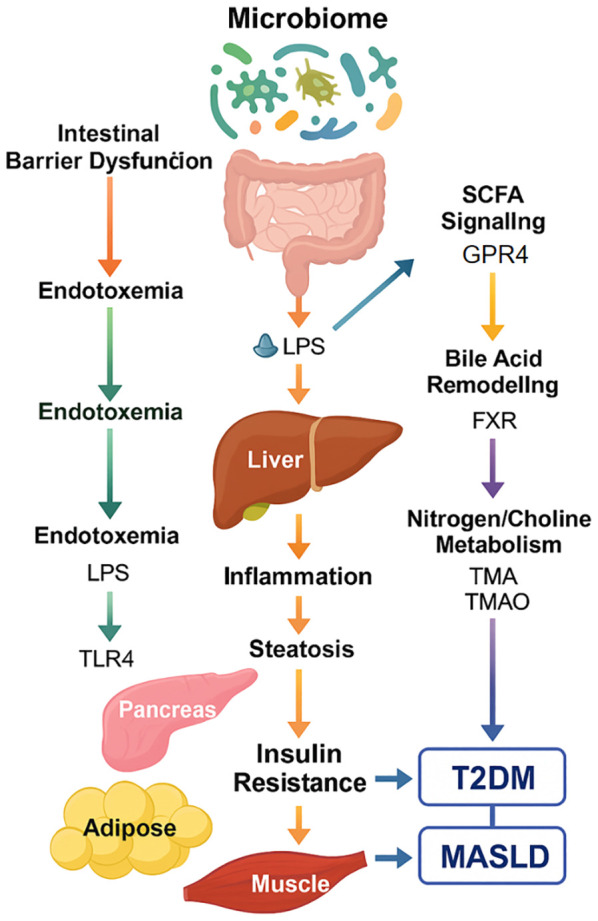
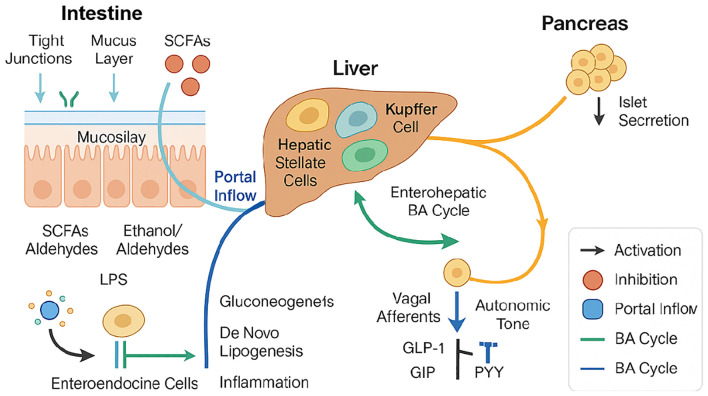
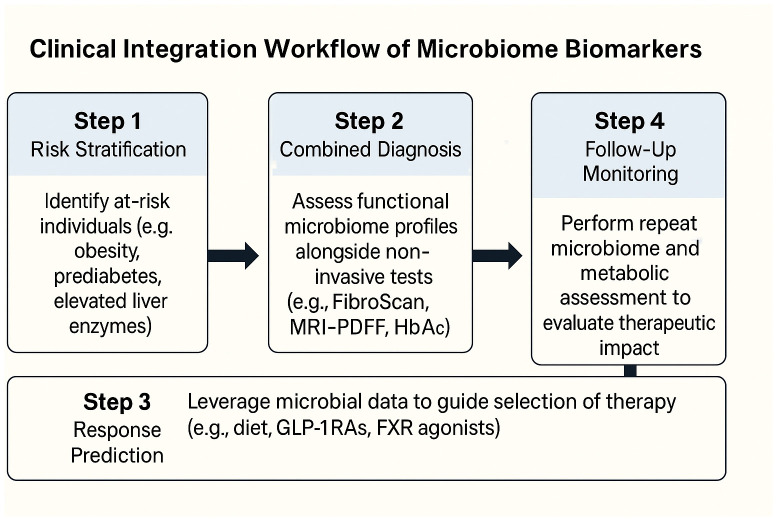
Type 2 diabetes mellitus (T2DM) and metabolic dysfunction–associated steatotic liver disease (MASLD) frequently co-occur and aggravate one another through shared pathways of insulin resistance, low-grade inflammation and disordered lipid handling. Framing their interaction through the gut–liver–pancreas axis, this review synthesizes recent progress with a function-first emphasis, moving beyond taxonomic lists to the microbial outputs most consistently linked to dual metabolic–hepatic endpoints. We summarize how short-chain fatty acids (SCFAs), bile acids (BAs), lipopolysaccharide (LPS) and other microbe-associated molecular patterns, branched-chain amino-acid (BCAA) catabolites, trimethylamine N-oxide (TMAO) and endogenous ethanol reach the liver via portal inflow or the enterohepatic BA cycle and act on epithelial, immune and endocrine interfaces, including the farnesoid X receptor (FXR), G-protein–coupled BA receptor 1 (TGR5) and fibroblast growth factor 19/15 signaling. Mechanistic routes—barrier dysfunction and endotoxaemia; SCFA signaling with effects on enteroendocrine tone and substrate flux; BA remodeling that resets hepatic and pancreatic set-points; and nitrogen/choline and ethanol pathways that promote lipotoxic injury—offer biologically coherent explanations for parallel trajectories of hyperglycemia and steatosis/inflammation. We appraise therapeutic modulation spanning diet and fermentable substrates, live biotherapeutics/postbiotics, BA-targeting drugs, fecal microbiota transplantation and metabolic/bariatric surgery, and we outline clinically actionable biomarker opportunities using function-based panels (fermentative capacity, BA transformation, inflammatory ligands, nitrogen/methyl flux) integrated with host metabolites and genetics for diagnosis, risk stratification and response prediction. By advocating standardized reporting, careful control of diet/medications and composite metabolic–hepatic endpoints in prospective trials, this review provides a practical framework to accelerate translation from association to targeted prevention and therapy that improves glycemic control and MASLD activity in parallel.
Overview
The claims and statistics of this paper haven’t been checked yet.
Run the check — free, no account needed. It reads the open-access text and checks the sources it cites.
Integrity signals
Registry
Cites
Statistics
Figures
Verification
Claims the paper makes
The claims and statistics of this paper haven’t been checked yet.
Run the check — free, no account needed. It reads the open-access text and checks the sources it cites.
Claims other papers make about this one
Each is checked against this paper’s own text: does it say what the citing paper says it does?
In the citing paper
“Butyrate functions as a potent histone deacetylase (HDAC) inhibitor, capable of epigenetically regulating gene expression in the intestinal epithelium and liver, thereby modulating systemic metabolic homeostasis99.”
From Emerging strategies in senotherapeutics: from broad-spectrum senolysis to precision reprogramming (2026) · cites this paper as [99]
Self-check
Percentages, sums and reported differences re-computed from the paper’s own numbers.
The self-check needs the paper’s full text.
Citations
Cites
A multisociety Delphi consensus statement on new fatty liver disease nomenclature
Rinella, M. E., Lazarus, J. V., Ratziu, V., Francque, S. M., Sanyal, A. J., Kanwal, F., Romero, D., Abdelmalek, M. F., Anstee, Q. M., Arab, J. P., et al. (2023) · Hepatology · doi:10.1097/hep.0000000000000520 · Cited by 3,476
A phase 3, randomized, controlled trial of resmetirom in NASH with liver fibrosis
Harrison, S. A., Bedossa, P., Guy, C. D., Schattenberg, J. M., Loomba, R., Taub, R., Labriola, D., Moussa, S. E., Neff, G. W., Rinella, M. E., et al. (2024) · New England Journal of Medicine · doi:10.1056/nejmoa2309000 · Cited by 2,084
Phase 3 Trial of Semaglutide in Metabolic Dysfunction–Associated Steatohepatitis
Sanyal, A. J., Newsome, P. N., Kliers, I., Østergaard, L. H., Long, M. T., Kjær, M. S., Cali, A. M. G., Bugianesi, E., Rinella, M. E., Roden, M., et al. (2025) · New England Journal of Medicine · doi:10.1056/nejmoa2413258 · Cited by 1,115
Tirzepatide for metabolic dysfunction-associated steatohepatitis with liver fibrosis
Loomba, R., Hartman, M. L., Lawitz, E. J., Vuppalanchi, R., Boursier, J., Bugianesi, E., Yoneda, M., Behling, C., Cummings, O. W., Tang, Y., et al. (2024) · New England Journal of Medicine · doi:10.1056/nejmoa2401943 · Cited by 1,005
Zelniker, T. A., Wiviott, S. D., Raz, I., Im, K., Goodrich, E. L., Furtado, R. H. M., Bonaca, M. P., Mosenzon, O., Kato, E. T., Cahn, A., et al. (2019) · Circulation · doi:10.1161/circulationaha.118.038868 · Cited by 781
Daily sampling reveals personalized diet-microbiome associations in humans
Johnson, A. J., Vangay, P., Al-Ghalith, G. A., Hillmann, B. M., Ward, T. L., Shields-Cutler, R. R., Kim, A. D., Shmagel, A. K., Syed, A. N., Walter, J., et al. (2019) · Cell Host & Microbe · doi:10.1016/j.chom.2019.05.005 · Cited by 742
Bonnardel, J., T’Jonck, W., Gaublomme, D., Browaeys, R., Scott, C. L., Martens, L., Vanneste, B., De Prijck, S., Nedospasov, S. A., Kremer, A., et al. (2019) · Immunity · doi:10.1016/j.immuni.2019.08.017 · Cited by 631
Lassailly, G., Caiazzo, R., Ntandja-Wandji, L.-C., Gnemmi, V., Baud, G., Verkindt, H., Ningarhari, M., Louvet, A., Leteurtre, E., Raverdy, V., et al. (2020) · Gastroenterology · doi:10.1053/j.gastro.2020.06.006 · Cited by 622
Bile Acids as Hormones: The FXR-FGF15/19 Pathway
Kliewer, S. A., & Mangelsdorf, D. J. (2015) · Digestive Diseases · doi:10.1159/000371670 · Cited by 424
Aminian, A., Al-Kurd, A., Wilson, R., Bena, J., Fayazzadeh, H., Singh, T., Albaugh, V. L., Shariff, F. U., Rodriguez, N. A., Jin, J., et al. (2021) · JAMA · doi:10.1001/jama.2021.19569 · Cited by 375
Research works printed but not linked: 87
- Ferdous, 2024, Pathophysiological relationship between type 2 diabetes mellitus and metabolic dysfunction-associated steatotic liver disease: novel therapeutic approaches, Int J Mol Sci, 25, 10.3390/ijms25168731 · DOI
- Le, 2022, 2019 Global NAFLD prevalence: A systematic review and meta-analysis, Clin Gastroenterol Hepatol, 20, 2809, 10.1016/j.cgh.2021.12.002 · DOI · Paper page
- Leith, 2024, Metabolic dysfunction-associated steatotic liver disease and type 2 diabetes: A deadly synergy, touchREV Endocrinol, 20, 5, 10.17925/EE.2024.20.2.2 · DOI
- Sanyal, 2024, Cardiovascular disease in patients with metabolic dysfunction-associated steatohepatitis compared with metabolic dysfunction-associated steatotic liver disease and other liver diseases: A systematic review, Am Heart J Plus, 41, 10.1016/j.ahjo.2024.100386 · DOI
- De Col, 2024, Underlying mechanisms behind the brain-gut-liver axis and metabolic-associated fatty liver disease (MAFLD): an update, Int J Mol Sci, 25, 10.3390/ijms25073694 · DOI
- Hsu, 2023, The gut-liver axis and gut microbiota in health and liver disease, Nat Rev Microbiol, 21, 10.1038/s41579-023-00904-3 · DOI · Paper page
- Marroncini, 2024, Gut-liver-pancreas axis crosstalk in health and disease: from the role of microbial metabolites to innovative microbiota manipulating strategies, Biomedicines, 12, 10.3390/biomedicines12071398 · DOI
- Zhai, 2021, Gut-microbial metabolites, probiotics and their roles in type 2 diabetes, Int J Mol Sci, 22, 10.3390/ijms222312846 · DOI
- Chiang, 2020, Bile acid receptors FXR and TGR5 signaling in fatty liver diseases and therapy, Am J Physiol Gastrointest Liver Physiol, 318, 10.1152/ajpgi.00223.2019 · DOI · Paper page
- Lin, 2025, Crosstalk between bile acids and intestinal epithelium: multidimensional roles of farnesoid X receptor and takeda G protein receptor 5, Int J Mol Sci, 26, 10.3390/ijms26094240 · DOI
- Fleishman, 2024, Bile acid metabolism and signaling in health and disease: molecular mechanisms and therapeutic targets, Signal Transduct Target Ther, 9, 97, 10.1038/s41392-024-01811-6 · DOI
- He, 2020, Short-chain fatty acids and their association with signalling pathways in inflammation, glucose and lipid metabolism, Int J Mol Sci, 21, 10.3390/ijms21176356 · DOI
- Surugihalli, 2023, Branched-chain amino acids alter cellular redox to induce lipid oxidation and reduce de novo lipogenesis in the liver, Am J Physiol Endocrinol Metab, 324, 10.1152/ajpendo.00307.2022 · DOI
- Vancamelbeke, 2017, The intestinal barrier: a fundamental role in health and disease, Expert Rev Gastroenterol Hepatol, 11, 10.1080/17474124.2017.1343143 · DOI
- Keogh, 2021, Role of pattern recognition receptors and the microbiota in neurological disorders, J Physiol, 599, 10.1113/JP279771 · DOI
- Chen, 2017, Dietary fibre-based SCFA mixtures promote both protection and repair of intestinal epithelial barrier function in a Caco-2 cell model, Food Funct, 8, 10.1039/c6fo01532h · DOI
- Guan, 2022, Bile acid coordinates microbiota homeostasis and systemic immunometabolism in cardiometabolic diseases, Acta Pharm Sin B, 12, 10.1016/j.apsb.2021.12.011 · DOI
- Panzitt, 2021, FXR in liver physiology: Multiple faces to regulate liver metabolism, Biochim Biophys Acta Mol Basis Dis, 1867, 10.1016/j.bbadis.2021.166133 · DOI
- Xie, 2020, Enteroendocrine hormone secretion and metabolic control: importance of the region of the gut stimulation, Pharmaceutics, 12, 10.3390/pharmaceutics12090790 · DOI
- Zsombok, 2024, Sympathetic circuits regulating hepatic glucose metabolism: where we stand, Physiol Rev, 104, 85, 10.1152/physrev.00005.2023 · DOI
- Diaz-Trastoy, 2020, GLP1 receptor agonist and SGLT2 inhibitor combination: an effective approach in real-world clinical practice, Clin Ther, 42, e1, 10.1016/j.clinthera.2019.12.012 · DOI
- Gourdy, 2023, Combining glucagon-like peptide-1 receptor agonists (GLP-1RAs) and sodium-glucose cotransporter-2 inhibitors (SGLT2is) in patients with type 2 diabetes mellitus (T2DM), Cardiovasc Diabetol, 22, 10.1186/s12933-023-01798-4 · DOI
- Turjeman, 2025, From big data and experimental models to clinical trials: Iterative strategies in microbiome research, Cell, 188, 10.1016/j.cell.2025.01.038 · DOI
- Tillett, 2025, SCFA biotherapy delays diabetes in humanized gnotobiotic mice by remodeling mucosal homeostasis and metabolome, Nat Commun, 16, 2893, 10.1038/s41467-025-58319-y · DOI
- Liu, 2024, Integration of polygenic and gut metagenomic risk prediction for common diseases, Nat Aging, 4, 10.1038/s43587-024-00590-7 · DOI
- Mirzayi, 2021, Reporting guidelines for human microbiome research: the STORMS checklist, Nat Med, 27, 10.1038/s41591-021-01552-x · DOI
- Nychas, 2025, Discovery of robust and highly specific microbiome signatures of non-alcoholic fatty liver disease, Microbiome, 13, 10.1186/s40168-024-01990-y · DOI
- Ruuskanen, 2022, Gut microbiome composition is predictive of incident type 2 diabetes in a population cohort of 5,572 finnish adults, Diabetes Care, 45, 10.2337/dc21-2358 · DOI
- Marizzoni, 2020, Short-chain fatty acids and lipopolysaccharide as mediators between gut dysbiosis and amyloid pathology in alzheimer’s disease, J Alzheimers Dis, 78, 10.3233/JAD-200306 · DOI
- Byndloss, 2024, The gut microbiota and diabetes: research, translation, and clinical applications - 2023 Diabetes, Diabetes Care, and Diabetologia Expert Forum, Diabetologia, 67, 10.1007/s00125-024-06198-1 · DOI
- Dong, 2022, Potential of gut microbiota for lipopolysaccharide biosynthesis in European women with type 2 diabetes based on metagenome, Front Cell Dev Biol, 10, 10.3389/fcell.2022.1027413 · DOI
- Gojda, 2021, Gut microbiota as the link between elevated BCAA serum levels and insulin resistance, Biomolecules, 11, 10.3390/biom11101414 · DOI
- Schnabl, 2025, Metabolic dysfunction-associated steatotic liver disease and the gut microbiome: pathogenic insights and therapeutic innovations, J Clin Invest, 135, 10.1172/JCI186423 · DOI
- Manca, 2024, Cost-effectiveness of sentinel screening of endemic diseases alongside malaria diagnosis: A case study in schistosomiasis, PloS Negl Trop Dis, 18, 10.1371/journal.pntd.0012339 · DOI
- Cheung, 2024, Effects of empagliflozin on liver fat in patients with metabolic dysfunction-associated steatotic liver disease without diabetes mellitus: A randomized, double-blind, placebo-controlled trial, Hepatology, 80, 10.1097/HEP.0000000000000855 · DOI
- Sharma, 2025, Exploring the role of pattern recognition receptors as immunostimulatory molecules, Immun Inflammation Dis, 13, 10.1002/iid3.70150 · DOI
- Facchin, 2024, Short-chain fatty acids and human health: from metabolic pathways to current therapeutic implications, Life (Basel), 14, 10.3390/life14050559 · DOI
- Korsten, 2023, Butyrate protects barrier integrity and suppresses immune activation in a caco-2/PBMC co-culture model while HDAC inhibition mimics butyrate in restoring cytokine-induced barrier disruption, Nutrients, 15, 10.3390/nu15122760 · DOI
- Salvi, 2021, Butyrate and the intestinal epithelium: modulation of proliferation and inflammation in homeostasis and disease, Cells, 10, 10.3390/cells10071775 · DOI
- Larraufie, 2018, SCFAs strongly stimulate PYY production in human enteroendocrine cells, Sci Rep, 8, 74, 10.1038/s41598-017-18259-0 · DOI
- Psichas, 2015, The short chain fatty acid propionate stimulates GLP-1 and PYY secretion via free fatty acid receptor 2 in rodents, Int J Obes (Lond), 39, 10.1038/ijo.2014.153 · DOI · Paper page
- Tolhurst, 2012, Short-chain fatty acids stimulate glucagon-like peptide-1 secretion via the G-protein-coupled receptor FFAR2, Diabetes, 61, 10.2337/db11-1019 · DOI · Paper page
- Fogelson, 2023, The gut microbial bile acid modulation and its relevance to digestive health and diseases, Gastroenterology, 164, 10.1053/j.gastro.2023.02.022 · DOI · Paper page
- Cardoso, 2024, consortium M. Phenotype-based targeted treatment of SGLT2 inhibitors and GLP-1 receptor agonists in type 2 diabetes, Diabetologia, 67, 10.1007/s00125-024-06099-3 · DOI
- Yepes-Cortes, 2025, Combining GLP-1 receptor agonists and SGLT2 inhibitors in type 2 diabetes mellitus: A scoping review and expert insights for clinical practice utilizing the nominal group technique, Diabetes Ther, 16, 10.1007/s13300-025-01722-x · DOI
- Li, 2021, Berberine attenuates choline-induced atherosclerosis by inhibiting trimethylamine and trimethylamine-N-oxide production via manipulating the gut microbiome, NPJ Biofilms Microbiomes, 7, 36, 10.1038/s41522-021-00205-8 · DOI
- Tang, 2017, Microbiome, trimethylamine N-oxide, and cardiometabolic disease, Transl Res, 179, 10.1016/j.trsl.2016.07.007 · DOI · Paper page
- Ali, 2019, Lipid peroxidation derived reactive aldehydes in alcoholic liver disease, Curr Opin Toxicol, 13, 10.1016/j.cotox.2018.10.003 · DOI
- Hughes, 2022, Resistant starch wheat increases PYY and decreases GIP but has no effect on self-reported perceptions of satiety, Appetite, 168, 10.1016/j.appet.2021.105802 · DOI
- Zhou, 2015, The importance of GLP-1 and PYY in resistant starch’s effect on body fat in mice, Mol Nutr Food Res, 59, 10.1002/mnfr.201400904 · DOI
- Zhou, 2008, Dietary resistant starch upregulates total GLP-1 and PYY in a sustained day-long manner through fermentation in rodents, Am J Physiol Endocrinol Metab, 295, 10.1152/ajpendo.90637.2008 · DOI
- Rodrigues, 2022, Akkermansia muciniphila and gut immune system: A good friendship that attenuates inflammatory bowel disease, obesity, and diabetes, Front Immunol, 13, 10.3389/fimmu.2022.934695 · DOI
- Hijova, 2024, Postbiotics as metabolites and their biotherapeutic potential, Int J Mol Sci, 25, 10.3390/ijms25105441 · DOI
- Ilyes, 2022, Diet-related changes of short-chain fatty acids in blood and feces in obesity and metabolic syndrome, Biol (Basel), 11, 10.3390/biology11111556 · DOI
- Maliha, 2021, Farnesoid X receptor and fibroblast growth factor 15/19 as pharmacological targets, Liver Res, 5, 10.1016/j.livres.2021.02.002 · DOI
- Vale, 2025, Early combination therapy with SGLT2i and GLP-1 RA or dual GIP/GLP-1 RA in type 2 diabetes, Diabetes Obes Metab, 27, 10.1111/dom.16077 · DOI
- Anderson, 2020, Combining glucagon-like peptide 1 receptor agonists and sodium-glucose cotransporter 2 inhibitors to target multiple organ defects in type 2 diabetes, Diabetes Spectr, 33, 10.2337/ds19-0031 · DOI
- Yun, 2025, Comparative hepatic outcomes of SGLT2i or DPP4i compared to GLP-1RA in CHB and T2DM patients, Liver Int, 45, 10.1111/liv.70060 · DOI
- Yun, 2025, Optimizing SGLT2 inhibitor and GLP-1 RA prescribing in high-risk patients with diabetes: a Department of Veterans Affairs quality improvement intervention, BMC Prim Care, 26, 78, 10.1186/s12875-025-02709-0 · DOI
- Dang, 2022, Roux-en-Y gastric bypass and sleeve gastrectomy induce substantial and persistent changes in microbial communities and metabolic pathways, Gut Microbes, 14, 10.1080/19490976.2022.2050636 · DOI
- Ni, 2023, Resistant starch decreases intrahepatic triglycerides in patients with NAFLD via gut microbiome alterations, Cell Metab, 35, 1530, 10.1016/j.cmet.2023.08.002 · DOI
- Alisi, 2014, Randomised clinical trial: The beneficial effects of VSL3 in obese children with non-alcoholic steatohepatitis, Aliment Pharmacol Ther, 39, 10.1111/apt.12758 · DOI · Paper page
- Xiong, 2023, Multi-’omics of gut microbiome-host interactions in short- and long-term myalgic encephalomyelitis/chronic fatigue syndrome patients, Cell Host Microbe, 31, 273, 10.1016/j.chom.2023.01.001 · DOI
- Sanyal, 2023, The nimble stage 1 study validates diagnostic circulating biomarkers for nonalcoholic steatohepatitis, Res Sq, 10.21203/rs.3.rs-2492725/v1 · DOI
- Sanyal, 2022, Non-invasive biomarkers of nonalcoholic steatohepatitis: the FNIH NIMBLE project, Nat Med, 28, 10.1038/s41591-021-01652-8 · DOI · Paper page
- Grembi, 2020, Gut microbiota plasticity is correlated with sustained weight loss on a low-carb or low-fat dietary intervention, Sci Rep, 10, 1405, 10.1038/s41598-020-58000-y · DOI
- Rroji, 2025, Targeting diabetic atherosclerosis: the role of GLP-1 receptor agonists, SGLT2 inhibitors, and nonsteroidal mineralocorticoid receptor antagonists in vascular protection and disease modulation, Biomedicines, 13, 10.3390/biomedicines13030728 · DOI
- Perez-Rubio, 2023, Gut microbiota and plasma bile acids associated with non-alcoholic fatty liver disease resolution in bariatric surgery patients, Nutrients, 15, 10.3390/nu15143187 · DOI
- Yang, 2024, Efficacy of fecal microbiota transplantation in type 2 diabetes mellitus: a systematic review and meta-analysis, Endocrine, 84, 48, 10.1007/s12020-023-03606-1 · DOI
- Ding, 2024, Integrative multiomic analysis identifies distinct molecular subtypes of NAFLD in a Chinese population, Sci Transl Med, 16, 10.1126/scitranslmed.adh9940 · DOI
- Sveinbjornsson, 2022, Multiomics study of nonalcoholic fatty liver disease, Nat Genet, 54, 10.1038/s41588-022-01199-5 · DOI
- Pirola, 2022, The influence of host genetics on liver microbiome composition in patients with NAFLD, EBioMedicine, 76, 10.1016/j.ebiom.2022.103858 · DOI
- Hughes, 2019, The role of the gut microbiome in predicting response to diet and the development of precision nutrition models-part I: overview of current methods, Adv Nutr, 10, 10.1093/advances/nmz022 · DOI
- Papoutsoglou, 2023, Machine learning approaches in microbiome research: challenges and best practices, Front Microbiol, 14, 10.3389/fmicb.2023.1261889 · DOI
- D, 2023, Fecal microbiota transplantation: History, procedure and regulatory considerations, Presse Med, 10.1016/j.lpm.2023.104204 · DOI
- Harrison, 2023, Safety and efficacy of once-weekly efruxifermin versus placebo in non-alcoholic steatohepatitis (HARMONY): a multicentre, randomised, double-blind, placebo-controlled, phase 2b trial, Lancet Gastroenterol Hepatol, 8, 10.1016/S2468-1253(23)00272-8 · DOI · Paper page
- Rose, 2025, FGF21 reverses MASH through coordinated actions on the CNS and liver, Cell Metab, 37, 1515, 10.1016/j.cmet.2025.04.014 · DOI · Paper page
- Rosenstock, 2023, The novel glycoPEGylated FGF21 analog pegozafermin activates human FGF receptors and improves metabolic and liver outcomes in diabetic monkeys and healthy human volunteers, J Pharmacol Exp Ther, 387, 10.1124/jpet.123.001618 · DOI
- Sun, 2023, The causal relationship between gut microbiota and type 2 diabetes: a two-sample Mendelian randomized study, Front Public Health, 11, 10.3389/fpubh.2023.1255059 · DOI
- Song, 2024, A two-sample bidirectional Mendelian randomization analysis investigates associations between gut microbiota and type 2 diabetes mellitus, Front Endocrinol (Lausanne), 15, 10.3389/fendo.2024.1313651 · DOI
- Pasolli, 2017, Accessible, curated metagenomic data through ExperimentHub, Nat Methods, 14, 10.1038/nmeth.4468 · DOI · Paper page
- Rolig, 2015, Individual members of the microbiota disproportionately modulate host innate immune responses, Cell Host Microbe, 18, 10.1016/j.chom.2015.10.009 · DOI
- Yang, 2025, Advancing gut microbiome research: the shift from metagenomics to multi-omics and future perspectives, J Microbiol Biotechnol, 35, 10.4014/jmb.2412.12001 · DOI
- Giambo, 2022, Role-playing between environmental pollutants and human gut microbiota: A complex bidirectional interaction, Front Med (Lausanne), 9, 10.3389/fmed.2022.810397 · DOI
- Yee, 2023, Genome mining for unknown-unknown natural products, Nat Chem Biol, 19, 10.1038/s41589-022-01246-6 · DOI · Paper page
- Kim, 2021, Human reference gut microbiome catalog including newly assembled genomes from under-represented Asian metagenomes, Genome Med, 13, 134, 10.1186/s13073-021-00950-7 · DOI
- Mobeen, 2018, Enterotype variations of the healthy human gut microbiome in different geographical regions, Bioinformation, 14, 10.6026/97320630014560 · DOI
Cited by
Sorted by citations
Emerging strategies in senotherapeutics: from broad-spectrum senolysis to precision reprogramming
Zhang, W., Song, S., Zhang, Y., Pan, Y., Hu, D., & Wang, Y. (2026) · npj Aging · doi:10.1038/s41514-026-00355-z · Cited by 6
Metadata
- Authors
- Jing, M., & Jiang, Y.
- Venue
- Frontiers in Endocrinology
- Publisher
- Frontiers Media SA
- Published
- 2025-11-17
- Volume
- 16
- ISSN
- 1664-2392
- PMC
- PMC12665569
- Cited by
- 24
- References
- 13
About these checks
Registry, retraction, Cites and statistics results are computed, not judged, with one exception: a printed reference that no index lists is read once by a model before it counts as a citation error. Claims are extracted by a model and kept only when their quote appears verbatim in the text; each cited source is then checked, with a model’s help, for whether it says what the claim relies on. Those verdicts can be wrong — read the claim’s quote and the cited source before relying on one.
Statistics and arithmetic are recomputed, not judged.
Confidence bands are shown only for fields calibrated on our annotated test set. None is calibrated yet, so no band is shown.
What counts as a claim ›How we measure confidence ›How we check this ›
Are you an author, or do you see a problem with this page? Request a review
How to cite
Cite CoChat for the checks on this page, and the paper for its own findings.
- This page
- CoChat. (2026). Citation check: Microbiome−mediated crosstalk between T2DM and MASLD: a translational review focused on function. https://app.cochat.ai/papers/10.3389/fendo.2025.1677175
- The paper
- Jing, M., & Jiang, Y. (2025). Microbiome−mediated crosstalk between T2DM and MASLD: a translational review focused on function. Frontiers in Endocrinology. https://doi.org/10.3389/fendo.2025.1677175
