

The DOI matches its Crossref record; 228 of the 229 references it cites were found in a registry or an index.
Age-related vascular stiffening: causes and consequences
Open accessAbstract
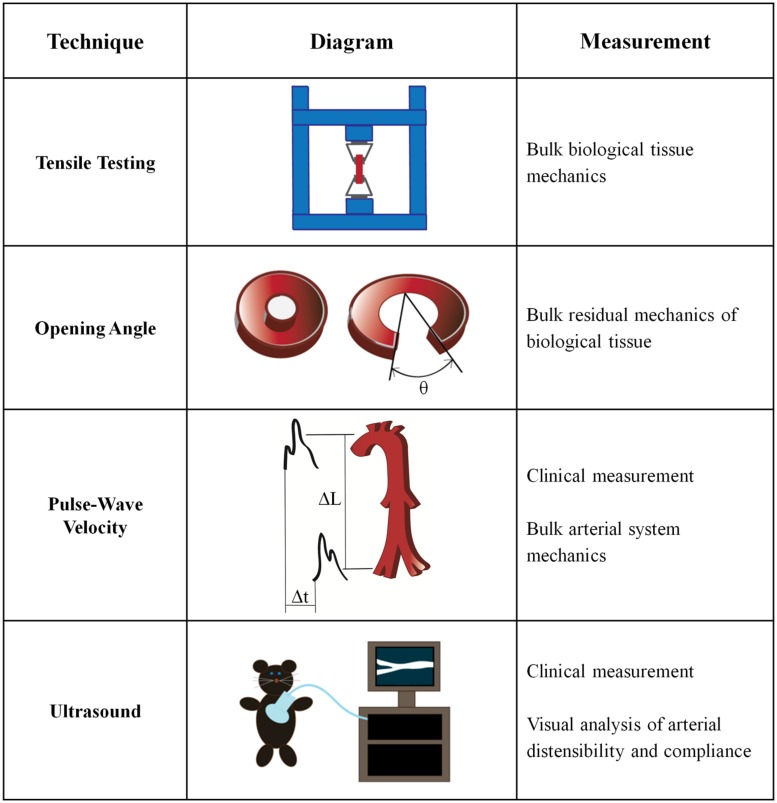
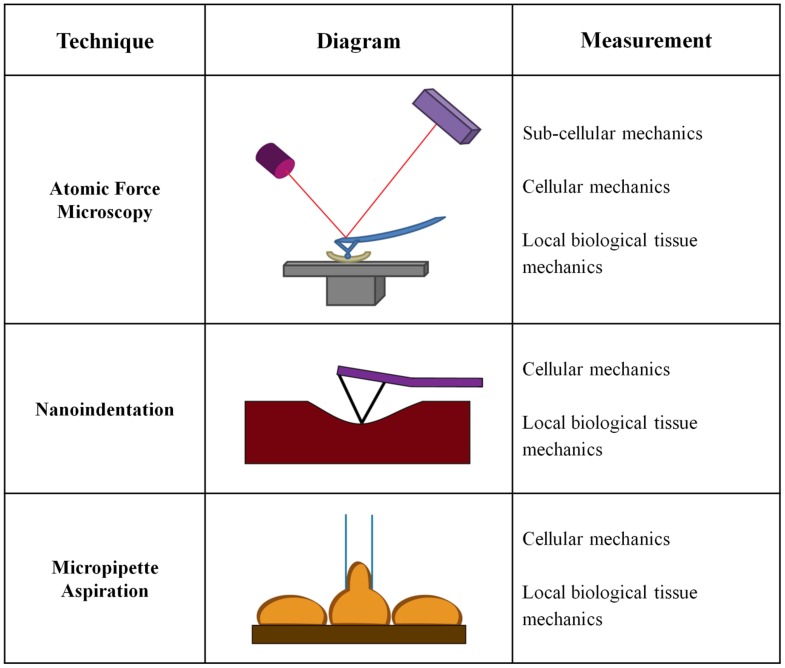
Arterial stiffening occurs with age and is closely associated with the progression of cardiovascular disease. Stiffening is most often studied at the level of the whole vessel because increased stiffness of the large arteries can impose increased strain on the heart leading to heart failure. Interestingly, however, recent evidence suggests that the impact of increased vessel stiffening extends beyond the tissue scale and can also have deleterious microscale effects on cellular function. Altered extracellular matrix (ECM) architecture has been recognized as a key component of the pre-atherogenic state. Here, the underlying causes of age-related vessel stiffening are discussed, focusing on age-related crosslinking of the ECM proteins as well as through increased matrix deposition. Methods to measure vessel stiffening at both the macro- and microscale are described, spanning from the pulse wave velocity measurements performed clinically to microscale measurements performed largely in research laboratories. Additionally, recent work investigating how arterial stiffness and the changes in the ECM associated with stiffening contributed to endothelial dysfunction will be reviewed. We will highlight how changes in ECM protein composition contribute to atherosclerosis in the vessel wall. Lastly, we will discuss very recent work that demonstrates endothelial cells (ECs) are mechano-sensitive to arterial stiffening, where changes in stiffness can directly impact EC health. Overall, recent studies suggest that stiffening is an important clinical target not only because of potential deleterious effects on the heart but also because it promotes cellular level dysfunction in the vessel wall, contributing to a pathological atherosclerotic state.
Overview
The claims and statistics of this paper haven’t been checked yet.
Run the check — free, no account needed. It reads the open-access text and checks the sources it cites.
Integrity signals
Registry
Cites
Statistics
Figures
Verification
Claims the paper makes
The claims and statistics of this paper haven’t been checked yet.
Run the check — free, no account needed. It reads the open-access text and checks the sources it cites.
Claims other papers make about this one
Each is checked against this paper’s own text: does it say what the citing paper says it does?
In the citing paper
“EC dysfunction has been shown to strongly affect arterial stiffness via cellular adhesion molecules (CAMs), matrix metalloproteinases (MMPs) and collagen molecules (COLs)67–71.”
From An inflammatory aging clock (iAge) based on deep learning tracks multimorbidity, immunosenescence, frailty and cardiovascular aging (2021) · cites this paper as [68]
Self-check
Percentages, sums and reported differences re-computed from the paper’s own numbers.
The self-check needs the paper’s full text.
Citations
Cites
Oliver, W. C., & Pharr, G. M. (1992) · Journal of materials research/Pratt's guide to venture capital sources · doi:10.1557/jmr.1992.1564 · Cited by 26,941 · cited 2×
“Different mathematical models are used to fit nanoindentation data and include the Hertz model (Hertz, 1881; Johnson, 1982), the Oliver-Pharr model (Oliver and Pharr, 1992, 2004), and the Johnson–Kendall–Roberts (JKR) adhesion model (Johnson et al., 1971).”
BackgroundMethodBinnig, G. K., Quate, C. F., & Gerber, C. (1986) · Physical Review Letters · doi:10.1103/physrevlett.56.930 · Cited by 14,795
Matrix elasticity directs stem cell lineage specification
Engler, A. J., Sen, S., Sweeney, H. L., & Discher, D. E. (2006) · Cell · doi:10.1016/j.cell.2006.06.044 · Cited by 13,915 · cited 2×
“Unlike AFM which records cantilever displacements, in nanoindentation, an external load is applied to the indenter tip to push the tip into the surface (Mann, 2007).”
BackgroundMethodOliver, W. C., & Pharr, G. M. (2004) · Journal of materials research/Pratt's guide to venture capital sources · doi:10.1557/jmr.2004.19.1.3 · Cited by 8,377 · cited 4×
“Different mathematical models are used to fit nanoindentation data and include the Hertz model (Hertz, 1881; Johnson, 1982), the Oliver-Pharr model (Oliver and Pharr, 1992, 2004), and the Johnson–Kendall–Roberts (JKR) adhesion model (Johnson et al., 1971).”
BackgroundMethodInfluentialInflammation in atherosclerosis
Libby, P. (2002) · Nature · doi:10.1038/nature01323 · Cited by 8,315
Surface energy and the contact of elastic solids
Johnson, K. L., Kendall, K., & Roberts, A. D. (1971) · Proceedings of the Royal Society of London A Mathematical and Physical Sciences · doi:10.1098/rspa.1971.0141 · Cited by 8,109 · cited 1×
“Different mathematical models are used to fit nanoindentation data and include the Hertz model (Hertz, 1881; Johnson, 1982), the Oliver-Pharr model (Oliver and Pharr, 1992, 2004), and the Johnson–Kendall–Roberts (JKR) adhesion model (Johnson et al., 1971).”
MethodExpert consensus document on arterial stiffness: methodological issues and clinical applications
Laurent, S., Cockcroft, J., Van Bortel, L., Boutouyrie, P., Giannattasio, C., Hayoz, D., Pannier, B., Vlachopoulos, C., Wilkinson, I., Struijker-Boudier, H., et al. (2006) · European Heart Journal · doi:10.1093/eurheartj/ehl254 · Cited by 6,077 · cited 4×
“Pulse wave velocity (PWV) measurements are the primary clinical method used to assess arterial stiffening and to help predict CVD events (Laurent et al., 2006; Van Bortel et al., 2012; Protogerou et al., 2014).”
BackgroundMethodInfluentialTensional homeostasis and the malignant phenotype
Paszek, M. J., Zahir, N., Johnson, K. R., Lakins, J. N., Rozenberg, G. I., Gefen, A., Reinhart-King, C. A., Margulies, S. S., Dembo, M., Boettiger, D., et al. (2005) · Cancer Cell · doi:10.1016/j.ccr.2005.08.010 · Cited by 3,941 · cited 2×
“Unlike AFM which records cantilever displacements, in nanoindentation, an external load is applied to the indenter tip to push the tip into the surface (Mann, 2007).”
BackgroundMethodSelf-citationLaurent, S., Boutouyrie, P., Asmar, R., Gautier, I., Laloux, B., Guize, L., Ducimetiere, P., & Benetos, A. (2001) · Hypertension · doi:10.1161/01.hyp.37.5.1236 · Cited by 3,856 · cited 1×
“Furthermore, in hypertensive patients, increased arterial stiffness is associated with increased mortality rates (Laurent et al., 2001).”
BackgroundInflammation in Atherosclerosis
Libby, P. (2012) · Arteriosclerosis Thrombosis and Vascular Biology · doi:10.1161/atvbaha.108.179705 · Cited by 3,796 · cited 2×
“During atherosclerosis, cholesterol permeates into the blood vessel wall and must be retained there to elicit the inflammatory reaction resulting in plaque formation (Libby, 2002).”
Background
Research works printed but not linked: 6
- Hertz, 1881, Tiber die beriihrung fester elastischer korper (On the contact of elastic solids)., J. Reine Angew Mathematik, 95, 156
- Hurley, 2009, “Contact resonance force microscopy techniques for nanomechanical measurements: introduction,†in, Applied Scanning Probe Methods XI: Scanning Probe Microscopy Techniques, 99
- Kohn, 2015, Effects of matrix stiffness on endothelial cell response to fluid shear stress., Biophys. J., 108, 471, 10.1016/j.bpj.201412.023 · DOI
- Quevedo, 2012, Aortic stiffness, blood pressure progression, and incident hypertension., Cardiol. Rev., 28, 875, 10.1001/2012.jama.10503 · DOI
- Sacks, 2000, Biaxial mechanical evaluation of planar biological materials., J. Elasticity, 61, 199, 10.1023/A:1010917028671 · DOI
- Santos-Parker, 2014, Aerobic exercise and other healthy lifestyle factors that influence vascular aging., Adv. Physiol. Educ., 38, 296, 10.1152/advan.00088.2014 · DOI
Cited by
Sorted by citations
Sayed, N., Huang, Y., Nguyen, K., Krejciova-Rajaniemi, Z., Grawe, A. P., Gao, T., Tibshirani, R., Hastie, T., Alpert, A., Cui, L., et al. (2021) · Nature Aging · doi:10.1038/s43587-021-00082-y · Cited by 572
Lampi, M. C., & Reinhart-King, C. A. (2018) · Science Translational Medicine · doi:10.1126/scitranslmed.aao0475 · Cited by 551
Self-citationBrozovich, F. V., Nicholson, C., Degen, C. V., Gao, Y. Z., Aggarwal, M., & Morgan, K. G. (2016) · Pharmacological Reviews · doi:10.1124/pr.115.010652 · Cited by 568
“underlying mechanisms causative of changes in the physical properties of blood vessels (Kohn et al., 2015).”
BackgroundLim, H. Y., Lim, S. Y., Tan, C. K., Thiam, C. H., Goh, C. C., Carbajo, D., Chew, S. H. S., See, P., Chakarov, S., Wang, X. N., et al. (2018) · Immunity · doi:10.1016/j.immuni.2018.06.008 · Cited by 384
Multifaceted Design and Emerging Applications of Tissue Adhesives
Ma, Z., Bao, G., & Li, J. (2021) · Advanced Materials · doi:10.1002/adma.202007663 · Cited by 271
Metadata
- Authors
- Kohn, J. C., Lampi, M. C., & Reinhart-King, C. A.
- Affiliations
- Cornell University (US)
- Venue
- Frontiers in Genetics
- Publisher
- Frontiers Media SA
- Published
- 2015-03-30
- Volume
- 06
- Pages
- 112-112
- ISSN
- 1664-8021 (ISSN-L)
- PMC
- PMC4396535
- OpenAlex
- W2048903244
- Cited by
- 440
- References
- 229
- Citations by year
- 2026: 45 · 2025: 36 · 2024: 58 · 2023: 60 · 2022: 46 · 2021: 51 · 2020: 36 · 2019: 29 · 2018: 40 · 2017: 26 · 2016: 11 · 2015: 1
- FWCI
- 4.48
- Type
- journal article
- Language
- en
- Open access
- gold
- doi.org
- Licence
- cc-by
- Locations
- Frontiers in Genetics (publishedVersion, cc-by)
- PubMed Central (publishedVersion, cc-by)
- PubMed (publishedVersion)
- DOAJ (DOAJ: Directory of Open Access Journals) (submittedVersion, cc-by-sa)
- Funders
- National Science Foundation (1435755, 2013165170, 2013155462)
- National Heart, Lung, and Blood Institute (R21HL097296, HL097296)
- Topics
- Health Sciences › Medicine › Cardiology and Cardiovascular Medicine › Cardiovascular Health and Disease Prevention
- Physical Sciences › Engineering › Biomedical Engineering › Elasticity and Material Modeling
- Life Sciences › Biochemistry, Genetics and Molecular Biology › Cell Biology › Cellular Mechanics and Interactions
- Keywords
- arterial stiffening, aging, extracellular matrix, matrix deposition, pulse wave velocity, endothelial dysfunction, atherosclerosis, cardiovascular disease, heart failure
About these checks
Registry, retraction, Cites and statistics results are computed, not judged, with one exception: a printed reference that no index lists is read once by a model before it counts as a citation error. Claims are extracted by a model and kept only when their quote appears verbatim in the text; each cited source is then checked, with a model’s help, for whether it says what the claim relies on. Those verdicts can be wrong — read the claim’s quote and the cited source before relying on one.
Statistics and arithmetic are recomputed, not judged.
Confidence bands are shown only for fields calibrated on our annotated test set. None is calibrated yet, so no band is shown.
What counts as a claim ›How we measure confidence ›How we check this ›
Are you an author, or do you see a problem with this page? Request a review
