

rAAV immunogenicity, toxicity, and durability in 255 clinical trials: A meta-analysis
Open accessThe DOI matches its Crossref record; 89 of the 89 references it cites were found in a registry or an index.
Abstract
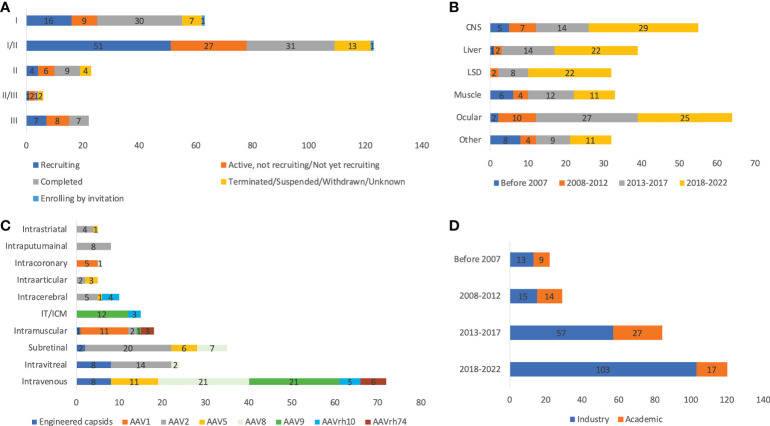
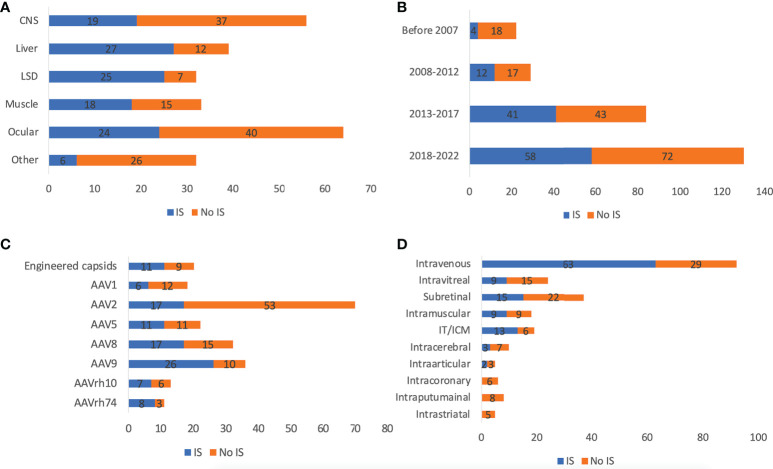
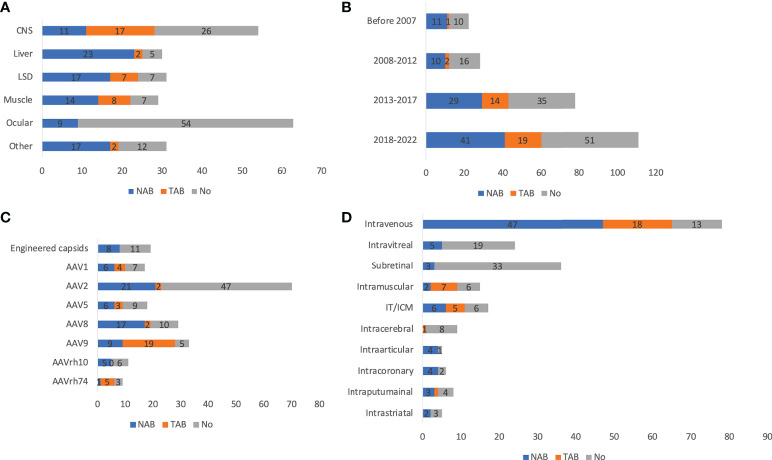
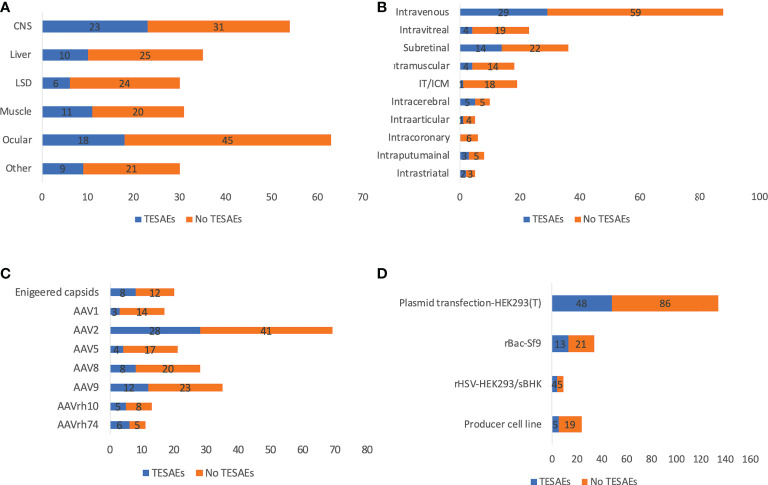
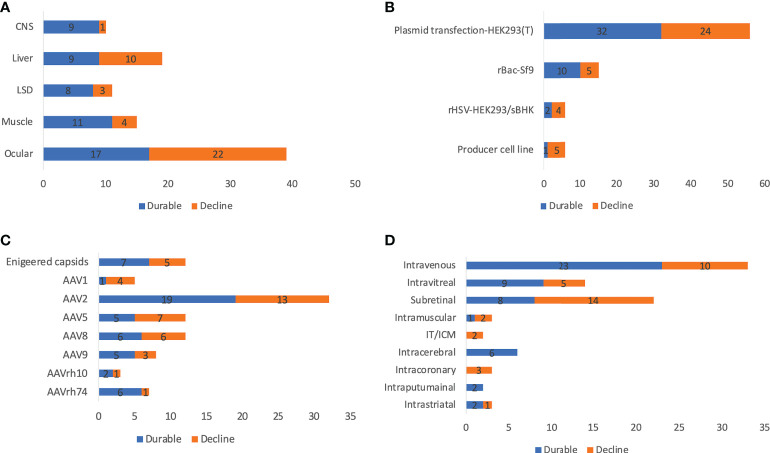
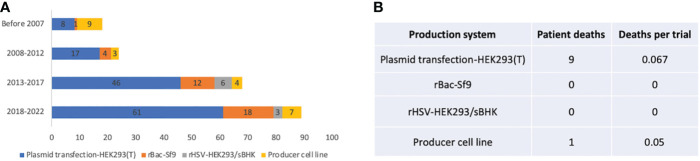
Recombinant Adeno-associated virus (rAAV) is one of the main delivery vectors for gene therapy. To assess immunogenicity, toxicity, and features of AAV gene therapy in clinical settings, a meta-analysis of 255 clinical trials was performed. A total of 7,289 patients are planned to be dosed. AAV2 was the most dominantly used serotype (29.8%, n=72), and 8.3% (n=20) of trials used engineered capsids. 38.7% (n=91) of trials employed neutralizing antibody assays for patient enrollment, while 15.3% (n=36) used ELISA-based total antibody assays. However, there was high variability in the eligibility criteria with cut-off tiers ranging from 1:1 to 1:1,600. To address potential immunogenicity, 46.3% (n=118) of trials applied immunosuppressants (prophylactic or reactive), while 32.7% (n=18) of CNS and 37.5% (n=24) of ocular-directed trials employed immunosuppressants, possibly due to the immune-privileged status of CNS and retina. There were a total of 11 patient deaths across 8 trials, and 18 out of 30 clinical holds were due to toxicity findings in clinical studies. 30.6% (n=78) of trials had treatment-emergent serious adverse events (TESAEs), with hepatotoxicity and thrombotic microangiopathy (systemic delivery) and neurotoxicity (CNS delivery) being the most prominent. Additionally, the durability of gene therapy may be impacted by two distinct decline mechanisms: 1) rapid decline presumably due to immune responses; or 2) gradual decline due to vector dilution. The durability varied significantly depending on disease indication, dose, serotypes, and patient individuals. Most CNS (90.0%) and muscle trials (73.3%) achieved durable transgene expression, while only 43.6% of ocular trials had sustained clinical outcomes. The rAAV production system can affect rAAV quality and thus immunogenicity and toxicity. Out of 186 trials that have disclosed production system information, 63.0% (n=126) of trials used the transient transfection of the HEK293/HEK293T system, while 18.0% (n=36) applied the baculovirus/Sf9 (rBac/Sf9) system. There were no significant differences in TESAEs and durability between AAV generated by rBac/Sf9 and HEK293/HEK293T systems. In summary, rAAV immunogenicity and toxicity poses significant challenges for clinical development of rAAV gene therapies, and it warrants collaborative efforts to standardize monitoring/measurement methods, design novel strategies to overcome immune responses, and openly share relevant information.
Overview
The claims and statistics of this paper haven’t been checked yet.
Free: it reads the open-access text and checks the first 5 claims that cite a source we can check. Create a free account to check every claim.
Integrity signals
Registry
Cites
Statistics
Figures
Verification
Claims the paper makes
The claims and statistics of this paper haven’t been checked yet.
Free: it reads the open-access text and checks the first 5 claims that cite a source we can check. Create a free account to check every claim.
Claims other papers make about this one
Each is checked against this paper’s own text: does it say what the citing paper says it does?
The source backs part of the claim, not all of it — or backs it for a different population, condition or comparison.
In the citing paper
“In severe cases, GTAU has, albeit uncommonly, led to the permanent loss of visual acuity, and long-term efficacy of treatment has only been achieved in 43.6% of ocular gene therapy trials.9”
From Characterization of the ocular inflammatory response to AAV reveals divergence by sex and age (2025) · cites this paper as [9]
Experimental — accuracy not yet measured
Self-check
Percentages, sums and reported differences re-computed from the paper’s own numbers.
The self-check needs the paper’s full text.
Citations
Cites
The PRISMA 2020 statement: an updated guideline for reporting systematic reviews
Page, M. J., McKenzie, J. E., Bossuyt, P. M., Boutron, I., Hoffmann, T. C., Mulrow, C. D., Shamseer, L., Tetzlaff, J. M., Akl, E. A., Brennan, S. E., et al. (2021) · Systematic Reviews · doi:10.1186/s13643-021-01626-4 · Cited by 13,874
Adeno-associated virus vector as a platform for gene therapy delivery
Wang, D., Tai, P. W. L., & Gao, G. (2019) · Nature Reviews Drug Discovery · doi:10.1038/s41573-019-0012-9 · Cited by 2,444 · cited 2×
“Additionally, the search was broadened to (1) company press releases (2), company official documents (SEC and IPO filings), (3) presentations in research conferences, (4) publications in journal articles, and (5) company websites.”
BackgroundSingle-Dose Gene-Replacement Therapy for Spinal Muscular Atrophy
Mendell, J. R., Al-Zaidy, S., Shell, R., Arnold, W. D., Rodino-Klapac, L. R., Prior, T. W., Lowes, L., Alfano, L., Berry, K., Church, K., et al. (2017) · New England Journal of Medicine · doi:10.1056/nejmoa1706198 · Cited by 2,381 · cited 5×
“Another 6 trials are associated with Zolgensma, which uses self-complementary AAV9 and have been approved as a commercialized product (35).”
BackgroundInfluentialManno, C. S., Pierce, G. F., Arruda, V. R., Glader, B., Ragni, M., Rasko, J. J. E., Ozelo, M. C., Hoots, K., Blatt, P., Konkle, B., et al. (2006) · Nature Medicine · doi:10.1038/nm1358 · Cited by 2,163 · cited 1×
“Additionally, the search was broadened to (1) company press releases (2), company official documents (SEC and IPO filings), (3) presentations in research conferences, (4) publications in journal articles, and (5) company websites.”
BackgroundSafety and Efficacy of Gene Transfer for Leber's Congenital Amaurosis
Maguire, A. M., Simonelli, F., Pierce, E. A., Pugh, E. N., Mingozzi, F., Bennicelli, J., Banfi, S., Marshall, K. A., Testa, F., Surace, E. M., et al. (2008) · New England Journal of Medicine · doi:10.1056/nejmoa0802315 · Cited by 2,145 · cited 1×
“Luxturna (32), and Upstaza (33) and one conditional approval Roctavian (34) in the USA and/or EU.”
BackgroundLong-Term Safety and Efficacy of Factor IX Gene Therapy in Hemophilia B
Nathwani, A. C., Reiss, U. M., Tuddenham, E. G. D., Rosales, C., Chowdary, P., McIntosh, J., Della Peruta, M., Lheriteau, E., Patel, N., Raj, D., et al. (2014) · New England Journal of Medicine · doi:10.1056/nejmoa1407309 · Cited by 1,273
Cre-dependent selection yields AAV variants for widespread gene transfer to the adult brain
Deverman, B. E., Pravdo, P. L., Simpson, B. P., Kumar, S. R., Chan, K. Y., Banerjee, A., Wu, W.-L., Yang, B., Huber, N., Pasca, S. P., et al. (2016) · Nature Biotechnology · doi:10.1038/nbt.3440 · Cited by 1,061 · cited 1×
“For instance, an engineered capsid selected from a C57BL/6J mice strain penetrates the blood brain barrier efficiently (90).”
BackgroundBoutin, S., Monteilhet, V., Veron, P., Leborgne, C., Benveniste, O., Montus, M. F., & Masurier, C. (2010) · Human Gene Therapy · doi:10.1089/hum.2009.182 · Cited by 970
Hinderer, C., Katz, N., Buza, E. L., Dyer, C., Goode, T., Bell, P., Richman, L. K., & Wilson, J. M. (2018) · Human Gene Therapy · doi:10.1089/hum.2018.015 · Cited by 814 · cited 1×
“The most prominent TESAEs were hepatotoxicity (43), TMA (44), and neurotoxicity (40), while DRG toxicity attracted much attention recently (38, 47).”
BackgroundWorldwide epidemiology of neutralizing antibodies to adeno-associated viruses
Calcedo, R., Vandenberghe, L. H., Gao, G., Lin, J., & Wilson, J. M. (2009) · The Journal of Infectious Diseases · doi:10.1086/595830 · Cited by 808 · cited 1×
“Serum prevalence studies suggested a significant portion of the human population had high levels of rAAV neutralizing antibodies (13).”
Background
Research works printed but not linked: 1
- 40. Bonnemann CG. AAV related immunological safety and toxicity: Preliminary clinical observations in the GAN and MTM1 trials. In: Presented at: Virtual workshop on systemic immunogenicity considerations of AAV-mediated gene therapy. (Baltimore, Maryland: NIH, NCATS) (2020).
Cited by
AAV vector development, back to the future
Suárez-Amarán, L., Song, L., Tretiakova, A. P., Mikhail, S., & Samulski, R. J. (2025) · Molecular Therapy · doi:10.1016/j.ymthe.2025.03.064 · Cited by 104
“In 2022, there were 20 trials using 10 unique engineered capsids as reported by Shen et al. 270 Currently, there are 39 trials utilizing 15 unique engineered capsids, indicating a substantial upswing in the utilization of the emerging novel capsids in the past 2 years.”
InfluentialSevigny, J., Uspenskaya, O., Heckman, L. D., Wong, L. C., Hatch, D. A., Tewari, A., Vandenberghe, R. R., Irwin, D. J., Saracino, D., Ber, I. L., et al. (2024) · Nature Medicine · doi:10.1038/s41591-024-02973-0 · Cited by 90
RNA Therapeutics for the Cardiovascular System
Dzau, V. J., & Hodgkinson, C. P. (2024) · Circulation · doi:10.1161/circulationaha.123.067373 · Cited by 80
“58 In addition to questions regarding their toxicity, AAVs are often cleared by preexisting immunity.”
BackgroundAAV Engineering for Improving Tropism to the Central Nervous System
Ghauri, M. S., & Ou, L. (2023) · Biology · doi:10.3390/biology12020186 · Cited by 74
“Until June 1, 2022, AAV-mediated gene therapy has been or is being evaluated in a total of 255 clinical trials [6].”
BackgroundSelf-citationKim, Y., Landstrom, A. P., Shah, S. H., Wu, J. C., & Seidman, C. E. (2024) · Circulation · doi:10.1161/cir.0000000000001296 · Cited by 94
“46,47 Adverse effects appear greatest among patients receiving high-dose AAV.”
López-Gordo, E., Chamberlain, K., Riyad, J. M., Kohlbrenner, E., & Weber, T. (2024) · Viruses · doi:10.3390/v16030442 · Cited by 70
“A meta-analysis performed on data gathered from 255 clinical trials using AAV vectors reported that 18 had been put on hold, at least temporarily [203].”
MethodMoyer, T. C., Hoffman, B. A., Chen, W., Shah, I. S., Ren, X., Knox, T. M., Liu, J., Wang, W., Li, J., Khalid, H., et al. (2025) · Molecular Therapy · doi:10.1016/j.ymthe.2025.04.046 · Cited by 69
“4 The success of Zolgensma for the treatment of infants with spinal muscular atrophy (SMA) constituted a major milestone in the establishment of AAV vectors as clinical modalities and showed that intravenously (i.v.) administered AAV9 capsids could cross the blood-brain barrier (BBB) and transduce…”
Greer-Short, A., Greenwood, A., Leon, E. C., Qureshi, T. N., von Kraut, K., Wong, J., Tsui, J. H., Reid, C. A., Cheng, Z., Easter, E., et al. (2025) · Nature Communications · doi:10.1038/s41467-025-57481-7 · Cited by 66
“Thus, the clinically relevant dose of 3E13 vg/kg 43,44 appeared to achieve near-maximal ef fi cacy for saturation of cardiac bene fi t.”
Kolesnik, V. V., Nurtdinov, R. F., Oloruntimehin, E. S., Karabelsky, A. V., & Malogolovkin, A. S. (2024) · Clinical and Translational Medicine · doi:10.1002/ctm2.1607 · Cited by 59
Liu, S., Li, J., Peraramelli, S., Luo, N., Chen, A., Dai, M., Liu, F., Yu, Y., Leib, R. D., Li, Y., et al. (2023) · Molecular Therapy · doi:10.1016/j.ymthe.2023.11.022 · Cited by 56
Self-citationEnhancing gene transfer to renal tubules and podocytes by context-dependent selection of AAV capsids
Furusho, T., Das, R., Hakui, H., Sairavi, A., Adachi, K., Galbraith-Liss, M. S., Rajagopal, P., Horikawa, M., Luo, S., Li, L., et al. (2024) · Nature Communications · doi:10.1038/s41467-024-54475-9 · Cited by 50
“…the growing concerns about AAV-related toxicity in humans, including hepatotoxicity, genotoxicity, thrombotic microangiopathy, and DRG toxicity 1,15,45 , local administration of AAV-KP1 and other capsids showing similar phenotypes offers a promising approach to mediate effective renal gene…”
Kachanov, A., Kostyusheva, A. P., Brezgin, S. A., Karandashov, I. V., Ponomareva, N. I., Tikhonov, A., Lukashev, A. N., Pokrovsky, V. S., Zamyatnin, A. A., Parodi, A., et al. (2024) · Medicinal Research Reviews · doi:10.1002/med.22036 · Cited by 49
Smith, T. J., Elmore, Z. C., Fusco, R. M., Hull, J. A., Rosales, A., Martinez, M. L., Tarantal, A. F., & Asokan, A. (2024) · Molecular Therapy · doi:10.1016/j.ymthe.2024.05.004 · Cited by 45
“7,12,14 The recombinant enzymes IceM and IceMG described in this study offer immunomodulatory solutions that can directly address these challenges by transiently removing circulating as well as surface IgM, thereby reducing the risk associated with complement activation.”
Building CRISPR Gene Therapies for the Central Nervous System: A Review
Salomonsson, S. E., & Clelland, C. D. (2024) · JAMA Neurology · doi:10.1001/jamaneurol.2023.4983 · Cited by 46
Stowaways in the cargo: Contaminating nucleic acids in rAAV preparations for gene therapy
Brimble, M. A., Winston, S. M., & Davidoff, A. M. (2023) · Molecular Therapy · doi:10.1016/j.ymthe.2023.07.025 · Cited by 45
Słyk, Ż., Stachowiak, N., & Małecki, M. (2024) · Biomedicines · doi:10.3390/biomedicines12071523 · Cited by 44
The road toward AAV-mediated gene therapy of Duchenne muscular dystrophy
Bengtsson, N. E., Tasfaout, H., & Chamberlain, J. S. (2025) · Molecular Therapy · doi:10.1016/j.ymthe.2025.03.065 · Cited by 40
Diagnostic and Therapeutic Aptamers
Mauro, V. D., Lauta, F. C., Modica, J., Appleton, S. L., de Franciscis, V., & Catalucci, D. (2023) · JACC Basic to Translational Science · doi:10.1016/j.jacbts.2023.06.013 · Cited by 38
Redirecting AAV vectors to extrahepatic tissues
Asokan, A., & Shen, S. (2023) · Molecular Therapy · doi:10.1016/j.ymthe.2023.10.005 · Cited by 39
“As reviewed in these meta-analysis studies, 2,6 a few safety concerns have emerged from systemic AAV gene therapies across different therapeutic areas.”
Lu, X., Zhang, M., Li, G., Zhang, S., Zhang, J., Fu, X., & Sun, F. (2023) · International Journal of Molecular Sciences · doi:10.3390/ijms241713202 · Cited by 45
“reported finding mouse muscle-tropic capsid variants with RGD motifs [110].”
BackgroundCoplan, L., Zhang, Z., Ragone, N., Reeves, J., Rodriguez, A., Shevade, A., Bak, H., & Tustian, A. D. (2024) · Biotechnology Progress · doi:10.1002/btpr.3445 · Cited by 35
Hepatotoxicity in Adeno-Associated Viral Vector Gene Therapy
Jagadisan, B., & Dhawan, A. (2023) · Current Hepatology Reports · doi:10.1007/s11901-023-00624-5 · Cited by 36
What’s New in Ocular Drug Delivery: Advances in Suprachoroidal Injection since 2023
Wu, K. Y., Gao, A., Giunta, M., & Tran, S. D. (2024) · Pharmaceuticals · doi:10.3390/ph17081007 · Cited by 30
“Advantages of NPs include accommodating larger DNA sizes and lower immune responses.”
BackgroundAAV- based vector improvements unrelated to capsid protein modification
Shitik, E. M., Shalik, I. K., & Yudkin, D. V. (2023) · Frontiers in Medicine · doi:10.3389/fmed.2023.1106085 · Cited by 30
Yu, H., Yu, J., & Yao, G. (2025) · International Journal of Nanomedicine · doi:10.2147/ijn.s507715 · Cited by 25
“154 Active targeting enhances drug delivery via nanoparticles in cardiovascular diseases, surpassing passive uptake, with aptamers serving as key ligands for tissue or cell specific absorption.”
Retina-directed gene therapy: Achievements and remaining challenges
Biber, J., Gandor, C. L. A., Bećirović, E., & Michalakis, S. (2025) · Pharmacology & Therapeutics · doi:10.1016/j.pharmthera.2025.108862 · Cited by 25
Severe hepatitis outbreak in children linked to AAV2 virus
Tacke, F. (2023) · Nature · doi:10.1038/d41586-023-00570-8 · Cited by 25
Ford, J. L., Karatza, E., Mody, H. R., Shastri, P. N., Khajehpour, S., Yang, T., Swanson, M., Chao, D. L., & Devineni, D. (2024) · Clinical Pharmacology & Therapeutics · doi:10.1002/cpt.3230 · Cited by 26
Computer-Aided Directed Evolution Generates Novel AAV Variants with High Transduction Efficiency
Han, Z., Luo, N., Wang, F., Cai, Y., Yang, X., Feng, W., Zhu, Z., Wang, J., Wu, Y., Ye, C., et al. (2023) · Viruses · doi:10.3390/v15040848 · Cited by 24
“The authorization of five AAV-based gene therapy drugs, comprising Glybera (AAV1), Luxturna (AAV2), Zolgensma (AAV9), Upstaza (AAV2), and Roctavian (AAV5), clearly demonstrated the enormous potential of AAV vectors for human gene therapy [3].”
BackgroundMazurek, R., Tharakan, S., Mavropoulos, S. A., Singleton, D. T., Bikou, O., Sakata, T., Kariya, T., Yamada, K. P., Kohlbrenner, E., Liang, L., et al. (2024) · Nature Communications · doi:10.1038/s41467-024-54635-x · Cited by 24
Characterization of the ocular inflammatory response to AAV reveals divergence by sex and age
Clare, A. J., Langer, P. M., Ward, A., Chan, Y. K., Dick, A. D., & Copland, D. A. (2025) · Molecular Therapy · doi:10.1016/j.ymthe.2025.01.028 · Cited by 19
Surface receptor-targeted protein-based nanocarriers for drug delivery: advances in cancer therapy
Theivendren, P., Pavadai, P., Veerachamy, S., Palanisamy, P., & Kunjiappan, S. (2025) · Nanotechnology · doi:10.1088/1361-6528/adad7a · Cited by 22
The clinical safety landscape for ocular AAV gene therapies: A systematic review and meta-analysis
Liu, Z., Zhang, H., Jia, H., Wang, H., Huang, Z., Tang, Y., Wang, Z., Hu, J., Zhao, X., Li, T., et al. (2025) · iScience · doi:10.1016/j.isci.2025.112265 · Cited by 22
Delivery of DNA-Based Therapeutics for Treatment of Chronic Diseases
Sussman, C., Liberatore, R. A., & Drozdz, M. M. (2024) · Pharmaceutics · doi:10.3390/pharmaceutics16040535 · Cited by 21
“Freeline Therapeutics is trying to address the inefficiencies of traditional treatment with its AAV therapy FLT201 (also known as GALILEO-1), which is of AAVS3 serotype [46] and designed to deliver a functional GBA transgene.”
BackgroundMethodAbad, C., Demeules, M., Guillou, C., Gondé, H., Zoubaïri, R., Tan, Y., Pinto-Espinoza, C., Schäfer, W., Mann, A. M., Vouret‐Craviari, V., et al. (2024) · Journal of Nanobiotechnology · doi:10.1186/s12951-023-02285-4 · Cited by 19
“…or EMA in recent years: for the treatment of lipoprotein lipase deficiency (AAV1, Glybera), retinal dystrophy (AAV2, Luxturna), spinal muscular atrophy (AAV9, Zol-gensma), haemophilia B (AAV5, Hemgenix), Duchenne muscular dystrophy (AAVrh74, Elevidys) and, haemophilia A (AAV5, Roctavian) [42, 43].”
BackgroundMannose-coupled AAV2: A second-generation AAV vector for increased retinal gene therapy efficiency
Mével, M., Pichard, V., Bouzelha, M., Álvarez‐Dorta, D., Lalys, P.-A., Provost, N., Allais, M., Mendes, A., Landagaray, E., Ducloyer, J., et al. (2024) · Molecular Therapy — Methods & Clinical Development · doi:10.1016/j.omtm.2024.101187 · Cited by 18
“33 Despite a proven ef fi cacy of voretigene neparvovec, the post-marketing trial PERCEIVE launched in 2019 followed up 103 treated patients and showed among them that 35% experienced at least one ocular adverse event including chorioretinal atrophic change mainly at the injection site, foveal…”
BackgroundHypoxia-induced AFAP1L1 regulates pathological neovascularization via the YAP-DLL4-NOTCH axis
Ren, J.-S., Bai, W., Ding, J.-J., Ge, H., Wang, S., Chen, X., & Jiang, Q. (2023) · Journal of Translational Medicine · doi:10.1186/s12967-023-04503-x · Cited by 17
“Notably, investigations centered around AAV as the principal gene delivery vector have been extensively executed within clinical trials, which encompass an array of evaluations, spanning the immunogenicity, toxicity, and persistence characteristics of this vector [62].”
BackgroundViral Vector-Based Gene Therapy for Epilepsy: What Does the Future Hold?
Bettegazzi, B., Cattaneo, S., Simonato, M., Zucchini, S., & Soukupovà, M. (2023) · Molecular Diagnosis & Therapy · doi:10.1007/s40291-023-00687-6 · Cited by 21
“Viral vector-mediated gene therapy is expected to cause dose-dependent adverse effects [62–66].”
BackgroundmRNA biotherapeutics landscape for rare genetic disorders
Iyer, V. R., Praveen Reddy., P., Kaduskar, B., Moharir, S. C., & Mishra, R. K. (2024) · Journal of Biosciences · doi:10.1007/s12038-023-00415-6 · Cited by 19
Next-generation biological vector platforms for in vivo delivery of genome editing agents
Leclerc, D., Siroky, M. D., & Miller, S. M. (2023) · Current Opinion in Biotechnology · doi:10.1016/j.copbio.2023.103040 · Cited by 17
Emerging Perspectives on Prime Editor Delivery to the Brain
BenDavid, E., Ramezanian, S., Lu, Y., Rousseau, J., Schroeder, A., Lavertu, M., & Tremblay, J. P. (2024) · Pharmaceuticals · doi:10.3390/ph17060763 · Cited by 17
“As indicated in the FDA’s 2021 report on Cellular, Tissue, and Gene Therapies Advisory Committee Meeting No. 70, there have been multiple cases of treatment-emergent serious adverse events in gene therapy studies with AAV8 vector-based products for an X-Linked Myotubular Myopathy [129,130].”
BackgroundJiménez, V., Sacristan, V., Jambrina, C., Jaén, M. L., Casana, E., MUÑOZ, S. A., Marcó, S., Molas, M., García, M., Grass, I., et al. (2024) · Molecular Therapy · doi:10.1016/j.ymthe.2024.10.023 · Cited by 16
Degradation and stable maintenance of adeno-associated virus inverted terminal repeats in E. coli
Radukic, M. T., Le, D. T., Krassuski, T., Borchert, P., Leach, D. R. F., & Müller, K. M. (2024) · Nucleic Acids Research · doi:10.1093/nar/gkae1170 · Cited by 15
Huang, N., Wei, Y., & Li, J. (2025) · Journal of Biological Engineering · doi:10.1186/s13036-025-00562-4 · Cited by 15
“Reflecting its growing importance, the use of this system for rAAV production rose from approximately 5.6% before 2007 to over 20% by 2022 [47].”
InfluentialTang, S., Luo, W., Wu, S., Yuan, M., Wen, J., Zhong, G., Shen, L., Jiang, W. H., Cheng, C., Wu, X., et al. (2025) · Genes & Diseases · doi:10.1016/j.gendis.2025.101649 · Cited by 17
“27,28 AAV-based gene therapy for treating more complex neurodegenerative diseases, such as AD, has also garnered increasing attention.”
Wu, F., He, W., Xiao, Y., Wu, Q., Zhang, Q., Zhang, T., Xu, L., & Pang, X. (2025) · Advanced Science · doi:10.1002/advs.202408397 · Cited by 17
Promising tools for future drug discovery and development in antiarrhythmic therapy
Mondéjar‐Parreño, G., Sánchez-Pérez, P., Cruz, F. M., & Jalife, J. (2024) · Pharmacological Reviews · doi:10.1124/pharmrev.124.001297 · Cited by 17
Thakur, G., Mink, S. R., Garcia, A. J., Bak, H., & Tustian, A. D. (2025) · Molecular Therapy — Methods & Clinical Development · doi:10.1016/j.omtm.2025.101441 · Cited by 14
“2,17 22 Thus, the current consensus in the industry is that it is critical to enrich for VCs to deliver safer and more ef fi cacious drug products to patients, serving to mitigate both AAV toxicity and immunogenicity risk by enabling lower capsid dosing for the same target viral dose.”
Okai, T., Sato, S., Deshpande, M., Matsumoto, S.-I., Nakayama, M., Yamamoto, S., Strack-Logue, B., Hioki, T., Tanaka, M., & Proetzel, G. (2025) · PLoS ONE · doi:10.1371/journal.pone.0321145 · Cited by 15
“For AAV5 the distribution to the liver is minimal, which would be beneficial when delivery to brain only is favored, and it would avoid the potential hepatotoxicity, a known liability of AAVs [75].”
Emami, M. R., Brimble, M. A., Espinoza, A., Owens, J. M., Whiteley, L. O., Casinghino, S. R., Lanz, T. A., Farahat, P. K., Pellegrini, M. A., Young, C. S., et al. (2024) · Molecular Therapy — Methods & Clinical Development · doi:10.1016/j.omtm.2024.101349 · Cited by 14
“However, when these genes were assessed in each condition in individual patients, the response appeared to be primarily driven by subject 1, with minimal induction of interferon response genes in subjects 2 – 5.”
Engineering adeno-associated viral vectors for CRISPR/Cas based in vivo therapeutic genome editing
Moyo, B., Brown, L. B. C., Khondaker, I., & Bao, G. (2025) · Biomaterials · doi:10.1016/j.biomaterials.2025.123314 · Cited by 13
In vivo delivery systems for CRISPR genome editing: Viral and non-viral carriers
Lee, Y., Kim, B., Lee, D., Cheon, S. Y., Lim, S. G., Kim, Y., & Koo, H. (2025) · Applied Physics Reviews · doi:10.1063/5.0228874 · Cited by 13
Rok, M. J., Wong, T. W. Y., Maino, E., Ahmed, A., Yang, G. M., Hyatt, E., Lindsay, K., Fatehi, S., Marks, R. M., Delgado-Olguín, P., et al. (2023) · Molecular Therapy — Methods & Clinical Development · doi:10.1016/j.omtm.2023.07.004 · Cited by 13
Pan, Y., Rohde, M., Zeitler, J., Namburi, S., Cao, L., Hu, J., Meyer, K. E., & Lu, Y. (2023) · Molecular Therapy — Methods & Clinical Development · doi:10.1016/j.omtm.2023.101126 · Cited by 13
“, 12 , 14 Here we”
MethodTang, Y., Ebadi, M., Lei, J., Feng, Z., Fakhari, S., Wu, P., Smith, M. D., Limberis, M. P., Kolbeck, R., Excoffon, K. J. D. A., et al. (2024) · Molecular Therapy — Methods & Clinical Development · doi:10.1016/j.omtm.2024.101244 · Cited by 11
“27 Clinical rAAV-mediated gene-replacement therapy studies for spinal muscular atrophy and Canavan disease demonstrated encouraging durable therapeutic effects over a 5-to 10-year period.”
BackgroundBenemei, S., Gatto, F., Marcucci, R., & Gresele, P. (2024) · Thrombosis and Haemostasis · doi:10.1055/a-2413-4345 · Cited by 11
AAV for gene therapy drives a nephrotoxic response via NFκB in kidney organoids
Gupta, N. R., Zhang, K., Sabbisetti, V. S., Shu, J., & Morizane, R. (2025) · Signal Transduction and Targeted Therapy · doi:10.1038/s41392-025-02336-2 · Cited by 13
Loeb, E. J., Fergione, S., Yudistyra, V., Fanous, M. M., Benkert, A. R., Fisher, D. G., Hull, J. A., ElMallah, M. K., & Asokan, A. (2025) · Cell Reports Medicine · doi:10.1016/j.xcrm.2025.102475 · Cited by 14
“5,6 10 AAV redosing presents a similar challenge since patients develop high-titer and long-lasting NAbs following vector dosing.”
Pichard, V., Guilbaud, M., Devaux, M., Jaulin, N., Journou, M., Michée‐Cospolite, M., Garcia, A., Ferry, N., Michalak-Provost, S., Gernoux, G., et al. (2025) · Gene Therapy · doi:10.1038/s41434-025-00514-z · Cited by 11
Green, E. A., Fu, Q., Ndahiro, N., Leibiger, T. M., Wang, Y., Lee, Y.-S., Lee, K. H., Betenbaugh, M. J., Yoon, S., & McNally, D. J. (2025) · Biotechnology and Bioengineering · doi:10.1002/bit.28980 · Cited by 10
Strategies of AAV capsid engineering for targeted delivery to brain, muscle, and retina
Xu, X. (2026) · Frontiers in Molecular Biosciences · doi:10.3389/fmolb.2025.1750807 · Cited by 10
Developing AAV-delivered nonsense suppressor tRNAs for neurological disorders
Wang, J., Gao, G., & Wang, D. (2024) · Neurotherapeutics · doi:10.1016/j.neurot.2024.e00391 · Cited by 10
“One of the most striking advantages of rAAV-delivered gene therapy is its long-term ef fi cacy [113,114].”
BackgroundMutagenesis and Carcinogenesis Risk Evaluation for AAV and Lentiviral Gene Therapies
Parman, T., Pizzurro, D. M., Lucas, J., & Peng, Z. (2025) · International Journal of Toxicology · doi:10.1177/10915818251318248 · Cited by 9
“…consider potential toxicities with concomitant therapies, immunomodulatory state in the study animals and/or target subject population, and the speci fi c disease indication/speci fi c target population, may contribute to vector-related toxicities 41 or modulate the risk for insertional mutagenesis.”
Retinal transduction profiling of diverse AAV serotypes via intravitreal injection
Zhang, T., Wang, F., Wu, Y., Cao, J., & Shen, Y. (2025) · Journal of Virology · doi:10.1128/jvi.00637-25 · Cited by 10
Zafra‐Puerta, L., Iglesias‐Cabeza, N., Sciaccaluga, M., Bellingacci, L., Canonichesi, J., Sánchez‐Martín, G., Costa, C., Sánchez, M. P., & Serratosa, J. M. (2025) · Clinical and Translational Medicine · doi:10.1002/ctm2.70514 · Cited by 9
“89,90 94 In this study, we assessed potential hepatotoxic effects at 5 and 15 months following intravenous treatment administration.”
Yip, M., Chen, J., Zhi, Y., Tran, N. T., Namkung, S., Pastor, E., Gao, G., & Tai, P. W. L. (2023) · Viruses · doi:10.3390/v15061228 · Cited by 9
Lemoine, J., Dubois, A., Dorval, A., Jaber, A., Warthi, G., Mamchaoui, K., Wang, T., Corre, G., Bovolenta, M., & Richard, I. (2024) · Scientific Reports · doi:10.1038/s41598-024-70075-5 · Cited by 9
Verdés, S., Navarro, X., & Bosch, A. (2025) · Human Gene Therapy · doi:10.1177/10430342251372898 · Cited by 9
“171 To mitigate these risks, strategies include using lower doses, neuron-speci fi c or endogenous promoters, immunosuppressive regimens, and novel capsids with enhanced CNS tropism and reduced immunogenicity.”
Lentiviral vectors for precise expression to treat X-linked lymphoproliferative disease
Ayoub, P. G., Gensheimer, J., Lathrop, L. E., Juett, C., Quintos, J. P., Tam, K., Reid, J. L., Ma, F., Tam, C., McAuley, G. E., et al. (2024) · Molecular Therapy — Methods & Clinical Development · doi:10.1016/j.omtm.2024.101323 · Cited by 9
“43,44 Furthermore, the utilization of nucleases and the induction of double-stranded breaks (DSBs) is a safety-pro fi le concern, speci fi cally due to off-target effects, chromosomal translocation, and chromothripsis.”
Adeno‐associated viral vector gene therapy: Challenges for the paediatric hepatologist
Jagadisan, B., & Dhawan, A. (2024) · Journal of Pediatric Gastroenterology and Nutrition · doi:10.1002/jpn3.12326 · Cited by 9
Tai, P. W. L. (2023) · Human Gene Therapy · doi:10.1089/hum.2023.29255.pwl · Cited by 9
Physicochemical and biological impacts of light stress on adeno-associated virus serotype 6
Takino, R., Yamaguchi, Y., Maruno, T., Ramadhani, E., Furukawa, M., Torisu, T., & Uchiyama, S. (2024) · Molecular Therapy — Methods & Clinical Development · doi:10.1016/j.omtm.2024.101362 · Cited by 7
Liu, H., Liu, N., Zhou, C., Du, A., Kapadia, M., Tai, P. W. L., Barton, E. S., Gao, G., & Wang, D. (2025) · EMBO Molecular Medicine · doi:10.1038/s44321-025-00248-w · Cited by 8
“In clinical trials, plasmid backbone DNA contaminants in rAAV were considered as a potential contributor to adverse events and led to clinical holds by FDA (Pena, 2018; Shen et al, 2022).”
A clinician’s guide to AAV production – How manufacturing platforms shape vector properties
Käsbach, J., & Magnus, J. B. (2025) · Medizinische Genetik · doi:10.1515/medgen-2025-2024 · Cited by 9
Design, development, and evaluation of gene therapeutics specific to KSHV-associated diseases
Inagaki, T., Espera, J. M., Wang, K.-H., Komaki, S., Nair, S., Davis, R. R., Kumar, A., Nakajima, K.-I., & Izumiya, Y. (2025) · Molecular Therapy Oncology · doi:10.1016/j.omton.2025.201050 · Cited by 7
Song, Q., Wu, J., Zhang, Q., Wu, S. V., Luo, X., Xu, M., Xu, Y., Wang, G., Yu, H., Chen, H., et al. (2025) · Molecular Therapy — Methods & Clinical Development · doi:10.1016/j.omtm.2025.101522 · Cited by 8
“1 In many CNS-related cases, achieving broad and uniform transduction in the brain and/or spinal cord is crucial for effective genetic therapies.”
Neumann, S. M., Soslow, J. H., Burnette, W. B., Harris, R. E., & Mohammad, S. (2025) · Pediatric Neurology · doi:10.1016/j.pediatrneurol.2025.09.003 · Cited by 7
Prince, C., Bounoutas, G. S., Zhou, B., Raja, W. K., Gold, I., Pozsgai, R., Thakker, P., Boisvert, N. M., Reardon, C., Thurmond, S., et al. (2025) · Molecular Therapy — Methods & Clinical Development · doi:10.1016/j.omtm.2025.101597 · Cited by 8
“43,44 Here we describe the first functioning gene delivery vector based on a human commensal anellovirus.”
Lee, H. H. C., Latzer, I. T., Bertoldi, M., Gao, G., Pearl, P. L., Şahin, M., & Rotenberg, A. (2024) · Journal of Inherited Metabolic Disease · doi:10.1002/jimd.12735 · Cited by 8
“39 Nevertheless, AAV is limited by a small packaging capacity of less than 5 kb. Alternative strategies accommodating a larger gene include a microgene encoding a truncated but functional protein and coadministration of a dual-vector system reconstituting a full-length gene.”
BackgroundSafety concerns surrounding AAV and CRISPR therapies in neuromuscular treatment
Wilton-Clark, H., & Yokota, T. (2023) · Med · doi:10.1016/j.medj.2023.11.008 · Cited by 7
Toxicologic Neuropathology of Novel Biotherapeutics
Bangari, D. S., Lanigan, L. G., Cramer, S. D., Grieves, J. L., Meisner, R., Rogers, A. B., Galbreath, E. J., & Bolon, B. N. (2023) · Toxicologic Pathology · doi:10.1177/01926233241230542 · Cited by 7
“44,142 Such chemical modifications dramatically alter the PK, PD, and toxicology profiles of nucleic acid therapies.”
BackgroundCurrent regulatory requirements for assessment of immunogenicity for gene therapy medicinal products
Mann, C. J., Giblin, J., Braun, M., Schmid, F., Sørensen, M. R., Caferra, P., Hudák, A., Letoha, T., Coderch, N., Hickling, T. P., et al. (2025) · Cell Reports Medicine · doi:10.1016/j.xcrm.2025.102422 · Cited by 7
“5,18,118 For example, immunosuppressive regimens are also used in ocular and CNS clinical trials despite the supposed immune-privileged status of these tissues.”
AAV-based gene therapies for neovascular AMD
Kim, T. H., Kwon, C. Y., Song, J. Y., & Yoo, H. C. (2026) · Gene Therapy · doi:10.1038/s41434-026-00595-4 · Cited by 7
“This strategy can attenuate anti-capsid immune responses and has shown potential to enable transduction in NAb-positive subjects, and its use is increasingly explored in clinical settings [144, 145].”
Luo, S., Jiang, H., Li, Q., Yang, S., Yu, X., Xu, X., Xie, Q., Ke, X., & Zheng, Q. (2024) · Pharmaceutics · doi:10.3390/pharmaceutics16121518 · Cited by 6
“These four patients received AAV gene therapy (AT132) at a dose of 1.3 × 10 14 GC/kg ( n = 1) or 3 × 10 14 GC/kg ( n = 3), exhibited evidence of hepatic dysfunction and ultimately died within 3–4 weeks [14].”
InfluentialNovel approaches in peripheral nerve repair: a review of current and emerging therapies
Lee, J. C., Trott, S. H., & Wax, M. K. (2025) · Plastic and Aesthetic Research · doi:10.20517/2347-9264.2024.122 · Cited by 9
Wasserman, S. R., Muron, S., Lee, H. R., Routh, M. L., Hepperla, A. J., Scoville, D. M., Huber, A. K., Umana, J. M., Pereira, N. E., Foley, C. A., et al. (2025) · Nucleic Acids Research · doi:10.1093/nar/gkaf345 · Cited by 6
“Amplifying this challenge, high or repeated dosing with rAAV vectors is known to increase the risk of immunogenic toxicity [ 13–15 ].”
Early postnatal expression mitigates immune responses to Cas9 in the murine central nervous system
Duba-Kiss, R., & Hampson, D. R. (2025) · Molecular Therapy — Methods & Clinical Development · doi:10.1016/j.omtm.2025.101536 · Cited by 6
“1,2 Some AAV-mediated therapies in development for central nervous system (CNS) disorders make use of non-endogenous therapeutic proteins.”
Hoffman, J. A., Denton, N., Sims, J. J., Meggersee, R., Zhang, Z., Olagbegi, K., & Wilson, J. M. (2024) · Human Gene Therapy · doi:10.1089/hum.2024.050 · Cited by 7
Yu, S., Zhao, Q., Zhang, C., Fu, D., Zhu, X., Zhou, J., Ma, W., Dong, Z., Zhai, X., Jiang, L., et al. (2024) · Viruses · doi:10.3390/v16101512 · Cited by 6
“AAV9 vector, with broad tissue tropisms, is being widely used in GTs targeting neurological, muscular or cardiological diseases [18,19].”
Wang, F., Sun, J., Guo, W., & Wu, Y. (2024) · Applied Sciences · doi:10.3390/app142310948 · Cited by 7
Advances in Gene Therapy with Oncolytic Viruses and CAR-T Cells and Therapy-Related Groups
Matsuzaka, Y., & Yashiro, R. (2025) · Current Issues in Molecular Biology · doi:10.3390/cimb47040268 · Cited by 5
“In addition to the risk of oncogenicity, serious side effects recognized in clinical trials include hepatotoxicity, thrombotic microangiopathy (TMA), and neurotoxicity [284].”
Xu, Z., Xin, H., Wang, Y., Xu, R., He, Y., Zhou, M., Yuan, Z., & Liu, H. (2025) · Advanced Science · doi:10.1002/advs.202503196 · Cited by 6
Sun, J., Shen, M., Chen, J., Wu, Y., Zhou, Y., Feng, J., Cheng, Y., Jia, H., Yang, X., Gong, Y., et al. (2025) · Ophthalmology Science · doi:10.1016/j.xops.2025.100970 · Cited by 5
“26,27 While ADVM-022 linked aqueous humor neutralizing antibodies ( 1:125) to sustained efficacy, 15 we observed no serum antidrug antibody/neutralizing antibody correlation, highlighting retinal immune privilege.”
Hao, L., Lu, J., & Xue, J. (2026) · Oncology Research Featuring Preclinical and Clinical Cancer Therapeutics · doi:10.32604/or.2026.076420 · Cited by 5
“A key advantage over adenoviral vectors is their reduced immunogenicity and diminished capacity to provoke inflammatory immune responses [126].”
Tsaregorodtseva, T. S., Radyukhina, M. A., Ayupova, A. I., Solovyeva, V. V., Sufianov, A. A., Суфианова, Г. З., & Rizvanov, A. A. (2026) · International Journal of Molecular Sciences · doi:10.3390/ijms27114818 · Cited by 5
“Interestingly, intravitreal administration has been associated with a lower risk of developing severe adverse events compared to subretinal administration, which can be explained by the invasiveness of subretinal injections [70].”
InfluentialShi, R., Ye, J., Liu, Z., Wang, C., Wu, S., Shen, H., Suo, Q., Li, W., He, X., Zhang, Z., et al. (2024) · Neural Regeneration Research · doi:10.4103/nrr.nrr-d-23-01802 · Cited by 5
The Osteoimmunologic Basis of Biologic and Bioengineered Scaffolds in Fracture Healing
Shelby, H., Bergren, S., Wier, J. R., Schwarz, E. M., & Lieberman, J. R. (2026) · Bioengineering · doi:10.3390/bioengineering13020223 · Cited by 5
“Use of viral vectors requires continued monitoring of biodistribution, persistence, and immunogenicity, while hydrogel-based systems must be evaluated for potentially cytotoxic degradation byproducts [194,195].”
Expanding the Potential of Gene Therapy for Duchenne Muscular Dystrophy
Khan, G., & Hussain, M. S. (2025) · Current Pharmaceutical Design · doi:10.2174/0113816128386290250507101412 · Cited by 4
Yu, D. L., van Lieshout, L. P., Stevens, B. A. Y., Near, K. J., Stodola, J. K., Stinson, K. J., Slavić, Ð., & Wootton, S. K. (2023) · Viruses · doi:10.3390/v16010057 · Cited by 5
“…immunity can limit the usefulness of many human AAV serotypes, as this can potentially compromise transgene expression by blocking transduction [3,4] and, in many cases, is an exclusion criterion for clinical trials, particularly those in which the vector is to be delivered systemically [5,6].”
BackgroundKleinboehl, E. W., Laoharawee, K., Jensen, J. D., Peterson, J. J., Slipek, N. J., Wick, B. J., Johnson, M. J., Webber, B. R., & Moriarity, B. S. (2024) · Molecular Therapy · doi:10.1016/j.ymthe.2024.09.033 · Cited by 3
“20 Utilizing autologous engineered Tm cells reduces many of the afore-mentioned risks of exploratory therapies for enzymopathies, making our approach more attractive than in vivo gene delivery or use of engineered autologous HSPCs. Notably, autologous Tm cells are easily obtained from…”
Metadata
- Authors
- Shen, W., Liu, S., & Ou, L.
- Affiliations
- University of Minnesota (US)
- Corresponding author
- Ou, Li
- Venue
- Frontiers in Immunology
- Publisher
- Frontiers Media SA
- Published
- 2022-10-27
- Volume
- 13
- Pages
- 1001263-1001263
- ISSN
- 1664-3224 (ISSN-L)
- PMC
- PMC9647052
- OpenAlex
- W4307633692
- Cited by
- 173
- References
- 88
- Citations by year
- 2026: 40 · 2025: 60 · 2024: 47 · 2023: 26
- FWCI
- 5.13
- Type
- journal article
- Language
- en
- Update notices
- corrigendum (2023-01-18)
- Open access
- gold
- doi.org
- Licence
- Locations
- Frontiers in Immunology (publishedVersion, cc-by)
- PubMed Central (publishedVersion, cc-by)
- PubMed (publishedVersion)
- DOAJ (DOAJ: Directory of Open Access Journals) (submittedVersion)
- Topics
- Life Sciences › Biochemistry, Genetics and Molecular Biology › Genetics › Virus-based gene therapy research
- Life Sciences › Biochemistry, Genetics and Molecular Biology › Molecular Biology › RNA Interference and Gene Delivery
- Life Sciences › Immunology and Microbiology › Immunology › Immunotherapy and Immune Responses
- Keywords
- recombinant adeno-associated virus, AAV gene therapy, immunogenicity, toxicity, neutralizing antibodies, immunosuppression, hepatotoxicity, thrombotic microangiopathy, neurotoxicity, ocular gene therapy, CNS gene therapy, HEK293 cells
- MeSH terms
- Dependovirus, Genetic Vectors, Humans, Immunosuppressive Agents, Genetic Therapy, HEK293 Cells
About these checks
Registry, retraction, Cites and statistics results are computed, not judged, with one exception: a printed reference that no index lists is read once by a model before it counts as a citation error. Claims are extracted by a model and kept only when their quote appears verbatim in the text; each cited source is then checked, with a model’s help, for whether it says what the claim relies on. Those verdicts can be wrong — read the claim’s quote and the cited source before relying on one.
Statistics and arithmetic are recomputed, not judged.
Confidence bands are shown only for fields calibrated on our annotated test set. None is calibrated yet, so no band is shown.
What counts as a claim ›How we measure confidence ›How we check this ›
Are you an author, or do you see a problem with this page? Request a review
Data sources
Bibliographic data: Semantic Scholar, OpenAlex, Crossref.
Contains information from the Semantic Scholar Academic Graph Datasets, made available under the ODC Attribution License (ODC-BY 1.0).
Semantic Scholar’s data is described in: Kinney, R., et al. (2023). The Semantic Scholar Open Data Platform. arXiv:2301.10140.
