

Subjective sleep quality and fatigue assessment in Polish adult patients with primary immunodeficiencies: A pilot study
Open accessThe DOI matches its Crossref record; 56 of the 56 references it cites were found in a registry or an index.
Abstract
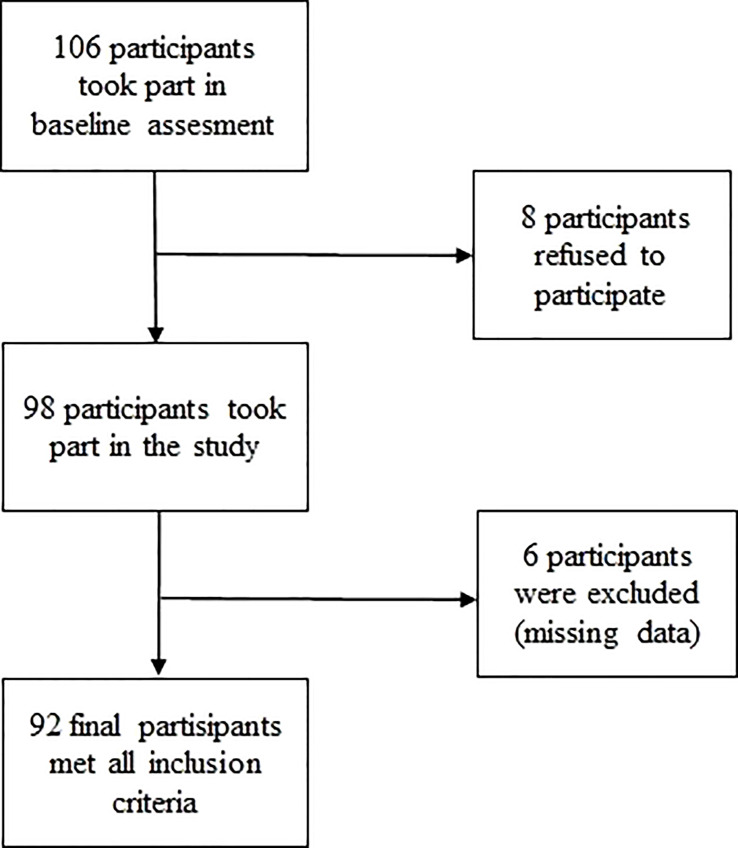
Introduction: Primary immunodeficiencies (PIDs) are clinically heterogeneous disorders caused by abnormalities in the immune system. However, PIDs are genetically determined and may occur at any age from early childhood to elderly age. Due to chronic patterns, the risk of malignancy and organ damage in patients with PIDs may affect any aspect of life, including sleep patterns. To our knowledge, the prevalence of insomnia and subjective sleep quality have not been investigated in patients with PIDs. Therefore, this pilot study was conducted to investigate sleep quality, the prevalence of sleep disturbances, and fatigue in adult patients with PIDs in Poland. Methods: All participants were surveyed using the Athens Insomnia Scale, Pittsburgh Sleep Quality Index, Fatigue Severity Scale, and a questionnaire concerning general health and demographic data. We included 92 participants: 48 women (52.2%) and 44 men (47.8%). Results: Participants' mean age was 41.9 ± 13.9 years. The mean sleep duration was 7.0 ± 1.5 hours, and the mean sleep latency was 41.2 ± 53.1 minutes. Additionally, 44.6% of patients (n=41) had symptoms of insomnia and 44.6% (n=42) had poor sleep quality. Less than one-fourth (n=22; 23.9%) of the patients reported the use of sleeping pills; moreover, clinically significant fatigue was reported in 52.2% (n=48). Discussion: Our investigation provides insight into the problem of sleep disturbances in patients with PIDs. Data have demonstrated that sleeping disorders with concomitant fatigue are common in patients with PID. Further studies are needed to determine the determinants of poor sleep quality in this specific group of patients.
Overview
The claims and statistics of this paper haven’t been checked yet.
Free: it reads the open-access text and checks the first 5 claims that cite a source we can check. Create a free account to check every claim.
Integrity signals
Registry
Cites
Statistics
Figures
Verification
Claims the paper makes
The claims and statistics of this paper haven’t been checked yet.
Free: it reads the open-access text and checks the first 5 claims that cite a source we can check. Create a free account to check every claim.
Claims other papers make about this one
Each is checked against this paper’s own text: does it say what the citing paper says it does?
The source backs part of the claim, not all of it — or backs it for a different population, condition or comparison.
In the citing paper
“patients are prone to developing mental health disorders, including anxiety and depression (3).”
From Anxiety in Polish adult patients with inborn errors of immunity: a cross-sectional study (2024) · cites this paper as [3]
Experimental — accuracy not yet measuredThe cited source says what the claim attributes to it.
In the citing paper
“Previously, we revealed that 38% of patients with IEI had anxiety symptoms, which were more frequent than depression symptoms (3).”
From Anxiety in Polish adult patients with inborn errors of immunity: a cross-sectional study (2024) · cites this paper as [3]
The cited source says what the claim attributes to it.
In the citing paper
“In our previous study (3), which included a part of the current study (n=92), anxiety symptoms were frequent.”
From Anxiety in Polish adult patients with inborn errors of immunity: a cross-sectional study (2024) · cites this paper as [3]
Self-check
Percentages, sums and reported differences re-computed from the paper’s own numbers.
The self-check needs the paper’s full text.
Citations
Cites
The Pittsburgh Sleep Quality Index: a new instrument for psychiatric practice and research
Buysse, D. J., Reynolds, C. F., Monk, T. H., Berman, S. R., & Kupfer, D. J. (1989) · Psychiatry Research · doi:10.1016/0165-1781(89)90047-4 · Cited by 35,234
Krupp, L. B. (1989) · Archives of Neurology · doi:10.1001/archneur.1989.00520460115022 · Cited by 6,172
International Classification of Sleep Disorders-Third Edition
Sateia, M. J. (2014) · Chest · doi:10.1378/chest.14-0970 · Cited by 3,860 · cited 1×
“The International Classification of Sleep Disorders has identified 7 major categories of sleep disorders: insomnia disorders, sleep-related breathing disorders, central disorders of hypersomnolence, circadian rhythm sleepwake disorders, sleep-related movement disorders, parasomnias, and other sleep disorders (12).”
BackgroundThe association of sleep and pain: an update and a path forward
Finan, P. H., Goodin, B. R., & Smith, M. T. (2013) · The Journal of Pain · doi:10.1016/j.jpain.2013.08.007 · Cited by 1,620
Fatigue in neurological disorders
Chaudhuri, A., & Behan, P. O. (2004) · The Lancet · doi:10.1016/s0140-6736(04)15794-2 · Cited by 1,297 · cited 1×
“Although fatigue appears in healthy individuals, it is more frequent in patients with chronic diseases (14), including various rheumatological diseases (15), neurological disorders (53), COPD (54), and cancers (52).”
BackgroundMerkies, I. S. J., & Kieseier, B. C. (2016) · European Neurology · doi:10.1159/000445347 · Cited by 869
The hospital anxiety and depression scale
Stern, A. F. (2014) · Occupational Medicine · doi:10.1093/occmed/kqu024 · Cited by 728
Sleep deficiency and chronic pain: potential underlying mechanisms and clinical implications
Haack, M., Simpson, N., Sethna, N., Kaur, S., & Mullington, J. (2020) · Neuropsychopharmacology · doi:10.1038/s41386-019-0439-z · Cited by 641
Sleep habits and susceptibility to the common cold
Cohen, S., Doyle, W. J., Alper, C. M., Janicki-Deverts, D., & Turner, R. B. (2009) · Archives of Internal Medicine · doi:10.1001/archinternmed.2008.505 · Cited by 605 · cited 1×
“(31) observed sleep efficiency and sleep duration in 153 healthy volunteers over 14 days.”
BackgroundMeasuring Subjective Sleep Quality: A Review
Fabbri, M., Beracci, A., Martoni, M., Meneo, D., Tonetti, L., & Natale, V. (2021) · International Journal of Environmental Research and Public Health · doi:10.3390/ijerph18031082 · Cited by 599
Research works printed but not linked: 1
- Obal F Krueger JM. Front Biosci (2003), 520–50. Department of Physiology, University of Szeged, A. Szent-Györgyi Medical Center, 6720 Szeged, Hungary, 2 Department of Veterinary and Comparative Anatomy, Pharmacology, and Physiology, Washington State University, Pullman, WA 99164-6520.
Cited by
Xiao, N., Huang, X., Yang, D., Zang, W., Kiselev, S. Y., Bolkov, M. A., Shinwari, K., Тузанкина, И. А., & Черешнев, В. А. (2024) · Preventive Medicine · doi:10.1016/j.ypmed.2024.108079 · Cited by 15
Subjective assessment of sleep quality in adult patients with hereditary angioedema
Karabıber, E., Gungoren, E. Y., Ozen, A. O., Barış, S., & Karakoç-Aydıner, E. (2025) · Frontiers in Neurology · doi:10.3389/fneur.2025.1555562 · Cited by 2
Assessment of Sleep Disorders in Patients with CVID
Punj, M., Neshat, S. S., Lee‐Mateus, A. Y., Cheung, J., & Squire, J. D. (2024) · Journal of Clinical Immunology · doi:10.1007/s10875-024-01711-y · Cited by 2
Anxiety in Polish adult patients with inborn errors of immunity: a cross-sectional study
Grochowalska, K., Ziętkiewicz, M., Nowicka-Sauer, K., Topolski, M., Więsik-Szewczyk, E., Matyja-Bednarczyk, A., Napiórkowska-Baran, K., & Zdrojewski, Z. (2024) · Frontiers in Psychiatry · doi:10.3389/fpsyt.2024.1293935 · Cited by 1
Self-citationGenetic and Immunological Insights into Angioedema Without Wheals
(2026) · Frontiers research topics · doi:10.3389/978-2-8325-7503-1
Metadata
- Authors
- Grochowalska, K., Ziętkiewicz, M., Więsik-Szewczyk, E., Matyja-Bednarczyk, A., Napiórkowska-Baran, K., Nowicka-Sauer, K., Hajduk, A., Sołdacki, D., & Zdrojewski, Z.
- Affiliations
- Gdańsk Medical University (PL)
- Nicolaus Copernicus University (PL)
- Central Clinical Hospital (PL)
- Corresponding author
- Grochowalska, Kinga
- ORCID
- Venue
- Frontiers in Immunology
- Publisher
- Frontiers Media SA
- Published
- 2023-01-13
- Volume
- 13
- Pages
- 1028890-1028890
- ISSN
- 1664-3224 (ISSN-L)
- PMC
- PMC9880253
- OpenAlex
- W4315797420
- Cited by
- 5
- References
- 56
- Citations by year
- 2026: 1 · 2025: 1 · 2024: 3
- FWCI
- 1.29
- Type
- journal article
- Language
- en
- Open access
- gold
- doi.org
- Licence
- Locations
- Frontiers in Immunology (publishedVersion, cc-by)
- PubMed Central (publishedVersion, cc-by)
- PubMed (publishedVersion)
- Homo Politicus (Academy of Humanities and Economics in Lodz) (submittedVersion, cc-by-nc-nd)
- DOAJ (DOAJ: Directory of Open Access Journals) (submittedVersion, cc-by-sa)
- Topics
- Social Sciences › Psychology › Experimental and Cognitive Psychology › Sleep and related disorders
- Social Sciences › Psychology › Experimental and Cognitive Psychology › Sleep and Work-Related Fatigue
- Life Sciences › Immunology and Microbiology › Immunology › Immunodeficiency and Autoimmune Disorders
- Keywords
- primary immunodeficiency, sleep quality, fatigue, insomnia, sleep disorders, sleep duration, sleep latency, hypnotics, adult patients
- MeSH terms
- Sleep Quality, Adult, Aged, Child, Preschool, Fatigue, Female, Humans, Sleep Initiation and Maintenance Disorders, Male, Middle Aged, Pilot Projects, Poland, Sleep
About these checks
Registry, retraction, Cites and statistics results are computed, not judged, with one exception: a printed reference that no index lists is read once by a model before it counts as a citation error. Claims are extracted by a model and kept only when their quote appears verbatim in the text; each cited source is then checked, with a model’s help, for whether it says what the claim relies on. Those verdicts can be wrong — read the claim’s quote and the cited source before relying on one.
Statistics and arithmetic are recomputed, not judged.
Confidence bands are shown only for fields calibrated on our annotated test set. None is calibrated yet, so no band is shown.
What counts as a claim ›How we measure confidence ›How we check this ›
Are you an author, or do you see a problem with this page? Request a review
Data sources
Bibliographic data: Semantic Scholar, OpenAlex, Crossref.
Contains information from the Semantic Scholar Academic Graph Datasets, made available under the ODC Attribution License (ODC-BY 1.0).
Semantic Scholar’s data is described in: Kinney, R., et al. (2023). The Semantic Scholar Open Data Platform. arXiv:2301.10140.
