

The clinical value of neutrophil-to-lymphocyte ratio, platelet-to-lymphocyte ratio, and D-dimer-to-fibrinogen ratio for predicting pneumonia and poor outcomes in patients with acute intracerebral hemorrhage
Open accessThe DOI matches its Crossref record; 47 of the 47 references it cites were found in a registry or an index.
Abstract
Background: This study aimed to investigate the neutrophil-to-lymphocyte ratio (NLR), platelet-to-lymphocyte ratio (PLR), and D-dimer-to-fibrinogen ratio (DFR) as predictors of pneumonia and poor outcomes in patients with acute intracerebral hemorrhage (ICH). Methods: We retrospectively examined patients with acute ICH treated in our institution from May 2018 to July 2020. Patient characteristics, laboratory testing data, radiologic imaging data, and 90-day outcomes were recorded and analyzed. Results: Among the 329 patients included for analysis, 183 (55.6%) developed pneumonia. Systolic blood pressure, initial hematoma volume, D-dimer concentration, NLR, PLR, DFR, and white blood cell, platelet, neutrophil, and lymphocyte counts at admission were significantly higher in patients who developed pneumonia than in those who did not; however, the Glasgow coma scale (GCS) score at admission was significantly lower in pneumonia patients compared with non-pneumonia patients (all P <0.05). Multivariate logistic regression showed that the NLR and PLR were independent predictors of pneumonia, and the NLR and DFR were independent predictors of poor 90-day outcomes (modified Rankin scale score 4–6). Conclusion: The NLR and PLR were independent predictors of pneumonia and the NLR and DFR were independent predictors of poor 90-day outcomes. The NLR, PLR, and DFR can provide prognostic information about acute ICH patients.
Overview
The claims and statistics of this paper haven’t been checked yet.
Free: it reads the open-access text and checks the first 5 claims that cite a source we can check. Create a free account to check every claim.
Integrity signals
Registry
Cites
Statistics
Figures
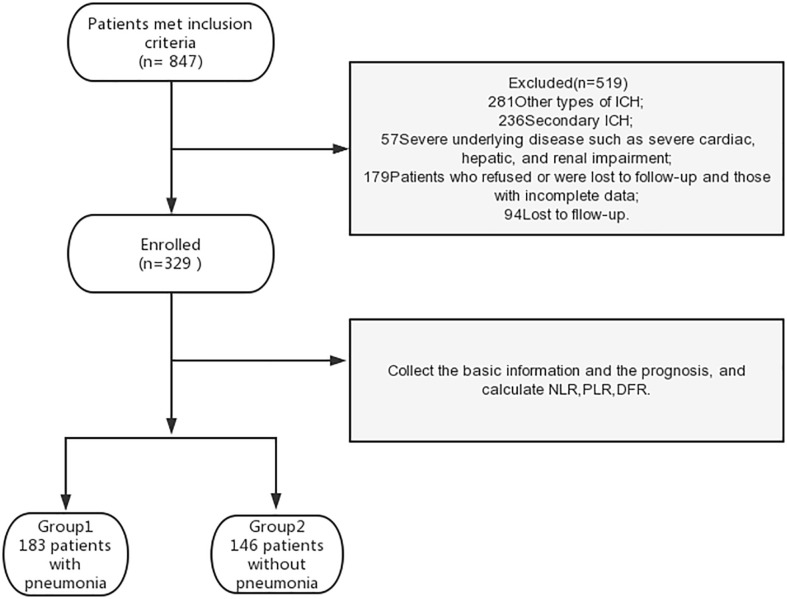
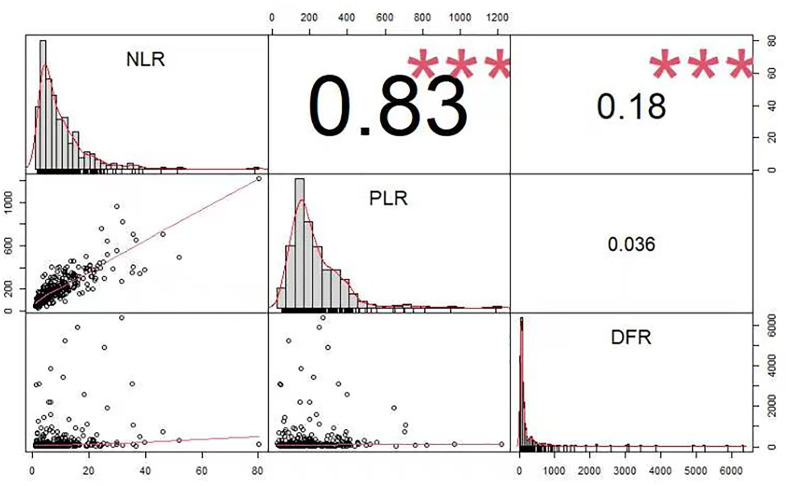
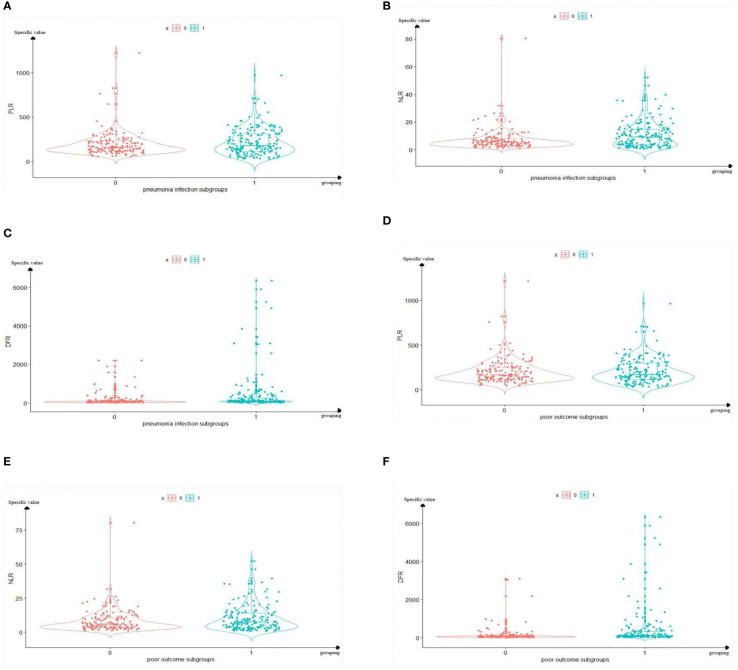
Verification
Claims the paper makes
The claims and statistics of this paper haven’t been checked yet.
Free: it reads the open-access text and checks the first 5 claims that cite a source we can check. Create a free account to check every claim.
Claims other papers make about this one
Each is checked against this paper’s own text: does it say what the citing paper says it does?
In the citing paper
“The PLR has hence emerged as an indicator of systemic inflammation and of endothelial dysfunction (both observed in mood disorders) that could affect the trafficking of peripheral inflammatory markers to the brain [79,80].”
From Complete blood count-based inflammation indexes and symptom severity in people with bipolar disorder: an analysis based on structural equation modelling (2026) · cites this paper as [79]
Self-check
Percentages, sums and reported differences re-computed from the paper’s own numbers.
The self-check needs the paper’s full text.
Citations
Cites
The ABCs of Measuring Intracerebral Hemorrhage Volumes
Kothari, R. U., Brott, T., Broderick, J. P., Barsan, W. G., Sauerbeck, L. R., Zuccarello, M., & Khoury, J. (1996) · Stroke · doi:10.1161/01.str.27.8.1304 · Cited by 2,222
Stroke-Associated Pneumonia: Major Advances and Obstacles
Hannawi, Y., Hannawi, B., Rao, C. P. V., Suarez, J. I., & Bershad, E. M. (2013) · Cerebrovascular Diseases · doi:10.1159/000350199 · Cited by 1,656
Fibrinogen as a Risk Factor for Stroke and Myocardial Infarction
Wilhelmsen, L., Svärdsudd, K., Korsan-Bengtsen, K., Larsson, B., Welin, L., & Tibblin, G. (1984) · New England Journal of Medicine · doi:10.1056/nejm198408233110804 · Cited by 1,646
Qureshi, A. I., Mendelow, A. D., & Hanley, D. F. (2009) · The Lancet · doi:10.1016/s0140-6736(09)60371-8 · Cited by 1,526 · cited 1×
“001 90-day mRS score, median (IQR) 5 [3-6] 2 [1-4] 74.”
Intensive Blood-Pressure Lowering in Patients with Acute Cerebral Hemorrhage
Qureshi, A. I., Palesch, Y. Y., Barsan, W. G., Hanley, D. F., Hsu, C. Y., Martin, R. L., Moy, C. S., Silbergleit, R., Steiner, T., Suarez, J. I., et al. (2016) · New England Journal of Medicine · doi:10.1056/nejmoa1603460 · Cited by 1,124
Circulating Platelets as Mediators of Immunity, Inflammation, and Thrombosis
Koupenova, M., Clancy, L., Corkrey, H. A., & Freedman, J. E. (2018) · Circulation Research · doi:10.1161/circresaha.117.310795 · Cited by 980
Smith, C. J., Kishore, A. K., Vail, A., Chamorro, A., Garau, J., Hopkins, S. J., Di Napoli, M., Kalra, L., Langhorne, P., Montaner, J., et al. (2015) · Stroke · doi:10.1161/strokeaha.115.009617 · Cited by 452
The Role of Inflammation in Venous Thromboembolism
Branchford, B. R., & Carpenter, S. L. (2018) · Frontiers in Pediatrics · doi:10.3389/fped.2018.00142 · Cited by 384
Factors influencing in-hospital mortality and morbidity in patients treated on a stroke unit
Koennecke, H.-C., Belz, W., Berfelde, D., Endres, M., Fitzek, S., Hamilton, F., Kreitsch, P., Mackert, B.-M., Nabavi, D. G., Nolte, C. H., et al. (2011) · Neurology · doi:10.1212/wnl.0b013e31822dc795 · Cited by 352
Acute inflammatory reaction following experimental intracerebral hemorrhage in rat
Gong, C., Hoff, J. T., & Keep, R. F. (2000) · Brain Research · doi:10.1016/s0006-8993(00)02427-6 · Cited by 334
Research works printed but not linked: 1
- Chinese Society of Neurology, Chinese Stroke Society. Chinese Guidelines for diagnosis and treatment of acute intracerebral hemorrhage. Chin J Neurol (2019) 52:994-1005.
Cited by
Wang, R.-H., Wen, W.-X., Jiang, Z.-P., Du, Z.-P., Ma, Z.-H., Lu, A.-L., Li, H.-P., Yuan, F., Wu, S.-B., Guo, J.-W., et al. (2023) · Frontiers in Immunology · doi:10.3389/fimmu.2023.1115031 · Cited by 372
“The platelet-to-lymphocyte ratio (PLR) is a marker based on platelet aggregation and systemic inflammation (12, 13).”
BackgroundInfluentialCai, C., Zeng, W., Wang, H., & Ren, S. (2024) · International Journal of COPD · doi:10.2147/copd.s452444 · Cited by 58
Kim, Y., Sohn, J., Kim, C., Park, S. Y., & Lee, S. (2023) · Journal of Clinical Medicine · doi:10.3390/jcm12083004 · Cited by 30
“evaluated the association between PLR and outcomes after ICH [11,39], and our study is the first to evaluate the impact of PLR on HE after ICH.”
BackgroundGuo, P., & Zou, W. (2024) · Frontiers in Neurology · doi:10.3389/fneur.2023.1288377 · Cited by 23
Guo, R., Yan, S., Li, Y., Liu, K., Wu, F., Feng, T., Chen, R., Liu, Y., You, C., & Tian, R. (2024) · World Neurosurgery · doi:10.1016/j.wneu.2024.06.001 · Cited by 16
Yang, S., Liu, Y., Wang, S., Cai, Z., Yang, A., & Hui, X. (2023) · Frontiers in Endocrinology · doi:10.3389/fendo.2023.1290176 · Cited by 18
Cavaleri, D., De Pietra, A., Gazzola, M., Crocamo, C., Bartoli, F., & Carrà, G. (2024) · Psychoneuroendocrinology · doi:10.1016/j.psyneuen.2024.107134 · Cited by 15
Li, X., Du, H., Song, Z., Meiqi, Zhang, G., yuan, S., Yuanfeng, & Wang, H. (2024) · BMC Neurology · doi:10.1186/s12883-024-03752-7 · Cited by 14
Wang, Y., Wang, G., Gong, M., Yang, Y., Ling, Y., Fang, X., Zhu, T., Wang, Z., Zhang, X., & Zhang, C. (2024) · BMC Psychiatry · doi:10.1186/s12888-023-05469-2 · Cited by 15
“The platelet-to-lymphocyte ratio (PLR) is an indicator derived from platelet aggregation and systemic inflammation [18], while the monocyte-to-lymphocyte ratio (MLR) serves as a potential peripheral marker of microglia activation in the brain, as monocytes could be recruited to the brain under…”
BackgroundXie, M., Liu, Z., Dai, F., Cao, Z., & Wang, X. (2025) · International Journal of General Medicine · doi:10.2147/ijgm.s524450 · Cited by 10
“9–12 These indices are easily obtainable and can reflect the systemic inflammatory status and immune response of the body, making them valuable references in clinical practice.”
Zhang, J., Liu, C., Hu, Y., Yang, A., Zhang, Y., & Hong, Y. (2023) · Frontiers in Neurology · doi:10.3389/fneur.2023.1189898 · Cited by 11
Ma, W., Wu, X., Yang, L., Yang, Y., Zhang, H., Wang, Y., Xue, H., & Long, X. (2024) · Frontiers in Neurology · doi:10.3389/fneur.2024.1444744 · Cited by 7
Neutrophil-To-Lymphocyte Ratio as a Prognostic Indicator in Thyroid Cancer
Gao, Q., Quan, M., Zhang, L., Ran, Y., Zhong, J., & Wang, B. (2024) · Cancer Control · doi:10.1177/10732748241309048 · Cited by 14
Wang, H., Liu, Y., Yuan, J. J., Wang, Y., Yuan, Y., Liu, Y., Ren, X., & Zhou, J. (2024) · Neurological Sciences · doi:10.1007/s10072-024-07572-y · Cited by 9
“[17, 24, 25, 28–33] Currently, there is scarce literature on predicting the short-term survival outcomes of patients with sTBI based on general baseline indicators, TBI-related clinical indicators, radiological indicators, and combined serological markers.”
Wang, H., Li, Y., Ye, F., Deng, Z., Huang, K., Li, G., Chen, Y., Liu, Y., & Zhou, L. (2025) · BMC Neurology · doi:10.1186/s12883-025-04137-0 · Cited by 6
“Some studies have reported a correlation between PLR and the prognosis of patients with cerebral hemorrhage [29–31].”
Chen, G., & Kang, H. (2024) · Heliyon · doi:10.1016/j.heliyon.2024.e39907 · Cited by 7
Wan, J., Liu, Y., Yuan, X., Fan, S., Xiao, Y., Fang, F., & Zhang, Y. (2025) · Journal of Inflammation Research · doi:10.2147/jir.s519664 · Cited by 5
Lan, D., Wang, M., Zhang, X., Huang, X., Liu, N., Ren, X., Fang, K., Zhou, D., & Meng, R. (2024) · Thrombosis Journal · doi:10.1186/s12959-024-00664-x · Cited by 6
“…both of which are crucial for assessing the severity and prognosis of CVT. DFR is a novel coagulation parameter indicates the balance of fibrinolysis and coagulation processes and has clinical value in patients with acute coronary syndrome, acute ischemic stroke and cerebral hemorrhage [9–12].”
InfluentialZhang, S., Zhang, Y.-L., Yuan, L., Ma, Y.-B., Huang, J.-M., Wen, Y.-Q., Zhu, M.-H., & Yang, W. (2024) · Clinical Neurology and Neurosurgery · doi:10.1016/j.clineuro.2024.108495 · Cited by 4
Self-citationXu, Y., & Liu, Y. (2025) · BMC Neurology · doi:10.1186/s12883-024-04016-0 · Cited by 8
“And the previous researches also indicated that NLR and PLR may predict early neurological deterioration in acute ischemic stroke and ICH patients [17, 18].”
Li, Y., Li, Y., Wang, J., & Sun, K. (2025) · Frontiers in Cellular and Infection Microbiology · doi:10.3389/fcimb.2025.1525758 · Cited by 4
Cai, Y., Ke, L., Xuefeng, H., Anbang, Q., Yang, X., Wenhui, C., Li, W., Zeng, Y., & Wei, B. (2025) · Therapeutic Advances in Respiratory Disease · doi:10.1177/17534666251320471 · Cited by 4
Cavaleri, D., Crocamo, C., Riboldi, I., Guzzi, P., Bartoli, F., & Carrà, G. (2026) · European Archives of Psychiatry and Clinical Neuroscience · doi:10.1007/s00406-025-02129-2 · Cited by 2
Wang, X., Yang, X. W., Yao, Y., Hu, H., Zhao, Y., & Zhu, Z. (2025) · Journal of Inflammation Research · doi:10.2147/jir.s553806 · Cited by 2
Liu, Y., Wu, C., Huang, Y., Guo, J., Du, C., & Li, X. (2025) · Frontiers in Neurology · doi:10.3389/fneur.2025.1644910 · Cited by 2
Li, Y., Yu, L., Fu, M., Liu, L., Han, F., Qiao, Y., Li, B., & Gao, X. (2025) · European journal of medical research · doi:10.1186/s40001-025-03378-6 · Cited by 3
“Indeed, clinical evidence has demonstrated that both hyperglycemia and lymphopenia independently correlate with poor outcomes in cerebrovascular diseases [20, 28, 29].”
Zhang, H. C., Chen, W., Yang, M., Zheng, H., Wu, Z., & Duan, T. (2026) · BMC Neurology · doi:10.1186/s12883-026-04914-5 · Cited by 2
“Conventional statistical models often assume a linear association between continuous predictors and outcomes [12, 13], which may not adequately capture complex biological relationships.”
Wang, Y. (2024) · American Journal of Translational Research · doi:10.62347/zxpv4184 · Cited by 2
A Novel Nomogram for Predicting the Risk of Pneumonia After Intracerebral Hemorrhage
Sun, Y., Zhang, L., Huang, B., He, Q., & Hu, B. (2025) · Journal of Inflammation Research · doi:10.2147/jir.s490064 · Cited by 2
Guo, Y., You, Q., Wang, P., Wan, J., Zhang, S., Fan, S., Ouyang, Y., Yuan, X. L., Li, T., Luis, C. D. J., et al. (2025) · Frontiers in Neurology · doi:10.3389/fneur.2025.1625410 · Cited by 1
Self-citationMbah, J. I., Bwititi, P., Gyawali, P., Ong, L. K., & Nwose, E. U. (2026) · Journal of Clinical Medicine · doi:10.3390/jcm15020892 · Cited by 2
“Many studies on lymphocyte ratios appear to focus on intracranial bleeding [57,58].”
Analysis of CT characteristics and prognostic factors in non-hypertensive cerebral hemorrhage
Liang, S., Yan, Q., Lu, W., & Zhou, Y. (2025) · Journal of Radiation Research and Applied Sciences · doi:10.1016/j.jrras.2025.101302
Role of thyroid function in non-basal ganglia intracerebral hemorrhage prognosis
Xu, Y., Xu, Z., Chen, Y., Yang, J., Li, K., Chen, Y., Xie, J., Pang, C., Gao, L., Song, M., et al. (2025) · Journal of Endocrinological Investigation · doi:10.1007/s40618-025-02603-7
Fan, J., Huo, J., Liang, J., & Jing, X. (2025) · Scientific Reports · doi:10.1038/s41598-025-21444-1
Wang, Y., Wang, G., Gong, M., Yang, Y., Ling, Y., Fang, X., Zhu, T., Wang, Z., Zhang, X., & Zhang, C. (2024) · Figshare · doi:10.6084/m9.figshare.25017830
Bao, H., Wei, H., Wang, Y., Zhang, Y., cai, W., & Wu, Y. N. (2026) · Frontiers in Neurology · doi:10.3389/fneur.2026.1826034
Zhang, X., Fu, Y., & Lu, J. (2026) · Clinical and Applied Thrombosis/Hemostasis · doi:10.1177/10760296261468428
“11,12 13-17 Elevated DFR levels independently predict cardiovascular events following percutaneous coronary intervention.”
Wu, Z., Sun, Q., Zhan, J., Yang, M., Duan, T., Pan, H., & Xu, J. (2026) · Frontiers in Neurology · doi:10.3389/fneur.2026.1866716
“Consistent with previous reports, elevated NLR, PLR, and SII have been associated with increased SAP risk (13, 35–37).”
InfluentialInflammation Markers Fail to Predict Post-thymectomy Myasthenic Crisis: A Retrospective Analysis
Kuo, Y., Huang, Y., Lin, K., Tsai, Y.-M., Huang, H., & Huang, T.-W. (2026) · Journal of Medical Sciences · doi:10.4103/jmedsci.jmedsci_11_26
Metadata
- Authors
- Luo, S., Yang, W.-S., Shen, Y.-Q., Chen, P., Zhang, S.-Q., Jia, Z., Li, Q., Zhao, J.-T., & Xie, P.
- Affiliations
- Henan Medical University (CN)
- The Affiliated Yongchuan Hospital of Chongqing Medical University (CN)
- Corresponding author
- Zhao, Jian-Ting
- Xie, Peng
- Venue
- Frontiers in Immunology
- Publisher
- Frontiers Media SA
- Published
- 2022-10-10
- Volume
- 13
- Pages
- 1037255-1037255
- ISSN
- 1664-3224 (ISSN-L)
- PMC
- PMC9589455
- OpenAlex
- W4304161253
- Cited by
- 39
- References
- 47
- Citations by year
- 2026: 6 · 2025: 15 · 2024: 14 · 2023: 4
- FWCI
- 4.34
- Type
- journal article
- Language
- en
- Open access
- gold
- doi.org
- Licence
- Locations
- Frontiers in Immunology (publishedVersion, cc-by)
- PubMed Central (publishedVersion, cc-by)
- PubMed (publishedVersion)
- DOAJ (DOAJ: Directory of Open Access Journals) (submittedVersion, cc-by-sa)
- Topics
- Health Sciences › Medicine › Clinical Neurology › Intracerebral and Subarachnoid Hemorrhage Research
- Health Sciences › Medicine › Oncology › Inflammatory Biomarkers in Disease Prognosis
- Health Sciences › Medicine › Clinical Neurology › Acute Ischemic Stroke Management
- Keywords
- acute intracerebral hemorrhage, neutrophil-to-lymphocyte ratio, platelet-to-lymphocyte ratio, pneumonia, prognostic factors, 90-day functional outcome, modified Rankin Scale, hematoma volume, Glasgow Coma Scale
- MeSH terms
- Cerebral Hemorrhage, Fibrin Fibrinogen Degradation Products, Fibrinogen, Humans, Lymphocytes, Neutrophils, Pneumonia, Retrospective Studies
About these checks
Registry, retraction, Cites and statistics results are computed, not judged, with one exception: a printed reference that no index lists is read once by a model before it counts as a citation error. Claims are extracted by a model and kept only when their quote appears verbatim in the text; each cited source is then checked, with a model’s help, for whether it says what the claim relies on. Those verdicts can be wrong — read the claim’s quote and the cited source before relying on one.
Statistics and arithmetic are recomputed, not judged.
Confidence bands are shown only for fields calibrated on our annotated test set. None is calibrated yet, so no band is shown.
What counts as a claim ›How we measure confidence ›How we check this ›
Are you an author, or do you see a problem with this page? Request a review
Data sources
Bibliographic data: Semantic Scholar, OpenAlex, Crossref.
Contains information from the Semantic Scholar Academic Graph Datasets, made available under the ODC Attribution License (ODC-BY 1.0).
Semantic Scholar’s data is described in: Kinney, R., et al. (2023). The Semantic Scholar Open Data Platform. arXiv:2301.10140.
