

The DOI matches its Crossref record; 3 of the 3 references it cites were found in a registry or an index.
Mini Review: Structure and Function of Nematode Phosphorylcholine-Containing Glycoconjugates
Abstract
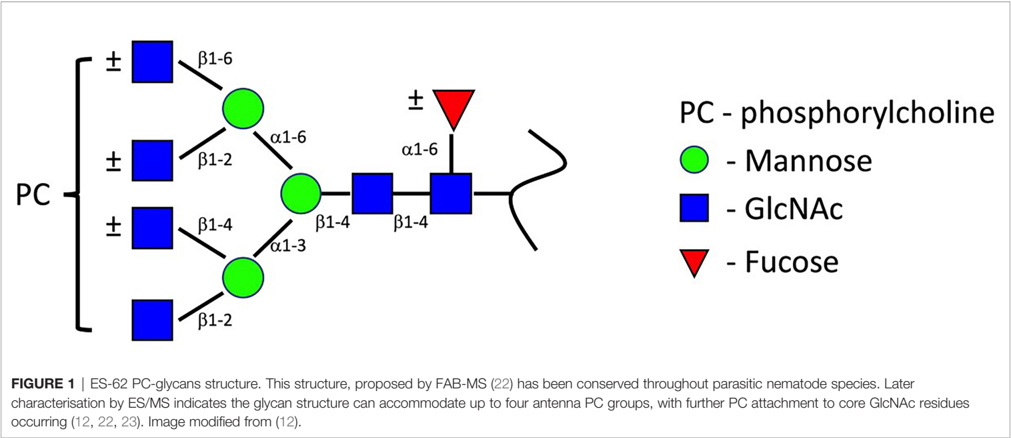
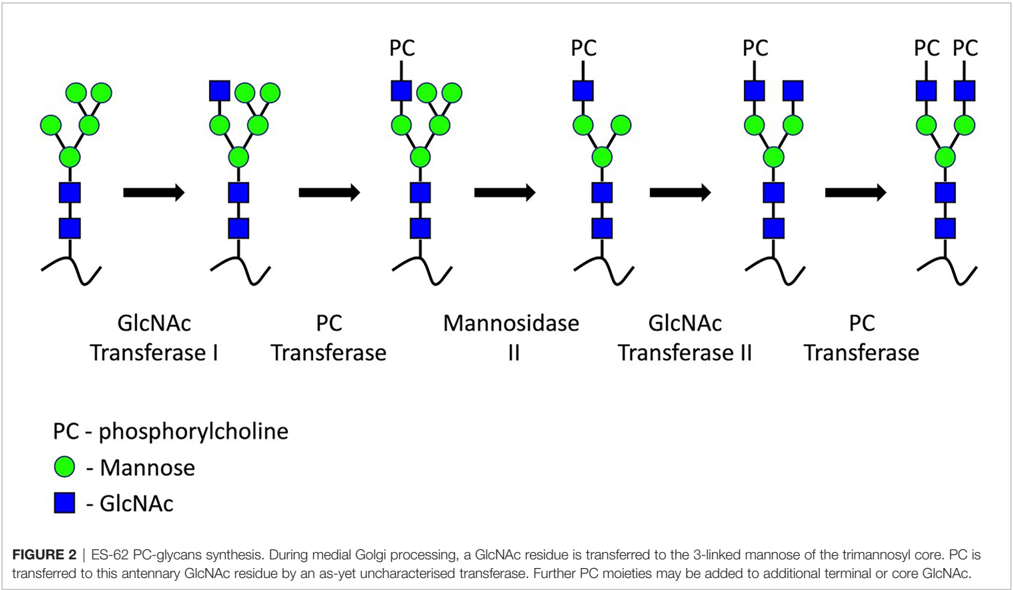
An unusual aspect of the biology of nematodes is the covalent attachment of phosphorylcholine (PC) to carbohydrate in glycoconjugates. Investigation of the structure of these molecules by ever-increasingly sophisticated analytical procedures has revealed that PC is generally in phosphodiester linkage with C6 of N-acetylglucosamine (GlcNAc) in both N-type glycans and glycosphingolipids. Up to five PC groups have been detected in the former, being located on both antenna and core GlcNAc. The PC donor for transfer to carbohydrate appears to be phosphatidylcholine but the enzyme responsible for transfer remains to be identified. Work primarily involving the PC-containing Acanthocheilonema viteae secreted product ES-62, has shown that the PC attached to nematode N-glycans possesses a range of immunomodulatory properties, subverting for example, pro-inflammatory signalling in various immune system cell-types including lymphocytes, mast cells, dendritic cells and macrophages. This has led to the generation of PC-based ES-62 small molecule analogues (SMAs), which mirror the parent molecule in preventing the initiation or progression of disease in mouse models of a number of human conditions associated with aberrant inflammatory responses. These include rheumatoid arthritis, systemic lupus erythematosus and lung and skin allergy such that the SMAs are considered to have widespread therapeutic potential.
Overview
The claims and statistics of this paper haven’t been checked yet.
Run the check — free, no account needed. It reads the open-access text and checks the sources it cites.
Integrity signals
Registry
Cites
Statistics
Figures
Verification
Claims the paper makes
The claims and statistics of this paper haven’t been checked yet.
Run the check — free, no account needed. It reads the open-access text and checks the sources it cites.
Claims other papers make about this one
Each is checked against this paper’s own text: does it say what the citing paper says it does?
In the citing paper
“Finally, ES-62, a glycoprotein secreted by Acanthocheilonema viteae, exhibits a broad range of immunomodulatory actions”
From Parasites and allergies: a complex bidirectional relationship from evolutionary origins to modern therapeutics (2026) · cites this paper as Buitrago et al. 2021
Self-check
Percentages, sums and reported differences re-computed from the paper’s own numbers.
The self-check needs the paper’s full text.
Citations
Cites
Assembly and localization of Toll-like receptor signalling complexes
Gay, N. J., Symmons, M. F., Gangloff, M., & Bryant, C. E. (2014) · Nature Reviews Immunology · doi:10.1038/nri3713 · Cited by 832
Hookworm recombinant protein promotes regulatory T cell responses that suppress experimental asthma
Navarro, S., Pickering, D. A., Ferreira, I. B., Jones, L., Ryan, S., Troy, S., Leech, A., Hotez, P. J., Zhan, B., Laha, T., et al. (2016) · Science Translational Medicine · doi:10.1126/scitranslmed.aaf8807 · Cited by 139
Al-Riyami, L., Pineda, M. A., Rzepecka, J., Huggan, J. K., Khalaf, A. I., Suckling, C. J., Scott, F. J., Rodgers, D. T., Harnett, M. M., & Harnett, W. (2013) · Journal of Medicinal Chemistry · doi:10.1021/jm401251p · Cited by 94
Self-citation
Research works printed but not linked: 112
- Brooker, 2004, Human Hookworm Infection in the 21st Century, Adv Parasitol, 58, 197, 10.1016/S0065-308X(04)58004-1 · DOI
- Recker, 2004, Transient Cross-Reactive Immune Responses can Orchestrate Antigenic Variation in Malaria, Nature, 429, 10.1038/nature02486 · DOI
- Leow, 2015, Structure-Function Analysis of Apical Membrane-Associated Molecules of the Tegument of Schistosome Parasites of Humans: Prospects for Identification of Novel Targets for Parasite Control, Br J Pharmacol, 172, 10.1111/bph.12898 · DOI
- Péry, 1974, Phosphorylcholine-Bearing Components in Homogenates of Nematodes, Eur J Immunol, 4, 10.1002/eji.1830040914 · DOI
- Forsyth, 1984, Onchocerca Gibsoni: Increase of Circulating Egg Antigen With Chemotherapy in Bovines, Exp Parasitol, 58, 41, 10.1016/0014-4894(84)90019-5 · DOI
- Forsyth, 1985, A Monoclonal Antibody-Based Immunoradiometric Assay for Detection of Circulating Antigen in Bancroftian Filariasis, J Immunol, 134, 1172, 10.4049/jimmunol.134.2.1172 · DOI
- Lal, 1987, Circulating Parasite Antigen(s) in Lymphatic Filariasis: Use of Monoclonal Antibodies to Phosphocholine for Immunodiagnosis, J Immunol, 138, 3454, 10.4049/jimmunol.138.10.3454 · DOI
- Maizels, 1987, Phosphorylcholine-Bearing Antigens in Filarial Nematode Parasites: Analysis of Somatic Extracts, in-Vitro Secretions and Infection Sera From Brugia Malayi and B. Pahangi, Parasite Immunol, 9, 49, 10.1111/j.1365-3024.1987.tb00488.x · DOI
- Weiss, 1986, Detection of Serum Antibodies and Circulating Antigens in a Chimpanzee Experimentally Infected With Onchocerca Volvulus, Trans R Soc Trop Med Hyg, 80, 10.1016/0035-9203(86)90150-1 · DOI
- Wenger, 1988, Identification of Phosphorylcholine Epitope-Containing Antigens in Brugia Malayi and Relation of Serum Epitope Levels to Infection Status of Jirds With Brugian Filariasis, Am J Trop Med Hyg, 38, 10.4269/ajtmh.1988.38.133 · DOI
- Harnett, 1989, Origin, Kinetics of Circulation and Fate In Vivo of the Major Excretory–Secretory Product of Acanthocheilonema Viteae, Parasitology, 99, 10.1017/S0031182000058686 · DOI
- Haslam, 1999, Structural Studies of N-Glycans of Filarial Parasites. Conservation of Phosphorylcholine-Substituted Glycans Among Species and Discovery of Novel Chito-Oligomers, J Biol Chem, 274, 10.1074/jbc.274.30.20953 · DOI
- Wuhrer, 2000, Phosphocholine-Containing, Zwitterionic Glycosphingolipids of Adult Onchocerca Volvulus as Highly Conserved Antigenic Structures of Parasitic Nematodes, Biochem J, 10.1042/bj3480417 · DOI
- Deehan, 2002, Immunomodulatory Properties of Ascaris Suum Glycosphingolipids – Phosphorylcholine and Non-Phosphorylcholine-Dependent Effects, Parasite Immunol, 24, 10.1046/j.1365-3024.2002.00489.x · DOI
- Pöltl, 2007, N-Glycans of the Porcine Nematode Parasite Ascaris Suum Are Modified With Phosphorylcholine and Core Fucose Residues, FEBS J, 274, 10.1111/j.1742-4658.2006.05615.x · DOI
- Hewitson, 2008, The Secretome of the Filarial Parasite, Brugia Malayi: Proteomic Profile of Adult Excretory-Secretory Products, Mol Biochem Parasitol, 160, 8, 10.1016/j.molbiopara.2008.02.007 · DOI
- Martini, 2019, Highly Modified and Immunoactive N-Glycans of the Canine Heartworm, Nat Commun, 10, 75, 10.1038/s41467-018-07948-7 · DOI
- Harnett, 1999, Molecular Cloning and Demonstration of an Aminopeptidase Activity in a Filarial Nematode Glycoprotein, Mol Biochem Parasitol, 104, 11, 10.1016/S0166-6851(99)00113-9 · DOI
- Stepek, 2002, Expression of the Filarial Nematode Phosphorylcholine-Containing Glycoprotein, ES62, Is Stage Specific, Parasitology, 125, 10.1017/S0031182002001920 · DOI
- Harnett, 1993, Acanthocheilonema Viteae: Phosphorylcholine Is Attached to the Major Excretory-Secretory Product via an N-Linked Glycan, Exp Parasitol, 77, 498, 10.1006/expr.1993.1113 · DOI
- Houston, 1996, Prevention of Attachment of Phosphorylcholine to a Major Excretory-Secretory Product of Acanthocheilonema Viteae Using Tunicamycin, J Parasitol, 82, 10.2307/3284169 · DOI
- Haslam, 1997, Characterisation of the Phosphorylcholine-Containing N-Linked Oligosaccharides in the Excretory-Secretory 62 kDa Glycoprotein of Acanthocheilonema Viteae, Mol Biochem Parasitol, 85, 53, 10.1016/S0166-6851(96)02807-1 · DOI
- North, 2019, Site-Specific Glycoproteomic Characterization of ES-62: The Major Secreted Product of the Parasitic Worm Acanthocheilonema Viteae, Glycobiology, 29, 10.1093/glycob/cwz035 · DOI
- Morelle, 2000, Phosphorylcholine-Containing N-Glycans of Trichinella Spiralis: Identification of Multiantennary lacdiNAc Structures, Glycobiology, 10, 10.1093/glycob/10.9.941 · DOI
- Wilson, 2016, Sweet Secrets of a Therapeutic Worm: Mass-Spectrometric N-Glycomic Analysis of Trichuris Suis, Anal Bioanal Chem, 408, 10.1007/s00216-015-9154-8 · DOI
- Hanneman, 2006, Isomer and Glycomer Complexities of Core GlcNAcs in Caenorhabditis Elegans, Glycobiology, 16, 10.1093/glycob/cwl011 · DOI
- Yan, 2015, Comparison of RP-HPLC Modes to Analyse the N-Glycome of the Free-Living Nematode Pristionchus Pacificus, Electrophoresis, 36, 10.1002/elps.201400528 · DOI
- Gerdt, 1999, Isolation, Characterization and Immunolocalization of Phosphorylcholine-Substituted Glycolipids in Developmental Stages of Caenorhabditis Elegans, Eur J Biochem, 266, 10.1046/j.1432-1327.1999.00937.x · DOI
- Grabitzki, 2008, The PCome of Caenorhabditis Elegans as a Prototypic Model System for Parasitic Nematodes: Identification of Phosphorylcholine-Substituted Proteins, Mol Biochem Parasitol, 161, 10.1016/j.molbiopara.2008.06.014 · DOI
- Houston, 2002, Investigation of the Nature of Potential Phosphorylcholine Donors for Filarial Nematode Glycoconjugates, Mol Biochem Parasitol, 123, 55, 10.1016/S0166-6851(02)00134-2 · DOI
- Cipollo, 2004, Biosynthesis In Vitro of Caenorhabditis Elegans Phosphorylcholine Oligosaccharides, Proc Natl Acad Sci USA, 101, 3404, 10.1073/pnas.0400384101 · DOI
- Houston, 1997, Studies on the Site and Mechanism of Attachment of Phosphorylcholine to a Filarial Nematode Secreted Glycoprotein, J Biol Chem, 272, 10.1074/jbc.272.3.1527 · DOI
- Houston, 2004, Structure and Synthesis of Nematode Phosphorylcholine-Containing Glycoconjugates, Parasitology, 129, 10.1017/S0031182004006171 · DOI
- Lal, 1990, Phosphocholine-Containing Antigens of Brugia Malayi Nonspecifically Suppress Lymphocyte Function, Am J Trop Med Hyg, 42, 56, 10.4269/ajtmh.1990.42.56 · DOI
- Harnett, 1993, Inhibition of Murine B Cell Proliferation and Down-Regulation of Protein Kinase C Levels by a Phosphorylcholine-Containing Filarial Excretory-Secretory Product, J Immunol (Baltimore Md 1950), 151, 10.4049/jimmunol.151.9.4829 · DOI
- Pineda, 2014, ES-62, a Therapeutic Anti-Inflammatory Agent Evolved by the Filarial Nematode Acanthocheilonema Viteae, Mol Biochem Parasitol, 194, 1, 10.1016/j.molbiopara.2014.03.003 · DOI · Paper page
- Deehan, 1998, A Phosphorylcholine-Containing Filarial Nematode-Secreted Product Disrupts B Lymphocyte Activation by Targeting Key Proliferative Signaling Pathways, J Immunol, 160, 10.4049/jimmunol.160.6.2692 · DOI
- Deehan, 2001, A Filarial Nematode-Secreted Phosphorylcholine-Containing Glycoprotein Uncouples the B Cell Antigen Receptor From Extracellular Signal-Regulated Kinase-Mitogen-Activated Protein Kinase by Promoting the Surface Ig-Mediated Recruitment of Src Homology 2 Domain-Containing Tyrosine Phosphatase-1 and Pac-1 Mitogen-Activated Kinase-Phosphatase, J Immunol, 166, 10.4049/jimmunol.166.12.7462 · DOI · Paper page
- Rzepecka, 2014, Small Molecule Analogues of the Immunomodulatory Parasitic Helminth Product ES-62 Have Anti-Allergy Properties, Int J Parasitol, 44, 10.1016/j.ijpara.2014.05.001 · DOI · Paper page
- Melendez, 2007, Inhibition of FcϵRI-Mediated Mast Cell Responses by ES-62, a Product of Parasitic Filarial Nematodes, Nat Med, 13, 10.1038/nm1654 · DOI
- Ball, 2013, Mast Cell Subsets and Their Functional Modulation by the Acanthocheilonema Viteae Product ES-62, Mast Cell Subsets and Their Functional Modulation by the Acanthocheilonema Viteae Product ES-62, J Parasitol Res, 2013, e961268, 10.1155/2013/961268 · DOI
- Bell, 2015, The Role of Individual Protein Kinase C Isoforms in Mouse Mast Cell Function and Their Targeting by the Immunomodulatory Parasitic Worm Product, ES-62, Immunol Lett, 168, 31, 10.1016/j.imlet.2015.09.001 · DOI
- Goodridge, 2007, Phosphorylcholine Mimics the Effects of ES-62 on Macrophages and Dendritic Cells, Parasite Immunol, 29, 10.1111/j.1365-3024.2006.00926.x · DOI · Paper page
- Goodridge, 2005, Immunomodulation via Novel Use of TLR4 by the Filarial Nematode Phosphorylcholine-Containing Secreted Product, ES-62, J Immunol, 174, 10.4049/jimmunol.174.1.284 · DOI
- Honda, 2005, IRF-7 Is the Master Regulator of Type-I Interferon-Dependent Immune Responses, Nature, 434, 10.1038/nature03464 · DOI
- Jin, 2007, Crystal Structure of the TLR1-TLR2 Heterodimer Induced by Binding of a Tri-Acylated Lipopeptide, Cell, 130, 10.1016/j.cell.2007.09.008 · DOI
- Honda, 2005, Spatiotemporal Regulation of MyD88–IRF-7 Signalling for Robust Type-I Interferon Induction, Nature, 434, 10.1038/nature03547 · DOI
- Hemmi, 2000, A Toll-Like Receptor Recognizes Bacterial DNA, Nature, 408, 10.1038/35047123 · DOI · Paper page
- Lumb, 2017, Dendritic Cells Provide a Therapeutic Target for Synthetic Small Molecule Analogues of the Parasitic Worm Product, ES-62, Sci Rep, 7, 1704, 10.1038/s41598-017-01651-1 · DOI
- Goodridge, 2001, Modulation of Macrophage Cytokine Production by ES-62, a Secreted Product of the Filarial Nematode Acanthocheilonema Viteae, J Immunol, 167, 10.4049/jimmunol.167.2.940 · DOI
- Zhou, 2014, Poly(I:C) Induces Antiviral Immune Responses in Japanese Flounder (Paralichthys Olivaceus) That Require TLR3 and MDA5 and Is Negatively Regulated by Myd88, PloS One, 9, e112918, 10.1371/journal.pone.0112918 · DOI
- Siednienko, 2011, Absence of MyD88 Results in Enhanced TLR3-Dependent Phosphorylation of IRF3 and Increased IFN-β and RANTES Production, J Immunol, 186, 10.4049/jimmunol.1003093 · DOI
- Alexopoulou, 2001, Recognition of Double-Stranded RNA and Activation of NF-κb by Toll-Like Receptor 3, Nature, 413, 10.1038/35099560 · DOI · Paper page
- Rzepecka, 2015, Prophylactic and Therapeutic Treatment With a Synthetic Analogue of a Parasitic Worm Product Prevents Experimental Arthritis and Inhibits IL-1β Production via NRF2-Mediated Counter-Regulation of the Inflammasome, J Autoimmun, 60, 59, 10.1016/j.jaut.2015.04.005 · DOI
- Suckling, 2018, Small Molecule Analogues of the Parasitic Worm Product ES-62 Interact With the TIR Domain of MyD88 to Inhibit Pro-Inflammatory Signalling, Sci Rep, 8, 2123, 10.1038/s41598-018-20388-z · DOI
- Pineda, 2015, From the Worm to the Pill, the Parasitic Worm Product ES-62 Raises New Horizons in the Treatment of Rheumatoid Arthritis, Lupus, 24, 10.1177/0961203314560004 · DOI
- Pineda, 2012, The Parasitic Helminth Product ES-62 Suppresses Pathogenesis in Collagen-Induced Arthritis by Targeting the Interleukin-17–Producing Cellular Network at Multiple Sites, Arthritis Rheum, 64, 10.1002/art.34581 · DOI
- Rodgers, 2015, Drug-Like Analogues of the Parasitic Worm-Derived Immunomodulator ES-62 Are Therapeutic in the MRL/Lpr Model of Systemic Lupus Erythematosus, Lupus, 24, 10.1177/0961203315591031 · DOI
- Vogel, 1999, Cutting Edge: Functional Characterization of the Effect of the C3H/HeJ Defect in Mice That Lack an Lps Gene: In Vivo Evidence for a Dominant Negative Mutation, J Immunol, 162, 10.4049/jimmunol.162.10.5666 · DOI
- Poltorak, 1998, Defective LPS Signaling in C3H/HeJ and C57BL/10ScCr Mice: Mutations in Tlr4 Gene, Science, 282, 10.1126/science.282.5396.2085 · DOI · Paper page
- Bovijn, 2012, Identification of Interaction Sites for Dimerization and Adapter Recruitment in Toll/interleukin-1 Receptor (TIR) Domain of Toll-Like Receptor 4, J Biol Chem, 287, 10.1074/jbc.M111.282350 · DOI
- Harnett, 2012, Receptor Usage by the Acanthocheilonema Viteae-Derived Immunomodulator, ES-62, Exp Parasitol, 132, 97, 10.1016/j.exppara.2011.09.001 · DOI
- Agrawal, 2001, Topology and Structure of the C1q-Binding Site on C-Reactive Protein, J Immunol, 166, 3998, 10.4049/jimmunol.166.6.3998 · DOI
- Agrawal, 1994, Probing the C1q-Binding Site on Human C-Reactive Protein by Site-Directed Mutagenesis, J Immunol, 152, 10.4049/jimmunol.152.11.5404 · DOI
- Kaplan, 1974, Interaction of C-Reactive Protein Complexes With the Complement System. I. Consumption of Human Complement Associated With the Reaction of C-Reactive Protein With Pneumococcal C-Polysaccharide and With the Choline Phosphatides, Lecithin and Sphingomyelin, J Immunol, 112
- Ricklin, 2010, Complement: A Key System for Immune Surveillance and Homeostasis, Nat Immunol, 11, 10.1038/ni.1923 · DOI · Paper page
- Ahmed, 2016, The Carbohydrate-Linked Phosphorylcholine of the Parasitic Nematode Product ES-62 Modulates Complement Activation, J Biol Chem, 291, 10.1074/jbc.M115.702746 · DOI
- Sjöwall, 2007, Solid-Phase Classical Complement Activation by C-Reactive Protein (CRP) Is Inhibited by Fluid-Phase CRP–C1q Interaction, Biochem Biophys Res Commun, 352, 10.1016/j.bbrc.2006.11.013 · DOI
- Houston, 2000, Presence of Phosphorylcholine on a Filarial Nematode Protein Influences Immunoglobulin G Subclass Response to the Molecule by an Interleukin-10-Dependent Mechanism, Infect Immun, 68, 10.1128/IAI.68.9.5466-5468.2000 · DOI
- Rocha, 2008, Protective Effect of an Extract From Ascaris Suum in Experimental Arthritis Models, Infect Immun, 76, 10.1128/IAI.01085-07 · DOI
- McInnes, 2003, A Novel Therapeutic Approach Targeting Articular Inflammation Using the Filarial Nematode-Derived Phosphorylcholine-Containing Glycoprotein ES-62, J Immunol, 171, 10.4049/jimmunol.171.4.2127 · DOI
- Rodgers, 2014, Protection Against Collagen-Induced Arthritis in Mice Afforded by the Parasitic Worm Product, ES-62, Is Associated With Restoration of the Levels of Interleukin-10-Producing B Cells and Reduced Plasma Cell Infiltration of the Joints, Immunology, 141, 10.1111/imm.12208 · DOI
- Pineda, 2014, ES-62 Protects Against Collagen-Induced Arthritis by Resetting Interleukin-22 Toward Resolution of Inflammation in the Joints, Arthritis Rheumatol, 66, 10.1002/art.38392 · DOI
- Doonan, 2019, The Parasitic Worm Product ES-62 Normalises the Gut Microbiota Bone Marrow Axis in Inflammatory Arthritis, Nat Commun, 10, 1554, 10.1038/s41467-019-09361-0 · DOI
- Brand, 2007, Collagen-Induced Arthritis, Nat Protoc, 2, 10.1038/nprot.2007.173 · DOI
- Pöllinger, 2011, Th17 Cells, Not IL-17+ γδ T Cells, Drive Arthritic Bone Destruction in Mice and Humans, J Immunol, 186, 10.4049/jimmunol.1003370 · DOI
- Harnett, 2014, The Parasitic Worm Product ES-62 Up-Regulates IL-22 Production by γδ T Cells in the Murine Model of Collagen-Induced Arthritis, Inflamm Cell Signal, 1, 10.14800/ics.308 · DOI
- Doonan, 2018, Protection Against Arthritis by the Parasitic Worm Product ES-62, and Its Drug-Like Small Molecule Analogues, Is Associated With Inhibition of Osteoclastogenesis, Front Immunol, 9, 10.3389/fimmu.2018.01016 · DOI · Paper page
- Rodgers, 2015, The Parasitic Worm Product ES-62 Targets Myeloid Differentiation Factor 88-Dependent Effector Mechanisms to Suppress Antinuclear Antibody Production and Proteinuria in MRL/lpr Mice, Arthritis Rheumatol, 67, 10.1002/art.39004 · DOI
- Aprahamian, 2015, The Immunomodulatory Parasitic Worm Product ES-62 Reduces Lupus-Associated Accelerated Atherosclerosis in a Mouse Model, Int J Parasitol, 45, 10.1016/j.ijpara.2014.12.006 · DOI
- Wilson, 2003, Hyporesponsiveness of Murine B Lymphocytes Exposed to the Filarial Nematode Secreted Product ES-62 In Vivo, Immunology, 109, 10.1046/j.1365-2567.2003.01661.x · DOI
- Rzepecka, 2013, The Helminth Product, ES-62, Protects Against Airway Inflammation by Resetting the Th Cell Phenotype, Int J Parasitol, 43, 10.1016/j.ijpara.2012.12.001 · DOI
- McSorley, 2012, Suppression of Type 2 Immunity and Allergic Airway Inflammation by Secreted Products of the Helminth Heligmosomoides Polygyrus, Eur J Immunol, 42, 10.1002/eji.201142161 · DOI
- Coltherd, 2016, The Parasitic Worm-Derived Immunomodulator, ES-62 and Its Drug-Like Small Molecule Analogues Exhibit Therapeutic Potential in a Model of Chronic Asthma, Sci Rep, 6, 19224, 10.1038/srep19224 · DOI
- Suckling, 2018, Synthetic Analogues of the Parasitic Worm Product ES-62 Reduce Disease Development in In Vivo Models of Lung Fibrosis, Acta Trop, 185, 10.1016/j.actatropica.2018.05.015 · DOI · Paper page
- Crowe, 2020, The Parasitic Worm Product ES-62 Promotes Health- and Life-Span in a High Calorie Diet-Accelerated Mouse Model of Ageing, PloS Pathog, 16, e1008391, 10.1371/journal.ppat.1008391 · DOI
- Lumb, 2019, Synthetic Small Molecule Analogues of the Immunomodulatory Acanthocheilonema Viteae Product ES-62 Promote Metabolic Homeostasis During Obesity in a Mouse Model, Mol Biochem Parasitol, 234, 111232, 10.1016/j.molbiopara.2019.111232 · DOI
- Doonan, 2018, Failure of the Anti-Inflammatory Parasitic Worm Product ES-62 to Provide Protection in Mouse Models of Type I Diabetes, Multiple Sclerosis, and Inflammatory Bowel Disease, Molecules, 23, 10.3390/molecules23102669 · DOI
- Pluijmert, 2020, Phosphorylcholine Antibodies Preserve Cardiac Function and Reduce Infarct Size by Attenuating the Post-Ischemic Inflammatory Response, JACC Basic Transl Sci, 5, 10.1016/j.jacbts.2020.09.012 · DOI
- de Vries, 2021, Identification of IgG1 Isotype Phosphorylcholine Antibodies for the Treatment of Inflammatory Cardiovascular Diseases, J Intern Med, 290, 10.1111/joim.13234 · DOI
- Frostegård, 2017, Antibodies Against Phosphorylcholine Among New Guineans Compared to Swedes: An Aspect of the Hygiene/Missing Old Friends Hypothesis, Immunol Invest, 46, 59, 10.1080/08820139.2016.1213279 · DOI
- Su, 2008, Natural Antibodies Against Phosphorylcholine as Potential Protective Factors in SLE, Rheumatology (Oxford), 47, 10.1093/rheumatology/ken120 · DOI
- Thiagarajan, 2020, Immunoglobulin G1 Antibodies Against Phosphorylcholine Are Associated With Protection in Systemic Lupus Erythematosus and Atherosclerosis: Potential Underlying Mechanisms, ACR Open Rheumatol, 2, 10.1002/acr2.11127 · DOI
- López, 2019, IgM Anti-Phosphorylcholine Antibodies Associate With Senescent and IL-17+ T Cells in SLE Patients With a Pro-Inflammatory Lipid Profile, Rheumatology, 59, 10.1093/rheumatology/kez264 · DOI
- Sun, 2018, IgM Antibodies Against Phosphorylcholine Promote Polarization of T Regulatory Cells From Patients With Atherosclerotic Plaques, Systemic Lupus Erythematosus and Healthy Donors, Atherosclerosis, 268, 36, 10.1016/j.atherosclerosis.2017.11.010 · DOI
- Thiagarajan, 2020, IgM Antibodies Against Malondialdehyde and Phosphorylcholine in Different Systemic Rheumatic Diseases, Sci Rep, 10, 11010, 10.1038/s41598-020-66981-z · DOI
- Ståhle, 2020, Therapeutic Antibody Against Phosphorylcholine Preserves Coronary Function and Attenuates Vascular (18)F-FDG Uptake in Atherosclerotic Mice, JACC Basic Transl Sci, 5, 10.1016/j.jacbts.2020.01.008 · DOI
- Que, 2018, Oxidized Phospholipids Are Proinflammatory and Proatherogenic in Hypercholesterolaemic Mice, Nature, 558, 10.1038/s41586-018-0198-8 · DOI · Paper page
- Lobo, 2017, Natural IgM and TLR Agonists Switch Murine Splenic Pan-B to “Regulatory” Cells That Suppress Ischemia-Induced Innate Inflammation via Regulating NKT-1 Cells, Front Immunol, 8, 10.3389/fimmu.2017.00974 · DOI
- Holodick, 2010, Immunoglobulin Secretion by B1 Cells: Differential Intensity and IRF4-Dependence of Spontaneous IgM Secretion by Peritoneal and Splenic B1 Cells, Eur J Immunol, 40, 10.1002/eji.201040545 · DOI
- Prieto, 2017, Development, Phenotype, and Function of Non-Conventional B Cells, Comp Immunol Microbiol Infect Dis, 54, 38, 10.1016/j.cimid.2017.08.002 · DOI
- Bhat, 1992, The Ontogeny and Functional Characteristics of Human B-1 (CD5+ B) Cells, Int Immunol, 4, 10.1093/intimm/4.2.243 · DOI
- Haury, 1997, The Repertoire of Serum IgM in Normal Mice Is Largely Independent of External Antigenic Contact, Eur J Immunol, 27, 10.1002/eji.1830270635 · DOI
- Masmoudi, 1990, All T15 Id-Positive Antibodies (But Not the Majority of VHT15+ Antibodies) Are Produced by Peritoneal CD5+ B Lymphocytes, Int Immunol, 2, 10.1093/intimm/2.6.515 · DOI
- Wilson, 2003, In Vivo Activation of Murine Peritoneal B1 Cells by the Filarial Nematode Phosphorylcholine-Containing Glycoprotein ES-62, Parasite Immunol, 25, 10.1111/j.1365-3024.2003.00650.x · DOI
- Ackerman, 2003, 19 Å Solution Structure of the Filarial Nematode Immunomodulatory Protein, ES-62, Biophys J, 84, 489, 10.1016/S0006-3495(03)74868-1 · DOI
- Egan, 2006, Lack of Immunological Cross-Reactivity Between Parasite-Derived and Recombinant Forms of Es-62, a Secreted Protein of Acanthocheilonema Viteae, Parasitology, 132, 10.1017/S0031182005009005 · DOI
- Harnett, 2010, How do Nematodes Transfer Phosphorylcholine to Carbohydrates, Trends Parasitol, 26, 10.1016/j.pt.2009.12.003 · DOI
- McVeigh, 2019, Can CRISPR Help in the Fight Against Parasitic Worms, eLife, 8, e44382, 10.7554/eLife.44382 · DOI
- Ball, 2018, IL-33/ST2 Signalling and Crosstalk With Fcϵri and TLR4 Is Targeted by the Parasitic Worm Product, ES-62, Sci Rep, 8, 4497, 10.1038/s41598-018-22716-9 · DOI · Paper page
- Lochnit, 2005, Searching New Targets for Anthelminthic Strategies: Interference With Glycosphingolipid Biosynthesis and Phosphorylcholine Metabolism Affects Development of Caenorhabditis Elegans, Int J Parasitol, 35, 10.1016/j.ijpara.2005.02.015 · DOI
- Houston, 2008, Gene Inactivation Confirms the Identity of Enzymes Involved in Nematode Phosphorylcholine-N-Glycan Synthesis, Mol Biochem Parasitol, 157, 88, 10.1016/j.molbiopara.2007.08.009 · DOI
Cited by
Sorted by citations
Packi, K., Świerczewski, D., Klimczak, S., Ochab, D., Gałęziewska, J., Gromek, P., Kruczkowska, W., Płuciennik, E., Kałuzińska-Kołat, Ż., & Kołat, D. (2026) · Antonie van Leeuwenhoek · doi:10.1007/s10482-026-02425-4
Metadata
- Authors
- Buitrago, G., Duncombe-Moore, J., Harnett, M. M., & Harnett, W.
- Venue
- Frontiers in Tropical Diseases
- Publisher
- Frontiers Media SA
- Published
- 2021-12-14
- Volume
- 2
- ISSN
- 2673-7515
- Cited by
- 8
- References
- 3
- Funders
- Biotechnology and Biological Sciences Research Council
About these checks
Registry, retraction, Cites and statistics results are computed, not judged, with one exception: a printed reference that no index lists is read once by a model before it counts as a citation error. Claims are extracted by a model and kept only when their quote appears verbatim in the text; each cited source is then checked, with a model’s help, for whether it says what the claim relies on. Those verdicts can be wrong — read the claim’s quote and the cited source before relying on one.
Statistics and arithmetic are recomputed, not judged.
Confidence bands are shown only for fields calibrated on our annotated test set. None is calibrated yet, so no band is shown.
What counts as a claim ›How we measure confidence ›How we check this ›
Are you an author, or do you see a problem with this page? Request a review
