

The DOI matches its Crossref record; 3 of the 3 references it cites were found in a registry or an index.
Physiological and genomic characterization of Arcobacter anaerophilus IR-1 reveals new metabolic features in Epsilonproteobacteria
Overview
The claims and statistics of this paper haven’t been checked yet.
Run the check — free, no account needed. It reads the open-access text and checks the sources it cites.
Integrity signals
Registry
Cites
Statistics
Figures
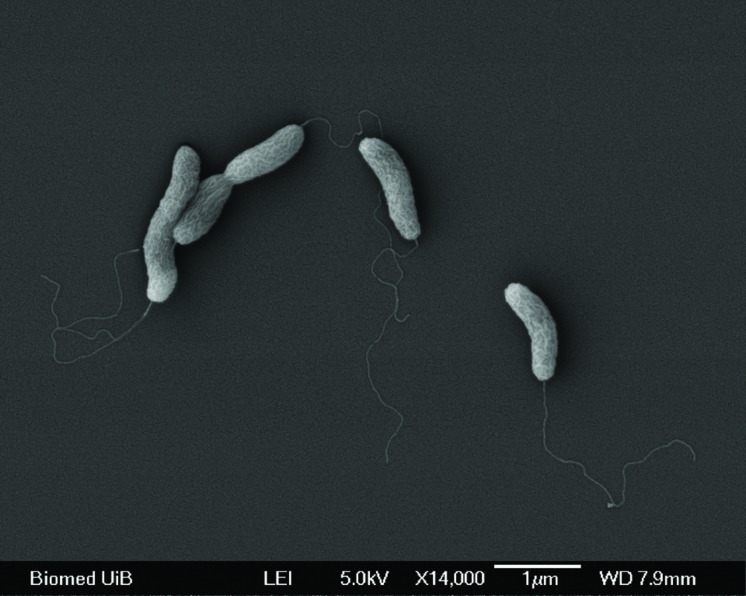
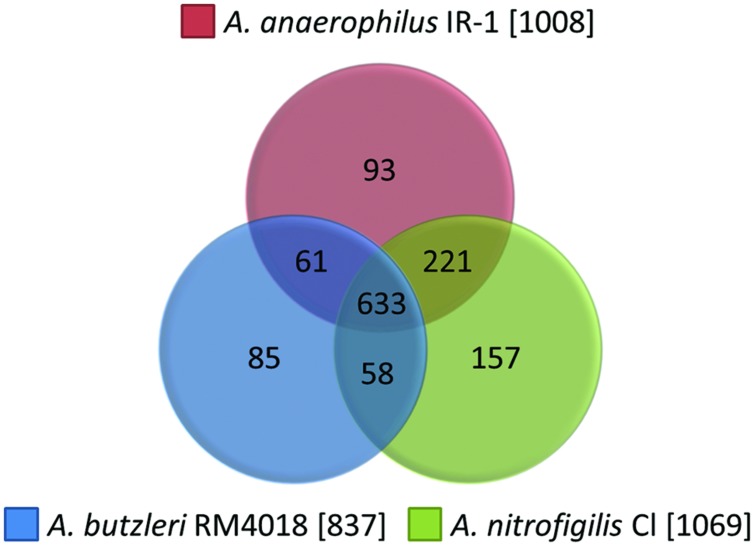
Verification
Claims the paper makes
The claims and statistics of this paper haven’t been checked yet.
Run the check — free, no account needed. It reads the open-access text and checks the sources it cites.
Claims other papers make about this one
Each is checked against this paper’s own text: does it say what the citing paper says it does?
In the citing paper
“In contrast, PG may promote growth of other acetotrophs pertaining to the Epsilonproteobacteria (Figure 3), such as Arcobacter spp. (Hubert et al., 2012; Roalkvam et al., 2015).”
From Microbial Diversity in Sulfate-Reducing Marine Sediment Enrichment Cultures Associated with Anaerobic Biotransformation of Coastal Stockpiled Phosphogypsum (Sfax, Tunisia) (2017) · cites this paper as Roalkvam et al., 2015
Self-check
Percentages, sums and reported differences re-computed from the paper’s own numbers.
The self-check needs the paper’s full text.
Citations
Cites
Humic substances as electron acceptors for microbial respiration
Lovley, D. R., Coates, J. D., Blunt-Harris, E. L., Phillips, E. J. P., & Woodward, J. C. (1996) · Nature · doi:10.1038/382445a0 · Cited by 1,834
Nitrate and periplasmic nitrate reductases
Sparacino-Watkins, C., Stolz, J. F., & Basu, P. (2014) · Chem. Soc. Rev. · doi:10.1039/c3cs60249d · Cited by 426 · cited 1×
“In these species, electrons are transferred from the menaquinone pool to the terminal reductase (NapAB) via a ferredoxin containing integral membrane protein (NapGH; Kern and Simon, 2009; Sparacino-Watkins et al., 2014).”
BackgroundThe hydrogenases of Geobacter sulfurreducens: a comparative genomic perspective
Coppi, M. V. (2005) · Microbiology · doi:10.1099/mic.0.27535-0 · Cited by 81
Research works printed but not linked: 103
- Akerman, 2013, Phylogenetic diversity and functional gene patterns of sulfur-oxidizing subseafloor Epsilonproteobacteria in diffuse hydrothermal vent fluids., Front. Microbiol., 4, 10.3389/fmicb.2013.00185 · DOI
- Alain, 2002, Caminibacter hydrogeniphilus gen. nov., sp. nov., a novel thermophilic, hydrogen-oxidizing bacterium isolated from an East Pacific Rise hydrothermal vent., Int. J. Syst. Evol. Microbiol., 52, 1317, 10.1099/ijs.0.02142-0 · DOI
- Altschul, 1990, Basic local alignment search tool., J. Mol. Biol., 215, 403, 10.1016/S0022-2836(05)80360-2 · DOI · Paper page
- Aziz, 2008, The RAST Server: rapid annotations using subsystems technology., BMC Genomics, 9, 10.1186/1471-2164-9-75 · DOI
- Bagchi, 2005, A structural study towards the understanding of the interactions of SoxY. SoxZ, and SoxB, leading to the oxidation of sulfur anions via the novel global sulfur oxidizing (sox) operon., Biochem. Biophys. Res. Commun., 335, 609, 10.1016/j.bbrc.2005.07.115 · DOI
- Benoit, 2008, Hydrogen and nickel metabolism in Helicobacter species., Ann. N. Y. Acad. Sci., 1125, 242, 10.1196/annals.1419.014 · DOI
- Bonch-Osmolovskaya, 1990, Desulfurella acetivorans gen. nov. and sp. nov. —a new thermophilic sulfur-reducing Eubacterium., Arch. Microbiol., 153, 151, 10.1007/BF00247813 · DOI
- Brinkhoff, 1999, Thiomicrospira kuenenii sp. nov. and Thiomicrospira frisia sp. nov., two mesophilic obligately chemolithoautotrophic sulfur-oxidizing bacteria isolated from an intertidal mud flat., Int. J. Syst. Bacteriol., 2, 385, 10.1099/00207713-49-2-385 · DOI
- Burgdorf, 2005, [NiFe]-hydrogenases of Ralstonia eutropha H16: modular enzymes for oxygen-tolerant biological hydrogen oxidation., J. Mol. Microbiol. Biotechnol., 10, 181, 10.1159/000091564 · DOI
- Cai, 2014, Non-contiguous finished genome sequence and description of Sulfurimonas hongkongensis sp. nov., a strictly anaerobic denitrifying, hydrogen- and sulfur-oxidizing chemolithoautotroph isolated from marine sediment., Stand Genomic Sci., 9, 1302, 10.4056/sigs.4948668 · DOI
- Campbell, 2006, The versatile Epsilonproteobacteria: key players in sulphidic habitats., Nat. Rev. Microbiol., 4, 458, 10.1038/nrmicro1414 · DOI
- Campbell, 2009, Adaptations to submarine hydrothermal environments exemplified by the genome of Nautilia profundicola., PLoS Genet., 5, 10.1371/journal.pgen.1000362 · DOI
- Carlström, 2013, Physiological and genetic description of dissimilatory perchlorate reduction by the novel marine bacterium Arcobacter sp. strain CAB., mBio, 4, 10.1128/mBio.00217-13 · DOI
- Chin, 2013, Nonhybrid, finished microbial genome assemblies from long-read SMRT sequencing data., Nat. Methods, 10, 563, 10.1038/nmeth.2474 · DOI · Paper page
- Collado, 2009, Arcobacter mytili sp. nov., an indoxyl acetate-hydrolysis-negative bacterium isolated from mussels., Int. J. Syst. Evol. Microbiol., 59, 1391, 10.1099/ijs.0.003749-0 · DOI
- Collado, 2011, Arcobacter defluvii sp. nov., isolated from sewage samples., Int. J. Syst. Evol. Microbiol., 61, 2155, 10.1099/ijs.0.025668-0 · DOI
- Cordwell, 2008, Identification of membrane-associated proteins from Campylobacter jejuni strains using complementary proteomics technologies., Proteomics, 8, 122, 10.1002/pmic.200700561 · DOI
- Dahl, 2008, Sulfur oxidation in prokaryotes, Encyclopedia of Life Sciences (ELS), 10.1002/9780470015902.a0021155 · DOI
- Dahle, 2013, The versatile in situ gene expression of an Epsilonproteobacteria-dominated biofilm from a hydrothermal chimney., Environ. Microbiol. Rep., 5, 282, 10.1111/1758-2229.12016 · DOI
- De Ley, 1970, The quantitative measurement of DNA hybridization from renaturation rates., Eur. J. Biochem., 12, 133, 10.1111/j.1432-1033.1970.tb00830.x · DOI
- Donachie, 2005, Arcobacter halophilus sp. nov., the first obligate halophile in the genus Arcobacter., Int. J. Syst. Evol. Microbiol., 55, 1271, 10.1099/ijs.0.63581-0 · DOI
- Drønen, 2014, Modeling of heavy nitrate corrosion in anaerobe aquifer injection water biofilm: a case study in a flow rig., Environ. Sci. Technol., 48, 8627, 10.1021/es500839u · DOI
- Dross, 1992, The quinone-reactive Ni/Fe-hydrogenase of Wolinella succinogenes., Eur. J. Biochem., 206, 93, 10.1111/j.1432-1033.1992.tb16905.x · DOI
- Edwards, 1989, Isolation and direct complete nucleotide determination of entire genes. Characterization of a gene coding for 16S ribosomal RNA., Nucleic Acids Res., 17, 7843, 10.1093/nar/17.19.7843 · DOI
- Ellis, 1977, Isolation of Spirillum/Vibrio-like organisms from bovine fetuses., Vet. Rec., 100, 451, 10.1136/vr.100.21.451 · DOI
- Figueras, 2011a, Arcobacter molluscorum sp. nov., a new species isolated from shellfish., Syst. Appl. Microbiol., 34, 105, 10.1016/j.syapm.2010.10.001 · DOI
- Figueras, 2011b, Arcobacter ellisii sp. nov., isolated from mussels., Syst. Appl. Microbiol., 34, 414, 10.1016/j.syapm.2011.04.004 · DOI
- Finn, 2014, Pfam: the protein families database., Nucleic Acids Res., 42, D222, 10.1093/nar/gkt1223 · DOI · Paper page
- Finster, 1997, Sulfurospirillum arcachonense sp. nov., a new microaerophilic sulfur-reducing bacterium., Int. J. Syst. Bacteriol., 47, 1212, 10.1099/00207713-47-4-1212 · DOI
- Friedrich, 2001, Oxidation of reduced inorganic sulfur compounds by bacteria: emergence of a common mechanism?, Appl. Environ. Microbiol., 67, 2873, 10.1128/AEM.67.7.2873-2882.2001 · DOI
- Gevertz, 2000, Isolation and characterization of strains CVO and FWKO B, two novel nitrate-reducing, sulfide-oxidizing bacteria isolated from oil field brine., Appl. Environ. Microbiol., 66, 2491, 10.1128/AEM.66.6.2491-2501.2000 · DOI
- Grosche, 2015, Cetia pacifica gen. nov., sp. nov., a chemolithoautotrophic, thermophilic, nitrate-ammonifying bacterium from a deep-sea hydrothermal vent., Int. J. Syst. Evol. Microbiol., 65, 1144, 10.1099/ijs.0.000070 · DOI
- Grote, 2012, Genome and physiology of a model Epsilonproteobacterium responsible for sulfide detoxification in marine oxygen depletion zones., Proc. Natl. Acad. Sci. U.S.A., 109, 506, 10.1073/pnas.1111262109 · DOI
- Grzeszik, 1997, Genes encoding the NAD-reducing hydrogenase of Rhodococcus opacus MR11., Microbiology, 143, 1271, 10.1099/00221287-143-4-1271 · DOI
- Headd, 2014, Biogeographic congruency among bacterial communities from terrestrial sulfidic springs., Front. Microbiol., 5, 10.3389/fmicb.2014.00473 · DOI
- Horch, 2012, NAD(H)-coupled hydrogen cycling – structure–function relationships of bidirectional [NiFe] hydrogenases., FEBS Lett., 586, 545, 10.1016/j.febslet.2011.10.010 · DOI
- Houf, 2009, Arcobacter thereius sp. nov., isolated from pigs and ducks., Int. J. Syst. Evol. Microbiol., 59, 2599, 10.1099/ijs.0.006650-0 · DOI
- Houf, 2005, Arcobacter cibarius sp. nov., isolated from broiler carcasses., Int. J. Syst. Evol. Microbiol., 55, 713, 10.1099/ijs.0.63103-0 · DOI
- Huber, 2010, Isolated communities of Epsilonproteobacteria in hydrothermal vent fluids of the Mariana Arc seamounts., FEMS Microbiol. Ecol., 73, 538, 10.1111/j.1574-6941.2010.00910.x · DOI
- Huss, 1983, Studies on the spectrophotometric determination of DNA hybridization from renaturation rates., Syst. Appl. Microbiol., 4, 184, 10.1016/S0723-2020(83)80048-4 · DOI
- Inagaki, 2003, Sulfurimonas autotrophica gen. nov., sp. nov., a novel sulfur-oxidizing Epsilonproteobacterium isolated from hydrothermal sediments in the Mid-Okinawa Trough., Int. J. Syst. Evol. Microbiol., 53, 1801, 10.1099/ijs.0.02682-0 · DOI
- Inagaki, 2004, Sulfurovum lithotrophicum gen. nov., sp. nov., a novel sulfur-oxidizing chemolithoautotroph within the Epsilonproteobacteria isolated from Okinawa Trough hydrothermal sediments., Int. J. Syst. Evol. Microbiol., 54, 1477, 10.1099/ijs.0.03042-0 · DOI · Paper page
- Kadnikov, 2013, Genomic analysis of Melioribacter roseus, facultatively anaerobic organotrophic bacterium representing a novel deep lineage within Bacteriodetes/Chlorobi group., PLoS ONE, 8, 10.1371/journal.pone.0053047 · DOI
- Kern, 2009, Electron transport chains and bioenergetics of respiratory nitrogen metabolism in Wolinella succinogenes and other Epsilonproteobacteria., Biochim. Biophys. Acta, 1787, 646, 10.1016/j.bbabio.2008.12.010 · DOI
- Kiehlbauch, 1991, Campylobacter butzleri sp. nov. isolated from humans and animals with diarrheal illness., J. Clin. Microbiol., 29, 376, 10.1128/JCM.29.2.376-385.1991 · DOI
- Kim, 2010, Arcobacter marinus sp. nov., Int. J. Syst. Evol. Microbiol., 60, 531, 10.1099/ijs.0.007740-0 · DOI
- Kita, 1984, Terminal oxidases of Escherichia coli aerobic respiratory chain. II. Purification and properties of cytochrome b558-d complex from cells grown with limited oxygen and evidence of branched electron-carrying systems., J. Biol. Chem., 259, 3375, 10.1016/S0021-9258(17)43305-9 · DOI
- Knittel, 2005, Thiomicrospira arctica sp. nov. and Thiomicrospira psychrophila sp. nov., psychrophilic, obligately chemolithoautotrophic, sulfur-oxidizing bacteria isolated from marine Arctic sediments., Int. J. Syst. Evol. Microbiol., 55, 781, 10.1099/ijs.0.63362-0 · DOI
- Kodama, 2007, Sulfurospirillum cavolei sp. nov., a facultatively anaerobic sulfur-reducing bacterium isolated from an underground crude oil storage cavity., Int. J. Syst. Evol. Microbiol., 57, 827, 10.1099/ijs.0.64823-0 · DOI
- Kodama, 2004, Sulfuricurvum kujiense gen. nov., sp. nov., a facultatively anaerobic, chemolithoautotrophic, sulfur-oxidizing bacterium isolated from an underground crude-oil storage cavity., Int. J. Syst. Evol. Microbiol., 54, 2297, 10.1099/ijs.0.63243-0 · DOI
- Labrenz, 2013, Sulfurimonas gotlandica sp. nov., a chemoautotrophic and psychrotolerant epsilonproteobacterium isolated from a pelagic redoxcline, and an emended description of the genus Sulfurimonas., Int. J. Syst. Evol. Microbiol., 63, 4141, 10.1099/ijs.0.048827-0 · DOI
- Lane, 1985, Rapid determination of 16S ribosomal RNA sequences for phylogenetic analyses., Proc. Natl. Acad. Sci. U.S.A., 82, 6955, 10.1073/pnas.82.20.6955 · DOI
- Levican, 2012, Arcobacter bivalviorum sp. nov. and Arcobacter venerupis sp. nov., new species isolated from shellfish., Syst. Appl. Microbiol., 35, 133, 10.1016/j.syapm.2012.01.002 · DOI
- Levican, 2013, Arcobacter cloacae sp. nov. and Arcobacter suis sp. nov., two new species isolated from food and sewage., Syst. Appl. Microbiol., 36, 22, 10.1016/j.syapm.2012.11.003 · DOI
- Long, 2007, Characterization of a HoxEFUYH type of [NiFe] hydrogenase from Allochromatium vinosum and some EPR and IR properties of the hydrogenase module., J. Biol. Inorg. Chem., 12, 62, 10.1007/s00775-006-0162-1 · DOI
- Luijten, 2003, Description of Sulfurospirillum halorespirans sp. nov., an anaerobic, tetrachloroethene-respiring bacterium, and transfer of Dehalospirillum multivorans to the genus Sulfurospirillum as Sulfurospirillum multivorans comb. nov., Int. J. Syst. Evol. Microbiol., 53, 787, 10.1099/ijs.0.02417-0 · DOI
- Marmur, 1961, A procedure for the isolation of deoxyribonucleic acid from micro-organisms., J. Mol. Biol., 3, 208, 10.1016/S0022-2836(61)80047-8 · DOI
- McClung, 1980, Isolation of a nitrogen-fixing Campylobacter species from the roots of Spartina alterniflora Loisel., Can. J. Microbiol., 26, 881, 10.1139/m80-153 · DOI
- Miller, 1983, The purification and characterization of the cytochrome d terminal oxidase complex of the Escherichia coli aerobic respiratory chain., J. Biol. Chem., 258, 9159, 10.1016/S0021-9258(17)44645-X · DOI
- Miller, 2007, The complete genome sequence and analysis of the Epsilonproteobacterium Arcobacter butzleri., PLoS ONE, 2, 10.1371/journal.pone.0001358 · DOI
- Mino, 2014, Sulfurovum aggregans sp. nov., a hydrogen-oxidizing, thiosulfate-reducing chemolithoautotroph within the Epsilonproteobacteria isolated from a deep-sea hydrothermal vent chimney, and an emended description of the genus Sulfurovum., Int. J. Syst. Evol. Microbiol., 64, 3195, 10.1099/ijs.0.065094-0 · DOI
- Miroshnichenko, 2002, Nautilia lithotrophica gen. nov., sp. nov., a thermophilic sulfur-reducing Epsilonproteobacterium isolated from a deep-sea hydrothermal vent., Int. J. Syst. Evol. Microbiol., 52, 1299, 10.1099/ijs.0.02139-0 · DOI
- Myhr, 2000, Denitrovibrio acetiphilus, a novel genus and species of dissimilatory nitrate-reducing bacterium isolated from an oil reservoir model column., Int. J. Syst. Evol. Microbiol., 50, 1611, 10.1099/00207713-50-4-1611 · DOI
- Nakagawa, 2005a, Thioreductor micantisoli gen. nov., sp. nov., a novel mesophilic, sulfur-reducing chemolithoautotroph within the Epsilonproteobacteria isolated from hydrothermal sediments in the Mid-Okinawa Trough., Int. J. Syst. Evol. Microbiol., 55, 599, 10.1099/ijs.0.63480-0 · DOI
- Nakagawa, 2005b, Nitratiruptor tergarcus gen. nov., sp. nov. and Nitratifractor salsuginis gen. nov., sp. nov., nitrate-reducing chemolithoautotrophs of the Epsilonproteobacteria isolated from a deep-sea hydrothermal system in the Mid-Okinawa Trough., Int. J. Syst. Evol. Microbiol., 55, 925, 10.1099/ijs.0.63480-0 · DOI
- Nakagawa, 2009, Nonpathogenic Epsilonproteobacteria, Encyclopedia of Life Sciences (ELS), 10.1002/9780470015902.a0021895 · DOI
- Nakagawa, 2007, Deep-sea vent epsilonproteobacterial genomes provide insights into emergence of pathogens., Proc. Natl. Acad. Sci. U.S.A., 104, 12146, 10.1073/pnas.0700687104 · DOI
- Nealson, 1997, Sediment bacteria: who’s there, what are they doing, and what’s new?, Annu. Rev. Earth Planetary Sci., 25, 403, 10.1146/annurev.earth.25.1.403 · DOI
- Neill, 1985, Taxonomic position of Campylobacter cryaerophila sp. nov., Int. J. Syst. Bacteriol., 35, 342, 10.1099/00207713-35-3-342 · DOI
- Nevin, 2000, Potential for nonenzymatic reduction of Fe(III) via electron shuttling in subsurface sediments., Environ. Sci. Technol., 34, 2472, 10.1021/es991181b · DOI
- Orcutt, 2011, Microbial ecology of the dark ocean above, at, and below the seafloor., Microbiol. Mol. Biol. Rev., 75, 361, 10.1128/MMBR.00039-10 · DOI
- Overbeek, 2014, The SEED and the Rapid Annotation of microbial genomes using Subsystems Technology (RAST)., Nucleic Acids Res., 42, D206, 10.1093/nar/gkt1226 · DOI
- Papen, 1986, Hydrogenase activities in cyanobacteria., Biochimie, 68, 121, 10.1016/S0300-9084(86)81077-X · DOI
- Pati, 2010, Complete genome sequence of Arcobacter nitrofigilis type strain (CIT)., Stand. Genomic Sci., 2, 300, 10.4056/sigs.912121 · DOI
- Pecher, 1983, On the redox control of synthesis of anaerobically induced enzymes in Enterobacteriaceae., Arch. Microbiol., 136, 131, 10.1007/BF00404787 · DOI
- Pfennig, 1976, Desulfuromonas acetoxidans gen. nov. and sp. nov., a new anaerobic, sulfur-reducing, acetate-oxidizing bacterium., Arch. Microbiol., 110, 3, 10.1007/BF00416962 · DOI
- Pop Ristova, 2015, Spatial scales of bacterial community diversity at cold seeps (Eastern Mediterranean Sea)., ISME J., 9, 1306, 10.1038/ismej.2014.217 · DOI
- Rákhely, 2004, Cyanobacterial-type, heteropentameric. NAD(+)-reducing NiFe hydrogenase in the purple sulfur photosynthetic bacterium Thiocapsa roseopersicina., Appl. Environ. Microbiol., 70, 722, 10.1128/AEM.70.2.722-728.2004 · DOI
- Rawlings, 2008, The MEROPS batch BLAST: a tool to detect peptidases and their non-peptidase homologues in a genome., Biochimie, 90, 243, 10.1016/j.biochi.2007.09.014 · DOI
- Reguera, 2005, Extracellular electron transfer via microbial nanowires., Nature, 435, 1098, 10.1038/nature03661 · DOI
- Reinhold-Hurek, 1997, Terminal oxidases of Azoarcus sp. BH72, a strictly respiratory diazotroph., FEBS Lett., 404, 143, 10.1016/S0014-5793(97)00111-7 · DOI
- Ryu, 1938, On the Gram-differentiation of bacteria by the simplest method., J. Vet. Med. Sci., 17
- Sasi Jyothsna, 2013, Arcobacter anaerophilus sp. nov., isolated from an estuarine sediment and emended description of the genus Arcobacter., Int. J. Syst. Evol. Microbiol., 63, 4619, 10.1099/ijs.0.054155-0 · DOI
- Seemann, 2014, Prokka: rapid prokaryotic genome annotation., Bioinformatics, 30, 2068, 10.1093/bioinformatics/btu153 · DOI
- Sievert, 2008, Genome of the epsilonproteobacterial chemolithoautotroph Sulfurimonas denitrificans., Appl. Environ. Microbiol., 74, 1145, 10.1128/AEM.01844-07 · DOI
- Sikorski, 2010, Complete genome sequence of Sulfurimonas autotrophica type strain (OK10T)., Stand. Genomic Sci., 3, 194, 10.4056/sigs.1173118 · DOI
- Simon, 2004, The unprecedented nos gene cluster of Wolinella succinogenes encodes a novel respiratory electron transfer pathway to cytochrome c nitrous oxide reductase., FEBS Lett., 569, 7, 10.1016/j.febslet.2004.05.060 · DOI
- Sorokin, 2006, Thiomicrospira halophila sp. nov., a moderately halophilic, obligately chemolithoautotrophic, sulfur-oxidizing bacterium from hypersaline lakes., Int. J. Syst. Evol. Microbiol., 56, 2375, 10.1099/ijs.0.64445-0 · DOI
- Stolz, 1999, Sulfurospirillum barnesii sp. nov. and Sulfurospirillum arsenophilum sp. nov., new members of the Sulfurospirillum clade of the Epsilonproteobacteria., Int. J. Syst. Bacteriol., 49, 1177, 10.1099/00207713-49-3-1177 · DOI
- Suh, 2015, Seasonal dynamics of marine microbial community in the South Sea of Korea., PLoS ONE, 10, 10.1371/journal.pone.0131633 · DOI
- Takai, 2004, Thiomicrospira thermophila sp. nov., a novel microaerobic, thermotolerant, sulfur-oxidizing chemolithomixotroph isolated from a deep-sea hydrothermal fumarole in the TOTO caldera. Mariana Arc, Western Pacific., Int. J. Syst. Evol. Microbiol., 54, 2325, 10.1099/ijs.0.63284-0 · DOI
- Takai, 2005, Lebetimonas acidiphila gen. nov., sp. nov., a novel thermophilic, acidophilic, hydrogen-oxidizing chemolithoautotroph within the Epsilonproteobacteria, isolated from a deep-sea hydrothermal fumarole in the Mariana Arc., Int. J. Syst. Evol. Microbiol., 55, 183, 10.1099/ijs.0.63330-0 · DOI
- Takai, 2006, Sulfurimonas paralvinellae sp. nov., a novel mesophilic, hydrogen- and sulfur-oxidizing chemolithoautotroph within the Epsilonproteobacteria isolated from a deep-sea hydrothermal vent polychaete nest, reclassification of Thiomicrospira denitrificans as Sulfurimonas denitrificans comb. nov. and emended description of the genus Sulfurimonas., Int. J. Syst. Evol. Microbiol., 56, 1725, 10.1099/ijs.0.64255-0 · DOI
- Tamagnini, 2002, Hydrogenases and hydrogen metabolism of cyanobacteria., Microbiol. Mol. Biol. Rev., 66, 1, 10.1128/MMBR.66.1.1-20.2002 · DOI
- Teske, 1996, Molecular identification of bacteria from a coculture by denaturing gradient gel electrophoresis of 16S ribosomal DNA fragments as a tool for isolation in pure cultures., Appl. Environ. Microbiol., 62, 4210, 10.1128/AEM.62.11.4210-4215.1996 · DOI
- Urich, 2014, Microbial community structure and functioning in marine sediments associated with diffuse hydrothermal venting assessed by integrated meta-omics., Environ. Microbiol., 16, 2699, 10.1111/1462-2920.12283 · DOI
- Ursing, 1994, Proposal of minimal standards for describing new species of the family Campylobacteraceae., Int. J. Syst. Bacteriol., 44, 842, 10.1099/00207713-44-4-842 · DOI
- Vandamme, 1991, Revision of Campylobacter, Helicobacter, and Wolinella taxonomy: emendation of generic descriptions and proposal of Arcobacter gen. nov., Int. J. Syst. Evol. Microbiol., 41, 88
- Vandamme, 1992, Polyphasic taxonomic study of the emended genus Arcobacter with Arcobacter butzleri comb. nov. and Arcobacter skirrowii sp. nov., an aerotolerant bacterium isolated from veterinary specimens., Int. J. Syst. Bacteriol., 42, 344, 10.1099/00207713-42-3-344 · DOI
- Vetriani, 2014, Deep-sea hydrothermal vent Epsilonproteobacteria encode a conserved and widespread nitrate reduction pathway (Nap)., ISME J., 8, 1510, 10.1038/ismej.2013.246 · DOI
- Voordeckers, 2005, Caminibacter mediatlanticus sp. nov., a thermophilic, chemolithoautotrophic, nitrate-ammonifying bacterium isolated from a deep-sea hydrothermal vent on the Mid-Atlantic Ridge., Int. J. Syst. Evol. Microbiol., 55, 773, 10.1099/ijs.0.63430-0 · DOI
- Wang, 2003, Coordinate regulation of the Escherichia coli formate dehydrogenase fdnGHI and fdhF genes in response to nitrate, nitrite, and formate: roles for NarL and NarP., J. Bacteriol., 185, 5076, 10.1128/JB.185.17.5076-5085.2003 · DOI
- Wirsen, 2002, Characterization of an autotrophic sulfide-oxidizing marine Arcobacter sp. that produces filamentous sulfur., Appl. Environ. Microbiol., 68, 316, 10.1128/AEM.68.1.316-325.2002 · DOI
Cited by
Sorted by citations
Zouch, H., Karray, F., Armougom, F., Chifflet, S., Hirschler-Réa, A., Kharrat, H., Kamoun, L., Ben Hania, W., Ollivier, B., Sayadi, S., et al. (2017) · Frontiers in Microbiology · doi:10.3389/fmicb.2017.01583 · Cited by 37
Metadata
- Authors
- Roalkvam, I., Drønen, K., Stokke, R., Daae, F. L., Dahle, H., & Steen, I. H.
- Venue
- Frontiers in Microbiology
- Publisher
- Frontiers Media SA
- Published
- 2015-09-16
- Volume
- 6
- ISSN
- 1664-302X
- PMC
- PMC4584990
- Cited by
- 77
- References
- 3
About these checks
Registry, retraction, Cites and statistics results are computed, not judged, with one exception: a printed reference that no index lists is read once by a model before it counts as a citation error. Claims are extracted by a model and kept only when their quote appears verbatim in the text; each cited source is then checked, with a model’s help, for whether it says what the claim relies on. Those verdicts can be wrong — read the claim’s quote and the cited source before relying on one.
Statistics and arithmetic are recomputed, not judged.
Confidence bands are shown only for fields calibrated on our annotated test set. None is calibrated yet, so no band is shown.
What counts as a claim ›How we measure confidence ›How we check this ›
Are you an author, or do you see a problem with this page? Request a review
