

The DOI matches its Crossref record.
Improving Acetic Acid Production by Over-Expressing PQQ-ADH in Acetobacter pasteurianus
Open accessAbstract
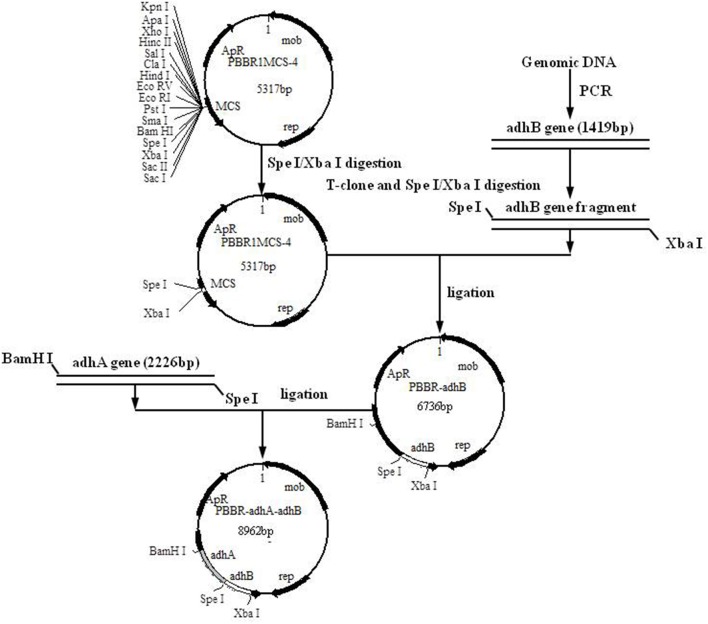
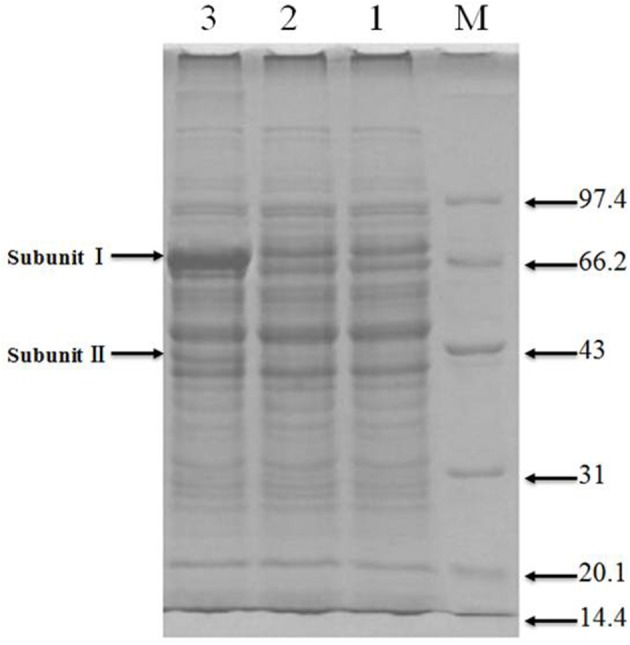
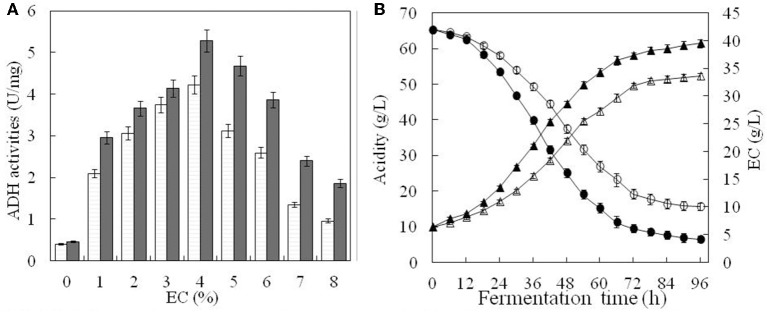
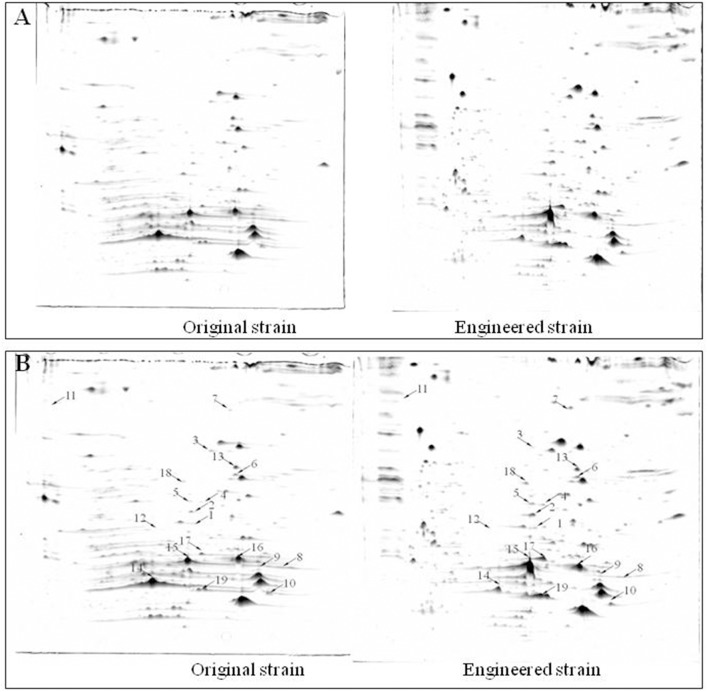
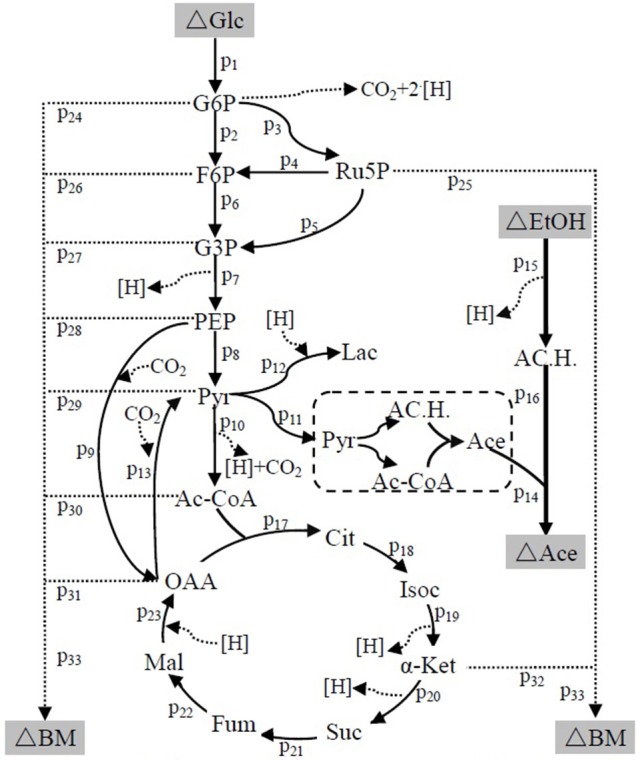
Pyrroquinoline quinone-dependent alcohol dehydrogenase (PQQ-ADH) is a key enzyme in the ethanol oxidase respiratory chain of acetic acid bacteria. To investigate the effect of PQQ-ADH on acetic acid production by Acetobacter pasteurianus JST-S, subunits I (adhA) and II (adhB) of PQQ-ADH were over-expressed, the fermentation parameters and the metabolic flux analysis were compared in the engineered strain and the original one. The acetic acid production was improved by the engineered strain (61.42 g L-1) while the residual ethanol content (4.18 g L-1) was decreased. Analysis of 2D maps indicated that 19 proteins were differently expressed between the two strains; of these, 17 were identified and analyzed by mass spectrometry and two-dimensional gel electrophoresis. With further investigation of metabolic flux analysis of the pathway from ethanol and glucose, the results reveal that over-expression of PQQ-ADH is an effective way to improve the ethanol oxidation respiratory chain pathway and these can offer theoretical references for potential mechanism of metabolic regulation in acetic acid bacteria and researches with its acetic acid resistance.
Overview
The claims and statistics of this paper haven’t been checked yet.
Run the check — free, no account needed. It reads the open-access text and checks the sources it cites.
Integrity signals
Registry
Cites
Statistics
Figures
Verification
Claims the paper makes
The claims and statistics of this paper haven’t been checked yet.
Run the check — free, no account needed. It reads the open-access text and checks the sources it cites.
Claims other papers make about this one
Each is checked against this paper’s own text: does it say what the citing paper says it does?
The cited source doesn’t support the claim as written.
In the citing paper
“The first step in the ethanol oxidation process involves the conversion of ethanol to acetaldehyde. This reaction is catalyzed by pyrroloquinoline quinone-dependent alcohol dehydrogenase (PQQ-ADH), which oxidizes ethanol to acetaldehyde, resulting in the reduction of PQQ to PQQH2. The second step entails the further oxidation of acetaldehyde to acetic acid (CH3COOH). This reaction is mediated by”
From The Metabolic Pathways of Yeast and Acetic Acid Bacteria During Fruit Vinegar Fermentation and Their Influence on Flavor Development (2025) · cites this paper as [62]
Checked by a reasoning model — may be wrong.
Experimental — accuracy not yet measured
Self-check
Percentages, sums and reported differences re-computed from the paper’s own numbers.
The self-check needs the paper’s full text.
Citations
Cites
No references could be resolved yet.
Research works printed but not linked: 44
- Andrés-Barrao, 2012, Proteome analysis of Acetobacter pasteurianus, during acetic acid fermentation, J. Proteomics, 75, 1701, 10.1016/j.jprot.2011.11.027 · DOI
- Antoniewicz, 2015, Methods and advances in metabolic flux analysis: a mini-review, J. Ind. Microbiol. Biotechnol., 42, 317, 10.1007/s10295-015-1585-x · DOI
- Chen, 2016, Correlation between ethanol resistance and characteristics of PQQ-dependent ADH in acetic acid bacteria, Eur. Food. Res. Technol., 242, 837, 10.1007/s00217-015-2589-5 · DOI
- Chinnawirotpisan, 2003, Quinoprotein alcohol dehydrogenase is involved in catabolic acetate production, while NAD-dependent alcohol dehydrogenase in ethanol assimilation in Acetobacter pasteurianusSKU1108, J. Biosci. Bioeng., 96, 564, 10.1016/S1389-1723(04)70150-4 · DOI
- Dandekar, 2014, Software applications toward quantitative metabolic flux analysis and modeling, Brief. Bionform., 15, 91, 10.1093/bib/bbs065 · DOI
- Hartl, 2002, Molecular chaperones in the cytosol: from nascent chain to folded protein, Science, 295, 1852, 10.1126/science.1068408 · DOI
- Hesterkamp, 1996, Escherichia coli trigger factor is a prolyl isomerase that associates with nascent polypeptide chains, Proc. Natl. Acad. Sci. U.S.A., 93, 4437, 10.1073/pnas.93.9.4437 · DOI
- Illeghems, 2013, Complete genome sequence and comparative analysis of Acetobacter pasteurianus 386B, a strain well-adapted to the cocoa bean fermentation ecosystem, BMC Genomics, 14, 526, 10.1186/1471-2164-14-526 · DOI
- Kanchanarach, 2010, Characterization of thermotolerant Acetobacter pasteurianus strains and their quinoprotein alcohol dehydrogenases, Appl. Microbiol. Biot., 85, 741, 10.1007/s00253-009-2203-5 · DOI
- Kondo, 1995, Cloning, sequencing, and characterization of the gene encoding the smallest subunit of the three-component membrane-bound alcohol dehydrogenase from Acetobacter pasteurianus, J. Bacteriol, 177, 5048, 10.1128/jb.177.17.5048-5055.1995 · DOI
- Kovach, 1995, Four new derivatives of the broad-host-range cloning vector pBBR1MCS, carrying different antibiotic-resistance cassettes, Gene, 166, 175, 10.1016/0378-1119(95)00584-1 · DOI
- Krahulec, 2003, Characterisation of plasmids purified from Acetobacter pasteurianus 2374, Biochem. Biophys. Res. Commun., 310, 94, 10.1016/j.bbrc.2003.08.125 · DOI
- Krusong, 2015, Influence of calcium chloride in the high temperature acetification by strain Acetobacter aceti WK for vinegar, J. Appl. Microbiol., 119, 1291, 10.1111/jam.12930 · DOI
- Lariviere, 2001, Uniform binding of aminoacyl-tRNAs to elongation factor Tu by thermodynamic compensation, Science, 294, 165, 10.1126/science.1064242 · DOI
- Lasko, 1997, Acetate-specific stress response in acetate-resistant bacteria: an analysis of protein patterns, Biotechnol. Progr., 13, 519, 10.1021/bp970075f · DOI
- Li, 2014, High levels of malic acid production by the bioconversion of corn straw hydrolyte using an isolated Rhizopus Delemar Strain, Biotechnol. Bioproce. E., 19, 478, 10.1007/s12257-014-0047-z · DOI
- Li, 2009, Screening, breeding and metabolic modulating of a strain producing succinic acid with corn straw hydrolyte, World J. Microbiol. Biotechnol., 25, 667, 10.1007/s11274-008-9936-7 · DOI
- Longacre, 1997, Flux analysis of glucose metabolism in Rhizopus oryzae for the purpose of increasing lactate yields, Fungal Genet. Biol., 21, 30, 10.1006/fgbi.1996.0952 · DOI
- Lu, 2013, L-glutamine provides acid resistance for Escherichia coli through enzymatic release of ammonia, Cell Res., 23, 635, 10.1038/cr.2013.13 · DOI
- Matsushita, 2008, A tightly bound quinone functions in the ubiquinone reaction sites of quinoprotein alcohol dehydrogenase of an acetic acid bacterium, Gluconobacter suboxydans, Biosci. Biotech. Bioch., 72, 2723, 10.1271/bbb.80363 · DOI
- Matsushita, 1992, Ethanol oxidase respiratory chain of acetic acid bacteria. reactivity with ubiquinone of pyrroloquinoline quinone-dependent alcohol dehydrogenases purified from Acetobacter aceti, Gluconobacter suboxydans. Biosci. Biotech. Bioch., 56, 304, 10.1271/bbb.56.304 · DOI
- Nakano, 2008, Analysis of proteins responsive to acetic acid in acetobacter: molecular mechanisms conferring acetic acid resistance in acetic acid bacteria, Int. J. Food Microbio., 125, 54, 10.1016/j.ijfoodmicro.2007.05.015 · DOI
- Nakano, 2004, Enhanced expression of aconitase raises acetic acid resistance, Acetobacter aceti. Fems. Microbio. Lett., 235, 315, 10.1111/j.1574-6968.2004.tb09605.x · DOI
- Okamoto-Kainuma, 2004, Cloning and characterization of the dnaKJ operon in Acetobacter aceti, J. Biosci. Bioeng., 97, 339, 10.1016/S1389-1723(04)70216-9 · DOI
- Okamoto-Kainuma, 2002, Cloning and characterization of groESL operon in Acetobacter aceti, J. Biosci. Bioeng., 94, 140, 10.1016/S1389-1723(02)80134-7 · DOI
- Qi, 2014, Mutation of Acetobacter pasteurianus, by UV irradiation under acidic stress for high-acidity vinegar fermentation, Int. J. Food Sci. Techno., 49, 468, 10.1111/ijfs.12324 · DOI
- Qin, 2016, Microbial diversity biochemical analysis of Suanzhou: a traditional Chinese fermented cereal gruel, Front. Microbiol., 7, 1311, 10.3389/fmicb.2016.01311 · DOI
- Quintero, 2009, Quantification of the expression of reference and alcohol dehydrogenase genes of some acetic acid bacteria in different growth condition, J. Appl. Microbio., 106, 666, 10.1111/j.1365-2672.2008.04046.x · DOI
- Rhee, 1976, Mechanistic studies of glutamine synthetase from Escherichia coli: kinetic evidence for two reaction intermediates in biosynthetic reaction, Proc. Natl. Acad. Sci. U.S.A., 73, 476, 10.1073/pnas.73.2.476 · DOI
- Richier, 2006, Oxidative stress and apoptotic events during thermal stress in the symbiotic sea anemone, anemonia viridis, FEBS J., 273, 4186, 10.1111/j.1742-4658.2006.05414.x · DOI
- Ryter, 2007, Mechanisms of cell death in oxidative stress, Antioxid. Redox Sign., 9, 49, 10.1089/ars.2007.9.49 · DOI
- Steiner, 2001, Proteins induced during adaptation of Acetobacter aceti to high acetate concentrations, Appl. Environ. Microb., 67, 5474, 10.1128/AEM.67.12.5474-5481.2001 · DOI
- Stephanopoulos, 1999, Metabolic fluxes and metabolic engineering, Metab. Eng., 1, 1, 10.1006/mben.1998.0101 · DOI
- Toyama, 2004, Quinohemoprotein alcohol dehydrogenases: structure, function, and physiology, Arch. Bioch. Biophys., 428, 10, 10.1016/j.abb.2004.03.037 · DOI · Paper page
- Trček, 2013, A unique enzyme of acetic acid bacteria, PQQ-dependent alcohol dehydrogenase, is also present in frateuria aurantia, Appl. Microbiol. Biot., 97, 7369, 10.1007/s00253-013-5007-6 · DOI
- Trček, 2015, Adaptation and tolerance of bacteria against acetic acid, Appl. Microbiol. Biot., 99, 6215, 10.1007/s00253-015-6762-3 · DOI
- Trček, 2006, Correlation between acetic acid resistance and characteristics of PQQ-dependent ADH in acetic acid bacteria, Appl. Microbio. Biot., 70, 366, 10.1007/s00253-005-0073-z · DOI
- Wallenius, 2016, Carbon 13-metabolic flux analysis derived constraint-based metabolic modelling of Clostridium acetobutylicum in stressed chemostat conditions, Bioresour. Technol., 219, 378, 10.1016/j.biortech.2016.07.137 · DOI
- Wang, 2015, Comparative proteome of Acetobacter pasteurianus Ab3 during the high acidity rice vinegar fermentation, Appl. Biochem. Biotech., 177, 1573, 10.1007/s12010-015-1838-1 · DOI
- Welch, 1993, Heat shock proteins functioning as molecular chaperones: their roles in normal and stressed cells, 71, 10.1007/978-94-011-2108-8_9 · DOI
- Yakushi, 2010, Alcohol dehydrogenase of acetic acid bacteria: structure, mode of action, and applications in biotechnology, Appl. Microbiol. Biot., 86, 1257, 10.1007/s00253-010-2529-z · DOI
- Yanisch-Perron, 1985, Improved M13 phage cloning vectors and host strains: nucleotide sequences of the M13mpl8 and pUC19 vectors, Gene, 33, 103, 10.1016/0378-1119(85)90120-9 · DOI
- Zhang, 2017, Valorization of Spent Escherichia coli media using green microalgae Chlamydomonas reinhardtii and feedstock production, Front. Microbiol., 8, 1026, 10.3389/fmicb.2017.01026 · DOI
- Zheng, 2014, Genetic Engineering Acetic Acid Bacteria of Overexpressing Coenzyme PQQ (Pyrroloquinoline Quinone) Synthetic Proteins and Application of Bacteria.
Cited by
Ge, Y., Wu, Y., Aihaiti, A., Wang, L., Wang, Y., Xing, J., Zhu, M., & Hong, J. (2025) · Microorganisms · doi:10.3390/microorganisms13030477 · Cited by 49
Metadata
- Authors
- Wu, X., Yao, H., Cao, L., Zheng, Z., Chen, X., Zhang, M., Wei, Z., Cheng, J., Jiang, S., Pan, L., & Li, X.
- Affiliations
- Hefei University of Technology (CN)
- Chaohu University (CN)
- Corresponding author
- Li, Xingjiang
- ORCID
- Venue
- Frontiers in Microbiology
- Publisher
- Frontiers Media SA
- Published
- 2017-09-06
- Volume
- 8
- Pages
- 1713-1713
- ISSN
- 1664-302X (ISSN-L)
- PMC
- PMC5592214
- OpenAlex
- W2748870868
- Cited by
- 32
- References
- 0
- Citations by year
- 2026: 1 · 2025: 2 · 2024: 6 · 2023: 5 · 2022: 2 · 2021: 4 · 2020: 9 · 2019: 2 · 2018: 1
- FWCI
- 1.34
- Type
- journal article
- Language
- en
- Open access
- gold
- doi.org
- Licence
- cc-by
- Locations
- Frontiers in Microbiology (publishedVersion, cc-by)
- Europe PMC (PubMed Central) (publishedVersion, cc-by)
- PubMed Central (publishedVersion, cc-by)
- PubMed (publishedVersion)
- DOAJ (DOAJ: Directory of Open Access Journals) (submittedVersion, cc-by-sa)
- Funders
- National Natural Science Foundation of China (31601465)
- Hefei University
- Hefei University of Technology
- Natural Science Foundation of Anhui Province (1408085MKL17)
- Topics
- Life Sciences › Biochemistry, Genetics and Molecular Biology › Molecular Biology › Microbial Metabolic Engineering and Bioproduction
- Life Sciences › Biochemistry, Genetics and Molecular Biology › Molecular Biology › Microbial metabolism and enzyme function
- Life Sciences › Biochemistry, Genetics and Molecular Biology › Biotechnology › Biochemical and biochemical processes
- Keywords
- acetic acid production, Acetobacter pasteurianus, ethanol oxidation, electron transport chain, metabolic flux analysis, protein expression profiling, acetic acid resistance
About these checks
Registry, retraction, Cites and statistics results are computed, not judged, with one exception: a printed reference that no index lists is read once by a model before it counts as a citation error. Claims are extracted by a model and kept only when their quote appears verbatim in the text; each cited source is then checked, with a model’s help, for whether it says what the claim relies on. Those verdicts can be wrong — read the claim’s quote and the cited source before relying on one.
Statistics and arithmetic are recomputed, not judged.
Confidence bands are shown only for fields calibrated on our annotated test set. None is calibrated yet, so no band is shown.
What counts as a claim ›How we measure confidence ›How we check this ›
Are you an author, or do you see a problem with this page? Request a review
