

The DOI matches its Crossref record; 54 of the 54 references it cites were found in a registry or an index.
Toxicological Effects of Berberine and Sanguinarine
Open accessAbstract
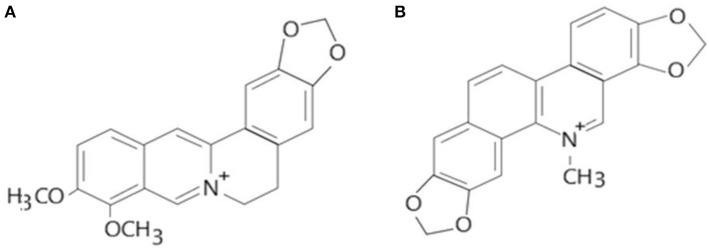
Berberine and Sanguinarine alkaloids belong to a group of naturally occurring chemical compounds that mostly contain basic nitrogen atoms. This group also includes some related compounds with neutral or weakly acidic properties. Alkaloids are produced by a large number of organisms including bacteria, fungi, plants, and animals. Berberine and Sanguinarine both are isoquinoline derivatives and belong to protoberberine and benzophenanthridines, respectively. Tyrosine or phenylalanine is common precursor for the biosynthesis of both. Sanguinarine [13-methyl (1,3) benzodioxolo(5,6-c)-1,3-dioxolo (4,5) phenanthridinium] is a toxin that kills animal cells through its action on the Na+-K+-ATPase transmembrane protein. Berberine, on the other hand, has been reported to cause cytotoxicity and adversely influence the synthesis of DNA. Several workers have reported varied pharmacological properties of these alkaloids as they exhibit antibacterial, antiasthma, anticancer, anti-inflammatory, and antidiabetic activities. This review article illustrates the toxicological effects of berberine and sanguinarine as well as mechanistic part of berberine and sanguinarine mediated toxicity in different living systems. This manuscript has included the lethal doses (LD50) of berberine and sanguinarine in different animals via different routs of exposure. Also, the effects of these alkaloids on the activities of some key enzymes, cell lines and organ development etc. have been summarized.
Overview
The claims and statistics of this paper haven’t been checked yet.
Run the check — free, no account needed. It reads the open-access text and checks the sources it cites.
Integrity signals
Registry
Cites
Statistics
Figures
Verification
Claims the paper makes
The claims and statistics of this paper haven’t been checked yet.
Run the check — free, no account needed. It reads the open-access text and checks the sources it cites.
Claims other papers make about this one
Each is checked against this paper’s own text: does it say what the citing paper says it does?
The source backs part of the claim, not all of it — or backs it for a different population, condition or comparison.
In the citing paper
“Finally, the heterogeneity of commercial products limits the generalizability of any effect-size estimate [32,33].”
From Berberine-Drug Interactions: Mechanisms, Clinical Relevance and Risk Stratification-A Narrative Review (2026) · cites this paper as [33]
Experimental — accuracy not yet measuredThe cited source says what the claim attributes to it.
In the citing paper
“The toxicity of berberine and related alkaloids also depends on dose and formulation [33,111]”
From Berberine-Drug Interactions: Mechanisms, Clinical Relevance and Risk Stratification-A Narrative Review (2026) · cites this paper as [33]
Self-check
Percentages, sums and reported differences re-computed from the paper’s own numbers.
The self-check needs the paper’s full text.
Citations
Cites
Pharmacological and therapeutic effects of Berberis vulgaris and its active constituent, berberine
Imanshahidi, M., & Hosseinzadeh, H. (2008) · Phytotherapy Research · doi:10.1002/ptr.2399 · Cited by 636
Küpeli̇, E., Koşar, M., Yeşilada, E., & Başer, K. H. C. (2002) · Life Sciences · doi:10.1016/s0024-3205(02)02200-2 · Cited by 379
El-Wahab, A. E. A., Ghareeb, D. A., Sarhan, E. M., Abu-Serie, M. M., & Demellawy, M. E. (2013) · BMC Complementary and Alternative Medicine · doi:10.1186/1472-6882-13-218 · Cited by 250
Yatoo, M. I., Gopalakrishnan, A., Saxena, A., Parray, O. R., Tufani, N. A., Chakraborty, S., Tiwari, R., Dhama, K., & Iqbal, H. M. N. (2018) · Recent Patents on Inflammation & Allergy Drug Discovery · doi:10.2174/1872213x12666180115153635 · Cited by 246
Ahmad, N., Gupta, S., Husain, M. M., Heiskanen, K. M., & Mukhtar, H. (2000) · PubMed · Cited by 224
Yeşilada, E., & Küpeli̇, E. (2002) · Journal of Ethnopharmacology · doi:10.1016/s0378-8741(01)00387-7 · Cited by 203
Cytotoxic Effects of Bangladeshi Medicinal Plant Extracts
Uddin, S. J., Grice, I. D., & Tiralongo, E. (2009) · Evidence-based Complementary and Alternative Medicine · doi:10.1093/ecam/nep111 · Cited by 192
Effects and mechanisms of berberine in diabetes treatment
Yin, J., Ye, J., & Jia, W. (2012) · Acta Pharmaceutica Sinica B · doi:10.1016/j.apsb.2012.06.003 · Cited by 183
Berberine hydrochloride: anticancer activity and nanoparticulate delivery system
Tan, W., Li, Chen, M., & Wang, Y. (2011) · International Journal of Nanomedicine · doi:10.2147/ijn.s22683 · Cited by 176
Argemone mexicana: Chemical and pharmacological aspects
Brahmachari, G., Gorai, D., & Roy, R. (2013) · Revista Brasileira de Farmacognosia · doi:10.1590/s0102-695x2013005000021 · Cited by 163
Research works printed but not linked: 1
- Manske, 1995, The Alkaliods: Chemistry and Physiology
Cited by
Sorted by citations
Ethnobotany and the Role of Plant Natural Products in Antibiotic Drug Discovery
Porras, G., Chassagne, F., Lyles, J. T., Marquez, L., Dettweiler, M., Salam, A. M., Samarakoon, T., Shabih, S., Farrokhi, D. R., & Quave, C. L. (2020) · Chemical Reviews · doi:10.1021/acs.chemrev.0c00922 · Cited by 415
Berberine as a Potential Anticancer Agent: A Comprehensive Review
Rauf, A., Abu‐Izneid, T., Khalil, A. A., Imran, M., Shah, Z. A., Emran, T. B., Mitra, S., Khan, Z., Alhumaydhi, F. A., Aljohani, A. S. M., et al. (2021) · Molecules · doi:10.3390/molecules26237368 · Cited by 304
Inhibition of inflammation by berberine: Molecular mechanism and network pharmacology analysis
Wang, K., Yin, J., Chen, J., Ma, J., Si, H., & Xia, D. (2024) · Phytomedicine · doi:10.1016/j.phymed.2023.155258 · Cited by 301
The Antibiotic Resistome: A Guide for the Discovery of Natural Products as Antimicrobial Agents
Hobson, C., Chan, A. N., & Wright, G. D. (2021) · Chemical Reviews · doi:10.1021/acs.chemrev.0c01214 · Cited by 229
Biological Activity of Berberine—A Summary Update
Och, A., Podgórski, R., & Nowak, R. (2020) · Toxins · doi:10.3390/toxins12110713 · Cited by 223
Metadata
- Authors
- Singh, N., & Sharma, B.
- Affiliations
- University of Allahabad (IN)
- Corresponding author
- Sharma, Bechan
- Venue
- Frontiers in Molecular Biosciences
- Publisher
- Frontiers Media SA
- Published
- 2018-03-19
- Volume
- 5
- Pages
- 21-21
- ISSN
- 2296-889X (ISSN-L)
- PMC
- PMC5867333
- OpenAlex
- W2790121275
- Cited by
- 227
- References
- 54
- Citations by year
- 2026: 19 · 2025: 32 · 2024: 31 · 2023: 35 · 2022: 40 · 2021: 31 · 2020: 28 · 2019: 8 · 2018: 3
- FWCI
- 2.04
- Type
- journal article
- Language
- en
- Open access
- gold
- doi.org
- Locations
- Frontiers in Molecular Biosciences (publishedVersion, cc-by)
- PubMed Central (publishedVersion, cc-by)
- PubMed (publishedVersion)
- DOAJ (DOAJ: Directory of Open Access Journals) (submittedVersion, cc-by-sa)
- Funders
- University Grants Commission
- Topics
- Health Sciences › Medicine › Pharmacology (medical) › Berberine and alkaloids research
- Life Sciences › Pharmacology, Toxicology and Pharmaceutics › Pharmacology › Plant-based Medicinal Research
- Life Sciences › Pharmacology, Toxicology and Pharmaceutics › Toxicology › Plant Toxicity and Pharmacological Properties
- Keywords
- berberine, sanguinarine, isoquinoline alkaloids, protoberberine alkaloids, benzophenanthridine alkaloids, alkaloid toxicity, Na+/K+-ATPase inhibition, cytotoxicity, DNA synthesis inhibition, lethal dose, pharmacological activity, organogenesis
About these checks
Registry, retraction, Cites and statistics results are computed, not judged, with one exception: a printed reference that no index lists is read once by a model before it counts as a citation error. Claims are extracted by a model and kept only when their quote appears verbatim in the text; each cited source is then checked, with a model’s help, for whether it says what the claim relies on. Those verdicts can be wrong — read the claim’s quote and the cited source before relying on one.
Statistics and arithmetic are recomputed, not judged.
Confidence bands are shown only for fields calibrated on our annotated test set. None is calibrated yet, so no band is shown.
What counts as a claim ›How we measure confidence ›How we check this ›
Are you an author, or do you see a problem with this page? Request a review
